1 882 résultats
18394726Chez Aubert 1839 Three volumes bound in one. First Edition. 4to 11 x 8.75 inches 150 b/w lithographic plates Bound in three-quarter calf and marbled paper boards spine lettered and decorated in gilt. Light scattered foxing throughout with occasional spots of minor soiling leather binding rubbed and worn at extremities corners scuffed with tearing to surface of the leather ¼-inch tear to the upper edge of front joint. Hardcover. Very Good. Chez Aubert hardcover
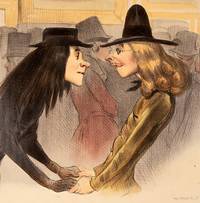
05964Paris: Chez Aubert 1839. With 150 Hand-Colored Lithographs<br /> including Forty-Five by Honoré Daumier and Forty-Two by Gavarni<br /> <br /> DAUMIER Honoré Gavarni and others illustrators. ALHOY Maurice Louis Huart and Charles Philipon editors. Le Musée pour rire. Dessins par tous les caricaturistes de Paris; Texte par MM. Maurice Alhoy Louis Huart et Ch. Philipon. Paris: Chez Aubert Editeur des Cent-et-Un Robert-Macaire 1839-1840.<br /> <br /> Three quarto volumes 10 3/16 x 7 15/16 inches; 259 x 202 mm. 2 half-title 2 title 200 2 "Table" 4 publisher's advertisements; 2 half-title 2 title 200 2 "Table; 2 half-title 2 title 200 2 "Table 4 publisher's advertisements pp. With 150 numbered hand-colored lithographs heightened with gum arabic by Honoré Daumier forty-five Gavarni forty-two Frédéric Bouchot twenty-two Victor Adam ten Platier seven Benjamin i.e. Benjamin Roubaud four Bourdet three Pruche three Platel two Grandville two Edme-Jean Pigal two Alophe Menut two Charles Vernier two Charles-Joseph Traviès one and others.<br /> <br /> Early twentieth-century half red scored calf ruled in gilt over marbled boards by Adolphe Cuzin stamp-signed in gilt at foot of spine. Smooth spines decoratively tooled and lettered in gilt all edges gilt marbled endpapers. Expert and almost invisible minor restoration to corners and spine extremities. Occasional light foxing and/or browning. A wonderful copy.<br /> <br /> "The house of Aubert was ingenious in marketing its products. Its lithographs.were published one by one in periodicals like Le charivari and together in suites by the same artist without letterpress. Still a third form of publication was in albums made up of lithographs by several artists with accompanying texts. These collections most commonly took the form of volumes with the generic title Paris comique which consisted of twenty colored lithographs accompanied by quite unrelated texts. Aubert remarked that the resulting hodgepodge had 'a plan that is easy to follow for it consists in not having any' and in fact this was indeed a frugal procedure for reusing old texts and already published plates. The interest of the various volumes of Paris comique resides entirely in the lithographs they happen to contain. It can be considerable however since Daumier and Gavarni are the predominant artists. Le musée pour rire represents a more considerable effort on the part of Aubert. To accompany 150 lithographs including forty-five by Daumier among them twenty-seven from Croquis d'expressions and eight from La galerie physionomique and forty-two by Gavarni new commentaries were commissioned on each plate all except two by Alhoy and Huart. Daumier's lithographs were trimmed slightly and their captions were relettered. The designs of the other artists were provided with decorative frames. The whole was then published in three handsome volumes and in copies with expert contemporary coloring like this one Le musée pour rire is among the freshest and most attractive of romantic illustrated books" Ray The Art of the French Illustrated Book.<br /> <br /> Le Musée pour Rire "contained 150 lithographs by Daumier Gavarni Bouchot Traviès etc. These are re-impressions some of them in mirror image which had previously already been used for publication in Le Charivari. Most prints of the series 'Croquis d'expressions' are contained in the book. The name of the series is missing and the texts were printed in a different type than in the original Charivari version. We do not consider these prints original lithographies but rather prints 'after Daumier'" The Daumier Register at http://www.daumier-register.org.<br /> <br /> Ray The Art of the French Illustrated Book 164. Paris: Chez Aubert, 1839 unknown
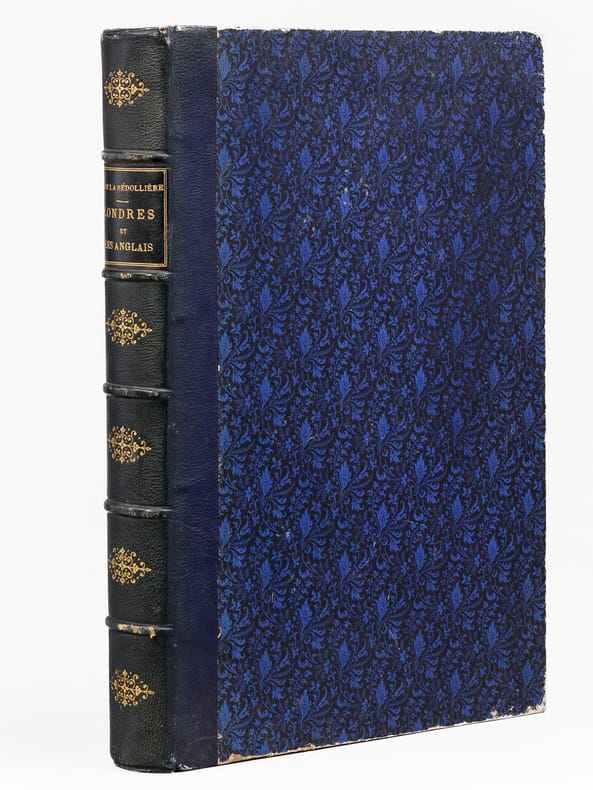
04829Paris: Chez Aubert 1839. With 50 Hand-Colored Lithographs<br /> including Nine by Honoré Daumier and Fifteen by Gavarni<br /> <br /> DAUMIER Honoré Gavarni and others illustrators. ALHOY Maurice Louis Huart and Charles Philipon editors. Le Musée pour rire. Dessins par tous les caricaturistes de Paris; Texte par MM. Maurice Alhoy Louis Huart et Ch. Philipon. Paris: Chez Aubert Editeur des Cent-et-Un Robert-Macaire 1839<br /> <br /> Volume II only of 3. First edition. Quarto 10 3/8 x 8 1/8 inches; 265 x 207 mm. i-ii half-title verso blank iii-iv title verso blank v-vi Table 200 pp. With 50 numbered 51-100 hand-colored lithographs heightened with gum arabic by Honoré Daumier nine Gavarni fifteen Frédéric Bouchot seventeen Benjamin i.e. Benjamin Roubaud four Bourdet three Grandville one and Edme-Jean Pigal one. Heavy spotting in places but mainly to text leaves. Plates generally clean.<br /> <br /> Publisher's silk patterned paper over boards covers decoratively stamped in gilt smooth spine decoratively stamped and titled in gilt. Rebacked with the original spine laid down. With the engraved bookplate of author and collector Jaques Robiquet on front paste-down. <br /> <br /> A reasonably priced album containing fine hand-colored lithographs of Bouchot Daumier & Gavarni etc. etc.<br /> <br /> "The house of Aubert was ingenious in marketing its products. Its lithographs.were published one by one in periodicals like Le charivari and together in suites by the same artist without letterpress. Still a third form of publication was in albums made up of lithographs by several artists with accompanying texts. These collections most commonly took the form of volumes with the generic title Paris comique which consisted of twenty colored lithographs accompanied by quite unrelated texts. Aubert remarked that the resulting hodgepodge had 'a plan that is easy to follow for it consists in not having any' and in fact this was indeed a frugal procedure for reusing old texts and already published plates. The interest of the various volumes of Paris comique resides entirely in the lithographs they happen to contain. It can be considerable however since Daumier and Gavarni are the predominant artists. Le musée pour rire represents a more considerable effort on the part of Aubert. To accompany 150 lithographs including forty-five by Daumier among them twenty-seven from Croquis d'expressions and eight from La galerie physionomique and forty-two by Gavarni new commentaries were commissioned on each plate all except two by Alhoy and Huart. Daumier's lithographs were trimmed slightly and their captions were relettered. The designs of the other artists were provided with decorative frames. The whole was then published in three handsome volumes and in copies with expert contemporary coloring like this one Le musée pour rire is among the freshest and most attractive of romantic illustrated books" Ray The Art of the French Illustrated Book.<br /> <br /> Le Musée pour Rire "contained 150 lithographs by Daumier Gavarni Bouchot Traviès etc. These are re-impressions some of them in mirror image which had previously already been used for publication in Le Charivari. Most prints of the series 'Croquis d'expressions' are contained in the book. The name of the series is missing and the texts were printed in a different type than in the original Charivari version. We do not consider these prints original lithographies but rather prints 'after Daumier'". <br /> <br /> Ray The Art of the French Illustrated Book 164. Paris: Chez Aubert, 1839 unknown
02253Paris: Chez Aubert 1839. With 150 Hand-Colored Lithographs<br /> including Forty-Five by Honoré Daumier and Forty-Two by Gavarni<br /> <br /> DAUMIER Honoré Gavarni and others illustrators. ALHOY Maurice Louis Huart and Charles Philipon editors. Le Musée pour rire. Dessins par tous les caricaturistes de Paris; Texte par MM. Maurice Alhoy Louis Huart et Ch. Philipon. Paris: Chez Aubert Editeur des Cent-et-Un Robert-Macaire 1839-1840.<br /> <br /> First edition. Three quarto volumes bound in one 10 x 7 5/8 in; 251 x 193 mm. 1 half-title 2 title 600 pp. With 150 numbered hand-colored lithographs heightened with gum arabic by Honoré Daumier forty-five Gavarni forty-two Frédéric Bouchot twenty-two Victor Adam ten Platier seven Benjamin i.e. Benjamin Roubaud four Bourdet three Pruche three Platel two Grandville two Edme-Jean Pigal two Alophe Menut two Charles Vernier two Charles-Joseph Traviès one and others.<br /> <br /> Bound ca. 1886-1890 by James Screeton of Hull with label to rear pastedown half black pebbled morocco over gray-brown cloth. Elaborately gilt tooled compartments gilt-rolled raised bands. All edges gilt. Some foxing and toning throughout but still a very good copy.<br /> <br /> "The house of Aubert was ingenious in marketing its products. Its lithographs.were published one by one in periodicals like Le charivari and together in suites by the same artist without letterpress. Still a third form of publication was in albums made up of lithographs by several artists with accompanying texts. These collections most commonly took the form of volumes with the generic title Paris comique which consisted of twenty colored lithographs accompanied by quite unrelated texts. Aubert remarked that the resulting hodgepodge had 'a plan that is easy to follow for it consists in not having any' and in fact this was indeed a frugal procedure for reusing old texts and already published plates. The interest of the various volumes of Paris comique resides entirely in the lithographs they happen to contain. It can be considerable however since Daumier and Gavarni are the predominant artists. Le musée pour rire represents a more considerable effort on the part of Aubert. To accompany 150 lithographs including forty-five by Daumier among them twenty-seven from Croquis d'expressions and eight from La galerie physionomique and forty-two by Gavarni new commentaries were commissioned on each plate all except two by Alhoy and Huart. Daumier's lithographs were trimmed slightly and their captions were relettered. The designs of the other artists were provided with decorative frames. The whole was then published in three handsome volumes and in copies with expert contemporary coloring like this one Le musée pour rire is among the freshest and most attractive of romantic illustrated books" Ray The Art of the French Illustrated Book.<br /> <br /> Le Musée pour Rire "contained 150 lithographs by Daumier Gavarni Bouchot Traviès etc. These are re-impressions some of them in mirror image which had previously already been used for publication in Le Charivari. Most prints of the series 'Croquis d'expressions' are contained in the book. The name of the series is missing and the texts were printed in a different type than in the original Charivari version. We do not consider these prints original lithographies but rather prints 'after Daumier'". <br /> <br /> James Screeton was the son of bookbinder William Screeton of Hull. It appears that he was partner of binder William Wardell until opened his own shop in 1886. <br /> <br /> Ray The Art of the French Illustrated Book 164. Paris: Chez Aubert, 1839 unknown
1850ROD0084534IMPRIMERIE D'AUBERT ET CIE. 1850. In-Folio. En feuillets. Bon état, Couv. convenable, Dos satisfaisant, Rousseurs. 2 gravures en noir et blanc par Edouard de Beaumont et Gavarni sur 1 page.. . . . Classification Dewey : 70.441-Journaux satiriques anciens
8381FASQUELLE EUGENE 1924
15787Paris, E. Dentu, 1856. In-16 broché, n.p. ( exemplaire gauchi, couverture brunie).
1858129942P. Martinon ; G. De Gonet 1858 In-4, bradel toile fauve, couvertures conservées, 157 pp. Illustrations hors-texte. Rousseurs.
50519Martinon.(s.d.)Gd.in-8 demi-toile.160 p.Dessins de Gavarni.Des rousseurs.
1862704921 vol. in-4 vol. in-4 rel. demi-basane chagrinée, dos à 5 nerfs, dessins noir et blanc par Gavarni, Gustave Barba libraire-éditeur, Paris, s.d. (1862), 379 pp.
15780Paris, J. Hetzel, 1846. Petit in-8, 84 pp., pleine toile éditeur gaufrée, fers dorés au premier plat et au dos, fers estampés à froid au plat inférieur.
43283Paris, J. Laisné, 1841. In-16, 126p. Reliure demi-veau à coin, dos orné d'un décor à froid et doré, tête dorée, couverture conservée [signée Maylander]
196039187Couverture rigide. Cartonnage de l'éditeur. 414 pages. Coiffe supérieure réparée.
18621310746Paris, Morizot, 1862. 2 Bl., 428 S. Mit Frontispiz, Titelvignette, 4 Holzstich-Tafeln von Gavarni. Blindgeprägter OLwdbd m. figürlicher Vorder- u. Hinterdeckel- sowie Rückenvergoldung u. allseitigem Goldschnitt (Rücken u. Ränder verblaßt, Kapitale u. Ecken bestoßen, Bibl.-Stempel auf Innendeckel vorn, Vordergelenk gelockert, meist gering, teils jedoch stärker braunfleckig).
1845424Curmer 1845 in-folio 1/2 basane rouge
1990014553Paris Réunion des Musées Nationaux 1990 In-4 Broché, couverture illustrée à larges rabats Dédicacé par l'auteur
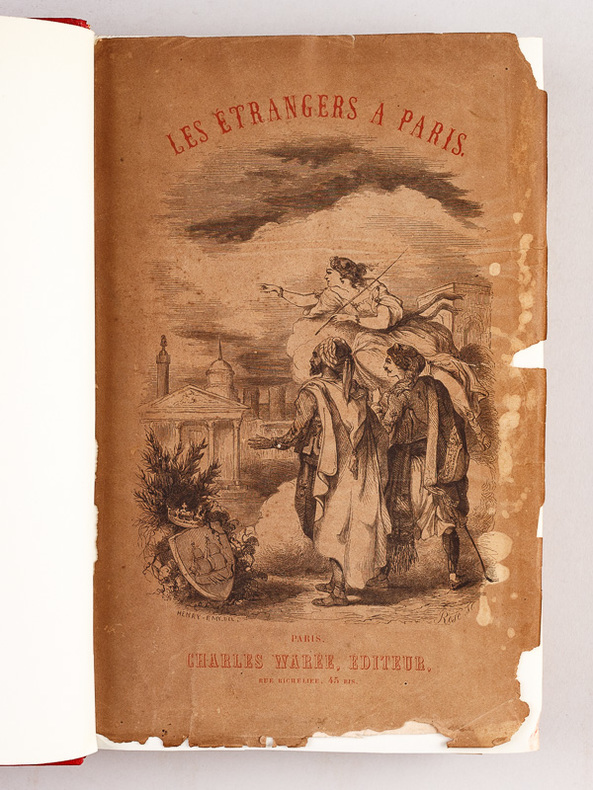
175Paris, Charles Waré, éditeur, sd (1844). In-4 (papier 261 x 162 mm), XXXV + 525 pp., demi-maroquin aubergine, dos à quatre nerfs,caissons ornés de larges filets dorés, filets sur les nerfs, plats de percaline ornés d'une plaque dorée, tranches dorées (reliure de l'époque). Frontispice et 29 planches gravées sur bois, tiréesen noir, par MM. Gavarni, Th. Frere, H. Emy, Th. Guerin, Ed. Frere, 89 vignettes in texte. 1er tirage.
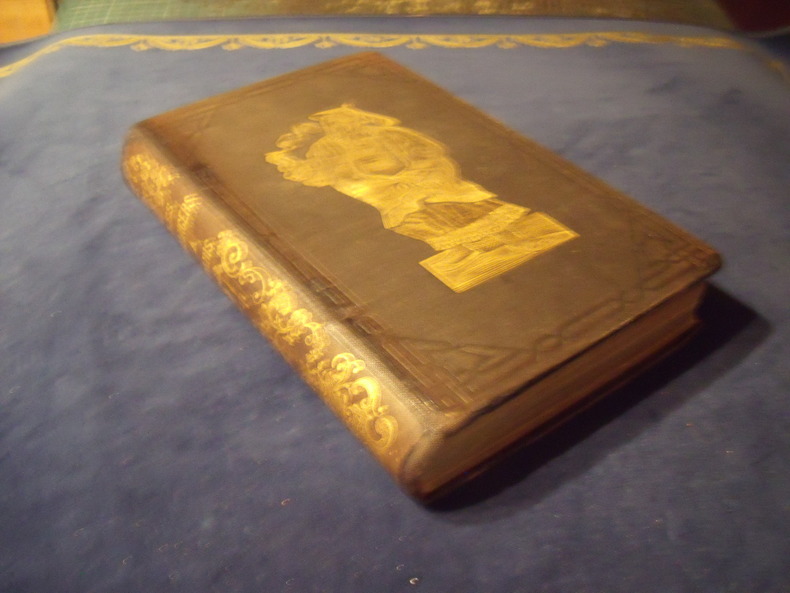
Gavar1844Charles Warée ,Editeur -Rue Richelieu -Paris - Sans date circa 1844 - 525 pages - Illustration dans le texte et en 29 hors texte de Gavarni ,Frére ,Emy ,Guérin + Un frontispice .Tables in finé - Fort volume grand in 8 ,cartonnage romantique de l’éditeur pleine percaline noir orné d'une grande composition sur le premier et second plat -Rousseurs sporadiques ,interieur assez frais ,tranches dorés ,légers ressauts de cahiers mais corps d'ouvrage bien solidaire -Bon état .
1844587401 vol. grand in-8 reliure postérieure demi-chagrin à coins rouge, dos à 4 nerfs dorés, filet doré en mors et coins, Charles Warée, Paris, s.d. [ 1844 ], XXXV-525 pp. et 1 f. avec 30 planches hors texte
1844658371 vol. grand in-8 reliure postérieure demi-chagrin brun, dos à 4 nerfs dorés, filet doré en mors et coins, Charles Warée, Paris, s.d. [ 1844 ], XXXV-525 pp. et 1 f. avec 30 planches hors texte
français Sans date (circa 1844). In-8 de XXXV-525 pp. + Table ; demi-chagrin noir à quatre nerf orné de caissons dorés, toutes tranches dorées (reliure de l'époque). Illustrés de 400 gravures dont un grand nombre tirées hors texte. Lég. rousseurs. Bel exemplaire.
186348753Paris Cournol 1863 1 vol. broché in-12, broché, 209 pp. Deuxième édition, parue un an après l'originale, avec un envoi de l'auteur. Ce premier livre de Jean Dolent (1835-1909) forme un recueil de portraits charges contre les tenants de la critique parisienne : Sainte-Beuve, Karr, Monselet, Houssaye, Th. Gautier, Janin, etc. Fils et petit-fils d'ouvriers, Jean Dolent (alias Charles-Antoine Fournier, 1835-1909) a été formé à l'école des théâtres comme figurant, au sein des ateliers de peinture comme rapin et dans les gazettes républicaines du Second Empire. Après la Commune, il tourne le dos à la littérature pour consacrer ses principaux livres à l'art contemporain, avec le discernement esthétique, la conscience sociale et l'indépendance de vues qui font les vrais critiques. Celui qui était resté plus de cinquante ans employé aux écritures dans une maison d'industrie ouvrit, à la fin de sa vie, sa villa de Belleville aux artistes (Eugène Carrière, Paul Gauguin, Auguste Rodin) comme aux critiques (Gustave Geffroy, Gustave Kahn, Roger Marx), de sorte que Camille Mauclair l'avait surnommé "le Mallarmé de Belleville". Petites rousseurs éparses.
186348753Paris Cournol 1863 1 vol. broché in-12, broché, 209 pp. Deuxième édition, parue un an après l'originale, avec un envoi de l'auteur. Ce premier livre de Jean Dolent (1835-1909) forme un recueil de portraits charges contre les tenants de la critique parisienne : Sainte-Beuve, Karr, Monselet, Houssaye, Th. Gautier, Janin, etc. Fils et petit-fils d'ouvriers, Jean Dolent (alias Charles-Antoine Fournier, 1835-1909) a été formé à l'école des théâtres comme figurant, au sein des ateliers de peinture comme rapin et dans les gazettes républicaines du Second Empire. Après la Commune, il tourne le dos à la littérature pour consacrer ses principaux livres à l'art contemporain, avec le discernement esthétique, la conscience sociale et l'indépendance de vues qui font les vrais critiques. Celui qui était resté plus de cinquante ans employé aux écritures dans une maison d'industrie ouvrit, à la fin de sa vie, sa villa de Belleville aux artistes (Eugène Carrière, Paul Gauguin, Auguste Rodin) comme aux critiques (Gustave Geffroy, Gustave Kahn, Roger Marx), de sorte que Camille Mauclair l'avait surnommé "le Mallarmé de Belleville". Petites rousseurs éparses.
186272718Paris Dentu 1862 1 vol. broché in-12, broché, 209 pp. Edition originale du premier livre de l'auteur (1835-1909), recueil de portraits charges contre les tenants de la critique parisienne : Sainte-Beuve, Karr, Monselet, Houssaye, Th. Gautier, Janin, etc. Dos fentillé avec légers manques de papier. Couverture défraîchie. Petites rousseurs éparses. 2 petites galeries de ver aux tranches, sans atteinte au texte. En l'état.
186272718Paris Dentu 1862 1 vol. broché in-12, broché, 209 pp. Edition originale du premier livre de l'auteur (1835-1909), recueil de portraits charges contre les tenants de la critique parisienne : Sainte-Beuve, Karr, Monselet, Houssaye, Th. Gautier, Janin, etc. Dos fentillé avec légers manques de papier. Couverture défraîchie. Petites rousseurs éparses. 2 petites galeries de ver aux tranches, sans atteinte au texte. En l'état.