SAPPHO - PUAUX René - CARLEGLELivre Rare Book
325 résultats
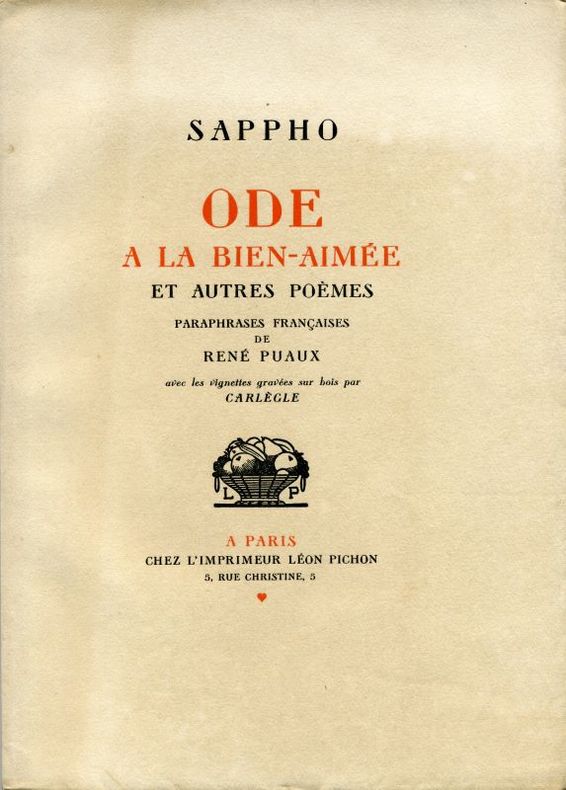
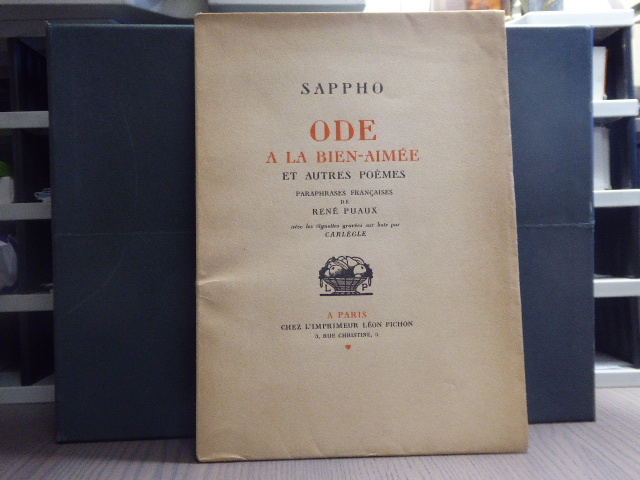
33105Léon Pichon Paris 1926 In-8 ( 255 X 185 mm ) de 52 pages, broché sous couverture rempliée. Paraphrases françaises de René PUAUX avec les vignettes gravées sur bois par CARLEGLE. Frontispice et deux figures in texte de CARLEGLE. 1 des 350 exemplaires sur vélin à la forme des papeteries d'Arches. Très bel exemplaire.
1956ABE-177042056545925 CM X 32 CM-JAQUETTE-COMPLET-(DG24)
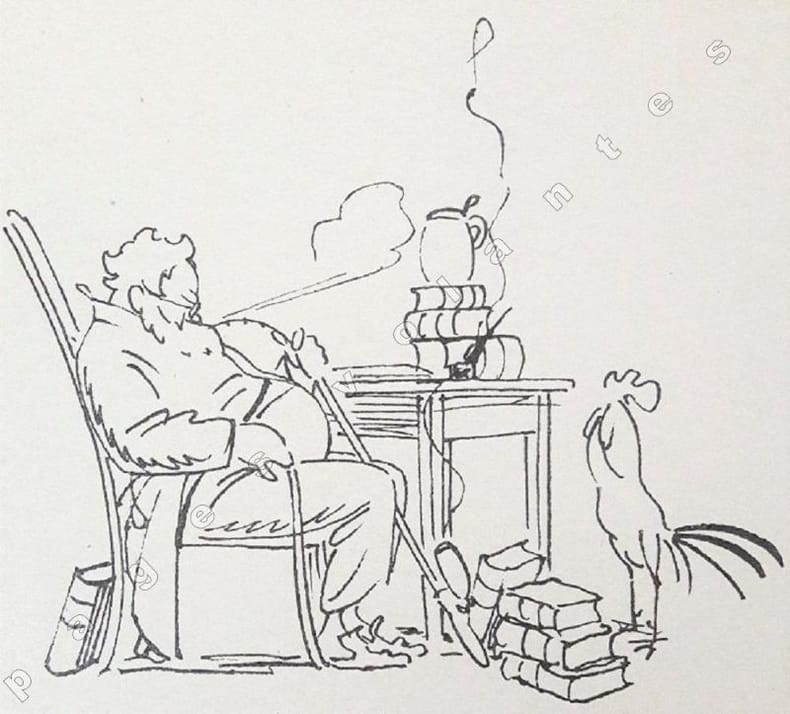
1924473361924 Paris, Chez l'Imprimeur Léon Pichon, 1924 - In-4 - Broché - Couverture rempliée, salie, rousseurs éparses sur les tranches - vignettes gravées sur bois par Carlègle - Tirage limité à 345 exemplaires, sur vergé à la cuve des papeteries d'Arches, N° 46 - 125 pages + Glossaire et table - Ex-libris Jacques Callame - bon exemplaire
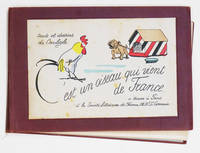
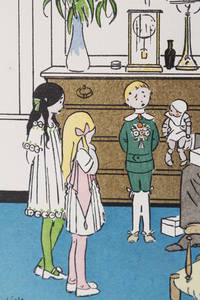
103392Paris Société littéraire de France 1916. Quer-8° 56 S. m blattgrosssen Illustr. OLwd. m Deckelillustration Deckel berieben min. fleckig Exlibris a Vors. Im Gelenk etws locker. Charles-Émile Egli dit Carlègle 1877–1937 est un graveur illustrateur et peintre suisse naturalisé français.Sous le nom de « Carlègle » il illustre des journaux satiriques tels que L'Assiette au beurre Le Rire Demain ou La Vie parisienne mais aussi L'Illustration Cocorico Fantasio et de nombreux livres et textes classiques ou contemporains comme La Fontaine Ronsard Verlaine Henri de Régnier etc.À compter de 1905 il commence à publier des albums de gravures comme L'Automobile 217-UU et Une histoire qui finit mal. En 1908 il commence à réaliser des illustrations destinées à des ouvrages. En 1909 il participe à des expositions internationales de dessinateurs humoristiques Paris Copenhague. Sa production ne faiblit pas dans les années 1920 et il reste à la fois chic et populaire produisant pour la Gazette du Bon Ton et La Vie Parisienne. Text franz. Dieses Buch befindet sich in unserem Aussenlager; sollten Sie dieses im Laden abholen wollen bitten wir Sie um vorgängige Nachricht. 010 Paris, Société littéraire de France, 1916 unknown
EXE-160Paris, Librairie Molière, [1905]. In-8° oblong, cartonnage illustré de l’édition. Edition Originale. Nombreux dessins en couleurs par Carlègle.
19308051Paris, Éditions Mornay, 1930. 200 x 151 mm, 240-(6) pp., (3) ff. blancs, illustration couleurs en frontispice, illustrations et vignette couleurs in-texte de CARÈGLE. Reliure demi-basane, dos à faux-nerfs, dos insolé, tranche sup. dorée, plats légèrement insolés (foncés), couvertures et dos conservés. Ex. N° 527, tirage à 1000 (+ 85 H. C.) ex., 1 des 841 ex. sur Rives numérotés de 160 à 1000. Très bel exemplaire.
1916178111916 Paris, Société Littéraire de France, 1916 album in-8 oblong à l'italienne de (4)-56-(2) pp., cart. de l'éditeur de pleine percaline bordeaux, illustré sur le 1er plat d'une grande vignette de titre contrecollée et illustrée en couleurs, très bel ex.
191254480Lucien Vogel éditeur | Paris 1912-1913 | 19 x 24.50 cm | une feuille
191289478Paris 1912-1913 | 19 x 24.50 cm | une feuille
19263638PICHON 1926 1 Paris, Léon Pichon, 1926, in-8, broché, couverture rempliée.
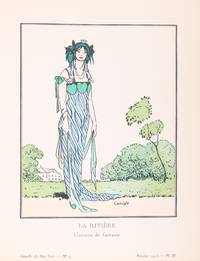
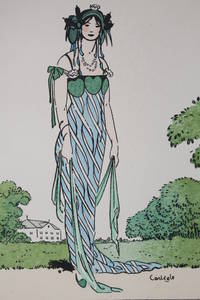
191389412Paris: Lucien Vogel éditeur 1913. Fine. Lucien Vogel éditeur Paris Février 1913 19 x 24.50 cm une feuille Original colour print printed on laid paper and signed in the plate lower right. Original engraving produced for the illustration of La Gazette du Bon Ton one of the most beautiful and influential fashion journals of the 20th century celebrating the talent of French designers and artists at the height of the Art Deco era. A celebrated fashion magazine established in 1912 by Lucien Vogel La Gazette du bon ton appeared until 1925 with a hiatus from 1915 to 1920 due to the war the editor-in-chief having been called up for service. It consisted of 69 issues printed in only 2000 copies each and notably illustrated with 573 color plates and 148 sketches of the models of the great designers. Right from the start this sumptuous publication “was aimed at bibliophiles and fashionable society” Françoise Tétart-Vittu “La Gazette du bon ton” in Dictionnaire de la mode 2016 and was printed on fine vergé paper using a type cut specially for the magazine by Georges Peignot known as Cochin later used in 1946 by Christian Dior. The prints were made using stencils heightened in colors some highlighted in gold or palladium. The story began in 1912 when Lucien Vogel a man of the world involved in fashion he had already been part of the fashion magazine Femina decided with his wife Cosette de Brunhoff – the sister of Jean creator of Babar – to set up the Gazette du bon ton subtitled at the time: “Art fashion frivolities.”  Georges Charensol noted the reasoning of the editor-in-chief: “’In 1910Â’ he observed ‘there was no really artistic fashion magazine nothing representative of the spirit of the time. My dream was therefore to make a luxury magazine with truly modern artistsÂ…I was assured of success because when it comes to fashion no country on earth can compete with France.’” “Un grand éditeur dÂ’art. Lucien Vogel” in Les Nouvelles littéraires no. 133 May 1925. The magazine was immediately successful not only in France but also in the United States and Latin America. At first Vogel put together a team of seven artists: André-Édouard Marty and Pierre Brissaud followed by Georges Lepape and Dammicourt as well as eventually his friends from school and the School of Fine Arts like George Barbier Bernard Boutet de Monvel and Charles Martin. Other talented people soon came flocking to join the team: Guy Arnoux Léon Bakst Benito Boutet de Monvel Umberto Brunelleschi Chas Laborde Jean-Gabriel Domergue Raoul Dufy Édouard Halouze Alexandre Iacovleff Jean Émile Laboureur Charles Loupot Chalres Martin Maggie Salcedo. These artist mostly unknown when Lucien Vogel sought them out later became emblematic and sought-after artistic figures. It was also they who worked on the advertising drawings for the Gazette. The plates put the spotlight on and celebrate dresses by seven designers of the age: Lanvin Doeuillet Paquin Poiret Worth Vionnet and Doucet. The designers provided exclusive models for each issue. Nonetheless some of the illustrations are not based on real models but simply on the illustratorÂ’s conception of the fashion of the day.   The Gazette du bon ton was an important step in the history of fashion. Combining aesthetic demands with the physical whole it brought together – for the first time – the great talents of the artistic literary and fashion worlds; and imposed through this alchemy a completely new image of women: slender independent and daring which was shared by the new generation of designers including Coco Chanel Jean Patou Marcel Rochas and so onÂ… Taken over in 1920 by Condé Montrose Nast the Gazette du bon ton was an important influence on the new layout and aesthetics of that “little dying paper” that Nast had bought a few years earlier: Vogue. Lucien Vogel éditeur unknown
191354503Paris: Lucien Vogel éditeur 1913. Fine. Lucien Vogel éditeur Paris Février 1913 19 x 24.50 cm une feuille Original color print printed on vergé paper signed in the plate. An original print used to illustrate the Gazette du bon ton one of the most attractive and influential 20th century fashion magazines featuring the talents of French artists and other contributors from the burgeoning Art Deco movement. A celebrated fashion magazine established in 1912 by Lucien Vogel La Gazette du bon ton appeared until 1925 with a hiatus from 1915 to 1920 due to the war the editor-in-chief having been called up for service. It consisted of 69 issues printed in only 2000 copies each and notably illustrated with 573 color plates and 148 sketches of the models of the great designers. Right from the start this sumptuous publication was aimed at bibliophiles and fashionable society Françoise Tétart-Vittu La Gazette du bon ton in Dictionnaire de la mode 2016 and was printed on fine vergé paper using a type cut specially for the magazine by Georges Peignot known as Cochin later used in 1946 by Christian Dior. The prints were made using stencils heightened in colors some highlighted in gold or palladium. The story began in 1912 when Lucien Vogel a man of the world involved in fashion he had already been part of the fashion magazine Femina decided with his wife Cosette de Brunhoff the sister of Jean creator of Babar to set up the Gazette du bon ton subtitled at the time: Art fashion frivolities. Georges Charensol noted the reasoning of the editor-in-chief: In 1910 he observed there was no really artistic fashion magazine nothing representative of the spirit of the time. My dream was therefore to make a luxury magazine with truly modern artists I was assured of success because when it comes to fashion no country on earth can compete with France. Un grand éditeur dart. Lucien Vogel in Les Nouvelles littéraires no. 133 May 1925. The magazine was immediately successful not only in France but also in the United States and Latin America. At first Vogel put together a team of seven artists: André-Édouard Marty and Pierre Brissaud followed by Georges Lepape and Dammicourt as well as eventually his friends from school and the School of Fine Arts like George Barbier Bernard Boutet de Monvel and Charles Martin. Other talented people soon came flocking to join the team: Guy Arnoux Léon Bakst Benito Boutet de Monvel Umberto Brunelleschi Chas Laborde Jean-Gabriel Domergue Raoul Dufy Édouard Halouze Alexandre Iacovleff Jean Émile Laboureur Charles Loupot Chalres Martin Maggie Salcedo. These artist mostly unknown when Lucien Vogel sought them out later became emblematic and sought-after artistic figures. It was also they who worked on the advertising drawings for the Gazette. The plates put the spotlight on and celebrate dresses by seven designers of the age: Lanvin Doeuillet Paquin Poiret Worth Vionnet and Doucet. The designers provided exclusive models for each issue. Nonetheless some of the illustrations are not based on real models but simply on the illustrators conception of the fashion of the day. The Gazette du bon ton was an important step in the history of fashion. Combining aesthetic demands with the physical whole it brought together for the first time the great talents of the artistic literary and fashion worlds; and imposed through this alchemy a completely new image of women: slender independent and daring which was shared by the new generation of designers including Coco Chanel Jean Patou Marcel Rochas and so on Taken over in 1920 by Condé Montrose Nast the Gazette du bon ton was an important influence on the new layout and aesthetics of that little dying paper that Nast had bought a few years earlier: Vogue. Lucien Vogel éditeur unknown
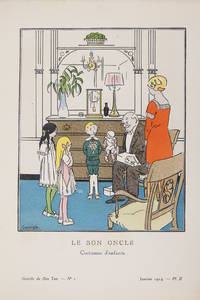
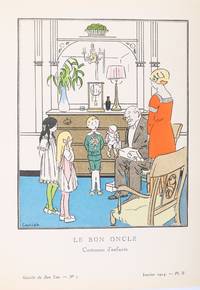
191484681Paris: Lucien Vogel éditeur 1914. Fine. Lucien Vogel éditeur Paris Janvier 1914 19 x 24.50 cm une feuille Original color print printed on laid paper signed at the bottom left of the plate. Original engraving created for the illustration of La Gazette du bon ton one of the most beautiful and influential fashion magazines of the 20th century celebrating the talent of French creators and artists in the full flowering of Art Deco. This famous fashion magazine founded in 1912 by Lucien Vogel was published until 1925 with an interruption during the War from 1915 to 1920 due to the mobilization of its editor-in-chief. It consists of 69 issues printed in only 2000 copies and is illustrated notably with 573 color plates and 148 sketches representing models by great couturiers. From their publication these luxurious publications ""address bibliophiles and worldly aesthetes"" Françoise Tétart-Vittu ""La Gazette du bon ton"" in Dictionnaire de la mode 2016. Printed on beautiful laid paper they use a typeface specially created for the magazine by Georges Peignot the Cochin character adopted in 1946 by Christian Dior. The prints are made using the metal stencil technique heightened in colors and some highlighted in gold or palladium. The adventure began in 1912 when Lucien Vogel a man of society and fashion - he had already participated in the magazine Femina - decided to found with his wife Cosette de Brunhoff sister of Jean the father of Babar the Gazette du bon ton whose subtitle was then ""Art modes et frivolités"". Georges Charensol reports the words of the editor-in-chief: ""In 1910 he observes there existed no fashion journal truly artistic and representative of the spirit of its time. I was therefore thinking of making a luxury magazine with truly modern artists . I was certain of success because for fashion no country can rival France."" ""Un grand éditeur d'art. Lucien Vogel"" in Les Nouvelles littéraires n°133 May 1925. The success of the magazine was immediate not only in France but also in the United States and South America. Originally Vogel therefore brought together a group of seven artists: André-Édouard Marty and Pierre Brissaud followed by Georges Lepape and Dammicourt; and finally his friends from the École des beaux-arts who were George Barbier Bernard Boutet de Monvel or Charles Martin. Other talents quickly came to join the team: Guy Arnoux Léon Bakst Benito Boutet de Monvel Umberto Brunelleschi Chas Laborde Jean-Gabriel Domergue Raoul Dufy Édouard Halouze Alexandre Iacovleff Jean Émile Laboureur Charles Loupot Charles Martin Maggie Salcedo. These artists mostly unknown when Lucien Vogel called upon them would subsequently become emblematic and sought-after artistic figures. These same illustrators created the drawings for the Gazette's advertisements. The plates highlight and sublimate the dresses of seven creators of the time: Lanvin Doeuillet Paquin Poiret Worth Vionnet and Doucet. The couturiers provided exclusive models for each issue. Nevertheless some of the illustrations featured no real model but only the illustrator's idea of the fashion of the day. La Gazette du bon ton is a decisive stage in the history of fashion. Combining aesthetic demands and plastic unity it brought together for the first time the great talents of the world of arts letters and fashion and imposed through this alchemy a completely new image of woman slender independent and audacious also carried by the new generation of couturiers Coco Chanel Jean Patou Marcel Rochas. Taken over in 1920 by Condé Montrose Nast the Gazette du bon ton would largely inspire the new composition and aesthetic choices of the ""dying little journal"" that Nast had bought a few years earlier: Vogue magazine. Lucien Vogel éditeur unknown
191489465Paris 1914. Fine. Paris Janvier 1914 19 x 24.50 cm une feuille Original colour print printed on laid paper and signed in the plate lower left. Original engraving produced for the illustration of La Gazette du Bon Ton one of the most beautiful and influential fashion journals of the 20th century celebrating the talent of French designers and artists at the height of the Art Deco era. A celebrated fashion magazine established in 1912 by Lucien Vogel La Gazette du bon ton appeared until 1925 with a hiatus from 1915 to 1920 due to the war the editor-in-chief having been called up for service. It consisted of 69 issues printed in only 2000 copies each and notably illustrated with 573 color plates and 148 sketches of the models of the great designers. Right from the start this sumptuous publication “was aimed at bibliophiles and fashionable society” Françoise Tétart-Vittu “La Gazette du bon ton” in Dictionnaire de la mode 2016 and was printed on fine vergé paper using a type cut specially for the magazine by Georges Peignot known as Cochin later used in 1946 by Christian Dior. The prints were made using stencils heightened in colors some highlighted in gold or palladium. The story began in 1912 when Lucien Vogel a man of the world involved in fashion he had already been part of the fashion magazine Femina decided with his wife Cosette de Brunhoff – the sister of Jean creator of Babar – to set up the Gazette du bon ton subtitled at the time: “Art fashion frivolities.”  Georges Charensol noted the reasoning of the editor-in-chief: “’In 1910’ he observed ‘there was no really artistic fashion magazine nothing representative of the spirit of the time. My dream was therefore to make a luxury magazine with truly modern artists…I was assured of success because when it comes to fashion no country on earth can compete with France.’” “Un grand éditeur d’art. Lucien Vogel” in Les Nouvelles littéraires no. 133 May 1925. The magazine was immediately successful not only in France but also in the United States and Latin America. At first Vogel put together a team of seven artists: André-Édouard Marty and Pierre Brissaud followed by Georges Lepape and Dammicourt as well as eventually his friends from school and the School of Fine Arts like George Barbier Bernard Boutet de Monvel and Charles Martin. Other talented people soon came flocking to join the team: Guy Arnoux Léon Bakst Benito Boutet de Monvel Umberto Brunelleschi Chas Laborde Jean-Gabriel Domergue Raoul Dufy Édouard Halouze Alexandre Iacovleff Jean Émile Laboureur Charles Loupot Chalres Martin Maggie Salcedo. These artist mostly unknown when Lucien Vogel sought them out later became emblematic and sought-after artistic figures. It was also they who worked on the advertising drawings for the Gazette. The plates put the spotlight on and celebrate dresses by seven designers of the age: Lanvin Doeuillet Paquin Poiret Worth Vionnet and Doucet. The designers provided exclusive models for each issue. Nonetheless some of the illustrations are not based on real models but simply on the illustrator’s conception of the fashion of the day.   The Gazette du bon ton was an important step in the history of fashion. Combining aesthetic demands with the physical whole it brought together – for the first time – the great talents of the artistic literary and fashion worlds; and imposed through this alchemy a completely new image of women: slender independent and daring which was shared by the new generation of designers including Coco Chanel Jean Patou Marcel Rochas and so on… Taken over in 1920 by Condé Montrose Nast the Gazette du bon ton was an important influence on the new layout and aesthetics of that “little dying paper” that Nast had bought a few years earlier: Vogue. unknown
191454616Paris: Lucien Vogel éditeur 1914. Fine. Lucien Vogel éditeur Paris Janvier 1914 19 x 24.50 cm une feuille Original color print printed on vergé paper signed in the plate. An original print used to illustrate the Gazette du bon ton one of the most attractive and influential 20th century fashion magazines featuring the talents of French artists and other contributors from the burgeoning Art Deco movement. A celebrated fashion magazine established in 1912 by Lucien Vogel La Gazette du bon ton appeared until 1925 with a hiatus from 1915 to 1920 due to the war the editor-in-chief having been called up for service. It consisted of 69 issues printed in only 2000 copies each and notably illustrated with 573 color plates and 148 sketches of the models of the great designers. Right from the start this sumptuous publication was aimed at bibliophiles and fashionable society Françoise Tétart-Vittu La Gazette du bon ton in Dictionnaire de la mode 2016 and was printed on fine vergé paper using a type cut specially for the magazine by Georges Peignot known as Cochin later used in 1946 by Christian Dior. The prints were made using stencils heightened in colors some highlighted in gold or palladium. The story began in 1912 when Lucien Vogel a man of the world involved in fashion he had already been part of the fashion magazine Femina decided with his wife Cosette de Brunhoff the sister of Jean creator of Babar to set up the Gazette du bon ton subtitled at the time: Art fashion frivolities. Georges Charensol noted the reasoning of the editor-in-chief: 'In 1910' he observed there was no really artistic fashion magazine nothing representative of the spirit of the time. My dream was therefore to make a luxury magazine with truly modern artists I was assured of success because when it comes to fashion no country on earth can compete with France.' Un grand éditeur d'art. Lucien Vogel in Les Nouvelles littéraires no. 133 May 1925. The magazine was immediately successful not only in France but also in the United States and Latin America. At first Vogel put together a team of seven artists: André-Édouard Marty and Pierre Brissaud followed by Georges Lepape and Dammicourt as well as eventually his friends from school and the School of Fine Arts like George Barbier Bernard Boutet de Monvel and Charles Martin. Other talented people soon came flocking to join the team: Guy Arnoux Léon Bakst Benito Boutet de Monvel Umberto Brunelleschi Chas Laborde Jean-Gabriel Domergue Raoul Dufy Édouard Halouze Alexandre Iacovleff Jean Émile Laboureur Charles Loupot Chalres Martin Maggie Salcedo. These artist mostly unknown when Lucien Vogel sought them out later became emblematic and sought-after artistic figures. It was also they who worked on the advertising drawings for the Gazette. The plates put the spotlight on and celebrate dresses by seven designers of the age: Lanvin Doeuillet Paquin Poiret Worth Vionnet and Doucet. The designers provided exclusive models for each issue. Nonetheless some of the illustrations are not based on real models but simply on the illustrator's conception of the fashion of the day. The Gazette du bon ton was an important step in the history of fashion. Combining aesthetic demands with the physical whole it brought together for the first time the great talents of the artistic literary and fashion worlds; and imposed through this alchemy a completely new image of women: slender independent and daring which was shared by the new generation of designers including Coco Chanel Jean Patou Marcel Rochas and so on Taken over in 1920 by Condé Montrose Nast the Gazette du bon ton was an important influence on the new layout and aesthetics of that little dying paper that Nast had bought a few years earlier: Vogue. Lucien Vogel éditeur unknown
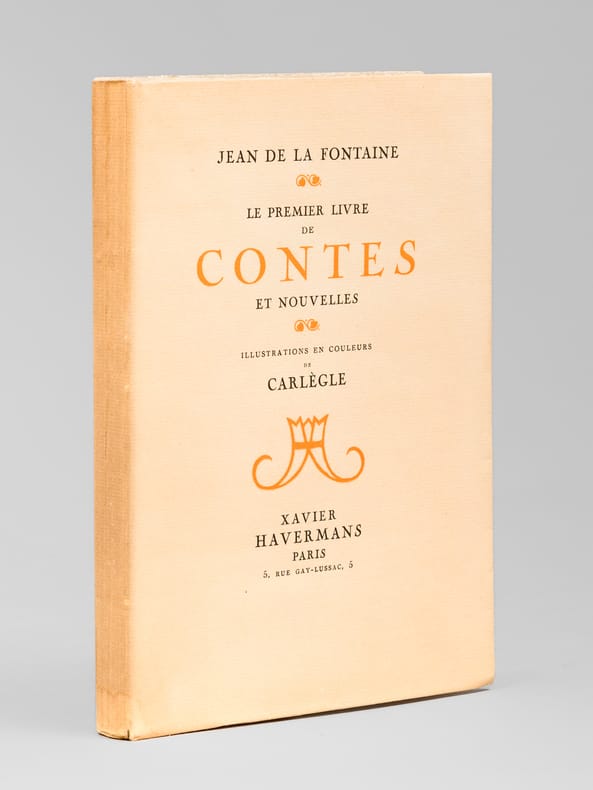
192771379Illustrations en couleurs de Carlègle, Tirage à 346 exemplaires, un des 300 exemplaires sur vélin de Rives numérotés (n° 58), 1 vol. in-8 br. sous couverture rempliée, Xavier Havermans, Paris, 1927, 89 pp.
EXE00525Paris, Plon-Nourrit, 1923. In-8° broché. Dessins au trait dans le texte. Tiré à 112 exemplaires sur vélin à la cuve.
EXE-162Paris, Calmann-Lévy, 1935. In-8° broché, couverture cartonnée illustrée. Nombreuses illustrations en couleurs par Carlègle. Envoi de l’auteur.
192926599A Paris, Editions Mornay / Coll. ''Les Beaux livres'', 1929. Un vol. au format gd in-12 (203 x 154 mm) de 289 pp. Reliure de l'époque de demi-maroquin olive à coins, filets dorés portés sur les plats, dos à nerfs orné de filets gras à froid, titre doré, tête dorée sur témoins, couvertures et dos conservés. (Flammarion).
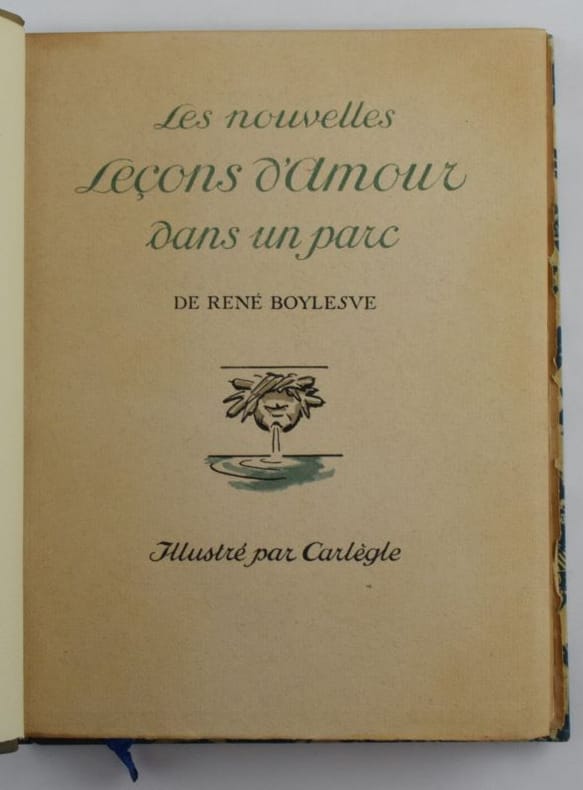
1929265991929. A Paris Editions Mornay / Coll. ''Les Beaux livres'' 1929. Un vol. au format gd in-12 203 x 154 mm de 289 pp. Reliure de l'ÂŽpoque de demi-maroquin olive ˆ coins filets dorÂŽs portÂŽs sur les plats dos ˆ nerfs ornÂŽ de filets gras ˆ froid titre dorÂŽ tÂte dorÂŽe sur tÂŽmoins couvertures et dos conservÂŽs. Flammarion. Exemplaire - qui a conservÂŽ ses couvertures papier originelles - est ici revÂtu d'une agrÂŽable reliure du temps signÂŽe Flammarion. Un des 825 exemplaires numÂŽrotÂŽs du tirage sur vÂŽlin de Rives. L'ouvrage s'agrÂŽmente - ici en premier tirage - de dÂŽlicieuses illustrations en couleurs de CarlÂgle. En peintre subtil des moeurs de la vie de province dont l'atmosphÂre se retrouve au coeur de beaucoup de ses histoires Boylesve livre ici un conte libertin et malicieux ÂŽcrit d'une plume dÂŽlicate et lÂŽgÂre. Saint-Martin 5.000 dessinateurs de presse p. 776 - BÂŽnÂŽzit IX Dictionnaire des peintres p. 316. Angles ÂŽlimÂŽs. Dos passÂŽ. Quelques lÂŽgers frottements affectant la reliure. TrÂs rares rousseurs dans le texte. Du reste belle condition. b42961 unknown
20925P., Société littéraire de France, 1916, In-8 oblong, pleine toile grenat, image en couleurs sur le premier plat, 56 pp.
10905, Paris, Editions Mornay, 1933., Broche, couverture d' editeur illustre en couleur, 15,5x20cm, 326pp, illustre en couleur.
1932AA379P., Le Livre du Bibliophile, Georges Briffaut, 1932 In-4° de 253 pp., frontispice, planches en couleurs.
190925174Paris LE RIRE 1909 -in-4 demi- percale un fort volume, reliure demi-percale bordeaux rose in-quarto (31 x 23 cm), dos long décoré "or" et à froid (gilt and blind stamping decoration), titre et tomaison frappés "or", filet large à froid en place des nerfs, papier marbré violet aux plats, (plats frottés), toutes tranches lisses, receuil de 51 numéros illustrés en couleurs par de nombreux artistes (Carlègle, Poulbot, Guillaume, Wilette, H. Gerbault, Léandre, Brunelleschi, Galanis, Abel Faivre, H.G. IBELS (Nabi), A. Roubille, Gosé, Portalès, Louis Morin, Capy, Gus Bofa, Balluriau, Pourriol, André Hellé, [N°335 : Spécial Marine illustré entièrement par Gervèze], Bac, Dangon, Touraine etc...), 1909 Paris LE RIRE - JOURNAL HUMORISTIQUE Editeur,
191025185Paris LE RIRE 1910 -in-4 demi- percale un fort volume, reliure demi-percale bordeaux rose in-quarto (31 x 23 cm), dos long décoré "or" et à froid (gilt and blind stamping decoration), titre et tomaison frappés "or", filet large à froid en place des nerfs, papier marbré violet aux plats, (plats frottés), toutes tranches lisses, receuil de 51 numéros illustrés en couleurs par de nombreux artistes (Léandre,Poulbot, Louis Morin, Mich, H.G. IBELS (Nabi), Cardonna, Gus Bofa, Carlègle, André Hellé, Lucien Métivet, A. Roubille, Brunelleschi, Charles Pourriol, Guillaume, Dangon, Capy, Capiello, Markous, A. Willette, J. Hémard, Martin, Genty, E. Cadel, Pierlis, Juan GRIS, Delaw, Huard, Avelot, Léonce Burret, Galanis, H. GERBAULT, Balluriau, Léonnec, KAINER, Marin, Opisso, Mirande, Delannoy, Martin, Jeanniot, Gus Bofa, Gervèze, Gosé, Portalès, E. Torent, RAY, Fabiano, Petitjean, 1910 Paris LE RIRE - JOURNAL HUMORISTIQUE Editeur,