10 867 résultats
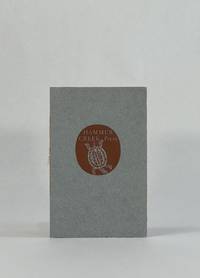
19529699New York: Hammer Creek Press 1952. Original Wrappers. Very Good binding. 16mo. 8 pp. illus. Limited edition number of copies unknown. As issued sewn in printed wrappers. Very light toning to the extremities and covers; nevertheless a very nice copy. Bookplate of noted collector Norman Sondheim on the verso of the front wrappers. <br /> <br /> Comprises title page/announcement; two engravings one of the Hell-Box Press and the second the Hammer Creek Press; and a colophon. The Hell-Box Press was one of Fass's earlier printing endeavors. Hammer Creek Press began when in 1950 when Fass purchased from Valenti Angelo a small iron press previously owned by Bruce Rogers who had sold it to Angelo the year before. It was on this press of significant provenance that the bulk of the Hammer Creek Press editions were printed few of which have stated limitations. With only 4 institutions reporting ownership according to OCLC it is difficult to imagine this title was produced in an edition of more than a few dozen copies if that. Cohen 15; DePol Catalogue Raisonne p. 40. Hammer Creek Press unknown
188017628Colt Publishing Co. Very Good. c. 1880. Print. Late 19th century original lithograph view of Hyde Park. The margin has staining with light chipping at the extremities and several tears in the bottom margin one of which extends 3/4" into the left side of the lithograph. The lithograph itself is toned with modest faint foxing. Dimensions: 24" x 18". Lithograph: 20.25" x 14.5". . . Colt Publishing Co. unknown
14992Paris Textes Prétextes 1951 in 4 (28,5x23,5) 1 volume broché, en faux-feuillets sous couverture illustrée, 234 pages [4], chemise et étui de l'éditeur. Ouvrage illustré de 10 eaux-fortes originales de Gus Bofa, en deux états, dont un avec remarques (le frontispice est en un seul état). Collationné complet. Tirage limité à 250 exemplaires numérotés sur vélin d'Arches, celui-ci un des 175 exemplaires numérotés de 76 à 250, avec la signature de Gus Bofa sur la justification. Bel exemplaire
19922110502150303241JK Print Studio 1992. Soft Cover. Fine. Volume: 1 JK Print Studio paperback
1890628CGZürich, Hofer & Burger o.J. (um 1890). Lithographie gez. von H. Schmid. Blattformat: 17,5 x 189 cm.
19544533Paris, Louis Carré, 1954. In-8 broché de 62-[4] pages, couverture illustrée rempliée, tiré à 1000 ex. sur vélin d’Arches à la forme.
18564554DBSt. Gallen, J. B. Isenring, 1856. 32 S., (10) S. Mit 10 Tafeln von Johann Baptist Isenring. Orig.-Pappband.
185089657Zürich: Verlag von Henri Fuessli & Cie, um 1850. 41 x 31 cm quer ; Halbleder
1865036424New York: Johnson Fry And Co. 1861 1862 1863 1864 1865 1865. 1st Edition . Hardcover. Very Good. 620 660 642 Pp. Three Volumes. Various Copyright Dates From 1861 To 1865 On Plates And Copyright Pages But Text Goes Through End Of War So Actual Publication Date Presumably 1865. Three Massive Volumes The Deluxe Issue In Full Brown Embossed And Gilt Morocco Five Bands Spines Stamped In Gilt Covers Stamped In Dark Brown Beveled Edges All Edges Of Page Block Gilt. Wear Fraying At Corners Gilt Bright. Volume I And Volume Ii Have Front Boards With New Cords. No Marks Or Stains Or Other Damage Text Block Square And Unworn. General Refurbishing By A Binder Made This An Exceptional Set. <br/> <br/> Johnson, Fry And Co. (1861, 1862, 1863, 1864, 1865) hardcover
LITT5840M1865, Hachette. Fort volume in-folio, relié, pleine percaline rouge à encadrements, dos à nerfs. IV-194pp. 75 planches hors textes des illustrations de Doré. Mouillure généralisée sur la première moitié de l'ouvrage. Quelques frottements sur la reliure. Cassure entre le premier plat et la garde. Exemplaire satisfaisant
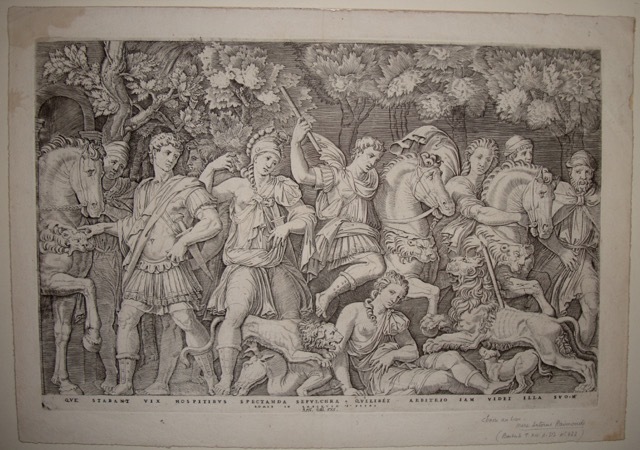
5618Grandes marges. On lit en bas au milieu : Ant. sal. exc. Bartsch XIV, p.317, 422 En feuille Très bon XVIè 26,7 x 40,9 cm
186537BGZürich, H. Füessly & Comp. zur Meise, 1865. Stahlstich. Nach der Natur gezeichnet und gestochen von Rud. Ringger in Küsnach b/Zürich. Druck von D. Herter in Zürich. Bildgrösse: 10,2 cm x 302 cm. + Wichtig: Für unsere Kunden in der EU erfolgt der Versand alle 14 Tage verzollt ab Deutschland / Postbank-Konto in Deutschland vorhanden +, 37BG Orig.-Pappdeckel (Gelenke u. Kanten leicht berieben, Ecken minim bestossen) in Orig.-Papp-Schuber (berieben, Gelenke angeplatzt, etwas verblasst).
- Lucien Vogel éditeur, Paris 1922, 18x24cm, en feuilles. - Set of nine original prints in color, drawn on laid paper. The boards are introduced by a text signed Joan Ramon Fernandez. Sketch XII and XIII are signed David, respectively bottom left and right planks. Original prints made ??for the illustration of The Gazette fashionable, one of the finest and most influential twentieth century fashion magazines, celebrating the talent of creators and artists French burgeoning art deco. Famous fashion magazine founded in 1912 by Lucien Vogel, The Gazette fashionable appeared until 1925 with an interruption during the War of 1915 to 1920, due to mobilization of its editor. She is 69 Deliveries from just 2000 copies and is illustrated including 573 color plates and 148 sketches depicting models of fashion designers. Upon publication, these luxury publications "are for bibliophiles and worldly aesthetes" (Françoise Tétart-Vittu "good Gazette of tone" in the fashion dictionary, 2016). Printed on fine laid paper, they use a typeface created specifically for the magazine by Georges Peignot, the Cochin character, taken in 1946 by Christian Dior. The prints are made with the technique of metal stencil, enhanced color and some outlined in gold or palladium. The adventure began in 1912 when Lucien Vogel, man of the world and fashion - it has already participated in Femina magazine - decided to found with his wife Cosette de Brunhoff (John's sister, the father of Babar) Gazette good tone in which the subtitle is then "Art, fashions and frivolities." Georges Charensol quotes the editor: "In 1910, he observed, there was no truly artistic fashion magazine and representative of the spirit of his time. So I thought of making a glossy magazine with truly modern artists [...] I was certain of success because for any fashion country can compete with France. "(" A great art editor. Lucien Vogel "in literary News, No. 133, May 1925). The success of the magazine is immediate, not only in France but also the US and South America. Originally, Vogel therefore brings together a group of seven artists: André-Édouard Marty and Pierre Brissaud, followed by Georges Lepape and Dammicourt; and finally his friends from the School of Fine Arts as are George Barbier, Bernard Boutet de Monvel or Charles Martin. Other talents come quickly reach the equipped Guy Arnoux, Léon Bakst, Benito, Boutet de Monvel, Umberto Brunelleschi, Chas Laborde, Jean-Gabriel Domergue, Raoul Dufy, Edward Halouze Alexander Iacovleff, Jean Emile Laboureur Charles Loupot, Charles Martin, Maggie Salcedo. These artists, mostly unknown when Lucien Vogel appealed to them, will eventually become iconic figures and artistic sought. These are the same illustrators who make the drawings advertisements Gazette. The boards highlight the dresses and sublime seven artists of the time: Lanvin, Doeuillet, Paquin, Poiret, Worth, Vionnet and Doucet. The designers provide for each number of exclusive models. Nevertheless, some of Illustrations contained no real model, but only the idea that the illustrator is done in the fashion of the day. Gazette fashionable is a milestone in the history of fashion. Combining the aesthetic requirement and plastic unit, it brings together for the first time the great talents of the world of arts, literature and fashion and imposed by this alchemy, a new image of women, slender, independent and bold, also driven by the new generation of designers Coco Chanel, Jean Patou, Rochas Marcel ... Recovery in 1920 by Condé Montrose Nast, Gazette fashionable modeled for the new composition and the aesthetic choices of the "little dying newspaper" that Nast had bought a few years ago: the Vogue magazine. [FRENCH VERSION FOLLOWS] Ensemble de neuf estampes originales en couleur, tirées sur papier vergé. Les planches sont introduites par un texte signé Jeanne Ramon-Fernandez. Les croquis XII et XIII sont signés David, respectivement en bas à gauche et à droite des planches. Gravures orig
- Lucien Vogel éditeur, Paris 1922, 18x24cm, relié. - Set of eight original prints in color, drawn on laid paper. The boards are introduced by a text signed Joan Ramon Fernandez. The sketches are signed XIX and XXI David, respectively on the lower right and left boards. Original prints made ??for the illustration of The Gazette fashionable, one of the finest and most influential twentieth century fashion magazines, celebrating the talent of creators and artists French burgeoning art deco. Famous fashion magazine founded in 1912 by Lucien Vogel, The Gazette fashionable appeared until 1925 with an interruption during the War of 1915 to 1920, due to mobilization of its editor. She is 69 Deliveries from just 2000 copies and is illustrated including 573 color plates and 148 sketches depicting models of fashion designers. Upon publication, these luxury publications "are for bibliophiles and worldly aesthetes" (Françoise Tétart-Vittu "good Gazette of tone" in the fashion dictionary, 2016). Printed on fine laid paper, they use a typeface created specifically for the magazine by Georges Peignot, the Cochin character, taken in 1946 by Christian Dior. The prints are made with the technique of metal stencil, enhanced color and some outlined in gold or palladium. The adventure began in 1912 when Lucien Vogel, man of the world and fashion - it has already participated in Femina magazine - decided to found with his wife Cosette de Brunhoff (John's sister, the father of Babar) Gazette good tone in which the subtitle is then "Art, fashions and frivolities." Georges Charensol quotes the editor: "In 1910, he observed, there was no truly artistic fashion magazine and representative of the spirit of his time. So I thought of making a glossy magazine with truly modern artists [...] I was certain of success because for any fashion country can compete with France. "(" A great art editor. Lucien Vogel "in literary News, No. 133, May 1925). The success of the magazine is immediate, not only in France but also the US and South America. Originally, Vogel therefore brings together a group of seven artists: André-Édouard Marty and Pierre Brissaud, followed by Georges Lepape and Dammicourt; and finally his friends from the School of Fine Arts as are George Barbier, Bernard Boutet de Monvel or Charles Martin. Other talents come quickly reach the equipped Guy Arnoux, Léon Bakst, Benito, Boutet de Monvel, Umberto Brunelleschi, Chas Laborde, Jean-Gabriel Domergue, Raoul Dufy, Edward Halouze Alexander Iacovleff, Jean Emile Laboureur Charles Loupot, Charles Martin, Maggie Salcedo. These artists, mostly unknown when Lucien Vogel appealed to them, will eventually become iconic figures and artistic sought. These are the same illustrators who make the drawings advertisements Gazette. The boards highlight the dresses and sublime seven artists of the time: Lanvin, Doeuillet, Paquin, Poiret, Worth, Vionnet and Doucet. The designers provide for each number of exclusive models. Nevertheless, some of Illustrations contained no real model, but only the idea that the illustrator is done in the fashion of the day. Gazette fashionable is a milestone in the history of fashion. Combining the aesthetic requirement and plastic unit, it brings together for the first time the great talents of the world of arts, literature and fashion and imposed by this alchemy, a new image of women, slender, independent and bold, also driven by the new generation of designers Coco Chanel, Jean Patou, Rochas Marcel ... Recovery in 1920 by Condé Montrose Nast, Gazette fashionable modeled for the new composition and the aesthetic choices of the "little dying newspaper" that Nast had bought a few years ago: the Vogue magazine. [FRENCH VERSION FOLLOWS] Ensemble de huit estampes originales en couleur, tirées sur papier vergé. Les planches sont introduites par un texte signé L. R. F. Les croquis L, LII, LIII, LV, sont signés David, respectivement en bas à droite et à gauche des planches. Reliure à la br
- Lucien Vogel éditeur, Paris 1922, 18x24cm, relié. - Set of eight original prints in color, drawn on laid paper. The boards are introduced by a text signed Joan Ramon Fernandez. The sketches are signed XIX and XXI David, respectively on the lower right and left boards. Original prints made ??for the illustration of The Gazette fashionable, one of the finest and most influential twentieth century fashion magazines, celebrating the talent of creators and artists French burgeoning art deco. Famous fashion magazine founded in 1912 by Lucien Vogel, The Gazette fashionable appeared until 1925 with an interruption during the War of 1915 to 1920, due to mobilization of its editor. She is 69 Deliveries from just 2000 copies and is illustrated including 573 color plates and 148 sketches depicting models of fashion designers. Upon publication, these luxury publications "are for bibliophiles and worldly aesthetes" (Françoise Tétart-Vittu "good Gazette of tone" in the fashion dictionary, 2016). Printed on fine laid paper, they use a typeface created specifically for the magazine by Georges Peignot, the Cochin character, taken in 1946 by Christian Dior. The prints are made with the technique of metal stencil, enhanced color and some outlined in gold or palladium. The adventure began in 1912 when Lucien Vogel, man of the world and fashion - it has already participated in Femina magazine - decided to found with his wife Cosette de Brunhoff (John's sister, the father of Babar) Gazette good tone in which the subtitle is then "Art, fashions and frivolities." Georges Charensol quotes the editor: "In 1910, he observed, there was no truly artistic fashion magazine and representative of the spirit of his time. So I thought of making a glossy magazine with truly modern artists [...] I was certain of success because for any fashion country can compete with France. "(" A great art editor. Lucien Vogel "in literary News, No. 133, May 1925). The success of the magazine is immediate, not only in France but also the US and South America. Originally, Vogel therefore brings together a group of seven artists: André-Édouard Marty and Pierre Brissaud, followed by Georges Lepape and Dammicourt; and finally his friends from the School of Fine Arts as are George Barbier, Bernard Boutet de Monvel or Charles Martin. Other talents come quickly reach the equipped Guy Arnoux, Léon Bakst, Benito, Boutet de Monvel, Umberto Brunelleschi, Chas Laborde, Jean-Gabriel Domergue, Raoul Dufy, Edward Halouze Alexander Iacovleff, Jean Emile Laboureur Charles Loupot, Charles Martin, Maggie Salcedo. These artists, mostly unknown when Lucien Vogel appealed to them, will eventually become iconic figures and artistic sought. These are the same illustrators who make the drawings advertisements Gazette. The boards highlight the dresses and sublime seven artists of the time: Lanvin, Doeuillet, Paquin, Poiret, Worth, Vionnet and Doucet. The designers provide for each number of exclusive models. Nevertheless, some of Illustrations contained no real model, but only the idea that the illustrator is done in the fashion of the day. Gazette fashionable is a milestone in the history of fashion. Combining the aesthetic requirement and plastic unit, it brings together for the first time the great talents of the world of arts, literature and fashion and imposed by this alchemy, a new image of women, slender, independent and bold, also driven by the new generation of designers Coco Chanel, Jean Patou, Rochas Marcel ... Recovery in 1920 by Condé Montrose Nast, Gazette fashionable modeled for the new composition and the aesthetic choices of the "little dying newspaper" that Nast had bought a few years ago: the Vogue magazine. [FRENCH VERSION FOLLOWS] Ensemble de huit estampes originales en couleur, tirées sur papier vergé. Les planches sont introduites par un texte signé Jeanne Ramon-Fernandez. Les croquis I et II sont signés David, en bas à droite des planches. Reliure à la bradel en plein papier à
- Aubier 1972, 65x50cm, une feuille. - Lithographie originale imprimée sur BFK de Rives. Mention "Epreuve d'artiste" rédigée au crayon en bas à gauche. Signature de l'artiste au crayon en bas à droite de la planche. Marges salies avec petites traçes de pliure. Paysage mystérieux à la végétation luxuriante, le feu au centre, représente le titan sur un fond de collines dans des tons verts et orangés. [ENGLISH DESCRIPTION ON DEMAND]
- Lucien Vogel éditeur, Paris 1922, 18x24cm, relié. - Set of eight original prints in color, drawn on laid paper. The boards are introduced by a text signed Joan Ramon Fernandez. The sketches are signed XIX and XXI David, respectively on the lower right and left boards. Original prints made ??for the illustration of The Gazette fashionable, one of the finest and most influential twentieth century fashion magazines, celebrating the talent of creators and artists French burgeoning art deco. Famous fashion magazine founded in 1912 by Lucien Vogel, The Gazette fashionable appeared until 1925 with an interruption during the War of 1915 to 1920, due to mobilization of its editor. She is 69 Deliveries from just 2000 copies and is illustrated including 573 color plates and 148 sketches depicting models of fashion designers. Upon publication, these luxury publications "are for bibliophiles and worldly aesthetes" (Françoise Tétart-Vittu "good Gazette of tone" in the fashion dictionary, 2016). Printed on fine laid paper, they use a typeface created specifically for the magazine by Georges Peignot, the Cochin character, taken in 1946 by Christian Dior. The prints are made with the technique of metal stencil, enhanced color and some outlined in gold or palladium. The adventure began in 1912 when Lucien Vogel, man of the world and fashion - it has already participated in Femina magazine - decided to found with his wife Cosette de Brunhoff (John's sister, the father of Babar) Gazette good tone in which the subtitle is then "Art, fashions and frivolities." Georges Charensol quotes the editor: "In 1910, he observed, there was no truly artistic fashion magazine and representative of the spirit of his time. So I thought of making a glossy magazine with truly modern artists [...] I was certain of success because for any fashion country can compete with France. "(" A great art editor. Lucien Vogel "in literary News, No. 133, May 1925). The success of the magazine is immediate, not only in France but also the US and South America. Originally, Vogel therefore brings together a group of seven artists: André-Édouard Marty and Pierre Brissaud, followed by Georges Lepape and Dammicourt; and finally his friends from the School of Fine Arts as are George Barbier, Bernard Boutet de Monvel or Charles Martin. Other talents come quickly reach the equipped Guy Arnoux, Léon Bakst, Benito, Boutet de Monvel, Umberto Brunelleschi, Chas Laborde, Jean-Gabriel Domergue, Raoul Dufy, Edward Halouze Alexander Iacovleff, Jean Emile Laboureur Charles Loupot, Charles Martin, Maggie Salcedo. These artists, mostly unknown when Lucien Vogel appealed to them, will eventually become iconic figures and artistic sought. These are the same illustrators who make the drawings advertisements Gazette. The boards highlight the dresses and sublime seven artists of the time: Lanvin, Doeuillet, Paquin, Poiret, Worth, Vionnet and Doucet. The designers provide for each number of exclusive models. Nevertheless, some of Illustrations contained no real model, but only the idea that the illustrator is done in the fashion of the day. Gazette fashionable is a milestone in the history of fashion. Combining the aesthetic requirement and plastic unit, it brings together for the first time the great talents of the world of arts, literature and fashion and imposed by this alchemy, a new image of women, slender, independent and bold, also driven by the new generation of designers Coco Chanel, Jean Patou, Rochas Marcel ... Recovery in 1920 by Condé Montrose Nast, Gazette fashionable modeled for the new composition and the aesthetic choices of the "little dying newspaper" that Nast had bought a few years ago: the Vogue magazine. [FRENCH VERSION FOLLOWS] Ensemble de huit estampes originales en couleur, tirées sur papier vergé. Les planches sont introduites par un texte signé Jeanne Ramon-Fernandez. Les croquis XIX et XXI sont signés David, respectivement en bas à droite et à gauche des planches. Reliure
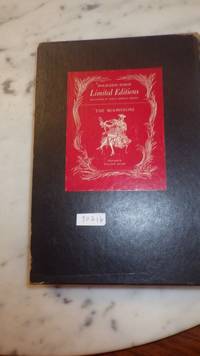
199730257<p>HBNODJ SLIPCASE HAS RED & WHITE ILLIUSTRATION ON FRONT OF GENTLEMAN SEATED SLIPCASE EDGE WEAR SEPARATION clear tape repairs 1944 on Title Pg COPY # 713 LIMITED NUMBERED 1ST EDITION VG/VG- AS-IS EXTREMITIES CHIPS WEAR DJ 1ST EDITION THUS Printed from Plates in Original Limited Edition of 1000 BEIGE CLOTH GREY ILLUSTRATED BOARDS IN WORN SLIPCASE Set in an aristocratic estate in Victorian England pronounced by critics as the oldest full length English mystery novel and to this day the best. Outlandish HORROR During a battle in India a sacred shrine is robbed of a jewel by a British soldier and the curse of the East Indian God follows the gem through generations of English ownership. A group of Fanatical East Indians follow the Moonstone to England where a mysterious death overtakes every heir to the fatal jewel Against the Gentle Background of an Aristocratic Estate in Victorian EnglandMoves a Story so Intriguing in Mystery Fascinating in Character Presentation & Beguiling in the Telling. During a Gory Battle in Far Off India a Sacred Shrine is entered & Robbed of a Jewel by an Adventurous British Soldier & the Curse of the East Indian God follows </p> DORAN DOUBLEDAY & CO LIMITED EDITIONS GARDEN CITY NY hardcover
RARE LIMITED EDITION OF 435 COPIES - COPY No.236 of a book set in British-ruled Palestine, written by Goncourt prize winners - the brothers Jérome (1874-1953 ) and Jean Tharaud (1877-1952). The exquisite illustrations are by two eminent French artists: the Orientalist painter and illustrator André Suréda (1872-1930) and the graphic artist Georges Beltrand (1881-1969). 300x215mm. 164 pages. Red leather Hardcover with gilt spine. Cover slightly curved. Cover and spine stained, rubbed/scratched and fading/yellowing. Cover corner bumped and peeling. Cover upper edge rubbed. Spine hinges upper part cracked and glued. Spine edge bumped and peeling/tattered. Pages slightly yellowing and rough-cut as published. [SUMMARY]: This extremely rare deluxe edition of a lavishly illustrated book about the Holy Land is in good condition. PLEASE NOTE: This item is overweight. We may ask for extra shipping costs.
1871FOSTERBI004667E. Moxon London. 1871. First edition thus: illustrated with 22 exquisite engravings by Birket Foster. Quarto. pp viii 109 1 adverts. 22 plates. Fine period binding by H. Sotheran of full straight-grain morocco with raised bands gilt decoration and rules all edges gilt.A bit of foxing here and there otherwise fine. E. Moxon, London. hardcover
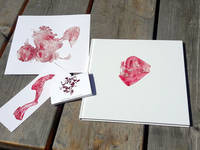
2018ABE-1675259210036Strange Attractor Press London 2018 This is a truly odd listing. It is easy to understand at one level. It has a powerful impact. It will set you thinking. It is also a truly original take on an historical theme. Ian Johnstone worked on this odd and fascinating collection. It is VERY odd; it is possibly unique. The wounds all twenty three of them were inspired by this artist's conception of how each stab was wielded and delivered upon Julius Caesar. An attempt to describe it sounds pretentious but with this strange book in your hands you can look and share something of this odd vision. Each was produced on - I believe - white melamine. The wounds are rendered in red pigment or ink. One of them is featured on the shiny white cover. It is an image inset into a blind stamped shape. The images inside are all in keeping with the cover and one can speculate; is this Brutus's mark And can that be yon Cassius's lean and hungry blade Was this how each wound appeared upon the toga of JC Speculate as you wish and contemplate them in whatever order you like. They are all worth a look and you will have seen nothing so strange before. And there are some photographs of the artist at the back by Kerry and Daniel O'Sullivan. Geoff Cox and Serena Korda have written the text. This is hard to describe and easy to look at. It is wondrous strange. It is peculiar.On the back cover it says '23 hawk beaks 23 fragments of a skull 23 curses hung round the neck of a scavenger.' And there are only 300 copies in the whole wide world of this book and it might be a masterpiece. It is not signed or numbered but the publisher insists only 300 copies exist. There is also a cassette of special music. YES! A cassette. The loose prints are ready to frame and the whole package is something very special indeed. Limited Edition. Hardcover. New. Strange Attractor Press London hardcover
31044Facsimile reprint . Maroon cloth boards elephant folio engraved dedication & 22 engraved plates The plates include two perspective views of the interior and one of the main entrance and several plans and sections the last plate providing a comparative view of the plans of fourteen other theatres including Covent Garden London Versailles the old Paris Opera the Comédie Française and theatres in Berlin Argentina Madrid &c. fine condition please note it wil incur extra postage which we will be happy to quote for at cost. Facsimile reprint hardcover
1759848041759. T. Kinnersley. London. 1759. In Two Volumes II and III and contains the whole set for the year 1759. Bound in 18th century quarter brown calf gilt very worn and rubbed and lacking portions of leather from heads and tails of spine. Joints tender but holding. Vol. II; ii 372 pages plus 4pages of index. Vignette to general title-page and engraved head-piece for each month. 6 engraved plates of unusual and more ordinary fauna including the dodo the rhinoceros sea hedge-hog the horned didapper flying fish and cassowary. 1 portrait plate of Magliabechi 14 full page engraved maps and plans. Vol. III; ii. 404 pages plus 4 page index. Engr. vignette to general title-page and engraved head-pieces or decorations to each month 4 engraved plates of fauna one portrait plate of Major General Wolfe 1 incredible engraved plate displaying the Torments Inflicted by the Dutch on the English in Amboyna plus the engraved frontis. to Pope's Essay on Man. Three engraved plates - 1 map and 2 plans. A wonderful insight into what interested people in the mid-18th century. Pages browned and occasionally foxed but otherwise a very useful set. hardcover
194430216A<p>HB NODJ SLIPCASE HAS RED & WHITE ILLIUSTRATION ON FRONT OF GENTLEMAN SEATED SLIPCASE EDGE WEAR SEPARATION 1944 on Title Pg COPY # 571 LIMITED NUMBERED 1ST EDITION VG/VG- AS-IS EXTREMITIES CHIPS WEAR DJ Printed from Plates in Original Limited Edition of 1000 BEIGE CLOTH GREY ILLUSTRATED BOARDS Set in an aristocratic estate in Victorian England pronounced by critics as the oldest full length English mystery novel and to this day the best. Outlandish HORROR During a battle in India a sacred shrine is robbed of a jewel by a British soldier and the curse of the East Indian God follows the gem through generations of English ownership. A group of Fanatical East Indians follow the Moonstone to England where a mysterious death overtakes every heir to the fatal jewel Against the Gentle Background of an Aristocratic Estate in Victorian EnglandMoves a Story so Intriguing in Mystery Fascinating in Character Presentation & Beguiling in the Telling. During a Gory Battle in Far Off India a Sacred Shrine is entered & Robbed of a Jewel by an Adventurous British Soldier & the Curse of the East Indian God follows</p> DORAN DOUBLEDAY & CO LIMITED EDITIONS GARDEN CITY NY hardcover
17845543Eau-forte et burin 320 x 390 D’après Lavreince. Importante et célèbre estampe. Belle épreuve, sans marges mais à la bonne adresse de Dequevauvillers (1er tirage) et avant la correction du mot Stockholm. Cadre moderne, passe-partout. cadre 1784