10 867 résultats
Original single-sheet steel engraving of a very fine quality. Overall size ca. 215 x 270 mm. Image size ca. 130 x 190 mm. A three-line caption engraved at bottom in elegant handtooled open-face and italic types. Engraved Artist's and Engraver's signatures underneath image. Engraved Publisher's line below. The print is in its original state, trimmed and gilded on three sides. It is printed with warmer ink, somewhat more dramatic in mood, with fine, crisp detail, subtlety and elegance. In overall fine condition. Preserved in pH-balanced, acid-free Renaissance archival paper. ~ A delicately executed steel engraving, representing a major illustrative work on 19th century Palestine, Syria, and Asia Minor. William Henry Bartlett (born London, 1809) was one of the foremost illustrators of topography of his generation. He travelled extensively throughout Britain, the Americas, and the Middle East, producing his work on location. In 1854 he made his last trip to the Holy Land; he died of fever on board a French ship on his return voyage to England. Bartlett's primary concern was to extract the picturesque aspects of a place and render "lively impressions of actual sights", as he wrote in the preface to "The Nile Boat" (London, 1849). His work became widely known through the numerous engravings after the original drawings and paintings he made. The interest in these engravings today is as much for the exquisite quality of the rendering and presentation of the architecture of the period, as it is for the representation of the landscape. Published in 1836 by Peter Jackson, Late Fisher, Son & Co. of London, it was originally accompanied by descriptions written by John Carne.
19752928Paris Editions Marquet 1975 aucune reliure Sérigraphie originale signée et numérotée, éditée par Jacques Marquet, circa 1975. Feuille : 66 x 50,5 cm. Image : 53 x 38 cm.
197729501977 aucune reliure 72 x 52 cm (feuille), 60 x 42 cm (sujet).
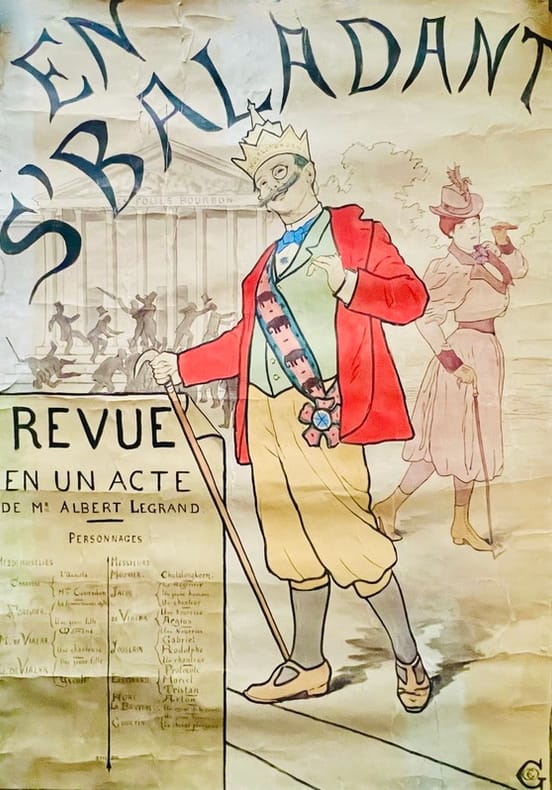
189844552Sans lieu, , 1898. Maquette d’affiche de théâtre, aquarelle et encre sur papier, entoilée (112 x 159 cm).
7 vols., 8vo., with wood-engraved frontispieces, numerous engraved illustrations in the text and pictorial endpapers; original patterned paper boards, dark cloth backs lettered and tooled in gilt, ivory endpapers, a near fine set in publisher's board slip-case. The text is based on Chapman's definitive edition; the patterned paper boards were designed by Hassall. First published by Folio Society between 1957-1963, with the Second Edition reset in 1975. In this reissue several novels contain additional wood-engravings. Gilson, E281(P&P; 1957); E286(S&S; 1958); E300(MP; 1959); E307(NA; 1960); E328 (P; 1961); E340(E; 1962); F17 (SW; 1963).
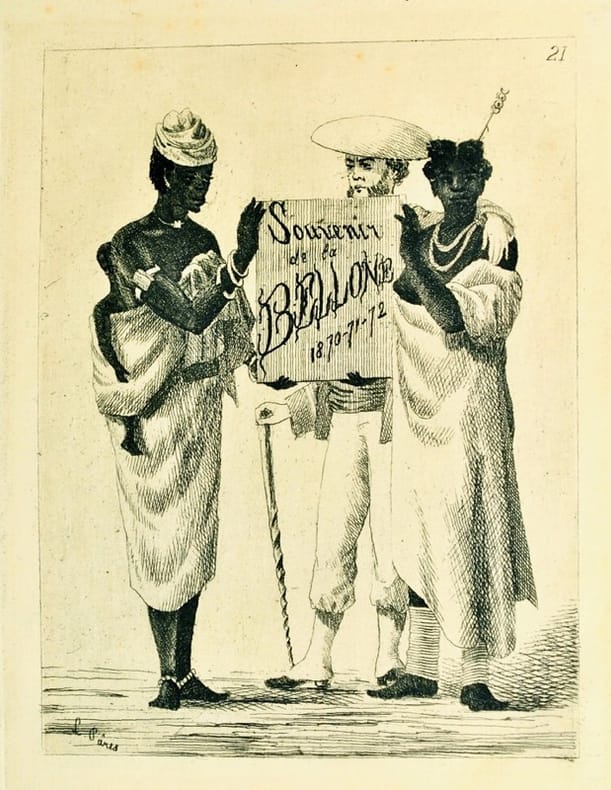
187511333, , 1875 ca. Ensemble 36 planches non classées (10 x 14 cm et 22 x 13,5 cm), montées sur onglet et reliées en 1 vol. in-4 oblong (32 x 24 cm) demi-chagrin brun à coins, dos orné à nerfs (Gaëtan Ronner).
6 Zeichnungen in Bleistift und Tusche; ferner 1 hs. Dedikationsblatt eines Freundes. In Zeichenalbum mit zus. 36 Bll. Leinenband der Zeit mit Bindebändern. Qu.-8vo (192 x 140 mm). Sechs Bleistift- bzw. Tuschzeichnungen eines wohl österreichischen Soldaten des Ersten Weltkriegs, der die Landschaft und Armeelager seiner Stationierungsorte im Feld festhielt. Neben einem Geschütz und den Mannschaftsbaracken sind mehrere mit genauen Höhenbezeichnungen versehene Landschaftspanoramen zu sehen, manche bezeichnet ("Zur Erinnerung an den 20. October 1914 wo hier die Serben eine starcke Niederlage hatten"; Ortsangaben u. a. Romanja Planina, Kukor, Grabavik, Krs; Gradiste, Daganj, Trebervic). Außerdem findet sich die Propagandazeichnung eines den russischen Bären, englischen Löwen und belgischen Igel mit dem Gewehrkolben erschlagenden deutschen Soldaten. Am Schluss hat sich 1916 ein Wiener "Freund und Kriegskollege", Andreas Seidlitzky aus Simmering, mit einem Gedenkvers "zur ewigen Erinnerung" eingetragen. - Am vorderen Innendeckel Marke der Papierhandlung Simon Kattan, Sarajevo. Wohlerhalten.
1354Paris : Senefelder, 1826. UNE ÉPREUVE SIGNÉE PAR L'INVENTEUR DE LA LITHOGRAPHIE
1988012615Sauveterre du Gard La Balance 1988 In-8 carré En feuilles, couverture à rabats <
192455135Lucien Vogel éditeur | Paris 1924-1925 | 36 x 24 cm | une feuille
- Lucien Vogel éditeur, Paris 1924-1925, 36x24cm, une feuille. - Double original color print, printed on vergé paper, signed in the plate. An original print used to illustrate the Gazette du bon ton, one of the most attractive and influential 20th century fashion magazines, featuring the talents of French artists and other contributors from the burgeoning Art Deco movement. A celebrated fashion magazine established in 1912 by Lucien Vogel, La Gazette du bon ton appeared until 1925, with a hiatus from 1915 to 1920 due to the war (the editor-in-chief having been called up for service). It consisted of 69 issues printed in only 2,000 copies each and notably illustrated with 573 color plates and 148 sketches of the models of the great designers. Right from the start, this sumptuous publication "was aimed at bibliophiles and fashionable society," (Françoise Tétart-Vittu, "La Gazette du bon ton", in Dictionnaire de la mode, 2016) and was printed on fine vergé paper using a type cut specially for the magazine by Georges Peignot, known as Cochin, later used (in 1946) by Christian Dior. The prints were made using stencils, heightened in colors, some highlighted in gold or palladium. The story began in 1912, when Lucien Vogel, a man of the world involved in fashion (he had already been part of the fashion magazine Femina) decided, with his wife Cosette de Brunhoff - the sister of Jean, creator of Babar - to set up the Gazette du bon ton, subtitled at the time: "Art, fashion, frivolities." Georges Charensol noted the reasoning of the editor-in-chief: "'In 1910,' he observed, 'there was no really artistic fashion magazine, nothing representative of the spirit of the time. My dream was therefore to make a luxury magazine with truly modern artists...I was assured of success, because when it comes to fashion, no country on earth can compete with France.'" ("Un grand éditeur d'art. Lucien Vogel" in Les Nouvelles littéraires, no. 133, May 1925). The magazine was immediately successful, not only in France but also in the United States and Latin America. At first, Vogel put together a team of seven artists: André-Édouard Marty and Pierre Brissaud, followed by Georges Lepape and Dammicourt, as well as eventually his friends from school and the School of Fine Arts, like George Barbier, Bernard Boutet de Monvel and Charles Martin. Other talented people soon came flocking to join the team: Guy Arnoux, Léon Bakst, Benito, Boutet de Monvel, Umberto Brunelleschi, Chas Laborde, Jean-Gabriel Domergue, Raoul Dufy, Édouard Halouze, Alexandre Iacovleff, Jean Émile Laboureur, Charles Loupot, Chalres Martin, Maggie Salcedo. These artist, mostly unknown when Lucien Vogel sought them out, later became emblematic and sought-after artistic figures. It was also they who worked on the advertising drawings for the Gazette. The plates put the spotlight on, and celebrate, dresses by seven designers of the age: Lanvin, Doeuillet, Paquin, Poiret, Worth, Vionnet and Doucet. The designers provided exclusive models for each issue. Nonetheless, some of the illustrations are not based on real models, but simply on the illustrator's conception of the fashion of the day. The Gazette du bon ton was an important step in the history of fashion. Combining aesthetic demands with the physical whole, it brought together - for the first time - the great talents of the artistic, literary, and fashion worlds; and imposed, through this alchemy, a completely new image of women: slender, independent and daring, which was shared by the new generation of designers, including Coco Chanel, Jean Patou, Marcel Rochas, and so on... Taken over in 1920 by Condé Montrose Nast, the Gazette du bon ton was an important influence on the new layout and aesthetics of that "little dying paper" that Nast had bought a few years earlier: Vogue. [FRENCH VERSION FOLLOWS] Estampe double originale en couleur, tirée sur papier vergé, signée en haut à droite de la planche. Gravure originale réali
First and only edition of this useful bibliography. The frontispiece is a wood-engraved portrait of George Washington by Alexander Anderson, originally published in 1818 and reprinted here from the original block. Edition limited to 150 numbered and signed copies printed on fine laid paper. This copy additionally inscribed and signed by Levis to Horace Parshall. 8vo, original cloth-backed boards. Uncut. Near fine, with only minimal wear to binding. Internally bright.
1331992397.Gpaperback. Good. Access codes and supplements are not guaranteed with used items. May be an ex-library book. paperback
19679403Lexington KY: Gravesend Press printed by Robert Middleton 1967. Original Wrappers. Near Fine binding. 12mo. 4 5 3 pp. frontis illus. Limited edition. As issued sewn into pastepaper wrappers with printed paper label on the front wrapper. <br /> <br /> A beautiful copy with three engravings by DePol including the final tail-piece "Finis / Gravesend / Press." The book was nearly complete already set in type at the time of Graves's unexpected death in 1960. After many years Joe's wife and partner Lucy Graves decided to complete this edition as the final Gravesend imprint complete with the prophetic tailpiece. An absolutely charming piece of Lexington history and most certainly a part of the private press movement that was burgeoning. No indication of the size of the edition. Gravesend Press | printed by Robert Middleton unknown
25877No place, The Commercial Press no year, about 1957, 420x345mm, editor's binding. With Maps. Book in very good condition.
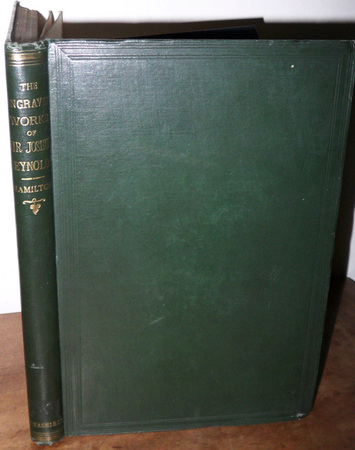
18846901884 London, P. & D. Colnaghi and Co, 1884. 27 x 18 cm, petit in-4, VII + 195 pp., reliure de percaline verte de l'éditeur, encadrements à froid sur les plats, titre doré au dos.
191289486Paris 1912-1913 | 19 x 24.50 cm | une feuille
Una poesia inedita ''Capelli biondi'' e 5 xilografie originali numerate e firmate di Primo Conti. Le xilografie sono state impresse da Giorgio Upiglio a Milano e il testo dalle Edizioni D'Arte Cantini di Firenze. Le dimensioni delle xilografie variano da cm 19,5x16 a cm 29x23. Una delle 80 copie su carta Fabriano (es. 62/80). Folio. pp. 8 + stampe. . Ottimo (Fine). . Prima edizione di 80 + XX esemplari. . Capelli biondi è ispirata ad un amore giovanile di Conti e fu scritta nel 1915. Le xilo furono realizzate nell'inverno 1914-1915, nel suo studio di via dei Della Robbia. Le matrici sono state riscoperte in anni recenti. Prima che il libro fosse stampato da Giorgio Upiglio, l'autore eseguì un certo numero di prove a mano. Fino all'età di 16 anni Primo Conti usò lo pseudonimo Umberto come indica la firma ''U.C.'' incisa nella matrice.
Una poesia inedita ''Capelli biondi'' e 5 xilografie originali numerate e firmate di Primo Conti. Le xilografie sono state impresse da Giorgio Upiglio a Milano e il testo dalle Edizioni D'Arte Cantini di Firenze. Le dimensioni delle xilografie variano da cm 19,5x16 a cm 29x23. Una dei XX esemplari su carta Japon imperiale formato 33x40 (es. VIII/20). Folio. pp. 8 + stampe. . Ottimo (Fine). . Prima edizione di 80 + XX esemplari. . Capelli biondi ? ispirata ad un amore giovanile di Conti e fu scritta nel 1915. Le xilo furono realizzate nell'inverno 1914-1915, nel suo studio di via dei Della Robbia. Le matrici sono state riscoperte in anni recenti. Prima che il libro fosse stampato da Giorgio Upiglio, l'autore esegu? un certo numero di prove a mano. Fino all'et? di 16 anni Primo Conti us? lo pseudonimo Umberto come indica la firma ''U.C.'' incisa nella matrice.
First Edition, [4],245,[1]pp., frontis., 6 engraved plates, orig. embossed cloth, 14,131 items.
[ii],47,[1]pp., title-page and text browned, margins worn, nineteenth century half calf, rubbed, upper cover detached, 1,608 lots.
This is a very good softcover copy with just light wear. Completely clean inside, Covers toned and small neat previous owner name at top edge of front cover (illegible). This is the 14th annual exhibition. Illustrated throughout in black & white. Covers the Netherlands, Italy, France and Germany. 9" high X 6" wide, 117 pages. Limited to 1500 copies.
5 Parts in one, 4to (275 x 220 mm), [4], 94, [4]; [4], 17, [3]; viii, [2], 99, [5]; [4], 53, [3]; [4], iv, 58pp., wide-margin copy, engraved portrait frontis., (a little spotted), all lots annotated in a neat contemporary hand with prices realised and buyers' names, MS biograpgy of Sir Mark Masterman Sykes copied from the Gentleman's Magazine April 1823 on front free-endpaper, cont. half morocco, marbled boards, rubbed, re-backed with original spine laid-down corners bumped, uncut, top edge gilt a very good copy. Sykes's collection of old master and modern prints was on as impressive scale as his library. Some 4500 lots were sold over a period of ten months for nearly ?18,000. On succeeding to the Estate a difficult decision had to be made by Sir Tatton Sykes. "A large sum of money had to be raised to pay off the considerable debt with which the Estate was encumbered. He did not wish to sell any land since this was the main source of the family's income and he was reluctant to part with his horses or hounds which represented his favourite pastime. This left his brothers works of art and his books. Though he had no trouble coming to a decision about the former, which comprised Italian paintings, sculptures, medals and coins, and a collection of some 50,000 prints "believed to be the rarest and best selected assemblage, particularly of portraits, of any private collection in the Kingdom", he has greater difficulty when it came to the latter, knowing the passion Mark had felt for them It is said that when the day came when the decision finally had to be made, he went and stood outside the door of the Library... the library itself being sold between the 11th and 24th May caused a sensation and buyers came from all over the world... Thomas Dibdin reflected "Never did the owner of such treasures so thoroughly enjoy them". The sale of the library and prints did not get the tiniest mention in Tatton's diaries. On May 11th the entry is blank. On May 24th it reads "York Races"."?C. S. Sykes, The Big Hose. 2004. p.120.
Numerous neat annotations in pencil by previous owner throughout text. Covers generally marked and rubbed.
This is a very good softcover copy with just light wear. Completely clean inside, Covers toned and small neat previous owner name at top edge of front cover (illegible). This is the 13th annual exhibition. Illustrated throughout in black & white. Covers the Netherlands, Italy, France and Germany. 9" high X 6" wide, 79 pages. Limited to 1500 copies.