10 867 résultats
10346University of Applied Science, Chicago, Ill.: 1921.Semi-hardcover. 8vo - over 73⁄4" - 93⁄4" tall. fourth edition, 5 lesson booklets total, illustrated. The introduction notes "the science of finger print identification is a new one. Although finger prints have been used for over a thousand years, the present practical system of classifying finger prints was perfected only a few years ago. In taking up the study of finger print identification you are allying yourself with one of the most rapidly progressing of the the modern professions,bound with;Secret intelligence Service:concise instruction in modern methode,fourth edition,47p. ALL ARE IN VERY GOOD CONDITION.
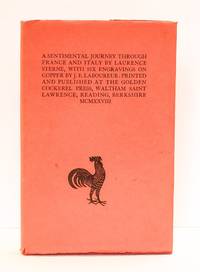
19281409751Reading: Golden Cockerel Press 1928. Limited Edition #285/500. Hardcover. Octavo 151 pages. In Very Good minus condition with a Very Good dust jacket. Spine red with black lettering. Bound in publisher's red fabric. Dust jacket protected with mylar covering. Top edge of text block gilt. Mild shelf wear to dust jacket small closed tears on spine. Three spots of discoloration on front dust jacket. Mild wear and rubbing front and back boards. Shelved in Case 9. Golden Cockerel Press is a curated private press started in 1920 in the Caxtonian tradition of editor-printer-publishers. 1409751. Shelved Dupont Bookstore. Golden Cockerel Press hardcover
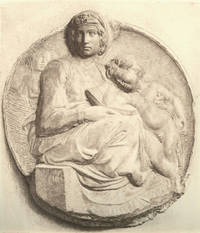
188834259Stuttgart: J Engelhorn Circa 1888. Presumed from the unlettered series of plates celebrating German engravers. Very fine large engravings reproducing Italian paintings by the engravers Ludwig Kuhn Peter Halm Karl von Siegl Jakob Groh Wilhelm Krauskopf and Doris Raab. 43.3 x 30.4 cm plates heavy wove paper with wide margins each plate with a tissue guard captioned in red. Six folio plates. In very good condition some of the plates and tissues have a little edgewear or minor light soiling in no case effecting the printed images. A VERY HANDSOME COLLECTION OF GERMAN ENGRAVINGS BASED ON ITALIAN RELIGIOUS ART OF THE SIXTEENTH AND SEVENTEENTH CENTURIES. The six plates included are:<br><br>1. Doris Raab 1851-1899—a fascinating female German engraver. The Christ with the Four Evangelists†aka “The Resurrection of Our Lord†after the painting in the collection of the Galleria Palatina Palazzo Pitti Florence executed in 1516 by Fra Bartolommeo.<br><br>2. Peter Halm 1854-1923. Madonna Enthroned aka Madonna and Child after a circa 1505 painting by Giovanni Bellini.<br><br>3. Ludwig Kuhn 1859-1936 Madonna of the Pesaro Family after the painting in the church of Santa Maria Gloriosa dei Frari in Venice executed by Titian circa 1519.<br><br>4. Jakob Groh 1855-1917 Madonna and Child aka "Pitti Tondo" by Michael Angelo Buonarroti reproduced from the marble bas-relief at the Museo Nazionale del Bargello in Florence executed sometime around 1504.<br><br>5. Wilhelm Krauskopf 1847-1921 Descent From the Cross "Espagnolet" reproduced from the original in the Museo Nazionale di San Martino in Naples by Jusepe de Ribera in circa 1588<br><br>6. Karl von Siegl 1842-1900 Adoration of the Three Kings Magi after the bas-relief by Venetian Baroque sculptor Giovanni Bonazza 1654–1736 located in the Chiesa dei Santi Giovanni e Paolo Venice. [J Engelhorn] unknown
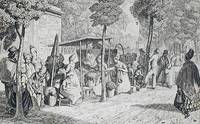
1823002813London: John and Arthur Arch 1823. Hardcover. Very Good . Published for the Author by John and Arthur Arch . . . R. Triphook . . . and J. Major . . . ." 8 15 1 p. 53 leaves of plates 1 leaf with copper-engraved dedication to Lavinia Countess Spencer signed Hewitt 52 leaves of mounted plates numbered 1-60 drawn and engraved by G.R. Lewis; 29 cm. Contemporary half red morocco with marbled paper over boards. Six spine compartments between gilt-rules and raised bands with gilt-tooled decoration. Black morocco spine label in second compartment with gilt-tooled title "Lewis's Etchings. Red morocco label on front board with double gilt-ruled border gilt corner rosettes and title "Etchings of the Physiognomy Manners & Character of the People of France & Germany." All page edges marbled to match boards and endpapers. Remains of a small circular label on front fixed endpaper reading "Abbey" along lower edge. The plates were issued for insertion in T.F. Dibdin's Bibliographical Antiquarian and Picturesque Tour in France and Germany 1821. Included are directions for placing the plates in Dibdin's work. Lewis made hundreds of drawings while accompanying Thomas Frognall Dibdin on his tour of France and Germany some of which were used to illustrate Dibdin's book. A disagreement about how much Dibdin owed Lewis for the drawings developed after the tour and the additional plates presented here were undoubtedly published by Lewis to generate some extra income from his work. In Very Good Condition: leather and boards are rubbed most heavily at head of spine and corners; corner of title page lightly soiled; light foxing primarily affecting the leaves on which the plates are mounted rather than the plates themselves; plates are clean and crisp. John and Arthur Arch hardcover
1977066307Whiltshire England: Compton Press 1977. Book. Near Fine. Hardcover. 4to. Includes slipcase. Limited Edition of 100 numbered copies. This is copy 69. Includes 10 signed and numbered tipped-in artists proofs. Marbled boards with green leather spine gilt lettering along spine. Minor shelfwear moderate spine fade. Tight binding no marks. Volume is in Near Fine condition. Heavy fading and tanning on slipcase with some scuffing. Slipcase is in Very Good-minus condition. Compton Press Hardcover
192615057Printed by Arrangement with the Bibliographical Society for Bernard Quaritch, London 1926. XVI, 609 p. 4to. Half cloth with top edge gilt. Spine heavily damaged and loose, hinges cracked. Block else tight. Some contemporary annotations and corrections in different English and German cursives, few of them in German. Important bibliographic refer
0504OTFRIWVUnknown Binding. Very Good. SIGNED by the author Harry Worcester Smith with a dedication on the front fly to John Cary Randolph who when he rides is "a thoroughbred on a thoroughbred." Dr. Archibald Cary Randolph a landed surgeon whose family helped settle Virginia was hunt master of the Piedmont Hunt until his death in 1959. Very good red cloth brighter gilt and doecot on front board than on spine; No reader remainder or ex-library marks. first ed. 1st printing in no dustjacket. Foxing at textblock and dusting at top edge only. Illus. excellent throughout. unknown
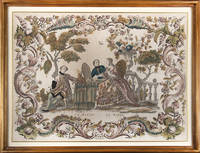
112186n.p. n.d. eighteenth century circa 1750. . A suite of four original hand coloured engravings titled in Spanish and French La Manna Le Matin; El Mediodia Le Midi; Eldespues de Comer L'Apres Diner and Le Soir La Tarde each approx. 50 x 68 cm modern gilt frames.<br /> An exquisite suite of four eighteenth century conversation piece engravings in the rococo style showing the nobility at leisure dining and dancing outdoors in a bucolic setting. Each image is beautifully set within delicately coloured scrolled borders featuring flowers foliage leafy tendrils and fruit. These prints capture the privilege and lifestyle of the aristocracy and are typical of French decorative art in the early to mid eighteenth century.<br /> n.p., n.d. [eighteenth century, circa 1750]. unknown
1638125X33 cm.
4613DBZürich, Verlag des Art. Institut Orell Füssli, o.J. Kl.-8°. 150 S. Mit 76 Illustrationen, gefalteten Panoramen. und einer Karte (ausklappbar). Originalleinenband mit Goldverzierung.
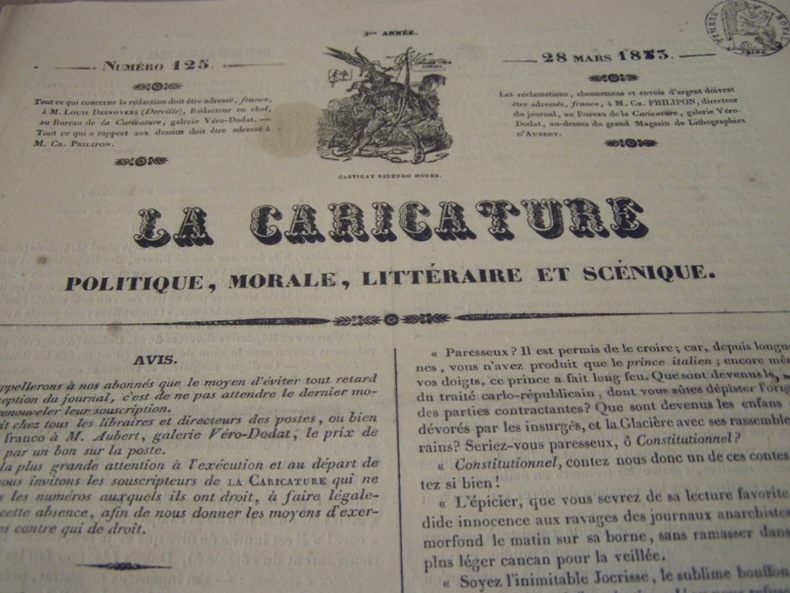
25253Lithographie - Planche HT parue dans La Caricature politique, morale, littéraire et scénique, volume 5, 28 mars 1833 (Planche n°259) - Œuvre : Hauteur: 27.3cm x Largeur: 35.8cm - Image : Hauteur: 18.5cmx Largeur: 27.5cm - Titre en bas au centre : « A ton nez d’Arg... ! à ton œil Bartholo ! à vous tous, Ventrus !! » ; indications : en ht à gche : « La Caricature (Journal) N°259. », en ht à dte : « Pl. 125. » (intervertion entre n° pl. et numéro du journal) - Dans la lettre : « Lith. de Becquet, rue Childebert N°9. » [imprimeur], « On s’abonne chez Aubert, galerie véro dodat. » [éditeur]; dans l’image, sur une feuille de papier, signature : « Ch. Invt. AD scul » [Charles Philipon, inventeur du modèle, et Auguste Desperet, dessinateur]
VOLUME ONE AND TWO ONLY of three volume set. RARE private printing for Benj. White of the classic travelogue by Thomas Pennant (1726-1798), a Welsh naturalist, traveler, writer and antiquarian. Volume 1 includes 44 engraved plates (incl. fold-out plates). Volume 2 includes 45 engraved plates (incl. fold-out plates). [BOTH VOLUMES]: 200x255mm. [VII+440] + [IV+487] pages. Red/maroon half-leather rebound Hardcovers. Parts of original spine pasted on as labels rebound spine. Original spine labels worn and peeling. Spine edges slightly bumped. Binding slightly loose and visible between front cover and whitepage. Ex-library copy with stamp on title page. Several pages water stained. Most printed plates have created "shadow" age-stains on either the previous or the following page. Text block edges browning. Pages yellowing, slightly wavy and age-stained. [VOL.1]: First whitepage coming loose from binding. [VOL.2]: Wormhole extending from front inner cover into page edges - NO damage to text or prints! [SUMMARY]: This extremely rare and beautifully illustrated classic travel account has sustained some unfortunate damage, but is still in good reading condition. PLEASE NOTE: This item is overweight. We may ask for extra shipping costs.
4613DBZürich, Verlag des Art. Institut Orell Füssli, o.J. Kl.-8°. 150 S. Mit 76 Illustrationen, gefalteten Panoramen. und einer Karte (ausklappbar). Originalleinenband mit Goldverzierung. + Wichtig: Für unsere Kunden in der EU erfolgt der Versand alle 14 Tage verzollt ab Deutschland / Postbank-Konto in Deutschland vorhanden +, 4613DB|4613DB_2 [2 Warenabbildungen]
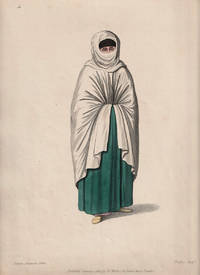
1802219552London.: W. Miller. 1802. Hand-coloured engraving 34.7 x 26 cms sheet including plate-mark edge toning but in very good condition. Attractive large image prepared as Plate IV for Dalvimart's work "The Costume of Turkey". <br>"Dalvimart's is one of the basic works on Turkish costume which has provided the prototypes for numerous other illustrative material. It is known that Dalvimart travelled in Turkey and Greece in 1797-8" Atabey. . W. Miller. unknown
1641030X39 cm.
1901241609London ; New York ; Bombay : Longmans Green and Co. 1901. First Edition. Hardcover. Near fine copy bound in full aniline calf with gilt-blocked label to the spine. Spine starting with wear to the spine and panel edges. Remains well-preserved overall; tight bright clean and sharp-cornered. Physical description; viii 355 p. 23 leaves of plates : ill. ports. ; 23 cm. Notes; Prize inscription to the frontis and dated 1910. Title page printed in red and black. Includes bibliographical references. Subjects; Haggard Henry Rider 1856-1925 — Travel. Voyages and travels. Israel — Description and travel. Italy — Description and travel. Cyprus — Description and travel. Palestine — Description and travel. Italy. Cyprus. Description and Travel. Genre; Illustrated. London ; New York ; Bombay : Longmans, Green, and Co. hardcover
6142New York: George H. Doran. Hardcover. Very Good. Small 4to 206 pages pictorial red cloth gilt dulled top cover lightly stained edges rubbed. <br/><br/>Tipped-in plates. by Arthur Rackham. 24 drawings in all of which most are in color. George H. Doran hardcover
75-7129Tokyo: The East Publications Inc. ca. 1980. Woodcut. 18 x 12 cm sheet. Beautiful Reproduction Mid 20th century Cutting and Printing. It has a Fine Impression with Subtle Mica Kirazuri Finish to Background. The Original Utamaro Masterpiece is Oban size; this cut is about half scale to the Original. It was commissioned by East Publications Inc. as a limited gift edition for its customers making it akin to a present day Surimono. Echizen Kizuki Hosho Washi Paper. Quality is Very good with a minor dent above and left of the Artists Name.Provenance: From the Collection of Frederick Gale Ruffner Jr.The Founder of Gale Research Detroit [Tokyo]: The East Publications Inc., [ca. 1980] unknown
192073137Lucien Vogel éditeur | Paris 1920 | 18 x 24 cm | une feuille
- Lucien Vogel éditeur, Paris 1920, 18x24cm, une feuille. - Estampe originale en couleur réalisée par Edouard Halouze, finement réhaussée à l'or, tirée sur papier vergé et signée en haut à droite de la planche. Peintre, illustrateur et décorateur, Edouard Halouze dessine des vignettes de mode pour la Gazette du Bon ton dès les débuts de la revue. Parallèlement à ce travail, il participe en 1920 à une exposition consacrée à "La mode vue par les peintres" et présentée au Musée des arts décoratifs. Il se distingue des autres dessinateurs de la Gazette par son style cubiste dans des décors, des costumes et des couvertures de programmes pour le music-hall. Gravure originale réalisée pour l'illustration de La Gazette du bon ton, l'une des plus belles et des plus influentes revues de mode du XXème siècle, célébrant le talent des créateurs et des artistes français en plein essor de l'art déco. Célèbre revue de mode fondée en 1912 par Lucien Vogel, La Gazette du bon ton a paru jusqu'en 1925 avec une interruption durant la Guerre de 1915 à 1920, pour cause de mobilisation de son rédacteur en chef. Elle se constitue de 69 livraisons tirées à seulement 2000 exemplaires et est illustrée notamment de 573 planches en couleurs et de 148 croquis représentant des modèles de grands couturiers. Dès leur parution, ces luxueuses publications « s'adressent aux bibliophiles et aux mondains esthètes » (Françoise Tétart-Vittu « La Gazette du bon ton » in Dictionnaire de la mode, 2016). Imprimées sur beau papier vergé, elles utilisent une police typographique spécialement créée pour la revue par Georges Peignot, le caractère Cochin, repris en 1946 par Christian Dior. Les estampes sont réalisées grâce à la technique du pochoir métallique, rehaussées en couleurs et pour certaines soulignées à l'or ou au palladium. L'aventure commence en 1912 lorsque Lucien Vogel, homme du monde et de la mode - il a déjà participé à la revue Femina - décide de fonder avec sa femme Cosette de Brunhoff (sur de Jean, le père de Babar) la Gazette du bon ton dont le sous-titre est alors « Art, modes et frivolités ». Georges Charensol rapporte les propos du rédacteur en chef : « En 1910, observe-t-il, il n'existait aucun journal de mode véritablement artistique et représentatif de l'esprit de son époque. Je songeais donc à faire un magazine de luxe avec des artistes véritablement modernes [...] J'étais certain du succès car pour la mode aucun pays ne peut rivaliser avec la France. » (« Un grand éditeur d'art. Lucien Vogel » in Les Nouvelles littéraires, n°133, mai 1925). Le succès de la revue est immédiat, non seulement en France, mais aussi aux Etats-Unis et en Amérique du Sud. À l'origine, Vogel réunit donc un groupe de sept artistes : André-Édouard Marty et Pierre Brissaud, suivis de Georges Lepape et Dammicourt ; et enfin ses amis de l'École des beaux-arts que sont George Barbier, Bernard Boutet de Monvel, ou Charles Martin. D'autres talents viennent rapidement rejoindre l'équipée : Guy Arnoux, Léon Bakst, Benito, Boutet de Monvel, Umberto Brunelleschi, Chas Laborde, Jean-Gabriel Domergue, Raoul Dufy, Édouard Halouze, Alexandre Iacovleff, Jean Émile Laboureur, Charles Loupot, Charles Martin, Maggie Salcedo. Ces artistes, inconnus pour la plupart lorsque Lucien Vogel fait appel à eux, deviendront par la suite des figures artistiques emblématiques et recherchées. Ce sont ces mêmes illustrateurs qui réalisent les dessins des publicités de la Gazette. Les planches mettent en lumière et subliment les robes de sept créateurs de l'époque : Lanvin, Doeuillet, Paquin, Poiret, Worth, Vionnet et Doucet. Les couturiers fournissent pour chaque numéro des modèles exclusifs. Néanmoins, certaines des illustrations ne figurent aucun modèle réel, mais seulement l'idée que l'illustrateur se fait de la mode du jour. La Gazette du bon ton est une étape décisive dans l'histoire de la mode. Alliant l'exigence esthétique et l'unité plastique, elle réunit pour la première fois les grands talen
RARE! COPY No.52 of 200 copies SIGNED BY ARTIST - ARTHUR KOLNIK, printed on Lana paper (altogether were printed 1126 numbered copies, only 226 of them signed by artist). This album is the HEBREW version of a hasidic story by the great Yiddish writer Isaac Leib Peretz illustrated by the renowned Jewish painter and printmaker Arthur Kolnik (1890-1972) who was born in Stanislaviv (today Ivano-Frankovsk), Ukraine and studied at the Academy of Fine Arts in Krakow in the studio of Professor Joseph Mehoffer. After an exhibition in the United States of America in 1921 settled in Chernivtsi and moved to Paris in 1931 where he worked as illustrator. Tel Aviv Art Museum organized a major exhibition of his works in 1968. 320x240mm. 25 pages. 20 woodcuts. Unbound double sheets with softcover. Each woodcut protected by a layer of transparent foil. Red lettering on front cover. Cover yellowing and slightly dirty. Front cover detached from rear cover. Cover edges tattered. Whitepages yellowing/age-stained. Pages slightly yellowing. Woodcuts in mint condition. [SUMMARY]: This extremely rare copy of illustrated Jewish prose has sustained some external damage to cover, but is otherwise in very good condition.
166013609Le massacre des Innocents; Burin. Rare. En feuille moyen Rome Billy 1660
192284850Lucien Vogel éditeur | Paris 1922 | 19 x 24.50 cm | une feuille
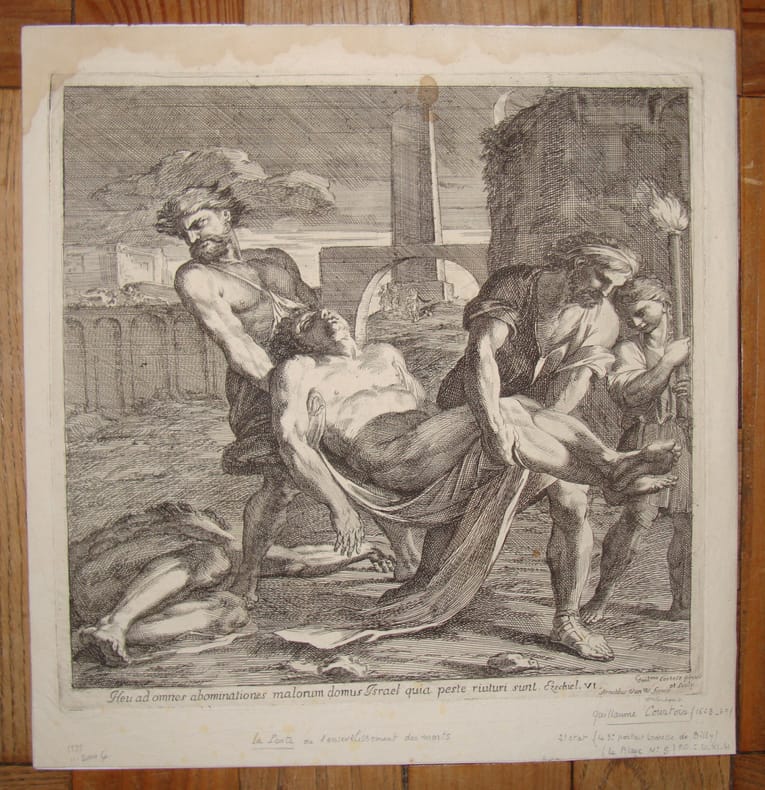
16555599Belles marges. Taches dans la marge supérieure. Épreuve du 2è état (sur 3), avec la lettre complète mais avant l’adresse de Billy. Filigrane : fleur de lys dans un cercle. “ Toutes les estampes de ce Maître sont d'une extrême rareté" (Robert-Dumesnil). Très bon état; 300 x 312 mm. vers 1655 - 1660. Pas de couverture Très bon Arnoldus Van W. 1655-1660 300 x 312
15204Épreuve sur beau papier filigrané. en feuille Très bon Paris 15 x 11 cm