ARTIGUE Albert ÉmileLivre Rare Book

10 867 résultats
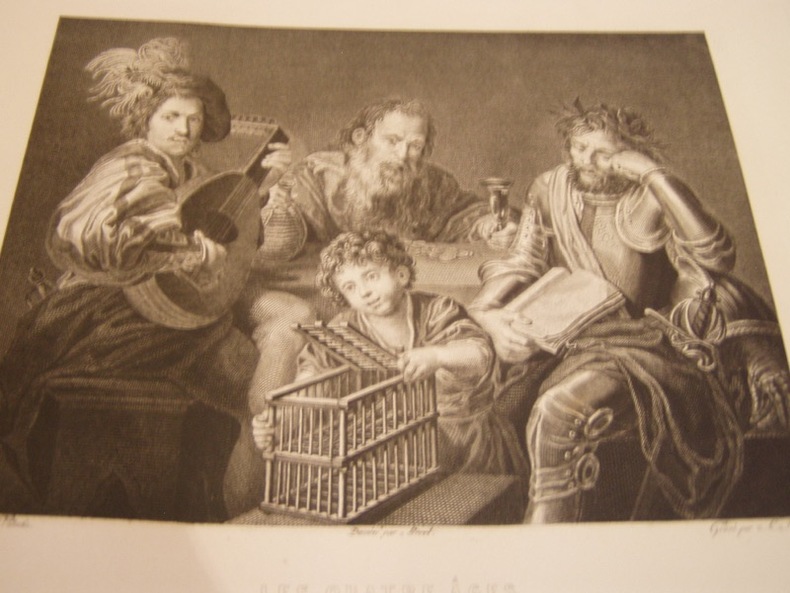
6133Belle épreuve parue dans l’Estampe Moderne. Notre épreuve porte le timbre sec de l’Estampe Moderne en bas à droite. L’Estampe Moderne a paru de mai 1897 à avril 1899. en feuille Très bon Paris L’Estampe Moderne. 31 x 27 cm.
1911S83724London, William Heinemann 1911 15pp.of text + frontispiece & 65 plates out-of-text, in the series "Great engravers", 21cm., editor's hardcover, good condition, S83724
15pp.of text + frontispiece & 65 plates out-of-text, in the series "Great engravers", 21cm., editor's hardcover, good condition, S83724
19024516CBBern, A. Francke, 1902. 4°. 40 S. Mit 8 Kupfertafeln und 4 Textkupfer. Leinenband der Zeit. + Wichtig: Für unsere Kunden in der EU erfolgt der Versand alle 14 Tage verzollt ab Deutschland / Postbank-Konto in Deutschland vorhanden +, 4516C
19024516CBBern, A. Francke, 1902. 4°. 40 S. Mit 8 Kupfertafeln und 4 Textkupfer. Leinenband der Zeit.
18656324BBBern, H. Blom, 1865. 8°. 114 S. Orig.-Pappband. + Wichtig: Für unsere Kunden in der EU erfolgt der Versand alle 14 Tage verzollt ab Deutschland / Postbank-Konto in Deutschland vorhanden +
18656324BBBern, H. Blom, 1865. 8°. 114 S. Orig.-Pappband.
18773919DBBern, Druck von B. F. Haller, 1877. 8°. + Wichtig: Für unsere Kunden in der EU erfolgt der Versand alle 14 Tage verzollt ab Deutschland / Postbank-Konto in Deutschland vorhanden +, A|B|C [3 Warenabbildungen]
18773919DBBern, Druck von B. F. Haller, 1877. 8°.
2084466 planches; format à l'italienne (38 cm x 27 cm), 67 pages, 450 pièces environ.Reluire plein chagrin estampé,
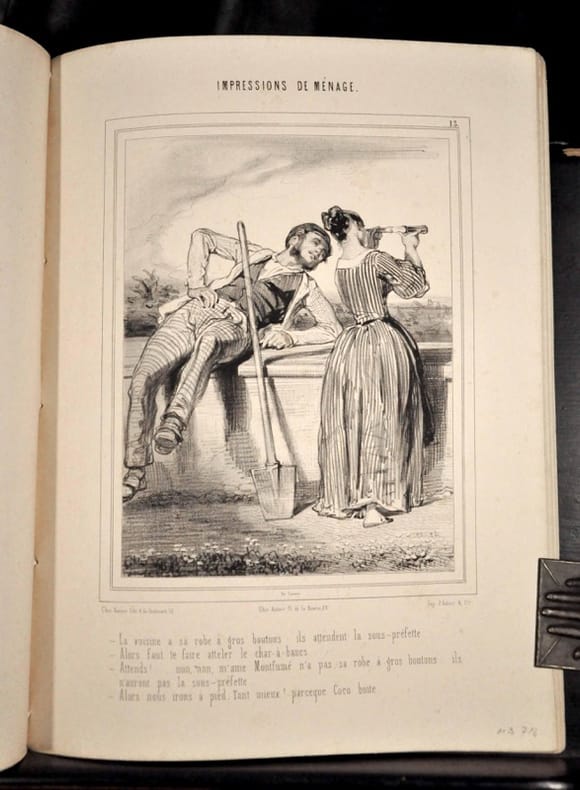
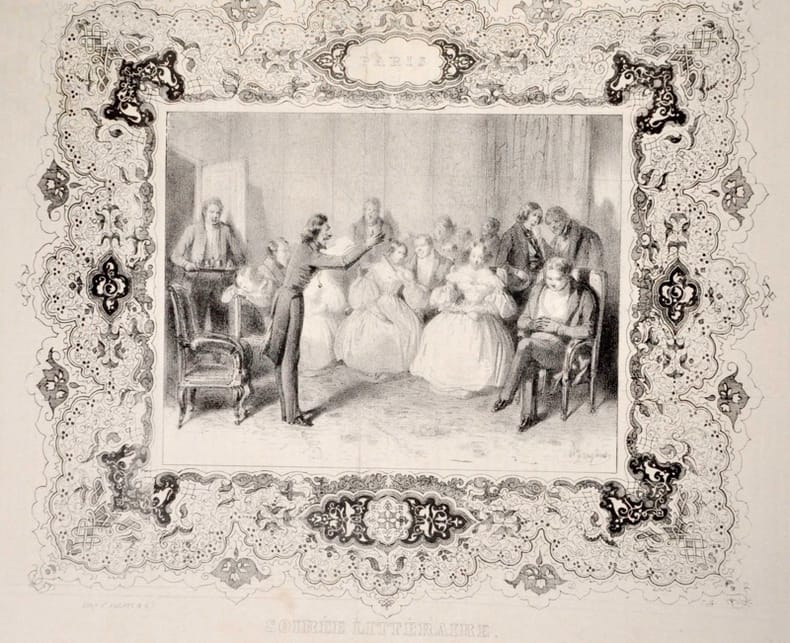
2720Paris, Au bureau du journal amusant et du petit journal pour rire, 20 rue Bergère., In-Folio, (34 x 26 cm), broché. 18 lithographies en noir.
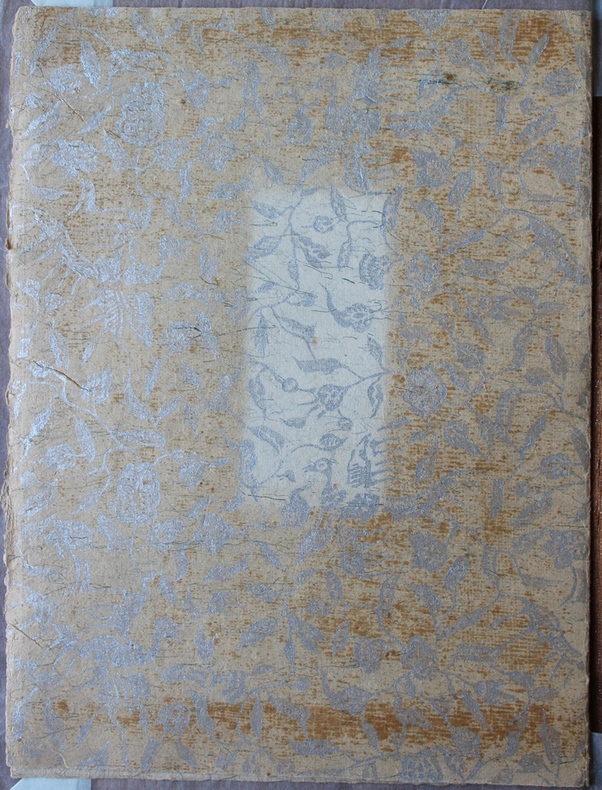
1920112751920 S.l.n.d.n.é. (vers 1920), 1 portfolio de 10 estampes sur Japon nacré insérées dans une chemise décorée d'oiseaux dans une végétation imprimé à l'argent, le tout sous couverture de papier à motifs géométriques portant une étiquette en long avec caractères japonais au plat inférieur. Dimensions des estampes : 330 x 250 - dimensions de la couverture : 394 x 277. Tout petit manque de papier à la couverture, chemise roussie, estampes en parfait état.
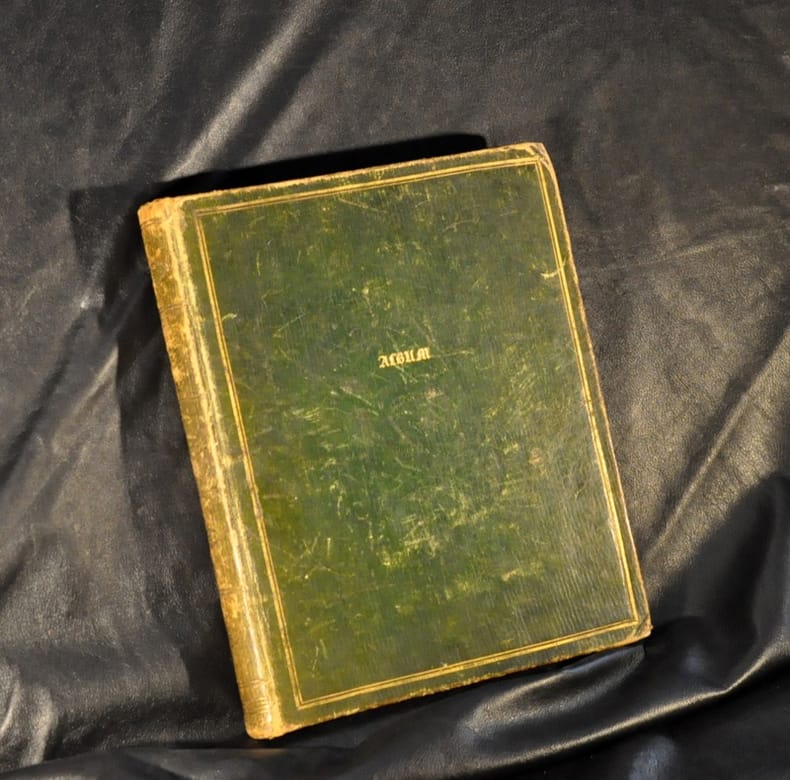
2998Album romantique de 205x260 mm, relie en basane maroquinee verte portant en super- libros sur le premier plat « Album ». Il se compose de feuillets de papier fort bleu montes sur onglets. Sur le verso de la premiere page, une table des matieres manuscrite.Les dessins au nombre de 39 sont colles a pleine page et certains d’entre eux sont decoupes, amputant une partie du dessin, ou sommairement replies en haut ou en bas. Certains dessins decoupes dans leur partie inferieure laissent deviner des ecritures au crayon qui ont ete otees. Un seul dessin, celui d’Anthony Thouret comporte une legende manuscrite.Le papier utilise est un papier fin, hativement decoupe. La plupart des dessins ont ete plies en deux ou en quatre. Certains semblent avoir ete mis sous enveloppe , certains ont ete dechires en tout ou partie puis recolles avec une bande en papier.
21804S.l., s.n., XIXe siècle. In-folio, 67 planches, demi-chagrin vert, plats de percaline chagrinée verte estampée à froid, dos à nerfs orné de filets dorés (reliure frottée, petites rousseurs et taches).
1840168861840 Paris AUBERT ,sans date vers 1840,IN FOLIO oblong,titre illustre + 33 planches lithographiées en noir,complet,plats detaches,mouillures claires en coin sur l’ensemble des planches,+ catalogue editeur,fentes en marge sans manque a 2 planches ,tirage moyen ,dans l’etat- Remise de 20% pour toutes commandes égales ou supérieures à 100 €.
BIO290MS.d. (1840/50?)N.-J. Philippart, Paris. In-8, relié, demi-chagrin orné, 8 pages d'introduction au personnage de Chateaubriand puis 20 gravures pleines pages commentées. Intérieur convenable. Quelques rousseurs. Reliure frottée, coins émoussés. Exemplaire convenable.
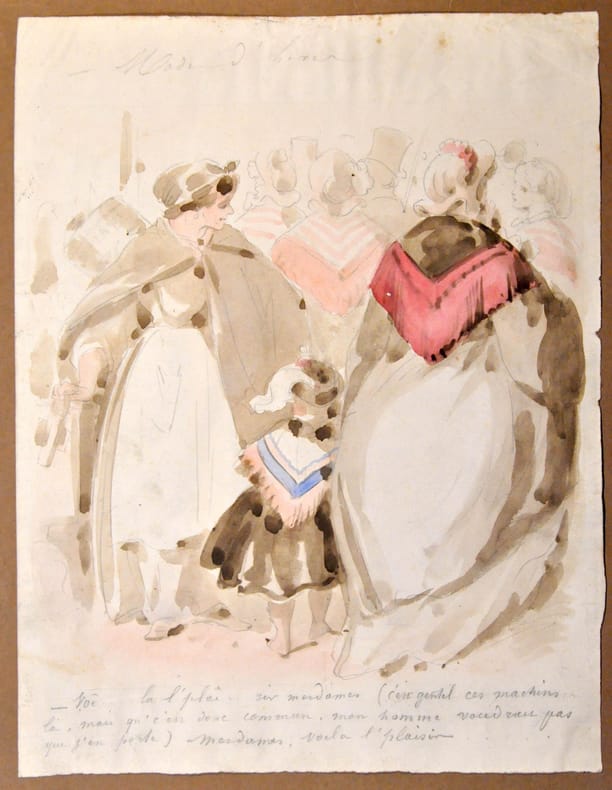
188029201880 Une grande caricature hors texte rempliée ; 72 aquarelles annotées ; 59 dessins au crayon et 1 à la plume. Grand in plano (420 x 280 mm) en demi basane rouge, dos à six nerfs orné, titre en or. Les aquarelles et dessins originaux annotés sont montés sur papier brun tabac : collés au recto de chaque feuille selon leur taille essentiellement par groupes de 2 ou 4 , et quelques grands dessins. ___
2891Paris circa 1840, In Plano pleine percaline rouge, Album de défets donnant des exemples de spécimens de publications romantiques, prospectus ou extraits, montés sur papier fort et sur onglets.Augmenté d’une suite complète de huit lithographies satyriques sur Paris extraite du Charivari illustrée par Malpeau, Jules David etc. imprimée par Aubert.
- Lucien Vogel éditeur, Paris 1922, 18x24cm, relié. - Set of eight original prints in color, drawn on laid paper. The boards are introduced by a text signed Joan Ramon Fernandez. The sketches are signed XIX and XXI David, respectively on the lower right and left boards. Original prints made ??for the illustration of The Gazette fashionable, one of the finest and most influential twentieth century fashion magazines, celebrating the talent of creators and artists French burgeoning art deco. Famous fashion magazine founded in 1912 by Lucien Vogel, The Gazette fashionable appeared until 1925 with an interruption during the War of 1915 to 1920, due to mobilization of its editor. She is 69 Deliveries from just 2000 copies and is illustrated including 573 color plates and 148 sketches depicting models of fashion designers. Upon publication, these luxury publications "are for bibliophiles and worldly aesthetes" (Françoise Tétart-Vittu "good Gazette of tone" in the fashion dictionary, 2016). Printed on fine laid paper, they use a typeface created specifically for the magazine by Georges Peignot, the Cochin character, taken in 1946 by Christian Dior. The prints are made with the technique of metal stencil, enhanced color and some outlined in gold or palladium. The adventure began in 1912 when Lucien Vogel, man of the world and fashion - it has already participated in Femina magazine - decided to found with his wife Cosette de Brunhoff (John's sister, the father of Babar) Gazette good tone in which the subtitle is then "Art, fashions and frivolities." Georges Charensol quotes the editor: "In 1910, he observed, there was no truly artistic fashion magazine and representative of the spirit of his time. So I thought of making a glossy magazine with truly modern artists [...] I was certain of success because for any fashion country can compete with France. "(" A great art editor. Lucien Vogel "in literary News, No. 133, May 1925). The success of the magazine is immediate, not only in France but also the US and South America. Originally, Vogel therefore brings together a group of seven artists: André-Édouard Marty and Pierre Brissaud, followed by Georges Lepape and Dammicourt; and finally his friends from the School of Fine Arts as are George Barbier, Bernard Boutet de Monvel or Charles Martin. Other talents come quickly reach the equipped Guy Arnoux, Léon Bakst, Benito, Boutet de Monvel, Umberto Brunelleschi, Chas Laborde, Jean-Gabriel Domergue, Raoul Dufy, Edward Halouze Alexander Iacovleff, Jean Emile Laboureur Charles Loupot, Charles Martin, Maggie Salcedo. These artists, mostly unknown when Lucien Vogel appealed to them, will eventually become iconic figures and artistic sought. These are the same illustrators who make the drawings advertisements Gazette. The boards highlight the dresses and sublime seven artists of the time: Lanvin, Doeuillet, Paquin, Poiret, Worth, Vionnet and Doucet. The designers provide for each number of exclusive models. Nevertheless, some of Illustrations contained no real model, but only the idea that the illustrator is done in the fashion of the day. Gazette fashionable is a milestone in the history of fashion. Combining the aesthetic requirement and plastic unit, it brings together for the first time the great talents of the world of arts, literature and fashion and imposed by this alchemy, a new image of women, slender, independent and bold, also driven by the new generation of designers Coco Chanel, Jean Patou, Rochas Marcel ... Recovery in 1920 by Condé Montrose Nast, Gazette fashionable modeled for the new composition and the aesthetic choices of the "little dying newspaper" that Nast had bought a few years ago: the Vogue magazine. [FRENCH VERSION FOLLOWS] Ensemble de huit estampes originales en couleur, tirées sur papier vergé. Les planches sont introduites par un texte signé Jeanne Ramon-Fernandez. Les croquis I et II sont signés David, en bas à droite des planches. Reliure à la bradel en plein papier à
1872222841872 Paris : A. Chevalier, 1872. grand IN FOLIO oblong à l’italienne,cartonnage decoré editeur ,texte sommaire + 25 planches gravées à l’eau forte sous serpentes,quelques rousseurs en marge,bon etat,2e plat couverture bruni,rare complet,25 plates ; cm. (fol.)
1868z07391Anvers: Imprimerie J.-E. Buschmann 1868. First edition. Hardcover. Good . First edition 1868. Quarto. 1262 pp. plus 60 engraved plates. Original three-quarter leather and patterned cloth boards. Ex-lib. with institutional labels on spine and endpapers occasional institutional inkstamps in contents not affecting plates. Spine and front board detached binding heavily worn text leaves lightly soiled. Plates fine with the exception of No. 13 which bears a very small stain and a larger one in the margin. Good plus. The scarce collection of exquisite engravings of city views of Antwerp by artist and master etcher and engraver Joseph Linning. While the binding and some contents of this copy show typical library wear the plates themselves have remained unscathed in almost all instances. Imprimerie J.-E. Buschmann hardcover
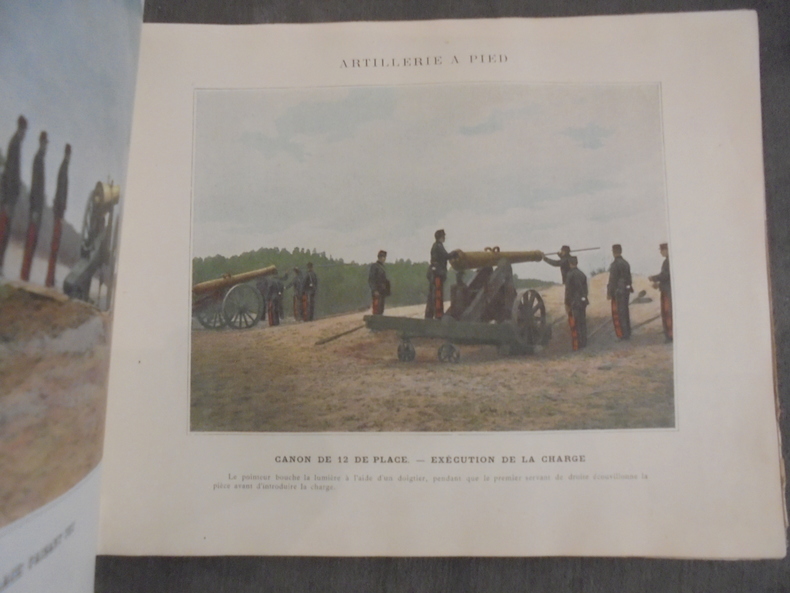
DIV493C217In-4° format italien, sous reliure de demi-cuir. Sans trace d'éditeur. Nombreuses gravures et reproductions en N&B sur l'armée française. Environ 1900.
Kl.-Folio (280:220 mm). Album mit zus. 32 Zeichnungen auf 27 Bll. Die Zeichnungen im Postkartenformat (90:120 mm) teilweise in Blei aquarelliert und teilweise mit Tusche laviert, mit Motiven meist aus den Niederlanden, Flandern und Frankreich, zumeist monogr. "ES", jeweils flächig montiert und mit Goldlinien gerahmt. Lederband der Zeit mit goldgepr. Deckeltitel "Reise Erinnerungen 1887", gepr. Rücken und dreiseitigem Goldschnitt; Vorsatzpapiere aus goldbedrucktem Karton mit feinem ornamentalen Muster. 1 Messingschließe. Die Zeichnungen, ausgeführt von einem geübten Zeichner und jeweils beschriftet und datiert, dokumentieren die Stationen einer Reise: Nijmegen, Kampen, Enkhuizen, Ursem bei Alkmaar, Rotterdam, Utrecht, Antwerpen, Brügge, Brüssel, Mecheln, Tournai, Laon, Soissons, Paris, Rouen, Versailles, Chinon, Fontainebleau, Sully sur Loire und Moulins. - Der Künstler mit dem verschlungenen, wohl als "ES" zu lesenden Monogramm konnte nicht ermittelt werden; vermutlich trug er den Nachnamen Schmidt: Darauf deuten drei beiliegende Photokopien, die wohl die Rückseiten von drei der Zeichnungen zeigen, die als Postkarten an einen Carl Schmidt in Berlin versandt wurden. - Bis auf eine Bleistiftzeichnung mit Allgäuer Gebirgslandschaft, bezeichnet und datiert "Mädelegabel, 15. 8. [18]86", entstanden alle Zeichnungen auf der Reise durch die Niederlande, durch Flandern und Fankreich. Der Spruch "Wie hat das Gott so schön erdacht, dass er den Wanderburschen schafft" unter der Zeichnung von Kampen zu Beginn der Reise deutet darauf hin, dass die Reise zu Fuß angetreten wurde. - Der Zeichner versteht sich meisterhaft auf die minutiöse Wiedergabe von Stadtansichten und historischen Gebäuden; oft beleben treffend skizzierte Staffagefiguren den Vordergrund, oder die Landschaft ist in zarten Aquarellfarben angedeutet. Ein Selbstportrait zeigt den Künstler auf einem kleinen Schemel hockend, mit Zylinder auf dem Kopf, in der Pariser Avenue de Montaigne; ein anderes Selbstportrait, durch einen Spiegel in der Decke gesehen, entstand im Schloss von Fontainebleau. - Einband etwas berieben. Einige Zeichnungen mit Poststempel oder Abklatschspuren eines Poststempels. Innengelenke gebrochen, gering fleckig, Trägerkartons leicht gebräunt.
112542Paris Boussod Valadon & C.ie 185 . In 8° tela edit. con titoli cornice e fregi al dorso e ai piatti. Leggera usura alla cuffia superiore. Pp. 6 n.n. 24 tavole incise una all'acquaforte tutte di carattere militare tutte protette da velina. Qualche giallitura non grave tagli oro Paris, Boussod, Valadon & C.ie hardcover
Folio (320 x 250 mm). 150 leaves with 140 drawings. Various media: felt-tip marker, India ink, pen, graphite, coloured pencil, gouache, etc. Contemporary leatherette album, upper cover giltstamped "Livre d'Or", covers reinforced with metal applications. Marbled endpapers. All edges gilt. A splendid album of original artwork by some of the foremost artists of the Franco-Belgian comics scene active during the early 1990s. The contributions, some of which are located and dated, would seem to have been collected at various comics fairs or events. Virtually all are inscribed to "Jean-Michel", also variously spelt "Yann Mikael" or similarly, suggesting - as do the frequent maritime subjects - that the collector hailed from Brittany, probably from Saint-Malo, where numerous entries were acquired. - Among the still-active luminaries of the medium's Golden Age are Morris (with a portrait of Lucky Luke) and Tabary (who draws Calife Haroun el Poussah, known in English as Haroun El Plassid). Jidéhem draws Gaston (on which strip he long collaborated with Franquin), and Albert Weinberg draws his character Dan Cooper. Marcel Uderzo, Albert's younger brother and sometime collaborator on the original Asterix albums, draws his own character Mathias. Others have taken over the torch from famous predecessors: Al Coutelis draws a spoof of Tanguy and Laverdure, a famous strip he inherited from Albert Uderzo; Jean-Claude Fournier draws Spirou, which character Franquin handed over to him as early as 1970. A portrait in fineliner and broad felt-tip is contributed by André Juillard, who would later take over Edgar P. Jacobs's Blake and Mortimer - a series in which Didier Convard, seen in another entry, would also have a hand, in collaboration with Juillard. Jacobs himself is obliquely present in the portrait of his villain Olrik, drawn by an unidentified contributor, while Jean-Charles Kraehn represents Saint-Malo's very own "bande dessinée" scene. - A few double-page spreads (21, 114). Occasional light offsetting to opposite page or bleeding to next, especially from felt-tip drawings, but on the whole perfectly preserved. A few blank pages serve as protective tissue guards. A complete list of contributors, all but a dozen identified, is available upon request.