Stefano PittalugaMareMagnum

52 942 résultats
32,5×23,5 cm; (76) pp. Legatura editoriale in piena tela con titolo impresso in amaranto su fascetta al piatto anteriore (un leggero alone di polvere). All’interno esemplare in ottime condizioni di conservazione. Timbro ed autografo del direttore del Cinema Imperiale di Bologna (storico cinema bolognese che sorgeva nella centralissima Via Indipendenza) recentemente chiuso e smantellato. Prima ed unica rarissima edizione di questo catalogo dei film presentati dalla Società Anonima Stefano Pittaluga per la stagione 1934-1935. Magnifiche le tavole a colori che presentano i film, alcune anche a doppia pagina. Si dice nell’introduzione “La produzione che la S. A. Stefano Pittaluga presenta per la stagione 1934-35 anno XIII reca il segno della più alta distinzione: le Coppe Mussolini per i due migliori film, italiano e straniero, premio ambitissimo che tutte le Case del mondo si contesero alla Mostra Internazionale della II Biennale di Venezia. Le pagine della nostra odierna raccolta recano pure il segno di un’altra vittoria: la produzione europea dall’Inghilterra alla Francia, dalla Cecoslovacchia all’Italia, ha ormai superato, per qualità di soggetti e per virtù di tecnici, per autorità d’artisti e per abilità di fotografi, tutto quanto la grande America ha potuto presentare quest’anno …”. La Società Anonima Stefano Pittaluga fu costituita su iniziativa di Stefano Pittaluga a Torino il 19 marzo del 1919. Stefano Pittaluga (Campomorone, in provincia di Genova, 2 febbraio 1887 – Roma, 5 aprile 1931) era figlio di un imprenditore genovese attivo nell’esercizio di sale cinematografiche. Personaggio dalla grande intuizione commerciale fu tra i sostenitori del cinema sonoro e arrivando a suggerire un piano nazionale per il sostegno e lo sviluppo dell’industria cinematografia italiana attraverso l’elargizione di sostegno statale. Già dal 1911 è noleggiatore di film, ottenendo l’esclusiva di alcune pellicole americane per il territorio della Liguria. Deciso ad allargare il suo giro d’affari decide di fondare la Società Anonima che già sul finire del 1919 si espande su tutto il territorio nazionale arrivando a contare 200 sale ad essa collegate. Dal 1924 iniziò anche la produzione di alcune pellicole, rilevando diversi stabilimenti di ditte fallite, come la Fert, la Rodolfi Film, l’Itala Film e la Cines e costituendo due nuove società denominate Fert-Pittaluga e Cines-Pittaluga. Nel 1926 aveva già sbaragliato tutti i concorrenti nella distribuzione sul territorio nazionale acquisendo l’ultimo di questi, la celebre Unione Cinematografica Italiana. Nel 1932 muore Stefano e la Società passa sotto la direzione di Mario Scolza e inizia un lento ma inesorabile declino che la portò, nel 1936 allo scioglimento. L’opera presenta diversi celebri titoli come: La signora di tutti di Max Ophuls con Isa Miranda, La vita amorosa di Casanova di René Barberis con Ivan Mosjoukine, Melodramma di Fritz Lang con Elsa Merlini, Seconda B di Goffredo Alessandrini con Sergio Tofano, Volga in fiamme di Venceslao Tourjanski, L’ebreo errante di Maurice Elevey con Conrad Veidt, Amore imperiale di Gaston Ravel con Pola Negri, Signora Paradiso di Enrico Guazzoni con Memo Benassi, Suss l’ebreo di Lothar Mendes con Conrad Veidt, La marcia di Rakorji di Gustav Frölich,Stefan Szekely, Paraninfo di Amleto Palermi con Angelo Musco, Il figlio del Carnevale di Alexander Wolkoff con Ivan Mosjoukine, La bella maledetta di e con Leni Riefenstahl, Notti moscovite di Alexis Granowski, Paradiso in fiore di Victor Saville, Vienna di Strauss di Alfred Hitchcock con Jessie Mattews, Il cappello a tre punte di Mario Camerini con Edoardo e Peppino De Filippo, Fedora di Louis Grasnier, L’uragano di V.Petroff, Febbre di vivere di George Cukor con Katharine Hepburn, John Barrymore, Chu Chin Chow di Walter Forde, Celiuskin – documentario U.R.S.S., Bella donna di Robert Milton con Conrad Veidt, Il figlio di Kong con Robert Armstrong, Notti di Pietroburgo di G.Rochal e V.Stroyeva, Dick Turpin,brigante gentiluomo di John Stafford con Victor McLaglen, Estasi con Hevy Keyssler, La bella addormentata di Karl Lamac con Anny Ondra, La figlia del reggimento di Karl Lamac con Anny Ondra, Lot in Sodoma di Sibley Watson e Melville Webber, Ritorno alla felicità di Carl Boese con Luise Ullrich, La vita di Virginia Winters di Alfred Santell con Ann Harding, Piccole donne di Georges Cukor con Katharine Hepburn, Paganini con Ivan Petrovich, Il tenente degli Honved di e con Gustav Fröhlich, L’eredità dello zio buonanima di Amleto Palermi con Angelo Musco, ecc. ecc. Opera rarissima e importante per la storia del cinema italiano. Esemplare in ottime condizioni di conservazione.
Film emblema della guerra fredda e del Maccartismo, <em>Invasion of the Body Snatchers (</em>questo il titolo originale) mette in scena la nevrosi collettiva, la paura dell'invasione, l'insicurezza che diventa terrore. Manifesto incorniciato a firma dello studio di grafica pubblicitaria "Studio Favalli" di Augusto Favalli. Minimi difetti ai margini e lieve piega, altrimenti in ottimo stato.
6 volumi. Opera completa. Napoli. Guida 1987-1994, 8°, pp. 712 + 614 + 816 + 977 + 873 + 1027. Leg. Edit., sovracc. Qualche segno di umidità ai tagli del volume 5 che non lede il testo e bruniture dovute a segni del tempo.
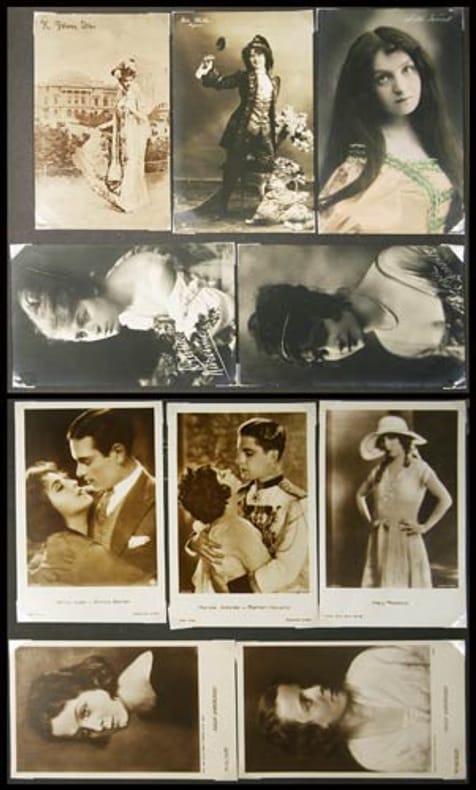
62634aaf20ème siècle, In-4to oblong, 266 cartes postales, planches réunies dans un album photo.
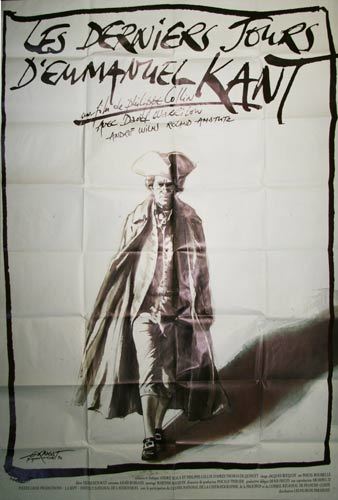
89102aaf1994, 115x156 cm. gefaltet.
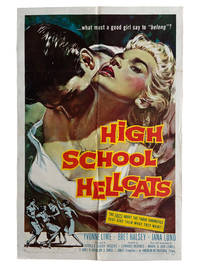
1958004938American International Pictures 1958. Single sided printed poster US one sheet approximately 680mm x 1045mm in size. Creased from old folds several pin holes small amount of light soiling to corners title stamp and numbers in ink to reverse but generally clean. With striking artwork. Starring Yvonne Lime Brett Halsey and Jana Lund the IMDB synopsis is "a good girl is forced to join a dangerous all-girl high school gang and only her waiter boyfriend and a caring female teacher can possibly help her before it may become too late". First Edition. Unbound. Good. Double Elephant. Poster. American International Pictures Paperback
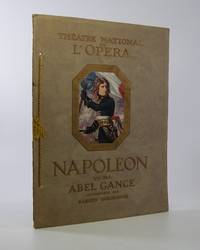
1927207644Paris: Société Générale de Films/ Société Française Gaumont-Metro-Goldwyn 1927. Trifling wear to spine and some incidental nicks to edges; an excellent copy. 4to unpag. 24pp in original printed wrappers tied through three holes with decorative gold cord. Souvenir program from the premiere of Abel Gance's classic 1927 film at the Théatre National de 'Opéra. Epic in scale and ambition and technically innovative Gance's film is regarded as a major achievement of the silent era. It had a lasting impact on cinema from Eisenstein to the French New Wave. Société Générale de Films/ Société Française Gaumont-Metro-Goldwyn unknown
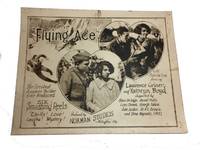
193090767Arlington Fl. now part of Jacksonville: Produced by Norman Studios 1930. Good. Complete set of 8 brown tinted Lobby Cards. 36 x 28 cm. Multiple pinholes at corners where these were probably displayed in a theater lobby. Other foxing and wear mostly in margins. This movie starred Laurence Criner in his first role and Kathryn Boyd in the first of her two known roles. This movie is the only Norman Studios movie that is known to have survived. The normanstudios.org website says that not much is known about Boyd although it is believed that she was Criner's wife. That website goes on to say that her portrayal of Ruth Sawtelle as ".a beautiful and bold young woman determined to learn to fly a plane" in the movie was possibly inspired by the life of Bessie Coleman. Norman had discussed the possibility of Coleman starring in a movie. Coleman died in a plane crash in April 1930. "The Flying Ace" was fimed later that same year. Produced by Norman Studios unknown
193731458New York: Cinema Magazine 1937. First edition. Three numbers of four published of this deluxe annual. Issue 1: Folio 11.5 inches x 14 inches. Cloth backed pictorial boards with cover portrait of Greta Garbo by Jaro Fabry. Light wear to extremities very good condition. Limited edition numbered and specially bound. With the publisher's presentation to Edward G. Robinson. Issue 3 has the publisher's presentation to Leslie Howard. Cinema Magazine unknown
1930WALTER-FILM005783<p><em>Les Miracles Cinema. Softcover/Paperback. Near Fine. Paris: Les Miracles Cinema ca. 1930. Vintage original French program pictorial wrappers 8 3/4 x 5 1/2" 22 x 14 cm. stapled 16 pp. Light creasing near fine. </em></p><p>A program for King Vidor's Black-cast film the second such talking film with six full-page images of actors four half-pages of scenes from the movie and one 2 x 9" 5 x 23 cm. image of the actors with their arms raised.</p><p>This program is very scarce. Not in OCLC.</p> Les Miracles Cinema paperback
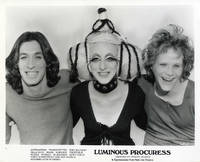
1971WALTER-FILM006450<p><em>New Line Cinema. No binding. Fine. New York: New Line Cinema 1971. Pair of vintage original 8 x 10" 20 x 25 cm. black-and-white print still photos fine. </em></p><p>Very scarce photos from the only feature film of experimental film director Steven Arnold. He curated the <em>Nocturnal Dreamshows</em> at the Palace Theater in San Francisco where The Cockettes got their start. "In 1969 Arnold began filming <em>Luminous Procuress</em> which went on to win him the 1972 New Director's Award at the San Francisco International Film Festival an extended exhibition at the Whitney Museum of American Art and a second invite to Cannes' Directors' Fortnight. Salvador Dali was so impressed with the film that he arranged a private screening at the St. Regis Hotel to which he invited New York's elite including Andy Warhol who also praised the film's genius. Arnold became a favorite of Dali's and in 1974 went to study with the master in Spain helping Dali to embellish and inaugurate his Museo-Teatro Dali.</p><p>After returning to California and failing to make any progress on other film projects Arnold was driven to find new modes of expression. By establishing his Los Angeles photography studio and west-coast salon Zanzibar Arnold did just that.</p><p>"From 1982-89 Steven Arnold found his niche designing and shooting <em>tableau-vivants</em> for four books leaving thousands of living tableau photographs and negatives unpublished. He also left behind a social legacy in Los Angeles which according to many who saw Zanzibar at its height has never been equaled. Arnold adored the vast cross-section of society represented at his nightly Salons but also culled inspiration from his dreams world religions sexuality fine art masterpieces Jungian archetypes social attitudes excess and artifice working all night and waking each afternoon to sketch dreams and visions into his growing collection of sketchbooks. In addition to his photography Arnold also translated these drawings into a large body of paintings and assemblage sculpture between 1990 and his early death in 1994." wikipedia.com</p><p><em>Luminous Procuress</em> is a surreal fantasy film in which two young men enter an alternate reality of what the photo describes as "AUTOMATONS TRANSVESTITES SUFI HOLYMEN MALE NUNS MIMES MONKEYS VEGETABLES PEOPLE WHORES MUSCLEMEN QUPIE DOLLS FAIRY GODMOTHERS AND ART MODELES." This is one of a tiny number of 1970s films in which The Cockettes appeared.</p> New Line Cinema
0495818739New. Brand new and still unused unknown
0495818658New. Brand new and still unused unknown
0495818682New. Brand new and still unused unknown
0495818747New. Brand new and still unused unknown
0495818704New. Brand new and still unused unknown
1966166291966. Truffaut François. Collection of film pressbooks 1966-1969 documents mid-twentieth-century film promotion and distribution practices within the French New Wave cinema movement. The material captures how films associated with François Truffaut were presented to journalists and exhibitors situating his work within the international circulation of European art cinema. The grouping supports research into cinematic publicity systems revealing how narrative authorship and visual identity were communicated to the press during the global expansion of French New Wave films.<br /> <br /> Truffaut François. Pressbook collection for Fahrenheit 451 1966 The Bride Wore Black La Mariée était en noir 1968 Stolen Kisses Baisers volés 1968 and Mississippi Mermaid La Sirène du Mississippi 1969. Four original pressbooks in illustrated wrappers each between 4 and 6 pages. These materials include film stills cast and crew credits narrative summaries excerpts of dialogue and promotional imagery including layouts for poster designs. The pressbooks were distributed to media outlets at the time of each film's release providing standardized information and visual content intended for reproduction in reviews advertisements and exhibition materials. The layout and content emphasize both the films' narrative elements and Truffaut's role as director reinforcing auteur-driven marketing.<br /> <br /> The material documents the system of film publicity and critical mediation through printed pressbooks showing how distributors and production entities shaped the reception of French New Wave cinema by supplying press-ready narratives imagery and interpretive framing and providing primary-source evidence for the study of international film marketing and auteur theory in practice. During the 1960s French New Wave directors including Truffaut gained international recognition and structured press dissemination played a key role in establishing their reputations outside France. Light handling wear to wrappers; contents clean and intact; overall very good to near fine condition. A cohesive group illustrating the mechanisms by which European art cinema was introduced and contextualized for global audiences. unknown
Sette voll. in 8° gr., t.tl. edit., tit. al d., pp. XLII-1558, 1262, 1179, 1435, 1722, 1274, 1834. Con tavv. col. in antip. e in nero n.t. Tra i collaboratori G. Ferrara, F. Di Giammatteo, T. Kezich, E. G. Laura, M. Verdone, G. Viazzi.
- S.n., Iver (Buckinghamshire) 24 novembre 1937, 20,5x25,5cm, une feuille. - Lettre autographe signée de René Clair, à en-tête de Pinewood studios à Iver en Angleterre, adressée à Carlo Rim, 26 lignes à l'encre noire, à propos de la naissance du fils de Carlo Rim pour laquelle René Clair ne semble pas être certain de l'avoir déjà félicité : "Avec honte, je découvre dans un dossier la carte par laquelle tu m'annonçais la naissance de ton fils. T'ai-je ou non envoyé des félicitations (dont la majeure partie s'adresse à Alice?), je n'en sais rien. Au risque de me répéter, je t'écris "à nouveau" ave quelques mois de retard." Afin de se rattraper quelque peu de son "oubli", René Clair manie l'humour : " Je suis né le 11 novembre. Ton fils le 14 juillet. Aux grands hommes les grandes dates. Je pourrai fonder en sa compagnie une société des gens bien-nés." et espère voir bientôt son ami Carlo Rim : "Tu tournes, me dit-on, à perdre haleine. Si tu peux t'arrêter une heure, quand je serai à Paris en décembre, j'espère que nous boirons à l'avenir de ta race." Pliures centrales inhérentes à la mise sous pli. Carlo Rim fut un écrivain provençal, auteur notamment de "Ma belle Marseille", un caricaturiste, un cinéaste : "Justin de Marseille", "L'armoire volante", "La maison Bonnadieu", et fut notamment l'ami de Fernandel, de Raimu et Marcel Pagnol mais aussi de Max Jacob et André Salmon qu'il rencontra à Sanary. [ENGLISH DESCRIPTION ON DEMAND]
- Nice 9 février 1952, 21x27cm, une feuille. - Lettre autographe signée de Jean Cocteau adressée depuis Nice à Carlo Rim, 11 lignes à l'encre bleue, à propos du tournage de "La maison Bonnadieu" que réalise Carlo Rim et pour lequel il a pris conseil auprès de Jean Cocteau qui lui répond : "Mon cher Carlo Rim, je reçois la lettre Bonnadieu trop tard et sur la côte. Je vous souhaite notre soleil si vous avez des extérieurs et je vous félicite de travailler avec mon admiarble Hayer. Bonne chance ! Votre Jean Cocteau", Jean Cocteau ayant agrémenté son patronyme de son habituelle étoile ainsi que de deux traits au crayon orange et au stylo bleu. Pliures centrales inhérentes à la mise sous pli. Carlo Rim fut un écrivain provençal, auteur notamment de "Ma belle Marseille", un caricaturiste, un cinéaste : "Justin de Marseille", "L'armoire volante", "La maison Bonnadieu", et fut notamment l'ami de Fernandel, de Raimu et Marcel Pagnol mais aussi de Max Jacob et André Salmon qu'il rencontra à Sanary. [ENGLISH DESCRIPTION ON DEMAND]
- S.n., s.l. 1919, 9,5x13,5cm, une feuille verso. - Photographic postcard signed by Polaire S.n., s.l1919, 9.5 x 13.5 cm, one verso sheet Photographic postcard depicting the singer and actress Polaire, facing her two dogs in her arms, taken in the A.Bert studio. A beautiful copy. Handwritten signature dated 1919 by Polaire above and to the right of her portrait. Handwritten presentation from Polaire on the back of the postcard to Mr Humbert Clerle. [FRENCH VERSION FOLLOWS] Carte postale photographique représentant la chanteuse et actrice Polaire, de face ses deux chiens dans les bras, prise dans le studio A.Bert. Bel exemplaire. Signature manuscrite datée de 1919 de Polaire en haut et à droite de son portrait. Envoi autographe de Polaire au verso de la carte postale à monsieur Humbert Clerle.
CARTELLA COMPLETA DI N. 15 LOCANDINE A COLORI, CM. 23 X 32, DEGLI ILLUSTRATORI CARLANTONIO LONGHI, AVERARDO CIRIELLO, ANGELO CESSELON, DONELLI, NICOLA SIMBARI, GIORGIO OLIVETTI, GIULIANO NISTRI, DANIELE MANNO. FILM: GIULIETTA E ROMEO, PIANURA ROSSA, IL PRIGIONIERO DELL'HAREM, AD OVEST DI ZANZIBAR, GIUBBA GLORIOSA, LA VALLE DEI MAORI, L'ISOLA DEL PARADISO, IL GRANDE FLAGELLO, IL FIGLIO CONTESO, SCANDALO DI NOTTE, IL MARCHIO DEL COBRA, I CONFINI DEL PROIBITO, L'IDOLO, 4 IN MEDICINA.
19904118Editions Presses de la Cité 1956. In-12 broché de 218 pages au format 12 x 18,5 cm. Belle couverture photo. Plats et intérieur frais malgré d'infimes frottis aux coins. Dos resté carré avec d'infimes traces de pliure. Intérieur frais malgré des rousseurs en page de garde. Portrait photo " Harcourt " de l'auteur, pleine page, au 4 ème plat. Edition originale en bel état général. Coupure de presse sur la mort de Dora Doll jointe. Précieux exemplaire enrichi d'une double dédicace autographe datée et signée de Dora Doll et Georges Simenon : Pour Monsieur Galland vive sympathie, Dora Doll, en cordial hommage de Georges Simenon, avec !'espoir qu'il ne sera pas déçu. Coupure de presse sur la mort de Dora Doll jointe.Le roman fut adapté au cinéma par Claude Autant-Lara en 1958 et présenté en sélection officielle en compétition à la Mostra de Venise 1958. Le scénario est écrit par Pierre Bost, d'après le roman éponyme de Georges Simenon paru en 1956, avec adaptation et dialogues de Jean Aurenche et Claude Autant-Lara. On trouve dans les rôles principaux : Jean Gabin, Brigitte Bardot, Edwige Feuillère, Franco Interlenghi, Nicole Berger, etc.
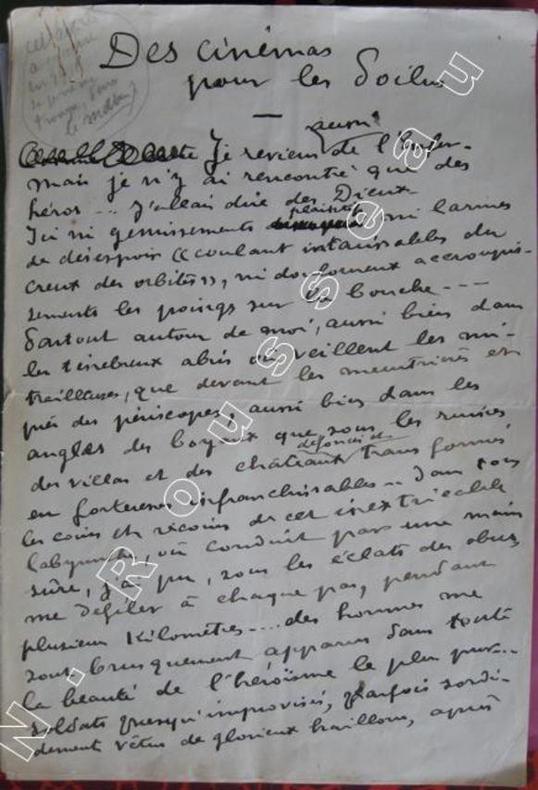
8674Manuscrit autographe signé de 6pp. grand in-4, ( rédigé au verso de 5 feuillets à l'en-tête du Ministre de l'Instruction Publique, sous-secrétariat d'Etat aux Beaux-arts ). Compte-rendu d'une visite sur le front., titré par l'auteur " Des cinémas pour les Poilus". Manuscrit à l'encre d'une plume large, plusieurs ratures, surcharges et ajouts . Armand Dayot, alors Inspecteur général des Beaux-arts, rend compte d'une visite dans les tranchées " Je reviens aussi de l'enfer, mais je n'y ai rencontré que des héros... J'allais dire des Dieux. Ici ni gémissements plaintifs, ni larmes de désespoir " coulant intarissables du creux des orbites"... Partout autour de moi.... dans tous les coins et recoins de cet inextricable labyrinthe... soldats presqu'improvisés, parfois sordidement vêtus de glorieux haillons, après tant de longs mois de souffrance et de combats , la barbe rude, le teint brulé mais les yeux pleins de flammes et le sourire aux lèvres, ce bon sourire français si près de la blague et de la chanson...". Il fait part de son émotion, voire " d'une vive commotion lorsque le premier obus de 150 éclata à une cinquantaine de mètres " ... Puis Dayot s'entretient avec l'officier " sous un abri casematé et blindé, que le bruit de la canonnade faisait trembler " qui l' interrroge sur les soldats : " ...que pensez-vous de nos poilus ?... Je pense que chacun d'entre eux mérite une statue ". L'interlocuteur de Dayot reconnait que ce serait " une excellente aubaine pour les sculpteurs ... mais ... assure... nos Poilus n'en demandent pas tant; Tachez seulement d'obtenir pour eux quelques ( rayé), un appareil cinématographique...". L' officier poursuit " tant que nos Poilus sont en première ligne, tout va bien. Devant la mort le moral est excellent... (le soldat) est immobile , comme un bronze....un braconnier à l'affut....Puis vient l'heure du repos, l'heure où tout danger disparait.. Alors les nerfs se détendent, les songes nostalgiques montent du fond de l'âme, et le Poilu loin de toute distraction , s'ennuie. C'est l'heure du cafard..." . Devant ce plaidoyer pour le cinéma , Dayot note de demander au Journal Le Matin de faire connaitre ce souhait " et je serai bien surpris que cette mesure salutaire ne se généralise pas bientot sur tous les fronts de bataille"... L' officier précise encore " Mais surtout pas de films tristes, pas de drames larmoyants, mais des histoires "bien rigolotes" avec de jolies petites femmes... Tuons le cafard pour mieux tuer le Boche...". Dayot revenu à l'arrière, prend des notes sur sa visite, il écrit son compte-rendu dans une chambre de la sous -préfecture (?) à tous vents, dans une ville où "le jardin est bouleversé par les obus", où les maisons s'écroulent. Il pourrait s'agir de Baccarat ( nom figurant à la fin de ses notes).
182114767Dimensions : (297 x 214 mm).