CollectifLivre Rare Book
151 804 résultats
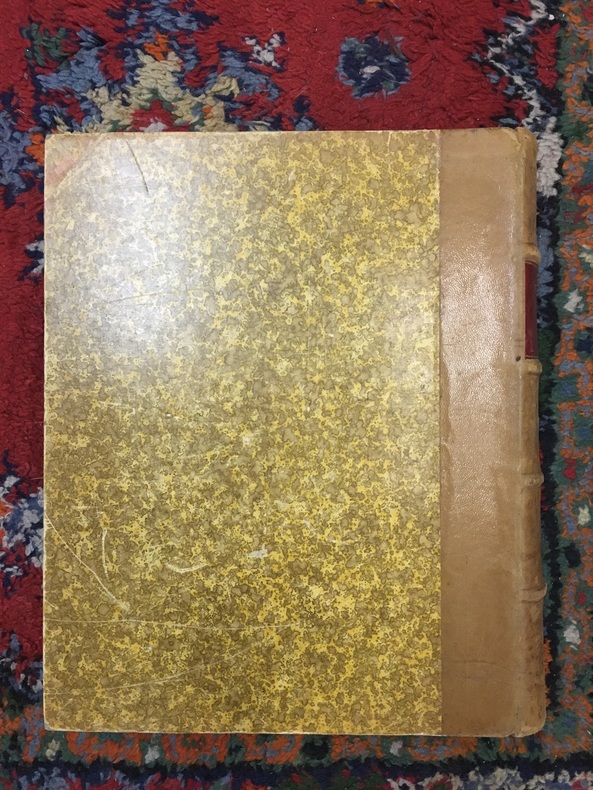
hum300mAvant de s’autoproclamer en 1902 “le plus gros éditeur de périodiques illustrés en France” Samuel-Sigismond Schwarz est éditeur de feuilletons frivoles voire grivois (Fanfan la Tulipe, etc) et d’éditions reliées dans le goût d’alors des œuvres de Hugo mais, conscient que l’attrait de cette formule économique s’étiole, il envisage de troquer rapidement le feuilleton pour le périodique illustré, opération d’autant plus propice qu’elle intervient dans une France violemment agitée par l’affaire Dreyfus. C’est au cours de l’Exposition Universelle de Paris de 1900 qu’il croise le chemin d’Albert Langen, l'éditeur allemand et fondateur du quotidien satirique Simplicissimus publié depuis 1896. Aussitôt attiré par le ton, il se met en tête de créer un journal hebdomadaire illustré en couleur qui, comme il l’écrit à Anatole France, “parlera sous une forme très mordante, très cinglante, des problèmes de la vie sociale actuelle”. Le 4 avril 1901 sort donc L’Assiette au Beurre, journal complétant un portefeuille de titres déjà riche du Pompon, du Tutu et du Frou-Frou. Dès la couverture, le premier numéro donne le ton pour ce qui restera un titre phare de la satire française : l’assiette au beurre se partage peu car, comme Steinlen le fait dire aux grévistes acculés “et le citoyen-ministre, il n’envoie rien ? Si, 3000 hommes de troupe”. Si le journal n’a jamais été complètement interdit à la vente, certaines de ses caricatures jugées trop sensibles, notamment sur le plan diplomatique, ont pu parfois faire l’objet d’une censure efficace, comme ce fut le cas pour la dernière planche du numéro du 28 septembre 1901 consacré aux camps de concentration du Transvaal figurant l’Impudique Albion dévoilant un postérieur grimant Édouard VII. Rapidement la planche de Jean Veber est rééditée et le visage du monarque moqué recouvert d’un linge. Dans les albums que nous présentons, chaque numéro est issu du tirage original et toutes les planches telles que voulues par leurs auteurs. À noter également la présence du numéro spécial Crimes et Châtiments intégralement illustré par Vallotton donc chaque lithographie est détachable grâce au système de pointillés perforés. Parmi les collaborateurs du journal, signalons Félix Vallotton, Charles Léandre, Alfred Le Petit, Jacques Villon, Caran d’Ache, Carlègle, Hermann-Paul, Chas Laborde, Jules Chéret, Géo-Dupuis, Kees van Dongen, Kupka, Carlègle, Pierre Falké, Jean Émile Laboureur, Juan Gris, Démétrios Galanis, Nadar, Raymond Renefer, Albert Robida, Steinlen, Jean Villemot, Gabriele Galantara, ou encore Louis Marcoussis. Ici sont rassemblés 4 albums compilant les quatre premières années du titre, depuis le n°1 du 4 avril 1901 au n°195 du 24 décembre 1904. Parmi les collaborateurs au journal, signalons Félix Vallotton, Charles Léandre, Alfred Le Petit, Jacques Villon, Caran d’Ache, Carlègle, Hermann-Paul, Chas Laborde, Jules Chéret, Géo-Dupuis, Kees van Dongen, Kupka, Pierre Falké, Jean Émile Laboureur, Juan Gris, Démétrios Galanis, Nadar, Raymond Renefer, Albert Robida, Steinlen, Jean Villemot, Gabriele Galantara, ou encore Louis Marcoussis. Ici sont rassemblés 4 albums compilant les quatre premières années du titre, depuis le n°1 du 4 avril 1901 au n°195 du 24 décembre 1904. 4 volumes, 1901 au format 35x27cms (feuillets non massicotés en pied) puis les 3 suivants 35x25cm. Reliure demi-basane hétérogène, dos à nerfs, plats et contreplats marbrés, pièce de titre cuir grenat, feuillets montés sur onglets. 1901 basane blonde, 1902 basane brune puis 1903 et 1904 basane havane. Chaque album est en parfait état de conservation et s’il est à signaler quelques rares accrocs, frottement et griffures sur le cuir au niveau du dos, coiffes et mors ainsi qu’un jaunissement normal dû aux papiers employés et à l’époque de publication déjà lointaine, l’ensemble est en très bel état, l’intérieur frais, sain et parfaitement complet. Chaque numéro est en parfait état de conservation et s’il est à signaler quelques rares accrocs, frottement et griffures sur le cuir au niveau du dos, coiffes et mors, l’ensemble est en très bel état, l’intérieur frais, sain et parfaitement complet des rares numéros que sont, par exemple, le Crimes et Châtiments intégralement illustré par Vallotton et lithographié (n°48).
Very Good Turkish, Ottoman (1500-1928) Contemporary quarter leather bdg. Handsomely bound. Six raised bands to spine, the second compartment has the title, the fifth has "issue 1-104", and the sixth has ex-owner's name of the volume, "Semseddin" lettered gilt. Original end-papers of the period. Slightly age-toned on the lower pages, fading on extremities of boards, overall a very good volume. Folio. (41 x 29 cm). In Ottoman script (Old Turkish with Arabic letters) and Turkish with Latin letters. This folio volume consists of 104 issues of the periodical, each issue has 4 pages, which has mostly color illustrated covers as well as several b/w ones. A rare togetherness of the first 104 issues of this Turkish satirical magazine, richly illustrated with thousands of attractive illustrations and caricatures, was published in Istanbul twice a week every Wednesday and Saturday with at least four, at most eight pages, during the Letter Revolution 1928, when the transition from the Arabic alphabet to new Latin letters was ensured. The collection provides an invaluable resource, reflecting the changes in society during and after the Letter Revolution in New Turkey, 1928, placing the new Latin alphabet instead of old Arabic letters and contributing to the development of reading and writing skills of the new Turkish society, as well as "creating the basis for the rapid social evolution in the young Turkish Republic Revolution" soon after the proclamation of the Republic in 1923. The newspaper had a printing house with the same name headquartered in Bab-i Ali (The Sublime Porte of Constantinople), the place where the heart of the Ottoman press was. Burhan Cahid Morkaya left Karagöz Newspaper and founded Köroglu Newspaper in 1928 and wanted the people living in Istanbul and Anatolia to be able to read and write new letters. Indeed, during the period of its publication, Köroglu Newspaper reached the most remote corners of the New Turkish Republic with its attractive cartoons covering local and mostly international subjects. In addition to this news and cartoons, Morkaya also published Turkish reading passages with Arabic letters that were transcripted into Latin letters. Therefore, he created a great positive effect that facilitated the transition to new letters during the Turkish Alphabet Revolution. Duman 1155.
- Le Passe-Temps, Ernest Bazard, Paris 1856-1864, 22,5x32cm, 8 volumes reliés. - Edition originale. Reliures en demi basane noire, dos lisses ornés de filets estampés à froid, pages de garde de papier à la cuve, reliures de l'époque. Nombreuses contributions, d'Alexandre Dumas (Le page du Duc de Savoie et Mémoires d'un policeman), de Emile de Nangis, Henry de Kock, Paul de Kock, Jules Janin, Charles Maquet, Luc Chardall, Frank Munzel, Elie Berthet, Louis Chazerain, Léon Beynet, Adrien Robert, Victor Perceval, A. de Gondrécourt, E. Gonzales, E. Bazard, Xavier de Montépin, Mme Ancelot, Léon Beauvallet, E. Capendu, Gustave Aimard, Marquis de Foudras, Edouard Devicque, Louis Digy, Philibert Audebrand, Albert Blanquet, Mortonval, Paul Duplessis. Ce journal prendra fin de 1893. Chaque numéro comporte une belle gravure sur bois en première page et d'autres in texte. A la fin de chaque numéro nous trouvons la rubrique "Contemporains en pantoufles" qui à travers les ans décrit presque toutes les personnalités de l'époque. Tables des matières et index des biographies manuscrits encollés sur les contreplats de chaque volume. Très rare ensemble de ce journal populaire dans un état de conservation remarquable. [ENGLISH DESCRIPTION ON DEMAND]
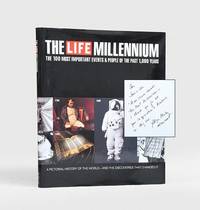
188391New York: Life Books 1998. Presented to Joan Didion First edition presentation copy inscribed by the photography editor for this title to Joan Didion and her husband on the front free endpaper "For Joan & John - as we slouch towards this next millennium - I thank you for all your inspiration & kindness in this one. Alison Morley Oct 22 1998". Didion had a column in Life starting in the late 60s and her daughter was a photo editor for Elle magazine who likely worked with Morley. The inscription references Didion's book Slouching Towards Bethlehem. Quarto. Colour illustrations throughout. Original black boards spine lettered in gilt. With dust jacket. Spine ends and head of rear cover just bumped; jacket unclipped minor creasing and one nick to edges: a near-fine copy in fine jacket. hardcover
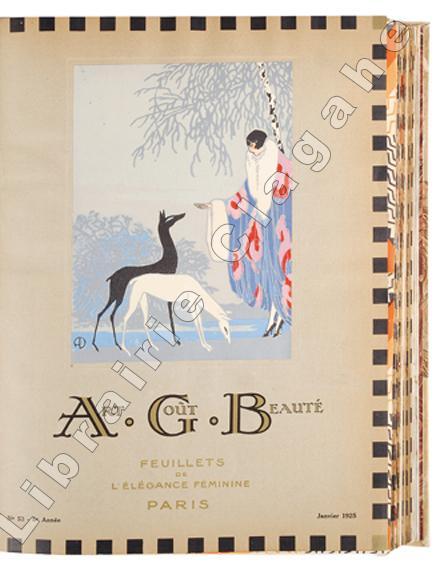
18380in-4°, bradel demi-velin à coin, titre et décor aquarellés (reliure moderne) du n°53 à 64 année complète. Les douze couvertures illustrées ont été conservées.
195097828452169471950-2007, Boxing News, in-4 brochés, Boxing News (divers numéros) lot environ 2000 numéros ou 6Eur pièce, hebdomadaire britannique | Etat : bon état (Ref.: G8692)
1843RO80039187IMP. RENOUARD Paul. 1841 - 1843. In-Folio. Relié demi-cuir. Etat passable, Couv. défraîchie, Dos satisfaisant, Intérieur frais. Environ 1000 + 1500 pages. Une carte dépliante en noir et blanc, hors-texte. Titres, tomaisons et filets dorés sur le dos cuir bordeaux. Texte sur 2 colonnes. Quelques épidermures sur le cuir. Quelques pages volantes. Rares passages de vers en marges. Marges abîmées, avec des manques et des pliures altérant légèrement la lecture du texte, en fin de 1er volume. Quelques tampons en marges. Coiffe en-tête abîmée sur le 2ème volume. Ouvrages déboités.. . . . Classification Dewey : 70.49-Presse illustrée, magazines, revues
408 pages. Signed and inscribed by fashion icon Grace Coddington upon title page, otherwise clean, bright and unmarked with light external wear. Reviews the life and prolific fashion accomplishments of Ms. Coddington during her thirty year tenure with Vogue magazine. Sumptously photo-illustrated in colour and black and white. Binding tight and square. Decorated black boards protected by attractive clear glossy acetate protector. Slipcase not included. A high-quality copy of this magnificent work. Book
185373896New York:: G. P. Putnam's & Co 1853-1856. First edition. 195y c. half morocco and marbled sides. Slight rubbing to the bindings; all volumes clean tight and sound. 8vo. Melville's contributions include: "Our Young Authors--Melville" "Israel Potter; or Fifty Years of Exile" Parts 1-2 "Piazza Tales" "I am My Chimney" "The Apple Tree Table" and "Bartleby the Scrivener." G. P. Putnam's & Co, unknown
194089451940. 1 vols. One full red calf corporate ledger titled "Yachting Incorporated"; one green cloth stock ledger with the remains of a Yachting label on the upper cover; two green cloth books of stock certificates each labeled "Yachting Incorporated Preferred Stock" and one such book labeled "Yachting Incorporated Common Stock"; a similar book of stock certificates of Kennedy Brothers Incorporated; two appointment books with tide tables for 1937 and 1938; and a brown expanding legal-size folder of documents. 1 vols. An Archive Concerning Yachting Magazine. John C. Kennedy was successively treasurer then president of Yachting Inc. publishers of Yachting Magazine and retained this archive after the magazine changed hands in the late 1930s. Included in this material are the corporate records of the Kelmo Corporation into which Yachting Inc. was merged in 1924 it later separated and was re-merged in 1940 records of the Yachting Board of Directors' meetings primarily concerning financing and including the meeting agreeing to sell all the capital stock to Kennedy; the actual books of issued and unissued common and preferred stock certificates of Yachting Inc. a book of shares of common stock of Kennedy Brothers Incorporated transferring Yachting stock to the Kennedys; the original 1923 signed option agreement by which Yachting's owners transferred for $40000 the total outstanding stock common and preferred and the actual stock certificates themselves and the original agreement of Oswald Garrison Villard conferring for $15000 his title and interest in the magazine--name records and other assets; Yachting's corporate income tax returns for 1927 and 1933 and some later tax and real estate correspondence; a lengthy Price Waterhouse report concerning the history and financial condition of Yachting as of January 1924 and a less encouraging special balance sheet and P&L for 1933; a 1933 recapitulation of book sales; and balance sheets and stock certificates of related companies. <br/> <br/> Also included are two 4 x 7" black leatherette books "Tide Tables and Daily Log" for l937 and 1938 in which John C. Kennedy has recorded his daily activities from July 7 l937 thru December 31 1938. Of particular interest are the efforts made in the fall of 1937 to interest Roy E. Larsen of Time Inc. in the purchase of Yachting Magazine by Time--a proposition which Larsen declined. The entries for 1938 deal mostly with Kennedy's growing financial worries and the decline of his sister's and his own health: it comes as a shock to learn that the author of these almost unbearably poignant entries was only 50 years old. On June 28 Kennedy reports the transfer "which took away my last of Yachting after 15 yrs." <br/><br/> In addition the archive contains the original certification of the familiar "Yachting" logo as a U.S. trade-mark registered June 3 1924; the original certificate registering the same in Canada dated January 20 1925; the unsigned carbon of a 1935 deposition by John C. Kennedy with accompanying schedule showing Yachting Inc.'s stock portfolio at the time of its sale in 1933 at a loss of $144000; the magazine's copy of a signed agreement to publish "The Model Yacht" by John O. Berg; a corrected draft of a document changing the corporate name of Yachting Inc. to Kelmo Corporation dated October 26 1939; 5 insurance policies with photostats of applications on the life of John C. Kennedy; his U.S. passport issued 1924; his autograph 2-pp enumeration of property to be divided among the heirs of his mother along with photographs and correspondence concerning her grave; and other papers including his agreement to lease from Jules S. Bache his 112-ft. diesel yacht "Colmena" for July and August 1931 for $13500--a unique souvenir of happier days. Altogether an archive of engrossing interest for the business and sporting historian alike. unknown books
The complete works of this early British learned economic journal which was published quarterly between 1881 and 1914 for the Oxford University Branch of The Christian Social Union. Includes writings by many names familiar to the modern historian of economic thought including: W.J. Ashley; W.H. Beveridge; J. Bonar; A.L. Bowley; Edwin Cannan; S.J. Chapman; A.W. Flux; L.L. Price; J.C. Stamp; R.H. Tawney; Sidney Webb; Beatrice Webb. Usual library markings. Most volumes bound in three-quarter leather with raised bands. Many later volumes bound in black buckram. Buckram volumes in good condition although all volumes bear varying degrees of external dustiness due to the partial disintegration of the leather on the leather-bound volumes which has produced considerable residue. Some leather backstrips partially loose. Gilt lettering upon all backstrips bears varying degrees of wear. Bindings generally sound. Leather volumes bear heavy external wear. Aside from the external soiling/dust, a worthy working compilation of this rare and interesting journal. Total weight approximately 90 pounds. Book
xx, 406, xiv, 409 pp. Index, black and white photographic plates, tissue-protected frontis photo and sketch of J.D. Rockefeller, maps, graphs, tables. The ground-breaking expose of John D. Rockefeller's Standard Oil Trust. First appeared as a nineteen part serialization in McClure's Magazine. "Describes the processes by which the oil industry passed from the control of the many to that of the few. The Standard Oil Trust furnished the methods, the charter, and the traditions for its followers. It led in the struggle against legislation against combinations. The perfection of its organisation and the ability and daring with which it carried out its projects, made it the pre-eminent trust of the world." - Paraphrased from Preface. Top edges gilt. Gilt lettering upon spines. Decorative title embossed upon red front boards. Moderate wear. Prior owner's discrete details upon recto of each back free endpaper, otherwise clean and unmarked. Narrow openings along hinges of Vol I. Dust jackets not included. A quality copy of this historic work. HOWES T 33. Book
19712501170096ybvkNo publisher's imprint; probably early 1971, as the album was released on April 23 1971 on the recently founded label 'Rolling Stones Records'. 2 parts* of 4-layer-pressed cardboard (the outer layers stronger than the inner ones, 3 mm in total), backed with fold-out stands (the lower one twice-folded for higher stability) of slightly softer 'single-wall' cardboard (2 thin layers with wave-shaped filling, also ca. 3 mm). - Upper part (from the upper 40% of the record-cover up to Mick's head): 87 x 41,5 cm (43+ x 16+ inches, widest at elbows) / Lower part (from the lower 60% of the record-cover down to Mick's feet [with plaster on the 2nd toe of his left foot]): 89 x 43,5 cm (35 x 17x inches, widest at feet); Total height: 176 cm (69+ inches).
STLB0079Wien, Vlg. d. Ersten Wiener Volksbuchhdlg. gr.-4°, mit zahlr., tls. farb. Abb., HLn. d. Zt., berieben, Kanten berieben, Ecken leicht bestoß., Buchblock des 1. Bandes lose, sonst insges. guter Zustand. Dietzel-Hügel 1191. Unter diesem Titel als Nachfolge bzw. Vorläuferzeitschrift der "Glühlichter" zwischen 1896 u. 1910 erschienen. Das illustrierte sozialdemokratische Satireblatt richtete seine Polemiken vor allem gegen Lueger und die Christlichsozialen, aber auch gegen Adel u. Klerus. - So komplett höchst selten.
19159356Madrid: Revista de Derecho Privado 1915-1974.- Tamaño 4º; Los 15 primeros años que ofrecemos están encuadernados en Media Piel.- Contiene además un índice sistemático de 1934 a 1946. La revista ha sido catalogada por mensualidades en vez de por números considerando el mes que se omita como número falto. DERECHO EN GENERAL Libro en español Revista de Derecho Privado hardcover
189931178Madrid: Imp. de A. Marco 1899.- 9 fascÃculos seguidos desde el 15 de mayo al 5 de agosto apareciendo los dÃas 5 15 y 25 de cada mes de unas 45 p. cada una llevando dos numeraciones por un lado la de la propia revista que es continuada en cada siguiente fascÃculo y por otro lado la de la novela por entregas que aparece en cada fascÃculo y también es continuada; 8º mayor 19 x 125 cm.; Papel algo quebradizo.- Todos los trabajos de la Revista Nueva son inéditos por lo que se convierten en primeras ediciones debidas a la pluma de insignes escritores del momento tales como Amado Nervo León Bloy Francisco Villaespesa Ramiro de Maeztu H. Ibsen B. G. Candamo PÃo Baroja Leopoldo Lugones PalmerÃn de Oliva Carlos Reyles Rubén darÃo F. A. de Icaza Jacinto Benavente Miguel de Unamuno Mariano de Cavia Benito Pérez Galdós Luis Zozaya José M. de Pereda Silverio Lanza Salvador Rueda J. M. Matheu J. Francos RodrÃguez E. Alonso y Orera entre otros mas. Es por lo que puede decirse que el valor literario de esta publicación es enorme no solo por la categorÃa de los intervinientes sino por la rareza de las obras que nos ofrecen. No se venden sueltos ya que son números seguidos y se ofrecen en conjunto. LITERATURA Y FILOSOFÃA ESPAÑOLAS DE LOS SIGLOS XIX-XXI Y SU HISTORIA EN GENERAL Libro en español Imp. de A. Marco paperback
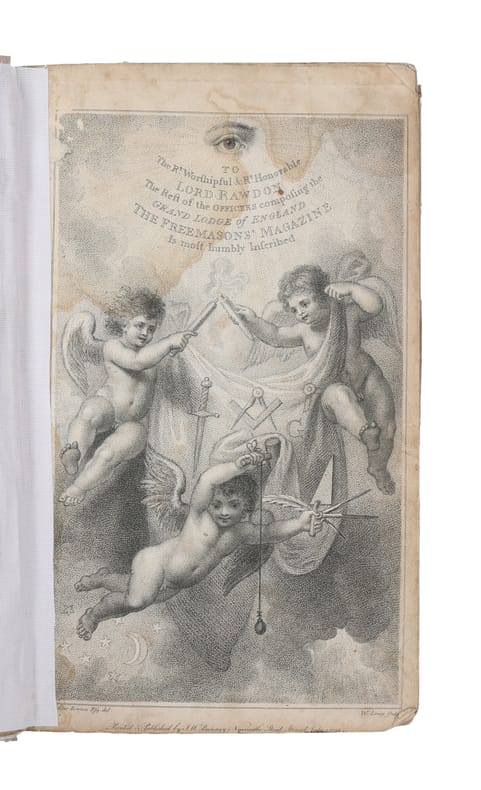
179863098London Scatcherd & Whitaker; Parsons; Cawthorn 1793 - 1798. 8vo. Bound in 11 volumes. Volume 2 - 11 uniformly bound in contemporary half calfs. Volume 1 in half calf with later marbled paper covered boards. Bindings with wear and stains. Leather on spines cracked. Volume 1 with reinforced hinges a dampstain to first leaves. A few volumes with dampstain to first leaves but internally generally a nice and clean set. 616 4 pp. 2 frontispiece and 7 engraved plates; 4 480 pp. 7 plates Wolstieg only calling for 5; 4 450 4 pp. 7 engraved plates; 4 426 6 8 pp. 7 engraved plates Wolstieg only calling for 3; 2 436 pp. 6 engraved plates Wolstieg only calling for 2; 2 452 4 pp. 6 engraved plates Wolstieg only calling for 4; 6 438 4 pp. 8 engraved plates Wolstieg only calling for 6; 4 464 4 pp. 8 engraved plates Wolstieg only calling for 4; 6 506 pp. 9 engraved plates Wolstieg only calling for 4; 2 430 pp. 6 engraved plates Wolstieg only calling for 1; 2 IV 338 8 pp. 9 engraved plates Wolstieg only calling for 2. This set has a total of 79 engraved plates Wolfstieg only calls for 47 plates. <br/><br/><em>Rare complete run of the first English periodical dedicated to freemasonry “the archetype of later Masonic periodicals†Önnerfors The Freemasons’ Magazine 1793–1798 published at a crucial time in the history of European Freemasonry in the immediate aftermath of the French Revolution. It represents one of the first efforts by the fraternity to define consolidate and disseminate its intellectual and moral identity in public. Its contents - lodge proceedings philosophical essays antiquarian inquiries biographical notices poetry and finely executed symbolic engravings - reflect the full breadth of late Enlightenment Masonry. The importance of the work lies in its function as a precursor since it anticipates the Masonic journals in the 19th century and marks the transition of Freemasonry into a self-conscious print-based intellectual culture. â€The Freemasons’ Magazine represent a forceful statement of British Freemasonry concerning its vigour loyalty and societal engagement. During 1794 the journal for the first time served as a platform to refute anti-Masonic writings that circulated in the public. Important apologies such as Defence of masonry 1730 or Cousto’s spiced account of his treatment by the Portuguese inquisition were republished. Parts of Ramsay’s ‘Oration’ were republished not just once but twice. We can also witness how the Knights Templar called the ‘sublime degree of masonry’ entered the world of British Masonic imagination long after the continental development. Nevertheless at the very same time Freemasonry in Britain was also celebrating technological progress in industry agriculture and science which makes its relationship to modernity complex. The Freemasons’ Magazine managed to attract correspondents in different parts of the empire and even the USA. A particularly strong link throughout the first seven volumes was Edinburgh. In the last four volumes we find more material inserted from Ireland at exactly the time when political tensions there erupted into a full-scale rebellion. The political tense years of 1797 and 1798 offer an intriguing insight into the British psyche at the time. Under constant real and imagined threat of French invasion internally shaken by the Irish rebellion uprisings and repeated mutinies public opinion was fuelled with anti-Masonic ideas not at least by Robison’s book Proofs of a conspiracy. The Freemasons’ Magazine unfortunately did not survive 1798. Most importantly perhaps it can be regarded as the archetype of later Masonic periodicals developing into a archtype Masonic press by the middle of the nineteenth century with titles such as he Freemasons’ Quarterly Magazine and Review 1834–53 The Masonic observer 1856–9 he Freemason’s Magazine and Masonic mirror 1856–71 the Freemason 1869–1951 some of them surviving well into the twentieth century. Whereas Masonic periodicals during the first century of their existence tied into the ongoing debates and controversies surrounding Freemasonry in culture and society they developed more and more into purely internal membership magazines with little connection to the outside world.†Önnerfors The Freemasons’ Magazine 1793–1798. Wolfsteig 516 </em> hardcover
179863098London, Scatcherd & Whitaker Parsons Cawthorn, 1793 - 1798. 8vo. Bound in 11 volumes. Volume 2 - 11 uniformly bound in contemporary half calfs. Volume 1 in half calf with later marbled paper covered boards. Bindings with wear and stains. Leather on spines cracked. Volume 1 with reinforced hinges a dampstain to first leaves. A few volumes with dampstain to first leaves but, internally, generally a nice and clean set. 616, (4) pp. + 2 frontispiece and 7 engraved plates (4), 480 pp. + 7 plates (Wolstieg only calling for 5) (4), 450, (4) pp. + 7 engraved plates (4), 426, (6), 8 pp. + 7 engraved plates (Wolstieg only calling for 3) (2), 436 pp. + 6 engraved plates (Wolstieg only calling for 2) (2), 452, (4) pp. + 6 engraved plates (Wolstieg only calling for 4) (6), 438, (4) pp. + 8 engraved plates (Wolstieg only calling for 6) (4), 464, (4) pp. + 8 engraved plates (Wolstieg only calling for 4) (6), 506 pp. + 9 engraved plates (Wolstieg only calling for 4) (2), 430 pp. + 6 engraved plates (Wolstieg only calling for 1) (2), IV, 338, (8) pp. + 9 engraved plates (Wolstieg only calling for 2). This set has a total of 79 engraved plates, Wolfstieg only calls for 47 plates.
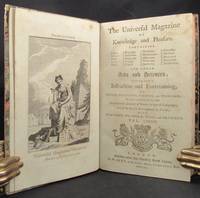
179031351London: W. Bent 1790. First Edition of the volume for January through June of 1790 including the supplements. Containing the stated FIRST PRINTING of the Addresses of the Mayor of Alexandria VA. to George Washington on his leaving his home in Mount Vernon to become President of the United States and of Washington's address to the people in reply. Most probably the first printing in book form of either of the addresses. No earlier printings in book form seem to exist and the Library of Congress shows only the manuscript copy in their holdings. Also containing one of the earliest reports of the mutiny onboard the H.M.S. 'Bounty' and an extensive essay on William Harvey as well as an essay by Mrs. Piozzi on the present King of Naples. Illustrated throughout. 8vo contemporary tan calf over marbled paper covered boards the spine with raised bands and a single red morocco label gilt tooled and lettered. 379 5 index pp. A very fresh and well preserved copy the text still quite clean and crisp only a hint of occasional spotting a few old marks by an early reader including the marking of one small section as "Not Fact". The binding has some rubbing at the tips and edges two joints starting but still a firm and solid binding in original state with no evidence of repair or restoration. THE UNIVERSAL MAGAZINE FOR THE FIRST HALF OF 1790; which with the stated first printing of the address to George Washington and his address to the Citizens of Alexandria also contains "Letters Debates Essays Tales Poetry History Biography Antiquities Voyages Travels Astronomy Geography Mathematics Mechanics Architecture Philosophy Medicine Chemistry Husbandry Gardening and other Arts and Sciences."<br> At 10:00am on the morning of April 16 1789 General George Washington left Mount Vernon for the journey north to New York where he would be inaugurated as the first President of the new United States. His first stop was in Alexandria with his former aide-de-camp Col. David Humphries and the Secretary of Congress Charles Thomson. At noon he arrived in Alexandria where he took an early dinner at Wise's Tavern with citizens of the town. The address by the Mayor celebrating Washington's service to and love of country was followed by Washington's own address concerning his considerations for his having accepted the honour to be bestowed upon him in New York. Washington had wanted to retire from public life but agreed to continue to serve the new nation upon the call of its citizenry.<br> Both addresses are moving tributes one to the man one to the new nation and its people. Humble in origin brilliant in effect they are. In the later afternoon hours General Washington was escorted by admirers up the Potomac to Georgetown where he was greeted by a large contingent of the citizenry of that town who escorted him up the Post Road towards Baltimore where he spent the night at Spurrier's Tavern. <br><br>George Washington's Address:<br> <br>To THE MAYOR CORPORATION AND CITIZENS OF ALEXANDRIA<br><br>Alexandria April 16 1789.<br><br>"Gentlemen: Although I ought not to conceal yet I cannot describe the painful emotions which I felt in being called upon to determine whether I would accept or refuse the Presidency of the United States.<br><br>The unanimity of the choice the opinion of my friends communicated from different parts of Europe as well as of America the apparent wish of those who were not altogether satisfied with the Constitution in its present form and an ardent desire on my own part to be instrumental in conciliating the good will of my countrymen towards each other have induced an acceptance.<br><br>Those who have known me best and you my fellow citizens are from your situation in that number know better than any others that my love of retirement is so great that no earthly consideration short of a conviction of duty could have prevailed upon me to depart from my resolution “ never more to take any share in transactions of a public nature .†For at my age and in my circumstances what possible advantages could I propose to myself from embarking again on the tempestuous and uncertain ocean of public-life<br><br>I do not feel myself under the necessity of making public declarations in order to convince you Gentlemen of my attachment to yourselves and regard for your interests. The whole tenor of my life has been open to your inspection; and my past actions rather than my present declarations must be the pledge of my future conduct.<br><br>In the mean time I thank you most sincerely for the expressions of kindness contained in your valedictory address. It is true just after having bade adieu to my domestic connexions this tender proof of your friendship is but too well calculated still farther to awaken my sensibility and encrease my regret at parting from the enjoyments of private life.<br><br>All that now remains for me is to commit myself and you to the protection of that beneficent Being who on a former occasion has happly brought us together after a long and distressing separation. Perhaps the same gracious Providence will again indulge us with the same heartfelt felicity. But words my fellow-citizens fail me: Unutterable sensations must then be left to more expressive silence: while from an aching heart I bid you all my affectionate friends and kind neighbours farewell! "<br><br> This volume also contains a series of Picturesque Scenes from Homer's Iliad with handsome engravings; Memoirs of the life and writings of the celebrated physician Dr. William Harvey; and a virtually countless array of stories and reports of "all things instructive and entertaining." W. Bent hardcover
- Le Grand Jeu, Paris Eté 1928 - Automne 1930, 19x24cm, 3 volumes brochés. - First edition for each issue of this Surrealist review, which only ran for three issues Contributions from René Daumal, Robert Desnos, Roger Gilbert-Lecomte, André Rolland de Réneville, Maurice Henry, Georges Ribemont-Dessaignes, Saint-Pol-Roux, Roger Vailland, André Masson, Mayo, Hans Arp, Arthur Rimbaud with unpublished pieces, and so on Covers and spine marginally sunned, one joint cracked at foot, traces of adhesive paper to first and final pages of volumes 1 and 2, small drawing of a fetish in biro to foot of lower cover of second volume, but otherwise a good set considering the fragility of copies of this work A rare complete set of all three numbers of this famous and very rare Surrealist review. [FRENCH VERSION FOLLOWS] Edition originale pour chacun des volumes de cette revue surréaliste qui ne connût que 3 numéros. Contributions de René Daumal, Robert Desnos, Roger Gilbert-Lecomte, André Rolland de Réneville, Maurice Henry, Georges Ribemont-Dessaignes, Saint-Pol-Roux, Roger Vailland, André Masson, Mayo, Hans Arp, Arthur Rimbaud avec des inédits... Dos et plats marginalement insolés, un mors fendu en pied, traces de papier adhésif sur les premières et dernières pages des volumes 1 et 2, un petit gri-gri au stylo bille en pied du deuxième plat du second volume, sinon agréable ensemble au regard de la fragilité des exemplaires. Rare ensemble complet en trois numéros de cette célèbre et très rare revue surréaliste.
17883741<p><strong>Harvard College -- "the earliest engraving of the College</strong><strong> which one may reasonably hope to obtain"</strong></p><p>This engraving entitled "View of the ancient Buildings belonging to Harvard College Cambridge New-England" appeared in the December 1788 issue of <em>The Columbian Magazine.</em> Bail notes that the view is based on the Burgis-Price print of 1743 which in turn was a slight modification of the Burgis view of 1726. The view taken from a point in front of the present Johnston Gate shows three College buildings in 1726 from left to right: the second Harvard College the first Stoughton Hall and the still-standing Massachusetts Hall. Although unsigned the engraving is undoubtedly the work of James Trenchard a co-owner of <em>The Columbian</em> <em>Magazine </em>and the engraver of nearly all the plates which appeared in it. <br /><br />Of the<em> Columbian</em> <em>Magazine</em> view Bail states: "In spite of the fact that the print is solely an adaptation it is important because of its early appearance and relative scarcity. This is the earliest engraving of the College which one may reasonably hope to obtain."</p><p>The engraving is accompanied by a disbound example of the December 1788 <em>Columbian Magazine</em> in which it appeared. It includes a 5-page "An Account of the ancient Colleges of Cambridge in New-England." Most of this is a republication of material from "a very scarce and valuable pamphlet" printed in London in 1642. In addition to a description of the College "The edifice is very fair and comely within and without." the rules and curriculum of the College are provided.</p><p>A very desirable engraving of Harvard with an example of the magazine in which it originally appeared.</p><p><strong>References:</strong> For the engraving: Bail <em>Views of Harvard</em>: 13; Plate XVII illustrated. Fielding <em>American Engravers upon Copper and Steel</em>: 1819. <br /><br /><strong>Condition: </strong>Image is age-toned with some generally light foxing. Darkening to margins outside of platemark where previously matted; remnant of strip of masking tape at upper margin on verso. The <em>Magazine</em> is complete and quite bright and clean although several pages are detached from the balance of the text.<br /><br />ICN 3431. <br /><br /><br /><br /></p> Printed for the Proprietors by W. Spotswood.
1953311614NP: WAYNE FELLOWS PRODUCTIONS/WARNER BROS. Near Fine. 1953. First Edition. Script. Final Script. Dated: May 1 1953. 90pp. Near fine in peach-colored studio covers with bradbound blue mechanically produced sheets. White revision sheets are present as well. Pencilled notes on blank reverse of a few pages Directed by John Farrow starring John Wayne in one of his signature roles as Calvary scout Hondo Lane with actress Geraldine Page in her supporting Oscar nominated debut performance. Also features Ward Bond in the memorable part of Buffalo Baker. Originally released in the 3-D process. O . WAYNE FELLOWS PRODUCTIONS/WARNER BROS. unknown
Abundant black and white illustrations and reproductions of photos. Features: Two Men's Madness - six lives and a fine ship, the Frank N. Thayer, are lost through the unaccountable frenzy of two Indians; In Wildest Ireland - A.W. Cutler describes and photographs "unspoilt" regions of the Emerald Isle - with many fascinating photos; The Guardian of the Line - the ordeal undergone by a humble railway-crossing keeper's wife in Lithuania on the Russian Front; In Search of the Unknown Land - The tragic story of the Stefansson Arctic Exploration Expedition, twelve-page article including many photos; The Tales of Golab Khan - some amusing stories of Indian life; The Airman's Escape - two British aviators raid a Bulgarian town, then one is shot down and must be rescued by his companion; From Job To Job Around the World - part VI - Two American wanderers make there way through the Holy Land to Constantinople - with photos; The Trouble at Crib No. 2 - a tug-boat fireman recounts an exciting story of a winter rescue on the Great Lakes; Australia's Water Miracle - article and photos describe how the Government of New South Wales has created a miracle of irrigation; The Story of Count Seilern - A Tragedy of the Hapsburgs; Alpine Acrobats - A vivid account, illustrated by some very remarkable photographs, of the first ascent of the needle-like "Cigar Rock" in the Italian Alps; Lovely one-page illustrated ad by Canada Steamship Lines promotes their Niagara to the Sea all-water route; and more. pp. 4 [ads], [3], 290-385, 7-32 [ads]. Unmarked with moderate wear. Soiling to back cover. Covers beginning to loosen, otherwise a sound vintage copy of this exceptional issue.. Book
Direttore Giambattista Vicari. Rivista mensile. 98 Fascicoli. Scritti dei principali poeti, narratori e saggisti italiani e stranieri. Fra gli altri: L. Bartolini, F. Fortini, M. Jacob, A. Arbasino, E. Pound, C. J. Cela, G. Parise, E. Zolla, D. Buzzati (Il capitano Pic), V. Sereni, M. Luzi, J. Cortazar, A. Delfini (Poesie della fine del mondo), L. Longanesi, N. Ginzburg, L. Romano, C. Bo, B. Fenoglio (Il padrone paga male), P. Chiara, T. Landolfi, S. Beckett, A. Zanzotto, R. Bilenchi, G. Comisso, C. Pavese (''Congedato'', Racconto inedito), I. Calvino . 8vo. pp. da 64 a 250/fasc.. . Ottimo (Fine). . . . Tutto il pubblicato della nuova serie. Nel corso degli anni la rivista cambia più volte editore, formato, grafica e periodicità (mensile, bimestrale, trimestrale). Dall'anno 1962 vengono introdotte le illustrazioni (disegni originali).
1884103781884 demi-chagrin tête de nègre. 17 volumes (9 vol. in-4 et 8 vol. in-8 à partir de 1889), illustrés, London Illustrated London News, 1884-90