21 005 résultats
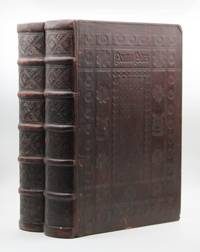
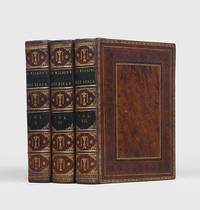
1785173867Bath: printed by R. Cruttwell; and sold by Rivingtons' Dilly Robson & Robinsons' 1785. With three Biblical fore edge paintings An imposing Bible handsomely bound by Edwards of Halifax in their celebrated "Etruscan" style. The set is unusual in featuring motifs relevant to the contents on all three fore-edges - scenes from the Old and New Testaments - as opposed to the more typical landscapes. Edwards famously almost never signed their bindings and their style was very frequently reproduced by others. This set is cited by Weber in his Annotated Dictionary of Fore-Edge Paintings as "a notable Bible from the Edwards bindery" Weber 2010 p. 118-9 and it is used as an example in a chapter devoted to distinguishing genuine Edwards bindings and paintings from imitations. The technique of concealing a painting under the gilt fore edge of books was revived in England by William Edwards about 1780. "The Edwards family not only carried on the art but enlarged it from the mainly floral and heraldic early efforts with occasional religious scenes and royal portraits to embrace views of well-known country houses set in landscapes" Marks p. 194. They were the originators of the bucolic English fore-edge painting which became standard in the 19th century. Scholars believe that the paintings were made in Halifax rather than in London by artists both within and outside the family and under the supervision of Thomas Edwards. Inspiration for the images was taken from various sources often engravings appearing in other books; for landscapes the favourite artist was William Gilpin a pioneer of the "picturesque". Volume I features a moment from Genesis: Abraham welcoming three angels into his home an act of hospitality which moved the Lord to bless Abraham and his wife with a son despite she was far beyond childbearing age. On Volume II is an episode from Exodus: an Egyptian princess and her attendants discover the infant Moses in the bulrushes of the Nile. Volume III displays an animated scene from the life of St. Paul as he preaches in Rome. The "Etruscan" style binding with a border of palmettes and other classical ornaments stencilled in black on brown calf was one of the firm's most popular designs. The origin of this style is debated: some 19th-century writers attributed the invention to John Whitaker while others ascribe it to the Edwards firm. It is known that Edwards employed it from at least 1775. Provenance: a Herman Frasch Whiton probably the American sailor and Olympic champion 1904-1967 with his elaborately designed bookplate featuring his arms and a ship on the verso of an initial blank in each volume. b Randall J. Moskovitz MD American collector from Memphis Tennessee with his bookplates loosely inserted. 3 vols large quarto 306 x 238 mm. Contemporary "Etruscan" calf by Edwards of Halifax spines with raised bands compartments tooled in gilt with flower and urn centerpieces and pediment cornerpieces black morocco labels covers with gilt pentaglyph and metope border stencilled frame of palmettes central panel of tree calf enclosed by gilt Greek key roll board edges and turn-ins tooled in gilt marbled endpapers each vol. with a contemporary fore-edge painting depicting a Scriptural scene edges gilt green silk bookmarkers. Spines uniformly darkened binding judiciously refurbished joints and spine ends repaired gilt retouched on spine light rubbing to palmettes design in places intermittent foxing and slight toning else clean the fore-edge paintings beautifully preserved. A handsome set. P. J. M. Marks "The Edwards of Halifax Bindery" British Library Journal vol. 24 no. 2 1998; Jeff Weber Annotated Dictionary of Fore-Edge Painting Artists & Binders 2010. See also: G. E. Bentley The Edwardses of Halifax 2015; Carl J. Weber Fore-Edge Painting 1966. hardcover
15668596At Rouen. By C. Hamillon at the coste and charges of Richd Carmarden. Cum priuilegio 1566. 1566 Folio. Collation is Aa12 Bb10 A-l8A-Q8 R8 AA-SS8 TT6. Page size is 395x252 mm. A tall well margined copy bound in plain dark calf over bevelled oak boards. Rebacked at some time with heavy raised bands and two contrasting labels. The endpapers are uniformly toned and brittle due to the acidity of the boards. The general title page is printed in red and black and may have been washed. The Prologue leaves have old marginal repairs and are soiled. This copy lacks all but 3 leaves of sigs Aa and Bb having only the title and the two leaves of the Prologue. Ai has a fore edge repair with slight loss of text. Ai and Aii have slight worming at the lower corner. A iii has a repair to the lower margin. Qi Qviii and Sig. R have lower margins extended. AAi the title to The Thirde Parte is defective with loss at the foot. EEi and sigs.FF and GG have the lower margins extended. HHiv and HHv have repairs to the fore edge. MMvii and MMviii have repairs to a small burn affecting a few words. Apocrypha title and Aaa viii are repaired at the foot. The NT title page is laid down. Aaa viii is remargined on the fore edge. At the end it lacks all after Ooviii i.e. the final leaf of Revelations the Psalter and the Table to Find the Epistles. An attractive copy of Elizabeth I's Great Bible with the text almost complete. The text itself is substantially Coverdale's translation. PROVENANCE: Inscription Robert Walshaw was born at Flockton Mill in the parish of Thornil Thornhill and in the year of Our Lord 1693. Several signatures of Nathaniel Shirt and Nathaniel Shirt Jun. from 1758 onwards. Nathaniel Shirt married Ann Walshaw at Penistone 21 February 1758 and a Nathaniel Shirt was vicar of Kirkburton in the 1650s. All these locations are close to Huddersfield West Yorks. Herbert 119. STC 2nd ed. 2098. ESTC S121985. At Rouen. [By C. Hamillon] at the coste and charges of Richd Carmarden. Cum priuilegio, hardcover
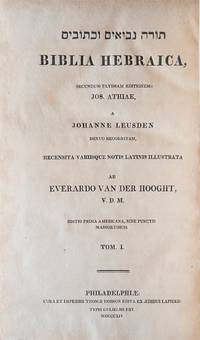
1814372931Philadelphia: Cura et Impensis Thomae Dobson edita ex aedibus Lapideis. Typis Gulielmi Fry 1814. First American edition. Text in Hebrew with notes in Latin. 6 296; 2 312 leaves. Half titles present in each volume. Uncut. 2 vols. 8vo. Original blue paper boards rebacked with plain paper. Provenance: Hugh Blair Grigsby booklabels. In a blue cloth folding box. First American edition. Text in Hebrew with notes in Latin. 6 296; 2 312 leaves. Half titles present in each volume. Uncut. 2 vols. 8vo. The first complete Hebrew Bible printed in America. Hebrew type was first used in the North American colonies in the Bay Psalm Book printed in 1640 in Cambridge. Over the next ninety-five years Hebrew type appeared in a handful of American imprints usually in brief examples of single words or short sentences. Paucity of appropriate type would continue to be a problem over the years that followed. The first Jewish Psalter was finally published in 1809 followed by this complete Bible five years later. "In 1812 Mr. Horwitz had proposed the publication of this edition of the Hebrew Bible the first proposal of the kind in the United States; early in 1813 be transferred his right and list of subscribers to Mr. Thos. Dobson who published soon afterwards the 1st volume" O'Callaghan. The title page indicates that this work is a reprinting of the second edition of the Joseph Athias Bible edited by Leusden with Latin notes by Everardo Van der Hought and that the Hebrew is printed without vowels. An important piece of American printing and of Jewish Americana. Darlow and Moule 5168a; Goldman 4; Rosenbach 171; Shaw and Shoemaker 30857; Singerman 236; M. Vaxer "The First Hebrew Bible Printed in America" Journal of Jewish Bib. 1940 vol. 2 pp. 20-26 Cura et Impensis Thomae Dobson edita ex aedibus Lapideis. Typis Gulielmi Fry unknown
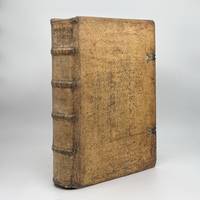
1527372109Coloniae: Petrus Quentel excudebat 1527. First Protestant Bible printed in Latin. Title-page with large woodcut vignette of arms of Cologne lion and gryphon rampant with and three crowns; numerous illustrations by Anton Woensam and ornamental initials throughout. Ff. 8 CCCXXV 1 LXXXVII i.e. 85 5. Manuscript marginal glosses in red chiefly calling out names names in Kings. 1 vols. Folio. Contemporary blindstamped pigskin over bevelled wooden boards clasps perished. Some soiling repairs to hinges painted fore-edge tabs. Very good. First Protestant Bible printed in Latin. Title-page with large woodcut vignette of arms of Cologne lion and gryphon rampant with and three crowns; numerous illustrations by Anton Woensam and ornamental initials throughout. Ff. 8 CCCXXV 1 LXXXVII i.e. 85 5. Manuscript marginal glosses in red chiefly calling out names names in Kings. 1 vols. Folio. The first Protestant Bible in Latin edited by Johan Rüdel Rudelius printed in Cologne by Peter Quentel or Quentell and notable for the wood engraved illustrations by Anton Woensam Anton von Worms particularly those at the head of each of the four gospels. Matthew faces an angle who is touching his stylus; a lion is seated beside Mark; a bull with Luke; and an eagle stands beside John.<br /> <br /> Quentel was the printer of Tyndale's quarto Cologne English New Testament known from a single surviving fragment in the Grenville Collection where this same illustration to Matthew appears. It is a reasonable inference that each of the four gospels would have carried an illustration. The project which had "'got as far as the letter K' the signature that would have taken the work well into Mark" ODNB was unfinished at the time of Tyndale's flight from Cologne in 1525. Quentel's print shop was raided but sheets of the first gospel translated from the original Greek and printed in English soon began to circulate in England. Tyndale settled in Worms where Schöffer completed an octavo printing of the first complete English New Testament in 1526 a facsimile of the Grenville fragment and its illustration were published in 1871.<br /> <br /> The blocks for the illustrations evidently survived the raid on the Quentel's shop and are used here at the head of each of the four gospels.<br /> <br /> A notable edition in the history of the printing of the Bible. Adams B1007; Darlow & Moule 6107 note; VD16 B2589; Copinger 210. Provenance: Cartusiae Buxiana Buxheim inscription on title; Thomas Raffle early signature on title; General Theological Seminary blindstamps bookplate Petrus Quentel excudebat unknown
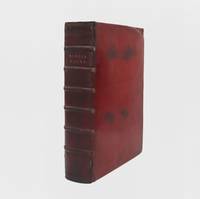
1763300386Birmingham: John Baskerville Printer to the University 1763. The third variant of the Subscriber's list with the most names ending with that of the Hon. Charles York Esq Attorney General. Unpaginated 1146 pages A2 B-13D2 13E1 a-e2 f1. With A Form of Prayer and Thanksgiving to Almighty God 4pp. Eyre and Spottiswoode: London 1859 and 2 pp. of manuscript prayers laid-in. 1 vols. Folio 18-3/4 x 12-3/8 in. Contemporary dark blue morocco covers gilt with wide roll borders surrounding central gilt cross built up from small tools. Some light scuffing and wear to joints and corners very slight staining to outer margin of first few leaves in all a very clean and handsome copy. Provenance: Richard Bellamy b. 1741 Manuscript birth and wedding register on rear free end paper for Richard Bellamy and his wife Elizabeth née Griffiths married in 1760 and their 7 children; John William Burns Kilmahew bookplate. The third variant of the Subscriber's list with the most names ending with that of the Hon. Charles York Esq Attorney General. Unpaginated 1146 pages A2 B-13D2 13E1 a-e2 f1. With A Form of Prayer and Thanksgiving to Almighty God 4pp. Eyre and Spottiswoode: London 1859 and 2 pp. of manuscript prayers laid-in. 1 vols. Folio 18-3/4 x 12-3/8 in. Baskerville's Masterpiece. The 1763 edition of Baskerville's Bible has always been recognized as his masterpiece and is one of the high-points in the history of printing in Britain. This copy in a beautiful contemporary binding in the style of the leading Cambridge binder of the day Edwin Moor with multiple border rolls and a central lozenge here a cross made up of small tools all typical of Moor's style. Nixon p. 184; Gaskell Bibliography of John Baskerville 26; Ramsden p. 135 John Baskerville, Printer to the University unknown books
1794302622Boston: Printed at Boston by Alexander Young and Thomas Minns For J. Boyle B. Larkin J. White Thomas and Andrews D. West E. Larkin W.P. Blake and J. West. Sold by them at their respective book-Stores 1794. A-U6 W6 X-Z6 Z6 verso blank. Text printed in two columns. 1 vols. 12mo. Recent half calf. Small hole in top of title page margin not affecting text title leaf with tissue repair at gutter and fore edge margin 4 other leaves with small repairs to margins. Very good. A-U6 W6 X-Z6 Z6 verso blank. Text printed in two columns. 1 vols. 12mo. This rare edition of the New Testament printed in 1794 at Boston for a consortium of booksellers aimed to provide a distinctly American printed Bible as an alternative to the British printings being imported and thus included the Great Seal of the United States prominently displayed on the title page. Thus suggesting that even at the dawn of the American republic certain clauses of the Bill of Rights were subject to fluid interpretation. This is an early appearance of the Great Seal of the United States and is the only instance where it was used in conjunction with a patently religious work. Copies are recorded at AAS and Duke. Evans 26664; Hills English Bible in America 48; ESTC W4683 AAS Duke Printed at Boston, by Alexander Young and Thomas Minns, For J. Boyle, B. Larkin, J. White, Thomas and Andrews, D. West, E. Larki unknown
1794302622Boston: Printed at Boston by Alexander Young and Thomas Minns For J. Boyle B. Larkin J. White Thomas and Andrews D. West E. Larkin W.P. Blake and J. West. Sold by them at their respective book-Stores 1794. A-U6 W6 X-Z6 Z6 verso blank. Text printed in two columns. 1 vols. 12mo. Recent half calf. Small hole in top of title page margin not affecting text title leaf with tissue repair at gutter and fore edge margin 4 other leaves with small repairs to margins. Very good. A-U6 W6 X-Z6 Z6 verso blank. Text printed in two columns. 1 vols. 12mo. Rare American Bible with the Great Seal of the U.S. on the Title. This rare edition of the New Testament printed in 1794 at Boston for a consortium of booksellers aimed to provide a distinctly American printed Bible as an alternative to the British printings being imported and thus included the Great Seal of the United States prominently displayed on the title page. Thus suggesting that even at the dawn of the American republic certain clauses of the Bill of Rights were subject to fluid interpretation. This is an early appearance of the Great Seal of the United States and is the only instance where it was used in conjunction with a patently religious work. Copies are recorded at AAS and Duke. Evans 26664; Hills English Bible in America 48; ESTC W4683 AAS Duke Printed at Boston, by Alexander Young and Thomas Minns, For J. Boyle, B. Larkin, J. White, Thomas and Andrews, D. West, E. Larki unknown books
158234482Rheims: John Fogny 1582. 4to. 8 3/4 x 6 1/4 inches. Collation: a-c4 d2 A-5D4 5E2; 28 745 27 pp. With woodcut initials head and tail pieces throughout. Bound in full late 19th century crushed dark blue morocco gilt extra a.e.g.; ex library with a stamp on the title and a few in the text generally a large clean copy.<br/> <br/>The first Roman Catholic New Testament in English.<br/> <br/>Very scarce first edition of the important Rheims New Testament the first Roman Catholic version in English translated from the Vulgate. Like the Geneva Bible the Rheims New Testament was "produced by religious refugees who carried their faith and work abroad. Since the English Protestants used their vernacular translations not only as the foundation of their own faith but as siege artillery in the assault on Rome a Catholic translation became more and more necessary in order that the faithful could answer text for text against the 'intolerable ignorance and importunity of the heretics of this time.' The chief translator was Gregory Martinc. 1542-1582 . Technical words were transliterated rather than translated. Thus many new words came to birth. Not only was Martin steeped in the Vulgate he was every day involved in the immortal liturgical Latin of his church. The resulting Latinisms added a majesty to his English prose and many a dignified or felicitous phrase was silently lifted by the editors of the King James's Version and thus passed into the language" Great Books and Book Collectors 108. While Martin was responsible for the translation the controversial textual annotations in defense of Catholic doctrine are attributed to Richard Bristow one of the supervisors of the project; most copies of this edition were purportedly suppressed and destroyed because of these notes some of which were removed from later editions. The New Testament was issued separately and first in the hope that its successful sale would finance prompt production of the Old Testament; the two-volume Old Testament did not however appear until 1609-10 due to insufficient funds.<br/> <br/>ESTC S102491; STC 2884; Darlow & Moule 134; The Bible 100 Landmarks 66; The Bible in the Lilly Library 39 40; Dore 291-98; Herbert 177 300; Pierpont Morgan Library The Bible 112115. Rumball-Petre 15. Rylands 95 96; Herbert 300; Pforzheimer 68. John Fogny unknown books
1582308536Rheims: John Fogny 1582. First Catholic Bible New Testament in English. Collation: a-c4 d2 A-5D4 5E2; 28 745 27 pp. With woodcut initials head and tail pieces throughout. 1 vols. 4to 8-3/4 x 6-1/4 inches. Bound in full late 19th century crushed dark blue morocco gilt extra a.e.g. Surface scuffs and light wear to extremities ex-library with a stamp on the title and colophon call number inked to lower margin of title upper outer corner of title repaired generally a large clean copy. Donor presentation inscription dated 1891 on flyleaf. First Catholic Bible New Testament in English. Collation: a-c4 d2 A-5D4 5E2; 28 745 27 pp. With woodcut initials head and tail pieces throughout. 1 vols. 4to 8-3/4 x 6-1/4 inches. THE FIRST ROMAN CATHOLIC NEW TESTAMENT IN ENGLISH. Very scarce first edition of the important Rheims New Testament the first Roman Catholic version in English translated from the Vulgate.<br/>Like the Geneva Bible the Rheims New Testament was "produced by religious refugees who carried their faith and work abroad. Since the English Protestants used their vernacular translations not only as the foundation of their own faith but as siege artillery in the assault on Rome a Catholic translation became more and more necessary in order that the faithful could answer text for text against the 'intolerable ignorance and importunity of the heretics of this time.' The chief translator was Gregory Martinc. 1542-1582 . Technical words were transliterated rather than translated. Thus many new words came to birth. Not only was Martin steeped in the Vulgate he was every day involved in the immortal liturgical Latin of his church. The resulting Latinisms added a majesty to his English prose and many a dignified or felicitous phrase was silently lifted by the editors of the King James's Version and thus passed into the language" Great Books and Book Collectors 108. While Martin was responsible for the translation the controversial textual annotations in defense of Catholic doctrine are attributed to Richard Bristow one of the supervisors of the project; most copies of this edition were purportedly suppressed and destroyed because of these notes some of which were removed from later editions. The New Testament was issued separately and first in the hope that its successful sale would finance prompt production of the Old Testament; the two-volume Old Testament did not however appear until 1609-10 due to insufficient funds. ESTC S102491; STC 2884; Darlow & Moule 134; The Bible 100 Landmarks 66; The Bible in the Lilly Library 39 40; Dore 291-98; Herbert 177 300; Pierpont Morgan Library The Bible 112 115. Rumball-Petre 15. Rylands 95 96; Herbert 300; Pforzheimer 68 John Fogny unknown books
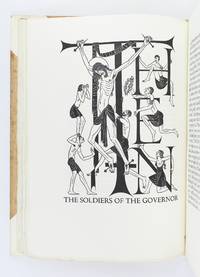
1931ST20201Waltham St. Lawrence: Golden Cockerel Press 1931. No. 352 OF 500 COPIES the first 12 on vellum. 343 x 241 mm. 13 1/2 x 9 1/2". 1 p.l. 268 2 pp 1 leaf colophon. <br/> Original white half pigskin and buckram sides by Sangorski & Sutcliffe stamp-signed on front pastedown raised bands top edge gilt other edges untrimmed. ILLUSTRATED THROUGHOUT with four large wood engravings on section titles and scores of striking large and small woodcut illustrations decorative elements and initials BY ERIC GILL. Printed on Batchelor handmade paper. The front pastedown with the engraved armorial bookplate of Albert and Constance Ramsay-Cohn the bookplate of Louis W. Black and the bookplate of "Downsland Court Ditchling Sussex." Chanticleer 78; A Century for the Century 26. Buckram boards somewhat freckled as usual very faint printer's smudges in one margin otherwise A VERY FINE COPY the pigskin--almost always found soiled and/or damaged--quite clean and pleasing and virtually pristine internally.<br/> <br/> This is an especially appealing copy of the chief work produced by one of the foremost English private presses. One of Eric Gill's outstanding achievements as an illustrator and one of the Golden Cockerel Press' great books the "Four Gospels" has been called by Franklin the finest of all private press books printed between the wars. The success of the work has much to do with Gill's ability to create a harmonious integration of woodcut illustration and typography his Golden Cockerel typeface one of the most important ever cut specifically for private use is introduced here. At the same time that the work achieves an aesthetic balance it also takes risks with the emotional nature of the woodcuts and with its unjustified page layout. As Franklin observes Gill's "pictures beautifully explain their letters as leaves spring from branches. This work is a wonderful extension of typography." Founded in 1920 with the intention to print fine editions of important well-known books as well as new literary works of merit from young authors the Golden Cockerel Press was purchased in 1924 by the illustrator and wood-engraver Robert Gibbings. "Under his direction" says Cave the Press was "transformed into the principal vehicle for the renaissance of wood-engraved book illustration" up until the beginning of World War II. In addition to doing wood engravings himself Gibbings employed a stable of eminent artists including among others Gill John Nash John Farleigh David Jones Eric Ravilious and Blair Hughes-Stanton. Our copy has been owned by two notable collectors and scholars of illustrated books. An early owner was British art historian Albert Mayer Cohn who wrote the catalogue raisonné of George Cruikshank's work. Later the volume passed into the hands of Boston collector Louis W. Black whose Aldine-related bookplate was designed by celebrated wood-engraver Leonard Baskin 1922-2000. Regarding the other bookplate here we have been unable to trace exactly who resided at Downsland Court in Ditchling but it is worth noting that Gill's Sussex artist's community was centered in Ditchling where he lived from 1907-24; it is certainly possible that our copy belonged to someone associated with this group. Golden Cockerel Press unknown
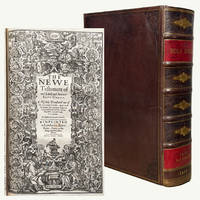
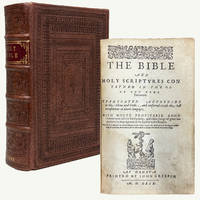
1617U26<p><em>The Holy Bible Conteyning the Old Testament and the New. Newly Translated Out of the Originall Tongues: And with the former translations diligently compared and revised by his Maiesties Speciall Comandement… </em></p><p><strong>Summary:</strong> Pulpit Folio approx. 16.25" x 11.25". The third of the five distinct pulpit folios of the King James Version. A textually complete copy with the Genealogies by John Speed at a fraction of the price of the first edition.</p><p><strong>Description: </strong>General title page 1617 in facsimile. Calendar printed in red and black. The Genealogies by John Speed with title page. The double-page map in facsimile. Text in large two column black letter type with 59 lines to the full column and within a ruled border. With the reading "and she went into the citie" in Ruth 3:15. New Testament title page 1617 with the twelve tribes of Israel on the left and the twelve disciples on the right. The four evangelists with their gospel symbols around the letterpress with the Tetragrammaton the dove and the slain Lamb at the center.</p><p><strong>Collation:</strong> A6 -A1 B4 C6 D4 prelims; A-C6 D2 -D2 Genealogies and map A-Z6; Aa-Zz6 Aaa-Zzz6 Aaaa-Zzzz6 Aaaaa-Ccccc6 Old Testament and Apocrypha; A-Z6 Dddddd6 New Testament. Complete Bible text with general title page and the map supplied in facsimile.</p><p><strong>Binding:</strong> Professionally rebound in brown calf. Covers paneled in gilt and blind. Spine with five raised bands gilt and blind tooling to compartments and with two gilt-lined red morocco labels and the words "Holy Bible" and "1611 3rd issue" lettered in gilt. Endpapers renewed.</p><p><strong>Condition:</strong> A2-C1 of prelims with marginal corner repair; 5D1-2 NT title and first leaf of Matthew with a few ink blots; 5G2 with ink blot to text obstructing a few letters on recto; 6A-6D with lower corner reinforced to margins; final two leaves of Revelation with loss to border and one letter of text; final leaf soiled and frayed to edges; overall a very nice copy with great margins.</p><p><strong>Note:</strong> The 1611 King James Bible was printed in a 59-line folio format in 1611 1613 1617 1634 and in 1640/39. The 1611 He Bible constituted a distinct edition with the reading "and hee went into the citie" in Ruth 3:15. The second edition 1613 She Bible was printed in subsequent years 1613 1617 1634 1640/39 with the variant "and she went into the citie." The second edition is frequently found in a variant state with leaves mixed in from different years but most here appear to originate from 1617.</p><p>Arguably the most important book ever published in English. Its influence can best be summed up by G.M. Trevelyan who stated that "for every Englishman who had read Sidney or Spenser or had seen Shakespeare acted at the Globe there were hundreds who had read or heard the Bible with close attention as the words of God. The effect of the continual domestic study of the book upon the national character imagination and intelligence for nearly three centuries to come was greater than that of any literary movement in our annals or any religious movement since the coming of St. Augustine." Macaulay said of it "If everything else in our language should perish the King James Bible would alone suffice to show the whole extent of its beauty and power" PMM 114.</p><p><strong>References:</strong> Herbert 319. PMM 114.</p> Robert Barker hardcover
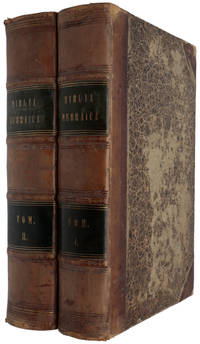
18146255Philadelphia: Printed by William Fry for Thomas Dobson 1814. First edition. <p>First edition of the first Hebrew Bible printed in America - this copy with the extremely rare inserted publisher's notice of February 1814 explaining the genesis of the edition a leaf that Goldman's bibliography of American Hebrew printing records in the Jewish Theological Seminary copy alone. Proposed in 1812 by Jonathan Horwitz an émigré newly arrived from Amsterdam with a font of Hebrew type the project passed early in 1813 to the publisher Thomas Dobson - already famous for the first American encyclopaedia - and the printer William Fry. The text reprints the great Amsterdam tradition of Athias Leusden and Van der Hooght whose 1705 edition was the received Hebrew text of the age printed here without vowel points and aimed at the Christian Hebraists of Harvard and Andover; American Jews continued to import pointed Bibles. It remained the only Hebrew Bible printed in America until Leeser's pointed edition of 1848. Bookseller's ticket of Talbot Watts New York dated March 1847.</p>. The Hebrew Bible Comes to America. <p>First edition of the first Hebrew Bible printed in America - the editio prima Americana of the sacred tongue of major importance in the field of American Judaica - this copy preserving the publisher's inserted notice of February 1814 recounting the genesis of the edition a leaf so rarely retained that Goldman's standard bibliography of American Hebrew printing records it in the Jewish Theological Seminary copy alone and omits it from the collation of the edition. Until these two octavo volumes left William Fry's Philadelphia press no complete biblical text in Hebrew had ever issued from an American press: congregations and colleges alike read from Bibles carried or ordered across the Atlantic. Their publication was the most ambitious Hebrew typesetting yet attempted in the United States and a measure of the standing Hebrew learning held in the early republic - a symbolic weight out of all proportion to the number of its readers. Abraham Karp surveying the Judaic treasures of the Library of Congress singled out the inserted notice as the key document of the edition's history found 'in some of the first copies of the first volume off the press'; the present set is one of the very few in which that first-state leaf escaped the binder's discard. Only one other copy described with the notice has been traced in auction records Philadelphia 2024.</p> <br /> <p>The notice itself dated February 1814 and printed on a single inserted leaf compresses the whole story of the enterprise into four paragraphs. In 1812 Jonathan Horwitz had proposed an edition of the Hebrew Bible 'the first proposal of the kind ever offered in the United States'; clergymen of standing endorsed the undertaking and subscriptions were gathered. Early in 1813 Horwitz transferred his rights and his subscriber list to Thomas Dobson who now reported the first volume published and the second well advanced. The publisher then turned his readers into proof-correctors: gentlemen of learning into whose hands the volume might come were entreated to note typographical errors and transmit their lists to Dobson in Philadelphia so that an accurate table of errata might be printed at the close of the work - a table which the collations of recorded copies suggest was never executed. A final line explains both the leaf's function and its disappearance: the title pages and preface would be furnished with the second volume. The earliest purchasers therefore received volume one as a bare text block this notice standing in for the missing preliminaries; when the second volume appeared with the title leaves and Van der Hooght's preface binders bound the proper preliminaries in and discarded the now-superfluous notice. The variable placement of those preliminaries among recorded copies - the four preface leaves stand at the front of the second volume in another documented set at the front of the first in the present one - is itself a fossil of this two-stage issue. The notice's survival here bound after the first title with the prefatory selections following marks the present set as one assembled from the first copies issued and fixes a terminus for its earliest American owner.</p> <br /> <p>Behind the notice lies a publishing race conducted in the newspapers of two cities. Jonathan Horwitz d. 1852 a Jewish émigré recently arrived from Amsterdam brought with him a font of Hebrew type and the conviction that the United States was ready for its own Hebrew Bible. He was nearly right and nearly first: the New York theological booksellers Whiting & Watson announced a rival Hebrew Bible under the patronage of the Theological Seminary at Andover; the missionary leaders John M. Mason and James McFarlane stood ready to enter the field; and in London Joseph Samuel C. F. Frey - the converted president of the London Society for Promoting Christianity Amongst the Jews - had in 1812 already published the first volume of a vocalized Hebrew Bible for the English-speaking world with rumours that he would cross the Atlantic to distribute it. Horwitz counter-attacked in the New York Evening Post of 16 January 1813 declaring that Harvard College and the Andover Theological Institution patronised his edition and had subscribed for forty copies each. Within weeks however he chose security over glory: he sold his Hebrew type to the printer William Fry made over his publication rights and subscriber list to Dobson and enrolled in the medical department of the University of Pennsylvania taking his M.D. in 1815. He practised medicine for the rest of his life marrying into the family of Haym Salomon the Jewish financier of the Revolution; his son Phineas rose to head the United States Navy's Bureau of Medicine. The Whiting & Watson Bible never appeared.</p> <br /> <p>The men who carried the project to completion were two of the most substantial figures in the Philadelphia book trade. Thomas Dobson 1751-1823 Scottish-born and Philadelphia-established from 1785 had already accomplished the most audacious publishing feat of the young republic: Dobson's Encyclopaedia 1789-1798 the first encyclopaedia published in the United States eighteen quarto volumes re-edited from the third Encyclopaedia Britannica with George Washington among the subscribers. His shop at 41 South Second Street was known simply as the Stone House and the Bible's title page Latinises the address into the imprint: edita ex aedibus lapideis. William Fry a printer praised for the accuracy of his presswork - his former partnership of Fry & Kammerer had printed the elegant 1809 specimen of Binny & Ronaldson the first permanent type foundry in the United States - executed the Hebrew text with the font acquired from Horwitz. Horwitz's prospectus had promised a new pica Hebrew to be cast for the purpose at the Binny & Ronaldson foundry but the type Fry actually employed appears to have been the Amsterdam font Horwitz had carried across the Atlantic: the foundry's surviving papers record only the freight on a parcel of Hebrew type shipped into Philadelphia in 1813 and every contemporary account of the project has Horwitz selling his own font to Fry. The Hebrew of the first American Bible was thus fittingly Dutch metal - cast in the same typographic culture that had produced the very editions the text reproduces. The choice of so compact a programme - the bare consonantal text without the apparatus of points and accents - kept the undertaking within the powers of a shop that had never before set a Hebrew book and the result is remarkably clean: the printer allowed himself a single flourish closing the first volume with the note Placuit Typographo has Deo agere gratias in fine hujus Tomi ex Jes. 40:29 - it pleased the typographer to give thanks to God at the end of the volume in the words of Isaiah.</p> <br /> <p>The text the Philadelphians chose was the most authoritative available anywhere: the Amsterdam tradition running from Joseph Athias through Everardus van der Hooght. Athias c. 1635-1700 the great Sephardic printer of Amsterdam produced in 1659-61 the first Hebrew Bible with numbered verses its proofs read by Johannes Leusden professor of Hebrew at Utrecht; on its completion Athias was admitted to the Amsterdam printers' guild an unprecedented honour for a Jew and the improved second edition of 1667 won him a gold chain and medal from the States General of the Dutch Republic. Long regarded as the most accurate Hebrew text in print the Athias-Leusden Bible became the foundation of virtually all subsequent editions. Everardus van der Hooght 1642-1716 a Dutch Reformed minister - the V.D.M. of the title page - corrected it once more for his Amsterdam and Utrecht edition of 1705 working not from manuscripts but from the printed tradition checked against the Masorah and prized above all for the exceptional clarity of its type. Van der Hooght's became the de facto received text of the Hebrew Bible for a century and a half: Houbigant Kennicott Hahn and Letteris all took it as their base as did the Bible Society editions of the nineteenth century. The 1814 Philadelphia edition declares this lineage on its title page and retains the essentials of Van der Hooght's apparatus in selection: four preliminary leaves headed Everardi van der Hooght ex praefatione selectae in hac editione retentae the Latin marginal annotations keyed to the text and the Masoretic verse-count summaries at the close of each biblical book with their mnemonic signs expounded in Latin notes.</p> <br /> <p>The two volumes carry the traditional tripartite Bible whole. The retained preface opens by expounding the division the volumes follow: the Torah or Law in its five books; the Prophets former and latter from Joshua to the Twelve; and the Hagiographa Psalms to Chronicles with the five scrolls read publicly at the festivals of the synagogue year. Divisional titles in Hebrew and Latin mark the great sections - Prophetae Posteriores announces Isaiah Jeremiah Ezekiel and the Twelve on a separate leaf - and each book runs under bilingual headlines the chapters numbered in roman and in Hebrew letters the text set in single column with Van der Hooght's Latin apparatus in the margins. At the end of each book the Masoretic colophons are reproduced and explicated: the close of Kings gives the count of 1534 verses with its mnemonic the close of Chronicles - and of the whole Bible - the count of 1656 each Hebrew letter-numeral resolved into figures in the Latin notes. These terminal apparatus pages easy to mistake for printer's ornament are in fact the working machinery of textual integrity that the Masoretes had built and Van der Hooght transmitted: a self-auditing text carried intact into the New World.</p> <br /> <p>One deliberate omission defined the edition's audience and its fate. As the title page announces the text is printed sine punctis Masorethicis - without the vowel points and cantillation marks of the Masoretic apparatus. Pointed Hebrew composition in which every consonant carries superimposed and subjacent sorts was beyond the capacity and the budget of the project; the unpointed text halved the difficulty of the typesetting at the cost of presupposing readers who could vocalise Hebrew for themselves - for the points are not ornament but the entire vocalisation tradition of the text fixed by the Masoretes of Tiberias and a bare consonantal page demands that the reader supply from memory what the apparatus would otherwise dictate. The practical consequence was that the first American Hebrew Bible was of limited use to American Jews: a text without points cannot serve the synagogue lectern or the elementary schoolroom and Jewish communities continued to import pointed Bibles from Europe. The book was aimed instead at the Gentile scholars ministers and seminarians whose institutions had subscribed for it - the constituency of the great religious revival then transforming American Protestantism which had made the recovery of the biblical languages an urgent devotional project. The edition thus occupies a curious position in Jewish book history: a Hebrew Bible produced in a land of Jewish refuge initiated by a Jewish immigrant and yet calculated for Christian use - a precise mirror of the state of Hebrew learning in the early republic.</p> <br /> <p>American Hebraism had deep roots but before 1814 almost no Hebrew press to show for it. Judah Monis's Grammar of the Hebrew Tongue Boston 1735 the first book printed in America with substantial Hebrew text had required type procured from London; Monis taught Hebrew at Harvard for nearly forty years and his grammar served as the College's required text. Hebrew figured in commencement exercises at Harvard Yale and Columbia; Ezra Stiles president of Yale made it a personal devotion. The founding of the Theological Seminary at Andover in 1808 institutionalised the revival of biblical philology and in 1813 the year Horwitz surrendered his project Andover's Moses Stuart published the first Hebrew grammar of the independent United States - finding no compositor equal to the task he set much of the Hebrew himself. A legend that the revolutionary generation had considered replacing English with Hebrew as the national language - traced by Shalom Goldman to a passing remark of the Marquis de Chastellux inflated by mocking British reviewers - has no documentary basis but its long circulation testifies to the symbolic standing the sacred tongue enjoyed in a republic that read itself as a new Israel. It was this climate - colleges teaching Hebrew seminaries multiplying a reading clergy hungry for the text in its original - that made a two-volume Hebrew Bible a plausible commercial venture in a country of perhaps three thousand Jews.</p> <br /> <p>Contemporary reception bore out both the promise and the irony. Karp observed that the appearance of a Hebrew work bearing the approbation of leading Christian clergymen and leading Jews alike marked the beginning of a friendlier intellectual discourse between the two communities - a discourse conducted warily since several of the divines most active in promoting Hebrew study were also active missionaries and Frey's conversionist society stood behind the rival London Bible. The standing of the edition among Jewish readers is caught a generation later in the letter of Rabbi Sabato Morais of Philadelphia printed by John Wright in Early Bibles of America: the edition was good the annotations helpful and copious. The endorsement carries its own quiet symmetry - Morais Leeser's successor at Mikveh Israel was a founder of the Jewish Theological Seminary the institution in whose library the one leaf-bearing copy recorded by Goldman now rests. The political setting sharpens the point: at the time of printing fewer than half of the original states extended full political equality to their Jewish citizens. The first Hebrew Bible printed in America thus appeared into a republic that honoured the language of Israel while still hedging the rights of Israelites - and the book itself passing between Jewish projector and Gentile publisher between seminary subscribers and synagogue importers embodies that unresolved moment.</p> <br /> <p>The edition kept its primacy for a generation. No second printing followed; Fry's Hebrew font surfaced only in smaller Philadelphia work; and the next complete Hebrew Bible printed in America - the first with vowel points - came only in 1848 when Isaac Leeser hazzan of Mikveh Israel in Philadelphia and the dominant figure of antebellum American Jewish letters produced his pointed Biblia Hebraica with the Episcopalian Hebraist Joseph Jaquett its Latin introduction dated September of that year. For thirty-four years the Dobson-Fry edition stood alone the only Hebrew Bible printed in America; every American who studied the Scriptures in their original from an American-printed book studied it from these sheets. Bibliographically the edition is anchored in every standard apparatus of the field - Rosenbach's pioneering American Jewish Bibliography Singerman's Judaica Americana Goldman's Hebrew Printing in America Darlow & Moule's catalogue of printed Scripture - and it is one of the few American books of its decade to have earned a separate bibliographical study Vaxer's account in the Journal of Jewish Bibliography for 1940.</p> <br /> <p>Sets of the Bible itself though held by the major Judaica collections - the Library of Congress and the Jewish Theological Seminary among them - appear on the market only at intervals: a recent cataloguer could count just five sets at auction in the preceding decade. The February 1814 notice is of another order of rarity altogether. The leaf was ephemeral by design superseded by the very preliminaries it promised and the bibliographers' collations treat it as a supernumerary survival rather than a constituent of the edition: Goldman's census-level note - locating the leaf in the Jewish Theological Seminary's Karp copy alone among the copies he recorded - remains the standard statement of its scarcity and the single auction copy described with the notice together with the present set brings the number of traceable examples to a small handful. For a collector of American Judaica the distinction is decisive: with the notice the set is not merely the first Hebrew Bible printed in America but a first-state copy carrying the edition's own birth certificate - the document from which every account of the book's genesis from Wright in 1894 to Karp in 1991 ultimately derives.</p> <br /> <p>An early trace of the set's American life survives on the front pastedown of the first volume: the printed ticket of Talbot Watts 'The Cheapest Store in the World' for books prints and oil paintings at 102 Nassau Street New York dated March 1847. Doggett's city directory for 1846-47 lists Watts as an agent for books and paintings at that address in the heart of the Nassau Street quarter that was already New York's second-hand book row; his ticket places the volumes in the New York trade barely a generation after publication circulating among the city's collectors and curiosity buyers while Leeser's pointed Bible was still in preparation.</p> <br /> <p>The two volumes close a circle in the history of the Hebrew book: a text perfected in seventeenth-century Amsterdam by Athias and Van der Hooght carried across the Atlantic in a font of type by an Amsterdam Jew and reborn in Philadelphia as the young republic's first Scripture printed in the original tongue. The line they opened runs forward through Leeser's pointed Biblia Hebraica of 1848 to the whole subsequent tradition of American Jewish Bible publishing and backward to Monis's lonely Harvard grammar of 1735 - the two poles between which this edition stands as the decisive event. Few books document so compactly the moment the Hebrew Bible came to America: the race of projectors fought out in the newspapers the immigrant's font of Dutch type the Stone House imprint rendered into Latin and in the copies issued first a printed leaf asking the learned gentlemen of a young republic to help perfect the word.</p> <br /> <br /> References:<br /> Goldman Hebrew Printing in America 4 - Rosenbach An American Jewish Bibliography 171 - Singerman Judaica Americana 236 - Darlow & Moule 5168a - Shaw & Shoemaker 30857 - O'Callaghan American Bibles 1814:8 - Wright Early Bibles of America 3rd ed. 1894 pp. 122-24 - Wolf & Whiteman The History of the Jews of Philadelphia p. 306 - M. Vaxer 'The First Hebrew Bible Printed in America' Journal of Jewish Bibliography II 1940 pp. 20-26 - A.J. Karp From the Ends of the Earth: Judaic Treasures of the Library of Congress Washington 1991 pp. 291-92 - S. Goldman God's Sacred Tongue: Hebrew and the American Imagination Chapel Hill 2004 - R.D. Arner Dobson's Encyclopaedia Philadelphia 1991.<br /> <br/> <br/> <p>Two vols. 8vo 221 × 139 mm ff. 6 296; 2 312 titles to both volumes dated 1814; the first volume with the inserted publisher's notice dated February 1814 and the four leaves of selections from Van der Hooght's Latin preface bound after the title. Contemporary American half calf over marbled boards smooth spines ruled in gilt with black lettering-pieces 'Biblia Hebraica' 'Tom. I'/'Tom. II'; binding moderately rubbed with loss of leather at the corners and some chipping at the spine ends; scattered foxing and some marginal staining the text generally clean. Printed ticket of Talbot Watts bookseller 102 Nassau Street New York dated March 1847 on the front pastedown of vol. I. Preserved in a custom cloth case with gilt-lettered morocco back.</p> . Printed by William Fry for Thomas Dobson unknown
LCS-17654Précieux exemplaire de cette rare bible illustrée du début du XVIe siècle. Lyon, Jacques Sacon, expensis Antonii Koberger, 10 mai 1518. In-folio gothique à 2 colonnes de (14) ff. pour le titre frontispice, la table, l’épitre et le prologue ; CCCXVII ff., (1) f.bl., (25) ff., relié sans le dernier feuillet (CC10) qui est blanc. Manchettes doubles. Pte. brulure marge inf. f. CCLXXXV. Titre imprimé en rouge au-dessus d’un grand bois à pleine page représentant Saint Jean-Baptiste, 2 bois à pleine page représentant les six jours de la Création (face au premier feuillet de la Genèse) et l’Adoration des bergers (au début du Nouveau Testament), nombreuses vignettes, nombreuses initiales gravées. Veau granité, encadrement de filets à froid autour des plats, dos à nerfs et coins refaits, tranches mouchetées. Reliure du XVIIIe siècle. 340 x 247 mm.
1590372093Rome: Ex Typographia Apostolica Vaticana 1590. First edition of the Sixtine Vulgate Bible. Engraved illustrated title-page. Title in red and black text in double columns. 8 479 1; 5 482-899; 5 902-1141pp. Lacks the 4ff preface i.e. the papal bull of Sixtus V beginning "Aeternus ille caelestium terrestriumq. rerum omnium conditr ac moderator Deus ." as often. Folio 13-1/2 x 9-1/2 inches. Later red morocco spine darkened corners bumped some repairs at head and tail of spine marbled endpapers gilt edges. Engraved title and title page paper-backed. Red quarter morocco clamshell box. First edition of the Sixtine Vulgate Bible. Engraved illustrated title-page. Title in red and black text in double columns. 8 479 1; 5 482-899; 5 902-1141pp. Lacks the 4ff preface i.e. the papal bull of Sixtus V beginning "Aeternus ille caelestium terrestriumq. rerum omnium conditr ac moderator Deus ." as often. Folio 13-1/2 x 9-1/2 inches. The Sixtine Bible containing the Vulgate text as edited by Pope Sixtus V intended as the first ecclesiastically authorized text to be used throughout Christendom. "In its text it comes closer to R. Stephanus' Bible of 1538-40 than to the Louvain editions" Darlow & Moule who discuss the textual variations. <br /> <br /> The association with Aldus II suggested by Renouard and lasting long thereafter is spurious.<br /> Pope Sixtus V died soon after the book was printed and was followed by three short-lived popes. The Sixtine Bible had "aroused antagonism among both clergy and laity" and was swiftly condemned; the edition was withdrawn by Pope Clement VIII soon after his elevation to the papal throne in 1592 and many copies were destroyed. Preparations began in 1591 for a new edition of the Vulgate printed in 1592 and known as the Clementine Bible which long remained the standard Vulgate text.<br /> <br /> As often e.g. the Brooker copy this copy without the preface the Bull of Sixtus declaring the text to be immutable and forbidding any reprint without papal permission. Copinger 521; Darlow & Moule 6181; Adams B1098; BM STC Italian 1465-1600 p. 93; EDIT16 CNCE 5805. Provenance: Henry John Farmer Atkinson his sale Sotheby Wilkinson & Hodge March 1896 lot 2752 sold for £18.15s to; Bernard Quaritch; General Theological Seminary bookplate Ex Typographia Apostolica Vaticana unknown
1789101717Philadelphia: William Young 1790 i.e. 1789. First edition thus. 12mo. 816 pp. with separate New Testament title-page. Collation: A-2L¹². Contemporary sheep; covers worn with some loss to leather exposing boards front joint split and holding by one cord rear joint with old sewed repair contents toned and dust-soiled a few gatherings worn at fore-edge touching text U1 "Song of Solomon" torn and damaged with loss to text and old paper repairs FIRST EDITION OF THE SECOND ENGLISH BIBLE PRINTED IN THE UNITED STATES and the first English Bible printed after the adoption of the Constitution. It follows Robert Aitken's Bible published in Philadelphia 1781-2. Printing of Young's 12mo Bible which Hills states was advertised for use in schools was already underway when Aitken's 1789 application to Congress for an exclusive right to publish Bibles in America was rejected. Evans notes that "this edition was published in 1789 although dated 1790" and quotes from the publisher's advertisement: "this edition has two strong recommendations to preference it is cheaper than any imported edition; and it is composed entirely of American manufacture." Young followed with a 24mo edition with metrical psalms in 1790.Rare: ESTC locates three copiestwo at AAS NYPL. Complete and in its original binding.PROVENANCE: contemporary birth records on verso of New Testament title-page for Vannosdoll family; Catherine Pellar early ownership inscription on title-page REFERENCE: ESTC W4491; Evans 22345; Herbert 1348; Hills 25 24mo issue; Rumball-Petre America's First Bibles Appendix no. 13 "Second Protestant Bible in English"; Sabin 5168; not in Darlow and Moule William Young hardcover
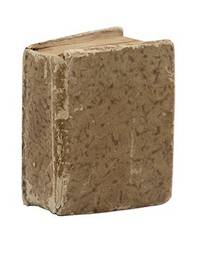
1802373649Boston: Printed by Thomas Fleet 1802. The tenth American thumb Bible. Separate title pages to each work. With three wood or metal cuts in N.T. 1013-160; vi 107 2 ii-iv iv pp. 1 vols. Miniature 2-1/16 x 3-1/4 inches in 12s. Dappled tan pastepaper over wooden boards. Leaf A1 in OT supplied and remargined. The tenth American thumb Bible. Separate title pages to each work. With three wood or metal cuts in N.T. 1013-160; vi 107 2 ii-iv iv pp. 1 vols. Miniature 2-1/16 x 3-1/4 inches in 12s. A splendid copy of the miniature Bible printed by Thomas Fleet in 1801-2 the tenth American thumb Bible. The text is a paraphrase of the Old and New Testaments by John Taylor 1578-1653 known as the Water Poet; the earliest surviving edition of which was printed in London in 1614. In America five editions were printed in the 1760s and four more between 1786 and 1799. All are rare and survive in just a few copies. After about 1810 the number of thumb Bibles and the variousness of their titles and imprints increased markedly.<br /> <br /> The Fleet thumb Bible is two volumes bound as one each with a separate dated title page. Following the New Testament are Prayers for Morning and Prayers for Evening.<br /> <br /> There are four other recorded copies of this book: at the Morgan Library PML81221 lacking all half title and titles and other leaves; at AAS the Welch Stone copy lacking the half title and six pages of the Old Testament; at the Boston Public library rebound; and at the Lilly Library bibliographer Ruth Adomeit's copy in the original binding lacking the first leaf.<br /> <br /> A gorgeous copy in original binding. Shaw & Shoemaker 1383; Welch 1293.10; Adomeit A10 Printed by Thomas Fleet unknown
1914353913Leipzig: Insel Verlag 1914. No. 208 of 300 copies limitation leaf at end of each volume. Photolithographic facsimile of the 42-line Bible printed in colors with gilt ornamental incipit pages book headings and red and blue initials and headlines throughout. 2 vols. Folio. Publisher's full blindstamped brown calf after the original binding on the Fulda Landesbibliothek copy. Finely rebacked preserving original spines. No. 208 of 300 copies limitation leaf at end of each volume. Photolithographic facsimile of the 42-line Bible printed in colors with gilt ornamental incipit pages book headings and red and blue initials and headlines throughout. 2 vols. Folio. The first and finest facsimile of the great landmark of printing history the Gutenberg Bible reproduced from the Berlin copy now in the Universitätsbibliothek at Tubingen with some leaves in the first volume reproduced from the Landesbibliothek copy at Fulda. Insel Verlag unknown
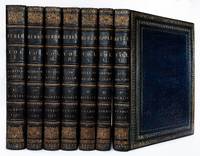
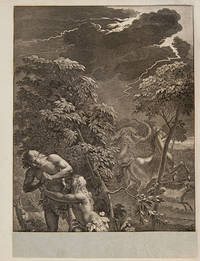
57837London: Printed for Thomas Macklin by Thomas Bensley 1800. 7 vols. Large folio 47.25 x 38 cm. Contemporary blue straight-grain morocco by C. Meyer sides ruled in gilt with decorative fillet and roll borders spine with raised bands and gilt in compartments brown coated endpapers all edges gilt and with some gauffering. Engrave title and 70 full-page engraved plates after Fuseli Reynolds Kauffman Hamilton West etc. plus numerous vignette head- and tail-pieces. Ex libris Gaddesden Library with their armourial bookplate to front-pastedown of each volume. Joints to volume one with professional restorations occasional light offsetting and spotting generally a fine example of this landmark edition of the bible. The most prodigious form of scripture in English ever published the Macklin Bible features large and bold type fine Whatman paper and a series of engravings by some of the most celebrated artists of the time. Macklin announced his plan to produce a lavishly illustrated luxuriously produced folio Bible in 1789 and he spent the next 11 years making his dream a reality though it proved a costly endeavour. He paid Reynolds £500 for his Holy Family and William Sharp £700 for its engraving. The average cost for 45 of the Bible's other engravings was £220 and the total cost of the publication was an estimated £30000 approximately £4500000 in today's money. His efforts paid off: "the subscription list for 703 copies at £46 1s. apiece was headed by the King the Queen and the Prince of Wales" DNB. Macklin died just five days after the last engraving was finished and did not see his masterpiece become one of the most acclaimed English Bibles. "The Macklin Bible endures as the most ambitious edition produced in Britain often pirated but never rivalled" DNB. A further volume of the Apocrypha was published in 1816. London: Printed for Thomas Macklin by Thomas Bensley, 1800. hardcover
107689Oxford Printed for the Society at The Clarendon Press 1817. . 8 vols; large 4to 32.5 x 26 cm; extra-illustrated with over 800 additional plates mounted on thin card and bound-in plus the 56 issued plates and 8 maps including mezzotints stipple engravings copper engravings and steel engravings some folding some two per page a few in text occasional light soiling to margins very occasional offsetting; contemporary dark blue straight-grained morocco gilt covers with wide gilt borders of small tools with large fan-shaped corner devices spines in six compartments gilt lettered direct in second third and fifth others richly gilt broad raised bands gilt all edges gilt joints of vols I and II expertly restored occasional light rubbing a very handsome set.<br /> A fine bible extra-illustrated with over 800 additional plates after Guercino Cipriani Rubens Sadeler Durer Blake and other Old Masters.<br /><br />This annotated edition according to the King James Version was prepared for the Archbishop of Canterbury Charles Manners-Sutton 1755-1828 by his domestic chaplains. D'Oyly 1778-1846 was rector of Buxted in Sussed and later became rector of Lambeth. Mant 1776-1848 subsequently became Bishop of Down Connor and Dromore in Ireland.<br /> Herbert 1658; Darlow/Moule 1072. Oxford, Printed for the Society, at The Clarendon Press, 1817. hardcover
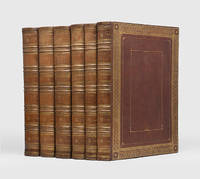
1800173564London: printed for Thomas Macklin by Thomas Bensley 1800. The grandest Bible ever printed in Britain First Macklin edition of the Bible handsomely bound. "The most ambitious edition produced in Britain often pirated but never rivalled" ODNB this Bible is a masterpiece of book art published at the apogee of British copperplate engraving and involving some of the best artists of its day. The Bible dedicated to the king was published serially between 1791 and 1800 in 70 parts each at £1. 1s. Thomas Macklin 1752-1800 began work on the project in the year following the opening of his famous Poets' Gallery in Pall Mall. The prospectus issued in 1789 explained that he was planning to add scripture pictures to his exhibition to be then reproduced in a "magnificent Bible". The paintings were realised by several artists including Hamilton Fuseli and Loutherbourg and exhibited at the Poets' Gallery between 1790 and 1796. Initially promising 60 plates the project eventually included 71 some of which never appeared in Macklin's exhibitions. Most of the headpiece and tailpiece vignettes were designed by Loutherbourg the type was cut by Joseph Jackson and his apprentice Vincent Figgins and the paper made by Whatman. The Bible took 11 years to complete and the publication costs exceeding £30000 almost bankrupted Macklin. Though the final engraving was finished five days before his death the last of the vignettes was not completed for another six weeks and he consequently never saw the finished work. Some copies of the Bible were bound in a fine neoclassical style by contemporary London binders particularly Staggemeier and Welcher. This set is unsigned but the treatment of the spine appears closer to the work of Kalthoeber see Maggs Cat. 1212 II no. 164. This set is bound in six volumes as recommended in the instructions to the binder vol. I. However sets are sometimes found bound in seven. 6 vols large folio 458 x 370 mm. With 71 copper engraved plates after Fuseli and others 113 wood engraved vignette head- and tailpieces. Contemporary diced russia spines with raised bands compartments lettered and tooled in gilt elaborate gilt frames to covers incorporating foliate and flower tools board edges and turn-ins tooled in gilt leather inner hinges marbled endpapers edges gilt silk bookmarkers. Bound with half-titles. A few trivial marks and light scuffs to covers small cosmetic repair to rear cover of vol. I superficial splits to a couple of joints subsequently retouched and now firm occasional foxing to contents and offsetting from plates else clean and bright. A very good set. ESTC T123175; Herbert 1441; Lowndes I p. 192. Maggs Bros Ltd Bookbinding in the British Isles Sixteenth to the Twentieth Century Cat. 1212 Part II 1996. hardcover
1569Q42<p>Geneva: John Crispin 1569. 4to 8.125 x 5.75 in. The scarce <em>second edition</em> of the Geneva Bible in quarto. Printed in Geneva in Roman font with illustrations double-page maps and provenance of a famous paper maker.</p><p><strong>Description</strong></p><p>Lacks the first preliminary leaf <em>Calendar Historical</em> and begins with <em>To The Reader </em>1 p. <em>Of the Golden Nombre</em>… etc.3 pp. <em>A Supputation of the years </em>1 p. <em>A Table of the Cycle of the Sunne </em>1 p. <em>Kalendar </em>with a small woodcut at the beginning of each month 6 pp. <em>Fairies in France and elsewhere </em>1 p. The printed title page 1569 with decorative headpiece and Crispin's device. Text in two column Roman type with the complete set of illustrations and maps in the text. Bound with four of the additional double-page maps including the Wanderings of the Israelites Nu 33 Ezekiel's Temple Ez 48 Description of the Holie Land before NT title and the Description of the Countreis and Places before Acts. Also bound with the Degrees of Consanguinitie Lev 18 and the map at Joshua provided in facsimile. Printed New Testament title page 1568 with printer's device. Ends with the <em>Table</em> and the <em>Order of the Years</em> 1 p. First chapter woodcut initials head and tailpieces.</p><p><strong>Collation</strong></p><p>par.8 -par1 4 a-c4 d-z8 A-Z8 Aa-Gg8 Old Testament n3-8 Table of Names Aa-Bb4 Cc-Ss8 Tt3 New Testament. <em>Lacks</em> Apocrypha Psalter and first preliminary leaf.</p><p><strong>Binding</strong></p><p>Newly rebound in speckled brown calf. Elaborate blind tooling and rolls to boards within concentric frames. Spine with four raised bands and extensive blind tooling to compartments. One red morocco label with gilt-rules and the words "Holy Bible" letter in gilt and a date of 1569 letter in gilt to foot. New plain endpapers.</p><p><strong>Condition</strong></p><p>Overall a clean text; trimmed close with infrequent loss to first letter of the marginal notes; a-c small stain to lower gutter; Q7-R1 old tape repair with a couple of lines of text replaced in manuscript; T2-3 upper dark marginal stain impacting three lines of text; final map with a tear along fold; Tt1-3 last few leaves of tables with tape repairs to margins.</p><p><strong>Provenance</strong></p><p>Bookplate of James Whatman 1702-1759 on front pastedown with his signature on first blank leaf. On the next four blank pp. at the front Whatman described the history of the Geneva version in a neat hand likely on his own wove paper. Whatman produced high-quality white paper in the 1740s that was used by state papers and also used in printed books. He was the first paper maker in Europe to make wove paper.</p><p><strong>Note</strong></p><p>The second edition of the Geneva version printed in Geneva. The second edition is a smaller book than the 1560 first edition. The Apocrypha was removed from this copy likely by a zealous Puritan. The Psalter was an integral part of this edition and is lacking from this copy but four of the five maps are present.</p><p><strong>Scarcity</strong></p><p>RBH records only three copies at auction since 1910. OCLC shows only six copies in institutions.</p><p><strong>References</strong></p><p>Herbert 130; ODNB 40776; STC 2106; not in USTC.</p> John Crispin hardcover
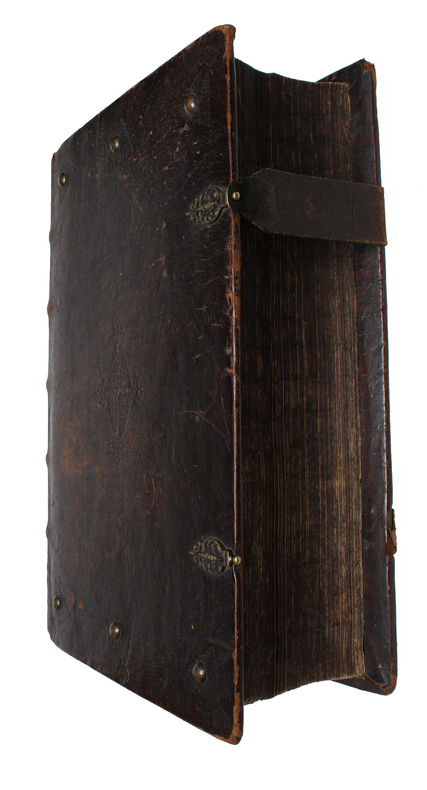
158857770Kiøbenhaffn, (Matz Vingaard), (1588-)89. Folio. (39 x 27 cm.). Samtidigt hellæderbind i brunt kalveskind over svært træ og med kanter i smig. Lettere ophøjede bind på ryg. Håndsyede kapitælbånd. Lille hak i skindet på nederste rygfelt. Med de 4 originale hængselsbeslag i støbt messing bevarede, men den ene strop fornyet og den anden mangler. Permerne har begge blindtrykte arabesker, i midterfeltet en stor arabesk og i hjørner og kanter 6 pyramideformede arabesker, som alle er med en blindtrykt krone i pyramidens top. Permerne har mindre messingstifter med store hoveder til beskyttelse af bindet ved opslag. Marmoreret snit. Bindet er ganske velbevaret med kun lidt kantslid og let slid på de ophøjede rygbind. (22),353(i.e.354),226,159 blade. Komplet, men uden de 3 blanke blade. Træskåret titelblad med tekst trykt i rødt i midterfeltet. Titelbladsvarianten med kongens kobberstukne portræt (af Goltzius) opklæbet på bagsiden (en del eksemplarer udkom uden portrættet). Blad 2 med rigsvåbnet, bladet er kantrepareret. 2 træskårne deltitelblade. Registerbladene med svag skjold i ydre marginer. De sidste 35 blade delvist omkantede, for det meste i ydre marginer. Ganske få spredte brunpletter. Iøvrigt ganske lette brugsspor. Et udmærket velbevaret og komplet eksemplar (bortset fra de 3 blanke).På forreste friblad er anført lidt af eksemplarets ejerhistorie fra 1819, - erhvervet af Mikkel Johannesson Fladebøe som her delvist klausulerer dens ejerskab til fremtidige ejere af gården (Fladebøe ?). Senere synes den overgået til andre i slægten bosat i U.S.A. (Olaf Albertsen, Axel Albertsen, Stanley Albertsen, Sidney Albertsen). Folio. (39 x 27 cm.). Contemporary brown full calf over heavy wooden boards with oblique edges. Sloghtly raised bands to spine. Hand-stitched capital bands. A small notch to the leather of bottom compartment of spine. With the four original brass clasps preserved, but one strap has been renewed and the other is missing. Boards with large blindstamped centre-arabesque and six pyramid shaped arabesques to corners and edges, all with a blindstamped crown on top. Large-headed bras spins to boards, to protect the boards when open. Marbled edges. A bit of wear to edges and light wear to the raised bands. (22), 353(i.e.354), 226, 159 ff. Complete, save for the three blank leaves. Woodcut title-page with centre-text printed in red. The title-page variant with the engraved portrait of the king (by Goltzius) mounted on verso. Several copies were issued without portrait, and some were issued, as here, with the title-page mounted on verso. F. 2 with the royal arms, restored at edges. Two woodcut helf-titles. The index-leaves with a vague damp stain to the outer margins. The last 35 leaves have been partly re-edged, mostly at the very outer margins. A bit of light scattered brownspotting. Light signs of wear. An overall well preserved copy in- as well as externally. Front free end-paper with handwritten notes on provenance from 1819 onward – bought by Mikkel Johannesson Fladebøe, who partly clauses the ownership of the copy to the future owners of the estate (Fladebøe?). It seems to have then passed to other generations of the same lineage located in The United States (Olaf Albertsen, Axel Albertsen, Stanley Albertsen, Sidney Albertsen).
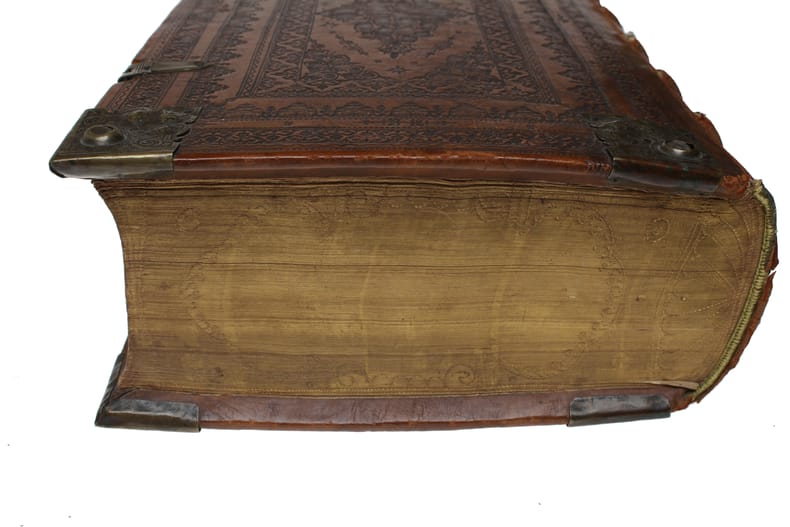
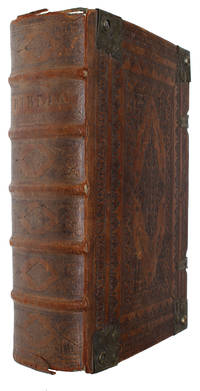
163360241Kiøbenhaffn, (Melchior Martzan og Salomon Sartor), (1632-) 1633. Folio (binding: 37 x 25 cm.). Bound in a spledid, contemporary full calf binding over wooden boards. Rich, elaborate gilding to both boards and spine. The gilding is vague, especially on the front board, but the tooling is very sharp, and the binding overall is magnificent. With four beautiful, ornamented brass edges to each board and two large ornamented brass clasps. All edges are gilt and beautifully blindtooled. Wear to capitals, where the cords are loosening a bit, and with a bit of loss of leather. A bit of wear to hinges, at the cords, which are showing. But overall the binding is in splendid condition. Also internally extremely well preserved. The title-page has a tiny restored hole to lower right corner, and the first four leaves might have been inserted. They are slightly smaller at the outer margin than the other leaves. But that might also be due to restoration, as the binding has not been tampered with at any point and is completely unrestored. The text is unusually nice, clean and fresh, by far the nicest copy we have ever come across. Pasted-down front end-paper with the ownership signature and lacquered coat-of-arms seal of Severin Svanenhielm (Severin Seehusen (1664-1726) ) as well as the ownership signatures of Søren Schiøtz (1796-1863) (with names of members of his family), C. Th. Zahle and Erik Zahle. With the book plate of William Davignon (d. 1924). The brass corners carry the initials HL and are depicted in Johannes Rudbeck's Svenska Bokband I (fig. 26, p.53). The binding there is dated 1622, whereas our binding is from 1633 or right after. The brass fittings were a commercial merchandise for sale in Germany and probably also in both Sweden and Denmark. Engraved title-page as well as the engraved portrait of Christian IV, all by the royal engraver Simon the Pas. Without the half-title, which merely contains the printed words ""BIBLIA / Paa Danske"", which is almost never present. (21 - not counting the engraved title-page and the portrait), 353 (i.e. 354 due to the erroneous double pagination 353), 226, 159 ff.
163360241Kiøbenhaffn Melchior Martzan og Salomon Sartor 1632- 1633. Folio binding: 37 x 25 cm. Bound in a spledid contemporary full calf binding over wooden boards. Rich elaborate gilding to both boards and spine. The gilding is vague especially on the front board but the tooling is very sharp and the binding overall is magnificent. With four beautiful ornamented brass edges to each board and two large ornamented brass clasps. All edges are gilt and beautifully blindtooled. Wear to capitals where the cords are loosening a bit and with a bit of loss of leather. A bit of wear to hinges at the cords which are showing. But overall the binding is in splendid condition. Also internally extremely well preserved. The title-page has a tiny restored hole to lower right corner and the first four leaves might have been inserted. They are slightly smaller at the outer margin than the other leaves. But that might also be due to restoration as the binding has not been tampered with at any point and is completely unrestored. The text is unusually nice clean and fresh by far the nicest copy we have ever come across. Pasted-down front end-paper with the ownership signature and lacquered coat-of-arms seal of Severin Svanenhielm Severin Seehusen 1664-1726 as well as the ownership signatures of Søren Schiøtz 1796-1863 with names of members of his family C. Th. Zahle and Erik Zahle. With the book plate of William Davignon d. 1924. The brass corners carry the initials HL and are depicted in Johannes Rudbeck's Svenska Bokband I fig. 26 p.53. The binding there is dated 1622 whereas our binding is from 1633 or right after. The brass fittings were a commercial merchandise for sale in Germany and probably also in both Sweden and Denmark. Engraved title-page as well as the engraved portrait of Christian IV all by the royal engraver Simon the Pas. Without the half-title which merely contains the printed words "BIBLIA / Paa Danske" which is almost never present. 21 - not counting the engraved title-page and the portrait 353 i.e. 354 due to the erroneous double pagination 353 226 159 ff. <br/><br/><em>A magnificent copy of the scarce first edition of the last i.e. the third of the Danish folio-bibles known as "Christian IV's Bible" being a slightly revised edition of the Bible of 1589. Christian IV is the most famous Danish king ever to have lived and the Christian IV bible is extremely sought-after. An unusually fresh and complete apart from the always lacking half-title copy of this splendid bible printed by the first royal printer Melchior Martzan and Salomon Sartor part 2. The numerous woodcut illustrations are the same that were used for the Frederik II Bibel from 1589. The four engraved leaves - the portrait and the three title-pages - are by Simon de Pas.Bibl. Dan.I9 - Thesaurus II 378. - Birkelund 41. - Darlow and Moule 3160. Provenance: Svanenhielm was a family of Danish and Norwegian nobility. Morten Hansen Seehuusen 1629-1694 was a merchant from Bredstedt in Schleswig-Holstein who re-located to Stavanger Norway. His son Severin Seehusen 1664-1726 was an official in Bergen as well as in Stavanger and Northern Norway. He owned among other properties Damsgård Manor outside Bergen Svanøy in Sunnfjord and Arnegård in Stavanger. In 1720 Severin Seehausen was ennobled under the name Svanenhielm. Søren Daniel Schiøtz 1796-1863 was a Norwegian bailiff and judge who was also very much engaged in religious matters and came to play an important role in the history of theology in Norway. He was one of the founders of the Norwegian Mission Society and the Norwegian Israeli Mission. He translated several important upbuilding pieces from German among them a comprehensive bible history. Carl Theodor Zahle 1866 – 1946 was a highly important Danish lawyer and politician. He was prime minister of Denmark from 1909 to 1910 and again from 1913 to 1920. In 1895 he was elected member of the lower chamber of the Danish parliament for the Liberal Party. A campaigner for peace in 1905 he co-founded the Social Liberal Party Det Radikale Venstre. He stayed on as a member of Parliament for Det Radikale Venstre until 1928 when he became a member of the upper chamber of Parliament Landstinget. In 1929 he became Minister of Justice a post which he held until 1935. Zahle was instrumental in starting negotiations for a new Danish–Icelandic Act of Union in 1917 which resulted in Iceland being recognized as a sovereign nation in a personal union with the king of Denmark the following year. Erik Zahle 1898-1969 was a famous Danish art historian author and museum director. </em> hardcover
158857770Kiøbenhaffn Matz Vingaard 1588-89. Folio. 39 x 27 cm. Samtidigt hellæderbind i brunt kalveskind over svært træ og med kanter i smig. Lettere ophøjede bind på ryg. Håndsyede kapitælbånd. Lille hak i skindet på nederste rygfelt. Med de 4 originale hængselsbeslag i støbt messing bevarede men den ene strop fornyet og den anden mangler. Permerne har begge blindtrykte arabesker i midterfeltet en stor arabesk og i hjørner og kanter 6 pyramideformede arabesker som alle er med en blindtrykt krone i pyramidens top. Permerne har mindre messingstifter med store hoveder til beskyttelse af bindet ved opslag. Marmoreret snit. Bindet er ganske velbevaret med kun lidt kantslid og let slid på de ophøjede rygbind. 22353i.e.354226159 blade. Komplet men uden de 3 blanke blade. Træskåret titelblad med tekst trykt i rødt i midterfeltet. Titelbladsvarianten med kongens kobberstukne portræt af Goltzius opklæbet på bagsiden en del eksemplarer udkom uden portrættet. Blad 2 med rigsvåbnet bladet er kantrepareret. 2 træskårne deltitelblade. Registerbladene med svag skjold i ydre marginer. De sidste 35 blade delvist omkantede for det meste i ydre marginer. Ganske få spredte brunpletter. Iøvrigt ganske lette brugsspor. Et udmærket velbevaret og komplet eksemplar bortset fra de 3 blanke.På forreste friblad er anført lidt af eksemplarets ejerhistorie fra 1819 - erhvervet af Mikkel Johannesson Fladebøe som her delvist klausulerer dens ejerskab til fremtidige ejere af gården Fladebøe . Senere synes den overgået til andre i slægten bosat i U.S.A. Olaf Albertsen Axel Albertsen Stanley Albertsen Sidney Albertsen. Folio. 39 x 27 cm. Contemporary brown full calf over heavy wooden boards with oblique edges. Sloghtly raised bands to spine. Hand-stitched capital bands. A small notch to the leather of bottom compartment of spine. With the four original brass clasps preserved but one strap has been renewed and the other is missing. Boards with large blindstamped centre-arabesque and six pyramid shaped arabesques to corners and edges all with a blindstamped crown on top. Large-headed bras spins to boards to protect the boards when open. Marbled edges. A bit of wear to edges and light wear to the raised bands. 22 353i.e.354 226 159 ff. Complete save for the three blank leaves. Woodcut title-page with centre-text printed in red. The title-page variant with the engraved portrait of the king by Goltzius mounted on verso. Several copies were issued without portrait and some were issued as here with the title-page mounted on verso. F. 2 with the royal arms restored at edges. Two woodcut helf-titles. The index-leaves with a vague damp stain to the outer margins. The last 35 leaves have been partly re-edged mostly at the very outer margins. A bit of light scattered brownspotting. Light signs of wear. An overall well preserved copy in- as well as externally. Front free end-paper with handwritten notes on provenance from 1819 onward – bought by Mikkel Johannesson Fladebøe who partly clauses the ownership of the copy to the future owners of the estate Fladebøe. It seems to have then passed to other generations of the same lineage located in The United States Olaf Albertsen Axel Albertsen Stanley Albertsen Sidney Albertsen. <br/><br/><em>The magnificent first printing of the second Danish-Norwegian Bible in folio. This the second Danish Bible in folio is also the first to be printed by a Dane. The scarce and famous "Frederik II-Bible" constitutes the magnum opus of the famed book printer Mads Vingaard "and the most extensive work of printing undertaken in Denmark during the sixteenth century. The book is profusely illustrated with woodcuts copied from a german Bible issued by Sigmund Feyerabend in Frankfurt a. M. 1560. The original woodcuts were made by the artist and craftsman Virgil Solis. Wide woodcut borders together with pictures using themes from the Scriptures surround the title pages and the illustrations. On the reverse of the first title page many copies have pasted in a portrait of Frederich II engraved by the Dutch artist Hendrick Goltzius. However this portrait may also be found on a separate leaf." Thesaurus I.Lauritz Nielsen 405. - Thesaurus I 129. - Birkelund 34. </em> hardcover