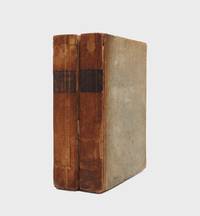
21 006 résultats
19140A Grenoble, chez Claude Faure, 1680, 1 pleine basane usagée, dos manquant, plats frottés, coiffes manquantes, coins et coupes émoussés, manque de cuir sur le plat inférieur, reliure à restaurer in-folio, 2 feuillets blanc détachées, titre détachée, 464 pages, texte sur 2 colonnes, lettrines, ex-libris manuscrtit: "François Félicien Arnaud", petit manque au haut de la page de titre, quelques taches de mouillures sur le haut des feuillets, quelques galeries de vers sur la marge centrale,
10427A Paris, Chez Guillaume Desprez et Chez Jean Baptiste Desessars, 1711. In-8 reliure d'époque pleine basane, dos à nerfs orné, pièce de titre cuir rouge. Tranches mouchetées. 772 p. Bandeaux, lettrines, culs-de-lampe. Etat : Mouillure sur la marge inférieure des 1ères (légère) et dern. pages - Reliure : coiffes manquantes, coins supérieurs émoussés, basane légèrement frottée.
46521Edition d'Art H. Piazza 1925, in-8 broché, couverure grise rempliée, 50-LXXVI p. (petit manque en haut du premier plat de couverture, bas du dos consolidé par un papier collant, sinon bon exemplaire solide) Tirage limité à 980 exemplaires, 1 des 775 numérotés sur vélin. Une belle réussite de Piazza, proposant le texte hébreu et une traduction française due à Robert Schmidt, illustrée de nombreuses compositions en couleurs sous serpentes du grand artiste Arthur Szyk (1894-1951), dans un style très ornementé rappelant Gustave Moreau ; c'était le premier livre français qu'illustra celui qui sera mondialement connu pour ses caricatures des dirigeants de l'Axe pendant la Seconde Guerre.
135775aafLausanne, Chez Henri Vincent, M. DCC. XC., 1790, in-8vo, IV + 681 p., manuscrit sur p. de garde: „Ce Testament appartient à Louise Marguerite Cathrine Cornaz de Faoug. Dieu lui fasse la grace d’en faire un profit salutaire Amen. Fait ce 17e Décembre 1794“. reliure en plein-cuir, dos à nerfs avec pièce de titre, coiffe sup. touchée, traces d’usage.
41676Stuttgart, Deutsche Bibelgesellschaft Stuttgart 1979, fort in-12 relié skyvertex bleu marine de l'éditeur, LXIX-1184-941 p. sur papier bible (très bon exemplaire ; non réédité) Edition intégrale en un seul volume du texte grec de la Septante, la première grande traduction grecque de l'Ancien Testament.
1735ST18632Amsterdam: Petrus Shenk 1735-38. First Edition in Dutch. 415 x 264 mm. 16 3/8 x 10 3/8". Entirely complete with continuous pagination but with a jump in page numbering from the end of book XIII to the beginning of XIV as usual. 15 parts in eight volumes. Translated by Florentius H. J. van Halen. <br/> HANDSOME CONTEMPORARY VELLUM covers with large gilt entrelac centerpiece framed with gilt floral rule with bouquet-like cornerpieces gilt floral border raised bands compartments richly gilt titles and volume numbers handwritten in ink on spines all edges gilt. With head- and tailpieces 15 engraved titles printed in red and black with engraved vignettes and complete with frontispiece two engraved portraits of the author and the engraver the latter with shorter margins probably tipped-in and 760 OFTEN STRIKING COPPER ENGRAVINGS on 758 plates one with partial hand coloring a few double-page. Front pastedown of first volume with handwritten note in French on lined paper; with additional black & white title to first work erroneously dated 1728. Nissen ZBI 3661; see also: Faber du Faur "German Baroque Literature" p. 472. Trivial soiling to the vellum the seventh volume with a faint marginal dampstain affecting a few quires but not touching engravings the odd negligible blemish but AN OUTSTANDING SET the very attractive original bindings showing only insignificant wear and THE CONTENTS ESPECIALLY FRESH AND CLEAN THROUGHOUT WITH VERY FINE IMPRESSIONS OF THE PLATES.<br/> <br/> This is the first Dutch translation of Scheuchzer's "Sacred Nature" one of the most splendid German illustrated books of the 18th century presenting what surely is the most impressive combination of biblical exegesis and scientific illustration to be found in any printed book. First published in 1731-35 as the "Physica Sacra" in Latin and as the "Kupfer-Bibel" in German so-named for the amazing array of copperplate engravings this work is arranged according to the progression of books in the Bible citing passages from those chapters where phenomena from the natural world are mentioned. The typical pattern here includes a textual citation followed by the author's often lengthy remarks on the passage and in many cases a dramatic engraving to illustrate what is said. The plates are identical to the earlier editions retaining the inscriptions in Latin and German and are the work of Johann-Melchior Fuseli of the well-known Zurich family of 18th and 19th century artists. The engraved scenes are always executed with great skill are generally very animated and are often fascinating. Of the 760 images meant to illustrate the text many are strictly or primarily depictions of biblical scenes; several are simply illustrations of specimens of nature; and a large number perhaps half offer a kind of combination. An example of this last type includes a wonderful scene showing the birth of Man as related in Genesis 1:26-27 depicting not only a startled Adam in his fecund paradise but also 10 images of fetuses placentas and the skeletons of children attached like mounted specimens to the architectural frame of the illustration. According to Faber du Faur it is in this work that "the Baroque attains philosophically as well as artistically its high point and its conclusion. It is the last of those elegant works which do not really contain illustrations to a text but which are in effect composed of splendid plates with a text to accompany them." Scheuchzer 1672-1733 was a prolific naturalist who promoted at every opportunity the most modern scientific ideas though without wanting to risk the accusation of being irreverent. He says that the present work represents an attempt at finding a harmony between reason and revelation though it can also be seen as an effort to promulgate progressive theories under the venerable cloak of biblical commentary. The bibliographies disagree about the number of plates that ought to be present in this work and in other editions but ours corresponds to copies previously sold at auction as complete. Copies of the "Physica Sacra" and its translations show up regularly for sale but almost never does one see the work both complete and as here with a clean and fresh text in remarkably well-preserved and attractive contemporary bindings. Petrus Shenk unknown
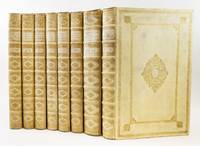
1862321072New York: American Bible Society 1862. Text in Armenian. New Testament with separate title page. 879 5 274 pp. 1 vols. 8vo. Original blindstamped leather. Rubbed lower board and last leaf detached. Good. Text in Armenian. New Testament with separate title page. 879 5 274 pp. 1 vols. 8vo. An early example of Armenian printing in America. The Armenian Bible was first printed in New York in 1859. "The translation of the OT begun . by H.G.O. Dwight and others . was completed by Elias Riggs. The NT is the version by J. Zohrab revised by J.B. Adger in 1841-2" Darlow & Moule 1851. OCLC: 39994158 Yale American Bible Society unknown
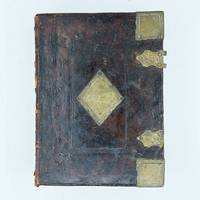
1604372251London: Robert Barker 1604. Text in Roman type in two columns. Titles within woodcut borders woodcut illustrations head and tail-pieces. 4 190; 117 i.e. 127; 128-187 i.e 197 omitting 129 as issued and other errors in pagination; 121 11 leaves. Complete with the leaf signed Ai preceding the general title. Bound with preceding the Bible: The Booke of Common Prayer with the Psalter or Psalmes of Dauid. Title in red and black within woodcut border. 46 leaves complete. ESTC S93831. Bound with following the Bible: The Whole Booke of Psalmes. 10 70pp only. Lacking terminal three signatures. 4to. Early mottled calf rebacked brass corner pieces and hinges lacks clasps upper cover detached marbled endpapers gilt edges. Provenance: William James signature and inscription dated 1663 on leaf preceding the general title; Frances Garway inscription on brass plate on covers dated 1701; Thomas Bever armorial bookplate inscriptions on endpaper circa 1748; Francis Hutchinson Synge; Arthur John Snow Paget inscription dated 1851 General Theological Seminary bookplate. Text in Roman type in two columns. Titles within woodcut borders woodcut illustrations head and tail-pieces. 4 190; 117 i.e. 127; 128-187 i.e 197 omitting 129 as issued and other errors in pagination; 121 11 leaves. Complete with the leaf signed Ai preceding the general title. Bound with preceding the Bible: The Booke of Common Prayer with the Psalter or Psalmes of Dauid. Title in red and black within woodcut border. 46 leaves complete. ESTC S93831. Bound with following the Bible: The Whole Booke of Psalmes. 10 70pp only. Lacking terminal three signatures. 4to. An excellent example of the Geneva Bible with Tomson's revised New Testament and Junius' Revelation. The principal Bible of 16th-century Protestantism and the Geneva Bible was used by Shakespeare Oliver Cromwell John Knox John Donne and John Bunyan. This edition contains the famous reading "breeches" in Genesis Chapter III verse 7 which first appeared in 1579. Although Barker's imprint on title of this edition reads "Printer to the Queenes most excellent Majestie" the colophon reads "Printer to the Kings most excellent Maiestie" as James I had ascended in March 1603. Darlow & Moole 209; ESTC S159; Herbert 274; STC 2190 Robert Barker unknown
1585372230London: Deputies of Christopher Barker 1585. Text in black letter in two columns. General title and calendar printed in red and black titles within woodblock frames woodcut map on leaf following NT NT-O3 woodcut initials. 17 536 137pp. New Testament title page present. Lacks preliminary blank lacks the general title with a 1588 title supplied in its place lacks NT leaf V1 Titus 2:12 through Hebrews 1:10 preliminaries bound out of order. Folio 15-5/8x10-1/2 inches. Nineteenth century dark purple morocco covers blocked in blind marbled endpapers red edges. Repairs to voids in preliminaries and several leaves in the beginning of Genesis general title supplied and mounted restoration to the terminal five leaves with some losses else scattered minor staining and edge tears. Scattered early marginalia including an early female ownership signature on page 536. Bookseller's label on front endpaper J. Whereat Weston Super Mare. Text in black letter in two columns. General title and calendar printed in red and black titles within woodblock frames woodcut map on leaf following NT NT-O3 woodcut initials. 17 536 137pp. New Testament title page present. Lacks preliminary blank lacks the general title with a 1588 title supplied in its place lacks NT leaf V1 Titus 2:12 through Hebrews 1:10 preliminaries bound out of order. Folio 15-5/8x10-1/2 inches. The Bishops' version the translation overseen by Matthew Parker. ESTC S156; Herbert 188; STC 2143. Provenance: General Theological Seminary bookplates Deputies of Christopher Barker unknown
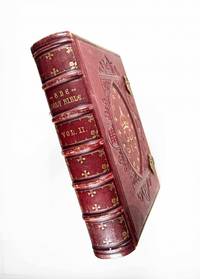
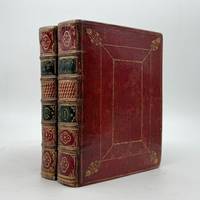
186249952Glasgow Edinburgh and London: William Mackenzie 1862. Deluxe Edition. Two volumes folio 450 x 330 mm published between 1862 and 1863. 16 1344pp. 57 unnumbered leaves of albumin prints 230 x 160mm mounted on card stock. Crimson morocco over wooden boards elaborately tooled in gilt and blind; edges mounted in brass double brass clasps with thistle motif; covers with a broad blind-stamped border around a recessed central panel with the crowned cipher of Queen Victoria in gilt; gilt tooled spine with 5 raised bands; a.e.g. marbled endleaves with gilt dentelles. Covers with some mild traces of use; single crease in each marbled endleaf partially detached in second volume; occasional light to moderate foxing mostly confined to the plate mounts; albumin prints in fine condition often with foxing extending about 5mm from the edges into the mount. Overall a very good set with a fine series of photographs notable for their technical achievment.<br /> <br /> Deluxe edition one of 170 copies complete with all 57 albumen prints. Produced for the 1862 International Exhibition and dedicated to Queen Victoria then recently in mourning for the death of Prince Albert this work appeared at a time when photography though still a laborious and expensive process was just beginning to become a popular activity. Victoria herself was an amateur photographer and "the royal couple had been enthusiastic supporters of photography in England from the beginning; in 1853 they became founding patrons of the Photographic Society Club" K. Fiedorek. Francis Frith 1822-1898 the devout Quaker whose photographic images grace the present work was one of the best-known photographers to work in the Near East and the most commercially successful photographer of the nineteenth century. Finding his elementary studies tedious Frith left school at the age of ten apprenticed with a grocer and eventually started his own business. He later went into printing sold the grocery business to a competitor at a substantial profit and went on to devote himself to photography. "The growing Victorian interest in the East and its exotic and historic attractions caught the attention of this astute businessman" Perez. Between 1856 and 1860 Frith made three photographic expeditions to Egypt Ethiopia Sinai and the Levant accompanied by the engineer Francis Herbert Wenham who provided technical assistance in mechanics and optics. While Perez notes that Frith's "approach was always a strictly commercial one and his concern was to make truthful and accurate views of the area" he readily concedes that "the technical quality of Frith's photographs is superior." Frith employed the new wet collodion process in which glass plate negatives were sensitized exposed and developed while still wet. While technically demanding the process yielded rich detail and broad tones. "Frith's were the first original wet-plate photographs of Jerusalem and the Holy Land to reach a wide English-speaking audience and his pictures of the small Palestinian towns were most likely the first published anywhere" Nir p.66.<br /> <br /> Perhaps the most novel aspect of this celebrated edition of the Bible and certainly a harbinger of things to come was the way in which the photographer "presented the radical possibility of seeing photographs of the biblical sites alongside related verses of scripture. he sought to defend and promote his faith by conscripting the veracity of science and materialism to his cause and considered photography to be the most effective medium for his campaign" Foster et al. This vision is manifest even in such details as the re-captioning of prints previously offered for sale so that the new descriptions would more clearly reference the King James text. It should be noted that while the printing was still done by hand this was one of the earliest books for which machinery was used for composing. Original publisher's price = 50 guineas. Another version of this work was published at London in 1860-1862 by Eyre & Spottiswoode; sometimes confused with the present work it was issued in 20 parts each containing a single photographic print by Frith.<br /> <br /> K. Fiedorek A Photographic Bible Fit for a Queen NYPL Blog 2014. Foster Heiting and Stuhlman Imagining Paradise pp. 68-69. Gernsheim Incunabula of British Photographic Literature 1839-1875 p.36 no.184. Herbert The English Bible 1940 1217. Y. Nir The Bible and the Image The History of Photography in the Holy Land 1939-1899 esp. chap. 3: "Early Traveling Landscape Photographers". N. Perez Focus East: Early Photography in the Near East 1838-1885 pp.163-165. William Mackenzie unknown
1790ST19326Amsterdam: H. Keyzer H. Gartman en W. Vermandel 1790. 555 x 345 mm. 21 7/8 x 13 3/4". 2 p.l. 62 folding plates. <br/> Attractive late 19th or early 20th century retrospective polished brown calf by L. Guétant stamp-signed in gilt on tail of spine double gilt-ruled border floral cornerpieces raised bands spine panels with scrolling floral borders and central flower ornament gilt titling. With title vignette and 62 ENGRAVED FOLDING PLATES ALL WITH BEAUTIFUL HAND COLORING AND HIGHLIGHTED WITH GOLD depicting Bible scenes from the Old and New Testament 61 of which are by Jan Luyken. A Large Paper Copy. For earlier editions: Graesse IV p. 308; Brunet III 1245-46; Klaversma & Hannema 159-164. Light rubbing to joints and edges boards just a little marked trivial foxing and faint spots here and there but A REMARKABLY FINE COPY the binding lustrous and showing little wear the paper extremely bright and fresh the margins immense and the paint and gold unusually vibrant.<br/> <br/> The marvelous illustrations of Dutch engraver and poet Jan Luyken comprise this collection of "remarkable stories" from the Bible each depicted with panoramic grandeur and enhanced with a wide range of finely applied colors and gold. Luyken 1649-1712 had written and illustrated erotic poetry as a young man but later became a devout Pietist after reading the works of German mystic Jakob Böhme. He became a member of the Baptist Church in 1673 and thereafter devoted his talents to producing religious works. The vast scenes here are notable in their scale detail and animation. There are a number of battle scenes from the Old Testament as well as dramatic depictions of the plagues and a fascinating episode from the histories of Josephus depicting Herod's soldiers being lowered down the side of a cliff in large boxes suspended from chains in order to attack the thieves hiding in caverns on the cliffside. There is a majestic portrayal of the Queen of Sheba arriving at the court of Solomon a peaceful scene of Adam naming the beasts in the Garden of Eden and a festive celebration of the Feast of Tabernacles. New Testament scenes include a terrifying final judgment a blinding conversion of St. Paul and scenes from that Apostle's travels. The engravings have one common trait: they are heavily populated whether by men or beasts and one of Luyken's special gifts is to render every person in the crowd as an individual with his own concerns and reactions to the events at hand. The engravings while already greatly pleasing in black and white are even more stirring and memorable when seen in the full color and gold used here. Expansive tableaus are given greater definition and clarity and events such as Noah’s flood and the destruction of Sodom and Gomorrah are rendered even more successful in expressing the awesome powers of the Almighty. The illustrations are quite definitely Protestant in point of view: there are no depictions of the Virgin Mary not even a Nativity scene. Except for engravings of the Annunciation to the Shepherds and the Massacre of the Holy Innocents the illustrations focus on Jesus as an adult and on the work of his Apostles spreading the gospel. There were earlier editions containing Luyken's 62 large plates which originally appeared without text as here in 1708 and they appeared again with a text in Dutch in 1729 and in French in 1732. Copies of these editions appear with some regularity in the marketplace but are usually not colored and are often found incomplete or with other major condition issues. We can trace no record in RBH or OCLC of a copy of our 1790 edition and we can find nothing that compares with the quality of coloring and grand height attained by the monumental margins seen here. H. Keyzer, H. Gartman en W. Vermandel unknown
1752D3102Paris: Gabriel-Charles Berton 1752. Hardcover. Very Good. 268 half-page engraved illustrations including title vignette. 20 552 pages including half-title. 4to contemporary mottled sheep gilt with morocco lettering piece spine ends rubbed cover corners worn; overall a very nice fresh copy. A charming old 19th century book marker with a little pillow at the head rests inside pillow dangling outside at the top. <br/><br/> Gabriel-Charles Berton hardcover
1979365295Boston: Charles Goodspeed & Co 1979. One of 87 copies. Printed and bound at the Stinehour Press. 4 10 2pp. With a leaf from the first edition of the Eliot Indian Bible tipped in following the title as issued. 1 vols. Small 4to. Original blue cloth glassine dust jacket slipcase. Fine. One of 87 copies. Printed and bound at the Stinehour Press. 4 10 2pp. With a leaf from the first edition of the Eliot Indian Bible tipped in following the title as issued. 1 vols. Small 4to. Includes a leaf from the 1663 Eliot Indian Bible. The present example being D2 from the Psalms comprising Psalms 42:7 through Psalms 45:8. Charles Goodspeed & Co unknown
1930253119San Francisco: Printed by Edwin & Robert Grabhorn for John Howell at the Sign of the Open Book 1930. From an edition limited to 580 copies this is one of 515 copies in the "Colonial Edition. Inserted leaf from the Bible printed by Robert Aitken Philadelphia 1782 from Deuteronomy; and 8 illustrations. 34 pp. 1 vols. 8vo. Original half leather and paper boards spine gilt. Bottom corners and head and foot of spine rubbed. Bookplate on front pastedown. Very good. From an edition limited to 580 copies this is one of 515 copies in the "Colonial Edition" Inserted leaf from the Bible printed by Robert Aitken Philadelphia 1782 from Deuteronomy; and 8 illustrations. 34 pp. 1 vols. 8vo. From an edition limited to 580 copies this is one of 515 copies in the "Colonial Edition" printed for John Howell Books by the Grabhorn Press and containing an essay by Edwin Grabhorn on typography in America in 1776. This volume contains an original leaf from a copy of the Aitken Bible one of the most celebrated American bibles being the first complete English Bible printed in America. During the colonial era the monopoly on printing English bibles belonged to the Royal Printer and the colonies were supplied entirely with bibles printed in England. The only Bible printed in the British colonies in America was the famous Eliot Indian Bible in Algonquian issued in Cambridge in 1661-63 and reprinted in 1680-85. With the Revolution this monopoly naturally ended and the embargo on goods from England acted to create a shortage. Aitken a Philadelphia printer undertook the task producing the New Testament in 1781 and the Old Testament in 1782. On completion he petitioned the Continental Congress for their endorsement and received it in September 1782. Because of this official endorsement and the reasons behind its production the Aitken Bible is often referred to as "The Bible of the Revolution" Grabhorn Bibliography 131 Printed by Edwin & Robert Grabhorn for John Howell at the Sign of the Open Book unknown
1587ST14247Venetiis Venice: Hieronymus Polus 1587. 213 x 146 mm. 8 3/8 x 5 5/8". 12 p.l. 1126 pp. <br/> ESPECIALLY PLEASING CONTEMPORARY CALF covers with gilt French fillet frame and oval wreath of olive branches the center of the wreath in the shape of a cross flat spine ruled in gilt red morocco label. Title page with elaborate wood-engraved frame text profusely illustrated WITH 600 WOOD ENGRAVINGS depicting scenes from scripture after Holbein Bernard Salomon le Petit Bernard and others a handful of these a bit indistinct. Front pastedown with ex-libris of Leonis S. Olschki. Adams B-1093; STC Italian 93. Not in Darlow & Moule. ◆A little wear to joints and extremities spine a bit crackled separation at hinges but no looseness occasional minor browning or foxing otherwise in remarkably fine condition the text clean and crisp and in a still-lustrous entirely solid unsophisticated original binding.<br/> <br/> This is a very well-preserved handsomely bound and lavishly illustrated edition with distinguished provenance of the Louvain Bible first printed in Venice in 1578. Our edition contains 600 wood engravings illustrating the text ranging from portraits of prophets saints and evangelists to dramatic scenes from the histories of the Old Testament and the life of Christ and ending with an imaginative Apocalypse cycle. Many of these are the work of Lyonnaise artist Bernard Salomon 1506-61 known by the sobriquet "Le Petit Bernard" for his small engravings rich with detail. Others are based on the biblical woodcuts of Hans Holbein. The binding here is likely French; the flat spine with just one large gilt-framed panel and the olive branch decoration on the covers is characteristic of late 16th century and early 17th century French work. The exceptional condition here is typical of books from the collection of Leo Samuel Olschki 1861-1940 scion of a family of Prussian Jewish printers whose interest in printing history led to his becoming a celebrated antiquarian bookseller author founder of the journal "The Bibliophile" and publisher of works in the humanities. Hieronymus Polus unknown
1489371804Strasbourg: Johann Prüss 1489. Text in double columns 52 lines per column. 450 leaves with erratic pagination and collation. Two leaves present in early manuscript facsimile Interpretations of Hebrew Names leaves b2 and b7. Partially rubricated. Contemporary manuscript marginalia with chapter summaries in the lower margins throughout and shoulder notes in the OT with extensive annotation on the title. Folio. Early blindstamped pigskin later brass bosses and clasps joints splitting some loss at bottom of spine. Title mounted with paper losses at fore-edge and lower margins affecting the manuscript annotation but not the text. Cloth clamshell box. Text in double columns 52 lines per column. 450 leaves with erratic pagination and collation. Two leaves present in early manuscript facsimile Interpretations of Hebrew Names leaves b2 and b7. Partially rubricated. Contemporary manuscript marginalia with chapter summaries in the lower margins throughout and shoulder notes in the OT with extensive annotation on the title. Folio. The second Prüss Bible. Place of publication and printer from Goff publication date from colophon Kk5v. Not in Darlow and Moule. This copy from the famed bible collection of W. A. Copinger. See his lengthy bibliographic description in Incunabula Biblica item 79 and plate XLI. ISTC ib00588000; GW 4265; Hain-Copinger 3104; Proctor 543; Goff B588; BM 15th cent. I 122 IB.1658; Walsh J.E. 15th cent. printed books 196; Stillwell B516; Bodleian Lib. 15th cent. B-297; Copinger W. Incunabula Biblica 79; BSB-Ink B-462. Provenance: W. A. Copinger bookplate; General Theological Seminary booklabel blindstamp on the title Johann Prüss unknown
1819373865Lancaster Penn: Johann Bär 1819. Text in two columns. Engraved frontispieces to the OT and NT. 10 100 12 4 738 26 4 227 1 92pp. Folio. Contemporary calf covers bordered with gilt roll tools and cornerpieces covers with pictorial blocking press and stencil-masked sprinkled motif in relief Moses on the upper cover and Jesus on the lower cover spines with double-raised bands elaborately tooled in gilt with additional stencil-masked motifs in relief red morocco letter piece marbled endpaper gilt edges repair to upper joint and hinge original full calf slipcase. Text in two columns. Engraved frontispieces to the OT and NT. 10 100 12 4 738 26 4 227 1 92pp. Folio. The first German folio Bible printed in America in a very unusual and elaborate American binding and with a very early slipcase. Wright p. 139 Johann Bär unknown
1609371891Geneva: Pierre de la Rouière 1609. In two columns. 28 184 283 1 84 203 1; 8 186 2 134 2pp. Folio 15 x 9-1/2 inches. Contemporary pigskin covers blocked in gilt and blind remnants of paper label on the spine gauffered edges lacks bosses and hinges and clasps worn at extremities and bottom of spine. Provenance: Johann Georg Feuchter of Jura-Weickersroda inscription on pastedown that the bible was purchased at an August 6 1728 auction for 4 florins and 30 groschen; General Theological Seminary blindstamp. In two columns. 28 184 283 1 84 203 1; 8 186 2 134 2pp. Folio 15 x 9-1/2 inches. Edited with introduction by Benito Arias Montanus 1527-1598 Spanish orientalist and editor of the Antwerp Polyglot a reprint of Plantin's similar edition. Darlow & Moole 5113 OT and 4662 NT Pierre de la Rouière unknown
1824373835New York: Edicion Estereotipica por A. Chandler 1824. First American Edition of the Bible in Spanish. 928; 251pp. 4to. Contemporary panelled calf usual wear front hinge neatly repaired. Foxing. Provenance: Essex Institute label on front pastedown. In half red morocco slipcase and chemise. First American Edition of the Bible in Spanish. 928; 251pp. 4to. First American edition of the Bible in Spanish printed by the American Bible Society for the use of missionaries in South America. It is among the earliest Catholic bibles printed in the United States noted on the verso of the titlepage as "Edicion 1". The text was taken from the Madrid edition of 1797 translated from the Latin by Felipe Scio de San Miguel Bishop of Segovia.<br /> <br /> Scarce on the market with no examples in the auction records for the last half century. Shaw & Shoemaker 15340; O'Callaghan 1824; Parsons 813 Edicion Estereotipica por A. Chandler unknown
1638371697London: Robert Barker Printer to the Kings most Excellent Majestie and by the Assignes of John Bill 1638. A-F8 G4; A-3K8; A-F8 G4. 8vo. Early black morocco tooled in gilt marbled endpapers a.e.g. GTS bookplates at front and rear. Autograph ownership signatures with several additional textual annotations. A few small interior tears with vernacular repairs. 2D2 torn with loss. A-F8 G4; A-3K8; A-F8 G4. 8vo. Includes Robert Barker's 1638 editions of the Book of Common Prayer and the Holy Bible both Old and New Testaments plus Apocrypha along with the 1637 edition of Thomas Sternhold's Whole Book of Psalms printed by G.M. for the Companie of Stationers in London all designated "Cum privilegio." Text in two columns with printed glosses. Three discrete ownership signatures of Richard Jacob are present - two on the versos of the title pages for the Old and New Testaments and one facing the title page for the Whole Book of Psalms - along with several autograph annotations and vernacular repairs. Robert Barker, Printer to the Kings most Excellent Majestie, and by the Assignes of John Bill unknown
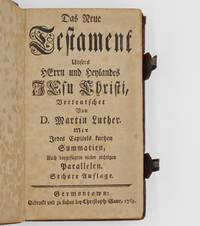
1769373151Germantown PA: Christoph Saur 1769. 5293pp. 12mo. Contemporary speckled calf covers ruled in blind spine with raised bands brass hinges and clasps minor wear along front joint. Provenance: Abraham de Türck printed book label inserted between the front endpapers. 5293pp. 12mo. German translation of the New Testament printed in Germantown by Christopher Saur the younger. Famous for their quarto bibles in German of 1743 1763 and 1776 the Saur father and son also issued the New Testament separately in smaller format in 1745 1755 1760 1761 1764 1769 and 1775.<br /> <br /> The present example with a unique added leaf preceding the front blank being a printed bookplate within an elaborate typographic border indicating that the owner Abraham de Türck had received the book from his grandfather Johannes Hoch in 1772. Evans 11181; ESTC W4533; Bötte 366 Christoph Saur unknown
1510371469Leipzig: Wolfgang Stockel 1510. Title in red and black. A-Dâ¶ Eâ´ F-Jâ¶ Kâ´ L-Mâ¶. 68 leaves. Extensive annotations throughout in Latin in a contemporary Germanic cursive comprising both interlinear notes and marginal gloss. 1 vols. Folio 12x8-1/2 inches. Early pigskin and oaken boards a remboitage from a thicker volume worn front hinge split between A2 and A3. Housed in a blue cloth slipcase. Provenance: Duplum Bibliothecae Regiae Monacensis pencil annotation; John Pintard inscription presenting the book to; General Theological Seminary bookplate and inked stamps. Title in red and black. A-Dâ¶ Eâ´ F-Jâ¶ Kâ´ L-Mâ¶. 68 leaves. Extensive annotations throughout in Latin in a contemporary Germanic cursive comprising both interlinear notes and marginal gloss. 1 vols. Folio 12x8-1/2 inches. Edited by Johann Kusthuert this printing of the Epistles of Paul was intended for the student market with the introduction addressed to studiosis sacarum litterarum tyronibus. In addition the colophon reads: Impressum ad altissimi Dei laudem ac studiosorum Sacre Scripture tyronum perfectum in officina libraria prouidi viri Vuolffgangi Stockel ciuis Liptzensis anno Domini 1510 quarto kalendis Septembris.<br /> <br /> The annotations and marginal gloss are impressive and very similar though in a different hand to the copy described by Rosenthal now at the Beinecke suggesting they are by a student at the same institution: "The present copy comes with a vast manuscript apparatus in Latin covering the entire text from St. Jerome's general preface to the last sentence of the last epistle. The annotation . is uniformly intense throughout. The script is a very small at times microscopic Germanic cursive and there is evidence of careful layout especially in the marginal gloss." Estimating the annotations to be approximately 80000 words Rosenthal describes the interlinear notes as "frequently far more than simole reading aids." He continues: "The marginal gloss includes an argumentum for each chapter and its subdivisions . There are also occasional citations from authorities such as St. Thomas and Ambrose."<br /> <br /> It is a handsomely printed volume with the title in large red letters above an 11-line subtitle in black. The verso of the title comprises a table of contents of the Pauline epistles and is followed by an introduction by Kusthuert.<br /> <br /> On the duplicates sold by the Munich royal library including the present volume see: Wagner Bettina. "'Duplum Bibliothecae Regiae Monacensis': The Munich Court Library and Its Book Auctions in the Nineteenth Century." The Papers of the Bibliographical Society of America vol. 111 no. 3 2017 pp. 345-77. Pintard 1759-1844 was a prominent New Yorker of Huguenot origin patron of education and one of the earliest and staunchest advocates for the preservation and study of the history of New York and the United States. Pintard began to work towards the establishment of a historical society in the city in early 1804 and he was the leader in the organization of the New-York Historical Society in November 1804. He was also a patron of the old French Huguenot Church of St. Esprit and the General Theological Seminary to whom he donated this volume in 1826.<br /> <br /> Scarce. OCLC locates three copies in Germany the aforementioned copy at Yale described by Rosenthal and the present example. Rosenthal B.M. Printed books with manuscript annotations 105 for a similarly annotated copy of the same edition; Panzer vii p. 169; VD16 B 4980. Not in BM STC Germany Adams or Darlow & Moule [Wolfgang Stockel] unknown
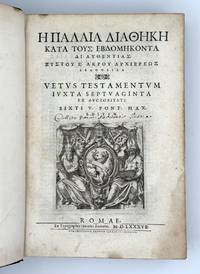
1587371783Rome: Franciscus Zanetti 1587. Text in Greek with short Latin notes at the end of each verse in two columns. Large engraved vignette on title with figures of Moses and Esdras on either side of the arms of Sixtus V. aâ´ A-3Sâ¶ 3Tâ¸. 8 783 1pp. Folio. Eighteenth century red morocco arms of the second Duke of Newcastle on the covers marbled endpapers gilt edges minor darkening to spine and wear to joints. Scattered minor dampstaining at lower outer corner of a few leaves. Provenance: Collegii Paris. Societas Jesu.early inscription on title; Douglass Maxwell Moffat booklabel with original invoice purchasing the volume from Davis & Orioli in 1940; General Theological Seminary bookplates. Text in Greek with short Latin notes at the end of each verse in two columns. Large engraved vignette on title with figures of Moses and Esdras on either side of the arms of Sixtus V. aâ´ A-3Sâ¶ 3Tâ¸. 8 783 1pp. Folio. Commissioned by Pope Sixtus V to assist the revisers who were preparing the Latin Vulgate edition ordered by the Council of Trent the "Sixtine" or "Roman" edition of the Septuagint was edited by Cardinal Antonio Carafa based on the Codex Vaticanus and became the standard for all the later editions of the Septuagint for three centuries after its publication. Darlow & Moule no. 4647; Adams B1246; BM STC Italian 1465-1600 p. 94 Franciscus Zanetti unknown
1653371930London: Roger Daniel 1653. Title in red and black. Engraved printer's device on the title state B. Text in two columns. 8 1279 1 pp. 4to 7-3/8 x 5-3/8 inches. Eighteenth century red morocco panelled in gilt spines gilt with black morocco lettering pieces marbled endpapers gilt edges. Provenance: Viscount Palmerston bookplate; General Theological Seminary bookplate. Title in red and black. Engraved printer's device on the title state B. Text in two columns. 8 1279 1 pp. 4to 7-3/8 x 5-3/8 inches. The rare first printing in England of the Septuagint the earliest translation of the Hebrew Old Testament into Greek the scarce printing in quarto format. The text is derived from the Sixtine text and edited by John Biddle 1615-1662 the Unitarian controversialist who was imprisoned by the Parliamentary Commissioners for his religious views. <br /> <br /> "Roger Daniel's version of the text of the Sixtine edition was prepared for the use of the scholars at Westminster School. This appeared in 1653 and was edited by the Socinian John Biddle. Its publication may have owed something to the interest in the Septuagint generated by Codex Alexandrinus and the frustration produced by the failure of Young's attempts to edit it" S. Mandelbrote "English Scholarship and the Greek Text of the Old Testament" p. 87.<br /> <br /> A rare issue from the same setting as the octavo edition imposed in quarto without rules separaring the columns. Wing 2nd ed. B2718A; ESTC R12599; Darlow & Moule 4692 Roger Daniel unknown
1810373845Boston: De l'Imprimerie de J. T. Buckingham 1810. 403; 3261pp. Half-titles errata leaf at back of second volume. Uncut. 2 vols. 8vo. Publisher's paper-backed boards printed paper label one cover detachedsome darkening and spotting chipping and cracking of spines. Spotting and light soiling of text mostly marginal and light. Very good copies in brown cloth open faced case. 403; 3261pp. Half-titles errata leaf at back of second volume. Uncut. 2 vols. 8vo. First American edition of the Bible in French. De Sacy's translation was the most widespread French Bible of the 18th century. O'Callaghan 102; Shaw & Shoemaker 19531; Rumball-Petre "Rare Bibles" 185 De l'Imprimerie de J. T. Buckingham unknown