Newton, Sir IsaacBiblio.com
26 496 résultats
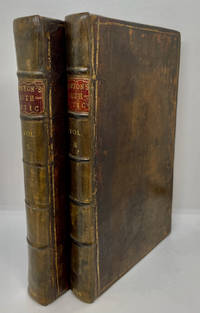
17693016<p>1769. Hardcover. Very Good/No Dust Jacket. Printed for W. Johnston; London 1769; translated by Mr. Ralphson and Revised and Corrected by Mr. Cunn; to which is added a Treatise upon the Measures of Ratios by James Maguire the whole Illustrated and Explained in a series of Notes by the Rev. Theak</p> hardcover
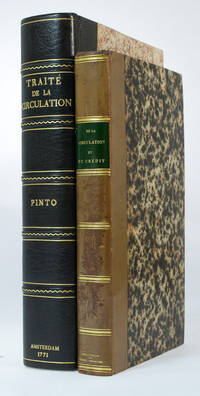
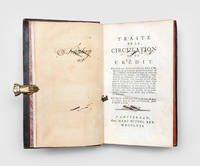
177166800Amsterdam: Chez Marc Michel Rey 1771. The very scarce first edition. xvi 368 with additional 8 pp. sheet H inserted before gathering I: entitled Etat des Finances en Angleterre a la fin de la session du Parlement en 1770.<br> <br> Nineteenth-century half calf over marbled boards spine ruled in gilt with green label and gilt lettering: at foot of spine in gilt lettering 'Bibliothèque de Michel Chevalier' spine head slightly frayed. Occasional spotting and staining but a very good copy and with the bookplate of Michel Chevalier 1806-1879 follower of Saint-Simon author of the Cours d'Économie Politique and co-architect of the Anglo-French 'Cobden-Chevalier' commercial treaty of 1860. Housed in a quarter brown morocco clamshell.<br> <br> "Economique. Sur le commerce l'agriculture les finances; passages pp. 70-72 sur la populatin anglaise; pp. 183-196 et 216-335 sur la population en France et en Angleterre. En particulier nécessité d'augmenter également la population dans les villes et danse les campagnes pout éviter les déséquilibres sociaux et économiques. Analyse de plusieurs ouvrages dont un livre qualifié de rare: 'Le détail de la France' part Boisguilbert" INED. Pinto admired the Physiocrats but disagreed with them. "Pinto's Traité is written from a national as well as an international perspective. Pinto's experience as a merchant and financier in the Republic along with his knowledge of French and English economic thought laid the foundations for his European economic model. Pinto wanted above all to convince his readers of hte soundness of the British system of public debt. With the adoption of improvements in the redemption policy proposed in his book the system would achieve a high degree of perfection. In France the physiocratic opinions of the elder Mirabeau in particular required Pinto to respond and in England the otherwise admiring Hume was in disagreement. By means of a critical discussion of the work of these and other authors Pinto propagated a financial policy that he thought would benefit both the State and the individual" I.J.A. Nijenhuis Een Joodse Philosophe. Isaac de Pinto 1717-1787 Amsterdam NEHA 1992.<br> <br> Goldsmiths' 10791. Higgs 5282. Kress 6811. Palgrave III pp. 109-110.<br> <br> HBS 66800.<br> <br> $8500. Chez Marc Michel Rey unknown
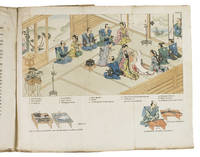
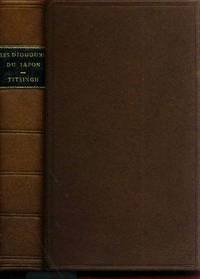
182418968The Hague 1824. 8vo. the widow of J. Allart Contemporary marbled boards with a paper title label on the spine. With 4 hand-coloured folding aquatint plates and a hand-coloured engraved vignette on the title page of each volume. 2 volumes. XVI 250; 1 1 blank 264 pp. First Dutch edition of a beautifully illustrated work on the Japanese festive ceremonies and customs. The work was written by Isaac Titsingh 1745-1812 then Head of the Dutch Factory at Decima the only place in Japan from where connections with the rest of the world were maintained until far into the 19th century. Titsingh was allowed to visit the Japanese court several times and is therefore one of the very few European observers and eye-witnesses of Japanese culture and customs in the 18th century.The first volume consists of essays on Japanese marriage and funeral ceremonies an account of "dosia" powder and some notes on the works of Confucius. It is concluded by a catalogue of books manuscript plans and artefacts collected by Titsingh. The second volume includes a series of anecdotes about the shoguns followed by several short essay amongst others on seppuku ritual suicide and Japanese poetry ending with explanations of the plans of the Dutch and Chinese factories at Nagasaki. The plates show a wedding ceremony a volcanic eruption of Mount Asama and the Dutch Factory at Decima.Titsingh was a diplomat historian and merchant who had a great interest in Japan. He moved to the East Indies in 1766 and stayed for most of his life. He spent a total of three years and eight months in Japan between 1778-1788 and amassed a large collection of authentic source materials on Japan during this time including printed books manuscripts prints maps city plans and coins. He came back to Holland in 1809 but quickly moved to Paris on account of the political situation. In Paris he began preparations for a monumental work on Japan based on the artefacts in his collection as well as his own notes but he died suddenly in 1812. When his son Willem went bankrupt he sold his father's collection which was then scattered all over Europe. Both a French and English publisher must have acquired some of the material as selections of it were printed in both countries. They were published in two volumes in Paris as Cérémonies usitées en Japon pour les mariages et les funérailles 1819 and Mémoires et anecdotes de la dynastie regnante des Djogouns 1820. The London edition Illustrations of Japan 1822 which was only printed in one volume was not a direct translation of the French works but clearly used the same source material. The present Dutch version is a translation of the English edition. Due to the impact of his collection and scholarly activities Titsingh can be seen as the founder of European Japanology.The boards of both volumes are somewhat scratched the spine of both volumes has cracked but the structural integrity of the binding is still intact. The first and last two leaves of each volume have browned around the edges likely from a past protective wrapper the work is slightly browned and foxed throughout the final quire and the two plates in volume 2 have detached but are still present annotations in pencil in the margins on some of the leaves. Otherwise in good condition.l Alt Japan Kat. 1520; Cordier Japonica col. 451; Landwehr Coloured plates 456; Tiele 1096. ABE CAT Anthropology & Ethnography hardcover
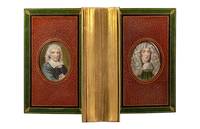
18086230London: Samuel Bagster 1808. First Bagster edition. Octavo 8 x 4 7/8 inches; 204 x 124 mm. iv vi vii-512 pp. Hand-colored frontispiece and nineteen engraved plates and two sheets of music. Ten of the plates are engraved by Audinet eight after Wale two after Samuel; two music plate; two plates of fishing tackle and flies. There are seventeen fine engravings of fish and two large woodcuts in the text. Extra-illustrated by the insertion of fifty-five engraved plates of which ten are hand-colored. Bound ca. 1925 by Bayntun stamp-signed in gilt "Bayntun. Binder. Bath. Eng." on front turn-in. Full green crushed levant morocco over beveled boards covers with elaborate gilt frames spine with five raised bands elaborately decorated and lettered in gilt in compartments gilt decorated board edges wide gilt turn-ins all edges gilt. Front doublure of brown morocco surrounded by a frame of inlaid maroon morocco. Set into the front doublure is a fine oval miniature painting of Isaac Walton under beveled glass within a double gilt frame. Set into the rear doublure is a fine oval miniature painting of Charles Cotton under beveled glass within a double gilt frame. Both miniatures measure 3 1/4 x 2 1/2 inches; 82 x 63 mm. Green watered silk end-leaves. Expertly and almost invisibly rebacked with the original spine laid down spine very slightly sunned otherwise a fine example housed in its original felt-lined green cloth clamshell case spine lettered in gilt.<br /> <br /> Walton's famous pastoral work on fishing The Compleat Angler is combined here with additions by Robert Venables and Charles Cotton on the art of fly fishing in particular. Walton the son of innkeepers moved to London to become an ironmonger but would spend the last forty years of his life collecting information and writing on fishing. The book was first published in 1653 but re-released in numerous editions both due to its popularity and Walton's propensity to revise and contribute more chapters to it. It has stayed in print since it was first published and is noted for its well observed descriptions of English country life. "The Compleat Angler has something in common with 'Lady Chatterley's Lover:' while many know the title few have actually read it. Yet it's the most frequently reprinted book in the English language after the Bible" The Guardian.<br /> <br /> George Bayntun 1873-1940 was the founder of Bayntun Bindery 1894 dedicated to using traditional hand-crafted techniques and high-quality materials. "The Riviere Bindery was one of the most notable and prolific shops in London's West End from about 1840 through 1939" Princeton. Bath-based Bayntun Bindery acquired the firm in 1939 transforming into the "Bayntun-Riviere bindery" which is still in existence and family owned. Although named after the English miniaturist Richard Cosway 1742-1821 the desirable "Cosway Binding" with its jewel-like portrait miniature set into a fine binding was first developed at the turn of the century by J.H. Stonehouse director of London's Henry Sotheran Booksellers. Their miniatures were painstakingly crafted by the talented painter Miss C. B. Currie 1849-1940. As the style grew in popularity other publishing houses quickly began to reproduce this technique-each developing their own desirable take on the aesthetic-referred to as "Cosway style." <br /> <br /> Coigney 18. Samuel Bagster unknown
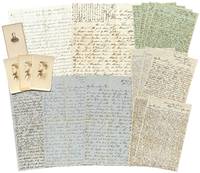
18674614261867. Unbound. Near Fine. A collection of 11 long letters written by a young paymaster’s clerk and officer in the U.S. Navy in which he gives detailed accounts of voyages to Central America China and South Africa in 1867-68. Also included is a gripping account of a terrific storm while crossing the Atlantic and of a dramatic rescue of sailors cast off their capsized ship off the coast of France. All 11 letters are densely written in Merrill’s neat small hand and are addressed to his parents at Bangor Maine. One letter has three or four small tears with partial loss to three or four words else near fine overall. Also included are six of the original mailing envelopes and four cabinet card portraits of Merrill: one of Merrill in uniform taken by “Pun-Lun†at Hong Kong and three duplicate portraits taken at Bangor Maine.<br /> <br /> Here is an excerpt from Merrill’s first seven-page letter written on board the storeship Brig Executive in January 1867 in which he describes his first voyage from Bangor to Cette France:<br /> <br /> “… Wednesday night – a gale commenced – and it was a screamer … day and night did every soul labor for dear life … we felt that our doom – by sinking – was sure … Buzzell and Chase and I worked with the rest – and by our aid the exhausted men were enabled to get a little sleep – until the forecastle was flooded and the galley stove in … we lived on raw meat for three days … Such mountainous waves! … they were as high as the upper-topsail yard – and often higher still – and when they would board us – and sweep over the decks – we all clinging to the main rigging … it seemed to us … that we should drown before it all passed over us … so long were we in the wave … During the whole gale … we sped onward in our course …â€<br /> <br /> They ran into another terrific storm off the coast of France near Montpelier where they encountered several ships in peril and participated along with soldiers on the shore in a dramatic rescue of two sailors and a pilot from their capsized boat one of whom later died. They went on to Paris and London where Merrill wrote his next two letters and returned home from Liverpool at the end of January.<br /> <br /> Merrill next writes at length about his voyage on board two Steamships Henry Chauncey and Sacramento and the storeship USS Supply. Setting off in November he sailed first to Aspinwall Colón on the Atlantic coast of Panama went across the isthmus by rail road to the City of Panama and then on to Acapulco and San Francisco. In two letters from November he gives descriptive accounts of Aspinwall including several disparaging remarks about the crowds of “natives and negroes along the plaza … the street was thronged with dusky vendors of fruit claret cakes &c. jabbering the virtues of their merchandise in the most conglomerate mixture of English Spanish and Samboish …†He also describes the structure of the “many isolated negro huts†along the 48-mile railroad trip to Panama City where they transfer their baggage etc. onto the Sacramento:<br /> <br /> “The sea has been as smooth as a pan of milk ever since we left Panama … Among the more noted of our passengers is Gen. Beuham of So. Carolina late of C.S. Army … Bishop Williams of the Episcopal Mission in China … and other missionaries of China … Spanish gentlemen and their families merchants of China & Japan … This morning early a poor fellow died in the Steerage of Panama fever. Another one is sick and will not live till evening … The sharks have followed our ship all the time from Panama … the surgeon said privately that there are other cases also …â€<br /> <br /> In a letter from December Merrill gives a long description of Acapulco: its harbor streets and street vendors the military fort and evidence of the French bombardment etc. In San Francisco his time in the city itself which he loves is curtailed by preparations on board Supply for the voyage to Japan and China. In a long six-page letter from February 1868 he describes various excursions in Canton and Hong Kong:<br /> <br /> “All of us officers went to Canton … and saw all the Elephants including the Temple of 500 Gods … Hong Kong has all the business that was formerly done in Canton … In some places where we went – but few Europeans had ever been and we were curious objects of interest to the population … One walled town we entered – contrary to the permission of the natives and there we met a ‘Sing-Song’ procession – marching about in fantastic costumes celebrating the advent of the Chinese New Year – and when they saw us you may believe there was a scattering and scampering! They perhaps thought that the ‘Fan-Kwei’ foreign devils as they call foreigners had come to kill and destroy … At one town which I entered alone the natives were much pleased to see a Fan-Kwei and they pressed me to take oranges paper cigarettes &c. ad libitum … We saw the forts ruins of at the Bocca Tigris and the Barrier Forts near Canton which were reduced by … the American & English fleet in the China Squabble of 1858-9 … Last Tuesday W. & Thursday were the Annual Races here in Hong Kong. All the fashionable of the Colony were there … We were invited to the whole course 3 days and had quarters in the booths of Russell & Co. and Oliphant & Co. … People and costumes of all nations mingled to make a dashing looking concourse …â€<br /> <br /> He concludes the letter with news about the Satsuma Samurai Rebellion of 1868: “You will probably hear about the outbreak and warfare in Japan … the Hartford and Aroostook are preparing to go there … the Prince of Satsuma … has landed ten thousand men below Osaka under the nose of one of the Tycoon’s frigates without molestation and marched them inland toward … the City of the Mikado or Spiritual ruler and had conflict with the Jap. national troops … the life of Sir Harry Parkes … has been attempted and one or two of our U.S. sailors … killed and it is reported that the Tycoon has taken refuge on the U.S.S. Iroquois …â€<br /> <br /> On the voyage back from China Merrill writes one letter in March from Java and two letters in April from South Africa in which he gives descriptions of Good Hope Cape Agulhas whaling grounds at Algoa Bay and of his excursion to Cape Town. He concludes his account of the voyage with a final letter written at Charlestown Massachusetts.<br /> <br /> A remarkable and historically important cache of letters all rich in content and deserving of further research. A list of the letters with a few quoted extracts is available. unknown
19287168New York: Robert H. Dodd 1928. First Edition. Hardcovers in slipcases with chemises. Fine/Very Good; Slipcases With Occasional Wear. Title continues: Compiled from Original Sources and Illustrated by Photo-Intaglio Reproductions of Important Maps Plans Views and Documents in Public and Private Collections.<p>Complete in six thick 4to volumes. Varying pagination. With maps documents photographs engravings and facsimiles of charters ordinances proclamations handbills broadsides surveys plans portraits and more. Many printed in color. The second volume is mostly concerned with Manhattan Island cartography including 96 plates some of which are double-page. The final volume contains an addendum an extensive bibliography by Victor H. Paltsits and an index to the entire work.<p>Top edges gilt others uncut. Publisher's half-vellum gilt lettering on spine over blue cloth boards with gilt device on front board. Housed in original dark blue chemises within slipcases. Chemises Good to Near Fine with slight darkening to spines; Vol. V chemise with a quarter-inch perforation on spine. Please see photo. Some slipcases with only occasional minor wear; the most egregious shown in photo with split starting and a slit at top edge. One of 360 copies printed on English handmade paper. Withal a superb set. With hundreds of maps views and architectural illustrations assembled from countless original sources Stokes' sweeping survey presents detailed chronologies and summaries of events and the personages involved up to 1909. A splendid set exceptional in the bright condition at-hand. HOWES S1026 "the most elaborate and comprehensive history of Manhattan". Robert H. Dodd hardcover
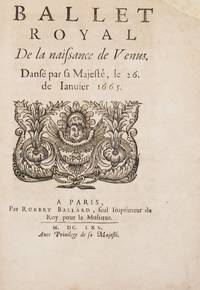
16653806A Paris: Par Robert Ballard seul Imprimeur du Roy pour la Musique 1665. First edition. Later green half morocco over marbled paper boards spine lettered in gilt. Italian provenance: early manuscript ownership inscription on the first leaf dated 30 Genn.o 1665 30 January 1665 partly torn and restored; later engraved armorial bookplate on the inner front panel. Paper tanned as usual; early folds and handling marks; otherwise clean and well preserved. First edition. Later green half morocco over marbled paper boards spine lettered in gilt. 52 2 p. <p><br /> Scarce first edition of the libretto of Lully's Naissance de Vénus a key work in the development of the French court-ballet tradition in a copy preserving a contemporary inscription dated only days after the premiere.<br /> <p><p><br /> First edition printed for the premiere of the libretto for the court ballet performed on 26 January 1665 at the Palais-Royal. The text was written by Isaac de Benserade and the music composed principally by Jean-Baptiste Lully at the request of Louis XIV and in honour of the king's sister-in-law Henrietta of England who appeared in the performance as Venus.<br /> <p><p><br /> The copy preserves an early Italian inscription dated 30 January 1665 only four days after the premiere suggesting that it may have been received in connection with the performance possibly by someone present at the court spectacle.<br /> <p><p><br /> The ballet belongs to the tradition of the French ballet de cour one of the principal ceremonial theatrical forms cultivated at the court of Louis XIV. The libretto presents a large mythological spectacle in two parts comprising twelve entrées. Conceived on an exceptional scale the production involved 96 performers representing 106 roles accompanied by 20 musicians and 14 singers with Louis XIV himself appearing in the final scene as Alexander the Great.<br /> <p><p><br /> Printed libretti of this type formed part of the broader genre of festival books ephemeral publications describing royal festivities and spectacles staged for political and ceremonial display. The present libretto is accordingly included in the Oxford "Early Modern Festival Books" collection which documents printed accounts of court celebrations and theatrical spectacles across Europe. <br /> <p><p><br /> A rare printed witness preserving a contemporary inscription to one of the most elaborate court ballets of Louis XIV's reign and an important document of early French operatic culture marking the culmination of the ballet tradition from which Lully would soon develop the tragédie en musique.<br /> <p><p><br /> LWV 27 <br /> <p>. Par Robert Ballard, seul Imprimeur du Roy pour la Musique unknown
19512210308New York: Gnome Press 1951. First issue First issue and second issue. hardcover. Fine/Fine. All three books in the trilogy each in fine condition. Books two and three are first trade editions and book one is stated First Edition has correct $2.75 price on front flap of jacket but is less thick than the true first edition so generally considered a second issue of the first edition. Books two and three are the correct first edition first issue thickness. Foundation Second Foundation and Foundation and Empire all in remarkable condition. <br /> In Second Foundation short piece of tape on inside of dj not visible from outside. In Foundation and Empire narrow crack in rear hinge. Gnome Press unknown
1991USINMYF00acmfNoonday Press 1991. Very Good. Singer Isaac Bashevis. In my Father's Court. NY: Noonday Press 1991. 307pp. 8vo. Paperback. Book condition: Very good with general rubbing and minor bumping. Panels smudged a bit. Former owner's name on last blank page. Noonday Press paperback
1950140946655New York: Gnome Press 1950. First Edition or Armed Services Edition. Near Fine. Though the publishing history is murky this is assumed to be either an example from the publisher's short foray into paperback publishing or an Armed Services edition. First edition wrappered issue according to Currey; though according to Chalker Gnome printed 5000 hardbound copies in 1950 and an additional 2500 were printed in 1951 as the trade paperback "Armed Forces Edition." Near Fine with light creases to wraps and light chipping at edges light foxing to textblock edge and contents heavily tanned. Exceedingly scarce in this format much more uncommon than the hardcover edition. Gnome Press unknown
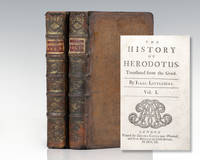
170996521London: Printed for Edward Castle and Sam Buckley 1709. First complete edition in English of Littlebury's translation of the histories of Herodotus also the first appearance in English since Thomas Marshe's 1584 incomplete translation of only the first two books. Octavo two volumes. Bound in full contemporary calf with gilt titles and tooling to the spine in six compartments within raised bands red morocco spine labels stamped ruling all edged speckled red woodcut ornaments to the title pages and colophon of volume II index. From the library of George Paterson of Castle Huntly with his armorial bookplates to the pastedowns. After amassing a large fortune with the East India Company Paterson purchased the famed Scottish Castle Huntly in 1770. In very good condition. Rare and with noted provenance. Herodotus is generally considered ‘the father of history’. Departing from the Homeric chronicle ‘he was the first to collect his materials systematically to test their accuracy as far as he could and arrange his story in such a way as to appeal to as well as inform his readers’ PMM. His main theme which is also the subject of the present work was the struggle between Persia and Greece. Printed for Edward Castle and Sam Buckley hardcover
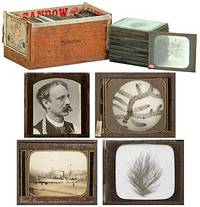
1897394021Bridgeport Connecticut 1897. Good. A unique collection of 87 glass lantern slides permanent positive images from the library of Isaac Holden an important Connecticut based phycologist and founding editor and contributor to the monumental: Phycotheca Boreali-Americana: A Collection of Dried Specimens of the Algae of North America. The collection consists of two sets totaling nearly 60 slides of images of dried marine algae specimens “Exsiccatae†and a set of about 25 slides taken in and around the town of St. John’s on the coast of Newfoundland. There are also a few slides of fauna insects and Holden as a dashing young man.<br /> <br /> The marine algae specimens were collected by Holden at Seaside Park along the Connecticut coast and Long Island Sound in the mid-1880s. About half of the species are identified in manuscript with the Latin name place date and Holden’s signature reproduced in the image. Three images have been dyed in red. It’s very likely that the unidentified specimens were collected by Holden and his close friend and colleague Frank Shipley Collins who co-edited and also contributed to the Phycotheca. Both sets of specimens include a few charts and figures.<br /> <br /> The set of Newfoundland views date from Holden’s 1897 trip to collect specimens of marine algae many of which were distributed in the Phycotheca. The views are of the rocky coastline and adjoining seascapes including a few snow-covered areas and several images of fishermen and other inhabitants at work in the harbor or in boats along the coast.<br /> <br /> The glass lantern slides measure 4†x 3¼†or 3¼†x 3¼†a subset of about 20 specimen slides consisting of the image plate and clear cover plate held together with plain paper folded over the edges. Many slides have glossy paper frames mounted in between the plates. The slides range in condition from fair to very good with scattered spotting and soiling. Several of the original paper edges are detached or missing a very few have been replaced with masking tape about 15 slides lack most or all of the original paper edges and are separated including a few lacking a cover plate. About five specimen slides are damaged with cracks to the glass and some deterioration to the image. About half are housed in a contemporary wooden box with chromolithographic labels from Bridgeport Connecticut.<br /> <br /> A unique and historically important research collection of early photographic images of marine algae and of the remote coastline of Newfoundland. The collection is divided into four sections:<br /> <br /> Set 1. 40 slides: North American Algae Specimens & Miscellaneous: Images of various types of seaweed and related algae.<br /> <br /> Set 2. 18 slides including three dyed in red: Seaweed and related algae signed and dated in the image: “Bridgeport Conn. 1885â€.<br /> <br /> Subset 3. 4 slides: Fauna/insects.<br /> <br /> Set 4. 25 slides: Views of Newfoundland: Images of St. Johns Newfoundland and vicinity: about half include local people. There are also five additional slides reproducing various maps. unknown
176519374Cambridge: J. Bentham 1765. FIRST EDITION. The first ten pages contain a list of subscribers mainly from Oxford and Cambridge and a corrigenda. With12 folding plates. Bound in old boards rebacked a clean and crisp copy uncut. First edition of this rather rare series of excerpts from Newton’s Principia. “Although there is no mention of it in the book itself the annotators were John Jebb M.D. Rector of Ovington Robert Thorp Archdeacon of Northumberland and Francis Wollaston Rector of Chislehurt†Babson.<br /> <br /> In addition to the myriad of books explaining the mathematics of Newton’s masterpiece published in the hundred years following the first edition the public clamored for copies and excerpts from the book itself. Jebb 1736-1786 was a medical doctor and a Fellow of the Royal Society. Thorp 1783-1862 succeeded his father as rector of Chillingham and in 1792 was created archdeacon of Northumberland. In addition to this work he published a translation of the Principia in English Mathematical principles of natural philosophy London 1777. Wollaston 1738-1826 a mathematician and son of the astronomer Francis Wollaston was a Fellow of the Royal Society.<br /> <br /> Babson 15; Wallis 20. J. Bentham unknown
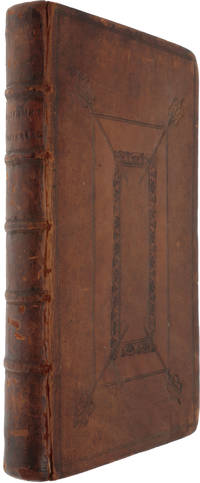
1220Twelve folding engraved plates. 4 p.l. 382 pp. one leaf of ads. 8vo cont. calf small portions of ends of spine & one corner carefully repaired spine gilt red morocco lettering piece on spine. London: W. Innys 1730.<br/> <br/> Fourth edition and the final edition to be revised by Newton of this great classic. It contains the complete set of 31 Queries which reveal some of Newton’s most influential and speculative writing. Fine crisp copy. Contemporary armorial bookplate of Edward Powell. <br/> <br/> ⧠Babson 136. unknown
17225823London: Benji & Sam. Tooke 1722. Second edition. <p>Second edition but the first authorised and edited by Newton probably with the assistance of John Machin of his treatise on algebra or 'universal arithmetic' his "most often read and republished mathematical work" Whiteside. "Included are 'Newton's identities' providing expressions for the sums of the ith powers of the roots of any polynomial equation for any integer i plus a rule providing an upper bound for the positive roots of a polynomial and a generalization to imaginary roots of René Descartes' Rule of Signs" Parkinson.</p>. NEWTON'S ALGEBRA - THE FIRST EDITION AUTHORISED AND EDITED BY NEWTON. <p>Second edition but the first authorised and edited by Newton probably with the assistance of John Machin - see below of his treatise on algebra or 'universal arithmetic' his "most often read and republished mathematical work" Whiteside Papers V p. xiv. "Included are 'Newton's identities' providing expressions for the sums of the ith powers of the roots of any polynomial equation for any integer i pp. 251-2 plus a rule providing an upper bound for the positive roots of a polynomial and a generalization to imaginary roots of René Descartes' Rule of Signs pp. 242-5" Parkinson p. 138. About this last rule for determining the number of imaginary roots of a polynomial which Newton offered without proof Gjertsen p. 35 notes: "Some idea of its originality . can be gathered from the fact that it was not until 1865 that the rule was derived in a rigorous manner by James Sylvester." The work is a printed version of lectures Newton prepared in the period 1672-83. Although the editor of the first edition William Whiston later claimed that he had Newton's permission to print the lectures Newton was far from satisfied with the result complaining that the titles and headings were not his and that it contained numerous mistakes. His real concern was that "an unfinished text composed so long before should now be presented to the world as though it represented his latest researches into the structure and applications of algebra" Papers V p. 11 and that Whiston had "too faithfully and impercipiently followed the parent manuscript incorporating in his princeps edition its several inconsistencies and lapses into error without in the main even bringing them to the reader's notice . In his private library copy of the edition Newton corrected many minor misprints inserted more appropriate running heads 'Multiplicatio' 'Divisio' 'Extractio Radicum' 'De Forma Aequationis' 'Reductio Aequationum' 'Resolutio Quaestionum Arithmeticarum Geometricarum' and the like and on the Arithmetica page 279 deleted an unwarranted half-title 'Aequationum Constructio linearis'; more radically he mapped out a large-scale reordering of the sixty-one geometrical problems comprising its central portion seeking to grade them into a more logical sequence and in increasing levels of difficulty while in the concluding section on the 'curvilinear ' construction of equations he pared away all not directly needed flesh reducing it to two skeletal conchoidal neuses now denuded of their proof. That last savage act of butchery apart all these improvements were incorporated in the Latin revise - future parent and rightfully so of all subsequent editions - which he himself brought to publication in 1722" ibid. pp. 13-14. Babson notes that "This edition was the last issued during Newton's lifetime and is almost as rare as the first." In commerce this edition is in fact much rarer than the first: ABPC/RBH list only two other copies of this edition since 1975 but ten of the first.</p> <br /> <p>"In fulfilment of his obligations as Lucasian Professor Newton first lectured on algebra in 1672 and seems to have continued until 1683. Although the manuscript of the lectures in Cambridge University Library carries marginal dates from October 1673 to 1683 it should not be assumed that the lectures were ever delivered. There are no contemporary accounts of them and apart from Cotes who made a transcript of them in 1702 they seem to have been totally ignored. Whiteside Papers V p. 5 believes that they were composed 'over a period of but a few months' during the winter of 1683-4" Gjertsen pp. 33-4.</p> <br /> <p>The Arithmetica "derives partly in its discussion of the elemental algebraic operations and of the reduction and exact solution of equations from Newton's earlier unpublished 'Observations' on the introduction to Cartesian algebra presented by Gerard Kinckhuysen in his 1661 Stelkonst partly in its techniques for delimiting the number and nature real or complex of the roots of equations and for reducing these by factorization from his own independent researches as a young postgraduate student into the theory of equations and partly in its approximate geometrical construction of cubics from his previously elaborated 'Problems for construing aequations'. Apart from novelties in detail and the fabrication of new illustrative 'questions' what is most notable is Newton's developing awareness - still far from completely expressed - of the fundamental structural equivalence which exists between the elements constants and free variables and their functional relationships of algebra and those given lines and undetermined line-lengths and their coordinate interconnections of geometry and his deepening grasp of the still more general isomorphism which permits a two-way 'translation' between mathematical 'speech' and the 'language' of exact science in all its manifestations. His guiding doctrine that algebra is 'universal arithmetick' embroiders a theme stated briefly in an opening phrase of his 1671 treatise on infinite series and fluxions and expounded in a geometrical context earlier still in preface to James Gregory's study of universal mathematical principles. Now also however he reaches tentatively forward to Barrow's notion that algebra is in its essence the abstract logic of relationships between quantities in divorce from their particular setting and hence to be developed as an independent metamathematical system" Papers V pp. 3-4.</p> <br /> <p>"We may reasonably conjecture that pressure was in some manner put upon Newton in late 1683 to fulfil however tardily his statutory obligation annually to deposit a fair copy of ten of his lecture scripts and be all but sure that the arrival in Cambridge the next spring of his young amanuensis Humphrey Newton able to take over from Isaac the dreary time-consuming chore of rewriting his much cancelled and corrected worksheets in legible and coherent form gave him new heart to codify and expand his previous mathematical investigations. But these surmises remain as unproved and essentially undemonstrable as the plausible suggestion that it was Edmond Halley's famous first visit to Cambridge in the late summer of 1684 to talk about the unsolved problem of elliptical planetary motion which provoked him abruptly to relinquish his restructuring of the Arithmetica. We may guess still more tenuously that the appearance in mid-1685 of John Wallis' voluminous Treatise of Algebra Both Historical and Practical would have long deterred Newton from making any efforts to have his own rival studies made publicly available. In later years certainly he grew increasingly soured with the often cumbersome computations and techniques of Cartesian algebra - at one point indeed if we may believe David Gregory he qualified it as 'the Analysis of the Bunglers in Mathematicks - and we may be certain that his reluctance during 1705-6 to have Whiston edit the deposited text of his algebraic lectures was not merely the manifestation of a growing personal antagonism to his successor in the Lucasian chair" ibid. pp. xi-xii.</p> <br /> <p>"When Newton resigned his Lucasian professorship to his deputy William Whiston in December 1701 it was natural that the latter should wish to familiarize himself with the deposited lectures of his predecessor. Whiston did not hesitate to introduce portions of Newton's earlier optical lectures concerning the mathematical theory of the rainbow into his own Lucasian Praelectiones physico-mathematica in the spring of 1706 and about that time also he turned his attention to the succeeding ones on algebra and began to consider their publication. In the meantime rumours began to spread in both Oxford and London that 'Newton's friends solicit him to publish a Treatise of Algebra which he wrote long since. If such ill-founded whispers penetrated to Cambridge Whiston ignored them and went quietly ahead arranging with the London stationer to underwrite the expense of printing the deposited manuscript and then subsequently between September 1705 and the following June correcting both specimen and proof sheets as they emerged from the compositor's bench at the University Press. In February 1706 David Gregory accurately noted in his memoranda that 'Its talked that there is now printing at Cambridge Elements or Principles of Algebra written long since by Sir Isaac Newton but withdrew his added remark that it was 'lately revised by him' when he saw Newton in London in July and was given a first-hand account of the history of the 'Algebra that is printing and near printed at Cambridge'. Though as Whiston was later to announce publicly Newton had given his reluctant approval for the edition . Despite its minor inconsistencies and confusions Gregory's report vividly conveys Newton's concern that an unfinished text composed so long before should now be presented to the world as though it represented his latest researches into the structure and applications of algebra" pp. 8-11.</p> <br /> <p>For a book that was to become Newton's most often republished mathematical work the Arithmetica initially made little impact in Britain and was not even graced by a review in the Philosophical Transactions. On the Continent the reception accorded the lectures was more positive. "Leibniz unhesitatingly divining their author beneath the cloak of anonymity gave them a long review in the Acta Eruditorum of Leipzig in 1708. Written thirty years before he noted and now deservingly printed by William Whiston he assured the reader that 'you will find in this little book certain particularities that you will seek in vain in great tomes on analysis.' His close associate Johann Bernoulli despite some adverse remarks paid Newton the compliment in 1728 of basing his own course on the elements of algebra upon Newton's text. Perhaps partly in consequence of Newton's recent death in Britain too the book began about this time to arouse greater interest than when it was first issued in 1707" Hall p. 174.</p> <br /> <p>Despite the impressive contributions of the work to the theory of equations mentioned earlier it is difficult to pigeonhole the work as being either algebraic or geometric. From one point of view the Arithmetica can be seen as a fulfillment of the programme outlined by Descartes in the Géométrie because it teaches how geometrical problems and also arithmetical and mechanical ones can be translated into the language of algebra. Paradoxically however Newton criticized Descartes maintaining that at least in some cases Apollonian geometry is to be preferred to Cartesian algebra in the analysis of indeterminate problems. Modern analysts he complained had confused algebra and geometry: "The Ancients so assiduously distinguished them one from the other that they never introduced arithmetical terms into geometry. recent people by confusing both have lost the simplicity in which all elegance in geometry consists" Papers V p. 429. The last section of the work 'The linear construction of equations' pp. 279-326 is particularly anti-Cartesian the term 'linear' in this context does not refer to straight lines but derives from Pappus. Newton here deals with the problem of constructing cubics third-degree equations that Descartes solved via the intersection of a circle and a parabola. Newton proposed instead to use a curve of degree higher than the conics as a means of construction namely the conchoid a fourth-degree curve. Newton regarded the conchoid as preferable because it has a mechanical construction and leads to a more elegant solution of the problem.</p> <br /> <p>The present 1722 revision is "the standard text of the Arithmetica published much as before 'Impensis Benj. & Sam. Tooke'. It appeared to Newton's first editor that 'that acute Mathematician Mr. John Machin Professor of Astronomy at Gresham College . and one of the Secretaries of the Royal Society published this Work again by the Author's later Desire or Permission; I lay no claim to it' Whiston Memoirs; John Conduitt's memorandum King's College Cambridge. Keynes MS 130.5 again adds the clarification that 'Machin overlooked the press for which Sir I intended to have given him 100 Guineas but he made him wait 3 years for a preface & then did not write one'. Elsewhere Keynes MS 130.6 2 Conduitt noted that 'Sir I. told me that Machin understood his Principia better than anybody that Halley was the best Astronomer but Machin the best Geometer'. Newton's active stage-managing of the 1722 revise can be documented in several ways: most notably a stray autograph sentence on an otherwise clean folio page now ULC. Add. 3960.7: 95 differs by only a single trivial adverb from an inserted footnote clarifying the reference to the unimplemented 'Regulae post docendae' on page 52 of the deposited copy. The ubiquitous presence of its author's editorial hand was not missed by W. J. 's Gravesande when he came to reissue the Arithmetica ten years later: 'Secunda vice liber in lucem prodiit Londini 1722; sed in statu perfectiore ut quis facile percipiat non omnino foetum abdicasse virum Celeberrimum; ordo propositionum non tantum mutatus est sed in ipsis solutionibus & demonstrationibus correctiones multae reperiuntur non nisi ipsi Auctori tribuendae'" ibid. p. 14 n 60.</p> <br /> <p>"Benjamin Tooke the London publisher and printer he was Queen's printer had eight books published at the Cambridge Press all of them by Whiston between 1702 and 1712. There are two London printer's ornaments used in this volume pp. 283 & 289 and nowhere else but we know that the woodcuts for the illustrations in the 1707 edition were delivered to Cambridge possibly from London 6d. was paid for the parcel. So far as one can tell the woodcuts are identical and we must assume they had been reclaimed by Tooke. Unfortunately we have no letters from Newton about the printing history of this volume" Macclesfield sale catalogue.</p> <br /> <p>Babson 200; Macclesfield 1520; Wallis 278. Gjertsen Newton Handbook 1986. Hall Isaac Newton 1992. Westfall Never at Rest 1983.</p> <br/> <br/> 8vo pp. iv 332 including half-title with list of books on verso woodcut diagrams throughout ink name of Newton on half-title ink inscription identifying Newton as author and another Whiston as editor on title slightly browned. Contemporary panelled calf ink signature of former owner Robert Andrews on front free endpaper corners and edges rubbed joints splitting spine rubbed. Benji & Sam. Tooke unknown
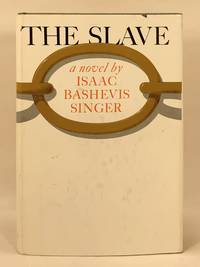
196247808New York: Farrar Straus amd Cudahy 1962. First Edition. Hardcover. Very good/very good. 311p octavo Translated from the Yiddish by the author and Cecile Hemley. A little fading and a bump on the boards very good in a very good dust jacket with a corresponding scrape on the rear panel and a tiny nick on the front panel. Inscribed by the author" To my friend and colleague Bernard Malamud with my best wishes for a healthy and creative life Isaac B Singer" <br/><br/> Farrar , Straus amd Cudahy hardcover
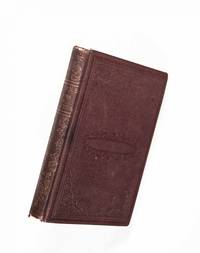
186847609Cincinnati: Bloch & Co 1868. First edition. Hardcover. vg- to vg. Duodecimo. 263pp. Period burgundy cloth boards with blind-stamped tooling and ruling on the covers gilt lettering and tooling on the spine. Edges of book block gilt. Published as the final piece of his magnum opus project for American-Jewish liturgy titled "Minhag America" this work offers the compilation of litergical hymns psalms and other prayers with text in English and German as collected and edited by the pionneering German-born American Refrom Rabbi Isaac Mayer Wise 1819-1900.<br /> <br /> The original two volumes of the Minhag America siddur prayer book had both been published in 1857 one with Hebrew-English text Prayer Book for Public and Private Worship and the other with Hebrew-German text Gebet-Buch fur den offentlichen Gottesdienst und die Privat-Andacht. As stated by Wise in his introduction this volume rather then simply being a mutl-lingual direct translation of that text is a specifically designed and compiled collection of hymns psalms and other prayers translated with care and consideration especially for this publication in only the vernacular languages of English and German with additional new writings by Wise himself and others. Text in English with the corresponding German text on the facing page. Also includes detailed service instructions religious notes a table of torah readings and a table of contents. The influential Minhag America would become the standard liturgy of American Refom congragations from its original publication until the introduction of the Union Prayer Book in the 1890s.<br /> <br /> Text throughout in English and German.<br /> <br /> Binding with light rubbing to corners some rubbing tand light chipping to the head and tail of the spine. Covers lightly smudged. Starting at the gutter of the interior front cover. Some pages throughout with light creasing. Text still clean bright and ledgible throughout. Book block tight overall. Binding in very good- interior in very good condition overall. Hebrew title: שירו ליהוה שיר חדש<br /> <br /> Singerman #2109. Bloch & Co hardcover
1730035995London: William Innys 1730. 4th Edition 1st Printing. Hardcover. Near Fine. New Calf Spine And Tips Over Marbled Paper Covered Boards New Endpapers. Two Preliminary Blanks Title Advertisements To First Second And Fourth Editions382 Pp 12 Folding Plates And Two Pages Of Publisher's Ads At Rear. Page Block 19.5 Cm Text Block 6.5" X 3 1/2" From Top To Bottom Of Printed Area Including Page Running Headings Tall. Top Edge Of Page Block Is Dark Grey Or Black Fore Edge And Bottom Edge Red All Polished. Leaves 7 5/8" Tall; Binding 7 3/4" X 5 3/16". The Last And Best Edition Prepared By Newton Corrected From The Third Edition By Newton; In This Fourth Edition Of 1730 There Are 31 Queries And It Is The Famous "31St Query" That Over The Next Two Hundred Years Stimulated A Great Deal Of Speculation And Development On Theories Of Chemical Affinity. The Publishers Have Added To This Edition Several Citations From The Lectiones Opticae 1669-1671 To Show Where Demonstrations Omitted From The Opticks May Be Found. Unusually Well Preserved Binding Fine Contents Clean Some Tiny Foxing Spots Mainly In Margins And Mainly Towards Beginning Of Book; Very Slight Wear To Edges Of Page Block. . <br/> <br/> William Innys hardcover
1771180611Amsterdam: Marc Michel Rey 1771. The beginner of the modern age of economics First edition of "one of the great documents in the history of political economy" Encyclopaedia Judaica p. 533 arguing that an expanding system of national debt would lead to economic prosperity. Written in refutation of the physiocrats the treatise contended that public debt when managed responsibly could support commercial growth by increasing liquidity credit and monetary circulation. Britain Pinto argued showed the model for a high debt as a bedrock of economic success. Beyond this he defended credit and circulation as the basic form of economic endeavour against what he termed the physiocrats' "frenzy of the soil". Implicitly he was defending the Jews who had long been denigrated for their role in the financial sphere. One of the most prominent Jewish economic writers of the 18th century Pinto's importance has long been recognized. "Marx called him 'the Pindar of the Amsterdam stock exchange' for his advocacy of speculation. Werner Sombart regarded him as the beginner of the modern age of economics and the first to understand the growth of credit. Sée claimed he was the first to say that speculation was useful" Encyclopaedia Judaica. Provenance: Arnold Heertje 1934-2020 Dutch economist with his bookplate; "W. Fredsberg" with their ownership signature on the front free endpaper and initial blank versos dated 1821 and 1818 respectively and again to title all struck through in an early hand. Octavo 198 x 120 mm pp. xvi 128 8129-368 2; bound with the additional 8-page note on the state of English finances in 1770 interim half-sheet H and the terminal errata; without the 16-page "Addition" sometimes found. Contemporary marbled calf twin red and green morocco labels gilt in compartments marbled endpapers red edges. Binding firm and fresh with only a hint of rubbing; scattered very light foxing and browning to contents else clean: an excellent copy. Einaudi 4447; Goldsmiths' 10791; Higgs 5282; INED 3603; Kress 6811; Mattioli 2851; McCulloch p. 347; Quérard VII 183. Encyclopaedia Judaica Volume 13 1972. unknown
195015527I ROBOT Gnome Press 1950 first edition fine in vg/vg dust-wrapper with some light rubbing to the front dust-wrapper panel and fading to about half the dust-wrapper spine. Laid in is a 42 word typed postcard SIGNED Iby Isaac to his long time friend Sam Moskowitz dated 1/29/67 thanking Moskowitz for a royalty check for his contribution to MODERN MASTERPIECES OF SCIENCE FICTION a book he Moskowitz edited. 7068.13 postpaid / insured Gnome Press unknown
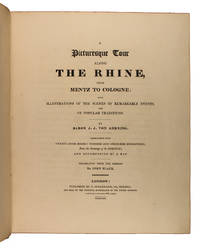
182012116London: R. Ackermann 1820. 330x275mm. 13x10¾". London R. Ackermann 1820. Folio 330 x 275mm. xvi-178 pp. 1 mapa plegado y 24 láminas coloreadas a mano al aguatinta. Encuadernación en holandesa marroquén con puntas lomera cuajada de adornos dorados. Primera edición inglesa temprana emisión con las finas láminas fechadas en 1817-1818 sin numerar y con buena impresión y color. Se trata de una de las mejores publicaciones de Ackermann y aparentemente es el primero de la serie "Picturesque Tours" que se continuaría luego con las exploraciones del Sena Ganges Tamesis etc. Se imprimieron sólo 750 ejemplares en formato similar a otras publicaciones del propio Ackermann como la dedicada a los Colegios Ingleses a la Abadía de Westminster y el Microcosmos de Londres. El libro describe un viaje por el Rhin que transcurre por la rivera considerada generalmente como más elegante y romántica. La relación contiene no sólo descripciones topográficas sino que incluye también información histórica de los lugares que recorre así como detalles de sus tradiciones populares. Contiene en total 1 mapa plegado y 24 finas láminas coloreadas a mano en la época al aguatinta. Muy buen ejemplar. R. Ackermann hardcover
04831London: Published by R. Ackermann.Printed by L. Harrison 1820. One of the Great Nineteenth-Century Color-Plate Books<br /> with Twenty-Four Hand-Colored Aquatints<br /> <br /> GERNING J.J. Johann Isaac von. A Picturesque Tour Along the Rhine from Mentz to Cologne: With Illustrations of the Scenes of Remarkable Events and of Popular Traditions. Embellished with Twenty-Four Highly Finished and Coloured Engravings from the Drawings of M. Schuetz; and Accompanied by a Map. Translated from the German by John Black. London: Published by R. Ackermann. Printed by L. Harrison 1820.<br /> <br /> First English edition early issue. The original German edition was published in Wiesbaden in 1819 as Die Rheingegenden von Mainz bis Cölln. <br /> <br /> Large quarto 13 1/4 x 10 3/4 inches; 336 x 273 mm. xiv xv xvi 178 pp. Complete with the list of subscribers pp. v-viii. Large folding engraved map with color highlights and twenty-four fine hand-colored aquatint plates by D. Havell and T. Sutherland after C.G. Schutz with tissue guards. Text watermarked 1817 and 1818 plates watermarked 1818 and 1819. In this copy the plates are unnumbered and the Mentz plate is dated "Octor. 1 1819" and the Biebrich plate is dated "Septr. 1 1819." Minimal offsetting from plates to text. <br /> <br /> Contemporary plum diced morocco covers richly bordered in gilt and blind. Spine with five shallow raised bands ruled in gilt and elaborated gilt and title in compartments. Decorative gilt board edges and turn-ins pale gray endpapers all edges gilt. With the armorial bookplate of Sarah Marie Turnor on front pastedown. Spine slightly faded. A fine copy.<br /> <br /> <br /> "The original unillustrated German edition was published in Wies-baden in 1819 as Die Rheingegenden von Mainz bis Cölln and it is clear from the.'Vorerinnerung' which is dated 14 June 1819 that Ackermann's edition was already planned; it seems possible in the circumstances in fact that the text was commissioned by Ackermann as were the views for the plates.Another German edition this time containing twenty-four views was published in Frankfurt in 1822" Abbey. <br /> <br /> "Containing a complete History and Picturesque Description of a portion of Country so full of curious and interesting circumstances as well as so resplendent for its landscape grandeur and beauty. The Work will be embellished with Twenty-four highly finished and coloured Engravings from Drawings expressly made by an eminent Artist resident near the Banks of the Rhine and habitually familiar with every part of it.The romantic beautiful and ever-varying Scenery of this River forms a distinguished feature of every modern foreign Tour; and no one can consider himself as an accomplished traveller who is not more or less acquainted with it.Baron von Gerning whose literary character is so well established in Germany has undertaken to write the Historical Part; and Mr. Schutz so well known as an artist will furnish the Drawings" Ackermann's prospectus for the completed work printed on the rear wrapper of Part I and others.<br /> <br /> "There are definitely later issues of the book.and these can be recognized by having plate numbers at the top right-hand corner. The impressions in these issues are poor and the colouring less good" Abbey.<br /> <br /> Abbey Travel 217. Martin Hardie pp. 107-108 and 312. Prideaux pp. 337 and 375. Tooley 234. London: Published by R. Ackermann....Printed by L. Harrison, 1820 unknown
04820London: Published by R. Ackermann.Printed by L. Harrison 1820. Cologne! Cologne! Thy Walls are Won"<br /> One of the Great Nineteenth-Century Color-Plate Books<br /> with Twenty-Four Hand-Colored Aquatints<br /> <br /> GERNING J.J. Johann Isaac von. A Picturesque Tour Along the Rhine from Mentz to Cologne: With Illustrations of the Scenes of Remarkable Events and of Popular Traditions. Embellished with Twenty-Four Highly Finished and Coloured Engravings from the Drawings of M. Schuetz; and Accompanied by a Map. Translated from the German by John Black. London: Published by R. Ackermann. Printed by L. Harrison 1820.<br /> <br /> First English edition early issue. The original German edition was published in Wiesbaden in 1819 as Die Rheingegenden von Mainz bis Cölln. <br /> <br /> Large quarto 13 1/4 x 10 3/4 inches; 336 x 273 mm. xiv xv xvi 178 pp. Complete with the list of subscribers pp. v-viii. Large folding engraved map with color highlights and twenty-four fine hand-colored aquatint plates by D. Havell and T. Sutherland after C.G. Schutz with tissue guards. Text watermarked 1817 and 1818 plates watermarked 1816 1818 and 1819. In this copy the plates are unnumbered and the Mentz plate is dated "Octor. 1 1819" and the Biebrich plate is dated "Septr. 1 1819."<br /> <br /> Slightly later ca. 1840 quarter brown calf over publisher's original pictorial boards. Spine with five shallow bands decoratively ruled and decorated in gilt in compartments blue morocco label lettered in gilt. Marbled endpapers and marbled edges. Inner hinges neatly strengthened. Some very minor foxing and minimal offsetting. The original tissue-guards are soiled at edges. A fine tall copy in a contemporary binding albeit rebacked some twenty years later.<br /> <br /> Two blank leaves at the beginning contain three pages of early ink manuscript from J.R. Planché Lays and Legends of the Rhine. Frankfurt: 1830. The poems included are The Lake of Constance; The Rhine Wine Song and L'Envoy. Cologne<br /> <br /> "The original unillustrated German edition was published in Wies-baden in 1819 as Die Rheingegenden von Mainz bis Cölln and it is clear from the.'Vorerinnerung' which is dated 14 June 1819 that Ackermann's edition was already planned; it seems possible in the circumstances in fact that the text was commissioned by Ackermann as were the views for the plates.Another German edition this time containing twenty-four views was published in Frankfurt in 1822" Abbey. <br /> <br /> "Containing a complete History and Picturesque Description of a portion of Country so full of curious and interesting circumstances as well as so resplendent for its landscape grandeur and beauty. The Work will be embellished with Twenty-four highly finished and coloured Engravings from Drawings expressly made by an eminent Artist resident near the Banks of the Rhine and habitually familiar with every part of it.The romantic beautiful and ever-varying Scenery of this River forms a distinguished feature of every modern foreign Tour; and no one can consider himself as an accomplished traveller who is not more or less acquainted with it.Baron von Gerning whose literary character is so well established in Germany has undertaken to write the Historical Part; and Mr. Schutz so well known as an artist will furnish the Drawings" Ackermann's prospectus for the completed work printed on the rear wrapper of Part I and others.<br /> <br /> "There are definitely later issues of the book.and these can be recognized by having plate numbers at the top right-hand corner. The impressions in these issues are poor and the colouring less good" Abbey.<br /> <br /> Abbey Travel 217. Martin Hardie pp. 107-108 and 312. Prideaux pp. 337 and 375. Tooley 234. London: Published by R. Ackermann....Printed by L. Harrison, 1820 unknown
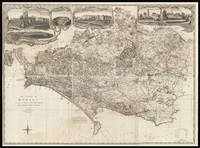
179514355<p>Charing Cross Road Large-scale engraved map on six sheets original hand-colour in outline. </p><p>Isaac Taylor was born in Worcester in 1730 and earned an early reputation as a surveyor of both county maps and city plans. His style was easily recognisable and gave particular emphasis to the hills on his county maps; Herefordshire 1754 Hampshire 1759 Dorset 1765 Worcestershire 1772 and Gloucestershire 1777. It is surprising that Taylor like Rocque and Jefferys was not successful in gaining the approval of the Society of Arts who appeared to favour the amateur surveyors rather than the professional mapmakers Nearly all the awards went to applicants who produced just one or two maps rather than men like Taylor and Jefferys who between them published fifteen fine large-scale map accurately surveyed and well engraved and in some instances more competent than most of those that were recognised by the Society.</p><p>On the first edition of 1765 the title and dedication cartouches took up most of the bottom left-hand sheet with the bottom right-hand corner containing an extensive key. Both have been removed by William Faden for this second edition with a more sober title and a rationalisation of the key together with the removal of the majority of the ships to the sea. Although the numerous engraved notes remain which refer to the stranding of many vessels and a long engraved note just off Weymouth refers to the "Chesil Bank where The Stones at Portland are about the size of an Egg opposite Fleet and Langston they are much smaller; at Beckingston they are scarcely bigger than Pease and between Swyre and Barton-cliffe where the Bank ends it is entirely a fine clear Sand" The legend goes on to remark about composition of the soil – a firm clay – beneath the pebbles. A large part of the top three sheets is occupied by six topographical views within the county – Corfe Castle Maiden Castle The Amphitheatre at Dorchester Lulworth Castle the Observatory at Horton and Sherborne Castle.</p><p>Taylor's map was acknowledged as an outstanding piece of work at the time and was the first map to be put forward for the prestigious Society of Arts Award just ahead of Donn's Devon. Despite tremendous efforts however to win the coveted prize it was unsuccessful due to the slight inaccuracy of its place names which proved unacceptable to some of the local gentry. Even so it is a paricularly rare map with the present copy in fantastic condition with full original colour.</p><p>Many of the errors which cost Taylor his prize such as place names were amended by William Faden on the present map who had acquired much of Taylor's stock following his death in 1788. The most notable addition is the maps highlighting of the numerous trunk roads together with the distance in miles marked between market towns.</p> hardcover
85052502Paris 1820 Nepveu. Full new leather very good 301p. with 6 large fold-out copper etched plates a folding chronology table ca.12 x 20.5 cm. exceptionally bright clean paper. Cordier 449. FIRST FRENCH EDITION VERY RARE SUBTITLE: Avec la Description des Fetes et Ceremonies Obser- vees aux Differentes Epoques de l'Annee a la Cour de ces Princes et un Appendice Contenant des Details sur la Poesie des Japonais Leur Maniere de Diviser l'anee &c. Ouvrage orne de planches gravees et coloriees tire des originaux Japonais par M. Titsingh. A superb and early primary resour- ce on Japan. Magnificently engraved plates showing illustr- ations of early 19th century Japan which at that time was still closed to foreigners.Titsingh was chief agent for the Dutch East India Company stationed in Nagasaki. He described feasts & ceremonies of the Japanese court marriages funer- als law poetry chronology furniture earthquakes &c. He also gave valuable and new first-hand information on Japan based on his personal observations which otherwise were not available elsewhere. One of the most important books of time period because Japan was essentially closed to the world. A treasure and superb addition to any collection & library. By and large the most important and most valuable primary resource on Japan of that time. A marvelous resource and historic work ! Titsingh was the chief for the Dutch East India Company and was stationed in at Deshima a tiny isl- land reserved for the Dutch in the Nagasaki harbour. Deshima was closed off of to the rest of Japan. See H. Cordier: JAP- ONICA Japonica 449; Abbey Travel 557; Tooley 489 for more details. ALWAYS RARE. Color scans can be sent by email. unknown