TYPOT, JACOBBiblio.com
262 résultats
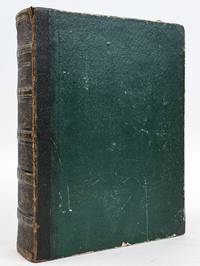
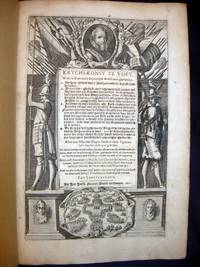
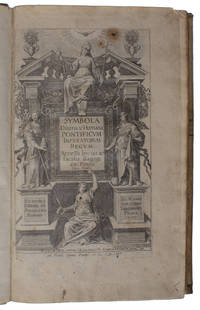
165260208Frankfurt G. Schönwetter 1652. Folio 335 x 203 mm. Three volumes bound in one contemporary full vellum bindings with title in contemporary hand to spine. Binding with some miscolouring and a bit of wear. Title-page with a few dots and light soiling otherwise a fine and clean copy. 141 7 4 183 7 176 3 pp. 151 engraved plates included in the pagination. Pp. 171-172 in vol. 2 copied in contemporary hand. <br/><br/><em>Later edition of Typot’s famous and beautifully illustrated work on emblems. The designs of the emblems were compiled by Ottavio Strada antiquarian to Emperor Rudolf III and were reproduced by the engraver Aegidius Sadeler - Typot wrote the Latin commentaries. The extensive work covers a broad array of subjects such as popes emperors kings and The Santa Eucharista. </em> hardcover
165260208Frankfurt, G. Schönwetter, 1652. Folio (335 x 203 mm). Three volumes bound in one contemporary full vellum bindings with title in contemporary hand to spine. Binding with some miscolouring and a bit of wear. Title-page with a few dots and light soiling, otherwise a fine and clean copy. 141, (7), (4), 183, (7), 176, (3) pp. 151 engraved plates included in the pagination. Pp. 171-172 in vol. 2 copied in contemporary hand.
1666JC14675Arnheim: Johann Fridericus Hagius 1666. Hardcover. Very Good. 12mo 135 x 70mm. Pagination: 1 398pp. 26 index. Signatures: 1; A-R12; S7 of 8 lacking final blank one leaf of index unopened. Full-page engraved architectural frontispiece of sacred muses holding holy attributes and 176 plates with 350 devices engravings by Aegidus Sadeler of Prague 1568-1629 laid out in ovals and medallions. 19th-century morocco with gilt monogram cipher of interlocking Cs as cornerpieces and to spine marbled endpapers all edges gilt; rubbing to extremities especially the head of the spine otherwise a good copy with rich impressions. Early monogram bookplate and another later of Bibliotheque I.G. Schorsch on front pastedown. A monogram and motto Nunc nox mox lux are stamped in green on the flyleaf. Another stamp to lower margin of title with French surname Bourcier. <br/><br/>Later Arnheim edition of Jacobus Typotiuss influential collection of emblems detailing parts of sacred ritual in the Latin West church. Typotiuss Symbola Divina et Humana was first published in Prague in three volumes from 1601 to 1603. An extant manuscript of the Symbola Divina et Humana dates to about 1590 and it is known that several copies were made and circulated through the court of Prague. Typotius a Flemish humanist scholar was court historian to Emperor Rudolf II. While his name takes precedence on the title page Typotius was possibly just one of four men responsible for this work. The designs were compiled by Ottavio Strada antiquarian to Emperor Rudolf III and were reproduced by the engraver Aegidius Sadeler. Typotius wrote the Latin commentaries on the impresa except in the fourth book which was the work of Anselm Boethius de Boodt physician to the same emperor. The imprese in Typotiuss work covers a vast array of subjects including the Santa Eucharista Holy Eucharist the Santa Crucis Holy Cross popes kings emperors and rulers of various nations princes clergy and cardinals. Some notable figures represented in imprese include French kings Philip I and Louis VII Henry VIII of England and his queens Anne Boleyn and Anne of Cleves James VI of Scotland Philip II of Spain and unsurprisingly Rudolf II of Bohemia. The work was highly popular in its time and was frequently reprinted in both Germany and in the Netherlands. Praz p. 518; Landwehr 799; Cicognara 1964. Johann Fridericus Hagius hardcover books
1666JC14675Arnheim: Johann Fridericus Hagius 1666. Hardcover. Very Good. 12mo 135 x 70mm. Pagination: 1 398pp. 26 index. Signatures: 1; A-R12; S7 of 8 lacking final blank one leaf of index unopened. Full-page engraved architectural frontispiece of sacred muses holding holy attributes and 176 plates with 350 devices engravings by Aegidus Sadeler of Prague 1568-1629 laid out in ovals and medallions. 19th-century morocco with gilt monogram cipher of interlocking Cs as cornerpieces and to spine marbled endpapers all edges gilt; rubbing to extremities especially the head of the spine otherwise a good copy with rich impressions. Early monogram bookplate and another later of Bibliotheque I.G. Schorsch on front pastedown. A monogram and motto Nunc nox mox lux are stamped in green on the flyleaf. Another stamp to lower margin of title with French surname Bourcier. <br/><br/>Later Arnheim edition of Jacobus Typotiuss influential collection of emblems detailing parts of sacred ritual in the Latin West church. Typotiuss Symbola Divina et Humana was first published in Prague in three volumes from 1601 to 1603. An extant manuscript of the Symbola Divina et Humana dates to about 1590 and it is known that several copies were made and circulated through the court of Prague. Typotius a Flemish humanist scholar was court historian to Emperor Rudolf II. While his name takes precedence on the title page Typotius was possibly just one of four men responsible for this work. The designs were compiled by Ottavio Strada antiquarian to Emperor Rudolf III and were reproduced by the engraver Aegidius Sadeler. Typotius wrote the Latin commentaries on the impresa except in the fourth book which was the work of Anselm Boethius de Boodt physician to the same emperor. The imprese in Typotiuss work covers a vast array of subjects including the Santa Eucharista Holy Eucharist the Santa Crucis Holy Cross popes kings emperors and rulers of various nations princes clergy and cardinals. Some notable figures represented in imprese include French kings Philip I and Louis VII Henry VIII of England and his queens Anne Boleyn and Anne of Cleves James VI of Scotland Philip II of Spain and unsurprisingly Rudolf II of Bohemia. The work was highly popular in its time and was frequently reprinted in both Germany and in the Netherlands. Praz p. 518; Landwehr 799; Cicognara 1964. Johann Fridericus Hagius hardcover
16561408574Amsterdam: Ian Iacobsz Schipper Jan Jacobsz. Schipper 1656. Early Printing. Hardcover. Quarto 8 154 165-200; 8 207; 5 124; 2 46; 6 154 4 pages including an engraved title page three engraved human anatomical plates and many in-text illustrations. In Good minus condition. Quarter-bound in black leather with green paper boards. Paneled spine with gilt titling. Boards have light cracking to joints moderate chipping to edges bumping to corners and scuff marks and wear throughout. Textblock has patterned end papers has started to separate from the spine along the front hinge the front free end paper is partially detached from spine archival repairs to some pages from the engraved title page to page 8 impacting text light age toning and wear to edges light soiling scattered throughout. Missing pages 155-164. Text in Dutch. Shelved in Room A. This volume contains several works all published in 1656 by Jan Jacobsz. Schipper. Titles include:<br /> <br> <br /> <br> <br /> “SCHAT DER GESONTHEYDTâ€--“SCHAT DER ONGESONTHEYDTâ€--“BERGH-VALâ€--“INLEYDINGE TOT DE HOLLANDTSCHE GENEES-MIDDELENâ€-- “STEEN-STUCKâ€--“HEEL-KONSTEâ€-- “VERVOLGH VAN DE HEEL-KONSTEâ€.<br /> <br> <br /> <br> <br /> Johan van Beverwyck 1594-1647 was a prominent Dutch physician and author who played a key role in popularizing medical knowledge during the Dutch Golden Age. Based in Dordrecht he was one of the first doctors to write medical treatises in the Dutch vernacular rather than Latin making health advice accessible to the general public. His most famous work Schat der Gesontheyt Treasure of Health combined practical medical guidance with moral philosophy and citations from classical literature. 1408574. Special Collections. Ian Iacobsz Schipper [Jan Jacobsz. Schipper] hardcover
16222666Middelburg: Jan van der Hellen for Jan Pieterss. van de Venne 1622. <p>4to 233 x 176 mm. 16 60 19 1 blank pp. Large emblematic publisher’s mark on title-page four half-page engraved illustrations by Pieter de Jode 2 Pieter Serwouters and Willem van der Passe after Adriaen van der Venne. Woodcut head- and tail-pieces and initials. Short marginal tear to title light dampstaining to first and last leaves. Later parchment over pasteboards ms. spine title. Provenance: Samuel Ashton Thompson Yates 1842-1903 bookplate dated 1894.  <br /> <br /> First Edition of Cats’ retelling of the Biblical tale of Queen Vasthi the first wife of the Persian king Ahasuerus who refused her husband’s summons to appear before his guests wearing the royal crown to display her beauty in the Jewish tradition of the Midrash she was ordered to wear nothing else which would better explain her refusal. For this she was punished with exile and the King went on to marry another strong-willed woman Esther. The tale was especially familiar to 17th-century Dutch audiences for whom Esther had come to symbolize Netherlandish resistance to Spain.  <br /> <br /> The first part of Cats’ word-playing verse adaptation whose title may be translated as The Theater of Manly Respectability is a long speech in the Queen’s defense and in defense of all women followed by a speech against her and in favor of “Manly Respectability.†The work concludes with the Judgment which is that Vasthi should obey her husband because women’s subservience to men is a law of nature. A final poem titled “Aller Princessen Spiegel aller Vrovwen Spoor†is illustrated with an engraving showing the humbled queen wearing a yoke around her neck. The parallels and differences between the Biblical Ahasuerus and Herodotus’ tale of King Candaules supplied in Latin and Dutch translations in an appendix whose wife’s rebellion was more successful are fully exploited by Cats and by the illustrator Cats’ usual partner the painter and engraver Adriaen van de Venne whose brother Jan published the edition.<br /> <br /> Van de Venne’s engravings notably the scene of Candaules’ naked wife being surprised by Gyges served as models for a number of Dutch painters. The Van de Venne brothers played a central role in the dissemination of Cats’ poetry and it is their joint production that makes the works come alive: “The complete works of Cats together with Van de Venne’s illustrations formed a sort of housebook of the Dutch people which remained popular for two centuries.†Bol p. 117.<br /> <br /> Following the privilege on the title verso is a letter from the publisher to all bailiffs officials and readers â€Noodige Waersschouwinge.†complaining of the many counterfeit editions of an earlier Cats work the 1620 Self-stryt and explaining how to tell them apart. A second edition without the Noodige Waersschouwinge appeared later in 1622 and several further editions followed. <br /> <br /> De Jonge van Ellemeet Museum Catsianum 97; Bol Adriaen Pietersz. Van de Venne 1989 p. 118.</p> Jan van der Hellen for Jan Pieterss. van de Venne unknown
16222666Middelburg: Jan van der Hellen for Jan Pieterss. van de Venne 1622. 4to 233 x 176 mm. 16 60 19 1 blank pp. Large emblematic publisher's mark on title-page four half-page engraved illustrations by Pieter de Jode 2 Pieter Serwouters and Willem van der Passe after Adriaen van der Venne. Woodcut head- and tail-pieces and initials. Short marginal tear to title light dampstaining to first and last leaves. Later parchment over pasteboards ms. spine title. Provenance: Samuel Ashton Thompson Yates 1842-1903 bookplate dated 1894.  First Edition of Cats' retelling of the Biblical tale of Queen Vasthi the wife of Ahasuerus who refused her husband's summons to appear before his guests wearing the royal crown and presumably nothing else and who was duly punished. The first part of Cats' word-playing verse adaptation whose title may be translated as The Theater of Manly Respectability is a long speech in the Queen's defense and in defense of all women followed by a speech against her and in favor of "Manly Respectability." The work concludes with the Judgment which is that Vasthi should obey her husband because women's subservience to men is a law of nature. A final poem titled "Aller Princessen Spiegel aller Vrovwen Spoor" is illustrated with an engraving showing the humbled queen wearing a yoke around her neck. The parallels and differences between the Biblical Ahasuerus and Herodotus' tale of King Candaules supplied in Latin and Dutch translations in an appendix whose wife's rebellion was more successful are fully exploited by Cats and by the illustrator Cats' usual partner the painter and engraver Adriaen van de Venne whose brother Jan published the edition.Van de Venne's engravings notably the scene of Candaules' naked wife being surprised by Gyges served as models for a number of Dutch painters. The Van de Venne brothers played a central role in the dissemination of Cats' poetry and it is their joint production that makes the works come alive: "The complete works of Cats together with Van de Venne's illustrations formed a sort of housebook of the Dutch people which remained popular for two centuries." Bol p. 117.Following the privilege on the title verso is a letter from the publisher to all bailiffs officials and readers "Noodige Waersschouwinge." complaining of the many counterfeit editions of an earlier Cats work the 1620 Self-stryt and explaining how to tell them apart. A second edition without the Noodige Waersschouwinge appeared later in 1622 and several further editions followed. De Jonge van Ellemeet Museum Catsianum 97; Bol Adriaen Pietersz. Van de Venne 1989 p. 118. Jan van der Hellen for Jan Pieterss. van de Venne unknown books
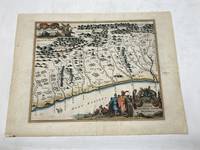
1672100390Amsterdam: Jacob van Meurs 1672. Map. Very Good. Copper engraved hand-colored map of the coastline of the Black Sea covering the region up to the Caucasus Mountains. Map: 11.5 in. x 13.75 in. Paper: 14 in. x 18 in. Brightly colored title cartouche in bollom right corner highlights the trade from the Black Sea/Georgian region to Western Europe. Second colored cartouche in upper left corner. Scale to upper left corner. Map highlights the map that was legendarily built by Alexander the Great that spanned the Caucasus Mountains sealing the uncivilized north Gog and Magog from the civilized southern region. Cities rivers mountains and forests are artistically presented <br /> <br /> Central vertical fold as originally presented. Light age-toning along edges with a couple spots and short tideline to paper's bottom left corner. Small handwritten word "Melpone" on right hand margin of paper. <br /> <br /> This map was published in "Asia Of Naukeurige Beschryving Van Het Rijk des Grooten Mogols." by Olfert Dapper Amsterdam: Jacob van Meurs 1672. Jacob Van Meurs 1619-1680 was a prominent Dutch engraver and map publisher. Jacob van Meurs unknown
1658383431658. Das ist: Beschreibung einer Reiss so zwee Exulanten durch Heuteliam gethan Eine Satyre auf Helvtien die Schweiz von anno dazumal schon damals geprägt durch Korruption und Vetternwirtschaft. Pagination fehlerhaft wie bei allen Ausgaben S.235 236 übersprungen. Kleine Fehlerstelle im Papier des Titelblattes. Handgeschriebenes Gloss auf den Nachsatzseiten. Alter Besitzerstempel u. Medaillons Haller V 1195. - Barth 2193 Kl.-8°. Pbd. Helvetica unknown
16583152DB1658. Lutetia Ulm 1658. 8°. 3 Bl. gedruckter Titel und Clavis 5 Bl. handschr. Clavis 7 leere Bl. 2 Bl. Vorrede S. 1 - 234 S. 237 - 297 1 leeres Bl. S 235/36 in der Pagination übersprungen. Mit 1 gest. Titel. Neuer Pergamentband im Stile der Zeit. Haller V 1195. Barth 2193. Faber du Faur 448. Jantz 2571. Vgl. Bächtold S. 473 und Feller/Bonjour SS 405. Einzige Ausgabe. Sehr seltene Satire über die Schweiz. «Im Jahre 1658 erschien eine Schrift Heutelia betitelt anagrammatisch gebildet aus "Helvetia" die Beschreibung einer Schweizerreise in welcher die staatlichen und gesellschaftlichen Zustände einzelner Kantone von schroff aristokratischem Standpunkt aus blossgelegt werden. Zur Sprache kommt die feile Justiz die Aemtersucht die Habgier und Bestechlichkeit der Landvögte. die geistige Trägheit und Versumpfung der Bürger die schlechte Jugenderziehung die unduldsame dogmensüchtige Geistlichkeit beider Konfessionen der Aberglaube die Hexenprozesse.» Bächtold «Ein pfälzischer Edelmann und ein württembergischer Rechtsgelehrter beide reformiert fliehen vor dem Dreissig-jährigen Krieg in die Schweiz und machen von Ort zu Ort ihre gepfefferten Glossen . Der Ton ist zügellos satirisch bisweilen zynisch namentlich wenn die Stellung der Frau gestreift wird. Lob und Tadel werden nach Orten verteilt. Zürich kommt gut weg . Gar von Bern entwerfen sie ein breites schonungsloses Sittengemälde das die Stadt in Aufruhr brachte . Ein Regierungsausschuss wurde eingesetzt das Büchlein zu unterdrücken umsonst. Es gehörte zu den boshaften Erzeugnissen über die man sich mit Vergnügen ärgert» Feller/Bonjour. Die im beliebten Stil der damaligen Sprachmengerei abgefassten Schrift auf zehn deutsche Worte kommt gewöhnlich ein lateinisches bietet mehr als andere Quellen Einblick in das eidgenössische Leben der Zeit. «Wer war der Verfasser Schon im 17. Jh. hielt man Jakob von Graviseth dafür der als bernischer Landvogt in Oron amtete . Heute neigt man dazu die Heutelia dem in Payerne geborenen Hans Franz Veiras zuzuschreiben einem Diplomaten in pfälzischen Diensten .». - Die ersten drei Blätter im Rand knapp beschnitten. Durchgehend leicht stockfleckig. unknown
16583152DBLutetia (Ulm?), 1658. 8°. (3) Bl. (gedruckter Titel und Clavis), (5) Bl. (handschr. Clavis), (7) leere Bl., (2) Bl. (Vorrede), S. 1 - 234, S. 237 - 297, 1 leeres Bl., (S 235/36 in der Pagination übersprungen). Mit 1 gest. Titel. Neuer Pergamentband im Stile der Zeit.
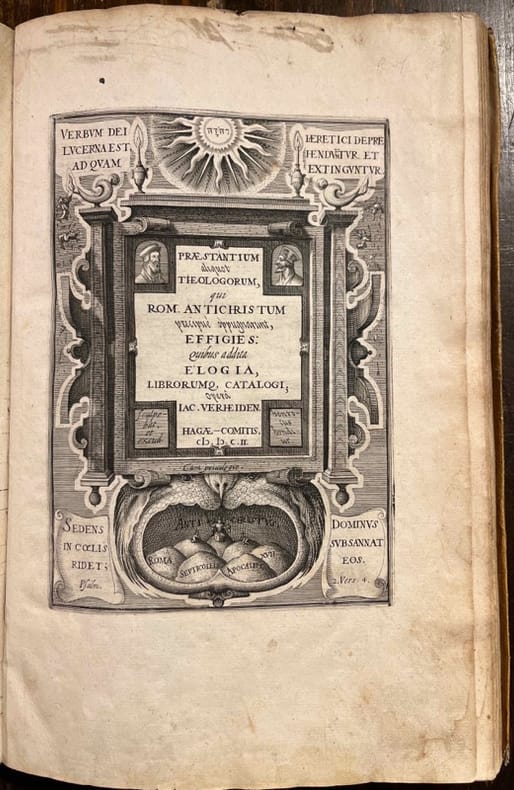
160216378Hagae Comitis [La Haye], Ex officina Bucoldi Cornelii Nieulandii, 1602. In-folio de [12]-226 pages [*6; A-Z4;Aa-Cc4; Dd6-Ee3], plein vélin à rabats, étiquette de titre manuscrite (en vélin), traces d'attaches. Ex-libris JFC, inscription ancienne au verso du titre.
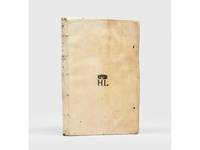
1602177786The Hague: ex officina Bucoldi Cornelii Nieulandii 1602. A portrait gallery of the Reformation First edition a compendium of 50 attractively engraved portraits of famous Protestant theologians each paired with a detailed biography and a list of their works. The illustrator was Henrick Hondius I 1573-1650 one of the most prominent engravers and cartographers in The Hague. This work is uncommon complete with all 50 portraits copies in commerce often lacking gathering "" comprising 2 leaves with the portrait of Berengarius. Hondius's portrait series sometimes referred to in English as "Celebrated Reformers and Men of the Religion" was first published without text in 1599. The artist then collaborated with Verheiden and the printer Nieulandt to include the portraits in this book. The series features all the major Protestant reformers such as Erasmus Luther Melanchthon Zwingli Calvin Theodore Beza John Knox Peter Martyr and Geronimo Savonarola. "The stylistic variation among the portraits may be due to the range of pictorial sources that Hondius seems to have relied upon for depicting each reformer. The portrait of Melanchton for example derives from the well-known portrait engraving by Durer of 1526. thus the entire series seems to have been engraved by Hondius himself during a period in which his style was in the process of transformation" Orenstein p. 64. Other sources of inspiration were the painter Hans Hasper and the engraver Jacques the Gheyn II. Provenance: Henry Yelverton Viscount of Longueville 1664-1704 with his monogram on the covers. Yelverton matriculated at Christ Church Oxford in 1680 but did not graduate and later supported William of Orange during his invasion in 1688. "Yelverton amassed a substantial library whose extent is not known but many volumes are traceable today in libraries around the world in English Latin Italian and Spanish with imprints from the early 16th century to the late 17th. Yelverton's stamp was often applied to books irrespective of their binding when acquired" Book Owners online. A manuscript index of contents was compiled on the final blank leaf of this copy by a late 17th-century hand perhaps by the viscount himself. Folio 302 x 198 mm: 852 A-2C4 2D6 2E4; 122 leaves pp. xvi 226 2. Elaborate engraved architectural frontispiece 50 engraved portraits similar allegorical plate. Contemporary vellum over thin boards flat spine lettered in early manuscript black monogram stamp "HL" surmounted by a viscount's coronet of Henry Yelverton 1664-1704 on both covers yapp fore-edges edges sprinkled red remnants of blue silk ties. Couple of minor near-contemporary marginalia. Head of front joint split but firm a little loss at foot of spine covers slightly bowed tiny rust burn on leaf V2 slightly affecting portrait and a couple of letters small faint damp stain in margin of 3 final leaves. A clean and well-margined copy. Pelc Illustrium Imagines 166; STCN 851224962. Nadine Orenstein Hendrick Hondius and the Business of Prints in Seventeenth-Century Holland 1996. hardcover
168876147Nuernberg; Norimbergaw:: Leonhard Loschge 1688. First edition. later flexible gilt-lettered pebbled cloth. The later binding is partially splitting at the inner hinges; contents very nice. Oblong 8vo. Engraved frontispiece and 50 engraved leaves of plates. Leonhard Loschge, hardcover
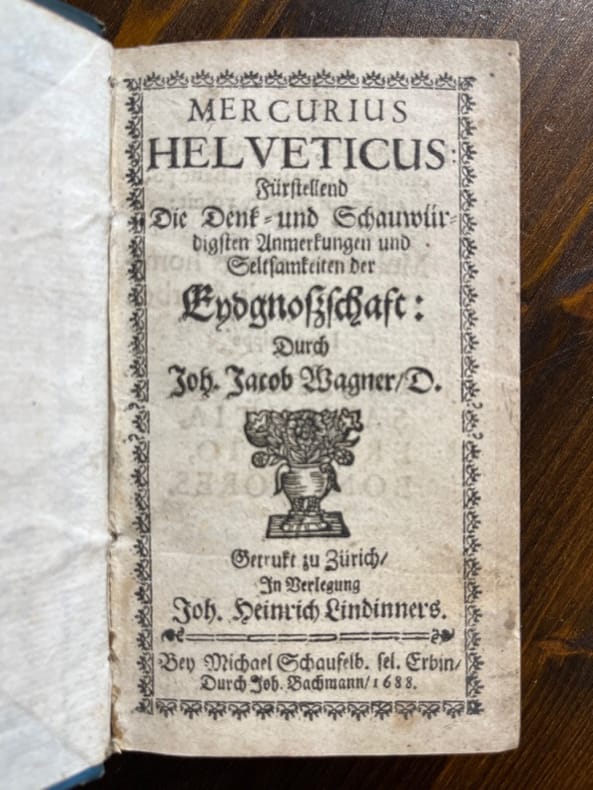
168820101Zürich, Joh. Heinrich Lindinner, 1688. In-12 de [12]-216 pages, cartonnage bleu ancien.
1665445561665. Basileæ Typis Joh. Jacobi Deckeri Academiæ Typographi 1665 Kl° 12 pp. Pappband. Disputatio Medica Inauguralis De Pica / Quam Sub Praesidio Supremi Numinis . in alma Basileensium Universitate Pro Licentia Summos In Arte Medica Honores & Privilegia Doctoralia rite consequendi Solenni examini exponit Philippus Jacobus Waldschmidt/ Moeno-Francofurtanus. Ad diem Novembris Anno MDCLXV. . Husner: Verzeichnis bas. med. Univ.Schriften Nr.1119 unknown
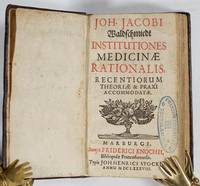
1688640981688. Marburg Knoch u. Ffm. Stock 1688. 12°. 18 Bl. 244 von 245 recte: 344 von 345 S. Ldr. d. Zt. mit Bibl.-Rsch. Etw. berieb. tls wurmspurig. Die seltene erste Ausgabe. VD 17 547:669055 Z. - Pag. springt von S. 199 auf 100. - Anfangs schwach wasserrandig die fehlene S. 245 = 345 in Hs. eingeb. Bibl.-St.a.T. - Nat 19. Johann Jakob Waldschmidt "Arzt geboren am 13. Januar 1644 zu Rudelsheim in der Wetterau studirte an mehreren deutschen Universitäten u. a. auch in Prag Wien und Gießen. Am letztgenannten Orte erlangte er 1667 mit der Inauguralabhandlung "De affectione hypochondriaca" die Doctorwürde. Anfangs prakticirte er in Hanau bis er 1674 einem Ruf als ordentlicher Professor der Medicin nach Marburg folgte wo er zugleich den Lehrstuhl der Physik bekleidete und am 12. August 1687 starb. Waldschmidt war ein gelehrter und philosophisch durchgebildeter Arzt bezw. Anhänger des Cartesius und Chemiatriker nach den Lehren des Sylvius. Außer zahlreichen Dissertationen deren Verzeichniß die in der unten citirten Quelle angegebenen biographischen Werke geben verfaßte Waldschmidt als selbständige Schriften noch: "Institutiones medicinae rationalis" Marburg 1688; Leyden 1691; Frankfurt 1696 1717; "Praxis medcinae rationalis succincte per casus tradita" Frankfurt 1690; Paris 1691. - Eine Gesammtausgabe der Schriften Waldschmidt's erschien unter dem Titel: "Opera medico-practica" Frankfurt 1695 1707; Neapel 1717; Lyon 1736." Julius Pagel ADB XL p.721 "In den Jahren 1677 1679 1684 und 1686 war er Dekan der Medizinischen Fakultät und in den Jahren 1677 1685 und 1686 Rektor der Universität Marburg. Er war eng mit dem Mediziner und Leibarzt des Landgrafen von Hessen-Cassel Johann Doläus befreundet mit dem er gemeinsam über Arzneien forschte. Am 25. Januar 1678 wurde Johann Jakob Waldschmidt unter der Matrikel-Nr. 75 mit dem akademischen Beinamen Priamus als Mitglied in die Leopoldina aufgenommen. Der Mediziner Wilhelm Hulderich Waldschmidt war sein Sohn. " wiki unknown
1617418041617. Leeuwaerden 1617. 4to. 8 313 s. Kobberstukket tittelbl. 2 kobberstikk. Treskårne vignetter. Nytt papiromsl. . unknown
169448525Nürnberg Johann Carl Gerzabeck 1694. 4to. Contemp. full sprinckled calf. Raised bands richly blindtooled compartments. Titlelabel. Very light wear to spine ends. Engraved frontispiece. 6818 pp. Index 56 pp. Light browning to some leaves. Internally clean. Printed in 2 columns. <br/><br/><em>First edition. </em> hardcover
169448525Nürnberg, Johann Carl Gerzabeck, 1694. 4to. Contemp. full sprinckled calf. Raised bands, richly blindtooled compartments. Titlelabel. Very light wear to spine ends. Engraved frontispiece. (6),818 pp. + Index (56) pp. Light browning to some leaves. Internally clean. Printed in 2 columns.
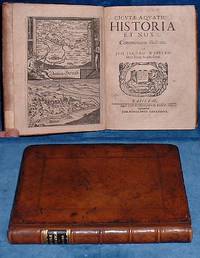
1679V58943Basel: Konig printed Genathius 1st edition 1679. Hardcover. Very Good. Copperplate map & city view of Donau 4 full page woodcuts of plants . Quarto contemporary panelled calf rebacked & blind-tooled with black spine label/tips worn 336pp viindex The Ae of Aquaticae & Noxae are very faintly printed on the Titlepage and there is slight paper thinning to the paper in 4 small 1cm diameter round areas and part of 2 letters have been strengthened with ink. Wepfer was the first to analyze the pharmacological effect of hemlock and its poison. In this treatise 1679 the author also reports the discovery of the duodenal glands. Konig printed Genathius 1st edition hardcover
169156230Franckfurt a. M. Verlegung ds Authoris Johan Görlin 1691. Contemp. full vellum. Stamp on title-page. 10388;6301 pp. 12 folded engraved plates. 1 plate repaired in right margin no loss but browning to lower corner. Internally clean. <br/><br/><em>Klaus Jordan 4078. </em> hardcover
169156230Franckfurt a. M., Verlegung ds Authoris, Johan Görlin, 1691. Contemp. full vellum. Stamp on title-page. (10),388(6),301 pp., 12 folded engraved plates., 1 plate repaired in right margin, no loss, but browning to lower corner. Internally clean.
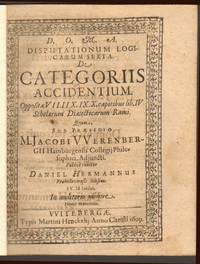
1609952237Wittenberg: Martin Henckel Juni 1609. Gut. 30 2 weiße Seiten. - Lagenkollation: A-D4. Neuer Umschlag aus Kleisterpapier im Stil der Zeit. Quarto. 192 x 163 mm. Papierbedingt leicht gebräunt gut erhalten. Enthält: De quantitate; De ijs quae cum alio conferuntur; De Quali sive qualitate; De sex categorijs reliquis. Jacob Werenberg Weremberg 1582-1623 ein lutherischer Theologe aus Hamburg der zu Helmstedt und Wittenberg studierte dort 1604 Magister und Adjunctus Facultatis philosophicae wurde 1609 jedoch wieder in seine Heimatstadt zurückkehrte um als Diakon und später als Pastor zu arbeiten lehrte als Professor am dortigen Gymnasium Logik und Metaphysik. - Der Doktorand Daniel Hermann geboren 1590 in Breslau; gestorben 1636 in Breslau war Pfarrer Lutherischer Theologe und Gymnasiallehrer . New wrappers. Lightly browned due to quality of paper else very good. - Sehr selten. Über KVK konnten wir nur kein Exemplar nachweisen. Nicht im VD17; nicht bei Schüling: Logische Schriften; nicht bei Risse; nicht bei Paisey. - RFM - Weitere Bilder auf Anfrage oder auf unserer Homepage. Wegen Urlaub kann Ihre Bestellung / Anfrage erst nach dem 21.06.2026 bearbeitet werden. - Because of holidays your order / question can be handled only after 06/21/2026. Martin Henckel unknown
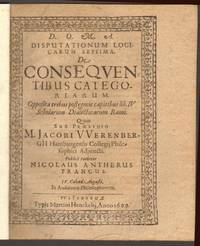
1609952236Wittenberg: Martin Henckel August 1609. softcover. Gut. 16 Seiten. - Lagenkollation: A-B4. Neuer Umschlag aus Kleisterpapier im Stil der Zeit. Quarto. 192 x 163 mm. Papierbedingt etwas gebräunt gut erhalten. Enthält: De oppositis sive contrariis; De modis prioris simul motus habere. - Sehr selten. Über KVK konnten wir kein Exemplar nachweisen. Jacob Werenberg Weremberg 1582-1622 ein lutherischer Theologe aus Hamburg der zu Helmstedt und Wittenberg studierte dort 1604 Magister und Adjunctus Facultatis philosophicae wurde 1609 jedoch wieder in seine Heimatstadt zurückkehrte um als Diakon und später als Pastor zu arbeiten lehrte als Professor am dortigen Gymnasium Logik und Metaphysik. - Der Doktorand Nicolaus Anther Kleinlangheim 1590 - 1638 Stroppen war Theologe und Pfarrer. Kleinlangheim ist ein Markt im unterfränkischen Landkreis Kitzingen. Strupina deutsch Stroppen ist ein Dorf und eine ehemalige Stadt in der Gemeinde Prusice Prausnitz im Powiat Trzebnicki Kreis Trebnitz der Woiwodschaft Niederschlesien in Polen. - New wrappers. Lightly browned due to quality of paper else very good. - Nicht im VD17; nicht bei Schüling: Logische Schriften; nicht bei Risse; nicht bei Paisey. - RFM - Weitere Bilder auf Anfrage oder auf unserer Homepage. Wegen Urlaub kann Ihre Bestellung / Anfrage erst nach dem 21.06.2026 bearbeitet werden. - Because of holidays your order / question can be handled only after 06/21/2026. Martin Henckel paperback