262 résultats
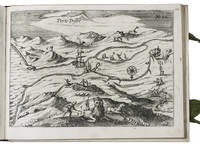
162231298Amsterdam: Chez Michel Colin 1622. Folio. 11 x 7 1/4 inches. 6 103 6 107-254pp. Engraved additional title 17 engraved maps 16 double-sheet 1 folding 5 engraved illustrations in the text of the Le Maire narrative. Without the portrait of Le Maire as usual found in only a small number of copies. Early eighteenth century sheep covers ruled in blind spine with raised bands in seven compartments morocco lettering piece in the second the others with a repeat decoration in gilt marbled pastedowns<br/> <br/>One of the classic descriptions of the Spanish conquests in the New World including the first publication of Jacques Le Maire's journal of one of the greatest early Pacific voyages and circumnavigations: a work of great rarity and importance.<br/> <br/>This edition of Herrera includes the first publication of Jacques Le Maire's journal of one of the greatest early Pacific voyages and circumnavigations that of Le Maire and Schouten in 1615 and 1616. Le Maire's journal which occupies pp. 107-174 of this book describes the voyage of trade and discovery launched by one of the most aggressive of Netherlands traders in this era of Dutch expansion. The expedition sailed around Cape Horn explored the Pacific coast of South America and pursued the search for Terra Australis. Inspired in part by Quiros and motivated by Dutch trading zeal this was the essential precursor to Tasman's voyage; indeed Tasman made great use of Le Maire's mapping of the ocean. The Le Maire voyage the last of the seventeenth century expeditions to search for the unknown continent from the east was responsible for extensive discoveries in the Pacific recorded in excellent detail on the numerous maps published here. These include maps of Le Maire's Pacific route and of New Guinea the latter definitely establishing it to be an island. There are also five engraved views showing the expedition in Patagonia a Polynesian sailing canoe the anchorage at Cocos Island natives at Cocos and the isle of Hoorn. The first section of this work is the first French and second edition overall of a portion of Antonio de Herrera's Historia General first published in Madrid in 1601. This is one of the classic descriptions of the Spanish conquests in the New World with important maps of the West Indies the Americas the coasts of Central and South America the interior of Mexico Terra Firme and the west coast of South America including some of the most important maps relating to the Pacific made to the time. The third section of this volume consists of brief accounts of other voyages into the Pacific and the account of Pedro de Cevallos of the Spanish possessions in the New World. Two issues of this French translation were printed in Amsterdam in 1622. This copy has the first imprint recorded by Wagner. There were also Latin and Dutch editions in the same year differing slightly in their makeup; Wagner assigns priority to this French edition. A work of great rarity and importance.<br/> <br/>Borba de Moraes p.400; European Americana 622/68; JCB 3II:166; Sabin 31543; Tiele pp. 56-57 314-316; Tiele-Muller 296; Wagner Spanish Southwest 12a. Chez Michel Colin unknown books
1621B86DJ001U79OAmsterdam 1621. Oblong 4to 17.5 x 23 cm. Johannes Janssonius printed by Izaak Elzevier Modern vellum sewn on 4 vellum tapes with gold double fillets on the boards gold lettering on the spine gilt edges green cloth ties. With 24 of 25 engraved plates with maps plans views and battle-scenes including 5 double-page and 10 larger folding the large map of the Malayan archipelago with an inset-map of the Strait of Boeton 32 x 45.5 cm. 4 172 pp. First and only edition of the French translation of one of the bestsellers of illustrated 17th-century travel literature describing one of the most famous early voyages around the world by Joris van Spilbergen 1568-1620 a veteran Dutch East Indies naval officer-turned-pirate undertaken from 1614 to 1618. A short survey of another of the most important early voyages around the world by Schouten and Le Maire in the years 1615 to 1617 is added at the end pp. 117-172 with drop-title "Navigationes Australes". It reports Le Maire's proof that Tierra del Fuego is an island and his discovery of what is still called the Strait of Le Maire an alternative route to the Pacific. Rich in ethnographic detail the numerous illustrations in the Miroir include oversized penguins llamas and an Andean condor with a nine-foot wing span. Naval battles beleaguered Spanish settlements and newly discovered islands are also depicted in detail making the work a valuable compendium of adventure on the high seas during the Age of Discovery.With several owner's inscriptions. With a few manuscript annotations in the margin. Lacking the world map. Washed with a brush leaving light brown steaks on most leaves and further with an occasional leaf foxed or smudged and an occasional minor tear. Otherwise a good copy of an extraordinary journal.l Borba de Moraes p. 826 "This French edition is much sought after"; Landwehr & V.d. Krogt VOC 362; Sabin 89451; Tiele Bibl. 1030. hardcover
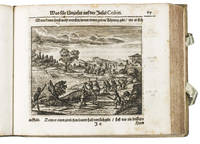
1662ABC_49406Nuremberg: printed by Wolfgang Eberhard Felssecker and sold by Johann Tauber 1662. Contemporary vellum with the manuscript title and author on the spine modern mint green closing ties red sprinkled edges. Oblong 8vo. With an engraved title page of a ship engaged in a sea battle an engraved portrait of the author and 15 engraved plates. Further with woodcut tailpieces woodcut decorated initials 2 gothic and 1 roman series and headpieces built up from typographic ornaments. Set in fraktur type with incidental schwabacher roman and italic. First edition of Johann Saar's extensive account of his travels from 1644 to 1659 in the Dutch East Indies the Moluccas and Ceylon present-day Sri Lanka. This account with beautiful plates depicting various aspects of the East Indies Ceylon and their cultures including rare eye-witness depictions of native elephant hunting is a great source of information for the 17th-century exploration of the East Indies and especially Ceylon. The first edition is quite rare as we have only been able to trace two other copies in sales records of the past hundred years.Johann Jacob Saar 1625-1664 was a German seaman. After working in the service of the Dutch East Indian army in Bantam Batavia and the Moluccas Saar moved to Ceylon in 1647 which he describes most extensively though he also covers Java Batavia the Banda islands etc. He describes Ceylons trees and fruits wild animals including the hunting of crocodiles depicted in 1 plate. He also gives more cultural-anthropological and historical information such as how the natives treat their sick and dead people how the king of Ceylon wanted peace with the Dutch and he comprehensively describes the local practice of elephant hunting which is beautifully illustrated in three plates. These illustrations like the others underline the diversity of the narrative. He and his crew then sailed from Ceylon to the coast of Goa. He describes how the Portuguese tried to capture a silver-fleet from the Japanese but he also describes a sea battle off the coast of Goa between the Dutch and the Portuguese. On their way home Saar visited and described Cape Town too including Table Mountain depicted in one of the plates. The vellum is somewhat soiled with brown stains on the front and back the ties and flyleaves have recently been replaced. The work is somewhat foxed throughout with annotations in some of the margins. Otherwise in good condition.l Cat. NHSM p. 174; Landwehr VOC 308; Tiele 952; USTC 2567770 9 copies; VD 17 23:253491D. printed by Wolfgang Eberhard Felssecker and sold by Johann Tauber, hardcover
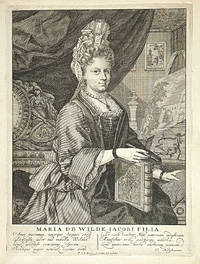
1700103081<p>Amsterdam Maria de Wilde 1700. 4to. 1 1 blank 11 1 blank pp. and 60 numbered engraved plates. = engraved title-page an engraved vignette depicting "virtute" signed "A. Schoonebeek fec." 1 large folding plate showing the interior of "Museum Wildianum" a full-page engraved portrait of Maria de Wilde signed "P. v.d. Berge ad vivum del. et fecit." decorated initials in the text and 60 numbered engraved plates by Maria de Wilde. Contemporary blind-stamped vellum sewn on 4 supports and laced through the joints with the manuscript title and author at the head of the spine red and blue sprinkled edges. With the green and white bookplate of "Collectie Buijnsters-Smets" on the inside of the front board and with the black and white bookplate of "A. Pitlo. Plus est en vous" on the verso of the now loose front paste-down. The binding is slightly browned and the paste-downs have come loose revealing the sowing supports. Internally fine and clean. Overall in very good condition.</p><p>First and only edition of an attractive display of the statues of the Museum Wildeanum once housed on the Keizersgracht in Amsterdam. The Dutch tax collector Jacob de Wilde 1645-1721 began the collection containing gems coins scientific instruments and statues. "This attractive account of a Dutch cabinet of the late seventeenth century is as much a eulogy of Maria de Wilde's gifts as an engraver as of her father's museum" Grinke. The 60 plates by Maria de Wilde 1682-1729 show the ancient Egyptian Greek and Roman statues in the museum including Egyptian figures of Isis Horus etc. some of which are now believed to be Renaissance copies of antique originals. The 6 text leaves include a brief introduction and several laudatory poems directed at Maria de Wilde and her engravings. The collection drew some important visitors including the Russian tsar Peter the Great in 1697. His visit is illustrated on the engraved folding plate where he can be identified by the double-headed eagle at his feet an element of the Russian coat of arms sitting in the museum at a table accompanied by Jacob. After De Wilde's death the collection probably dispersed. The tsar acquired part of it for his "Kunstkamera" the first museum in Russia which was completed in 1727. A catalogue of the gems and coins of the museum was published in 1703 entitled Gemmae selectae antiquae e museo Jacobi de Wilde.<br />From the library of the Dutch professor of civil and notarial law Adriaan Pitlo 1901-1987 and from the collection of Dutch book historian and professor of Dutch literature linguistics and book history Piet J. Buijnsters 1933-2022 and his wife the art historian Leontine M.A. Buijnsters-Smets 1937-2021. A beautiful copy of an art historical work showing a late 17th-century Dutch cabinet with a notable provenance. c.f. Grinke 61; Murray I p. 38 & III p. 272; STCN 842380264; Tavernier Russia and the Low Countries: an international bibliography 3178.</p> Maria de Wilde
1670ABC_48983Amsterdam 1670. Contemporary stiff paper wrappers with a manuscript label pasted upside down on the back wrapper reading: Carta Marinaresca del Mar Mediterraneo. Folio 29 x 45 cm. With 9 double-page engraved charts only each sheet ca. 44 × 55 cm each mounted on stiff paper with maps back-to-back with thick red and black ink borderlines. 8 of 9 maps are by Colom numbered 2-9 in the plates from; plate 1 has been replaced with Johannes de Rams map of the Mediterranean: "Paskaart vande Middelandsche Zee In twee deelen vertoont". Unusual working copy of Coloms rare pilot owned by an Ottoman Turkish mariner with his Osmanli inscriptions transliterating the location names throughout. Coloms charts cover the Straits of Gibraltar the Barbary Coast Mallorca the coastline around Barcelona Nice Corsica Sardinia Southern Italy Sicily and Croatia. Koeman highlights the rarity of all of Coloms pilot books and notes that despite thousands of copies having been circulated . only a score have survived.The wrappers are worn and with significant spotting and browning throughout some cockling and losses to sheets old repaired tears creases and signs of heavy use. A highly uncommon survival.l Cf. Koeman IV 120; Phillips III 53 ff. unknown
1609WRCAM46859Amsterdam: Cornille Nicolas 1609. Two volumes bound in one. Described in greater detail below. Folio. Contemporary boards rebacked in calf spine gilt leather label. Very good. From the Library of the Earls of Macclesfield with engraved 1860 bookplate on front pastedown and blind pressure stamp on first two printed leaves of first title. Two highly important Dutch voyages both in their second French editions and bound together as issued in 1609. These two voyages represent the initial Dutch exploration and expansion to the East Indies a significant element in a global commercial enterprise which was to develop throughout the 17th century. The two foundation accounts in the present volume originally issued together by Amsterdam printer Cornille Nicolas include: <br> <br> 1 Lodewijcksz Willem: PREMIER LIVRE DE L'HISTOIRE DE LA NAVIGATION AUX INDES ORIENTALES PAR LES HOLLANDOIS. Amsterdam: Cornille Nicolas 1609. 53 leaves. Titlepage with engraved map forty-five in-text engravings including three maps seventeen in-text woodcut illustrations and one plate on separate leaf following printed text. Moderate soiling on titlepage slight edge wear to first few leaves. <br> <br> Second French edition following the first French edition of 1598. Lodewijcksz gives an account of the first Dutch expedition to the East Indies under Cornelis Houtman from 1595 to 1597. The information collected by Houtman on the spice trade convinced the Dutch they could compete with Portugal's monopoly in the East Indies and his narrative served to initiate the explosion of Dutch trading at the turn of the century. <br> <br> "Like the English Houtman's men suffered so severely from scurvy that they had to put in at the Cape of Good Hope and at Antongil Bay in Madagascar to recuperate. But they then sailed straight across the Indian Ocean to the Straits of Sunda and dropped anchor at Bantam in Java without the loss of a ship. At this port the center of the Javanese pepper trade a long time was spent. Both natives and Portuguese showed considerable hostility and Houtman and some of his men were imprisoned. However the Dutch succeeded in making a commercial treaty and departed with a good cargo. They proceeded eastward to Bali and then returned along the south coast of Java thereby acquiring a more correct impression of the width of the island than had prevailed and laid the ghost of Java's being the northern part of the Southern Continent.the Dutch skipper had enough to show for his venture to inspire the merchants of Amsterdam with a determination to exploit the trade" - Penrose. <br> <br> 2 Neck Jacob Cornelissoon van: LE SECOND LIVRE IOURNAL OU COMPTOIR CONTENANT LE VRAY DISCOURS ET NARRATION HISTORIQUE. Amsterdam: Cornille Nicolas 1609. Two parts. 228 leaves. Titlepages with engraved illustrations twenty-two in-text engravings including one map two in-text woodcuts. <br> <br> Second French edition following the first French edition of 1601. Van Neck who represented the Verre Company commanded three ships which were part of the first successful Dutch trading voyage to the region. The other two ships were commanded by Wybrand Van Warwijck and Jacob Van Heemskerk. Van Neck's vessel became separated from the other two after rounding the Cape of Good Hope and the three did not reunite again until his arrival in Java in late December 1598. Unlike his Dutch predecessor Cornelis Houtman who three years earlier had seized the port of Bantam Van Neck dealt diplomatically with the natives. "Rather than rejecting the inflated prices asked by the local ruler he offered to pay over the odds in order to cement a lasting relationship.Van Neck's was the most profitable of the pre-VOC Dutch East India Company voyages. Despite the apparently high price paid for spices he netted a profit of 300 per cent on his overall costs. In 1601 fourteen fleets comprising sixty-five ships sailed for the East Indies but by that time competition between rival Dutch operators as well as with the Portuguese had inflated prices and none were as successful as Van Neck's first enterprise" - Howgego. While focused on activity in the East Indies EUROPEAN AMERICANA notes the text includes references to Brazil and tobacco from the West Indies. The second part of this 1609 French edition an eight-page appendix of words spoken in Java and Malay includes word lists in French printed in roman type Malay in italic type and Javanese in civilité. <br> <br> Two of the most important of the pioneering French voyages to the Far East bound together as probably issued in this edition. Lodewijcksz: EUROPEAN AMERICANA 609/71. TIELE-MULLER 115. JCB 3II:63. HOWGEGO H105 Houtman. Penrose TRAVEL AND DISCOVERY IN THE RENAISSANCE 1952 p.204. Neck: EUROPEAN AMERICANA 609/93. TIELE 786. TIELE-MULLER 129. HOWGEGO N13. Cornille Nicolas hardcover books
1610WRCAM51636Amsterdam: Cornille Nicolas 1610. Three volumes bound in one. Described in greater detail below. Folio. Contemporary vellum over boards rebacked with original spine preserved. Bookplate on front pastedown. Light soiling and repairs to titlepages; minor soiling otherwise. Very good. Three highly important Dutch voyages all in their second French editions and bound together as issued in 1610. These three voyages represent the initial Dutch exploration and expansion to the East Indies a significant element in a global commercial enterprise which was to develop throughout the 17th century. The foundational accounts in the present volume originally issued together by Amsterdam printer Cornille Nicolas include: <br> <br> 1 Lodewijcksz Willem: PREMIER LIVRE DE L'HISTOIRE DE LA NAVIGATION AUX INDES ORIENTALES PAR LES HOLLANDOIS. Amsterdam: Cornille Nicolas 1609. 53 leaves. Titlepage with engraved map forty-five in-text engravings including three maps seventeen in-text woodcut illustrations and one plate on separate leaf following printed text. Moderate soiling on titlepage slight edge wear to first few leaves. <br> <br> Second French edition following the first French edition of 1598. Lodewijcksz gives an account of the first Dutch expedition to the East Indies under Cornelis Houtman from 1595 to 1597. The information collected by Houtman on the spice trade convinced the Dutch they could compete with Portugal's monopoly in the East Indies and his narrative served to initiate the explosion of Dutch trading at the turn of the century. <br> <br> "Like the English Houtman's men suffered so severely from scurvy that they had to put in at the Cape of Good Hope and at Antongil Bay in Madagascar to recuperate. But they then sailed straight across the Indian Ocean to the Straits of Sunda and dropped anchor at Bantam in Java without the loss of a ship. At this port the center of the Javanese pepper trade a long time was spent. Both natives and Portuguese showed considerable hostility and Houtman and some of his men were imprisoned. However the Dutch succeeded in making a commercial treaty and departed with a good cargo. They proceeded eastward to Bali and then returned along the south coast of Java thereby acquiring a more correct impression of the width of the island than had prevailed and laid the ghost of Java's being the northern part of the Southern Continent.the Dutch skipper had enough to show for his venture to inspire the merchants of Amsterdam with a determination to exploit the trade" - Penrose. <br> <br> 2 Neck Jacob Cornelissoon van: LE SECOND LIVRE IOURNAL OU COMPTOIR CONTENANT LE VRAY DISCOURS ET NARRATION HISTORIQUE. Amsterdam: Cornille Nicolas 1609. Two parts. 224 leaves. Titlepages with engraved illustrations twenty-two in-text engravings including one map two in-text woodcuts. Leaves D2 and D3 lacking provided in facsimile. <br> <br> Second French edition following the first French edition of 1601. Van Neck who represented the Verre Company commanded three ships which were part of the first successful Dutch trading voyage to the region. The other two ships were commanded by Wybrand Van Warwijck and Jacob Van Heemskerk. Van Neck's vessel became separated from the other two after rounding the Cape of Good Hope and the three did not reunite again until his arrival in Java in late December 1598. Unlike his Dutch predecessor Cornelis Houtman who three years earlier had seized the port of Bantam Van Neck dealt diplomatically with the natives. "Rather than rejecting the inflated prices asked by the local ruler he offered to pay over the odds in order to cement a lasting relationship.Van Neck's was the most profitable of the pre-VOC Dutch East India Company voyages. Despite the apparently high price paid for spices he netted a profit of 300 per cent on his overall costs. In 1601 fourteen fleets comprising sixty-five ships sailed for the East Indies but by that time competition between rival Dutch operators as well as with the Portuguese had inflated prices and none were as successful as Van Neck's first enterprise" - Howgego. While focused on activity in the East Indies EUROPEAN AMERICANA notes the text includes references to Brazil and tobacco from the West Indies. The second part of this 1609 French edition an eight-page appendix of words spoken in Java and Malay includes word lists in French printed in roman type Malay in italic type and Javanese in civilité. 3 Noort Olivier van: DESCRIPTION DU PENIBLE VOYAGE FAIT ENTOUR DE L'UNIVERS OV GLOBE TERRESTRE. PAR SR. OLIVIER DU NORT D'UTRECHT GENERAL DE QUATRE NAVIRES ASSAVOIR. Amsterdam: Widow of Cornille Nicolas 1610. 2611pp. Engraved titlepage vignette. Twenty-five in-text engravings including three maps. <br> <br> Second French edition following the first French printing of 1602. Van Noort a former innkeeper in Rotterdam sponsored by a group of Dutch merchants accomplished the fourth circumnavigation of the globe after Magellan Drake and Cavendish. He was the first Dutch explorer to do so making the trip from 1598 to 1601. The voyage was particularly arduous. Half the crew mutinied his ships were constantly harassed and most of those that didn't mutiny perished from disease. He returned to Holland "with only one battered ship and eight crew left although some accounts suggest that forty-five crew survived. His voyage contributed little to the geographical knowledge of the time but had some effect in opening the way to the establishment of the Dutch in the East Indies.Van Noort's achievement however captured the imagination of his countrymen and the published accounts sold well the first appearing only eighteen days after his return. A more complete edition appeared later that year followed by two amended editions in 1602" Howgego. <br> <br> Three of the most important pioneering French voyages to the Far East bound together as issued. Lodewijcksz: EUROPEAN AMERICANA 609/71. TIELE-MULLER 115. JCB 3II:63. HOWGEGO H105 Houtman. Penrose TRAVEL AND DISCOVERY IN THE RENAISSANCE 1952 p.204. Neck: EUROPEAN AMERICANA 609/93. TIELE 786. TIELE-MULLER 129. HOWGEGO N13. Noort: EUROPEAN AMERICANA 610/79. SABIN 55438. BORBA DE MORAES p.617. W. Klooster THE DUTCH IN THE AMERICAS 1600- 1800 p.12. TIELE 806. JCB 3II:71. HOWGEGO N37. Cornille Nicolas hardcover books
1619WRCAM54737Leiden: Nicolaus a Geelkercken 1619. 1751pp. lacking blank leaf P4 which divides the two narratives but was mistakenly included as pp.119-120 in the continuous pagination; including large engraved vignette on title with twenty-five engraved plates five folding double-page and two large folding maps. Oblong quarto. Contemporary Dutch vellum. Old stains and soiling to boards manuscript "33" in ink on spine edges rubbed boards slightly bowed. Modern bookplate on front pastedown. Minor toning and foxing tiny reinforcement at mounting stub on verso of each large folding map some offsetting. Overall very good. In a blue cloth box gilt leather label. Scarce first Latin edition of one of the bestsellers of illustrated 17th-century travel literature which reports Le Maire's critical DISCOVERY OF TIERRA DEL FUEGO an alternate route to the Pacific and also recounts the Pacific pillaging of the veteran East Indies sailor-turned-pirate Joris van Spilbergen. In addition the work includes valuable early information on ports along the Pacific coast of the Americas and is also of interest for the 17th-century Dutch presence in Brazil. Rich in ethnographic detail the numerous illustrations in the SPECULUM ORIENTALIS. include images of oversized penguins llamas and an Andean condor with a nine-foot wing span. Naval battles beleaguered Spanish settlements and newly discovered islands are also depicted in detail making this a valuable compendium of adventure on the high seas during the Age of Discovery. <br> <br> In 1614 the VOC commissioned Spilbergen to sail to the Moluccas with nearly 700 men. Despite the ostensible commercial nature of his expedition Spilbergen's six vessels were heavily armed anticipating encounters with silver-laden Spanish vessels. Spilbergen spent two years calling at various Spanish and Portuguese ports along both coasts of South America failing to capture any great amounts of silver or silk from Manila but burning several settlements and emerging triumphant from a naval skirmish just south of Lima. <br> <br> By contrast Le Maire's less mercenary expedition resulted in important discoveries; his exploration of Tierra del Fuego and the Tuamotou Archipelago called into doubt the existence of a massive southern continent providing a catalyst for Tasman's discovery of New Zealand and Australia. The two expeditions crossed paths in the Dutch East Indies in 1616. <br> <br> Spilbergen's fleet of six ships was fitted out and armed to combat the Spanish colonies attacking Spanish settlements and shipping along their route. They sailed to Brazil then through the Straits of Magellan and north along the coast of America as far as California. After sailing east to the Philippines they went on to Batavia in search of a Spanish fleet reportedly planning to attack Dutch settlements in the Moluccas but they never found a fleet. On his arrival at Batavia Spilbergen encountered Le Maire and Schouten whose voyage for the newly-formed Compagnie Australe had embarked in 1615 a year after Spilbergen's. Le Maire and Schouten traveled via the newly-discovered Le Maire Strait but on their arrival at Batavia they were arrested for breaching the monopoly granted to the Dutch East India Company of the Strait of Magellan. Spilbergen took Le Maire Schouten and their crews on board and escorted them back to the Netherlands virtually as prisoners. Le Maire grew ill and died en route. <br> <br> This work is remarkable as an early document on Dutch navigation to the Brazilian coasts. Its great value lies in Spilbergen's detailed account of their stay in the Ilha Grande from October 1614 to January 1615 and in São Vicente in 1615. Plate 2 depicting the disordered landing of Dutch vessels in São Vicente clearly documents the way of life of the indigenous peoples under Portuguese occupancy. Colonial religious structures appear alongside typical Native American hammocks and traditional Brazilian costumes and methods of animal husbandry are evident. This illustration with its explanatory text is particularly important as 17th-century ethnographic documents about the future São Paulo are very rare. <br> <br> One of the large folding maps remains important for illustrating Le Maire and Schouten's route across the Pacific. Other maps show the Straits of Magellan and Manila the Moluccas and various ports on the Pacific coast of America. <br> <br> The SPECULUM ORIENTALIS. was originally published in Dutch the same year as this Latin edition with identical plates. Translations in other languages followed rapidly: German in 1620 Frankfurt and French in 1621 Amsterdam. The work was not translated into English until the 1906 Hakluyt Society edition with the title THE EAST AND WEST INDIAN MIRROR. LANDWEHR VOC 361 mistaking the first edition of the Dutch: it is 1619 as his excellent collation obviously attests not 1617. BORBA DE MORAES II:276. HOWGEGO S159. W. Klooster THE DUTCH IN THE AMERICAS 1600- 1800 cat. 24 p.12. BLAIR-ROBERTSON XV pp.328-30; illustrated XVIII p.224. LeCLERC 1994. SABIN 2288. RODRIGUEZ 2288. EUROPEAN AMERICANA 619/133. J. de Villiers THE EAST AND WEST INDIAN MIRROR Hakluyt Society 1906. JCB II:143. Lach ASIA IN THE MAKING OF EUROPE III pp.445-48. Schilder AUSTRALIA UNVEILED Ch. V pp.32-37. TIELE 66. Nicolaus a Geelkercken hardcover books
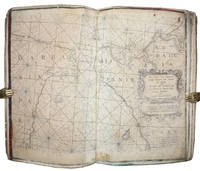
167712861Amsterdam: Printed by Jacob and Casparus Loots-man Bookseller upon the Water in the Loots-man 1677. Folio 440 by 280mm engraved title 20 engraved charts numerous woodcut charts and coastal profiles within text seventeenth century speckled calf to style spine in seven compartments separated by raised bands gilt. The Lootsman family a surname adopted by the founder of the firm Anthonie or Theunis Jacobsz are one of the less well-known firms of chart makers and publishers working in Amsterdam specialising in pilot books of European coastal waters but who also published a sea atlas of the world. Their output of charts and chart-books deserves to be better known as much of their work was original rather than the slavish copies some of their better-known rivals produced. Dutch chart publishers dominated the European market and by preparing editions in vernacular languages they were able to achieve wide distribution of their output. Most of the Dutch publishers produced English editions of their atlases and pilots and such was the dominance achieved that the Dutch were effectively able to stifle English competitors such as Joseph Moxon and John Seller. But it was the Lootsmans' misfortune to be overshadowed by the larger established firms or newcomers such as van Keulen and their productions often achieved only limited distribution. For example almost all the English editions published by the Lootsmans are located by Koeman in but a single example. It is interesting to compare Seller's early output with this volume and others like it to see the problems that early English publishers faced breaking the Dutch monopoly. This rare work is the first edition preceding the editions cited by Koeman with the title bearing the joint imprint of the brothers Jacob and Caspar Lootsman; whereas Koeman's earliest edition from 1678 bears the sole imprint of Caspar Lootsman. c.f. Koeman Jac 75 a & b. Printed by Jacob and Casparus Loots-man, Bookseller upon the Water, in the Loots-man, hardcover
1601WRCAM38446London: Simon Stafford and Felix Kingston for Cuthbert Burby & John Flasket 1601. 1584 leaves. Woodcut vignette of sailing ship on titlepage. Extra-illustrated with 19 engravings numbered 1-3 19 4-18 from Van Neck's HISTORIALE BESCHRIJVINGHE Amsterdam 1619. Text and plates "inlaid to size" remargined to 9 1/4 x 6 3/4 inches. Quarto. 19th-century mottled calf gilt spine gilt gilt leather label. Boards and spine slightly worn. Titlepage and plates mounted to larger sheets; printed pages of text inlaid in larger sheets. Engraved plates annotated in ink with corresponding "page" leaf recto or verso of text. Lacking the dedication leaf paraph 2 and leaf Q4 blank pages shaved with occasional slight loss of text in lower margin rust hole in leaf P3 affecting a few letters on recto tear in leaf Q3 repaired not affecting text. Overall a very good copy with the 1860 engraved bookplate of the Library of the Earls of Macclesfield on front pastedown shelf marks inscribed on verso of front free endpaper. Embossed stamp of the Earls of Macclesfield in upper extended margins of titlepage leaf and following two leaves of text. The first English edition of Van Neck's account of his 1598 voyage to the East Indies translated from the 1601 Amsterdam edition of the author's HET TWEEDE BOECKE. The Dutch navigator who represented the Verre Company commanded three ships which were part of the first successful Dutch trading voyage to the region. The other two ships were commanded by Wybrand Van Warwijck and Jacob Van Heemskerk. Van Neck's vessel became separated from the other two after rounding the Cape of Good Hope and the three did not reunite again until his arrival in Java in late December 1598. Unlike his Dutch predecessor Cornelis Houtman who three years earlier had seized the port of Bantam Van Neck dealt diplomatically with the natives. "Rather than rejecting the inflated prices asked by the local ruler he offered to pay over the odds in order to cement a lasting relationship.Van Neck's was the most profitable of the pre-VOC Dutch East India Company voyages. Despite the apparently high price paid for spices he netted a profit of 300 per cent on his overall costs. In 1601 fourteen fleets comprising sixty-five ships sailed for the East Indies but by that time competition between rival Dutch operators as well as with the Portuguese had inflated prices and none were as successful as Van Neck's first enterprise" - Howgego. While focused on activity in the East Indies EUROPEAN AMERICANA notes that the text includes references to Brazil and tobacco from the West Indies. <br> <br> Van Neck's account was popular throughout the first half of the 17th century and was reprinted and translated into German and French as well as English. It also appeared in collections of voyages such as those by De Bry Hulsius and Colijn. This extra- illustrated copy includes nineteen engraved plates from the Amsterdam 1619 edition of Van Neck's HISTORIALE BESCHRIJVINGHE published by Michiel Colijn. The images are mounted on separate sheets and bound in the book at the appropriate portion of the text. The engravings are annotated in ink indicating the appropriate page i.e. recto or verso of a specific leaf related to the image. <br> <br> A rare book on the market. Prior to this copy from the Macclesfield sale in March 2007 the last copy previously available was sold at the Boise Penrose sale in 1971. Both EUROPEAN AMERICANA and STC record only two copies in the U.S. at the Huntington and NYPL the latter noted as imperfect. EUROPEAN AMERICANA 601/66. STC 18417 noting quires A-G printed by Stafford paraph 2 and quires H-Q printed by Kingston. TIELE-MULLER p.144. HOWGEGO N13. [Simon Stafford and Felix Kingston] for Cuthbert Burby & John Flasket hardcover books
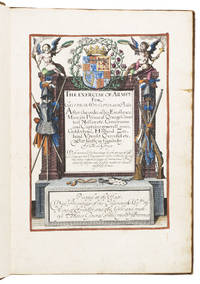
1607ABC_48580The Hague 1607. Folio ca. 37 x 27 cm. Mid-19th-century gold-tooled half faded red morocco and red cloth sides gilt edges marbled endpapers bound in 1840-ca. 1860 by the celebrated British bookbinder Robert Riviere 1808-1882 with his stamp "Bound by Riviere" in the bottom outer corner of the verso of the first flyleaf. With an engraved title page with at the head of the page the coat of arms of the dedicatee Prince Henry Frederick eldest son of King James I of England within a wreath of lilies and roses which - together with the title and the imprint were engraved on 3 separate slips of paper pasted over areas left blank for that purpose; and 117 including one repeat expertly engraved plates ca. 26 x 19 cm: 42 numbered plates in part 1 43 partly-numbered plates in part 2 and 32 numbered plates in part 3. All engravings including the engraved title-page are magnificently coloured and highlighted in gold and silver by a contemporary hand. The plates show exercises with the arquebus part 1 musket part 2 and pike part 3. 3 parts in 1 volume. 4; 2; 3 ll. Splendid copy of this very rare English edition of De Gheyn's illustrated major military manual with the plates in their first state before they were numbered and with some details added during the colouring stage instead of being engraved several puffs of smoke in the illustrations. The present copy is one of the three "presentation copies" of the first English edition New Hollstein The De Gheyn family II p. 159 1b.The history of the publication of the book is complex. It appears that Count Johann II of Nassau-Siegen 1561-1623 commissioned De Gheyn in about 1596 to publish the work together with or with the support of his nephew the great military commander and Stadtholder Prince Maurice who had re-organised the army of the Dutch Republic. Many copies have the engraved date 1607 on the title-page changed to 1608 suggesting that this may have been the true date of issue. The same title-border was used for the various early editions with the engraved texts on slips of paper to be pasted onto the places left blank on the engraved title-page. Different coats-of-arms were used for the different languages. The Dutch issues show for instance the coat-of-arms of Prince Maurice.This work is of the highest interest for military history regarding the early 17th century. It constitutes a simple transparent and well-illustrated manual for the instruction of recruits in the rapid and skilful handling of calivers an obsolete name for the arquebus muskets and pikes which had proven to be essential for the successful and revolutionary way of warfare introduced by Prince Maurice through reforming the Dutch army by introducing exercises and strict discipline in the past years. Fully coloured copies like the present were produced largely for princes and other important persons and were probably coloured by De Gheyn himself who was certainly responsible for the high standard of the colouring. In our copy the title is in the first undated state. All the early editions use the same main plate for the title-page so the text and arms for the editions in various languages and with various dedications were engraved on three separate slips of paper to be pasted over blank spaces: for the coat of arms above the engraved title centre and the imprint and privilege below. The book met immediate success and makes a considerable contribution to our knowledge of military history. The large format editions like the present were followed in 1609 and 1619 by smaller quarto editions with woodcut copies of the original engravings. The present copy varies slightly from other similar copies in that the compiler of this particular copy added plate 34 in part two twice unfortunately omitting part 2 plate 2 in that process and adding 2 plates with minor variants to this copy part 2 plates 29 and 35. Arguably this makes the present copy even rarer.The provenance of the present copy is impressive to say the least. It was most likely the presentation copy from De Gheyn for Robert Cecil first Earl of Salisbury 1563-1612 judging by the paper slip mounted on the recto of the second flyleaf which contains in early 17th-century manuscript the following text: "For my Lord ye Earle of Salisbury". This note is accompanied by a later more extensive annotation below the slip of paper reads: "This appears to have been a presentation copy to Robert Cecil Earl of Salisbury. The above inscription was on the fragment of a flyleaf and is probably the autograph of the author - De Gheyn. signature". Robert Cecil was Secretary of State to Queen Elisabeth I of England and King James I of England. In 1608 around the time the present work was published Cecil was appointed Lord Treasurer. Furthermore the splendour of the expert and strictly contemporary colouring of all engravings including the title-page prove that the present copy was made for a very important person like a nobleman or high statesman. Other bookplates show that the present work was at least part of two other collections. The first of the two is Christopher Turnor 1809-1886 with his bookplate on the front pastedown who was an English Conservative Party politician MP for South Lincolnshire between 1841 and 1847 founder of Stoke Rochford Hall and the son of English antiquarian author and politician Edmund Turnor 1755/56-1829. The second of the two is Hermann Marx 1881-1947 a famous German-born stockbroker and banker and a noted book and print collector. His "very choice and valuable library" was auctioned by Sotheby's in 1948.With the book plate of Christopher Turnor on the front pastedown the book plate of Hermann Marx on the recto of the first flyleaf and the paper slip with the 17th-century dedication to the Earl of Salisbury with the 19th-century note below on the recto of the second flyleaf. The numbers of the plates are added in a contemporary hand since the plates here appear in their first unnumbered state. The first plate of each part also contains Gheyns signature "J. De Gheyn. in." in manuscript instead of as part of the engraving. The binding shows some signs of wear some rubbing along the edges corners and the spine and fading of the leather and cloth on the front board and spine plate 2 in plate in part 2 has been replaced by a duplicate of plate 34 from the same part internally some minor marginal browning or staining but the coloured and highlighted engravings remain fine and clean. Overall in very good condition.l Cockle 79; Keynes New observations on Jacques de Gheyns The Exercise of Arms in: The Print Collectors Newsletter 13 1983 pp. 211-212; Kist Commentary to the facsimile of the Dutch edition 1971; Lipperheide nos. 2057-2060; Meij Jacques de Gheyn II als tekenaar p. 12 nos. 15-20 pp. 45-47; Muller Historieplaten no. 1117 & Suppl.; New Hollstein The De Gheyn family nos. 340-457 descriptions and illustrations of all plates; Regteren Altena Jacques de Gheyn Three generations vol. 2 pp. 64-78 nos. 342-464; Simoni A present for a Prince in: Ten studies in Anglo-Dutch relations 1975; STCN 85107989X 3 copies; cf. Jähns pp. 1005-1007 other eds. ABE CAT Costumes & Uniforms hardcover
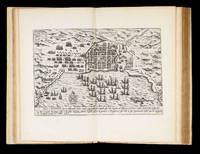
162215084Amsterdam: Chez Emanuel Colin de Thovoyon 1622. Folio 310 by 200mm first French edition second issue title page canncelled with Paris imprint added to that of Amsterdam engraved title with vignettes and map 8 103 1 blank 6 107-254 pp. head- and tail-pieces with decorated initials; 27 engraved plates pictorial title page 17 maps and charts 16 double-page 1 folded 4 city views 5 text engravings scenes from Le Maire voyage portrait of Le Maire not present as usual for the French edition seventeenth century vellum. The first French edition of Herrera'a rare work here extra-illustrated with Boazio's exceedingly rare views of Santo Domingo Dominican Republic; Santiago Cape Verde Islands; Cartagena Columbia; and San Augustine Florida - first known engraving of any locality in the present-day United States. The importance of this French edition of Herrera's 'Description des Indes Occidentales' and the other 1622 editions in Latin and Dutch lies in its engraved pictorial title page with the first map to delineate California as an Island and in the inclusion of the first comprehensive account of Jacob Le Maire's voyage. The 14 maps in the Herrera's section are almost identical to those in the original 1601 'Descripcion' save for some resizing and changes in a few details. The most interesting are probably the 'Description de las Yndias Occidentalis' which depicts the Papal line of demarcation dividing the world between Spain and Portugal and the 'Description de las Indias del Poniente' which depicts a large part of the Pacific with the Moluccas the Philippines and the Ladrones accurately positioned. Le Maire and Cornelis Schouten his second in command left Texel in June 1615 on a mission to find a new route to reach the Spices Islands which would break the trade monopoly of the Dutch East India Company which had been grant a monopoly trade through the Strait of Magellan. The pair succeeded to break the monopoly by rounding south America south of the Straits of Magellan. The new cape was name Horn or Hoorn after Shouten's ship which had been lost due to fire at the Patagonian port Desire. In doing so they also dispelled the myth of a great southern continent joined to South America. They would continue to sail across the Pacific discovering numerous islands along the way and sailing up the northern coast of New Guinea. By September 1616 Le Maire reached Ternate in the Moluccas the headquarters of the Dutch East India Company. Initially well received they were soon accused of having encroached on the rights of the Company and were tried found guilty and shipped home on Spilbergen's ship which was completing its own trip around the world. Le Maire died on the return voyage and his journals were taken by the Company. Schouten and Spibergen published an abreviated version of these journal; and it was not until 1622 after a long trial that Isaac Le Maire was able to regain custody of his son's journals and to publish them in full. The four additional city views Santo Domingo in the Dominican Republic; Santiago in the Cape Verde Islands; Cartagena in Columbia; and San Augustine Florida were drawn and possibly engraved by the Italian artist Baptista Boazio. The Boazio views are "probably the most interesting and important published graphic work pertaining to Drake and his career" Kraus. They are also the first representations of those four cities. Indeed the view of St Augustine is the first known engraving of any locality in the present-day United States. Their history is uncertain. There is no indication that Boazio participated to the voyage but he must have obtained a version of these views from someone who did: "It was undoubtedly in the course of the return voyage that the author of this view-plan of St. Augustine was able to copy the figure of the Dorado fish and of the other creatures decorating the plans from John White's original drawings" Kraus. John White was the Governor of the first English settlement in America who along with the other surviving settlers returned to England from Roanoke Island with Drake's expedition. Two issues of these views were printed in Leiden in 1588 both extremely rare: a large paper issue 16.5 by 22 inches was printed to illustrate Walter Bigges and Master Croftes 'A Summarie and true discourse of Sir Francis Drake's West Indian Voyage' published in London in 1589; the present smaller size 7.5 by 11.25 inches has captions in Latin and French and a numerical instead of alphabetical key and was probably printed to illustrate the Latin and French translations of 'A Summarie and true discourse' published in Leiden in 1588. While the pictures are broadly similar the present examples show greater detail whilst the larger ones include more sea monsters and other embellishments. Priority regarding date of publication between those two issues has not been established with certainty but there are indications that the smaller issue came first: <br /><br />"A close comparison of details however suggests that the smaller engravings come from an earlier set of drawings and that the larger maps represent revisions as well as embellishments probably done by the same artist" Mary Frear Keeler. <br /><br />There were two subsequent issues of the smaller Boazio plates: the first in 1589 published in Cologne used the same plates but with only the Latin text below; the plates themselves are set within the text with printed text to the verso; the second 1590 Nuremberg printing was neither printed from new plates or the plates have been heavily revised. Only two complete sets of the four large views have appeared at auction in the last fifty years each accompanied by an example of a map of Drake's Atlantic voyage: the DuPont sale at Christie s in 1991 for $231000; and bound into the Macclesfield example of Saxton's atlas Sotheby's 2007 for £669600. A large coloured view of Cartagena was sold at Christies in 1996 for $16100. <br /><br />There is no record of any copy of the 1588 smaller size issue having gone through auction. In 1970 Kraus p.156 estimated that they were eight recorded complete sets of the large Boazio plates and seven complete sets of the smaller plates 1588 and 1589. <br /><br />OCLC records eight complete sets of the large plates but only two complete sets of the small 1588 plates: New York Public Library and the Huntington Library. There is an incomplete set lacking San Augustine of the smaller 1588 plates in the Kraus' Sir Francis Drake Collection housed in the Library of Congress. Of the 1589 small plates we were able to trace nine complete examples. <br /><br />A comparison of the Boazio maps in the present book with the plates in the Huntington Library New York Public Library and the Library of Congress confirm that the 4 sets are identical. For the 'Description des Indes Occidentales': Brunet III cols 132-133; Burden 195-198; Cox I: 41n. 'European Americana' 1622/68; Medina 'Biblioteca Hispano-Americana' 455n.; Tooley 'California as an Island' 107; Wagner 'Cartography of the Northwest Coast' pp. 145-146 & No. 291. For the Boazio plates: Burden 65 & 70; in the February 2016 'Addenda for The Mapping of North America' note 71 Burdern refers to this set and the number of known copies; Church 134A 136 138; H.P. Kraus 'Sir Francis Drake A Pictorial Biography' Amsterdam 1970 pp. 121-127 and nos. 20 & 49a; Mary Frear Keeler 'Sir Francis Drake's West Indian Voyage' 1585 86. Hakluyt Society London 1981. Chez Emanuel Colin de Thovoyon, hardcover