734 résultats
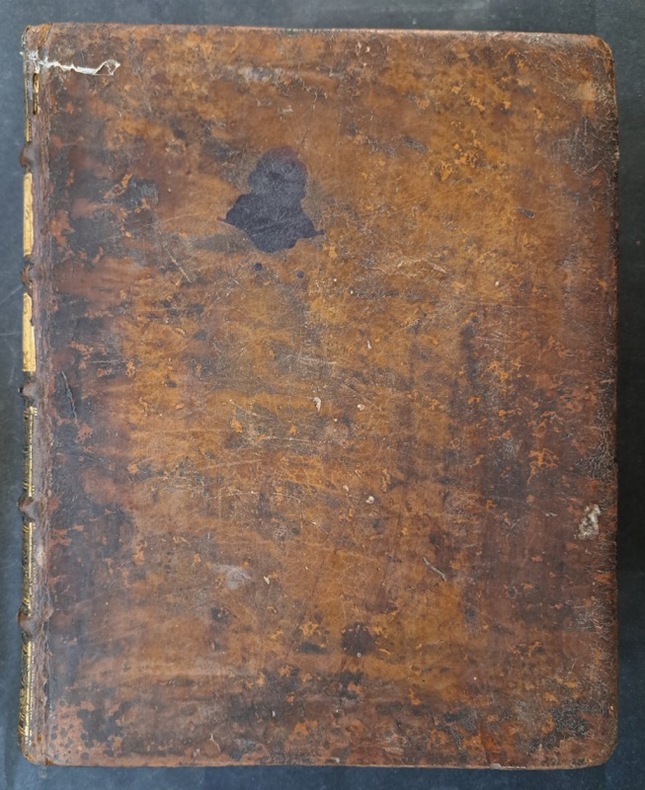
173030654AB2 Bände. Genève, Fabri & Barrillot, 1730. 4°. (2) Bl., XV, 556 S.; (6) Bl., 518 S. Mit 2 gest. Titelvignetten, 2 mehrfach gef. Ansichten von Genf und 13 Kupfertafeln. Lederbände der Zeit mit reicher Rückenvergoldung und Rückenschildern.
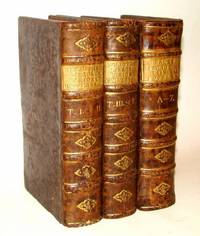
1770952262Nürnberg: Martin Jacob Bauer 1770-1774. leather_bound. Gut. Erster Theil: 40 328 Seiten. - Zweyter Theil: 32 334 2 weiße Seiten. - Dritter Theil: 8 351 1 weiße Seiten. - Vierter Theil: 8 328 Seiten. - Suppl. I: 14 420 4 Seiten. - Suppl. II: 11 1 weiße 400 Seiten. Ganzleder der Zeit mit goldgeprägten Rücken. Octavo. 190 x 110 mm. leicht berieben gut erhalten. "Bibliotheca librorum rariorum universalis." Universalbibliothek seltener Bücher. Das Original nicht der Nachdruck! Erscheinungsvermerk: "Nürnberg bey Martin Jacob Bauer. 1770." In drei uniformen marmorierten handgefertigten Schaflederbänden der Zeit auf fünf echten erhabenen Bünden mit goldgeprägten hellbraunen Rückenschildchen auf zweitem Feld der jeweiligen Bandzahl im dritten die anderen mit einem größeren fleuralen Stempel vergoldet und die Bünde mit goldgeprägten Linien abgesetzt Reste einer Stehkantenvergoldung. Handgestochene grün/weiße Kapitale Rotschnitte. Vorsätze aus Marmorpapier. Drei guterhaltene dekorative Bände. - Beschrieben werden ca. 17.500 Titel meist des 15. bis 17. Jh. Etwa von der Hälfte des dritten Teils ab ist das Werk von Bernhard Friedrich Hummel bearbeitet. Es erschien wesentlich später 1791 noch ein letztes Supplement das jedoch nur noch 289 Seiten stark war und 2500 weitere Titel beschrieb. Die umfangreiche Bibliographie enthält mit Quellenangaben in alphabetischer Anordnung nach Autoren bzw. bei Anonyma nach Titeln: Klassiker-Ausgaben Werke protestantischer Theologie historische wie geographische Werke. Grundlagen waren die Methode von Lenglet du Fresnoy sowie die Verzeichnisse und Sammlungen von Baumgarten Bünau Bünemann Engel Feuerlin Freytag Reimmann Schelhorn Schwarz Schwindel Solger Thomasius Vogt u.a. Eine frühe umfangreiche Bibliographie. - Exemplar aus süddeutschen Bibliotheken mit dem zeitgenössischen gestochenen Wappenexlibris von "Franciscus Paepositus S. Salvatoris Pollingae"; dem Exlibris des Gymnasiums und Lyceums zu München dem mehrfachen Stempel der Phil.-theol. Hochschule Freising und schließlich dem Stempel der UB Freiburg mit Ausgeschieden-Vermerk auf den Titelversos und am Schluß. - First edition. Contemporary sheep five raised bands spine gilt in compartments. Bindings rubbed in places minor defects to lower ends of spines of vols I and II small wormhole some foxing else good. Scarce. - Einbände leicht berieben unteres Kapital von I/II leicht beschädigt. Kleiner Wurmgang im unteren weißen Rand von Band I/II. Ein bzw. zwei Exlibris auf vorderem Spiegel; Bibliotheksstempel. Blattweiser. Bisweilen leicht stockfleckig sonst gut. In so dekorativen Einbänden sehr selten. Petzholdt 114 - Besterman I909 - Slg. Krieg 4 wie hier ohne den letzten Supplementband - Ebert 1772 - Nicht im VD 18! - RFM - Weitere Bilder auf Anfrage oder auf unserer Homepage. Wegen Urlaub kann Ihre Bestellung / Anfrage erst nach dem 21.06.2026 bearbeitet werden. - Because of holidays your order / question can be handled only after 06/21/2026. Martin Jacob Bauer hardcover
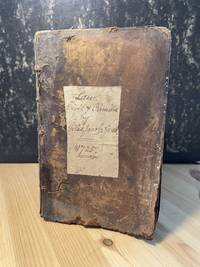
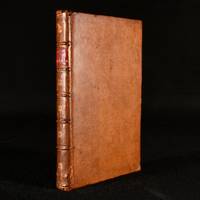
172531757AB1725. First Edition. London In the Savoy Printed by E. and R. Nutt and R. Gosling Assigns of Edward Sayer Esq. for T. Corbett at Addison's Head 1725. Small Octavo. 3 unnumbered 224 8 unnumbered pages. Original full leather. Binding in very porr condition but still in its original state. Needs repair. Interior very good with pre-owner's name in ink on titlepage: "RMA Mainish - 1825". Extremely scarce publication. Price reflects condition. Giles Jacob 1686 8 May 1744 was a British legal writer whose works include a well-received law dictionary that became the most popular and widespread law dictionary in the newly independent United States. Jacob was the leading legal writer of his era according to the Yale Law Library. The literary works of Giles Jacob did not fare as well as his legal ones and he feuded with the poet Alexander Pope both publicly and in literary form. Pope named Jacob as one of the dunces in his 1728 Dunciad referring to Jacob as "the blunderbuss of the law". Jacob is remembered well for his legal writing though not so much for his poetry and plays. Giles was born in Romsey Hampshire and was baptized on 22 November 1686. Among eight children Giles was the only son of Henry and Susannah Jacob. Henry Jacob was a maltster who lived until 1735. Giles Jacob's legal training included employment by Thomas Freke and then as a secretary to Sir William Blathwayt. Working for Blathwayt he engaged in litigation and dispensation probably in manorial courts. Jacob's first book The Compleat Court-Keeper 1713 gives detailed and practical instructions for how to administer estate matters. He combined this with a chronological summary of statute law and the combination was financially successful. Jacob always had an interest in contemporary poetry and the literary life and in 1714 he wrote a farce called Love in a Wood or The Country Squire. This play was never produced. He persisted however and in 1717 he wrote a satire of Alexander Pope's The Rape of the Lock in the form of The Rape of the Smock. The poem was low and bawdy and the next year he wrote a serious work titled Tractatus de hermaphroditis about the legal status of intersex people published by Edmund Curll in 1718 along with the first English-language publication of Ioannes Henricus Meibomius's A treatise of the use of flogging in venereal affairs. Title page from an 1811 edition of Jacob's The New Law Dictionary. In 1719 two works appeared by Jacob both very successful. The first was Lex constitutionis which was a thoroughly researched compendium of statute law common law and criminal law schematized according to which powers of the executive branch of the government were involved. While the work's fame and usefulness were surpassed in a few years Jacob's book was a well regarded analysis. The same year he produced the first volume of the Poetical Register with a second volume in 1720. This work provided biographies of contemporary authors as well as earlier ones. According to the literary editor Stephen Jones: He is generally accurate and faithful and affords much information to those who have occasion to consult him. It cannot be denied that he possessed very small abilities; but he was fully equal to a task where plodding industry and not genius must be deemed the essential qualification. In the Poetical Register Jacob criticized the play Three Hours After Marriage 1717 which had been written by John Gay with anonymous assistance from John Arbuthnot and Alexander Pope. Jacob wrote that its scenes "trespassed on Female Modesty". He subsequently criticized that play for "obscenity and false Pretence". Jacob had admired Pope had been on good terms with him and had submitted the biographical entry of Pope in the Poetical Register to Pope himself for correction. Jacob likely did not realize that Three Hours After Marriage had been anonymously co-authored by Pope. In The Dunciad of 1728 Pope pounced: Jacob the scourge of grammar mark with awe Nor less revere him blunderbuss of law. Pope explained Jacob's offense as follows: "he very grossly and unprovoked abused in that book the Poetical Register the authors friend Mr. Gay". The play Three Hours After Marriage was panned by most critics as obscene and literary historian Thomas Lounsbury has explained that no one criticized the play "without incurring from Pope an enmity that never died out". In 1725 Jacob wrote The Student's Companion and regarded it as his favorite of the books he had written. It was a guide to studying law with practical tips reviews and indexes. In 1729 his most famous work nine years in the making appeared: A New Law Dictionary. It combined a dictionary of legal practice with an abridgment of statute law and it reached its fifth edition by the time of Jacob's death. As late as 1807 "Jacob's Law Dictionary" was still a very profitable copyright. His last work was Every Man his Own Lawyer which outsold even the law dictionary. It was a self-help book for average citizens who might be involved in litigation. Jacob's legal writings were of a practical and descriptive sort often compared unfavorably to the analytic and theoretical treatises by authors like William Blackstone. But according to historian Julia Rudolph authors like Jacob had a different purpose in that they "were dealing with the problem of knowledge management or 'information overload' and in response to this problem the learning of the law was systematized alphabetized and organized." Jacob's most successful non-legal writing was of a similarly practical and descriptive sort. Jacob married Jane Dexter in 1733 and they had at least one daughter also named Jane.4 He and his family moved to Staines Middlesex where he died on 8 May 1744. Wikipedia hardcover
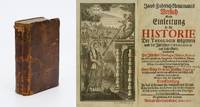
171731168AB1717. Magdeburg und Leipzig Verlegts Christoph Seidel 1717. Octavo. Mit gestochenem Frontispiz und 1 Faltblatt "Typus Systematis Antiquitatis Literariae" 11 nn. Bl. 807 Seiten plus 81 nn. Seiten Index Autorum und Index Rerum. Hardcover / Originales Ganzleder des 18.Jahrhunderts. Der Buchblock sehr gut wirklich tadellos erhalten. Die Bindung etwas berieben. Kleiner Wurmgang an einigen Stellen des hinteren Einbanddeckels. Sehr seltene Publikation ! Jacob Friedrich Reimmann 22. Januar 1668 in Gröningen; 1. Februar 1743 in Hildesheim war ein deutscher lutherischer Theologe Pädagoge Historiker und Philosoph. Reimmann wurde als Sohn eines Lehrers geboren. Nach dem Besuch der Gymnasien in Magdeburg Eisleben und Altenburg begann er 1688 in Jena das Studium der Theologie und Philosophie. Ab 1692 war er als Rektor in Osterwiek und an der Martinischule in Halberstadt tätig. Am 14. Februar 1693 heiratete er in der Dorfkirche St. Petri in Brumby Anna Margarethe Hävecker. 1704 wechselte er als Pfarrer nach Ermsleben. Dort war sein früherer Schüler Leonhard Christoph Rühl ab 1711 Hauslehrer seiner Kinder. Rühl veröffentlichte 1717 sein Schediasma historico-litterarium de doctis Reimmannis Historisch-bibliographische Darstellung der gelehrten Reimmänner worin er Jacob Friedrich den Hauptteil widmete. 1714 ging Reimmann als Diakon und Domprediger nach Magdeburg. 1717 wurde Reimmann als Superintendent mit der Aufsicht über das Gymnasium Andreanum nach Hildesheim berufen. Größere Bekanntheit erlangte Reimmann mit den sechs Bänden seines zwischen 1708 und 1713 veröffentlichten Versuchs einer Einleitung in die Historiam Literariam so wohl insgemein als auch derer Teutschen insonderheit. War Daniel Georg Morhofs Polyhistor noch auf Latein erschienen so lag mit Reimmanns Sammlung eine erste deutschsprachige Historia Literaria vor: Ein Gang durch alle wichtigsten Schriften der Wissenschaften Literatur im Wortsinn der Zeit. Reimmanns Werk war die Fachkritik meidend allein auf seinen Sohn zugeschnitten erschienen. Im Dialog mit dem Heranwachsenden werden die wichtigsten Titel jeder Wissenschaft genannt und kurz inhaltlich besprochen ein offensichtlich für Kinder uninteressantes Buch das umso interessanter für Studenten und Gelehrte war es bot Zugriff auf zitierbare Ausgaben und ersparte im Extremfall den Gang in Bibliotheken; man konnte mit Reimmanns Bänden Fußnoten zu allen Fachgebieten ohne weitere Lektüre setzen. Berufskollegen wie Gottfried Wilhelm Leibniz notierten die gewaltige Arbeit beide standen miteinander in Briefaustausch. Gottlieb Stolles Kurtze Anleitung zur Historie der Gelahrheit Halle: Neue Buchhandlung 1718 sollte mit Neuausgaben und Erweiterungsbänden Reimmanns Arbeit wenig später als das besser gegliederte und modernere Werk in den Schatten stellen. Reimmanns Position bleibt schwierig einzuordnen. Seine Ausführungen sind oft schulmeisterlich. Gegenüber der Bildung in den modernen belles lettres nahm er in seiner historia literaria eine ablehnende Haltung gänzlich unterschieden sich etwa seine Bewertungen des Romans von denjenigen Stolles. Kurios lesen sich im Rückblick Reimmanns Versuche über die vorsintflutliche Gelehrsamkeit genauere Auskunft zu geben den Stand der Wissenschaften in den 1600 Jahren zwischen Adam und dem Untergang der seinerzeitigen Zivilisation zu ermessen. Modern liest sich demgegenüber sein Versuch einer Critique über das Dictionaire historique et critique des Mr. Bayle 1711 die Auseinandersetzung mit Pierre Bayles revolutionärem Werk der Kritik an den historischen Wissenschaften. 1727 schrieb er die erste Historia philosophie Sinensis über chinesische Philosophie. Werke Auswahl Critisirender Geschichts-Calender von der Logica. Frankfurt am Main 1699 Poesis Germanorum Bekandte und Unbekandte Poesie der Deutschen. Leipzig 1703 Versuch einer Einleitung in die Historiam Literariam. 6 Bde. Halle/Saale 170813 Versuch einer Einleitung in die Historie der Theologie. Magdeburg u. Leipzig 1717 Jakob Friedrich Reimmann: Historia universalis atheismi et atheorum falso et merito suspectorum 1725 mit einer Einleitung hrsg. von Winfried Schröder frommann-holzboog Stuttgart / Bad Cannstatt 1992. Reimmann widmete sich in späteren Jahren mit Nachdruck den theologischen Schriften. 1725 erschien seine Untersuchung des Atheismus die Historia universalis atheismi et atheorum falso et merito suspectorum 1731 sein Catalogus Bibliothecae Theologicae systematico-criticus Schriften die ihn heute unter die Denker der Frühaufklärung bringen. Er trat gegen den Pietismus des Jenaer Theologen Johann Franz Buddeus auf. Auch mit dem katholischen Domprediger in Hildesheim Jesuitenpater Winand Hesselmann geriet er 1730 aus Anlass des 200. Jahrestages der Augsburger Konfession in einen konfessionellen Streit. Wikipedia hardcover
17980187-B17981. Radierung, Rom 1798, auf Velin. 28:38 cm. Literatur: Andresen 75, II (von II). Aus der 72-Blatt-Folge ?Mahlerisch radirte Prospecte von Italien? die J.Chr. Reinhart, J.W. Mechau (1745-1808) und A.Chr. Dies (1755-1822) 1792-1793 nach der Natur für den Verleger und Kunsthändler Frauenholz in Nürnberg zeichneten und radierten. - Vorzüglicher und vollrandiger Abdruck, Einriß im oberen Rand hinterlegt.
172544238HB1725. Teil 2 von 4. Frankfurt a. M. J. F. Fleischer 1725. Kl.-8°. Doppelblattgr. Drucktitel 10 Bl. 1240 S. 24 Bl. Register. Späterer marmorierter Pappband mit goldgeprägtem Rückentitel auf farbigem Rückenschild leicht berieben. Titel verso mit blassem Namenszug von alter Hand. Gelegentlich schwach fleckig oder wasserrandig. Sonst in sehr schöner Erhaltung. Erste Ausgabe. - Blake 63 führt alle Teile einzeln; nicht bei Waller Wellcome und Hirsch/H. - Der zweite in sich abgeschlossene Teil des Thesaurus der erstmals von 1712 bis 1728 erschien. Jeder Band behandelt ein anderes Thema der vorliegende enthält die Chirurgie ferner Kapitel über Augenkrankheiten und über Zahnmedizin. - Johann Jacob Bräuner ging 1683 mit den Churfürstl. Sächs. Truppen nach Ungarn und hat im 'obgedachten Feld-Leben bey nahe 17. Jahr lang viel und mancherley Arten schwehrer und gefährlicher Blessuren und Operationen beygewohnet' Dedicatio. Seine von den 'Feldscheerern' erlernte Kunst vertiefte er 'durch Nachlesung guter Autoren.' Mit dem vorliegenden Werk legt er die Summe seiner Erfahrungen vor. unknown
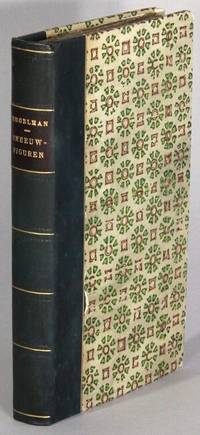
177168810Utrecht: G. Van den Brink 1771. 8vo pp. 28 178; uncut; 5 folding tables and 29 folding plates; 20th-century blue calf-backed decorative paper-covered boards; a very good sound and clean copy. Engelman 1710-1782 was a Dutch doctor one of the directors of the Rijnland Water Board and an amateur meteorologist. In Van der Aa's Biographical Dictionary of the Netherlands it is mentioned that Engelman also wrote a book about ''snow figures'' snow crystals which was first published in Haarlem in 1747 and here in a second edition with a lengthy preface by Boddaert. G. Van den Brink unknown
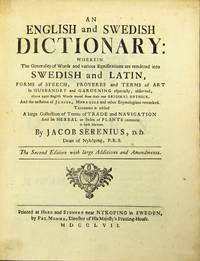
175723854Printed at Harg and Stenbro near Nykoping in Sweden by Pet. Momma 1757. 4to pp. 8 16 unpaginated lexicon in double column; full contemporary Swedish calf red morocco label; rebacked with old spine laid down endpapers renewed; spine quite rubbed but generally a good sound copy. With a 'Table of Terms of Trade and Navigation' and 'Words of Command and Sea-Terms' occupying 17pp. at the back and another on herbal terms occupying another 12pp. Serenius chaplin to the Swedish embassy in London 1725-35 where he tried to strengthen the relations between Sweden and Great Britain. It was during this time that he began work on his dictionary Dictionarium Suethico-Anglo-Latinum first published in Stockholm in 1741. Termed second edition the present work is basically a new undertaking being twice the size of the original with a much expanded emphasis on etymology. Serenius states in his preface that he has been influenced by Edward Lye and 'in a manner excited by the late lexicographer Mr. Johnson that prodigy of laboriousness and sagacity who in the preface to his excellent Dictionary complains of a scanty knowledge in northern literature É I must own that the judicious author is aright." This must be one of the earliest acknowledgements by a foreign lexicographer of the achievements of Johnson. Serenius does not say so but it seems likely that some of the etymologies were borrowed from him. <br/><br/> unknown books
17571079Printed at Harg and Stenbro near Nykoping in Sweden by Pet. Momma 1757. Second edition with large additions and amendments 4to pp. 8 16 & unpaginated lexicon in double column edges rubbed small cracks starting at the tops and bottoms of the joints but generally a very good copy in contemporary quarter calf over marbled boards; binding firm. <br/><br/> hardcover books
175723854printed at Harg and Stenbro near Nykoping in Sweden by Pet. Momma 1757. 4to pp. 8 16 unpaginated lexicon in double column; full contemporary Swedish calf red morocco label; rebacked with old spine laid down endpapers renewed; spine quite rubbed but generally a good sound copy. With a 'Table of Terms of Trade and Navigation' and 'Words of Command and Sea-Terms' occupying 17pp. at the back and another on herbal terms occupying another 12pp. Serenius chaplin to the Swedish embassy in London 1725-35 where he tried to strengthen the relations between Sweden and Great Britain. It was during this time that he began work on his dictionary Dictionarium Suethico-Anglo-Latinum first published in Stockholm in 1741. Termed second edition the present work is basically a new undertaking being twice the size of the original with a much expanded emphasis on etymology. Serenius states in his preface that he has been influenced by Edward Lye and 'in a manner excited by the late lexicographer Mr. Johnson that prodigy of laboriousness and sagacity who in the preface to his excellent Dictionary complains of a scanty knowledge in northern literature É I must own that the judicious author is aright." This must be one of the earliest acknowledgements by a foreign lexicographer of the achievements of Johnson. Serenius does not say so but it seems likely that some of the etymologies were borrowed from him. unknown
17571079printed at Harg and Stenbro near Nykoping in Sweden by Pet. Momma 1757. Second edition with large additions and amendments 4to pp. 8 16 & unpaginated lexicon in double column edges rubbed small cracks starting at the tops and bottoms of the joints but generally a very good copy in contemporary quarter calf over marbled boards; binding firm. With a 'Table of Terms of Trade and Navigation' and 'Words of Command and Sea-Terms' occupying 17 pages at the back and another on herbal terms occupying another 12 pages. Serenius was chaplain to the Swedish embassy in London 1725-35 where he tried to strengthen the relations between Sweden and Great Britain. It was during this time that he began work on his dictionary Dictionarium Suethico-Anglo-Latinum first published in Stockholm in 1741. Termed the second edition the present work is basically a new undertaking being twice the size of the original with a much-expanded emphasis on etymology. Serenius states in his preface that he has been influenced by Edward Lye and 'in a manner excited by the late lexicographer Mr. Johnson that prodigy of laboriousness and sagacity who in the preface to his excellent Dictionary complains of a scanty knowledge in northern literature . I must own that the judicious author is aright." This must be one of the earliest acknowledgements by a foreign lexicographer of the achievements of Johnson. His dictionary was published in 1755. Serenius does not say so but it seems likely that some of the etymologies were borrowed from him. unknown
176854703Leipzig Caspar Fritsch 1768. Contemp. full calf. 4 raised bands. Titlelabel with gilt lettering. A paperlabel pasted on lower part of spine. Wear to spine ends. Light wear along edges. 14346 pp. 1 large folded engraved map. Internally clean. <br/><br/><em>First German edition. </em> hardcover
176854703Leipzig, Caspar Fritsch, 1768. Contemp. full calf. 4 raised bands. Titlelabel with gilt lettering. A paperlabel pasted on lower part of spine. Wear to spine ends. Light wear along edges. (14),346 pp., 1 large folded engraved map. Internally clean.
1724131381Franckfurt und Leipzig: Verlegts George Marcus Knoche, 1723 - 1724. 2 Bll., [XXXIV] S., 1 Bll., 444 S., 1 Bll., [II] S., 316 S. ; 21 x 18,5 cm ;
178323592Upsala, Johan Edman, 1783. 11 n.n. Bll., 366 SS., 5 n.n. Bll. Register und Druckfehler. 8°, Leder der Zeit über 4 Bünden, Rotschnitt, geprägtes Rückenschildchen. An Ecken und Kanten berieben, der Rücken bestoßen, das Rückenschildchen stark vergraut.
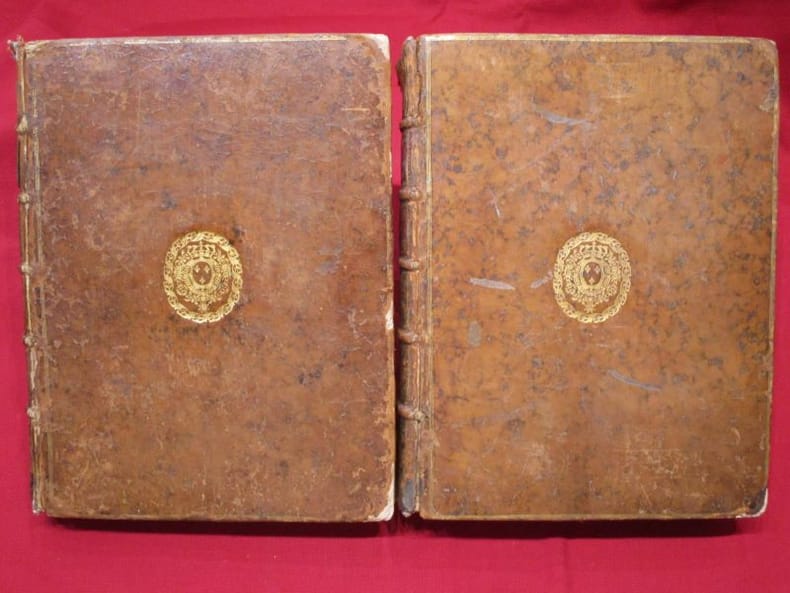
1752115036imprimerie royale 1752 2 in-4 A Paris, De l'imprimerie royale, 1752-1754, 2 volumes in-4 de 215x285 mm environ, XV, 203 - VII, 333 pages, contenant 2 vignettes de titre dont une de Cochin et 3 bandeaux de N. Cochin. Pleine reliure marbrée d'époque aux armes de Louis XV, dos à cinq nerfs portant titres dorés sur pièces de cuir bordeaux, caissons ornés de fers royaux, plats encadrés de triple filet doré, fer central aux armes royales (armoiries dans un écu ovale ceint des colliers de Saint-Michel et du Saint-Esprit), roulette dorée sur les coupes, tranches mouchetées rouges, gardes de papier marbré à la coquille. Exemplaires solides mais reliures abimées (coiffes manquantes, tranchefiles apparentes et l'une d'elle abimée, mors fendus, coins dénudés, griffures sur les plats), ex libris du médecin états-unien Jacob Solis Cohen collé sur les contreplats, des cernes sur les gardes volantes, rares rousseurs sinon intérieur frais.
171365043London: Jacob Tonson 1713. Hardcover Quarto no dust jacket. Hardcover. Good. Londini London apud J. Nicholson B. Tooke & J. Tonson white vellum cover gilt lettering 1752 pp text in latin covers soiled <br /> <br /> Standard shipping no tracking / Priority with tracking / Custom quote for large or heavy orders. Jacob Tonson hardcover
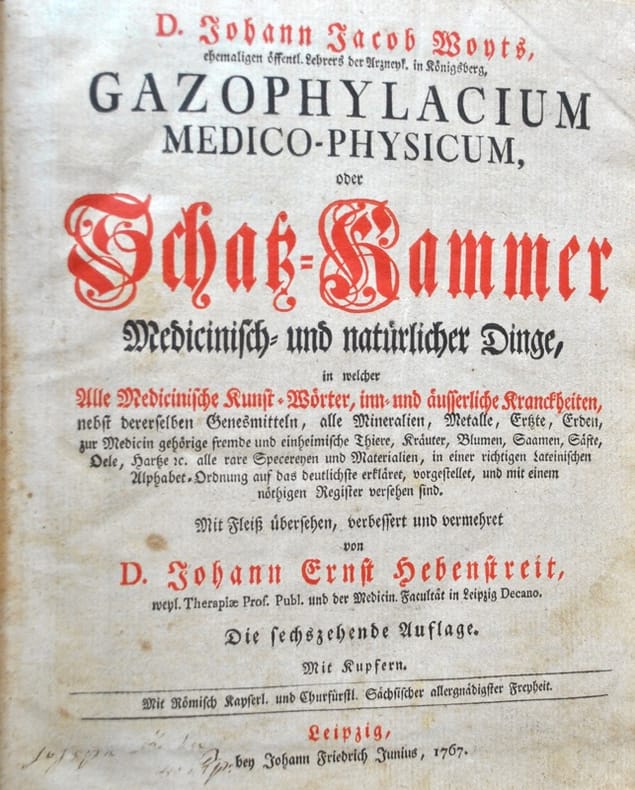
176711492Leipzig, Johann Friedrich Junius, 1767. In-4 de 1 frontispice gravé (14) pp. 2524 col. (81) pp. 1 planche.HEBENSTREIT (Johann Ernst). Exegesis onomaton ton peri pathon. Exegesis nominum Graecorum, quae morbos definiunt. Erklarung griechischer Worter, von Kranckheiten des menschlichen Cörpers. Leipzig, 1760. In-4 de (10)-535 col. (18) pp. Ensemble 1 vol. in-4, vélin (reliure de l'époque).
17151912020001Leiden Lugduni Batavorum: Samuelem Luchtmans 1715. Hardcover. Very Good. Folio 32 x 21 cm. Bound in modern calf with contemporary vellum mounted on front cover with arms of Nijmegen. Good binding and cover. Printed in parallel Greek & Latin text. Collated: 20 of 22 554 2 555-1000 55 pages. Lacks the half-title. Includes additional engraved allegorical title dated 1716 incorporating map of Greece. Minor winkling to some of the margins. Generally in very good shape. Brunet III 122. [Leiden] Lugduni Batavorum: Samuelem Luchtmans hardcover
1740660661740. Leipzig Bey Friedrich Lanckisches Erben 1740 4° 6 1035 70 pp. rot/schw. Titel mit Titgelvignete Frontispiece Pergamenteinband d.Zt. Vollständiger Titel: "D. Johann Jacob Woyts Oeffentlichen Lehrers der Artzney-Kunst in Königsberg Gazophylacium Medico-Physicum Oder Schatz-Kammer Medicinisch- und Natürlicher Dinge$dIn welcher Alle Medicinische Kunst-Wörter inn- und äusserliche Kranckheiten nebst dererselben Genes-Mitteln alle Mineralien Metalle Ertzte Erden zur Medicin gehörige fremde und einheimische Thiere Kräuter Blumen Saamen Säffte Oele Hartze etc. alle rare Specereyen und Materialien und viel curiöse zur Mechanic gehörige Kunst-Griffe in einer richtigen Lateinischen Alphabet-Ordnung auf das deutlichste erkläret vorgestellet und mit einem nöthigen Register versehen worden. Die Zehende Auflage. Aufs neue mit Fleiß übersehen verbessert und vermehret." Eines der beliebtesten medizinischen Lexika des 18. Jahrhunderts dessen erste Auflage 1701 unter dem Titel "Deutsches vollständig-medicinisches Lexicon" erschienen ist und das bis 1784 siebzehn Auflagen erreichte. Die Beiträge waren kurz gehalten gingen aber über eine bloße Begriffserklärung oft deutlich hinaus. Johann Jacob Woyt "geb. 14. August 1671 zu Elbing studirte in Königsberg und Leipzig provirte 1697 in Kopenhagen mit der Diss. "De chylificatione" wurde 1706 Professor in Königsberg 1709 Arzt der Epidemieen und starb 29. December 1709. Er schrueb unter Anderem noch: "Thesaurus pharmaceutico-chirurgicus oder gründliche Erklärung der Kunstwörter welche in Lesung deutscher med. Bücher vorkommen" Leipz. 1696; 1709; 1737; 1751 - "Heimlichkeiten des ganzen weiblichen Geschlechts" Danzig 1700 - "Trifolium chirurgicum" Leipzig 1705 - "Unterricht von den tödtlichen Wunden des ganzen menschlichen Körpers" Dresden 1716 - "Abhandlung aller innerlichen und äusserlichen Krankheiten " Leozig 1731; 140; 1753 . "Gazophyxlacium medicophysicum oder Schatzkammer medizinischer und natürlicher Dinge tec. Etc." Leipz. 1709; 12. Aufl. 1746; 15. Aufl. 1761." Pagel Hirsch-H. IV p.999 Zu Woyt siehe - Karl Reiss J.J. W.'s Schatzkammer in Wiener med. Presse. 1872 XIII p.129 unknown
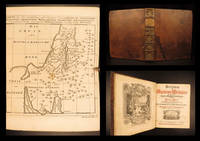
174550153<p>First edition printed in Halle in 1745 of Uebersetzung der Algemeinen Welthistorie die in Engeland durch eine Geselschaft von Gelehrten ausgefertiget worden edited by Siegmund Jacob Baumgarten and Johann Salomo Semler. The publication formed part of an eighteenth century historical project translating studies written by English scholars for the German academic world. Baumgarten directed the early editorial work while Semler continued the project within the environment of German Enlightenment scholarship. The present volume focuses on Biblical antiquity and historical geography of the eastern Mediterranean. Subjects include the Exodus the distribution of the Canaanites Moabites and Ammonites discussion of the Temple of Baalbek examination of the ruins of Palmyra and Tadmor antiquities of Sidon the route of the Israelites toward the Holy Land commentary concerning manna and the leadership of Moses. Ten engraved plates accompany the text. Very Good; leather binding tight and secure with mild staining to the boards corners with little wear text block complete and engravings clean. Quarto 4to single volume. Collation: 700 pp. Illustrations: 10 engraved plates. Edition: First edition Halle Verlag Joh. Justinus Gebauers 1745. Item Number SKU: #50153. PHOTOS AVAILABLE UPON REQUEST.</p> Joh. Justinus Gebauers hardcover
1725227524Uppsala: Werner 1725. Collation π1 A-C8; Pp. i title-ii verso blank 1-48. 1 vols. 16mo. Stitched. Ink signature at foot of title minor paper flaw in top margin of first two leaves three manuscript corrections in text else fine. Collation π1 A-C8; Pp. i title-ii verso blank 1-48. 1 vols. 16mo. Early work on the Norse voyages to Greenland Vinland Helluland Skraelingaland and discussion of the textual record of the exploration of North America.<br /> <br /> Celsius the uncle of Anders of the temperaturs scale fame was an early mentor of Carl Linneaus. Howes W15; Sabin 100960; Alden 725/208 Werner unknown
1725227524Uppsala: Werner 1725. Collation π1 A-C8; Pp. i title-ii verso blank 1-48. 1 vols. 16mo. Stitched. Ink signature at foot of title minor paper flaw in top margin of first two leaves three manuscript corrections in text else fine. Collation π1 A-C8; Pp. i title-ii verso blank 1-48. 1 vols. 16mo. The Norse and the Skraelings in America. Early work on the Norse voyages to Greenland Vinland Helluland Skraelingaland and discussion of the textual record of the exploration of North America.<br/><br/>Celsius the uncle of Anders of the temperaturs scale fame was an early mentor of Carl Linneaus. Howes W15; Sabin 100960; Alden 725/208 Werner unknown books
1760128439à La Haye, chez Pierre Gosse junior, Libraire de S. A. S. Monseigneur le Prince, M. DCC. LX., 1760 In-4 25 x 20 cm. Reliure de l’époque veau havane marbré, dos à nerfs encadrés, pièces de titre et de tomaison maroquin fauve, 2 ff. n. ch., IV-358-[8]-344-[6] pp., table à la fin de chaque volume, portrait en frontspice du baron par Stein gravé par Houbraken, complet des 4 tableaux repliés concernant l’Isle de France pour l’année 1759.
1774806F26London: Printed for the Author by J. March 1774 . First edition. Leather. Very Good. 8.5" by 5.5". Not Stated. An extra-illustrated first edition of this late eighteenth century study of a Kent market town in a smart calf binding and with a large number of engraved copper plate illustrations. The first edition of English antiquary and mayor Edward Jacob's illustrated study of the market town of Faversham Kent.Illustrated with five folding plates - including a folding map - and a further fourteen copper engraved plates. With four extra plates; 'The Gateway of Faversham Abbey' 'Faversham Abbey in Kent' 'King Stephen and his Queen Matilda' and 'The West front of the Nunnery and Church of Davington'. Collated complete.Jacob was an antiquary bibliophile scientist botanist and fossil collector who published a number of works and was the mayor of Faversham on four occasions between 1749 and 1775.ESTC reference no. T138691A fascinating work of late eighteenth century local history with a man closely associated with the area featuring chapters on local grammar schools markets historic ruins and the gun powder works. In a full calf binding. Boards clean with rubbing to back strip head and tail and small losses of leather to joints. Internally firmly bound. Pages clean and bright. Very Good Printed for the Author, by J. March hardcover