VERHEIDEN Jacob; HONDIUS Henrik:Livre Rare Book
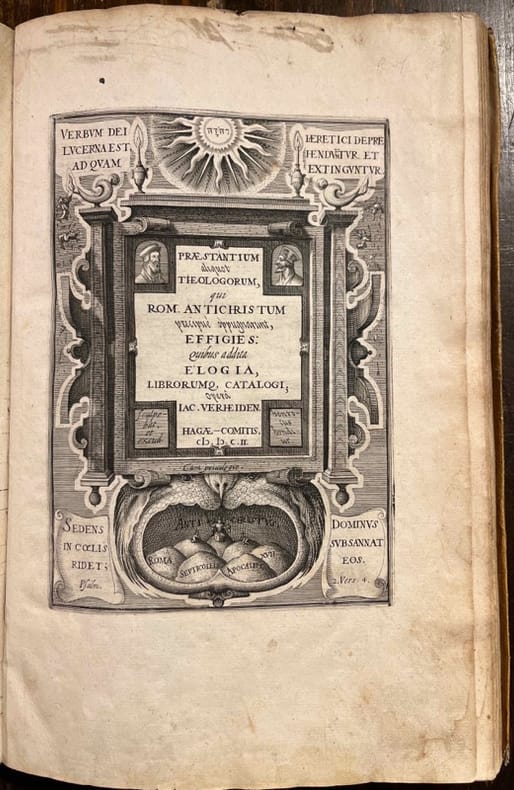
262 résultats
160216378Hagae Comitis [La Haye], Ex officina Bucoldi Cornelii Nieulandii, 1602. In-folio de [12]-226 pages [*6; A-Z4;Aa-Cc4; Dd6-Ee3], plein vélin à rabats, étiquette de titre manuscrite (en vélin), traces d'attaches. Ex-libris JFC, inscription ancienne au verso du titre.
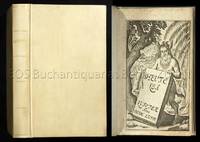
16583152DBLutetia (Ulm?), 1658. 8°. (3) Bl. (gedruckter Titel und Clavis), (5) Bl. (handschr. Clavis), (7) leere Bl., (2) Bl. (Vorrede), S. 1 - 234, S. 237 - 297, 1 leeres Bl., (S 235/36 in der Pagination übersprungen). Mit 1 gest. Titel. Neuer Pergamentband im Stile der Zeit.
1658383431658. Das ist: Beschreibung einer Reiss so zwee Exulanten durch Heuteliam gethan Eine Satyre auf Helvtien die Schweiz von anno dazumal schon damals geprägt durch Korruption und Vetternwirtschaft. Pagination fehlerhaft wie bei allen Ausgaben S.235 236 übersprungen. Kleine Fehlerstelle im Papier des Titelblattes. Handgeschriebenes Gloss auf den Nachsatzseiten. Alter Besitzerstempel u. Medaillons Haller V 1195. - Barth 2193 Kl.-8°. Pbd. Helvetica unknown
16583152DB1658. Lutetia Ulm 1658. 8°. 3 Bl. gedruckter Titel und Clavis 5 Bl. handschr. Clavis 7 leere Bl. 2 Bl. Vorrede S. 1 - 234 S. 237 - 297 1 leeres Bl. S 235/36 in der Pagination übersprungen. Mit 1 gest. Titel. Neuer Pergamentband im Stile der Zeit. Haller V 1195. Barth 2193. Faber du Faur 448. Jantz 2571. Vgl. Bächtold S. 473 und Feller/Bonjour SS 405. Einzige Ausgabe. Sehr seltene Satire über die Schweiz. «Im Jahre 1658 erschien eine Schrift Heutelia betitelt anagrammatisch gebildet aus "Helvetia" die Beschreibung einer Schweizerreise in welcher die staatlichen und gesellschaftlichen Zustände einzelner Kantone von schroff aristokratischem Standpunkt aus blossgelegt werden. Zur Sprache kommt die feile Justiz die Aemtersucht die Habgier und Bestechlichkeit der Landvögte. die geistige Trägheit und Versumpfung der Bürger die schlechte Jugenderziehung die unduldsame dogmensüchtige Geistlichkeit beider Konfessionen der Aberglaube die Hexenprozesse.» Bächtold «Ein pfälzischer Edelmann und ein württembergischer Rechtsgelehrter beide reformiert fliehen vor dem Dreissig-jährigen Krieg in die Schweiz und machen von Ort zu Ort ihre gepfefferten Glossen . Der Ton ist zügellos satirisch bisweilen zynisch namentlich wenn die Stellung der Frau gestreift wird. Lob und Tadel werden nach Orten verteilt. Zürich kommt gut weg . Gar von Bern entwerfen sie ein breites schonungsloses Sittengemälde das die Stadt in Aufruhr brachte . Ein Regierungsausschuss wurde eingesetzt das Büchlein zu unterdrücken umsonst. Es gehörte zu den boshaften Erzeugnissen über die man sich mit Vergnügen ärgert» Feller/Bonjour. Die im beliebten Stil der damaligen Sprachmengerei abgefassten Schrift auf zehn deutsche Worte kommt gewöhnlich ein lateinisches bietet mehr als andere Quellen Einblick in das eidgenössische Leben der Zeit. «Wer war der Verfasser Schon im 17. Jh. hielt man Jakob von Graviseth dafür der als bernischer Landvogt in Oron amtete . Heute neigt man dazu die Heutelia dem in Payerne geborenen Hans Franz Veiras zuzuschreiben einem Diplomaten in pfälzischen Diensten .». - Die ersten drei Blätter im Rand knapp beschnitten. Durchgehend leicht stockfleckig. unknown
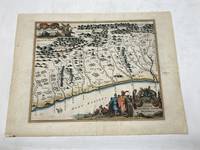
1672100390Amsterdam: Jacob van Meurs 1672. Map. Very Good. Copper engraved hand-colored map of the coastline of the Black Sea covering the region up to the Caucasus Mountains. Map: 11.5 in. x 13.75 in. Paper: 14 in. x 18 in. Brightly colored title cartouche in bollom right corner highlights the trade from the Black Sea/Georgian region to Western Europe. Second colored cartouche in upper left corner. Scale to upper left corner. Map highlights the map that was legendarily built by Alexander the Great that spanned the Caucasus Mountains sealing the uncivilized north Gog and Magog from the civilized southern region. Cities rivers mountains and forests are artistically presented <br /> <br /> Central vertical fold as originally presented. Light age-toning along edges with a couple spots and short tideline to paper's bottom left corner. Small handwritten word "Melpone" on right hand margin of paper. <br /> <br /> This map was published in "Asia Of Naukeurige Beschryving Van Het Rijk des Grooten Mogols." by Olfert Dapper Amsterdam: Jacob van Meurs 1672. Jacob Van Meurs 1619-1680 was a prominent Dutch engraver and map publisher. Jacob van Meurs unknown
16222666Middelburg: Jan van der Hellen for Jan Pieterss. van de Venne 1622. 4to 233 x 176 mm. 16 60 19 1 blank pp. Large emblematic publisher's mark on title-page four half-page engraved illustrations by Pieter de Jode 2 Pieter Serwouters and Willem van der Passe after Adriaen van der Venne. Woodcut head- and tail-pieces and initials. Short marginal tear to title light dampstaining to first and last leaves. Later parchment over pasteboards ms. spine title. Provenance: Samuel Ashton Thompson Yates 1842-1903 bookplate dated 1894.  First Edition of Cats' retelling of the Biblical tale of Queen Vasthi the wife of Ahasuerus who refused her husband's summons to appear before his guests wearing the royal crown and presumably nothing else and who was duly punished. The first part of Cats' word-playing verse adaptation whose title may be translated as The Theater of Manly Respectability is a long speech in the Queen's defense and in defense of all women followed by a speech against her and in favor of "Manly Respectability." The work concludes with the Judgment which is that Vasthi should obey her husband because women's subservience to men is a law of nature. A final poem titled "Aller Princessen Spiegel aller Vrovwen Spoor" is illustrated with an engraving showing the humbled queen wearing a yoke around her neck. The parallels and differences between the Biblical Ahasuerus and Herodotus' tale of King Candaules supplied in Latin and Dutch translations in an appendix whose wife's rebellion was more successful are fully exploited by Cats and by the illustrator Cats' usual partner the painter and engraver Adriaen van de Venne whose brother Jan published the edition.Van de Venne's engravings notably the scene of Candaules' naked wife being surprised by Gyges served as models for a number of Dutch painters. The Van de Venne brothers played a central role in the dissemination of Cats' poetry and it is their joint production that makes the works come alive: "The complete works of Cats together with Van de Venne's illustrations formed a sort of housebook of the Dutch people which remained popular for two centuries." Bol p. 117.Following the privilege on the title verso is a letter from the publisher to all bailiffs officials and readers "Noodige Waersschouwinge." complaining of the many counterfeit editions of an earlier Cats work the 1620 Self-stryt and explaining how to tell them apart. A second edition without the Noodige Waersschouwinge appeared later in 1622 and several further editions followed. De Jonge van Ellemeet Museum Catsianum 97; Bol Adriaen Pietersz. Van de Venne 1989 p. 118. Jan van der Hellen for Jan Pieterss. van de Venne unknown books
16222666Middelburg: Jan van der Hellen for Jan Pieterss. van de Venne 1622. <p>4to 233 x 176 mm. 16 60 19 1 blank pp. Large emblematic publisher’s mark on title-page four half-page engraved illustrations by Pieter de Jode 2 Pieter Serwouters and Willem van der Passe after Adriaen van der Venne. Woodcut head- and tail-pieces and initials. Short marginal tear to title light dampstaining to first and last leaves. Later parchment over pasteboards ms. spine title. Provenance: Samuel Ashton Thompson Yates 1842-1903 bookplate dated 1894.  <br /> <br /> First Edition of Cats’ retelling of the Biblical tale of Queen Vasthi the first wife of the Persian king Ahasuerus who refused her husband’s summons to appear before his guests wearing the royal crown to display her beauty in the Jewish tradition of the Midrash she was ordered to wear nothing else which would better explain her refusal. For this she was punished with exile and the King went on to marry another strong-willed woman Esther. The tale was especially familiar to 17th-century Dutch audiences for whom Esther had come to symbolize Netherlandish resistance to Spain.  <br /> <br /> The first part of Cats’ word-playing verse adaptation whose title may be translated as The Theater of Manly Respectability is a long speech in the Queen’s defense and in defense of all women followed by a speech against her and in favor of “Manly Respectability.†The work concludes with the Judgment which is that Vasthi should obey her husband because women’s subservience to men is a law of nature. A final poem titled “Aller Princessen Spiegel aller Vrovwen Spoor†is illustrated with an engraving showing the humbled queen wearing a yoke around her neck. The parallels and differences between the Biblical Ahasuerus and Herodotus’ tale of King Candaules supplied in Latin and Dutch translations in an appendix whose wife’s rebellion was more successful are fully exploited by Cats and by the illustrator Cats’ usual partner the painter and engraver Adriaen van de Venne whose brother Jan published the edition.<br /> <br /> Van de Venne’s engravings notably the scene of Candaules’ naked wife being surprised by Gyges served as models for a number of Dutch painters. The Van de Venne brothers played a central role in the dissemination of Cats’ poetry and it is their joint production that makes the works come alive: “The complete works of Cats together with Van de Venne’s illustrations formed a sort of housebook of the Dutch people which remained popular for two centuries.†Bol p. 117.<br /> <br /> Following the privilege on the title verso is a letter from the publisher to all bailiffs officials and readers â€Noodige Waersschouwinge.†complaining of the many counterfeit editions of an earlier Cats work the 1620 Self-stryt and explaining how to tell them apart. A second edition without the Noodige Waersschouwinge appeared later in 1622 and several further editions followed. <br /> <br /> De Jonge van Ellemeet Museum Catsianum 97; Bol Adriaen Pietersz. Van de Venne 1989 p. 118.</p> Jan van der Hellen for Jan Pieterss. van de Venne unknown
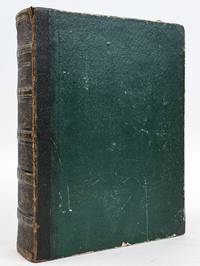
16561408574Amsterdam: Ian Iacobsz Schipper Jan Jacobsz. Schipper 1656. Early Printing. Hardcover. Quarto 8 154 165-200; 8 207; 5 124; 2 46; 6 154 4 pages including an engraved title page three engraved human anatomical plates and many in-text illustrations. In Good minus condition. Quarter-bound in black leather with green paper boards. Paneled spine with gilt titling. Boards have light cracking to joints moderate chipping to edges bumping to corners and scuff marks and wear throughout. Textblock has patterned end papers has started to separate from the spine along the front hinge the front free end paper is partially detached from spine archival repairs to some pages from the engraved title page to page 8 impacting text light age toning and wear to edges light soiling scattered throughout. Missing pages 155-164. Text in Dutch. Shelved in Room A. This volume contains several works all published in 1656 by Jan Jacobsz. Schipper. Titles include:<br /> <br> <br /> <br> <br /> “SCHAT DER GESONTHEYDTâ€--“SCHAT DER ONGESONTHEYDTâ€--“BERGH-VALâ€--“INLEYDINGE TOT DE HOLLANDTSCHE GENEES-MIDDELENâ€-- “STEEN-STUCKâ€--“HEEL-KONSTEâ€-- “VERVOLGH VAN DE HEEL-KONSTEâ€.<br /> <br> <br /> <br> <br /> Johan van Beverwyck 1594-1647 was a prominent Dutch physician and author who played a key role in popularizing medical knowledge during the Dutch Golden Age. Based in Dordrecht he was one of the first doctors to write medical treatises in the Dutch vernacular rather than Latin making health advice accessible to the general public. His most famous work Schat der Gesontheyt Treasure of Health combined practical medical guidance with moral philosophy and citations from classical literature. 1408574. Special Collections. Ian Iacobsz Schipper [Jan Jacobsz. Schipper] hardcover
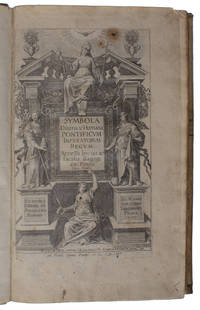
1666JC14675Arnheim: Johann Fridericus Hagius 1666. Hardcover. Very Good. 12mo 135 x 70mm. Pagination: 1 398pp. 26 index. Signatures: 1; A-R12; S7 of 8 lacking final blank one leaf of index unopened. Full-page engraved architectural frontispiece of sacred muses holding holy attributes and 176 plates with 350 devices engravings by Aegidus Sadeler of Prague 1568-1629 laid out in ovals and medallions. 19th-century morocco with gilt monogram cipher of interlocking Cs as cornerpieces and to spine marbled endpapers all edges gilt; rubbing to extremities especially the head of the spine otherwise a good copy with rich impressions. Early monogram bookplate and another later of Bibliotheque I.G. Schorsch on front pastedown. A monogram and motto Nunc nox mox lux are stamped in green on the flyleaf. Another stamp to lower margin of title with French surname Bourcier. <br/><br/>Later Arnheim edition of Jacobus Typotiuss influential collection of emblems detailing parts of sacred ritual in the Latin West church. Typotiuss Symbola Divina et Humana was first published in Prague in three volumes from 1601 to 1603. An extant manuscript of the Symbola Divina et Humana dates to about 1590 and it is known that several copies were made and circulated through the court of Prague. Typotius a Flemish humanist scholar was court historian to Emperor Rudolf II. While his name takes precedence on the title page Typotius was possibly just one of four men responsible for this work. The designs were compiled by Ottavio Strada antiquarian to Emperor Rudolf III and were reproduced by the engraver Aegidius Sadeler. Typotius wrote the Latin commentaries on the impresa except in the fourth book which was the work of Anselm Boethius de Boodt physician to the same emperor. The imprese in Typotiuss work covers a vast array of subjects including the Santa Eucharista Holy Eucharist the Santa Crucis Holy Cross popes kings emperors and rulers of various nations princes clergy and cardinals. Some notable figures represented in imprese include French kings Philip I and Louis VII Henry VIII of England and his queens Anne Boleyn and Anne of Cleves James VI of Scotland Philip II of Spain and unsurprisingly Rudolf II of Bohemia. The work was highly popular in its time and was frequently reprinted in both Germany and in the Netherlands. Praz p. 518; Landwehr 799; Cicognara 1964. Johann Fridericus Hagius hardcover
1666JC14675Arnheim: Johann Fridericus Hagius 1666. Hardcover. Very Good. 12mo 135 x 70mm. Pagination: 1 398pp. 26 index. Signatures: 1; A-R12; S7 of 8 lacking final blank one leaf of index unopened. Full-page engraved architectural frontispiece of sacred muses holding holy attributes and 176 plates with 350 devices engravings by Aegidus Sadeler of Prague 1568-1629 laid out in ovals and medallions. 19th-century morocco with gilt monogram cipher of interlocking Cs as cornerpieces and to spine marbled endpapers all edges gilt; rubbing to extremities especially the head of the spine otherwise a good copy with rich impressions. Early monogram bookplate and another later of Bibliotheque I.G. Schorsch on front pastedown. A monogram and motto Nunc nox mox lux are stamped in green on the flyleaf. Another stamp to lower margin of title with French surname Bourcier. <br/><br/>Later Arnheim edition of Jacobus Typotiuss influential collection of emblems detailing parts of sacred ritual in the Latin West church. Typotiuss Symbola Divina et Humana was first published in Prague in three volumes from 1601 to 1603. An extant manuscript of the Symbola Divina et Humana dates to about 1590 and it is known that several copies were made and circulated through the court of Prague. Typotius a Flemish humanist scholar was court historian to Emperor Rudolf II. While his name takes precedence on the title page Typotius was possibly just one of four men responsible for this work. The designs were compiled by Ottavio Strada antiquarian to Emperor Rudolf III and were reproduced by the engraver Aegidius Sadeler. Typotius wrote the Latin commentaries on the impresa except in the fourth book which was the work of Anselm Boethius de Boodt physician to the same emperor. The imprese in Typotiuss work covers a vast array of subjects including the Santa Eucharista Holy Eucharist the Santa Crucis Holy Cross popes kings emperors and rulers of various nations princes clergy and cardinals. Some notable figures represented in imprese include French kings Philip I and Louis VII Henry VIII of England and his queens Anne Boleyn and Anne of Cleves James VI of Scotland Philip II of Spain and unsurprisingly Rudolf II of Bohemia. The work was highly popular in its time and was frequently reprinted in both Germany and in the Netherlands. Praz p. 518; Landwehr 799; Cicognara 1964. Johann Fridericus Hagius hardcover books
165260208Frankfurt, G. Schönwetter, 1652. Folio (335 x 203 mm). Three volumes bound in one contemporary full vellum bindings with title in contemporary hand to spine. Binding with some miscolouring and a bit of wear. Title-page with a few dots and light soiling, otherwise a fine and clean copy. 141, (7), (4), 183, (7), 176, (3) pp. 151 engraved plates included in the pagination. Pp. 171-172 in vol. 2 copied in contemporary hand.
165260208Frankfurt G. Schönwetter 1652. Folio 335 x 203 mm. Three volumes bound in one contemporary full vellum bindings with title in contemporary hand to spine. Binding with some miscolouring and a bit of wear. Title-page with a few dots and light soiling otherwise a fine and clean copy. 141 7 4 183 7 176 3 pp. 151 engraved plates included in the pagination. Pp. 171-172 in vol. 2 copied in contemporary hand. <br/><br/><em>Later edition of Typot’s famous and beautifully illustrated work on emblems. The designs of the emblems were compiled by Ottavio Strada antiquarian to Emperor Rudolf III and were reproduced by the engraver Aegidius Sadeler - Typot wrote the Latin commentaries. The extensive work covers a broad array of subjects such as popes emperors kings and The Santa Eucharista. </em> hardcover
169896BzStrasbourg Stadel 1698 [ALSACE- STRASBOURG. Chronique 1386, 1698] TWINGER, Jacob (dit de Konigshofen) & SCHILTER, Johann]. Die Alteste Teutsche so wol Allgemeine Als insonderheit Elsassische und Straßburgische Chronicke/ Von Jacob von Königshoven/Priestern in Straßburg/ Von Anfang der Welt biß ins Jahr nach Christi Geburth M CCC LXXXVI. beschrieben. Anjetzo zum ersten mal heraus und mit Historischen Anmerckungen in Truck gegeben von D. Johann Schilter [suivi de] Origines Civitatis Friburgi in Brisgovia. Chronicke der Stadt Freyburg in Brisgaw ; ex Ms. Archivi Reip. Argentor. Strasburg, J. Städel, 1698. Petit in-4 de (50) ff. y compris. le titre front. , 1172 pp. (72) ff., (1) f. de titre, 52 pp., (1) f. - 8 pages manuscrites insérées dans la préface de Johann Schilter ,avant la chronique elle mème, datant de l'époque d'édition , écrites en Allemand et remplaçant le texte imprimé - 6 planches dépliantes hors textes dont un plan de Strasbourg- Reliure d'époque en vélin ivoire, dos lisse avec titre a l'encre - trous de ver jusqu'à la page 37 , des pages 275 à 301 et des pages 311 à 322 en bordure du texte . Certains feuillets uniformément brunis . Une déchirure importante sans manque sur une planche dépliante.Mors inférieur trés légèrement fendu sur 2 cm. Edition originale tirée du manuscrit de Jacob Twinger Von Königshoven (1346-1420), elle est ornée d'un beau titre frontispice gravé et de 6 planches hors texte certaines dépliantes signées par J. A. Seüpel. Les exemplaires complets doivent avoir 8 planches dont 2 plans de Strasbourg . "Jacob Twinger dit de Koenigshofen, est né en 1346 à Königshoffen dans une famille modeste. Ordonné prêtre en 1382, il devient curé de Drusenheim puis chanoine de Saint Thomas à Strasbourg, charge qu'il garde jusqu'à sa mort en 1420. Il travaille pendant 38 ans à la rédaction d'une chronique latine qu'il écrit aussi en langue vulgaire (en allemand), ce qui n'est pas une nouveauté à Strasbourg.( 4 pages sont en Français , il s'agit de l' accord entre Strasbourg et la France de 1681) Cette histoire est composée de six chapitres. Adressée à des laïcs, elle affiche le triple souci d'instruire, d'édifier et de divertir. L'enjeu n'est pas seulement de permettre aux lecteurs laïcs de se situer dans le temps ; Königshofen écrit aussi une véritable chronique universelle : le cinquième chapitre est celui de l'histoire de Strasbourg." (Olivier Richard, "Histoire de Strasbourg, histoire pour Strasbourg, Revue d'Alsace").La chronique a été analysé et augmenté par Johann Schilter , il y a également un supplément concernant la ville de Freiburg. Bon exemplaire malgré les défauts annoncés.
169896BzStrasbourg Stadel 1698 [ALSACE- STRASBOURG. Chronique 1386, 1698] TWINGER, Jacob (dit de Konigshofen) & SCHILTER, Johann]. Die Alteste Teutsche so wol Allgemeine Als insonderheit Elsassische und Straßburgische Chronicke/ Von Jacob von Königshoven/Priestern in Straßburg/ Von Anfang der Welt biß ins Jahr nach Christi Geburth M CCC LXXXVI. beschrieben. Anjetzo zum ersten mal heraus und mit Historischen Anmerckungen in Truck gegeben von D. Johann Schilter [suivi de] Origines Civitatis Friburgi in Brisgovia. Chronicke der Stadt Freyburg in Brisgaw ; ex Ms. Archivi Reip. Argentor. Strasburg, J. Städel, 1698. Petit in-4 de (50) ff. y compris. le titre front. , 1172 pp. (72) ff., (1) f. de titre, 52 pp., (1) f. - 8 pages manuscrites insérées dans la préface de Johann Schilter ,avant la chronique elle mème, datant de l'époque d'édition , écrites en Allemand et remplaçant le texte imprimé - 6 planches dépliantes hors textes dont un plan de Strasbourg- Reliure d'époque en vélin ivoire, dos lisse avec titre a l'encre - trous de ver jusqu'à la page 37 , des pages 275 à 301 et des pages 311 à 322 en bordure du texte . Certains feuillets uniformément brunis . Une déchirure importante sans manque sur une planche dépliante.Mors inférieur trés légèrement fendu sur 2 cm. Edition originale tirée du manuscrit de Jacob Twinger Von Königshoven (1346-1420), elle est ornée d'un beau titre frontispice gravé et de 6 planches hors texte certaines dépliantes signées par J. A. Seüpel. Les exemplaires complets doivent avoir 8 planches dont 2 plans de Strasbourg . "Jacob Twinger dit de Koenigshofen, est né en 1346 à Königshoffen dans une famille modeste. Ordonné prêtre en 1382, il devient curé de Drusenheim puis chanoine de Saint Thomas à Strasbourg, charge qu'il garde jusqu'à sa mort en 1420. Il travaille pendant 38 ans à la rédaction d'une chronique latine qu'il écrit aussi en langue vulgaire (en allemand), ce qui n'est pas une nouveauté à Strasbourg.( 4 pages sont en Français , il s'agit de l' accord entre Strasbourg et la France de 1681) Cette histoire est composée de six chapitres. Adressée à des laïcs, elle affiche le triple souci d'instruire, d'édifier et de divertir. L'enjeu n'est pas seulement de permettre aux lecteurs laïcs de se situer dans le temps ; Königshofen écrit aussi une véritable chronique universelle : le cinquième chapitre est celui de l'histoire de Strasbourg." (Olivier Richard, "Histoire de Strasbourg, histoire pour Strasbourg, Revue d'Alsace").La chronique a été analysé et augmenté par Johann Schilter , il y a également un supplément concernant la ville de Freiburg. Bon exemplaire malgré les défauts annoncés.
1621R119850Köthen, Cothenis Anhaltinorum 1621 [8] + 843 pp., printer's device of ornamental fleur-de-lis on title page, head pieces, 25x19cm., Text of the New Testament in old Syriac (Peshitta version) with parallel text of Latin translation by Tremellius at the foot of the page as well as a select list of various readings prepared by Martin Trost, The Syriac text is printed in large type, pagination and register read front to back, contemporary full vellum binding (intact except for a minor defect at spine, somewhat soiled), text is clean and bright except for few minor occasional foxing and stains, good condition, cfr. OCLC 247662296, weight: 1.5 kg., R119850
165149274Leipzig and Jena: P. Fuhrmann and G. Sengenwald 1651. Early edition. Hardcover. Very Good-. 12mo: 4 455 1 blank 80: indices Latin Greek German and errata. Contempory vellum over boards with exposed thongs. Several old entries at endleaves and title. Covers lightly soiled; lightly embrowned else a very good clean copy.<br /> <br /> First edition of this popular work on the Latin particles to be edited by the academic philosopher and jurist Jacob Thomasius 1622-1684 who has supplied copious annotations. Thomasius was the father of the important early Enlightenment thinker Christian Thomasius and taught rhetoric and moral philosophy at the University of Leipzig where Gottfried Wilhelm Leibniz was among his students. Orazio Torsellino Horatius Tursellinus; 1545-1609 was a Roman-born Jesuit scholar whose works especially on Latin grammar were very influential. First published at Rome by A. Zanetti in 1598 revised editions appeared well into the nineteenth century; the present edition was also published at Antwerp by Arnold Brakel in the same year.<br /> <br /> Annotations: The first entry inscribed on the title page "Ex libris Christophorii Friedelii. 1662." Among the inscriptions which appear at the endleaves is an evocative bit of verse: Se cupis o lector librum quis posfidet istum / Infra fluse oculos perlege nomen ad est If you wish O reader who trusts in this book read the name of it inwardly with flowing eyes. References: Cf. De Backer and Sommervogel 8:146.10 not listing the present edition. Cf. Vancil Cordell Collection p.237 eds. 1625; 1636. <br /> <br /> Full title and imprint: De particulis Latinae orationis Horatii Tursellini Romani libellus utilissimus. Nova editio superioribus longè emendatior locupletiórque adornate M. Jacobo Thomasio Lipsiensi Scholae Sent. Conrect. . Impensis Philippi Fuhrmanni Bibliopol. Lipsisnsis. Jenae Literis Georgii Sengenwald. Anno M.DC.LI. P. Fuhrmann and G. Sengenwald hardcover
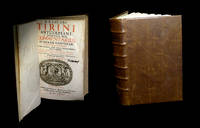
167821788Lugduni [Lyon], sumpt. Joannis Girin & Bartholom. Rivière, 1678. 2 tomes reliés en un fort vol. au format in-folio (377 x 238 mm) de 6 ff. n.fol. et 432 pp. ; 2 ff. n.fol. et 308 pp., 245 pp. d'Index in fine. Reliure pastiche (XXème) de pleine basane brune, plats jansénistes, dos à nerfs orné de filets à froid, titre doré, tranches mouchetées.
1678217881678. Lugduni Lyon sumpt. Joannis Girin & Bartholom. RiviÂre 1678. 2 tomes reliÂŽs en un fort vol. au format in-folio 377 x 238 mm de 6 ff. n.fol. et 432 pp. ; 2 ff. n.fol. et 308 pp. 245 pp. d'Index in fine. Reliure pastiche XXÂme de pleine basane brune plats jansÂŽnistes dos ˆ nerfs ornÂŽ de filets ˆ froid titre dorÂŽ tranches mouchetÂŽes. Ensemble complet des deux tomes le constituant ; ici reliÂŽs en un fort volume. ''EntrÂŽ au noviciat de la Compagnie de JÂŽsus ˆ l'‰ge de vingt ans Jacques Tirin fut ordonnÂŽ prÂtre en 1614. Professeur d'ƒcriture sainte il participa en 1615 ˆ la septiÂme CongrÂŽgation gÂŽnÂŽrale de la Compagnie de JÂŽsus ˆ Rome. Ë son retour en 1616 Tirin devint le premier supÂŽrieur de la maison professe d'Anvers. Il y meurt le 14 juillet 1636. Le pÂre Tirin est passÂŽ ˆ la postÂŽritÂŽ gr‰ce ˆ son commentaire biblique le Commentarius in Vetus et Novum Testamentum''. De Bure Bibliographie instructive ou de la connaissance des livres rares et singuliers 121 pour la Biblia Maxima du mÂme auteur - Brunet VI Manuel du libraire et de l'amateur de livres 413. LÂŽgers frottements affectant la reliure. Feuillets lÂŽgÂrement oxydÂŽs. Cerne claire en marge de l'ensemble des feuillets. Du reste bonne condition. b42961 unknown
162870012by Jan Maes | Loven (Louvain) 1628 | 15.50 x 10.50 cm | broché sous étui
162870012Loven Louvain Louvain Louvain: by Jan Maes 1628. Fine. by Jan Maes Loven Louvain Louvain Louvain 1628 15.50 x 10.50 cm broché sous étui First illustrated edition with 20 woodcuts by Christoffel van Sichem decorated with initial letters and tailpieces printed in Gothic type. Our copy is presented in original wrappers within a contemporary half morocco slipcase with raised bands in old rose gilt date at foot vellum-style paper boards. Jacob Stratius Antwerp 1559-Leuven 1634 was rector of the Jesuit college of Leuven notably writing compilation works .Wars of Flanders. This work by Thomas A Kempis is also a compilation and edition by Jean Stratius. by Jan Maes hardcover
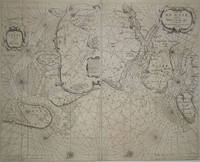
166215961Amsterdam: Jacques & Gasper Anthoine 1662. Other. A strong impression in overall good to very good condition however there are two older very carefully mended tears or thin places in the paper of the Maase map in the blank sea between right of the lower centerfold and the compass-rose. 432 by 540mm 17 by 21¼ inches. 432 by 540mm 17 by 21¼ inches. Two sea-charts on one doublepage. The left one is showing Medenblick Texel and Wieringen. Additional there is a small inset of Medenblick and Enckhuysen. On the other map the area of the river Maase with Rotterdam Scheidam towards West Voeren is detailled shown. Both maps are ornated with title-cartouches and compass-roses. As well we find a milage scales to convert Dutch English & French leagues to degrees. The maps are very accurately engraved towns harbour-places sandbanks depths are marked. Koeman Jac. 14 and a variant of Jac 33 #36 Jacques & Gasper Anthoine unknown
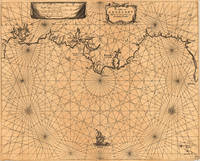
166219199Amsterdam: Jacques & Gasper Anthoine 1662. Other. In excellent condition. 423 by 525mm 16¾ by 20¾ inches. 423 by 525mm 16¾ by 20¾ inches. Copper-engraving uncolored when published. Detailed sea chart of the area Bordeaux - Bayonne - San Sebastian in South West France and the neighbouring Galicia. Ornated with a large decorative title cartouche in the upper right corner as well compass roses and a sailing ship. The map is pretty accurate and provides information along the coast with place names anchor places sand banks and depths in the sea. Jacques & Gasper Anthoine unknown
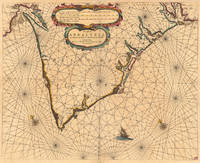
166215983Amsterdam: Jacques & Gasper Anthoine 1662. Other. A strong impression in good to very good condition. As published on the full sheet. There are very skillfully mended splits along the centerfold and two printers creases at the right and left side with as well mended minor splits. 425 by 528mm 16¾ by 20¾ inches. 425 by 528mm 16¾ by 20¾ inches. Detailled handcoloured sea-chart showing the Portugese coastline from Setubal S. Vves along the Algarve towards Palos in the South. Villa Nova Faro Tavilla and Aimonte are prominently displayed. Ornated with a large decorative handcoloured title cartouche in the upper center above there is a large milage scale to convert Dutch Spanish English & French leagues to degrees. Further on the chart is ornated with two compass roses and a ship. Koeman Jac. 14 and a variant of Jac 33 #58 Jacques & Gasper Anthoine unknown
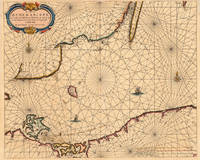
166215951Amsterdam: Jacques & Gasper Anthoine 1662. Other. A decorative handcoloured map in a strong impression and excellent condition. 432 by 533mm 17 by 21 inches. 432 by 533mm 17 by 21 inches. Detailled seachart of a part of the Baltic Sea with the Southern Swedish coast from Schoenen towards Calmer with the island of Oeland. As well the islands Meun Bornholm Rügen and the Southern tip of Gothland are shown. Below is the Pommeranian coastline from Stralsund towards Rygshooft showing prominent the island of Rügen. The map is equipped with many details names of towns and villages along the coastlines anchor places islands and sandbanks with marked depths. The map is ornated in the upper left corner with a large title-cartouche one compass-rose and a ship. In the lower right corner we find a milage scale to convert Dutch Spanish English & French leagues to degrees. Koeman Jac. 14 and a variant of Jac 33 #26 Jacques & Gasper Anthoine unknown
166215969Amsterdam: Jacques & Gasper Anthoine 1662. Other. A strong impression in very good condition. There is a minor marginal fraying of the paper on the lower margin of the mapsheet just beneath the lower engraved border line full margins as published. 431 by 538mm 17 by 21¼ inches. 431 by 538mm 17 by 21¼ inches. Fascinating detailed seachart of the south-eastern coast of England showing the coastline from Lizard Point over Plymouth Torquay Exeter towards Portland. In the very lower right corner the Kiscases and Barroches islands are marked. The map is ornated near the upper left corner with a large decorative cartouche containing a milage scale to convert Dutch Spanish English & French leagues to degrees right near it is the title-cartouche the map is as well decorated with a large ship and two compass-roses. Along the coastline several villages and towns are marked as well anchor places in the bays sandbanks are shown mostly with detailed information on the water-depths. Koeman Jac. 14 and a variant of Jac 33 #44 Jacques & Gasper Anthoine unknown