262 résultats
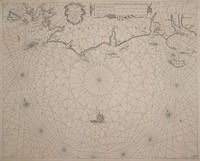
166219188Amsterdam: Jacques & Gasper Anthoine 1662. Other. A strong impression in very good condition. 424 by 530mm 16¾ by 20¾ inches. 424 by 530mm 16¾ by 20¾ inches. Copper-engraving uncolored when published. Detailed sea chart showing the coasts of the Bretagne from Brest towards Vannes with the Island Boelin. Ornated in the upper centre with a decorative title cartouche as well two compass roses and a sailing ship. The map is pretty accurate and provides information along the coast with place names anchor places sand banks and depths in the sea. Jacques & Gasper Anthoine unknown
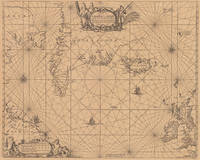
166215989Amsterdam: Jacques & Gasper Anthoine 1662. Other. A strong impression in excellent condition. 426 by 533mm 16¾ by 21 inches. Rare seachart by Jacobsz Theunis of the North Atlantic showing prominent Greenland Iceland and parts of the North American continent. The map is decorated with a large figurative title cartouche in the upper center as well with compass roses ships and an allegoric ornated decorative milage scale. Derived from the Goos 1650 this charts progenitor was actually by his father Theunis Jacobsz c. 1649. Centred on the North Atlantic it concentrated on providing information on the approaches to the North West Passage. Terra Nova is omiited as it was on the Goos. At first Jacob adopted his fathers name being known as Jacob Theunisz. Later with his brother Caspar in association they applied the noun Lootsman to their name to avoid confusion. In 1666 Jacob Lootsman published the first known edition of the Nieuwe Water-Werelt Ofte Zee-Atlas which also encluded this map. -Burden #372. Our copy of the map here can be dated c. 1662 it was bound with a collection of seacharts French text edition of his atlas Le Grand & Nouveau Miroir ou Flambeau De la Mer. by J. Theunis the engraved title was definitly dated 1662. Burden #372 2nd state of 4; Koeman IV pp. 223-4 & 231 Jac. 1.9 & Jac. 19B.25 Jacques & Gasper Anthoine unknown
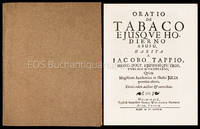
16896987CBTertio edita auctior & correctior. Helmestadii, Hammii, 1689. 4°. (20) Bl. Neuer Umschlag.
16896987CB1689. Tertio edita auctior & correctior. Helmestadii Hammii 1689. 4°. 20 Bl. Neuer Umschlag. Frühe medizinische Schrift über den Tabakkonsum. Papier leicht stock- und wasserfleckig. unknown
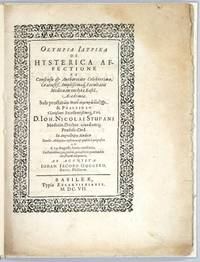
1607446571607. Basilaea: Typis Excertierianis 1607 Kl.4° 15 pp. Pappband. Olympia iatrika de hysterica affectione / . Sub . praesidio Ioh. Nicolai Stupani . publice proposita ad d. 24. Augusti . ab agonista Iohan. Iacobo Guggero Basil. Philiatro. Husner: Verzeichnis bas. med. Univ.Schriften Nr. 555 unknown
168543361Wittenberg: Christianus Schrödterus 1685. First edition. Hardcover. g to vg-. Large octavo. Unpaginated 11 leaves. Black library buckram over marbled off-white heavy cardstock boards. The book block approx. 5.5x7" is re-bound attached to the boards by white library tape. The scarce work is a philological study on the fifth verse of the sixth chapter of the Book of Samuel dealing with God's punishment upon the Philistines for taking the Ark of the Covenant. The work seems to have been a dissertation given before a large audience on September 9th 1685 at the University of Wittenberg and submitted for academic review by Johanne Nicolao Hardtschmidt. Text in Latin with selected terms and passages throughout in Hebrew. Boards with some light water stains at the bottom of the front cover. Interior with some minor sporadic water spots and minor rubbing and creasing to the extremities of some pages. Binding in good interior in very good- condition overall. Johann Jacob Stolterfoht 1665 Schleswig - 1715 Lubeck was a German theology scholar physician and professor at the University of Greifswald. Early in his academic career he studied Protestant theology at the University of Wittenberg under Abraham Calovius. He later decided to study medicine at the University of Greifswald where he later became a professor. Christianus Schrödterus hardcover
1610043260Geneva: Jacob Stoer 1610. First Edition. Hardcover Vellum. Good Condition. Contemporary vellum worn soiled with a few repairs but intact. some worming to endpapers and the first title but otherwise clean internally. Two separate titles the second dated 1611. Apparently lacking blanks otherwise complete. 78pp 2 372 ll; iv pp 270 ll. Size: Octavo 8vo. Previous owner's book-plate inside front cover. Quantity Available: 1. Shipped Weight: 1-2 kilos. Category: Language & Linguistics; Antiquarian & Rare. Inventory No: 043260. Jacob Stoer hardcover
1610043260Geneva: Jacob Stoer 1610. First Edition. Hardcover Vellum. Good Condition. Contemporary vellum worn soiled with a few repairs but intact. some worming to endpapers and the first title but otherwise clean internally. Two separate titles the second dated 1611. Apparently lacking blanks otherwise complete. 78pp 2 372 ll; iv pp 270 ll. Size: Octavo 8vo. Previous owner's book-plate inside front cover. Quantity Available: 1. Shipped Weight: 1-2 kilos. Category: Language & Linguistics; Antiquarian & Rare. Inventory No: 043260. <br/><br/> Jacob Stoer hardcover books
1699451131699. Halae Magdeb. Litteris Christ. Henckelii 1699 Kl.4° 20 8 pp. orig. Broschur. unknown
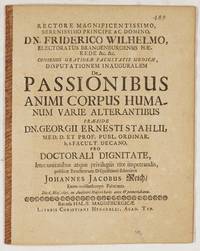
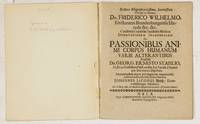
1695419751695. Halae Magdeb. Literis Christiani Henckelii 1695 Kl.4° 16 6 pp. orig. Broschur. Erste Ausgabe zweiter Abdruck! Die hier vorliegenden "Disputatio de passionibus animi" "Über den mannigfaltigen Einfluß von Gemütsbewegungen auf den menschlichen Körper" zeigt daß es Stahl schon zum Beginn seines Wirkens in Halle seit 1694 also um das Problem der psychophysischen Wechselwirkung gegangen ist. Er hat seine Bedeutung seine Auswirkung in der Praxis beobachtet. Man findet hier die Grundlagen der medizinischen Psychologie. Es werden Beispiele für den Einfluß seelischer Erregungen auf den menschlichen Organismus angeführt. In der Einleitung wird hervor gehoben: "So leiten sich von den Leidenschaften des Gemütes in ihrer vielfältigen Bestimmung Leitung oder Änderungen der Bewegungen des menschlichen Körpers auch viele Krankheitsanzeichen her." Die Mehrschichtigkeit seelischer Alterationsstufen das Unverlierbare besonders tiefe Eindrücke wird in der Vorahnung späterer Erkenntnisse Freudausgesprochen: Zugegeben sei "daß der im Erbgang geprägte Prototyp der Leidenschaften und Neigungen des Gemüthes in gewohnheitsmäßiger Festigung nicht ganz umgekehrt werden kann" so vermag doch "die domminierendende Leidenschaft durch eine ihr entgegengesetzte Gewohnheit an die zweite oder gar dritte Stelle verdrängt werden wo sie zwar noch innerhalb der Ordnungen steht gleichwohl ihre Rangstufe wechselt." Es liegt dem in nuce die Idee von der Verdrängung zugrunde. Es wird schließlich empfohlen die psychologischen Beobachtungen bei der Behandlung der Patienten nützlich anzuwenden und zu verwerten indem man den Kranken "viele Ausbrüche des Erschreckens der Furcht des Zornes anhebender Ängstlichkeit durch guten Zuspruch und durch vertrauenserweckende Sicherheit" benimmt. So zieht die Arbeit die Folgerung: "Seelenleiden die von Verletzungen des Körpers herrühren sind oft mit schwerwiegenden und dauernden Folgen verbunden. Doch sie sind zu vertreiben mit der Heilung der Körperschäden." Die Lehre von den symptomatischen Psychosen wird im Ansatz vorweggenommen wenn auch die Terminologie auf einen noch neuen Begriffsterain vortastet. Es sind Gehversuche auf einem noch dunklem Gebiet in der ärztlichen Praxis. Man kann die "Disputatio" als eine frühe Arbeit bezeichnen die sich aus der Sicht des Arztes mit dem Problem psychisch verursachter Störungen von Krankheitsabläufen beschäftigt. Es handelt sich hierbei nicht um Geisteskrankheiten. Es geht vor allem um die körperlichen Einflüsse transitorischer Seelenzustände die man heute in der Lehre von den Neurosen und ihren verschiedenen Erscheinungsformen zusammenfassen würde. Die seit der Antike beknatte Verbindung zwischen Knostitution und Charakter wird auch nach der therapeutischen Seite hin erwogen und berücksichtigt. Es ist der Geist einer naturwissenschaftlichen Betrachtungsweise der sich durch diese Arbeit hindurchzieht. Es zeigt wie vorbeitreffend die Annahme war den STAHL'schen Animismus nur religiös zu interpretieren." "In dem an zweiter Stelle stehenden "Propempticon inaugurale" - es ist eine dem Doktoranden JOHANN JACOB REICH gewidmete Abschiedsrede STAHLS mit angeschlossener Vita REICHS - nimmt STAHL zu dem Thema "De synergeia naturae in medendo" Stellung. Man findet hier alle Merkmale des STAHLschen Systems und erkennt wie sehr der aus der Erfahrung schöpfende Psychologe den Vorrang gehabt hat. So wird eine tiefe Kenntnis des Eigenrhythmus biologischer Abläufe in dem Gedanken ausgesprochen: "Die Natur hat ihr eigenes Zeitmaß und verwendet dieses bei den rhythmischen Vorgängen des Lebens von längerer Zeitdauer so bei der Embryonalentwicklung bei der Geburt Zahnung Pubertät". Die Synergie der Organe unter der Direktion der Lebenskraft enthält im Krankheitsfalle das ärztliche Problem die nützlichen Bewegungen der Naturheilkraft von den eigentlichen Krankheitsbewegungen zu unterscheiden. Der Arzt muß vor allem die Bewegungen erkennen die auf einen nützlichen Zweck abzielen. Theoretische Fragen werden aus dieser Sicht kurzerhand beiseite geschoben und in der für STAHL typischen Art das Leib-Seele-Problem zu einem biologischen Postulat'gemacht : "Es handelt sich nicht um eine Annahme sondern wir beweisen a priori mit der Vernunft daß im Menschen von einer einzigen Seele alle diese Akte und Bewegungen vollzogen werden können. Erfahrung und Vernunft zeigen a posteriori daß diese Zusammenhänge zwischen Leib und Seele in der Tat vorliegen." In diesem Problem sieht STAHL den Inhalt seiner Lebensarbeit: "Darauf werfe ich mich mit ganzer Seele. Dem gilt meine ganze Arbeit. Weder Mühe noch Neid können mich dabei verdrießlich machen. Ich hoffe vielmehr mit dem Problem in würdiger Weise fertig zu werden. Möge die Medizin dann wieder auf ihr rechtes Fundament gestellt sein"!" Diese beiden Texte "vermitteln so ein interessantes Bild der ärztlichen Persönlichkeit STAHLS ihres Temperamentes und ihrer Suche nach den biologischen und psychologischen Gesetzen einer wirksamen Therapie. Er gibt sich mit der Vorstellung einer nur mechanistischen Arzneiwirkung nicht zufrieden. Er nennt die besondere "Chronometrie" biologischer Abläufe das Gesetz der Ganzheit den Begriff des allen Einzelerscheinungen übergeordneten Organismus den Einfluß seelischer Erregungen auf die Vitalbewegungen desselben. Die psychophysische Wechselwirkung wird dem Arzt als praktisch wichtiges Problem gestellt. Jedenfalls hat STAHL bereits im Jahre 1695 alle wesentlichen Gedanken seines medizinischen Systems dargelegt. Die Ansicht er habe erst durch CHRISTIAN WOLF gewichtige Anregungen erhalten ist nicht mehr haltbar. Bereits 12 Jahre vor dem Erscheinen seiner "Theoria medica vera" hat die Forschungsrichtung STAHLS ihr wesentliches Ziel gehabt. Wenn man die Geschichte der medizinischen Psychologie überdenkt so wird man GEORG ERNST STAHL auf Grund der Einsichten in die ärztliche Bedeutung des Psychischen wie schon KORNFELD mit Recht ausgeführt hat an den Anfang einer Erschließung dieses Fachgebietes stellen dürfen. Die Leitsätze am Schluß der "Disputatio" enthalten das historische Fundament dieser neuen erst in unserer Zeit zur Anerkennung gekommenen Wissenschaft." B.J. Gottlieb G.E.Stahl Sudhoffs Klassiker der Medizin pp.18-21 23-47 unknown
1695621831695. Halae : Typis Christophori Salfeldi 1695 Kl.4° 16 6 pp. marmor. Broschur; feines Expl. Sehr Selten - Erste Ausgabe! Die hier vorliegenden "Disputatio de passionibus animi" "Über den mannigfaltigen Einfluß von Gemütsbewegungen auf den menschlichen Körper" zeigt daß es Stahl schon zum Beginn seines Wirkens in Halle seit 1694 also um das Problem der psychophysischen Wechselwirkung gegangen ist. Er hat seine Bedeutung seine Auswirkung in der Praxis beobachtet. Man findet hier die Grundlagen der medizinischen Psychologie. Es werden Beispiele für den Einfluß seelischer Erregungen auf den menschlichen Organismus angeführt. In der Einleitung wird hervor gehoben: "So leiten sich von den Leidenschaften des Gemütes in ihrer vielfältigen Bestimmung Leitung oder Änderungen der Bewegungen des menschlichen Körpers auch viele Krankheitsanzeichen her." Die Mehrschichtigkeit seelischer Alterationsstufen das Unverlierbare besonders tiefe Eindrücke wird in der Vorahnung späterer Erkenntnisse Freudausgesprochen: Zugegeben sei "daß der im Erbgang geprägte Prototyp der Leidenschaften und Neigungen des Gemüthes in gewohnheitsmäßiger Festigung nicht ganz umgekehrt werden kann" so vermag doch "die domminierendende Leidenschaft durch eine ihr entgegengesetzte Gewohnheit an die zweite oder gar dritte Stelle verdrängt werden wo sie zwar noch innerhalb der Ordnungen steht gleichwohl ihre Rangstufe wechselt." Es liegt dem in nuce die Idee von der Verdrängung zugrunde. Es wird schließlich empfohlen die psychologischen Beobachtungen bei der Behandlung der Patienten nützlich anzuwenden und zu verwerten indem man den Kranken "viele Ausbrüche des Erschreckens der Furcht des Zornes anhebender Ängstlichkeit durch guten Zuspruch und durch vertrauenserweckende Sicherheit" benimmt. So zieht die Arbeit die Folgerung: "Seelenleiden die von Verletzungen des Körpers herrühren sind oft mit schwerwiegenden und dauernden Folgen verbunden. Doch sie sind zu vertreiben mit der Heilung der Körperschäden." Die Lehre von den symptomatischen Psychosen wird im Ansatz vorweggenommen wenn auch die Terminologie auf einen noch neuen Begriffsterain vortastet. Es sind Gehversuche auf einem noch dunklem Gebiet in der ärztlichen Praxis. Man kann die "Disputatio" als eine frühe Arbeit bezeichnen die sich aus der Sicht des Arztes mit dem Problem psychisch verursachter Störungen von Krankheitsabläufen beschäftigt. Es handelt sich hierbei nicht um Geisteskrankheiten. Es geht vor allem um die körperlichen Einflüsse transitorischer Seelenzustände die man heute in der Lehre von den Neurosen und ihren verschiedenen Erscheinungsformen zusammenfassen würde. Die seit der Antike beknatte Verbindung zwischen Knostitution und Charakter wird auch nach der therapeutischen Seite hin erwogen und berücksichtigt. Es ist der Geist einer naturwissenschaftlichen Betrachtungsweise der sich durch diese Arbeit hindurchzieht. Es zeigt wie vorbeitreffend die Annahme war den STAHL'schen Animismus nur religiös zu interpretieren." "In dem an zweiter Stelle stehenden "Propempticon inaugurale" - es ist eine dem Doktoranden JOHANN JACOB REICH gewidmete Abschiedsrede STAHLS mit angeschlossener Vita REICHS - nimmt STAHL zu dem Thema "De synergeia naturae in medendo" Stellung. Man findet hier alle Merkmale des STAHLschen Systems und erkennt wie sehr der aus der Erfahrung schöpfende Psychologe den Vorrang gehabt hat. So wird eine tiefe Kenntnis des Eigenrhythmus biologischer Abläufe in dem Gedanken ausgesprochen: "Die Natur hat ihr eigenes Zeitmaß und verwendet dieses bei den rhythmischen Vorgängen des Lebens von längerer Zeitdauer so bei der Embryonalentwicklung bei der Geburt Zahnung Pubertät". Die Synergie der Organe unter der Direktion der Lebenskraft enthält im Krankheitsfalle das ärztliche Problem die nützlichen Bewegungen der Naturheilkraft von den eigentlichen Krankheitsbewegungen zu unterscheiden. Der Arzt muß vor allem die Bewegungen erkennen die auf einen nützlichen Zweck abzielen. Theoretische Fragen werden aus dieser Sicht kurzerhand beiseite geschoben und in der für STAHL typischen Art das Leib-Seele-Problem zu einem biologischen Postulat'gemacht : "Es handelt sich nicht um eine Annahme sondern wir beweisen a priori mit der Vernunft daß im Menschen von einer einzigen Seele alle diese Akte und Bewegungen vollzogen werden können. Erfahrung und Vernunft zeigen a posteriori daß diese Zusammenhänge zwischen Leib und Seele in der Tat vorliegen." In diesem Problem sieht STAHL den Inhalt seiner Lebensarbeit: "Darauf werfe ich mich mit ganzer Seele. Dem gilt meine ganze Arbeit. Weder Mühe noch Neid können mich dabei verdrießlich machen. Ich hoffe vielmehr mit dem Problem in würdiger Weise fertig zu werden. Möge die Medizin dann wieder auf ihr rechtes Fundament gestellt sein"!" Diese beiden Texte "vermitteln so ein interessantes Bild der ärztlichen Persönlichkeit STAHLS ihres Temperamentes und ihrer Suche nach den biologischen und psychologischen Gesetzen einer wirksamen Therapie. Er gibt sich mit der Vorstellung einer nur mechanistischen Arzneiwirkung nicht zufrieden. Er nennt die besondere "Chronometrie" biologischer Abläufe das Gesetz der Ganzheit den Begriff des allen Einzelerscheinungen übergeordneten Organismus den Einfluß seelischer Erregungen auf die Vitalbewegungen desselben. Die psychophysische Wechselwirkung wird dem Arzt als praktisch wichtiges Problem gestellt. Jedenfalls hat STAHL bereits im Jahre 1695 alle wesentlichen Gedanken seines medizinischen Systems dargelegt. Die Ansicht er habe erst durch CHRISTIAN WOLF gewichtige Anregungen erhalten ist nicht mehr haltbar. Bereits 12 Jahre vor dem Erscheinen seiner "Theoria medica vera" hat die Forschungsrichtung STAHLS ihr wesentliches Ziel gehabt. Wenn man die Geschichte der medizinischen Psychologie überdenkt so wird man GEORG ERNST STAHL auf Grund der Einsichten in die ärztliche Bedeutung des Psychischen wie schon KORNFELD mit Recht ausgeführt hat an den Anfang einer Erschließung dieses Fachgebietes stellen dürfen. Die Leitsätze am Schluß der "Disputatio" enthalten das historische Fundament dieser neuen erst in unserer Zeit zur Anerkennung gekommenen Wissenschaft." B.J. Gottlieb G.E.Stahl Sudhoffs Klassiker der Medizin pp.18-21 23-47 unknown
168560617Utrecht, François Halma, 1685. 12mo. In contemporary full calf with four raised bands and richly gilt spine. Light wear to extremities, some of gilting to spine worn off. Lower left corner of the large folded cityscape of Geneva torn off but laid in, othewise internally fine. (22), 435, (9), 413-522, (17) pp + frontispiece, 2 fold-out Geneva cityscapes and 4 plates.
168560617Utrecht François Halma 1685. 12mo. In contemporary full calf with four raised bands and richly gilt spine. Light wear to extremities some of gilting to spine worn off. Lower left corner of the large folded cityscape of Geneva torn off but laid in othewise internally fine. 22 435 9 413-522 17 pp frontispiece 2 fold-out Geneva cityscapes and 4 plates. <br/><br/><em>Third edition revised and corrected of this extensive history of Geneva. </em> hardcover
16859392Utrecht: Francois Halma 1685. 8vo contemporary calf gilt and morocco spine label spine in six compartments with gilt bands 24 435 9 413-522 18 pp lacking frontispiece and illustration plates. A history of the city of Geneva Switzerland. Front cover detached covers worn toning to pages owner inscriptions to front endpaper name excised from title page. Francois Halma unknown
1687TK0098London:: Printed for Bernard White 1687. 1687. 4to. iv 250 6 pp. 5 plates including: engraved frontispiece "Old Geneva" p.9 City Stamps plate p. 107 folding engr. plate of the surrounding regions of Geneva city of Geneva p. 148. Ancient Inscriptions which are to be seen at Geneva p. 193; faint waterstain viewable on the outer margins rear. NOTE: A2 final leaf of Preface trimmed on the right margin replaced with similarly toned paper however with some minor loss of a few letters neatly repaired; some waterstaining. Modern half calf raised bands gilt-stamping red gilt-stamped spine label marbled boards. Ownership signature of the British politician Somerset Davies 1754-1817 of Croft Castle. Bookplate of Robert J. Hayhurst. Handsome copy. First edition in English. Jacob Spon was born into a Calvinist family of German origin in Lyon in 1647. He became a doctor and archeologist traveler and wrote respected studies of Greece. "After a period in Geneva he published Histoire de la ville et de l'Estat de Geneve 1680 a compilation of ancient chronicles of the city state". – Irini Apostolou "Jacob Spon" in: Christian-Muslim Relations 1500 - 1900 vol. 9 Western and Southern Europe 1600-1700 General Editors: David Thomas John Chesworth Brill 2017 pp. 406-412. / With the large folding plate of Geneva and the surrounding area showing Lac Leman / Lake Geneva and all the small municipalities that dot the region such as Eyvan = Evian Morges the mountainous terrain there are even a few cows shown in the plate. The city view of Geneva p. 148 shows the original wall at the city entrance. Spon was a numismatist thus his interest is shown p. 107 with a plate devoted to early coinage of the city. The frontispiece features a view of Geneva with Saint Pierre Cathedral as a focal point. That cathedral dates from 1150 and was founded in the 4th century. / With this text one learns of the origin of the name for the city of Geneva derived from the Latin word for the Juniper shrub which populated the hilly regions there. PROVENANCE: 1 Ownership signature of the British politician Somerset Davies 1754-1817 of Croft Castle; 2 Robert John Hayhurst 1929-2016 inherited and improved a successful group of retail pharmacies John Hayhurst & Son based in Nelson Lancashire. He was a keen collector of naval history and of eighteenth-century literature in contemporary bindings. Printed for Bernard White, 1687. hardcover
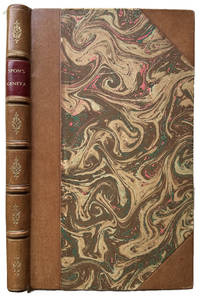
1678T5108<p><strong>Very rare first edition of 'one of the most important accounts of travels in the Levant and the first description of Athens which was systematic detailed and trustworthy' Blackmer. </strong></p><p>'Spon and Wheler met in Italy in 1675; they travelled together with Francis Vernon to Zakynthos where the two groups separated. Spon and Wheler continued by sea to Constantinople and Vernon travelled overland. The great merit of Spon's work is due to its combination of a careful and knowledgeable interest in classical antiquity with an accurate observation of men manners and topography in modern Greece. The whole of vol. II is devoted to Greece and includes a glossary of Modern Greek words and phrases with instruction on pronunciation. Spon's interest in Greece was longstanding. He had already published Babin's description of Athens which had been communicated to him by the Abbé Pecoil of Lyon with his own notes and preface' <em>ibid.</em>.</p><p>From Venice Spon and Wheler's itinerary took them along the Dalmatian coast and the Ionian islands. They set anchor at Zakynthos and later Cythera visited Delos and eventually reached Istanbul where they visited the French ambassador Charles-François Olier Marquis de Nointel who had already visited Athens and was able to give them valuable information about the city. They also visited Bursa and Thyateira in Asia Minor and stayed in Izmir for some time. On their return journey they crossed over to Patras from Zakynthos visited Delphi travelled to Athens and toured the region of Attica.</p><p>Jacob Spon 1647–1685 physician archaeologist and collector was the archetypal French 'curieux' like his father before him. He collected medals manuscripts and inscriptions with immense enthusiasm acquiring an entire coin hoard of seven hundred pieces found at Lyons. George Wheler 1652–1724 who published his own account of their travels in 1682 'was a man of many interests and practical skills. As a boy he had amused himself with woodwork constructing a birdcage and a small harpsichord and had taken an interest in plants; the latter he maintained in Oxford by frequent visits to the physic garden … On his travels he displayed keen curiosity and took the opportunity to collect plant specimens … He gave to his Oxford college more than thirty Greek manuscripts acquired mainly in Athens and Constantinople; they included a priceless illuminated typicon the foundation charter of a convent established in Constantinople about 1300. His plant specimens were given to the Oxford Physic Garden. Wheler occupies a significant position in the history of botany since he introduced to Britain some plants hitherto unknown including St John's wort' ODNB.</p><p><em>Provenance</em>: John Hay second Marquess of Tweeddale 1645–1713 MP and Lord Chancellor of Scotland in 1704-5 with his bookplates Franks 14192/566. The purchase note on the front flyleaf of vol. I 'payd for thes 3 volums 0–12–00' <em>i.e</em>. 12 shillings is probably his.</p><p><em>Physical description:</em><br />Three vols 12mo pp. I: xxiv 405 3 blank II: 417 13 2 blank III: 204 '226' <em>recte </em>228 with a copper-engraved frontispiece portrait in vol. I 30 plates many folding and two folding maps; paperflaws in outer margin of two leaves vol. I C10 and R6 no loss of text some occasional very pale marginal foxing but an excellent set; in contemporary British speckled calf double fillet frames ruled in blind on covers and in compartments of spines small blind-stamped floral tool in corners of covers board-edges ruled in gilt edges speckled red; lightly rubbed one corner bumped headcap of vol. I very slightly chipped.</p><p><em>References:</em><br />Weber 405. Blackmer 1586 records the second edition.</p> Antoine Cellier
168715216London:: for Bernard White 1687. First edition in English. contemporary calf. Joints starting at head and tail of spine but still quite sound; minor rubing to boards; otherwise a clean very attractive copy. Folio. With 5 plates one folding. Cox I p. 111. Wing S5017. Hans Sloane's copy with his bookplate. for Bernard White, hardcover
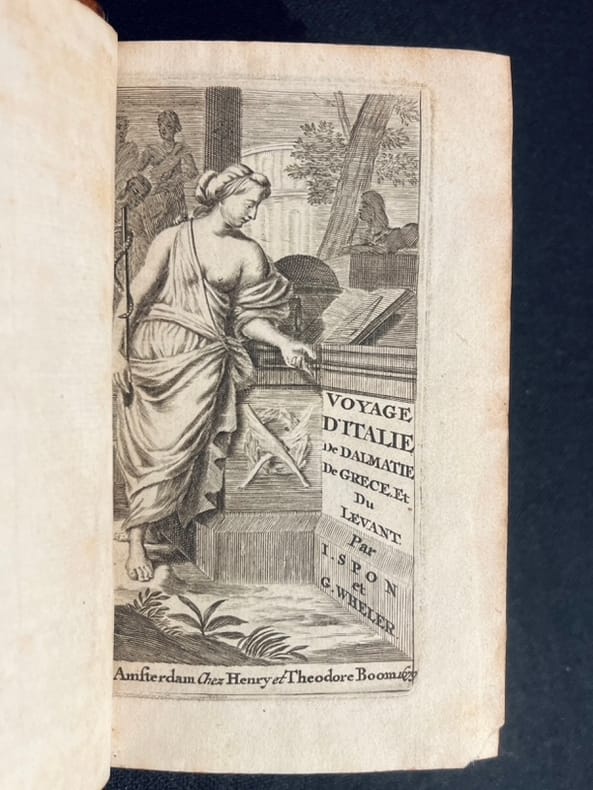
167921803A Amsterdam, chez Henry & Theodore Boom, 1679. 2 volumes in-12 de [24]-456 et 322-[14] pages puis de 323 à 489.*12; A-T; A-X12. Pleine basane marron, dos à nerfs ornés de filets et fleurons dorés.
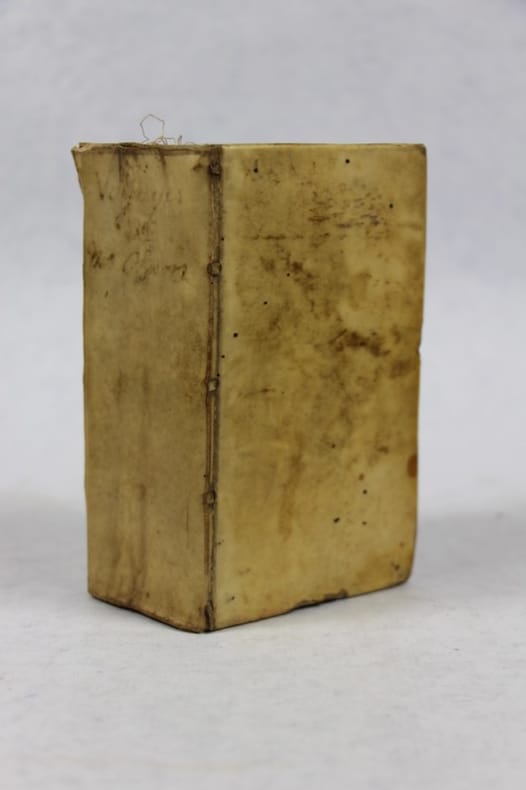
1679130712Amsterdam ; Henry & Théodore Boom 1679 2 tomes en 1 vol. in-16 136 x 75 mm., plein vélin muet, .18- 456- 489 pp. Les 2 derniers ff. restaurés avec accroc du texte. Portrait frontispice, titre et 30 planches gravés. Quelques attaques de vers. Brunissures au portrait et au titre gravéSeconde édition de cet important récit de voyage au Levant.centré sur l'étude des traces de l'antiquité : épigraphie, architecture, glyptique, numismatique.
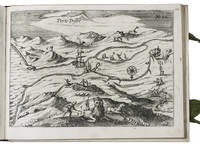
1619WRCAM54737Leiden: Nicolaus a Geelkercken 1619. 1751pp. lacking blank leaf P4 which divides the two narratives but was mistakenly included as pp.119-120 in the continuous pagination; including large engraved vignette on title with twenty-five engraved plates five folding double-page and two large folding maps. Oblong quarto. Contemporary Dutch vellum. Old stains and soiling to boards manuscript "33" in ink on spine edges rubbed boards slightly bowed. Modern bookplate on front pastedown. Minor toning and foxing tiny reinforcement at mounting stub on verso of each large folding map some offsetting. Overall very good. In a blue cloth box gilt leather label. Scarce first Latin edition of one of the bestsellers of illustrated 17th-century travel literature which reports Le Maire's critical DISCOVERY OF TIERRA DEL FUEGO an alternate route to the Pacific and also recounts the Pacific pillaging of the veteran East Indies sailor-turned-pirate Joris van Spilbergen. In addition the work includes valuable early information on ports along the Pacific coast of the Americas and is also of interest for the 17th-century Dutch presence in Brazil. Rich in ethnographic detail the numerous illustrations in the SPECULUM ORIENTALIS. include images of oversized penguins llamas and an Andean condor with a nine-foot wing span. Naval battles beleaguered Spanish settlements and newly discovered islands are also depicted in detail making this a valuable compendium of adventure on the high seas during the Age of Discovery. <br> <br> In 1614 the VOC commissioned Spilbergen to sail to the Moluccas with nearly 700 men. Despite the ostensible commercial nature of his expedition Spilbergen's six vessels were heavily armed anticipating encounters with silver-laden Spanish vessels. Spilbergen spent two years calling at various Spanish and Portuguese ports along both coasts of South America failing to capture any great amounts of silver or silk from Manila but burning several settlements and emerging triumphant from a naval skirmish just south of Lima. <br> <br> By contrast Le Maire's less mercenary expedition resulted in important discoveries; his exploration of Tierra del Fuego and the Tuamotou Archipelago called into doubt the existence of a massive southern continent providing a catalyst for Tasman's discovery of New Zealand and Australia. The two expeditions crossed paths in the Dutch East Indies in 1616. <br> <br> Spilbergen's fleet of six ships was fitted out and armed to combat the Spanish colonies attacking Spanish settlements and shipping along their route. They sailed to Brazil then through the Straits of Magellan and north along the coast of America as far as California. After sailing east to the Philippines they went on to Batavia in search of a Spanish fleet reportedly planning to attack Dutch settlements in the Moluccas but they never found a fleet. On his arrival at Batavia Spilbergen encountered Le Maire and Schouten whose voyage for the newly-formed Compagnie Australe had embarked in 1615 a year after Spilbergen's. Le Maire and Schouten traveled via the newly-discovered Le Maire Strait but on their arrival at Batavia they were arrested for breaching the monopoly granted to the Dutch East India Company of the Strait of Magellan. Spilbergen took Le Maire Schouten and their crews on board and escorted them back to the Netherlands virtually as prisoners. Le Maire grew ill and died en route. <br> <br> This work is remarkable as an early document on Dutch navigation to the Brazilian coasts. Its great value lies in Spilbergen's detailed account of their stay in the Ilha Grande from October 1614 to January 1615 and in São Vicente in 1615. Plate 2 depicting the disordered landing of Dutch vessels in São Vicente clearly documents the way of life of the indigenous peoples under Portuguese occupancy. Colonial religious structures appear alongside typical Native American hammocks and traditional Brazilian costumes and methods of animal husbandry are evident. This illustration with its explanatory text is particularly important as 17th-century ethnographic documents about the future São Paulo are very rare. <br> <br> One of the large folding maps remains important for illustrating Le Maire and Schouten's route across the Pacific. Other maps show the Straits of Magellan and Manila the Moluccas and various ports on the Pacific coast of America. <br> <br> The SPECULUM ORIENTALIS. was originally published in Dutch the same year as this Latin edition with identical plates. Translations in other languages followed rapidly: German in 1620 Frankfurt and French in 1621 Amsterdam. The work was not translated into English until the 1906 Hakluyt Society edition with the title THE EAST AND WEST INDIAN MIRROR. LANDWEHR VOC 361 mistaking the first edition of the Dutch: it is 1619 as his excellent collation obviously attests not 1617. BORBA DE MORAES II:276. HOWGEGO S159. W. Klooster THE DUTCH IN THE AMERICAS 1600- 1800 cat. 24 p.12. BLAIR-ROBERTSON XV pp.328-30; illustrated XVIII p.224. LeCLERC 1994. SABIN 2288. RODRIGUEZ 2288. EUROPEAN AMERICANA 619/133. J. de Villiers THE EAST AND WEST INDIAN MIRROR Hakluyt Society 1906. JCB II:143. Lach ASIA IN THE MAKING OF EUROPE III pp.445-48. Schilder AUSTRALIA UNVEILED Ch. V pp.32-37. TIELE 66. Nicolaus a Geelkercken hardcover books
1621B86DJ001U79OAmsterdam 1621. Oblong 4to 17.5 x 23 cm. Johannes Janssonius printed by Izaak Elzevier Modern vellum sewn on 4 vellum tapes with gold double fillets on the boards gold lettering on the spine gilt edges green cloth ties. With 24 of 25 engraved plates with maps plans views and battle-scenes including 5 double-page and 10 larger folding the large map of the Malayan archipelago with an inset-map of the Strait of Boeton 32 x 45.5 cm. 4 172 pp. First and only edition of the French translation of one of the bestsellers of illustrated 17th-century travel literature describing one of the most famous early voyages around the world by Joris van Spilbergen 1568-1620 a veteran Dutch East Indies naval officer-turned-pirate undertaken from 1614 to 1618. A short survey of another of the most important early voyages around the world by Schouten and Le Maire in the years 1615 to 1617 is added at the end pp. 117-172 with drop-title "Navigationes Australes". It reports Le Maire's proof that Tierra del Fuego is an island and his discovery of what is still called the Strait of Le Maire an alternative route to the Pacific. Rich in ethnographic detail the numerous illustrations in the Miroir include oversized penguins llamas and an Andean condor with a nine-foot wing span. Naval battles beleaguered Spanish settlements and newly discovered islands are also depicted in detail making the work a valuable compendium of adventure on the high seas during the Age of Discovery.With several owner's inscriptions. With a few manuscript annotations in the margin. Lacking the world map. Washed with a brush leaving light brown steaks on most leaves and further with an occasional leaf foxed or smudged and an occasional minor tear. Otherwise a good copy of an extraordinary journal.l Borba de Moraes p. 826 "This French edition is much sought after"; Landwehr & V.d. Krogt VOC 362; Sabin 89451; Tiele Bibl. 1030. hardcover
1690265353Frankfurt: Zunner 1690. hardcover. very good. 2 volumes Pars Generalis & pars Specialis bound together in 1. Illustrated with 2 copper-engraved allegorical frontispieces rubricated title pages with engraved vignettes. xii 23 engraved sheets with 1780 figures of of heraldic shields 368 38 page index; 2 index sheets torn with significant loss; viii 778 35 engraved sheets with 397 larger heraldic shields 32 page index. A few pages have minor soiling including the first frontispiece. Thick tall folio full velum somewhat stained but very sound and attractive with manuscript spine title; red edges. Frankfurt John David Zunner 1680. A very good copy. -- Brunet V 486; Graesse VI 464.<br/> <br/> Zunner unknown
1690265353Frankfurt: Zunner 1690. hardcover. very good. 2 volumes Pars Generalis & pars Specialis bound together in 1. Illustrated with 2 copper-engraved allegorical frontispieces rubricated title pages with engraved vignettes. xii 23 engraved sheets with 1780 figures of of heraldic shields 368 38 page index; 2 index sheets torn with significant loss; viii 778 35 engraved sheets with 397 larger heraldic shields 32 page index. A few pages have minor soiling including the first frontispiece. Thick tall folio full velum somewhat stained but very sound and attractive with manuscript spine title; red edges. Frankfurt John David Zunner 1680. A very good copy. -- Brunet V 486; Graesse VI 464.<br/><br/> Zunner unknown books
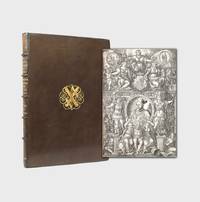
1603100584Innsbruck: Daniel Baur 1603. First edition in German after the Latin edition published in 1601. With frontispiece engraved portrait of Archduke Ferdinand II privilege on verso title page two preliminary leaves and 121 of 125 elaborate engraved portraits each with facing biographical notice printed within woodcut border. Lacking 4 leaves portraits 3 24 64 71. Two preliminary leaves printed for William Sterling Maxwell his extensive bibliographical note and index of portraits; a facsimile folding view of Innsbruck inserted after title. Full dark brown morocco spine titled in gilt upper board with Sterling Maxwell arms in gilt a.e.g. by XXXX. Sterling Maxwell's largest bookplate on front pastedown. A few portraits possibly in old facsimile or restrike. 11 leaves loose or slightly sprung a few marginal paper flaws one portrait poorly inked. First edition in German after the Latin edition published in 1601. With frontispiece engraved portrait of Archduke Ferdinand II privilege on verso title page two preliminary leaves and 121 of 125 elaborate engraved portraits each with facing biographical notice printed within woodcut border. Lacking 4 leaves portraits 3 24 64 71. Two preliminary leaves printed for William Sterling Maxwell his extensive bibliographical note and index of portraits; a facsimile folding view of Innsbruck inserted after title. The celebrated portrait gallery of the Archduke Ferdinand II of Austria with portraits of emperors kings nobles and war heroes in historic suits of armor in the Archduke's collection at Schloß Ambras. Compiled by the Archduke's secretary Schrenck von Notzing and translated into German by J.E. Noyse van Campenhouten. With an interesting full page printed bibliographical notice by Sterling Maxwell dated 1870 printed within facimile borders matching the text pages of the portraits. Colas 2691; Brunet V 224; Vinet 2046; Grässe VI 317; Lipperheide 499 Daniel Baur unknown books
1603376588Innsbruck: Daniel Baur 1603. First edition in German after the Latin edition published in 1601. With frontispiece engraved portrait of Archduke Ferdinand II privilege on verso title page two preliminary leaves and 121 of 125 elaborate engraved portraits each with facing biographical notice printed within woodcut border. Lacking 4 leaves portraits 3 24 64 71. Two preliminary leaves printed for William Sterling Maxwell his extensive bibliographical note and index of portraits; a facsimile folding view of Innsbruck inserted after title. Full dark brown morocco spine titled in gilt upper board with Sterling Maxwell arms in gilt a.e.g. by XXXX. Sterling Maxwell's largest bookplate on front pastedown. A few portraits possibly in old facsimile or restrike. 11 leaves loose or slightly sprung a few marginal paper flaws one portrait poorly inked. First edition in German after the Latin edition published in 1601. With frontispiece engraved portrait of Archduke Ferdinand II privilege on verso title page two preliminary leaves and 121 of 125 elaborate engraved portraits each with facing biographical notice printed within woodcut border. Lacking 4 leaves portraits 3 24 64 71. Two preliminary leaves printed for William Sterling Maxwell his extensive bibliographical note and index of portraits; a facsimile folding view of Innsbruck inserted after title. The celebrated portrait gallery of the Archduke Ferdinand II of Austria with portraits of emperors kings nobles and war heroes in historic suits of armor in the Archduke's collection at Schloß Ambras. Compiled by the Archduke's secretary Schrenck von Notzing and translated into German by J.E. Noyse van Campenhouten. With an interesting full page printed bibliographical notice by Sterling Maxwell dated 1870 printed within facimile borders matching the text pages of the portraits. Colas 2691; Brunet V 224; Vinet 2046; Grässe VI 317; Lipperheide 499 Daniel Baur unknown