260 résultats
1698D2444Lubeck: Christoph Gottfried Jäger for Peter Böckmann and Johann Wiedemeyer 1698. Hardcover. Very Good. 4to 190 x 156mm. 16 197pp. 2 including index and errata leaf at end. Dedicated to Joseph I Holy Roman Emperor and first King of Hungary reunited under Hapsburg rule. Over 70 copper-plate engraved illustrations for portraits of kings and emperors of the Roman Empire from Albertus to Sigismundus Franciscus all on coins recto and verso giving heraldry and one engraved chapter vignette heraldic on dedication page. Text in Latin. Later paste-paper boards paper label with manuscript title to spine edges stained red; margins trimmed close lightly toned scattered light foxing; lightly rubbed. German numismatist Jacob von Melle was a renowned poly-historian and a distinguished authority on the town of Lübecks history. Notably Melle was one of the first people to use the term bracteates for thin metal or gold medals. He was also the vicar for his local parish knew ten languages and directed a museum in Lübeck. In his time Melle published countless books; among these a Low German dictionary with 20000 entries and a book about the so-called guldgubber on the Danish island Bornholm guldgubber gold old men are tiny pre-historic gold-plates with a stamped human image. Interesting record with several important imperial portraits and heraldry on coins invaluable to the study of numismatics. <br/><br/> Christoph Gottfried Jäger for Peter Böckmann and Johann Wiedemeyer hardcover books
165260208Frankfurt G. Schönwetter 1652. Folio 335 x 203 mm. Three volumes bound in one contemporary full vellum bindings with title in contemporary hand to spine. Binding with some miscolouring and a bit of wear. Title-page with a few dots and light soiling otherwise a fine and clean copy. 141 7 4 183 7 176 3 pp. 151 engraved plates included in the pagination. Pp. 171-172 in vol. 2 copied in contemporary hand. <br/><br/><em>Later edition of Typot’s famous and beautifully illustrated work on emblems. The designs of the emblems were compiled by Ottavio Strada antiquarian to Emperor Rudolf III and were reproduced by the engraver Aegidius Sadeler - Typot wrote the Latin commentaries. The extensive work covers a broad array of subjects such as popes emperors kings and The Santa Eucharista. </em> hardcover
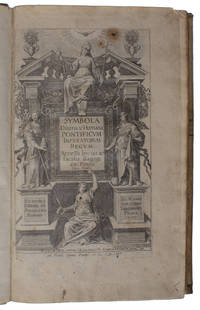
1666JC14675Arnheim: Johann Fridericus Hagius 1666. Hardcover. Very Good. 12mo 135 x 70mm. Pagination: 1 398pp. 26 index. Signatures: 1; A-R12; S7 of 8 lacking final blank one leaf of index unopened. Full-page engraved architectural frontispiece of sacred muses holding holy attributes and 176 plates with 350 devices engravings by Aegidus Sadeler of Prague 1568-1629 laid out in ovals and medallions. 19th-century morocco with gilt monogram cipher of interlocking Cs as cornerpieces and to spine marbled endpapers all edges gilt; rubbing to extremities especially the head of the spine otherwise a good copy with rich impressions. Early monogram bookplate and another later of Bibliotheque I.G. Schorsch on front pastedown. A monogram and motto Nunc nox mox lux are stamped in green on the flyleaf. Another stamp to lower margin of title with French surname Bourcier. <br/><br/>Later Arnheim edition of Jacobus Typotiuss influential collection of emblems detailing parts of sacred ritual in the Latin West church. Typotiuss Symbola Divina et Humana was first published in Prague in three volumes from 1601 to 1603. An extant manuscript of the Symbola Divina et Humana dates to about 1590 and it is known that several copies were made and circulated through the court of Prague. Typotius a Flemish humanist scholar was court historian to Emperor Rudolf II. While his name takes precedence on the title page Typotius was possibly just one of four men responsible for this work. The designs were compiled by Ottavio Strada antiquarian to Emperor Rudolf III and were reproduced by the engraver Aegidius Sadeler. Typotius wrote the Latin commentaries on the impresa except in the fourth book which was the work of Anselm Boethius de Boodt physician to the same emperor. The imprese in Typotiuss work covers a vast array of subjects including the Santa Eucharista Holy Eucharist the Santa Crucis Holy Cross popes kings emperors and rulers of various nations princes clergy and cardinals. Some notable figures represented in imprese include French kings Philip I and Louis VII Henry VIII of England and his queens Anne Boleyn and Anne of Cleves James VI of Scotland Philip II of Spain and unsurprisingly Rudolf II of Bohemia. The work was highly popular in its time and was frequently reprinted in both Germany and in the Netherlands. Praz p. 518; Landwehr 799; Cicognara 1964. Johann Fridericus Hagius hardcover
165260208Frankfurt, G. Schönwetter, 1652. Folio (335 x 203 mm). Three volumes bound in one contemporary full vellum bindings with title in contemporary hand to spine. Binding with some miscolouring and a bit of wear. Title-page with a few dots and light soiling, otherwise a fine and clean copy. 141, (7), (4), 183, (7), 176, (3) pp. 151 engraved plates included in the pagination. Pp. 171-172 in vol. 2 copied in contemporary hand.
1666JC14675Arnheim: Johann Fridericus Hagius 1666. Hardcover. Very Good. 12mo 135 x 70mm. Pagination: 1 398pp. 26 index. Signatures: 1; A-R12; S7 of 8 lacking final blank one leaf of index unopened. Full-page engraved architectural frontispiece of sacred muses holding holy attributes and 176 plates with 350 devices engravings by Aegidus Sadeler of Prague 1568-1629 laid out in ovals and medallions. 19th-century morocco with gilt monogram cipher of interlocking Cs as cornerpieces and to spine marbled endpapers all edges gilt; rubbing to extremities especially the head of the spine otherwise a good copy with rich impressions. Early monogram bookplate and another later of Bibliotheque I.G. Schorsch on front pastedown. A monogram and motto Nunc nox mox lux are stamped in green on the flyleaf. Another stamp to lower margin of title with French surname Bourcier. <br/><br/>Later Arnheim edition of Jacobus Typotiuss influential collection of emblems detailing parts of sacred ritual in the Latin West church. Typotiuss Symbola Divina et Humana was first published in Prague in three volumes from 1601 to 1603. An extant manuscript of the Symbola Divina et Humana dates to about 1590 and it is known that several copies were made and circulated through the court of Prague. Typotius a Flemish humanist scholar was court historian to Emperor Rudolf II. While his name takes precedence on the title page Typotius was possibly just one of four men responsible for this work. The designs were compiled by Ottavio Strada antiquarian to Emperor Rudolf III and were reproduced by the engraver Aegidius Sadeler. Typotius wrote the Latin commentaries on the impresa except in the fourth book which was the work of Anselm Boethius de Boodt physician to the same emperor. The imprese in Typotiuss work covers a vast array of subjects including the Santa Eucharista Holy Eucharist the Santa Crucis Holy Cross popes kings emperors and rulers of various nations princes clergy and cardinals. Some notable figures represented in imprese include French kings Philip I and Louis VII Henry VIII of England and his queens Anne Boleyn and Anne of Cleves James VI of Scotland Philip II of Spain and unsurprisingly Rudolf II of Bohemia. The work was highly popular in its time and was frequently reprinted in both Germany and in the Netherlands. Praz p. 518; Landwehr 799; Cicognara 1964. Johann Fridericus Hagius hardcover books
1601447181601. Basileae: Typis Conradi Waldkirchii 1601 Kl.4° 28 pp. Pappband. Synopsis febrium imprimis quartanae diexodikon logon / . Pro insignis & privilegiis in Arte Asclepiadea Doctoralibus consequendis discutiendum Iatrogonistis proponit publice Ad diem 22. Iunii . Ioan. Iacobus Crafftius Basiliensis. - Basileae : typis Conradi Waldkirchii 160. Husner: Verzeichnis bas. med. Univ.Schriften Nr. 405 unknown
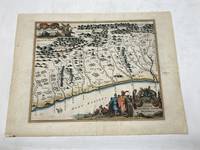
1672100390Amsterdam: Jacob van Meurs 1672. Map. Very Good. Copper engraved hand-colored map of the coastline of the Black Sea covering the region up to the Caucasus Mountains. Map: 11.5 in. x 13.75 in. Paper: 14 in. x 18 in. Brightly colored title cartouche in bollom right corner highlights the trade from the Black Sea/Georgian region to Western Europe. Second colored cartouche in upper left corner. Scale to upper left corner. Map highlights the map that was legendarily built by Alexander the Great that spanned the Caucasus Mountains sealing the uncivilized north Gog and Magog from the civilized southern region. Cities rivers mountains and forests are artistically presented <br /> <br /> Central vertical fold as originally presented. Light age-toning along edges with a couple spots and short tideline to paper's bottom left corner. Small handwritten word "Melpone" on right hand margin of paper. <br /> <br /> This map was published in "Asia Of Naukeurige Beschryving Van Het Rijk des Grooten Mogols." by Olfert Dapper Amsterdam: Jacob van Meurs 1672. Jacob Van Meurs 1619-1680 was a prominent Dutch engraver and map publisher. Jacob van Meurs unknown
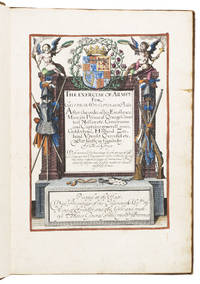
1607ABC_48580The Hague 1607. Folio ca. 37 x 27 cm. Mid-19th-century gold-tooled half faded red morocco and red cloth sides gilt edges marbled endpapers bound in 1840-ca. 1860 by the celebrated British bookbinder Robert Riviere 1808-1882 with his stamp "Bound by Riviere" in the bottom outer corner of the verso of the first flyleaf. With an engraved title page with at the head of the page the coat of arms of the dedicatee Prince Henry Frederick eldest son of King James I of England within a wreath of lilies and roses which - together with the title and the imprint were engraved on 3 separate slips of paper pasted over areas left blank for that purpose; and 117 including one repeat expertly engraved plates ca. 26 x 19 cm: 42 numbered plates in part 1 43 partly-numbered plates in part 2 and 32 numbered plates in part 3. All engravings including the engraved title-page are magnificently coloured and highlighted in gold and silver by a contemporary hand. The plates show exercises with the arquebus part 1 musket part 2 and pike part 3. 3 parts in 1 volume. 4; 2; 3 ll. Splendid copy of this very rare English edition of De Gheyn's illustrated major military manual with the plates in their first state before they were numbered and with some details added during the colouring stage instead of being engraved several puffs of smoke in the illustrations. The present copy is one of the three "presentation copies" of the first English edition New Hollstein The De Gheyn family II p. 159 1b.The history of the publication of the book is complex. It appears that Count Johann II of Nassau-Siegen 1561-1623 commissioned De Gheyn in about 1596 to publish the work together with or with the support of his nephew the great military commander and Stadtholder Prince Maurice who had re-organised the army of the Dutch Republic. Many copies have the engraved date 1607 on the title-page changed to 1608 suggesting that this may have been the true date of issue. The same title-border was used for the various early editions with the engraved texts on slips of paper to be pasted onto the places left blank on the engraved title-page. Different coats-of-arms were used for the different languages. The Dutch issues show for instance the coat-of-arms of Prince Maurice.This work is of the highest interest for military history regarding the early 17th century. It constitutes a simple transparent and well-illustrated manual for the instruction of recruits in the rapid and skilful handling of calivers an obsolete name for the arquebus muskets and pikes which had proven to be essential for the successful and revolutionary way of warfare introduced by Prince Maurice through reforming the Dutch army by introducing exercises and strict discipline in the past years. Fully coloured copies like the present were produced largely for princes and other important persons and were probably coloured by De Gheyn himself who was certainly responsible for the high standard of the colouring. In our copy the title is in the first undated state. All the early editions use the same main plate for the title-page so the text and arms for the editions in various languages and with various dedications were engraved on three separate slips of paper to be pasted over blank spaces: for the coat of arms above the engraved title centre and the imprint and privilege below. The book met immediate success and makes a considerable contribution to our knowledge of military history. The large format editions like the present were followed in 1609 and 1619 by smaller quarto editions with woodcut copies of the original engravings. The present copy varies slightly from other similar copies in that the compiler of this particular copy added plate 34 in part two twice unfortunately omitting part 2 plate 2 in that process and adding 2 plates with minor variants to this copy part 2 plates 29 and 35. Arguably this makes the present copy even rarer.The provenance of the present copy is impressive to say the least. It was most likely the presentation copy from De Gheyn for Robert Cecil first Earl of Salisbury 1563-1612 judging by the paper slip mounted on the recto of the second flyleaf which contains in early 17th-century manuscript the following text: "For my Lord ye Earle of Salisbury". This note is accompanied by a later more extensive annotation below the slip of paper reads: "This appears to have been a presentation copy to Robert Cecil Earl of Salisbury. The above inscription was on the fragment of a flyleaf and is probably the autograph of the author - De Gheyn. signature". Robert Cecil was Secretary of State to Queen Elisabeth I of England and King James I of England. In 1608 around the time the present work was published Cecil was appointed Lord Treasurer. Furthermore the splendour of the expert and strictly contemporary colouring of all engravings including the title-page prove that the present copy was made for a very important person like a nobleman or high statesman. Other bookplates show that the present work was at least part of two other collections. The first of the two is Christopher Turnor 1809-1886 with his bookplate on the front pastedown who was an English Conservative Party politician MP for South Lincolnshire between 1841 and 1847 founder of Stoke Rochford Hall and the son of English antiquarian author and politician Edmund Turnor 1755/56-1829. The second of the two is Hermann Marx 1881-1947 a famous German-born stockbroker and banker and a noted book and print collector. His "very choice and valuable library" was auctioned by Sotheby's in 1948.With the book plate of Christopher Turnor on the front pastedown the book plate of Hermann Marx on the recto of the first flyleaf and the paper slip with the 17th-century dedication to the Earl of Salisbury with the 19th-century note below on the recto of the second flyleaf. The numbers of the plates are added in a contemporary hand since the plates here appear in their first unnumbered state. The first plate of each part also contains Gheyns signature "J. De Gheyn. in." in manuscript instead of as part of the engraving. The binding shows some signs of wear some rubbing along the edges corners and the spine and fading of the leather and cloth on the front board and spine plate 2 in plate in part 2 has been replaced by a duplicate of plate 34 from the same part internally some minor marginal browning or staining but the coloured and highlighted engravings remain fine and clean. Overall in very good condition.l Cockle 79; Keynes New observations on Jacques de Gheyns The Exercise of Arms in: The Print Collectors Newsletter 13 1983 pp. 211-212; Kist Commentary to the facsimile of the Dutch edition 1971; Lipperheide nos. 2057-2060; Meij Jacques de Gheyn II als tekenaar p. 12 nos. 15-20 pp. 45-47; Muller Historieplaten no. 1117 & Suppl.; New Hollstein The De Gheyn family nos. 340-457 descriptions and illustrations of all plates; Regteren Altena Jacques de Gheyn Three generations vol. 2 pp. 64-78 nos. 342-464; Simoni A present for a Prince in: Ten studies in Anglo-Dutch relations 1975; STCN 85107989X 3 copies; cf. Jähns pp. 1005-1007 other eds. ABE CAT Costumes & Uniforms hardcover
16171307120067Thomas Adams 1617-01-01. Hardcover. Good. Folio. Contemporary boards rebacked with later leather spine. 5 raised bands. Solid binding and cover. 20 790 122 p. Generally clean unmarked pages with minor toning. Provenance: Christopher Will 1701. Inked with calligraphic flourish on end page. Thomas Adams hardcover
168715216London:: for Bernard White 1687. First edition in English. contemporary calf. Joints starting at head and tail of spine but still quite sound; minor rubing to boards; otherwise a clean very attractive copy. Folio. With 5 plates one folding. Cox I p. 111. Wing S5017. Hans Sloane's copy with his bookplate. for Bernard White, hardcover
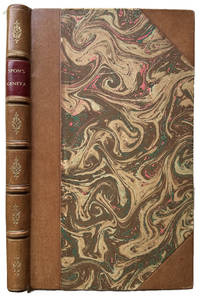
1687TK0098London:: Printed for Bernard White 1687. 1687. 4to. iv 250 6 pp. 5 plates including: engraved frontispiece "Old Geneva" p.9 City Stamps plate p. 107 folding engr. plate of the surrounding regions of Geneva city of Geneva p. 148. Ancient Inscriptions which are to be seen at Geneva p. 193; faint waterstain viewable on the outer margins rear. NOTE: A2 final leaf of Preface trimmed on the right margin replaced with similarly toned paper however with some minor loss of a few letters neatly repaired; some waterstaining. Modern half calf raised bands gilt-stamping red gilt-stamped spine label marbled boards. Ownership signature of the British politician Somerset Davies 1754-1817 of Croft Castle. Bookplate of Robert J. Hayhurst. Handsome copy. First edition in English. Jacob Spon was born into a Calvinist family of German origin in Lyon in 1647. He became a doctor and archeologist traveler and wrote respected studies of Greece. "After a period in Geneva he published Histoire de la ville et de l'Estat de Geneve 1680 a compilation of ancient chronicles of the city state". – Irini Apostolou "Jacob Spon" in: Christian-Muslim Relations 1500 - 1900 vol. 9 Western and Southern Europe 1600-1700 General Editors: David Thomas John Chesworth Brill 2017 pp. 406-412. / With the large folding plate of Geneva and the surrounding area showing Lac Leman / Lake Geneva and all the small municipalities that dot the region such as Eyvan = Evian Morges the mountainous terrain there are even a few cows shown in the plate. The city view of Geneva p. 148 shows the original wall at the city entrance. Spon was a numismatist thus his interest is shown p. 107 with a plate devoted to early coinage of the city. The frontispiece features a view of Geneva with Saint Pierre Cathedral as a focal point. That cathedral dates from 1150 and was founded in the 4th century. / With this text one learns of the origin of the name for the city of Geneva derived from the Latin word for the Juniper shrub which populated the hilly regions there. PROVENANCE: 1 Ownership signature of the British politician Somerset Davies 1754-1817 of Croft Castle; 2 Robert John Hayhurst 1929-2016 inherited and improved a successful group of retail pharmacies John Hayhurst & Son based in Nelson Lancashire. He was a keen collector of naval history and of eighteenth-century literature in contemporary bindings. Printed for Bernard White, 1687. hardcover
1601WRCAM38446London: Simon Stafford and Felix Kingston for Cuthbert Burby & John Flasket 1601. 1584 leaves. Woodcut vignette of sailing ship on titlepage. Extra-illustrated with 19 engravings numbered 1-3 19 4-18 from Van Neck's HISTORIALE BESCHRIJVINGHE Amsterdam 1619. Text and plates "inlaid to size" remargined to 9 1/4 x 6 3/4 inches. Quarto. 19th-century mottled calf gilt spine gilt gilt leather label. Boards and spine slightly worn. Titlepage and plates mounted to larger sheets; printed pages of text inlaid in larger sheets. Engraved plates annotated in ink with corresponding "page" leaf recto or verso of text. Lacking the dedication leaf paraph 2 and leaf Q4 blank pages shaved with occasional slight loss of text in lower margin rust hole in leaf P3 affecting a few letters on recto tear in leaf Q3 repaired not affecting text. Overall a very good copy with the 1860 engraved bookplate of the Library of the Earls of Macclesfield on front pastedown shelf marks inscribed on verso of front free endpaper. Embossed stamp of the Earls of Macclesfield in upper extended margins of titlepage leaf and following two leaves of text. The first English edition of Van Neck's account of his 1598 voyage to the East Indies translated from the 1601 Amsterdam edition of the author's HET TWEEDE BOECKE. The Dutch navigator who represented the Verre Company commanded three ships which were part of the first successful Dutch trading voyage to the region. The other two ships were commanded by Wybrand Van Warwijck and Jacob Van Heemskerk. Van Neck's vessel became separated from the other two after rounding the Cape of Good Hope and the three did not reunite again until his arrival in Java in late December 1598. Unlike his Dutch predecessor Cornelis Houtman who three years earlier had seized the port of Bantam Van Neck dealt diplomatically with the natives. "Rather than rejecting the inflated prices asked by the local ruler he offered to pay over the odds in order to cement a lasting relationship.Van Neck's was the most profitable of the pre-VOC Dutch East India Company voyages. Despite the apparently high price paid for spices he netted a profit of 300 per cent on his overall costs. In 1601 fourteen fleets comprising sixty-five ships sailed for the East Indies but by that time competition between rival Dutch operators as well as with the Portuguese had inflated prices and none were as successful as Van Neck's first enterprise" - Howgego. While focused on activity in the East Indies EUROPEAN AMERICANA notes that the text includes references to Brazil and tobacco from the West Indies. <br> <br> Van Neck's account was popular throughout the first half of the 17th century and was reprinted and translated into German and French as well as English. It also appeared in collections of voyages such as those by De Bry Hulsius and Colijn. This extra- illustrated copy includes nineteen engraved plates from the Amsterdam 1619 edition of Van Neck's HISTORIALE BESCHRIJVINGHE published by Michiel Colijn. The images are mounted on separate sheets and bound in the book at the appropriate portion of the text. The engravings are annotated in ink indicating the appropriate page i.e. recto or verso of a specific leaf related to the image. <br> <br> A rare book on the market. Prior to this copy from the Macclesfield sale in March 2007 the last copy previously available was sold at the Boise Penrose sale in 1971. Both EUROPEAN AMERICANA and STC record only two copies in the U.S. at the Huntington and NYPL the latter noted as imperfect. EUROPEAN AMERICANA 601/66. STC 18417 noting quires A-G printed by Stafford paraph 2 and quires H-Q printed by Kingston. TIELE-MULLER p.144. HOWGEGO N13. [Simon Stafford and Felix Kingston] for Cuthbert Burby & John Flasket hardcover books
169316791printed for Randal Taylor near Stationers Hall 1693. 2nd edition. Disbound. Disbound VG. viii104pp marginal water stain to the bottom left corner & top edge a nice clean copy internally. An interesting book published under the pseudonym Jacob Curate & containing a scurrilous attack on Scotch Presbyterianism & the Scots in general 'It is ordinary among some Plebians in the South of Scotland to go about from door to door upon New Year`s Eve crying Hagmane.' The book collects together the sayings & sermons of Scottish preachers & discredits them. The book also contains the source material for several Scottish ballads. printed for Randal Taylor, near Stationers Hall unknown
167719641Amsterdam: Henry & Theodor Boom 1677. First Edn. . Full-hardcover. Very Good. C4. Has been sympathetically rebound in heavy dark brown tooled leather 5 bands on spine title "Thesaurus Numismatum" in gil lettering on spine pages clean and in good condition some damp staining some light foxing. Title continues: "Cum Singulorum Succinta Descriptione & Accurata Enarratione". <br/> <br/> Henry & Theodor Boom hardcover
16773608Amstelodami Amsterdam Henrici & Theodori Boom 1677. 1st Edition . Hardcover. . ~ ~ NOTE: THE PRICE OF THIS BOOK IS CURRENTLY REDUCED! ~ ~ . Crown quarto 240 x 195 mm. Pp. xii 570 including a second title-page verso blank 22 4 i.e. final blanks. Errors in the pagination i.e. page nos. 257-258 omitted from pagination; nos. 281-282 used twice. Fine allegorical frontispiece by Ger. Laresse engraved on copper by Chr. Hagen. Plus 118 numbered copperplates 114 of which depict numerous impressions of coins the last four are pictorial allegorical schematic or technical. Engraved device to title. Woodcut initials head- and tail-pieces. A list of typographical errors and note to the binder.HARDCOVER handsomely bound in recent half shagreen and marbled boards new endpapers spine with false raised bands old crimson morocco label in gilt laid down a chipped lower blank corner to a leaf or two. Overall in fine condition. An excellent copy superb strikes of the plates. ~ FIRST EDITION. Collated in accordance with the British Library copy. Jacob Oisel 1631-1686. ~ Provenance: Felix Béthune 1857-1901 with his heraldic bookplate bearing the Coat-of-Arms of the Béthune family. It incorporates a shield with 3 stars a knight's helmet and a Baron's crown decorated with 7 pearls. Held by two lions the shield is surrounded by a circular motto "nec auro nec armis" "not with gold not by weapons". Felix Béthune was a member of the National Congress of Belgium Mayor of the city of Courtrai Kortrijk and a Senator. In 1845 he received a knighthood from King Leopold and in 1855 he became a Baron. In 1866 Pope Pius IX granted him the honorary title of a Roman Catholic Count. Rare. F-2 <br/> <br/> Amstelodami, [Amsterdam] Henrici & Theodori Boom hardcover
1610WRCAM51636Amsterdam: Cornille Nicolas 1610. Three volumes bound in one. Described in greater detail below. Folio. Contemporary vellum over boards rebacked with original spine preserved. Bookplate on front pastedown. Light soiling and repairs to titlepages; minor soiling otherwise. Very good. Three highly important Dutch voyages all in their second French editions and bound together as issued in 1610. These three voyages represent the initial Dutch exploration and expansion to the East Indies a significant element in a global commercial enterprise which was to develop throughout the 17th century. The foundational accounts in the present volume originally issued together by Amsterdam printer Cornille Nicolas include: <br> <br> 1 Lodewijcksz Willem: PREMIER LIVRE DE L'HISTOIRE DE LA NAVIGATION AUX INDES ORIENTALES PAR LES HOLLANDOIS. Amsterdam: Cornille Nicolas 1609. 53 leaves. Titlepage with engraved map forty-five in-text engravings including three maps seventeen in-text woodcut illustrations and one plate on separate leaf following printed text. Moderate soiling on titlepage slight edge wear to first few leaves. <br> <br> Second French edition following the first French edition of 1598. Lodewijcksz gives an account of the first Dutch expedition to the East Indies under Cornelis Houtman from 1595 to 1597. The information collected by Houtman on the spice trade convinced the Dutch they could compete with Portugal's monopoly in the East Indies and his narrative served to initiate the explosion of Dutch trading at the turn of the century. <br> <br> "Like the English Houtman's men suffered so severely from scurvy that they had to put in at the Cape of Good Hope and at Antongil Bay in Madagascar to recuperate. But they then sailed straight across the Indian Ocean to the Straits of Sunda and dropped anchor at Bantam in Java without the loss of a ship. At this port the center of the Javanese pepper trade a long time was spent. Both natives and Portuguese showed considerable hostility and Houtman and some of his men were imprisoned. However the Dutch succeeded in making a commercial treaty and departed with a good cargo. They proceeded eastward to Bali and then returned along the south coast of Java thereby acquiring a more correct impression of the width of the island than had prevailed and laid the ghost of Java's being the northern part of the Southern Continent.the Dutch skipper had enough to show for his venture to inspire the merchants of Amsterdam with a determination to exploit the trade" - Penrose. <br> <br> 2 Neck Jacob Cornelissoon van: LE SECOND LIVRE IOURNAL OU COMPTOIR CONTENANT LE VRAY DISCOURS ET NARRATION HISTORIQUE. Amsterdam: Cornille Nicolas 1609. Two parts. 224 leaves. Titlepages with engraved illustrations twenty-two in-text engravings including one map two in-text woodcuts. Leaves D2 and D3 lacking provided in facsimile. <br> <br> Second French edition following the first French edition of 1601. Van Neck who represented the Verre Company commanded three ships which were part of the first successful Dutch trading voyage to the region. The other two ships were commanded by Wybrand Van Warwijck and Jacob Van Heemskerk. Van Neck's vessel became separated from the other two after rounding the Cape of Good Hope and the three did not reunite again until his arrival in Java in late December 1598. Unlike his Dutch predecessor Cornelis Houtman who three years earlier had seized the port of Bantam Van Neck dealt diplomatically with the natives. "Rather than rejecting the inflated prices asked by the local ruler he offered to pay over the odds in order to cement a lasting relationship.Van Neck's was the most profitable of the pre-VOC Dutch East India Company voyages. Despite the apparently high price paid for spices he netted a profit of 300 per cent on his overall costs. In 1601 fourteen fleets comprising sixty-five ships sailed for the East Indies but by that time competition between rival Dutch operators as well as with the Portuguese had inflated prices and none were as successful as Van Neck's first enterprise" - Howgego. While focused on activity in the East Indies EUROPEAN AMERICANA notes the text includes references to Brazil and tobacco from the West Indies. The second part of this 1609 French edition an eight-page appendix of words spoken in Java and Malay includes word lists in French printed in roman type Malay in italic type and Javanese in civilité. 3 Noort Olivier van: DESCRIPTION DU PENIBLE VOYAGE FAIT ENTOUR DE L'UNIVERS OV GLOBE TERRESTRE. PAR SR. OLIVIER DU NORT D'UTRECHT GENERAL DE QUATRE NAVIRES ASSAVOIR. Amsterdam: Widow of Cornille Nicolas 1610. 2611pp. Engraved titlepage vignette. Twenty-five in-text engravings including three maps. <br> <br> Second French edition following the first French printing of 1602. Van Noort a former innkeeper in Rotterdam sponsored by a group of Dutch merchants accomplished the fourth circumnavigation of the globe after Magellan Drake and Cavendish. He was the first Dutch explorer to do so making the trip from 1598 to 1601. The voyage was particularly arduous. Half the crew mutinied his ships were constantly harassed and most of those that didn't mutiny perished from disease. He returned to Holland "with only one battered ship and eight crew left although some accounts suggest that forty-five crew survived. His voyage contributed little to the geographical knowledge of the time but had some effect in opening the way to the establishment of the Dutch in the East Indies.Van Noort's achievement however captured the imagination of his countrymen and the published accounts sold well the first appearing only eighteen days after his return. A more complete edition appeared later that year followed by two amended editions in 1602" Howgego. <br> <br> Three of the most important pioneering French voyages to the Far East bound together as issued. Lodewijcksz: EUROPEAN AMERICANA 609/71. TIELE-MULLER 115. JCB 3II:63. HOWGEGO H105 Houtman. Penrose TRAVEL AND DISCOVERY IN THE RENAISSANCE 1952 p.204. Neck: EUROPEAN AMERICANA 609/93. TIELE 786. TIELE-MULLER 129. HOWGEGO N13. Noort: EUROPEAN AMERICANA 610/79. SABIN 55438. BORBA DE MORAES p.617. W. Klooster THE DUTCH IN THE AMERICAS 1600- 1800 p.12. TIELE 806. JCB 3II:71. HOWGEGO N37. Cornille Nicolas hardcover books
169448525Nürnberg Johann Carl Gerzabeck 1694. 4to. Contemp. full sprinckled calf. Raised bands richly blindtooled compartments. Titlelabel. Very light wear to spine ends. Engraved frontispiece. 6818 pp. Index 56 pp. Light browning to some leaves. Internally clean. Printed in 2 columns. <br/><br/><em>First edition. </em> hardcover
169448525Nürnberg, Johann Carl Gerzabeck, 1694. 4to. Contemp. full sprinckled calf. Raised bands, richly blindtooled compartments. Titlelabel. Very light wear to spine ends. Engraved frontispiece. (6),818 pp. + Index (56) pp. Light browning to some leaves. Internally clean. Printed in 2 columns.
16222666Middelburg: Jan van der Hellen for Jan Pieterss. van de Venne 1622. <p>4to 233 x 176 mm. 16 60 19 1 blank pp. Large emblematic publisher’s mark on title-page four half-page engraved illustrations by Pieter de Jode 2 Pieter Serwouters and Willem van der Passe after Adriaen van der Venne. Woodcut head- and tail-pieces and initials. Short marginal tear to title light dampstaining to first and last leaves. Later parchment over pasteboards ms. spine title. Provenance: Samuel Ashton Thompson Yates 1842-1903 bookplate dated 1894.  <br /> <br /> First Edition of Cats’ retelling of the Biblical tale of Queen Vasthi the first wife of the Persian king Ahasuerus who refused her husband’s summons to appear before his guests wearing the royal crown to display her beauty in the Jewish tradition of the Midrash she was ordered to wear nothing else which would better explain her refusal. For this she was punished with exile and the King went on to marry another strong-willed woman Esther. The tale was especially familiar to 17th-century Dutch audiences for whom Esther had come to symbolize Netherlandish resistance to Spain.  <br /> <br /> The first part of Cats’ word-playing verse adaptation whose title may be translated as The Theater of Manly Respectability is a long speech in the Queen’s defense and in defense of all women followed by a speech against her and in favor of “Manly Respectability.†The work concludes with the Judgment which is that Vasthi should obey her husband because women’s subservience to men is a law of nature. A final poem titled “Aller Princessen Spiegel aller Vrovwen Spoor†is illustrated with an engraving showing the humbled queen wearing a yoke around her neck. The parallels and differences between the Biblical Ahasuerus and Herodotus’ tale of King Candaules supplied in Latin and Dutch translations in an appendix whose wife’s rebellion was more successful are fully exploited by Cats and by the illustrator Cats’ usual partner the painter and engraver Adriaen van de Venne whose brother Jan published the edition.<br /> <br /> Van de Venne’s engravings notably the scene of Candaules’ naked wife being surprised by Gyges served as models for a number of Dutch painters. The Van de Venne brothers played a central role in the dissemination of Cats’ poetry and it is their joint production that makes the works come alive: “The complete works of Cats together with Van de Venne’s illustrations formed a sort of housebook of the Dutch people which remained popular for two centuries.†Bol p. 117.<br /> <br /> Following the privilege on the title verso is a letter from the publisher to all bailiffs officials and readers â€Noodige Waersschouwinge.†complaining of the many counterfeit editions of an earlier Cats work the 1620 Self-stryt and explaining how to tell them apart. A second edition without the Noodige Waersschouwinge appeared later in 1622 and several further editions followed. <br /> <br /> De Jonge van Ellemeet Museum Catsianum 97; Bol Adriaen Pietersz. Van de Venne 1989 p. 118.</p> Jan van der Hellen for Jan Pieterss. van de Venne unknown
16222666Middelburg: Jan van der Hellen for Jan Pieterss. van de Venne 1622. 4to 233 x 176 mm. 16 60 19 1 blank pp. Large emblematic publisher's mark on title-page four half-page engraved illustrations by Pieter de Jode 2 Pieter Serwouters and Willem van der Passe after Adriaen van der Venne. Woodcut head- and tail-pieces and initials. Short marginal tear to title light dampstaining to first and last leaves. Later parchment over pasteboards ms. spine title. Provenance: Samuel Ashton Thompson Yates 1842-1903 bookplate dated 1894.  First Edition of Cats' retelling of the Biblical tale of Queen Vasthi the wife of Ahasuerus who refused her husband's summons to appear before his guests wearing the royal crown and presumably nothing else and who was duly punished. The first part of Cats' word-playing verse adaptation whose title may be translated as The Theater of Manly Respectability is a long speech in the Queen's defense and in defense of all women followed by a speech against her and in favor of "Manly Respectability." The work concludes with the Judgment which is that Vasthi should obey her husband because women's subservience to men is a law of nature. A final poem titled "Aller Princessen Spiegel aller Vrovwen Spoor" is illustrated with an engraving showing the humbled queen wearing a yoke around her neck. The parallels and differences between the Biblical Ahasuerus and Herodotus' tale of King Candaules supplied in Latin and Dutch translations in an appendix whose wife's rebellion was more successful are fully exploited by Cats and by the illustrator Cats' usual partner the painter and engraver Adriaen van de Venne whose brother Jan published the edition.Van de Venne's engravings notably the scene of Candaules' naked wife being surprised by Gyges served as models for a number of Dutch painters. The Van de Venne brothers played a central role in the dissemination of Cats' poetry and it is their joint production that makes the works come alive: "The complete works of Cats together with Van de Venne's illustrations formed a sort of housebook of the Dutch people which remained popular for two centuries." Bol p. 117.Following the privilege on the title verso is a letter from the publisher to all bailiffs officials and readers "Noodige Waersschouwinge." complaining of the many counterfeit editions of an earlier Cats work the 1620 Self-stryt and explaining how to tell them apart. A second edition without the Noodige Waersschouwinge appeared later in 1622 and several further editions followed. De Jonge van Ellemeet Museum Catsianum 97; Bol Adriaen Pietersz. Van de Venne 1989 p. 118. Jan van der Hellen for Jan Pieterss. van de Venne unknown books
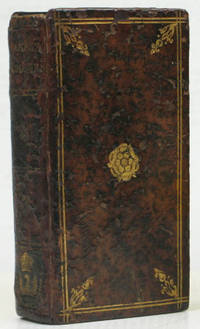
164217147Lugduni Batavorum Leiden: Ex Officina Joannis Maire 1642. Second edition 16mo 377 1 pp. Engraved title marbled paste downs armorial bookplate of Lord Sinclair. Contemporary calf a.e.g. covers with double gilt rules cornerpieces and a central rose gilt phoenix to the foot of the spine with the motto Rinasce Piu Gloriosa "It rises again more glorious" spine somewhat worn with loss to top. A leading Protestant lawyer who helped negotiate the Peace of Westphalia Lampadius' writings form part of the basis of Germanic constitutional law. First published 1634. Lugduni Batavorum [Leiden]: Ex Officina Joannis Maire unknown
1642101261642 Joannis Maire,, Lugduni Batavorum,, 1642 in 16, plein veau de l'époque,,dos à nerfs, caissons orné pp. 3 ffbl titregravé titre, 377 pp 5 ff bl . Con
1609WRCAM46859Amsterdam: Cornille Nicolas 1609. Two volumes bound in one. Described in greater detail below. Folio. Contemporary boards rebacked in calf spine gilt leather label. Very good. From the Library of the Earls of Macclesfield with engraved 1860 bookplate on front pastedown and blind pressure stamp on first two printed leaves of first title. Two highly important Dutch voyages both in their second French editions and bound together as issued in 1609. These two voyages represent the initial Dutch exploration and expansion to the East Indies a significant element in a global commercial enterprise which was to develop throughout the 17th century. The two foundation accounts in the present volume originally issued together by Amsterdam printer Cornille Nicolas include: <br> <br> 1 Lodewijcksz Willem: PREMIER LIVRE DE L'HISTOIRE DE LA NAVIGATION AUX INDES ORIENTALES PAR LES HOLLANDOIS. Amsterdam: Cornille Nicolas 1609. 53 leaves. Titlepage with engraved map forty-five in-text engravings including three maps seventeen in-text woodcut illustrations and one plate on separate leaf following printed text. Moderate soiling on titlepage slight edge wear to first few leaves. <br> <br> Second French edition following the first French edition of 1598. Lodewijcksz gives an account of the first Dutch expedition to the East Indies under Cornelis Houtman from 1595 to 1597. The information collected by Houtman on the spice trade convinced the Dutch they could compete with Portugal's monopoly in the East Indies and his narrative served to initiate the explosion of Dutch trading at the turn of the century. <br> <br> "Like the English Houtman's men suffered so severely from scurvy that they had to put in at the Cape of Good Hope and at Antongil Bay in Madagascar to recuperate. But they then sailed straight across the Indian Ocean to the Straits of Sunda and dropped anchor at Bantam in Java without the loss of a ship. At this port the center of the Javanese pepper trade a long time was spent. Both natives and Portuguese showed considerable hostility and Houtman and some of his men were imprisoned. However the Dutch succeeded in making a commercial treaty and departed with a good cargo. They proceeded eastward to Bali and then returned along the south coast of Java thereby acquiring a more correct impression of the width of the island than had prevailed and laid the ghost of Java's being the northern part of the Southern Continent.the Dutch skipper had enough to show for his venture to inspire the merchants of Amsterdam with a determination to exploit the trade" - Penrose. <br> <br> 2 Neck Jacob Cornelissoon van: LE SECOND LIVRE IOURNAL OU COMPTOIR CONTENANT LE VRAY DISCOURS ET NARRATION HISTORIQUE. Amsterdam: Cornille Nicolas 1609. Two parts. 228 leaves. Titlepages with engraved illustrations twenty-two in-text engravings including one map two in-text woodcuts. <br> <br> Second French edition following the first French edition of 1601. Van Neck who represented the Verre Company commanded three ships which were part of the first successful Dutch trading voyage to the region. The other two ships were commanded by Wybrand Van Warwijck and Jacob Van Heemskerk. Van Neck's vessel became separated from the other two after rounding the Cape of Good Hope and the three did not reunite again until his arrival in Java in late December 1598. Unlike his Dutch predecessor Cornelis Houtman who three years earlier had seized the port of Bantam Van Neck dealt diplomatically with the natives. "Rather than rejecting the inflated prices asked by the local ruler he offered to pay over the odds in order to cement a lasting relationship.Van Neck's was the most profitable of the pre-VOC Dutch East India Company voyages. Despite the apparently high price paid for spices he netted a profit of 300 per cent on his overall costs. In 1601 fourteen fleets comprising sixty-five ships sailed for the East Indies but by that time competition between rival Dutch operators as well as with the Portuguese had inflated prices and none were as successful as Van Neck's first enterprise" - Howgego. While focused on activity in the East Indies EUROPEAN AMERICANA notes the text includes references to Brazil and tobacco from the West Indies. The second part of this 1609 French edition an eight-page appendix of words spoken in Java and Malay includes word lists in French printed in roman type Malay in italic type and Javanese in civilité. <br> <br> Two of the most important of the pioneering French voyages to the Far East bound together as probably issued in this edition. Lodewijcksz: EUROPEAN AMERICANA 609/71. TIELE-MULLER 115. JCB 3II:63. HOWGEGO H105 Houtman. Penrose TRAVEL AND DISCOVERY IN THE RENAISSANCE 1952 p.204. Neck: EUROPEAN AMERICANA 609/93. TIELE 786. TIELE-MULLER 129. HOWGEGO N13. Cornille Nicolas hardcover books
169953282(Ohne Ort). Anno M. DC. XCIX (1699). 32 Seiten. Titelbroschur (Geringe Gebrauchsspuren) 19x15 cm
167763401677 Zurich, Johann Wilhelm, Simler, 1677-1678. In-16: 10 x 15.5 cm, 1f. de titre illustré, 1f. faux-titre, 1f. avertissement, 1f. frontispice grav. 2 ff. préface, 4 ff. de tables, 174 pp. de texte, 1 carte grav. de Jérusalem, 2 pl. grav. en taille douce. Première édition collective de ces textes et édition originale de trois d'entre eux, seul le récit de Hans Jacod Amman avait déjà été publié en 1618 et 1630. Ouvrage rare et recherché contenant quatre récits de voyages réalisés par des Zurichois: 1. en Terre-Sainte; 2. en Jamaïque; 3. aux Caraïbes et en Nouvelle Angleterre; 4. sur la Côte de l'or de l'Afrique de l'ouest. Reliure postérieure (fin 18e - début 19e) en demi-basane à petits coins. Dos lisse à filets dorés avec pièce de titre de maroquin rouge. Plats marbrés. Quelques légères rousseurs, sans défaut. Reliure en parfait état.