260 résultats
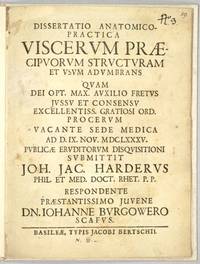
1685446271685. Basileae: Typis Jacobi Bertschii 1685 Kl.4° 32 pp. Pappband. Dissertatio anatomico-practica viscerum praecipuorum structuram et usum adumbrans / quam . vacante sede medica ad d. IX. Nov. MDCLXXXV. publicae . disquisitioni submittit Ioh. Iac. Harderus . respondente Iohanne Burgowero Scafus. Husner: Verzeichnis bas. med. Univ.Schriften Nr. 1209 unknown
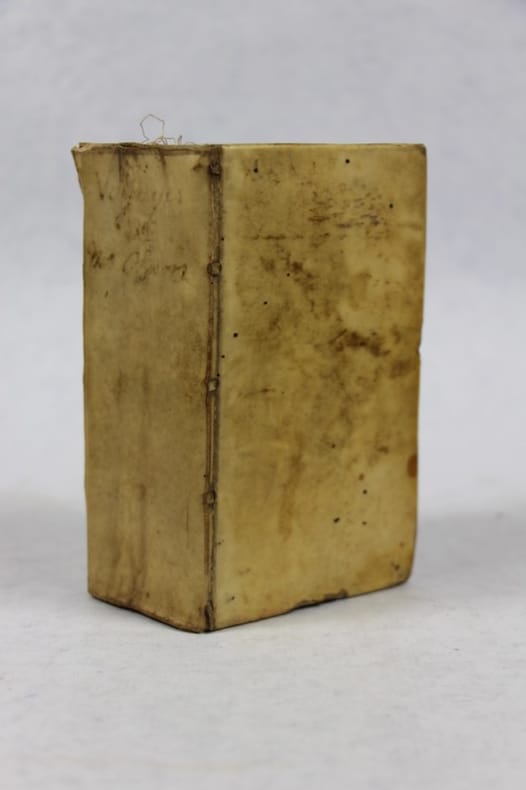
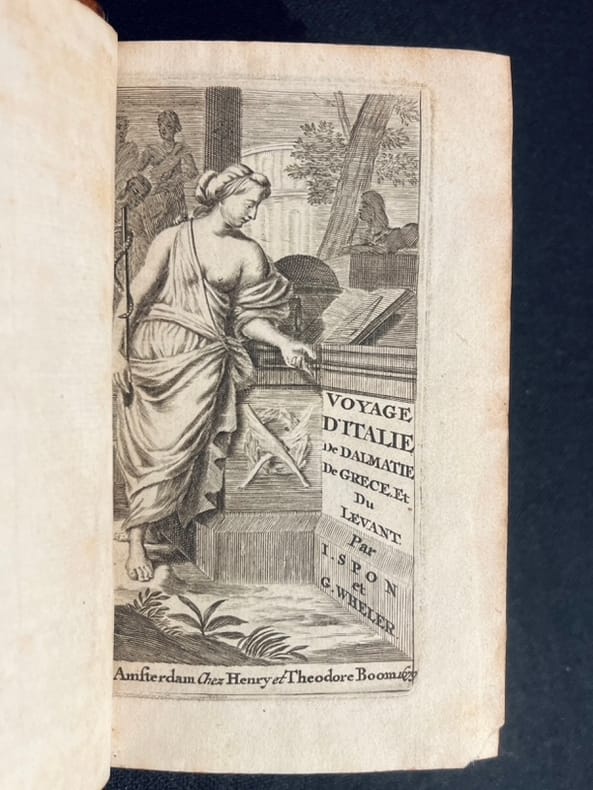
1679130712Amsterdam ; Henry & Théodore Boom 1679 2 tomes en 1 vol. in-16 136 x 75 mm., plein vélin muet, .18- 456- 489 pp. Les 2 derniers ff. restaurés avec accroc du texte. Portrait frontispice, titre et 30 planches gravés. Quelques attaques de vers. Brunissures au portrait et au titre gravéSeconde édition de cet important récit de voyage au Levant.centré sur l'étude des traces de l'antiquité : épigraphie, architecture, glyptique, numismatique.
167921803A Amsterdam, chez Henry & Theodore Boom, 1679. 2 volumes in-12 de [24]-456 et 322-[14] pages puis de 323 à 489.*12; A-T; A-X12. Pleine basane marron, dos à nerfs ornés de filets et fleurons dorés.
1678T5108<p><strong>Very rare first edition of 'one of the most important accounts of travels in the Levant and the first description of Athens which was systematic detailed and trustworthy' Blackmer. </strong></p><p>'Spon and Wheler met in Italy in 1675; they travelled together with Francis Vernon to Zakynthos where the two groups separated. Spon and Wheler continued by sea to Constantinople and Vernon travelled overland. The great merit of Spon's work is due to its combination of a careful and knowledgeable interest in classical antiquity with an accurate observation of men manners and topography in modern Greece. The whole of vol. II is devoted to Greece and includes a glossary of Modern Greek words and phrases with instruction on pronunciation. Spon's interest in Greece was longstanding. He had already published Babin's description of Athens which had been communicated to him by the Abbé Pecoil of Lyon with his own notes and preface' <em>ibid.</em>.</p><p>From Venice Spon and Wheler's itinerary took them along the Dalmatian coast and the Ionian islands. They set anchor at Zakynthos and later Cythera visited Delos and eventually reached Istanbul where they visited the French ambassador Charles-François Olier Marquis de Nointel who had already visited Athens and was able to give them valuable information about the city. They also visited Bursa and Thyateira in Asia Minor and stayed in Izmir for some time. On their return journey they crossed over to Patras from Zakynthos visited Delphi travelled to Athens and toured the region of Attica.</p><p>Jacob Spon 1647–1685 physician archaeologist and collector was the archetypal French 'curieux' like his father before him. He collected medals manuscripts and inscriptions with immense enthusiasm acquiring an entire coin hoard of seven hundred pieces found at Lyons. George Wheler 1652–1724 who published his own account of their travels in 1682 'was a man of many interests and practical skills. As a boy he had amused himself with woodwork constructing a birdcage and a small harpsichord and had taken an interest in plants; the latter he maintained in Oxford by frequent visits to the physic garden … On his travels he displayed keen curiosity and took the opportunity to collect plant specimens … He gave to his Oxford college more than thirty Greek manuscripts acquired mainly in Athens and Constantinople; they included a priceless illuminated typicon the foundation charter of a convent established in Constantinople about 1300. His plant specimens were given to the Oxford Physic Garden. Wheler occupies a significant position in the history of botany since he introduced to Britain some plants hitherto unknown including St John's wort' ODNB.</p><p><em>Provenance</em>: John Hay second Marquess of Tweeddale 1645–1713 MP and Lord Chancellor of Scotland in 1704-5 with his bookplates Franks 14192/566. The purchase note on the front flyleaf of vol. I 'payd for thes 3 volums 0–12–00' <em>i.e</em>. 12 shillings is probably his.</p><p><em>Physical description:</em><br />Three vols 12mo pp. I: xxiv 405 3 blank II: 417 13 2 blank III: 204 '226' <em>recte </em>228 with a copper-engraved frontispiece portrait in vol. I 30 plates many folding and two folding maps; paperflaws in outer margin of two leaves vol. I C10 and R6 no loss of text some occasional very pale marginal foxing but an excellent set; in contemporary British speckled calf double fillet frames ruled in blind on covers and in compartments of spines small blind-stamped floral tool in corners of covers board-edges ruled in gilt edges speckled red; lightly rubbed one corner bumped headcap of vol. I very slightly chipped.</p><p><em>References:</em><br />Weber 405. Blackmer 1586 records the second edition.</p> Antoine Cellier
165017389ca. 1650 130 x 320 mm à la pliure centrale, une marque claire.
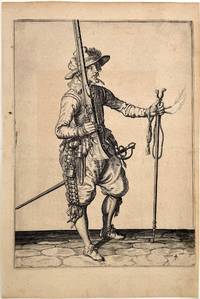
1609791AD6R1MSG6Frankfurt 1609. 4to. Wilhelm Hoffmann Contemporary vellum sewn on 3 vellum tapes rebacked. With the letterpress title within engraved border including the imprint and 3 series of 42 43 and 32 full-page numbered woodcuts showing exercises with the arquebus musket and pike. 3 parts in 1 volume. 3 1 blank 43 1 blank 44 36 ll. Rare first edition published in Germany with woodcuts instead of engravings of a military manual known in English as The exercise of arms it was written and illustrated by Jacques de Gheyn and quickly became a famous pictorial army manual for use of officers to teach the young recruits how to handle their weapons: the arquebus part 1 musket part 2 and pike part 3. The text here in German and French gives a short explanation of the illustrations. It gives an excellent picture of the successful army of the Dutch Republic after its reform by Prince Maurits who reintroduced exercises and discipline. It also immortalizes Prince Maurits as a military thinker and commander of the most disciplined army of his age.Some faint browning throughout slightly more visible on a few leaves and some foxing on title-page. Binding rebacked and a few stains on the sides. Good copy.l VD 17 39:124359A 3 copies; WorldCat 6 copies incl. 2 the same; cf. Cockle 79 other ed.; Jähns pp. 1005-1007 other ed.; Lipperheide 2057-2060 other eds. ABE CAT Costumes & Uniforms hardcover
16072473Amsterdam 1607. Engraving on cream laid paper with an trefoil and sword watermark 10 x 7 1/4 inches 254 x 184 mm; sheet 12 x 8 inches 305 x 204 mm unevenly trimmed narrow to wide margins. Uniform toning and scattered light spots of discoloration all consistent with age. From the ground-breaking military instruction manual commissioned by Maurits of Nassau Prince of Orange to standardize drill movements for the Dutch army during the Eighty Years' War. unknown
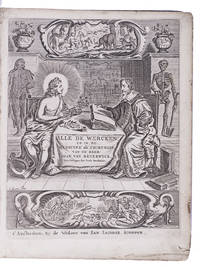
1672KBJA62HZUVCNAmsterdam 1672. 4to. widow of Jan Jacobsz. Schipper Contemporary vellum. With engraved frontispiece 28 engravings in volume one 29 engravings in volume two including one on the title-page and 20 engravings including one on the title-page plus 1 woodcut in volume three. 3 volumes bound as 1. 18 252; 8 127 1 328 48; 8 278=276 12 pp. Penultimate edition of the most influential medical work in the Low Countries during the 17th-century the collected works of Johannes Van Beverwijck 1594-1647. It was very popular partly through the inserted poems by Jacob Cats and its illustrations. The three main parts contain a general survey of the several elements of medicine varying from medical folklore and herbal knowledge to anatomy and chirurgy. At the end of the third part "Heel-konste" letters from and to Van Beverwijck as well as some other important letters are issued. Among these are letters of Descartes on the motion of the hart written ca. 1637-1643 to and from Anna Maria van Schurman ca. 1640 and William Harvey. Van Beverwijck was a very well-read man and all his writings include many references to ancient and contemporary authors on the subject. With owners' inscriptions on flyleaf and some modern underscoring and annotations in pencil. Front board and spine detached from bookblock a few tiny wormholes a couple tears in the foot margin otherwise in good condition.l BMN I p. 387; Krivatsy 1191; STCN 840960328; Wellcome II p. 159. hardcover
164724501London: Printed by M. S. for H. Blunden at the Castle in Corne-hill 1647. 1st Edition variant issue Wing B-3408A. Another issue of the same year has the printer's name "Matth. Simmons. in the yeare 1647". Period full leather with modern rebacking to style. Red morocco title label in second spine compartment. Modern eps. An overall VG copy text paper beginning to brown at edges with some associated chipping/repaired hole to lower right quarter of E2 affects last few words of two lines on p 25 and first few words of four lines on page 26/occasional po marginal pencil annotation a/o check mark. 18 155 7 28 4 pp. Separate t.p. for "Clavis". Last 4 pp: 2 pp 'Catalogue of Bookes' viz. bibliographical list by Behmen 1 pp of "Faults Escaped in Printing" & a blank. Inserted table & plate imperfect lacking 'folded' left side approx. 1 - 1.5". 4to: ¢4 -¢1 a half-title a2 a3 B1 A4 -A1 C - 2B4 2C2. <br/><br/>Bohme a German philosophical mystic who had a profound influence on such later intellectual movements as idealism and Romanticism. Born of poor parents in Goerlitz Germany as a boy he tended cattle later becoming a shoemaker marrying & fathering 4 children. Boehme at the robust age of 37 in 1612 wrote his first treatise Aurora oder Die Morgenroete in Aufgang. In 1613 an unauthorized copy of the manuscript was copied and circulated by Karl von Ender. Its reception "raised him out of his homely sphere and made him the centre of a local circle of liberal thinkers considerably above him in station and culture." However the local pastor primarius of Gorlitz Gregorius Richter leveled a charge of heresy. The local muncipal council administered an admonishment to no further "meddle in such matters." This charge Boehme publicly followed for 5 years. In 1618 Boehme again started writing expository & polemical treatises. The majority of his works were written though not formally published from 1619 - 1624. A second major work Der Weg zu Christo was published in 1624 and signaled a renewal of clerical hostility. Boehem however was destined to suffer but a short period of this second persecution; he died of an illness on 17 November 1624. Boehme has been said to have a "fertility of ideas" and a "trasncendent greatness of religious insight." Boehme was studied by Sir Isaac Newton and influenced the work Henry More as well as and especially William Law 1686 - 1761. Xl Questions concerning the Soule was translated by the English mystic John Sparrow in collaboration with John Ellstone & financed by Humphrey Blunden. This the first of several works by Boehme that Sparrow & Ellstone were to translate into English between 1644 - 1662. Boehme proved to be highly popular in England where there were regular societies of Behmenists at the time. This work XL Questions went into a second edition in 1648 and a third edition in 1665. 11th EB. A scarce title in the Boehme canon. We find no copies currently offered via the major on-line databases OCLC records but 4 institional cc and the work has only appeared at auction 3 times in the last 25 years the last in 1989. Printed by M. S. for H. Blunden, at the Castle in Corne-hill hardcover books
162520701625 Ouvrage illustré de 16 chromolithographies et de 250 gravures sur bois ( dont 20 tirées hors texte ). 2 ème Edition. à Paris chez Firmin Didot et Cie. 1878. Un volume très fort in 4. 1/2 basane marron marbrée époque. ébarbé. dos à nerfs. Fleurons dorés. reliure pastiche à la XVIII ème. 560 pages. volume très propre. quelques rousseurs sur la page de titre, sinon parfait état.