SCHUMAUSS, JOHANN JACOB.Livre Rare Book

730 résultats
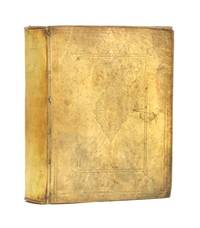
174061270Leipzig, Gleditschens, 1740. 8vo. In contemporary full calf with four raised bands and richly gilt spine. Small paper-label pasted on to top of spine. Spine-ends with wormholes. Ex-libris pasted on to pasted down front end-paper. A nice and clean book. 30, 864, (110) pp,
174061270Leipzig Gleditschens 1740. 8vo. In contemporary full calf with four raised bands and richly gilt spine. Small paper-label pasted on to top of spine. Spine-ends with wormholes. Ex-libris pasted on to pasted down front end-paper. A nice and clean book. 30 864 110 pp <br/><br/><em>Third edition of Schumauss' popular work on legal history. </em> hardcover
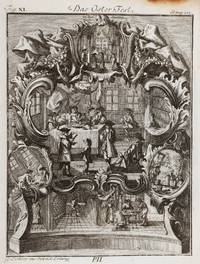
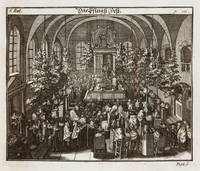
174950405Erlangen: Printed at Joh. Friede. Becker's University Print shop 1749. First edition. Hardcover. Good to fine condition. Quarto. 16 206 386 2 14 256 270 34pp. 30 plates plus frontispiece. Fully rebound in three-quarter brown leather over textured paper-covered boards with blind-stamped ruling on cover gilt lettering and brown ruling on spine; raised bands. Cream endpapers. Frontispiece engraving by Gottfried Eichler 1715–1770. Both title pages printed in red and black. Historiated and decorative initials head and endpieces. <br /> <br /> Magnus Opus of Johann Christoph Georg Bodenschatz theologian and orientalist in Erlangen.<br /> <br /> This extensive work on the ecclesiastical status of the German Jews is drafted from their own and other writings. It is illustrated with thirty engravings plus frontispiece. The preface is by Kaspar Jacob Huth. Dedicated to Friederich Margrave of Brandenburg.<br /> <br /> Volume one Part one treats the origin and the fate of the Jewish people part two the church and the service of the German Jews. Volume two part three the distinguished faith and doctrines of the German Jews and part four other customs and the Jew's unique way of life. The work “treats living conditions services rituals faith and doctrines of the Jews based on his own observations. It is a formidable source particularly in view of his impartial open-mindedness for the practice of ceremonies of the German Jews before the Emancipation. The precious engravings are prepared especially for this work.†NDB II 355. Contains thirty-four page register at rear.<br /> <br /> A second edition was published under the title “Aufrichtig Deutsch redender Hebräer Sincere German speaking Hebrew†in 1756. The beautifully configured engravings at time decorated with rocaille cartouches show rites during holy days everyday life customs cult objects scripts etc. Some of the engravings were taken from B. Picart’s “Cérémonies et Coutumes religieuses de toss les peoples."<br /> <br /> Bodenschatz 1717–1797 was a German Protestant theologian educated in Gera. His teacher Schleusner interested Bodenschatz in Biblical and Oriental studies. It is said that Bodenschatz created elaborate models of Noah’s Arch and the Tabernacle as a young man. Bodenschatz went on to study oriental languages at the University of Jena. He entered the church became vicar at Uttenreuth and superintendent at Bauerndorf in 1780.<br /> <br /> Text in German Gothic script. Binding with sunned spine. Water-staining on verso of frontispiece and bottom margin below etching not affecting image. Library stamp on title page and its verso. All plates are mounted to foredge of blank bound-in pages and folded. Some staining in margins on plates iv and xii lightly affecting the upper right of image foredges of plates with light wear. 12 plates are bound in after part I. Plate vii of part II with light water staining affecting image lightly at top and bottom plate viii light water staining at bottom else only in margins. Foredges with light wear and creasing. Binding and interior in overall good to very good condition. Printed at Joh. Friede. Becker's University Print shop hardcover
176111181Amsterdam Gerrit de Groot en Zoon 1761. 24 409 11 p. Origineel blind-gestempeld Perkament 4° Diverse wormgaatjes in de marges plaatselijk iets doorlopend naar de tekst en/of verstevigd. Amsterdam, Gerrit de Groot en Zoon unknown
172647515Nürnberg: Peter Conrad Monath 1726. New edition. Hardcover. Very good- to very good condition. Octavo. 6 leaves 226 18pp. 28 plates not incl. frontispiece and half-title 2 folding plates with list of engravings. Original calf binding with reverse lettering on label blind-stamped decor and ruling on spine; raised bands. Copperplate engraved frontispiece by Puschner. Title page printed in red and black. Decorative head- and endpieces and initials. Illustrated throughout with twenty-eight copper plate engravings all folding one additional engraved half-title following address to the reader and two printed folding pages containing detailed description of twenty-seven engravings. Plate twenty-eight illustrating an embroidered wimpel is bound in after plate twenty-seven but not described in printed folding plates of descriptive list. Plates thirteen and fourteen are bound in following pages 206 respectively 216 concurrent with the relating text.<br /> <br /> Nunmehro aber bey dieser neuen Auflage mit accuraten Kupfern versehen New edition with accurate engravings. Enlarged edition with annotations by Sebastian Jacob Jungendres. An important illustrated work documenting ceremonial rituals of European Jews. First published in 1716 without engravings Kirchner's work covers: Labor and Birth Circumcision Marriage Rituals Death Mourning Artifacts Holidays and daily devotional practices. Alfred Reubens a Jewish iconographer dates Kirchner's first illustrated edition as 1724 with a revised copy appearing in 1734. This 1726 edition was unknown to him and is not found in Mayer. <br /> <br /> The plates Nos. 3 6 7 16 26 and 14 are signed in print Puschner below images plate 10 "P." plate 12 "J. G. Puschner" and plate 18 "Puschner" in lower right corner of image. Many of the plates are based on information from Johannes Buxtorf celebrated Hebraist and compiler of the first Hebrew Bible based on Masoretic text and offer an enlightening look into costuming and day to day preparations for rituals in Jewish life. Table of content and register at rear. <br /> <br /> Text in German. Binding with some wear light chipping and half an inch tear at bottom of front joint light scuffing and lightly cracked spine. Lower corner lightly bumped top with light scuffing. Covers rubbed. Brief notes on front endpaper front and verso. Inked reference numbers on title page both crossed out with pencil. Some foxing and staining of block. First engraving with very light foxing else all engravings in excellent condition with occasional imperfections in margins. Peter Conrad Monath hardcover
173450418Nürnberg: Peter Conrad Monath 1734. New edition. Hardcover. Very good- to very good condition. Octavo. 6 leaves 226 26 pp. 27 plates not incl. frontispiece and half-title. Descriptive list of engravings at rear. Period light brown paper-covered boards numbered 34 in red on small label of spine. Copperplate engraved frontispiece by Puschner. Title page printed in red and black with decorative initial. Decorative head- and endpieces and initials. <br /> <br /> Illustrated throughout with twenty-seven copper plate engravings all folding one additional engraved half-title following address to the reader and the frontispiece. Plates thirteen and fourteen are bound in following pages 206 respectively 216 concurrent with the relating text.<br /> <br /> "Nunmehro aber bey dieser neuen Auflage mit accuraten Kupfern versehen" New edition with accurate engravings. Enlarged edition with annotations by Sebastian Jacob Jungendres. An important illustrated work documenting ceremonial rituals of European Jews. First published in 1716 without engravings Kirchner's work covers: Labor and Birth Circumcision Marriage Rituals Death Mourning Artifacts Holidays and daily devotional practices. Alfred Reubens a Jewish iconographer dates Kirchner's first illustrated edition at 1724 with this revised copy appearing in 1734.<br /> <br /> The plates Nos. 3 6 7 12 14 16 18 and 26 are signed in print Puschner below images plate 10 "P." plate 12 "J. G. Puschner" and plate 18 "Puschner" in lower right corner of image. Many of the plates are based on information from Johannes Buxtorf celebrated Hebraist and compiler of the first Hebrew Bible based on Masoretic text and offer an enlightening look into costuming and day to day preparations for rituals in Jewish life. Table of content and register at rear. <br /> <br /> Text in German. Binding with some wear light chipping and half an inch tear at bottom of front joint light scuffing and lightly cracked spine. Lower corner lightly bumped top with light scuffing. Covers rubbed. Half-page inked note on front endpaper. Small creases at lower foredge corner of front free and paper and frontispiece not affecting image. Some rubbing of title page at foredge and lower right corner. All engravings in excellent condition with occasional imperfections in margins. Peter Conrad Monath hardcover
171752850Frankfurt and Leipzig: Samuel Tobias Hocker 1717. Hardcover. Good to very good condition. Bound in full vellum with handwritten lettering on spines. Octavo. Vol. I.: 24 incl. frontispiece 580pp. 8 432 383 1pp. Franckfurter Juden Ehverlöbniß und Hochzeit. Vol. II.: 8 358 1pp. 30 320pp. 447 1 192pp. plus two registers and a supplement 1717 38 48 1 60pp. Frontispiece and ten copper plate engravings some folding. Part two and three published in 1714 part four in three parts published in 1717 with two chapters published in 1716 see below. Speckled edges. Decorative initials head- and endpiece woodcuts.<br /> <br /> Jewish oddities introducing curiosities and memorable events of Jews in "all four parts" of the world in the last few centuries particularly of Jews scattered in Germany. Contains a complete Frankfurt Jewish Chronicle with memorable events relating to Jews living in Frankfurt for centuries including several elucidating engravings. Part two includes the chapter XXV "about Jews in Frankfurt regarding marriage vows and wedding" on six pages. Part four in three chapters of which the last includes the apparel regiment for Frankfurt Jews and a chapter on the celebration on the occasion of the birth of the Crown Prince of Jews in Frankfurt and Prague both 1716 both with separate title pages and frontispieces but continuous pagination.<br /> <br /> Though not addressed to a particular Jewish community most of the information was gathered in Frankfurt with several texts copied by Schudt in Hebrew and Yiddish that are not recorded in elsewhere e.g. a Selicha authored by Rabbi Shmuel Schotten Katz after the great fire in the Jewish Quarter of Frankfurt in 1711 the Purim play "Ahasuerus-Spiel" most copies of the play were burnt following a rabbinical decree; thanks to Schudt the text was preserved two versions of women's incantations for childbirth regulations of the Jewish community forbidden luxuries among others. <br /> <br /> Schudt's writings are considered a landmark in the history of modern anti-Semitism mainly due to a chapter dedicated entirely to describing the Jewish body its shape colors and smells promulgating racist anti-Semitism in Europe. <br /> <br /> Schudt's book features several copperplate engravings. The most prominent of these is an image of the Judensau Jews' Sow which first appeared in medieval sculptures found in churches throughout Germany starting in the 14th century and then was subsequently depicted in woodblock and copperplate engravings. Schudt's version of this notorious anti-Semitic image is an elaborate construction taking motifs from three or more predecessors presenting a panoply of negative anti-Semitic tropes including: the blood libel ritual murder the devil's association with the Jewish people Jews "sucking and eating the wealth" from the allegorical pig and their belief in the absolution of sin through the sacrifice of the Azazel during the holiday of Yom Kippur. He includes descriptive text to elucidate the images.<br /> <br /> The main part of this folk art image shows three Jewish figures one sitting backwards atop the sow holding its tail facing the devil while another Jew kneels behind the pig eating its excrement encouraged by the devil. A third Jew is lying on his back suckling the sow's milk. On the other side of the sow a high priest stands with the Azazel goat.<br /> <br /> Additional engravings depict Jacob blessing Joseph's sons another two festive processions held in Jewish communities in Germany in 1716 for the birth of Leopold Johann son of the Holy Roman Emperor Carl VI and a portrait of Johann Jacob Schudt among others. Some of the engravings are placed into the text.<br /> <br /> With elaborate inscription inked to verso of front free endpaper. Text in German Gothic script. Some wear with light staining of lower edge of back cover of Vol. I more extensive on back cover of Vol. II here with some light staining of spine and rubbing of bindings. Some water staining in lower edges of last 200 pages of volume one not affecting text. Volume one with light erosion at bottom foredge corner of some 200 pages not affecting text. Volume two with some light fraying of lower foredge corner of Vol. II. Johann Jacob Schudt studied theology Wittenberg and then orientalism Hamburg under Ezra Edzardi. Devoted to Jewish history he published several works but is best known for his "Jüdische Merckwürdigkeiten" in three parts first published in 1714 with part IV a supplement volume published in 1717 containg the fourth part in three chapters.<br /> <br /> Schudt's standing in the Jewish community of Frankfurt he taught here at the gymnasium he had been educated at deteriorated with the publication of the "Oddities." Though he had published "Judaeus Christicida" on his own in 1703 suggesting corporal as well as spiritual punishment for the crucifixion the writings in "Jewish Oddities" repeats many of the anti-Semitic tropes found in Johann Andreas Eisenmenger two volumes under the title "Entdecktes Judentum" Judaism Unmasked first published in 1711. Eisenmenger's then was banned after several complaints by the Jewish bankers Oppenheimer and Wertheim only to be republished three years later.<br /> <br /> Schudt's "Jewish Oddities" however is still considered a fundamental source for Jewish history especially in Frankfurt documenting details of Jewish life their language prayers holidays dress and customs not found in other sources. Samuel Tobias Hocker hardcover
1757298<p>"Justinus concerning the Philippic Histories and the Origins of the Whole World Illustrated with Interpretation and Notes by Peter Joseph Cantel of the Society of Jesus: by the command of the Most Christian King for the Use of the Most Serene Dauphin Third Edition from the New Recension of David Durand Member of the Royal Society. With Adapted Chronological Excerpts of Jacob Bongars Added to the Histories of Justin." Justus 2nd c. AD was a Latin writer and historian who wrote an epitome or abridgement of the Philippic Histories of Trogus fl. 1st c. BC which is now lost. It was his goal to gather the most interesting parts of the original text together. Gnaeus Pompeius Trogus was a Gallo-Roman historian. Commentary by Peter Joseph Cantel 1645-1684 was added a Jesuit from Rouen who was partly responsible for creating the Delphin Classics a series of classical Latin texts produced for the education of the son of Louis XIV of France. He originally produced this text of Justinus in 1677. This third edition has been updated from the new recension of Justinus by David Durand 1680-1763 a Huguenot who moved to England in 1711 where we worked as a minister and historian. He served as a pastor in French-language Anglican churches in London and was made a Fellow of the Royal Society in 1728. Finally this third edition includes chronical excerpts from an abridgement of Justinus' work written by Jacques Bongars 1554-1612 a French scholar and diplomat. This copy is in the original binding. It is listed in poor condition as unfortunately the front cover and the title page have separated from the book. The title page is still attached to the front cover. There is tape on the front fly leaf and pastedown as well as the other side of the pastedown and the title page where previous attempts have been made to fix the book. The back cover is still attached but is loose. Otherwise the remaining pages are all tightly bound. There is an interesting handwritten note on the back fly leaf. Written in Latin it reads: "A Mose ad Mosem par Mosi non fuit ullus: More ore et calamo mirus uterque fuit." Translated this reads "From Moses to Moses there was no equal to Moses: in custom speech and writing each was a marvel." The relation of this phrase to the text is unknown however it would appear to be a reference to the biblical Moses and the later medieval Jewish philosopher Moses Maimonides.</p> G. Innys & J. Richardson, J. Clarke, C. Hitch & L. Hawes, J. Hodges, B. Barker, E. Wicksted, B. Dod, J. Ward, G. Johnston, & P. hardcover
179235774Leipzig: in Johann Friedrich Gleditschens Handlung 1792. ZINCKE Georg Heinrich. Thick octavo. Full pigskin with decorative tooling. 1f. title 8 Vorbericht . 1712 4 Vorrede . 1776 2 Errinnerung zu dieser neuen Ausgabe 16 Verzeichnis der Bücher 2492 columns. Title printed in red and black. Untrimmed. <br/><br/>Ownership mark in ink to foot of title; remnants of handstamp to verso. <br/><br/>Binding slightly worn soiled and bumped. Light browning and foxing throughout. 14th edition the last printed.<br/><br/>Johann Hübner 1668-1731 was a German geographer and noted pedagogue. He wrote only the preface to the first edition of Curieuses Natur-Kunst-Gewerck- und Handlungs-Lexicon 1712 but his name became associated with the encyclopedia for future editions compiled primarily by Marperger. The 1746 edition was expanded by Georg Heinrich Zincke 1692-1769 and then continually expanded by the publisher. in Johann Friedrich Gleditschens Handlung unknown books
176638957Rostok, Koppischen Buchhandlung, 1766. Lex8vo. Large uncut copy. Wrapper blank and without frontwrapper. (42),142 pp., Engraved portrait and titlevignette and 4 engraved plates.
176638957Rostok Koppischen Buchhandlung 1766. Lex8vo. Large uncut copy. Wrapper blank and without frontwrapper. 42142 pp. Engraved portrait and titlevignette and 4 engraved plates. unknown
1749286557Amstelodami: Apud Petrum Justice 1749. Nova Editio. Full Leather. Very Good binding. Jacob Vaniere's Praedium Rusticum. A Jesuit priest Vaniere was best known for this poetic work sixteen books written in the style of Virgil's Georgics. Complete with portrait frontispiece engraved half title and 16 additional plates. Collates complete; 6 x 320 6 pp. Minor loss to the extremities of the spine and the bottom of the front joint. Full calf with gilt decoration and a leather label on the spine. All edges speckled red. Very Good. Very Good binding. Apud Petrum Justice unknown books
172230308Trajecti ad Rhenum i.e. Utrecht: Apud Guilielmum Vande Water 1722. 4to. 23 ff. 957 1 pp. 9 ff. <br><br>German orientalist Jacob Rhenferd 16541712 a professor at Franeker the Netherlands' second oldest university until it was disbanded by Napoleon in 1811 provides scholars with this massive study of the organization and administration of Synagogues philology baptism comparative grammar of Semitic languages and Jewish "heresies. 19th-century half brown sheep with mottled paper sides; round spine. Ex-library: call number on spine bookplate removed from front pastedown rubber-stamps pencilling charge pocket. A good solid and clean copy. Apud Guilielmum Vande Water unknown books
177842819Venetiis: ex typographia Johannis Gatti . superiorum facultate 1778. Editio novissima folio 2 volumes in 1 pp. x 446; 458 22 Verba barbara ex Calepini 80 Vocabulario Italiano e Latino . per uso delle scuole di gramatica; primary title page printed in red and black and with woodcut vignette lexicon in double column appendices in triple column contemporary calf-backed paper-covered boards brown morocco label on spine; some rubbing and wear but generally a good sound copy or better. A late edition but under the editorship of the renowned philologist Jacobo Faccolati 1682-1769 who was both a philologist and lexicographer at Padua. His edition of Calepino was first published at Padua in 1718. It is here re-edited by Jean-Baptiste Gallicciolli. Labarre 210; Vancil p. 44. <br/><br/> ex typographia Johannis Gatti ... superiorum facultate hardcover books
177842819Venetiis: ex typographia Johannis Gatti . superiorum facultate 1778. Editio novissima folio 2 volumes in 1 pp. x 446; 458 22 Verba barbara ex Calepini 80 Vocabulario Italiano e Latino . per uso delle scuole di gramatica; primary title page printed in red and black and with woodcut vignette lexicon in double column appendices in triple column contemporary calf-backed paper-covered boards brown morocco label on spine; some rubbing and wear but generally a good sound copy or better. A late edition but under the editorship of the renowned philologist Jacobo Faccolati 1682-1769 who was both a philologist and lexicographer at Padua. His edition of Calepino was first published at Padua in 1718. It is here re-edited by Jean-Baptiste Gallicciolli. Labarre 210; Vancil p. 44. ex typographia Johannis Gatti ... superiorum facultate unknown
174633597Francofurti ad Moenum: Sumptibus viduae beati Knochii et J.G. Eslingeri 1746. 8vo 18 cm; 7.25". 3 parts in 1 vol. I: 8 ff. 385 1 pp. 3 ff. 1 7 pp. 30 24 ff. II: 2 ff. 122 pp. III: 8 ff. 31 1 32 88 57176 pp. <br><br>A marvelous volume containing studies or grammars of Hebrew Arabic Persian Ethopic and Samaritan languages: "Editio nona. Simili Institutionum Samaritanarum Rabbinicarum Arabicarum Aethiopicarum et Persicarum synopsi a Georgio Othone . auctior." The two authors Atling 16181679 and Georg Otho 16341713 were respectively a Dutch philologist theologian and professor at the University of Groningen; and a German librarian and professor of oriental languages.<br>Â Â Â Â The volume has divisional title-pages for "Jacobi Altingi Synopsis institutionum Chaldaearum et Syrarcum" dated 1747; and "Georgii Othonis . Synopsis institutionum Samaritanarum Rabbinicarum Arabicarum Aethiopicarum et Persicarum" dated 1735. <br>Â Â Â Â <br>Â Â Â Â This edition not in VD18. Modern light brown paper-covered boards with paper spine label. Ex-library with faint blind-pressure stamp on title- and one other leaf and librarian's pencil notations on verso of title-page. Scattered foxing occasional stray stain. Overall a good solid clean copy. Sumptibus viduae beati Knochii et J.G. Eslingeri hardcover books
173892003BB1738 . Zürich: Conrad Orell 1738. 8°. 6 Bll. 302 S. Rot/schwarzes Titelblatt. Leder auf 5 Bünden. Einband geflammtes Leder mit blind geprägter Fillette. Rückenschild mit Goldbuchstaben auf rotem Grund. Florales Goldmuster- mit Filletten. Vorsätze marmoriert. Lesebändchen. Umlaufender rötlicher Schnitt. altersmässig gebräunt; Buchblock vorne und hinten stark stockfleckig; Einband kaum beschabt. Leder krakeliert; 1 Kratzer; 1 eingeritzter Zeichnung; Kanten wenig berieben; Ecken minim bestossen Text in Fraktur. Johann Jacob Lauffer 1688-1734 Berner Theologe und Historiker. unknown
173791997BB1737 . Zürich: Conrad Orell 1737 8°. 5 Bll. 340 S. Einige Holzstich-Schmuckstempel. Titelblatt in Rot/schwarz. Leder auf 5 Bünden. Rückenschild in Goldbuchstaben auf hellem Grund. Rücken mit floralem Goldmuster. Vorsätze marmoriert. Lesebändchen. Umlaufender Rotschnitt. altersmässig etwas gebräunt; Titelblatt mit kleinem Fleck durch rote Druckerfarbe; S. 154 kleiner roter Tintenfleck; Einband beschabt; Rückenschild gebleicht etwas gelöst; Kapitale minim geplatzt Kanten berieben; Ecken bestossen Text in Fraktur. Johann Jacob Lauffer 1688-1734 Berner Theologe und Historiker. unknown
173792001BB1737 . Zürich: Conrad Orell 1737. 8°. 4 Bll. 352 S. Titelblatt in Rot/schwarz. Leder auf 5 Bünden. Einband mit blind geprägter Fillette. Rückentitel in Goldschrift auf rotem Grund. Florales Goldmuster auf Rücken. Vorsätze marmoriert. Umlaufender rötlicher Schnitt. Lesebändchen. altersmässig gebräunt; Vorsatzblätter Titelblatt und Schnitt stockfleckig; Einband wenig beschabt; Kanten etwas berieben; Ecken leicht bestossen Text in Fraktur. Johann Jacob Lauffer 1688-1734 Berner Theologe und Historiker. unknown
173792000BB1737 . Zürich: Conrad Orell 1737. 8°. 5 Bll. 343 S. 1 Holzstich-Zierleisten-und Schmuckstempel. Titelblatt in Rot/schwarz. Leder auf 5 Bünden. Geflammtes Leder mit blind geprägter Zierleiste. Vorsätze marmoriert. Lesebändchen. Rückenschilder in Goldlettern auf rotem Grund mit geprägtem floralem Goldmuster auf Rücken; Umlaufender rötlicher Schnitt. Lesebändchen. altersmässig gebräunt; teils stark stockfleckig; Einband und Vorsätze etwas beschabt; Kanten leicht berieben; Ecken minim bestossen Text in Fraktur. Johann Jacob Lauffer 1688-1734 Berner Theologe und Historiker. unknown
173791998BB1737 . Zürich: Conrad Orell 1737. 8°. 6 Bll. 338 S. 1 Holzstich-Schmuckleistenstempel. Titelblatt in Rot/schwarz. Leder auf 5 Bünden. Einband geflammtes Leder mit blind geprägter Fillette. Vorsätze marmoriert. Rückenschild mit Goldbuchstaben auf rotem Grund. Rücken mit floralem Goldmuster und Filletten. Umlaufender rötlicher Schnitt. Lesebändchen. altersmässig gebräunt; Inhalt und Schnitt kaum Vorsätze und Titelblatt stockfleckig; Vorsatz hinten handschriftlicher kleiner Nummerneintrag; Einband etwas beschabt; Ecken leicht berieben; Kapitale oben leicht abgeplatzt Text in Fraktur. Johann Jacob Lauffer 1688-1734 Berner Theologe und Historiker. unknown
173892004BB1738 . Zürich: Conrad Orell 1738. 8°. 4 Bll. 327 S. 3 Holzstichvignetten-Stempel. 1 Schmuckleisten-Stempel. Titelblatt in Rot/schwarz. Leder auf 5 Bünden. Einband geflammtes Leder mit blind geprägter Fillette. Vorsätze marmoriert. Rückenschild in Goldbuchstaben auf rotem Grund. Rücken floraler Goldschmuck mit Filletten. Lesebändchen. Umlaufender rötlicher Schnitt. altersmässig gebräunt; Vorsätze stark Titelblatt Buchblock und Schnitt wenig stockfleckig; handschriftlicher Nummerneintrag auf Vorsatz hinten mit Abklatsch auf die gegenüberliegende Seite; Einband wenig beschabt und leicht krakeliert; Kapitale und Ecken etwas berieben Text in Fraktur. Johann Jacob Lauffer 1688-1734 Berner Theologe und Historiker. unknown
173791999BB1737 . Zürich: Conrad Orell 1737. 8°. 4 Bll. 342 S. Rot/schwarzes Titelblatt. 1 Holzstich-Zierleiste. 3 Vignetten-Stempel. Leder auf 5 Bünden. Einband geflammtes Leder mit blind geprägter Fillette. Rückentitel in Goldbuchstaben auf rotem Grund. Florales Goldmuster mit Filletten. Vorsätze marmoriert. Lesebändchen. Umlaufender rötlicher Schnitt. altersmässig gebräunt; Vorsätze stockfleckig; Einband etwas beschabt mit einigen feinen Kratzern; Kapitale beschabt; Kanten kaum berieben Text in Fraktur. Johann Jacob Lauffer 1688-1734 Berner Theologe und Historiker. unknown
1708028007Magdeburg: Zufinden in Rengenischer Buchhandle 1708. Small Octavo. Half-title frontispiece title page in red and black 477 pages index. Text is predominantly in German and Latin This is Jacob Friderich Reimman's attempt at an introduction to the Historiam Literariam in general. Leibnitz considered it fascinating as did Pierre Bayle. The frontispiece of the garden maze is fascinating as the author sees the mystery of the vast early history of the language and its Teutonic origins. Bound in full vellum title on spine in brown ink but faded an early previous owner has written neatly in the upper margins the subjects of each page ad underlining what he believed was important passages. An interesting work in nice condition. Zufinden in Rengenischer Buchhandle unknown books
1708028007Magdeburg: Zufinden in Rengenischer Buchhandle 1708. Small Octavo. Half-title frontispiece title page in red and black 477 pages index. Text is predominantly in German and Latin This is Jacob Friderich Reimman's attempt at an introduction to the Historiam Literariam in general. Leibnitz considered it fascinating as did Pierre Bayle. The frontispiece of the garden maze is fascinating as the author sees the mystery of the vast early history of the language and its Teutonic origins. Bound in full vellum title on spine in brown ink but faded an early previous owner has written neatly in the upper margins the subjects of each page ad underlining what he believed was important passages. An interesting work in nice condition. Zufinden in Rengenischer Buchhandle unknown