[Abraham Lincoln] WH Pratt W HBiblio.com
26 503 résultats
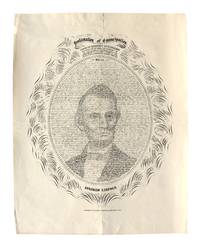
190027986Denver CO: Issued by Halsey M. Rhoads 1900. Very Good. Denver CO: Issued by Halsey M. Rhoads ca. 1900. Later printing. Broadside with calligraphic portrait of Abraham Lincoln in which the script of the Emancipation Proclamation forms the image within a decorative frame surrounded by the names of the members of Congress who voted for the amendment of the U.S. Constitution. 48 x 37 3/4 cm. A few tears to edges with tape mend to verso top edge; folds; minor edge wear; paper residue to verso from previous mount; overall Very Good. <br /> <br /> The original design was by W.H. Pratt in 1865 with just portrait and border and the names to the outside added to later printings. Halsey Rhoads was publisher of the Rocky Mountain Herald and a well known and prominent Denver citizen--even his bout with appendicitis in 1901 treated with leeches and ice garnered several writeups in contemporary newspaper accounts. <br /> This broadside scarce in any printing. <br /> <br /> See Eberstadt 42. Issued by Halsey M. Rhoads unknown
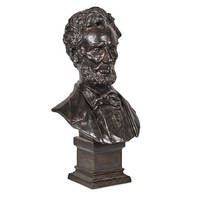
131044Patinated bronze cast of Abraham Lincoln by George Bissell one of only three commissioned by Ralph Newman for THE USS AL. Boldly signed by the artist in the back Geo. E. Bissell Sc. George Bissell was an important American sculptor working in the late 19th and early 20th centuries. He produced two full length statues of Lincoln: one in Edinburgh and one in Clermont Iowa. According to the letter from Lincoln College Curator Paul Beaver the present item is one of three copies made from the school's original Bissell bronze bust of Lincoln by the Van Dyke Galleries of Chicago in the summer of 1989. One copy was presented to the USS Abraham Lincoln commissioned in 1989 one copy was sold to Mel Smith and the third to Barry and Louise Taper. In fine condition. The piece measures 25.5 inches in height. An exceptional piece. unknown
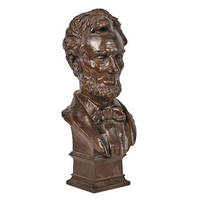
133797Patinated bronze portrait bust of Abraham Lincoln marked "GEO. E. BISSELL Sc GORHAM CO. FOUNDERS copyrighted" and stamped "G 47." This is one of a series of popular desktop busts of Lincoln produced by the Gorham foundry in the early part of the 20th century. In fine condition. The piece measures 18 inches in height. An exceptional piece of American history. unknown
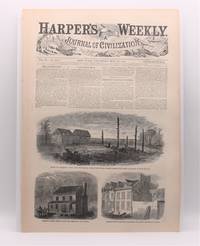
1865W2380New York: Harper's Weekly 1865. 16 pages. Large folio 16 inches by 11 1/4 inches. Original complete issue of Harper's Weekly. Harper's Weekly was the most important American pictorial newspaper in the 19th century. Because the original wood engravings in virtually every issue are highly collectible complete issues are becoming more difficult to obtain. The issue offered here focuses on the events following the assassination of Lincoln. On the front page are articles on the assassination and the funeral along with three original wood engravings: one showing the ruins of the Garrett barn where John Wilkes Booth was shot; another showing the house where Booth died; and a third engraving of the house of Booth's co-conspirator David Herold. On the interior are multiple engravings of various Lincoln funeral sites. Among the unrelated engravings is the double-page centerfold by Thomas Nast entitled "Palm Sunday"--one side portraying the arrival of Jesus in Jerusalem and the other side Lee surrendering to Grant. This issue of Harper's Weekly is disbound from an annual volume and has the usual sewing holes along the binding edge but it is still in very good condition: clean and bright with minimal toning of the paper. Note: we have available more than 500 complete issues of Harper's Weekly as well as thousands of individual wood engravings. Please inquire if you are looking for specific items. First Edition. Paperback. Very Good. Elephant Folio - over 15" - 23" tall. Magazine. Harper's Weekly Paperback
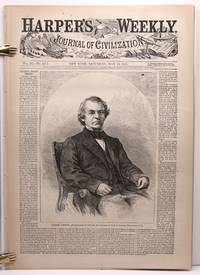
1865W2422<p>New York: Harper's Weekly 1865. 16 pages. Harper's Weekly was the most important American pictorial newspaper in the 19th century. Because the original wood engravings in virtually every issue are highly collectible complete issues are becoming more difficult to obtain. The issue here focuses on Lincoln's New York City funeral procession and the capture and killing of John Wilkes Booth. The front page features a wood engraving of the newly sworn-in President Andrew Johnson. It is based on a photograph by Alexander Gardner. The centerfold is a double-page wood engraving captioned "President Lincoln's Funeral--Procession in New York City." It is based on a photograph by Matthew Brady. Other wood engravings include "Sergeant Boston Corbett" a portrait based on a Brady photograph of the man who shot Booth; "Planning the Capture of Booth and Harold" based on a Gardner photograph; "Booth's Capture--The Assassin Brought to Bay" a recreated view of Booth in the burning barn in which he was killed; "President Lincoln's Funeral--Removal of the Body from the City Hall to the Funeral Car New York"; and "Post-Mortem Examination of Booth's Body on Board the Monitor 'Montauk'." There is text accompanying most images. Especially striking is the lengthy description of the interaction between Booth and his pursuers before he was killed. This newspaper is disbound from an annual volume and has the usual sewing holes along the binding edge but it is still in very good condition: clean and bright with minimal toning of the paper; a long but neat closed tear along the centerfold line of the double-page engraving; a one-inch closed tear limited to the blank margin of the front page; and a 1.5 inch by 3.5 inch triangular chip out of a corner of the last leaf primarily impacting one word in the title of an advertisement. Note: we have available more than 500 complete issues of Harper's Weekly as well as thousands of individual wood engravings. Please inquire if you are looking for specific items. . First Edition. Paperback. Very Good. Elephant Folio - over 15" - 23" tall. Magazine.</p> Harper's Weekly paperback
186525618<p>Frank Leslie published this print as a premium for his new family magazine <i>Frank Leslie's Chimney Corner</i> and copyrighted it on April 8 1865 just a week before Lincoln's death. The image created by engraver Henry B. Major and lithographer Joseph Knapp portrays Lincoln flanked by the First Lady and Vice President Andrew Johnson greeting Julia Dent Grant wife of Lieutenant General Ulysses S. Grant who stands nearby.</p><p>According to a notice printed at the bottom right corner "<i>Every Person who pays Ten Cents each for numbers 1 and 2 of Frank Leslie's Chimney Corner The New Family Paper is entitled to a copy of this PLATE without extra charge</i>" or individuals could purchase the print for $3.</p> <b>ABRAHAM LINCOLN.</b>Lithograph. "Grand Reception of the Notabilities of the Nation at the White House 1865" New York: Frank Leslie April 1865. 1 p. 19 x 23¾ in.<p><br /></p><p>In the first issue of <i>The Chimney Corner</i> Leslie described the "Grand Reception" image as "the most costly gift plate ever presented by any publisher in the United States having been produced at an expense of $10000."</p><p>"Every family should possess this truly national picture and carefully preserve it" Leslie continued "as it will transmit to future generations the men who have restored our great national unity. It is especially valuable as it contains an excellent likeness of our late lamented President introducing General Grant and his wife to Mrs. Lincoln." The picture contains "nearly 100 portraits of our most celebrated Generals Statesmen and Civilians also of many of our most distinguished American ladies. The likenesses are admirable having been taken from photographs by Brady."</p><p>The key giving the names of each individual portrait was published in issue number 4 of the <i>Chimney Corner</i> on June 24.</p><p>Included in the image are Generals Ulysses S. Grant John G. Foster William T. Sherman Hugh J. Kilpatrick Nathaniel P. Banks Philip H. Sheridan Winfield S. Hancock John A. Logan Joseph Hooker Benjamin F. Butler Oliver O. Howard John A. Dix and Henry W. Slocum. Admirals David Farragut and David Dixon Porter represent the Navy. Members of the cabinet include Secretary of War Edwin M. Stanton Secretary of State William H. Seward and Secretary of the Navy Gideon Welles. Members of Congress include Senator Henry B. Anthony of Rhode Island Senator William P. Fessenden of Maine Senator Charles Sumner of Massachusetts and Speaker of the House Schuyler Colfax of Indiana. Chief Justice Salmon P. Chase represents the U.S. Supreme Court. New York newspaper editors Horace Greeley Henry J. Raymond and James Gordon Bennett are also present. Prominent women include First Lady Mary Lincoln Ann S. Stephens dime novelist and magazine editor Miriam Folline Squier wife of Leslie's former editor-in-chief and Leslie's future wife Julia Dent Grant wife of Ulysses S. Grant Kate Chase Sprague daughter of Chief Justice and wife of Rhode Island Senator and Adele Cutts Douglas widow of Stephen A. Douglas. Others identified in the key include Ephraim G. Squier Leslie's former editor-in-chief archaeologist and U.S. commissioner to Peru Governor Andrew G. Curtin of Pennsylvania and Ambassador to Russia Cassius M. Clay of Kentucky.</p><p>Despite Leslie's copyright Anton Hohenstein created a very similar image entitled "Lincoln's Last Reception" which also featured Lincoln's meeting General Ulysses S. Grant's wife Julia. Published by John Smith in Philadelphia in 1865 and hand-colored "Lincoln's Last Reception" also included more than thirty military and political leaders and a few prominent women among the onlookers in the ballroom.</p><p><b><i>Frank Leslie's Chimney Corner</i></b> 1865-1884 was a weekly family newspaper published "every Tuesday" in New York by Frank Leslie. Each illustrated issue of sixteen pages contained serial fiction short stories poetry biographies history travel sketches natural history anecdotes and other subjects. According to the prospectus the newspaper would be "a welcome messenger of instruction and amusement to the young and old in the family and by the fireside—that altar around which cluster our holiest and most cherished recollections." Leslie had copyrighted the title in 1861 but "the great Rebellion now happily closing intervened to put a stop to the enterprise."</p><p><b>Frank Leslie</b> 1821-1880 was born in England as Henry Carter but he adopted the pseudonym of Frank Leslie to keep his artistic activities a secret from his relatives who disapproved. He came to the United States in 1848 and settled in New York in 1853 to engrave woodcuts for P. T. Barnum's <i>Illustrated News</i>. When that publication failed Leslie began work on his own series of illustrated publications including <i>Frank Leslie's Illustrated Newspaper</i> <i>The Budget of Fun</i> <i>Frank Leslie's Chimney Corner</i> and others. At his death he was deeply in debt but his second wife Miriam Folline Squier 1836-1914 continued his publications and again made them profitable even legally changing her name to Frank Leslie in 1881.</p><p><b>Condition</b></p><p>Spot-mounted to modern board mat toning moderate foxing minor edge wear. Would benefit from conservation.</p> Frank Leslie
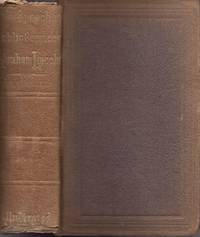
186533818New York: Moore Wilstach & Baldwin 1865. Hardcover. Fair. Thick octavo. 1 842 pages 6 pages of advertisements 1. Frontispiece engraving of Lincoln. Illustrations in text. Brown cloth hardcover ruled in blind on the covers with title on the spine. Cloth binding edge worn with chips head and base of the spine. Cracked hinges. Interior contents clean. Previous owners illustrated bookplate on the right front flyleaf. Another owner inscription on the front blank end sheet. First copyrighted ion 1860. The 1865 edition contains up to date information and the details of assassination of Lincoln. Fair. Moore, Wilstach & Baldwin hardcover
186425614<p>The second in a series of four racist political cartoons published in 1864 by Bromley & Company which was closely affiliated with the Copperhead New York <i>World</i> newspaper. These prints sought to undermine Abraham Lincoln's chances for reelection by branding him as a "miscegenationist" and playing on white fears of "race-mixing." The cartoon scene pictures several interracial couples enjoying a day at the park eating ice cream discussing wedding plans and a woman's upcoming lecture. Two African American families have white employees a carriage driver and footmen and a babysitter.</p><p>The only other example traced at auction brought $7800 in 2010.</p> <b>ABRAHAM LINCOLN. RACISM.</b>Print. "Miscegenation or the Millennium of Abolitionism." Political Cartoon. New York: Bromley & Co. 1864. 1 p. 20¾ x 13â… in.<p><br /></p><p>American politics had long played on fears of sexual relationships between races. A powerful new word for "race-mixing" was coined in an anonymous December 1863 pamphlet entitled <i>Miscegenation: The Theory of the Blending of the Races Applied to the American White Man and Negro</i> published in New York. Purporting to advocate the virtues of the "blending of the white and black races on this continent" it was a literary forgery prepared by <i>The World</i> managing editor David Goodman Croly and reporter George Wakeman. The authors were unsuccessful in their attempt to trick President Lincoln into endorsing the work.</p><p>At the far left of the image Abraham Lincoln declares "<i>I shall be proud to number among my intimate friends any member of the Squash family especially the little Squashes.</i>" The African American woman to whom he is speaking replies "<i>I'se 'quainted wid Missus Linkum I is washed far her 'fore de hebenly Miscegenation times was cum. Dont do nuffin now but gallevant 'round wid de white gem'men! he-ah! he-ah! he-ah!</i>"</p><p>Senator Charles Sumner says "<i>Mr. President! Allow me the honor of introducing my very dear friend Miss Dinah Arabella Aramintha Squash.</i>" A white carriage driver complains in the background "<i>Gla-a-ang there 240t! White driver white footmen niggers inside my heys! I wanted a situation when I took this one</i>" while a black man in the carriage tells his companion "<i>Phillis de_ah dars Sumner. We must not cut him if he is walking.</i>" A black woman at a table tells a white man with her "<i>Ah! Horace its-its-its-bully 'specially de cream</i>" and he replies "<i>Ah! my dear Miss Snowball we have at last reached our political and social Paradise. Isn't it extatic</i>"</p><p>To the right are two couples embracing each a white woman and an African American man. The first white women tells her partner "<i>Oh! You dear creature. I am so agitated! Go and ask Pa</i>" to which he replies "<i>Lubly Julia Anna name de day when Brodder Beecher shall make us one!</i>" The second white woman says "<i>Adolphus now you'll be sure to come to my lecture to morrow night won't you</i>" to which he answers "<i>I'll be there Honey on de front seat sure!</i>" In the background are various immigrant minorities viewing the scene. One exclaims "<i>Most hextwadinary! Aw neva witnessed the like in all me life if I did dem me!</i>" and another adds "<i>Mine Got vat a guntry vat a beebles!</i>" An Irish girl complains "<i>And is it to drag nagur babies that I left old Ireland Bad luck to me.</i>"</p><p>Manton Marble the editor of <i>The World</i> collaborated with printmaker Bromley & Company to issue a series of four anti-Lincoln "Political Caricatures." The present example was the No. 2 in that series. No. 1 was "The Grave of the Union or Major Jack Downing's Dream"; No. 3 "The Abolition Catastrophe Or the November Smash-up"; and No. 4 "The Miscegenation Ball."</p><p>Republicans responded by trying to turn the "miscegenation" charge against the Democrats. A Republican print "The Political "Siamese" Twins: The Offspring of Chicago Miscegenation" pictures McClellan and Pendleton joined together despite their very different ideas on ending the war.</p><p>Although Abraham Lincoln won New York states' electoral votes in 1860 Stephen Douglas had carried New York City and its environs. Financial elites fearing that civil war would ruin business and recent immigrants fearing competition with free black labor supported Douglas. Lincoln's unpopularity in New York City during the Civil War was a factor in the deadly 1863 Draft Riots.</p><p>In 1864 Lincoln again won the states' electoral votes while New York City favored his Democratic opponent McClellan. In fact Lincoln's majority dropped from 50136 votes in 1860 to only 7373 votes in 1864 with approximately 50000 more total votes cast than in 1860.</p><p>Bromley and Company continued to sell the caricatures after the election as this January 1865 advertisement from an Ohio newspaper makes clear. Another advertisement assured purchasers that the set of four prints available for $1 were "sent on wooden rollers to insure safe carriage."</p><p><b><i>The World</i></b> 1860-1931 a daily independent newspaper was published in New York City. Alexander Cummings founded it as a religious Republican outlet in 1860. August Belmont and others purchased it in 1862 changing the editorial focus. With editor Manton Marble 1834-1917 <i>The World</i> soon became the country's leading Democratic newspaper. In 1864 Union authorities shut down <i>The World</i>and another paper for three days after they published forged documents purportedly written by Lincoln that were really part of a hoax to manipulate the price of gold. The paper actively supported George B. McClellan against Lincoln in 1864.</p><p><b>Condition</b></p><p>Fine for exhibit despite flaws. Cropped with loss of "Political Caricature No. 2" from top edge and part of printed pricing information from bottom edge publisher's name rubbed out from the copyright statement lacking ½" from lower left corners a few short tape repairs by the edges a 2" closed tear through the second dialogue bubble along the top edge and a 3" closed tear parallel to the right edge. Mount remnants on verso.</p>
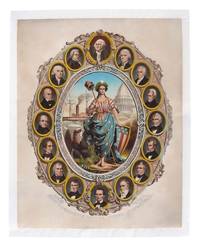
186131279Philadelphia: F. Bouclet 1861. Very Good. Philadelphia: F. Bouclet 1861. Original color lithograph 68x54cm. Mounted to matte backing; marginal tears and soiling; rubbing and a few scrapes around title; colors remain bright; a Very Good copy. <br /> <br /> This large vibrant lithograph was issued to commemorate Lincoln's first inauguration depicting the first sixteen Presidents with George Washington at top a beardless Abraham Lincoln at the bottom. The female personification of Columbia stands in the center before the Capitol holding a shield and staff with a liberty cap. The Capitol Dome sits in the background and is depicted as the artist anticipated it would look--the structure was not completed until late 1863. A handsome and uncommon print scarce in retail and auction records with only two holdings found in OCLC at the Library of Congress and the Mankato Area Public School District in Minnesota. . F. Bouclet unknown
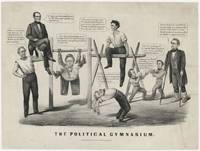
186060001<p><strong>Scarce iconic & fantastic lithograph Abraham Lincoln cartoon <em>The Political Gymnasium</em></strong></p><p>Abraham Lincoln Louis Mauer <strong><em>The Political Gymnasium</em></strong>. New York: Currier & Ives 1860. Lithograph broadside 18 x 13-1/2 inches.</p><p>This scarce and iconic lithograph is a detailed humorous "parody on the field of presidential candidates and their supporters in the 1860 campaign." Bell and Everett for the Constitutional Union Party are there: Bell a muscle man holds Everett aloft on a barbell. Horace Greeley struggles to do a pull-up in his effort to gain the New York governorship while Lincoln is easily astride his own bar wooden rails offering helpful advice: "You must do as I did Greely get somebody to give you a boost. I'm sure I never could have got up here by my own efforts." The New York Courier's James Watson Webb does a backward somersault in the foreground.</p><p>The broadside evidently issued after the parties' nominating Conventions because Seward is depicted as a cripple "on crutches and with bandaged feet." Breckinridge and Douglas "the two sectional Democratic candidates compete in a boxing match."</p><p>Auction records for the last couple of years show a colored example with trimmed right margin selling for $8125 and a nice but sooty uncolored example for $5250. Both sold by Heritage. Measures 18 x 13-1/2 in. and is an ideal candidate for framing. Overall Near Fine. Professionally cleaned & mended. Closed tear crosses most of Seward's midsection.</p> Currier & Ives
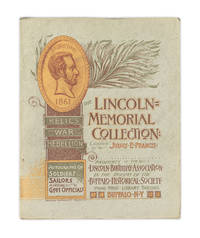
3733314<p>Buffalo: Art-Printing Works of Matthews Northrup & Co. Office of the Buffalo Morning Express 1887. 55 1 pages. Small quarto. Pictorial wraps. A near fine copy.</p> <p>An exceptional copy. “Description of three cases of material comprising the “Lincoln Memorial Collection†in the Grosvenor Library in Buffalo and programs and addresses of dedication. Also programs of the Lincoln Birthday Association from 1874 to 1881.†—Monaghan</p> <p>Monaghan 1031.</p> unknown
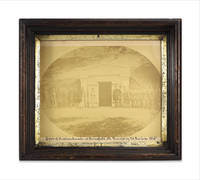
3733424<p>Springfield Illinois 1865. Photographic image: 7½ x 9 inches on mount with handwritten caption. Period deep-set walnut and gilt frame glazed 9¾ x 11¼ inches overall. Evenly-lightened with the image likely taken on a bright sunlit day.</p> <p>Unpublished and previously unknown. A rare photographic print created from a large format albumen photograph taken in 1865. The image captures Lincoln’s tomb being guarded by the Veteran Reserve Corps. The Reserve Corps were active from May to November 1865 helping to date when this image was first taken.</p> <p>As President Lincoln’s funeral train wended its way from Washington D.C. to Springfield “non-commissioned officers of the Veteran Reserve Corps were detailed to act as a body-guard and major generals of the army were directed to attend the train and keep watch so that at all times during the journey the coffin should be under their special guardianship.†Isaac N. Arnold</p> <p>The majority of photographs of Lincoln’s tomb taken in Springfield in 1865 were captured by two local photographers Ingmire and Tresize. They had a thriving business photographing various delegations in front of the Lincoln home and at the receiving tomb. Jonathan H. Mann</p> <p>Over the past two decades new examples of these tomb photographs have emerged suggesting that many individuals involved in the procession including honor guards made a pilgrimage and posed for the camera. Most of these images are found in carte-de-visite format. Larger formats like the present print hold greater significance and desirability. While the members of the Reserve Corps in this image may remain anonymous there are four individuals of higher rank depicted on the opposite side of the vault door who might be identifiable with closer examination. ibid</p> unknown
177874611778 2 Neuchâtel: Chez Samuel Fauche, 1778. 2 vol. in-4.: 19.5 x 25 cm. I/ 3 ff. de fx-t., front. et titre, iv pp. de dédicace et préface, 454 pp., 1 f. d'avis au relieur + 38 pl. grav. et cartes; II/ 3 ff. de fx-t., front. et titre, 391-[1] pp. avec avis au relieur au vo de la p. 391 + 41 pl. grav. et cartes. Première et unique édition in-4°, la plus recherchée, avec les 81 gravures et cartes d'après Merian: 2 frontispices, 67 vues de la Suisse et 12 cartes donc 6 dépliantes. Cette nouvelle édition, la quatrième, entièrement refondue, est plus exacte que les précédentes. (Lonchamp: no. 2560 /Quérard, VIII: 276). Reliures de l'époque en veau granité. Dos à nerfs avec pièces de titre et de tomaison en veau vert et caissons ornés aux petits fers. Trois filets dorés en encadrement des plats. Deux filets aux coupes. Tranches marbrée. Ex-libris: andré Gutzwiller. Traces d'usage aux reliures. Quelques rousseurs. Petite déchirure à la partie sup. de la p. 305 du 1er volume. La figure représentant le plan de Lausanne de Mérian, quelque peu effacée à un endroit: en compensation une figure plus ancienne, également d'après Mérian, a été contrecollée à son recto (Vol I: p. 351).
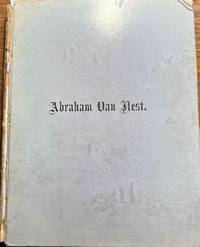
186436698New York: Printed by Sanford Harroun & Co 1864. First Edition. Hardcover. Good. Octavo. 7 76 pages. Illustrated with 3 albumen photographs. Glossy paper covered boards with name of Abraham Van Nest on the front cover. Spine is chipped in several places. Corners bumped. Shelf wear to the covers. Interior contents clean and unmarked. Some ephemera relating to Van Nest laid inside the front cover. Printed by Sanford, Harroun & Co hardcover
17115962[sans lieu], [sans nom], 1711. In-12 de [4]-270p. demi-basane brune, dos à nerfs, pièce de titre verte, coiffe sup. accrochée (reliure 1900), tampon-ex-libris moderne.
67265Oxford University Press 1852. No edition stated hardback. 8vo 22cm by 14cm x 400pp. Full brown calf black morocco title label to the spine all edges gilt. The boards are scuffed and there is light foxing of the preliminary pages; overall this book is in good plus condition. Oxford University Press, 1852. hardcover
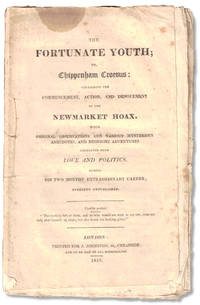
181857875London: J. Johnston 1818. Paperback. Good. Paperback. 42pp 4 ads. Side stitched signatures. Foxed throughout with some expected loss to the edges and a stain to the top of the front else a good complete example. Uncommon. An odd hoax perpetrated by a student at Shrewsbury School. Abraham Cawston aged about 16 claimed to have met in a coach a stranger who took a fancy to him and expressed the intention of making the boy heir to his own enormous fortune. Cawston then announced his patron's death and proceeded to convince his family and various bankers of the truth of his story. "He referred to a palace that he had in Spain full of works of art and instructed his solicitor to look out for a large country house for him and to acquire for him a few parliamentary boroughs. The Empress of Russia he said paid interest of six thousand pounds a year on a loan from his benefactor and he claims too on the King of Spain. the hoax lasted only a few months. The acceptance of his story is incapable of explanation but the facts are not in dispute. He subsequently became a clergyman."-Oldham A History of Shrewsbury School pages 88-9. OCLC locates only ten examples. J. Johnston paperback
185013513Purewa: Printed at St. John's College Press. Very Good- with no dust jacket. 1850. First Edition. Softcover. No signatures. Upper corners of first few leaves slightly creased and dog-eared. Some light foxing. ; Part Two of Lessons on the Church Catechism. Title imprint has a date of 1850 but this was not actually published until 1852. 26 pages. Stitched into original plain light brown paper wrappers. Page dimensions: 179 x 116mm. Text in Maori. Bibliographical references: BIM 316 - "5003 copies were produced between 17 May and 2 July 1852"; Williams 199. ; 12mo . Printed at St. John's College Press paperback
135962306X.Ghardcover. Good. Access codes and supplements are not guaranteed with used items. May be an ex-library book. hardcover
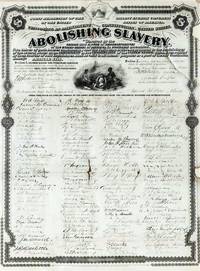
1868019219Chicago: Western Bank Note & Engraving Co. 1868. First Edition. Document. Recently backed with thin paper with several professional repairs of chips and tears. Very Good . Large folio 16-1/4" x 21-3/4" finely engraved and printed on good quality paper with elaborate decorative borders with a "US" monogram to upper corners a bold calligraphic heading with "ABOLISHING SLAVERY" in prominent decorated letters; at top center is a small vignette of the pyramid and all-seeing eye above an oval vignette of a slave family with child mourning over a cameo portrait of Lincoln. This is followed by the engraved signatures of President Lincoln Vice President Hamlin Schuyler Colfax and J. W. Forney Speaker and Secretary of the Senate and 164 Senators and Congressmen. An exceedingly rare and beautiful printing of the Thirteenth Amendment abolishing slavery: "Neither slavery nor involuntary servitude . Shall exist within the United States." This elaborately engraved Reconstruction-era broadside is based on the special "souvenir" copies on parchment signed by Lincoln and the others of which only a handful are known to have been made. The Thirteenth Amendment represents the first substantive change to how America interpreted those liberties guaranteed by the Bill of Rights since its ratification in 1791. The Emancipation Proclamation only freed the slaves in the openly rebellious states. The Amendment effectively put an end to slavery once and for all upon its passage on 1 February 1865. <br/><br/> Western Bank Note & Engraving Co. unknown
168574414Paris: Chez Federic Leonard 1685. 8vo. Two volumes French text. xxx 542 ; iv 543-686 78 table des matieres 16 memoire 8 preface table des chapitres 184 examen pp. Full sheepskin with raised bands morocco title-labels and a decorative gilt-tooled spine. Red edges & marbled endpapers. Head and tail reinforced with paper repair extremities have been coloured. Overall in very good shape with minor cracks to spine and occasional small marks or dents. Bindings solid. Stamp of the Broussonnet Library to title-pages and two further small ink inscriptions to title and verso of ffep of vol. 1. Bookplate residue to endpapers. Generally pleasant and clean internally especially vol. 1 with some occasional foxing and toning as to be expected. Decorative headpieces/ tailpieces and initials. Vol. 2 contains 'Examen de La Liberte Originaire de Venise' translated from the Italian. . Very Good. Full Sheep. Revised and Corrected. 1685. Chez Federic Leonard 1685 unknown
1685097239Paris: Paris : 'chez Federic Leonard' 1685 1685. Library label of S. Rosen. Venise on fixed endpaper. Book measures 7 3/4 x 5 1/4 inches. Collation 30 686 8016pp. Bound with Examen de la liberte´ originaire de Venise / traduit de l'Italien ; avec une harangue de Lou¨is He´lian ; traduite du latin.Published A Ratisbonne : Che´s Jean Aubri 1684. Author Bedmar Alfonso de la Cueva marque´s de 1572-1655. Collation 8184pp. Bound in full period or early vellum yapp edges title in manuscript previous owners crest on top board. At some time not recently the binding has been recased with new endpapers. Binding in very good condition. Internally tanning to second title page. Pages in good clean condition throughout. A very nice copy in a very attractive early binding. . Very Good Plus. 8vo. Paris : 'chez Federic Leonard' 1685 hardcover
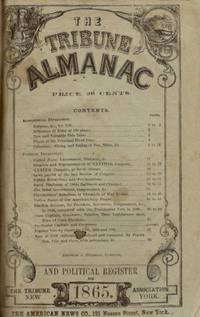
186431724New York: The American News Co 1864. First Edition. Hardcover. Good. Octavo. 11; 72 pages; 5. Original wraps with covers rebound in Gray paper covered boards with blue cloth spine. Gilt title "Almanac" on the upper spine. "J E Boos" in gilt letters stamped on lower spine. Light scattered foxing and toning to the contents. <br /> <br /> Bound with the Almanac preceding the front wrap is an essay titled: "An Old House Near An Old Dead Canal" by J. E. Boos Albany New York 1931. Following the last page of the Almanac are 5 bound in additional leaves of which 3 are blank. A receipt dated July 27th 1879 is pasted down on one of the pages for Adam Van Vraken donation of $66 to the poor. Another page has a pasted down blank Justice of the Peace form printed by "Websters & Skinners at their bookstore in the White House corner of State & Pearl Streets Albany". <br /> <br /> The essay in front contains 6 typed one-sided pages 3 photograph plates and one pasted down photograph of an old house Vranken's house. Page 1 of the narrative has a small circle photograph in the body of the text. Photograph plates include a floral arrangement frontispiece; The First Bridge between Schenectady and Scotia; and Some Horace Greeley 1872 Campaign Pins. <br /> <br /> In his short narrative Boos recounts a visit to the abandoned house that once belonged to Adam Van Vranken. He writes about the condition of dilapidated house describing plaster on the floors the roof falling in scattered toys and pieces of clothing a torn Courier and Ives print wreck of a Boston Rocker a paper box holding locks of children's hair papers scattered about and much more. He takes the Almanac as a souvenir: "I picked from under a pile an old Almanac that had been printed by the White Coated Philosopher Horace Greeley. I decided to carry it away before wet and mold caught up with it because it was sold when Abraham Lincoln was President in the year of his second inaugural and at the time of the ending of the Civil War." <br /> <br /> "J. E. Boos October 1931" inscription is located bottom of the last narrative page before the front wrap of the Almanac. The American News Co hardcover
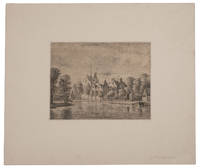
91MGUB7YLZSDNetherlands 1740. Mounted in passepartout. A view in brown ink with light and dark grey watercolour washes on laid paper 16.5 x 21.5 cm with a manuscript caption at the head. Attractive view in brown ink with grey washes of the picturesque Kostverloren manor on the Amstel River just outside Amsterdam. The manor was originally built at the end of the 15th century. In 1650 it was severely damaged by fire but it was soon restored. In 1822 Kostverloren was razed. The manor was famously depicted by Rembrandt Ruisdael and also by Abraham Rademaker 1676/77-1735 one of the most important topographic artists of his day. Rademakers drawing closely matches the present view in style and shows the exact same scene from the trees on the left to the smaller house on the right. The only difference is the season: the trees depicted here are much fuller.Slightly foxed but otherwise in good condition.l Cf. Blokland & Dumas de kasteeltekeningen van Abraham Rademaker C58. unknown
187925841Paris L. BOULANGER 1879 -in-12 broché un volume, broché gris-jaune in-douze Editeur (paperback duodecimo Editor)(18,8 x 11,4 cm), dos imprimé en noir, 1ère de couverture imprimée en rouge et noir et ornée d'une marque gravée de l'Editeur L. Boulanger, léger manque de papier au coin droit haut de la 1ère de couverture (moins d'1/5 de cm2), toutes tranches non-rognées en partie non-coupé, titre imprimé en rouge et noir, Belle Edition imprimée sur papier vergé à Angers par Lachèse et Dolbeau, ornée de deux dessins hors-texte en noir avec serpentes composés par MM. J. Lenepveu,... et J. Dauban,... ; gravés à l'eau-forte par J.-B. Dupré et quatre eaux-fortes hors-texte en noir avec serpentes par M. Tancrède Abraham + bandeaux front-de-chapitre historiés gravés in-texte en noir, 201 pages, 1879 (date imprimée en bas du dos) à Paris L. BOULANGER Libraire-Editeur,