ORTELIUS, AbrahamBiblio.com

213 résultats
158453174Antwerp. c.1584. Based on Egnatio Dante's 1580 Perugia map engraved by Mario Cartaro. Decorated strapwork cartouche at lower right scale at lower left and compass point at centre right empty cartouche at top left. Published in Ortelius' epic atlas the Theatrum Orbis Terrarum. Copper engraving. A little darkened but clean with good margins. Expert repairs to cracks. caused by verdi gris. Closed tear at lower margin not affecting map.Very good condition. Original colour. Size: 33.4 x 47 cm. van den Broecke 136. unknown
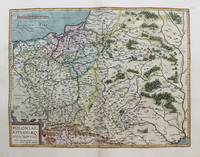
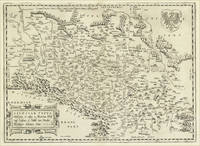
1598M3122Antwerp c.1598. Very Good. Notes: Scarce map of Poland and Lithuania during the late 16th century. <br>The map shows major cities and towns as well as geographical features. Includes a charming image of a horse-drawn sleigh in the bottom right corner. <br>Dutch text on verso. Size : 369x482 mm 14.53x18.98 Inches Coloring: Hand Colored Category: Maps Europe Poland Lithuania; unknown
1584001117Antwerp: Christopher Plantin 1584. Map. Fine. Framed. Size: 377 x 485 mm. Framed size: 580 x 465mm. Hand-coloured engraved map published in the Theatrum Orbis Terrarum. Wooden moulding frames glazed and mounted late 20th century. In fine condition only a small two spots in a upper part. A beautiful map of Poland and Lithuania part of the Baltic Sea title in cartouche at lower left in Latin scale at top left decorated sleigh with a horse. . Christopher Plantin Hardcover
15739404Antwerp 1573. Three engraved maps on one sheet 38.5 x 50 cm black and white very faintly red-ruled slight marginal soiling Latin text on verso; old tabs on verso where previously mounted. An early example of this particular map which was first printed in Dutch German and Latin editions of Ortelius Theatrum in the same year 1573. Pomerania running along the Baltic coast between Rostock and Gdansk is now divided between Germany and Poland; Livonia covers much of modern Latvia and Estonia; the Duchies of Oswiecim and Zator were two of the Duchies of Silesia in modern Poland. Ortelius's Theatrum Orbis Terrarum is generally considered the first modern atlas of the world originally published in 1570. Ortelius gathered the best available cartographic knowledge and presented it in a consistent style in a single volume with text. The Theatrum was very decorative and hugely popular amongst the wealthy and educated running into over forty editions in Latin and the major European languages. Marcel Van den Broecke Ortelius Atlas Maps no. 158. Map unknown
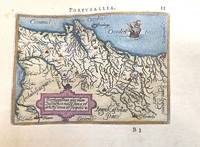
1588M11346Antwerp Belgium c.1588. Very Good. Notes: A miniature map of Portugal.<br>French text on verso. <br>Abraham Ortelius April 1527 – June 1598 was a Flemish cartographer geographer and cosmographer from Antwerp in the Spanish Netherlands. He is recognized as the creator of the first modern atlas the Theatrum Orbis Terrarum Theatre of the World. Along with Gemma Frisius and Gerardus Mercator Ortelius is generally considered one of the founders of the Netherlandish school of cartography and geography. He was a notable figure of this school in its golden age approximately 1570s–1670s and an important geographer of Spain during the age of discovery. The publication of his atlas in 1570 is often considered as the official beginning of the Golden Age of Netherlandish cartography. Size : 78x110 mm 3.07x4.33 Inches Coloring: Hand Colored Category: Maps Europe Portugal; unknown
158728094Antwerp: Ortelius 1587. Maps. Overall in very good condition. A very nice example of Ortelius' famous map of the Kingdom of Prester John with later hand color. It is from a Latin edition of Ortelius' Theatrum Orbis Terrarum the first modern atlas of the world. <br /> <br /> Cartographica Neerlandica Background for Ortelius Map No. 175. The map is difficult to date. The following details correspond to the aforementioned bibliography - it is consistent with 175.2 as the coastline has hatching extended from about 3 to about 6 mm signifying from 1587 & beyond. The ship in the lower left corner has a vessel attached to its mast. In the first state this vessel has vertical hatching. Now this is changed to horizontal hatching. In this copy the frame around the map has curved oval hatching around its oval ornaments. The sea was not re-engraved in later editions and as they are strongly engraved in this copy it would indicate an earlier edition. There is a watermark of two crossed arrows measuring 10 cm in length. The last line of text on the verso reads "uerit vide Jacobum Nauarchum in sua epistola Asiatica & Gerardum Mercatorem in sua universali tabula. 89". <br /> "Ortelius 1579 is penciled on the verso by an unknown person but that is unknown.<br /> <br /> The map centers on "Africva" in a strange configuration which goes from the coast of Benin and the "Mare Aethiopicum" to the Arabian Sea titled "Barbaricus Sinus". Arabia Felix covers the area of Saudi Arabia and adjoining countries with the Red Sea between the Arabian Penninsula and the coast of Africa. Mecca Medina and Jerusalem are noted with large buildings indicating their importance and colored red.<br /> <br /> Prester John was a mythical African King waging a war against the Muslim Infidels from his Kingdom in Central Africa. Add the Byzantine Patriarch Crusaders Islamic Saracens the Portuguese and a fake letter for this For centuries from the receipt of a fake letter from Prester John to the Byzantine Patriarch Europeans searched for Prester John initially in Asia and later in Africa. The Crusaders hoped that Prester John would join with Europeans in the protection of the Holy Lands from the Islamic Saracens and in the protection of all Europe from the Mongols. In the late 1400s and early 1500s the Portugese searched for Prester John in East Africa through they did eventually find a Christian kingdom in Abyssinia. A dedication to King David of the Bible is in the upper left of map. Above the dedication is the coat of arms of Prester John. Elephants and other figures adorn the map. <br /> <br /> Copper engraving with period hand color 17.5 x 15" with wide margins. Text in Latin on the verso. Two small wormholes in the top margin. Ortelius unknown
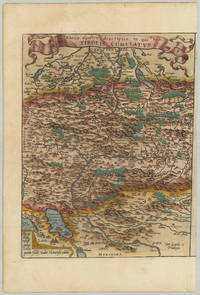
157432793Antwerp: Platin 1574. Other. In excellent condition.which was then in theHabsburg Netherlandsmodern-day Belgium. 340 by 260mm 13½ by 10¼ inches. Original antique copper engraving hand colored in outline and wash when published. Latin text edition. "Tirolis Comitatus" a fine engraved map depicting of the county of Tirol after Wolfgang Lazius published in a 1574 Latin text edition of the "Theatrum Orbis Terrarum" by Abraham Ortelius. Abraham Ortelius published this map between 1573 until 1612 in various editions of his atlas "Theatrum Orbis Terrarum". From this 1574 Latin text edition only 175 copies were published! A fine a decorative 16th century map of Tirol. With many engraved details as some place names rivers mountains lakes small villages and cities. Place names are still engraved as miniature views. At the bottom the "privilegium" and a dedication to Wolfgang Lazius. Ortelius was born on 14 April 1527 in the city of Antwerp which was then in the Habsburg Netherlands modern-day Belgium. The Orthellius family were originally from Augsburg a Free imperial city of the Holy Roman Empire. In 1535 the family had fallen under suspicion of Protestantism. Following the death of Ortelius's father his uncle Jacobus van Meteren returned from religious exile in England to take care of Ortelius. Abraham remained close to his cousin Emanuel van Meteren who would later moved to London. In 1575 he was appointed geographer to the king of Spain Philip II on the recommendation of Arias Montanus who vouched for his orthodoxy. He travelled extensively in Europe and is specifically known to have traveled throughout the Seventeen Provinces; in southern western northern and eastern Germany e.g. 1560 15751576; France 15591560; England and Ireland 1576; and Italy 1578 and perhaps twice or thrice between 1550 and 1558. Beginning as a map-engraver in 1547 he entered the Antwerp Guild of Saint Luke as an illuminator of maps. He supplemented his income trading in books prints and maps and his journeys included yearly visits to the Frankfurt book and print fair where he met Gerardus Mercator in 1554. In 1560 however when travelling with Mercator to Trier Lorraine and Poitiers he seems to have been attracted largely by Mercator's influence towards the career of a scientific geographer. Wikipedia Bibliography: Broe. 116a K/M:62a K:1/89 Platin unknown
159552816Theatrum Orbis Terrarum. 1595. Ortelius based the map on the map and plan by Marcus Secsnagel 1551. Braun and Hogenberg also used Secsnagel work. The poem at the top left commemorates him. The map has been drawn as if stretched over a frame with the edges pinned down the lower edges have rolled free to reveal the town plan at lower right Copper engraving. Fine condition good margins top edge very slightly worn Later colouring. Size: 43 x 34 cm. 17 x 13½ inches van den Broecke 107 unknown
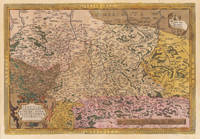
158437541Antwerpen 1584. In excellent condition. . 345 by 503mm 13 by 19 inches. Hand-Colored Original Copperplate Engraving by Abraham Ortelius depicting Saxoniae Misniae Thuringiae Nova Exactissimaq Descriptio. Published Antwerpen 1584. Sheet: 345 by 503mm 13 by 19 inches. A fine and original hand-colored example of Ortelius's celebrated cartographic work documenting this region of Germany with the precision and decorative artistry characteristic of the 15800s. Abraham Ortelius 1527-1598 was a Flemish cartographer and geographer from Antwerp widely regarded as the creator of the first modern atlas. His landmark publication Theatrum Orbis Terrarum 1570 set the standard for atlas-making for the next century presenting uniform copper-engraved maps with scholarly commentary. By Ortelius's death the Theatrum had appeared in 25 editions in seven languages. In 1575 King Philip II of Spain appointed him Royal Geographer. His maps engraved with extraordinary precision are among the most sought-after in antique cartography held in collections including the Plantin-Moretus Museum in Antwerp the Library of Congress and the British Library.This original copperplate engraving with original hand coloring depicts the region of Saxoniae Misniae Thuringiae Nova Exactissimaq Descriptio. published in Antwerpen 1584. The map records the political and geographic boundaries of the region as understood in 1584 offering a fascinating window into the history of German territorial organization. Sheet measures 345 by 503mm 13 by 19 inches. In good condition overall with minor signs of age appropriate for a 16th-century engraving. Ready to frame. Broe. 93 unknown
158552380Antwerp. c.1585. Very attractive map with ornamented cartouche and border.Three scales. The map was criticised by Hiob van Magdeburg at an early stage but survived through all editions of the Ortelius's landmark atlas. Published in the landmark work by Abraham Ortelius The Theatrum Orbis Terrarum. Copper engraving. The map itself is in good condition.V shaped water mark at top centre fold affecting margin and extending 25 mm. on to map tiny hole at top edge of centre fold. Expert repairs near invisible from the front on left hand margin and lower left hand corner faint watermarks on lower edge. Original colour. Size: 50 x 34 cm. van den Broecke 93. unknown
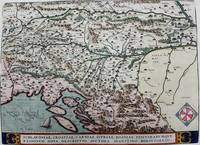
1595M7934Antwerp Belgium c.1595. Very Good;. Notes: French text on verso. Size : 336x463 mm 13.23x18.23 Inches Coloring: Hand Colored Reference: Marcel P.R. van den Broecke 145. Category: Maps Europe Balkans; unknown
15958231Antwerp Plantin-Moretus 1595. Copper engraving 33 x 46 cms modern hand-colour Latin text on verso. Ortelius map of the western Balkans drew on the cartography of Augustin Hirschvogel. Van den Broecke 145.3 Map unknown
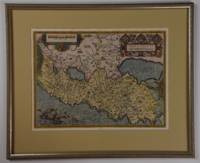
158715883Antwerp 1587. Three part old color map of Italy showing Corsica Siena and Ancona. With an Ortelius watermark on the section with Corsica. According to Dr. Marcel van den Broecke it is based on "an anonymous 'Marca Anconitana' published in 1564 by Vincenzo Luchini Meurer p. 95. On the authority of Brandmair 1914 p. 71 Karrow attributes this map to Cæsar Orlandi see Hessels nr. 39". Ornate cartouche in the map of Siena with a text block about the bountiful supply of fish. French text on verso. This map corresponds to Dr. Marcel van den Broecke and Dr. Deborah van den Broecke-Günzburger's Ort 137 classification: "Occurrence in Theatrum editions and page number: 1587F74 250 copies printed last line left aligned: se sous le Pape. A la fin elle est retournée en la puissance des Geneuoisausquels elle obeit encore. Image size: 19 x 13". Paper size: 23 1/8 x 17 1/2". Very good. unknown
157426946Antwerpen: Platin 1574. Other. A strong impression. In excellent condition. 280 by 385mm 11 by 15¼ inches. Copper engraving uncolored as published. Latin text edition printed 1574. Broe. 102. Platin unknown
15782206Antwerp: Plantin 1578. Hardcover. Very Good. 4to - over 9¾ - 12" tall. 4to. 23 x 16.5 cm 4 ff. 417 1 pp. 1 f. Bound in contemporary vellum over flexible boards head slightly chipped; early signature on t-p. Woodcut 'golden compass' device of the Plantin press on title. Generally good. First edition of this early modern geographical dictionary published alongside the first Plantin edition of Ortelius' successful Theatrum orbis terrarum Antwerp 1579 and listing thousands of names both ancient and modern for "peoples regions islands great and small towns mountains foothills forests seas bays lakes" etc. depicted in the atlas. Earlier versions of the Synonymia had previously appeared as indices to the atlas containing a little over 2000 entries; "in all this first version of Ortelius' geographical dictionary in the form of a separate book includes approximately 10000 entries" Meurer. Ortelius' methodology in the present volume differs from that of his earlier indices: a parallel glossary of non-Latin names has been turned into a bilingual appendix and Ortelius relies almost completely on classical authors quoting moderns only when he cannot go straight to the source. The significance of these alterations for the author's role not as mapmaker but as linguist and lexicographer is hard to overstate: his introduction declares that he undertook the new Synonymia largely out of frustration at the scholarly inadequacy of current Latin lexica including earlier editions of his own which frequently printed inexact or even nonexistent terms sometimes on dodgy authority. Voet 1835; Skelton Theatrum orbis terrarum facsimile 1964; Meurer in Abraham Ortelius and the First Atlas ed. Voet pp. 331-346. Plantin hardcover
159854753Antwerp. 1598. This glorious map is embellished with an elegant border and a bold imposing title cartouche in top right corner and a smaller oval cartouche in bottom left corner containing nine lines of Latin text. Natural topography is clearly delineated with the relief shown pictorially. Charming details include a couple of sailing ships a large flying fish and two warriors in their tented camps. This beautiful and important map still showing California as a peninsula was much copied by other cartographers. Size: 470 x 350 mm. Copper engraving. Original colour. Fine condition. Moreland & Bannister Antique Maps p.269. unknown
159813293451598. A map of the Holy Land by Abraham Ortelius dated 1598 first issued in 1584 as a part of Theatrum Orbit Terrarium. In Very Good condition with age toning and a central crease. Matted but not framed. w 26.5 in. x h 22 in. Shelved at Rockville PS 1101 #25. Based on material collected by the Dutch Astronomer Peter Laicksteen who travelled to the Holy Land in 1556. Christian Sgrooten here written "Schrot" royal geographer to King Phillip II of Spain produced a nine-sheet map of Palestine in 1570 from Laikstain's information. This map was condensed into the present form by Abraham Ortelius. Ortelius the creator of the first modern atlas collected and edited maps from all over Europe for his book. Many of the original mapmakers rose to fame solely through Ortelius's decision to include their maps in his atlas. Laicksteen took thorough and accurate notes and the original Laicksteen and Sgrooten map contained improvements over earlier maps. For instance the River Kishon is here shown as flowing from the mountains near the Sea of Galilee not as was previously thought from the Sea of Galilee itself. However the Levantine coastline Sgrooten and Ortelius depicted is hardly recognizable to modern eyes. The map is replete with fanciful bays and peninsulas though some of the most recognizable features of the coastline such as the outcrops of land at Haifa and Beirut are absent. Ortelius had originally used another map of the Holy Land by cartographer Tilleman Stella in the early editions of the Theatrum Orbis Terrarum. It covered a far more extensive territory including part of Egypt and Syria. Oddly the coastline in this first map was much more accurate than in the Sgrooten map. Laicksteen and Sgrooten's original map included a small inset with an extended geography. However their mapping of the Dead Sea and surrounding areas was so controversial that Ortelius chose to leave out this region completely. The strange anecdote written in the Dead Sea is Ortelius's own addition. It describes how the Dead Sea was once a fertile valley but was transformed by an act of God into a barren sea to punish the wickedness of Sodom and Gomorrah. In the bottom left hand corner is a hand colored illustration of the story of Jonah. Above the luscious cartouche Ortelius has added three miniatures featuring the Crucifixion the Nativity and the Resurrection of Christ. The French text on the verso a long-winded description with little relevance to the map was changed to a more "reader-friendly" version shortly after the publication of this edition. 525 copies were made of this edition of Ortelius's map. 1329345. Special Collections - Upstairs. unknown
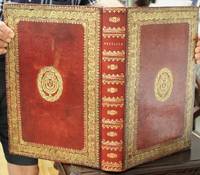
1570B6632Colophon: Antwerp: Gielis von Diest 1572-1573 Durch Abrahamum Ortelium. c. 1572 & 1570 -1595. occasional minor damp staining map of Morocco rebacked; rare oxidization spots otherwise a very good example. Binding: Expertly rebacked in style; saving the armorial seventeenth century heavily gilt panelled full red calf with Louis xiv’s fleur-de-lis bookplates on upper and lower covers; spine raised with six 6 bands gilt ornamented compartments and gilt lettered title on two; inner gilt dentelles. Notes: The 1572 German special edition plus other early maps.First very rare German 1572 edition in contemporary colour bound with maps from editions up to 1595.<br> <br>1572 Atlas with text in German and captions in Latin; extra plates in Latin one in Spanish. <br>A5v Ortelius publ. <br>“Abraham Ortelius or Ortels or Orthellius or Wortels 1527–1598 was a … cartographer geographer and cosmographer conventionally recognized as the creator of the first modern atlas the Theatrum Orbis Terrarum…. Along with Gemma Frisius and Gerardus Mercator Ortelius is generally considered one of the founders of the Netherlandish school of cartography and geography. He was also one of the most notable figures of the school in its golden age approximately 1570s–1670s. The publication of his atlas in 1570 is often considered as the official beginning of the Golden Age of Netherlandish cartography. … On 20 May 1570 Gilles Coppens de Diest at Antwerp issued Ortelius's Theatrum Orbis Terrarum the "first modern atlas" of 53 maps…. Three Latin editions of this besides a Dutch a French and a German edition appeared before the end of 1572. …†<br> <br>Tooley states: "The publication of this atlas marked an epoch in the history of cartography. It was the first uniformly sized systematic collection of maps of the countries of the world based only on contemporary knowledge".<br> <br>“The present work is the first German edition of the Theatrum with the German title “Theatrum oder Schawplatz des Erdtbodems …†The plates are identical; however the Index/ Register is reduced/ absent as explained at A5v of the German edition or Ortelius’ to the Reader or “Abraham Ortelius// Zum guetwilligen Leser.â€<br> <br>Shirley states: “From the first atlas in 1570 with 53 map sheets the work grew in size so that the final edition in 1612 contained over 160 items. Initially new maps were issued through a series of Additamenta between 1573 and 1597; in addition a classical addendum called the Parergon was produced from 1579 onwards.†<br> <br>"Shape and contents set the standards for later atlases when the centre of the map-trade moved from Antwerp to Amsterdam. The characteristic feature of the Theatrum is that it consists of two elements forming part of a unitary whole: text and maps. This concept for a 'Theatre of the world' was followed through the 17th century. Before Ortelius no one had done this" Koeman. <br> <br>Koeman 1961 mentions on p.138/ under 49.1 the 1572 German text edition following its 1570 Latin ‘Theatrum orbis terrarum’. <br> Size: Folio 414x285mm Illustration: Illustrated allegorical title; ornamental woodcut initials at openings of poetry dedication explanation of the allegorical title and the “to the Reader†as well as each of the 53 openings of explanatory texts preceding each plate; head and endpieces; all fifty-three 53 double page plates reflecting the same plates first published in the 1570 Latin edition; and various literature mention that only the first German edition is similar to First Latin edition. moreover the second edition had extra plates. the twenty 20 further double page plates representing twenty-eight 28 early maps this includes small insert maps dating up to 1595 both in contemporary hand colour and uncoloured. <br> <br> References: Lilly Library Indiana University Bloomington The Bernando Mendel Collection 1964: p.42; Koeman vol.III: pp.25-33; Shirley I: p.771 Pages: Ll: Bl. A1-6 with title and texts of poetry dedication explanation of allegory in title and to the reader; ill 53 DP plates; ill 20 interspersed DP plates bl. Category: Book Europe Germany; Book Atlas & Cartography; (Colophon: Antwerp: Gielis von Diest, 1572-[1573]) Durch Abrahamum Ortelium. unknown
15703370BNetherlands: Publisher Not Known 1570. a very good map 6 x 7"; Abraham Ortelius 1527-98. One of the first and greatest of the Dutch map makers. His "Theatrum Orbis Terrarum" of 1570 is generally considered the first modern Atlas. For this work large copper plates were engraved and from time to time alterations were made in these plates as various editions were issued even as late as 1693-- long after Ortelius' death. These Maps are much favoured by collectors because of a quaint rather archaic quality of drawing. They are exceedingly decorative and careful examination of any one of them will disclose curious little fugures scenes or other decorations. This map is one of these original engravings with nice old colouring. This map will make a nice gift and is quite scarce. First Edition. Softcover. Very Good/No Dustjacket. 6 x 7". Publisher Not Known Paperback
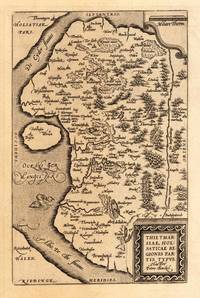
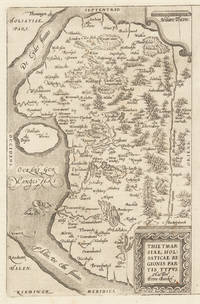
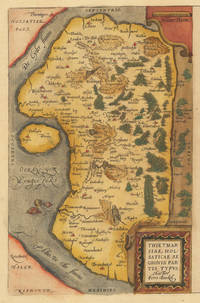
158427410Antwerpen: Platin 1584. Other. In excellent condition. 304 by 196mm 12 by 7 inches. Hand-Colored Original Copperplate Engraving by Abraham Ortelius depicting Thietmarsiae Holsaticae Regionis Partis Typus. Auctore Petro Boeckel. Published Antwerpen Platin 1584. Sheet: 304 by 196mm 12 by 7 inches. A fine and original hand-colored example of Ortelius's celebrated cartographic work documenting this region of Germany with the precision and decorative artistry characteristic of the 15800s. Abraham Ortelius 1527-1598 was a Flemish cartographer and geographer from Antwerp widely regarded as the creator of the first modern atlas. His landmark publication Theatrum Orbis Terrarum 1570 set the standard for atlas-making for the next century presenting uniform copper-engraved maps with scholarly commentary. By Ortelius's death the Theatrum had appeared in 25 editions in seven languages. In 1575 King Philip II of Spain appointed him Royal Geographer. His maps engraved with extraordinary precision are among the most sought-after in antique cartography held in collections including the Plantin-Moretus Museum in Antwerp the Library of Congress and the British Library.This original copperplate engraving with original hand coloring depicts the region of Thietmarsiae Holsaticae Regionis Partis Typus. Auctore Petro Boeckel. published in Antwerpen Platin 1584. The map records the political and geographic boundaries of the region as understood in 1584 offering a fascinating window into the history of German territorial organization. Sheet measures 304 by 196mm 12 by 7 inches. In good condition overall with minor signs of age appropriate for a 16th-century engraving. Ready to frame. Platin unknown
158430502Antwerpen: Platin 1584. Other. In excellent condition. 304 by 196mm 12 by 7 inches. Hand-Colored Original Copperplate Engraving by Abraham Ortelius depicting Thietmarsiae Holsaticae Regionis Partis Typus. Auctore Petro Boeckel. Published Antwerpen Platin 1584. Sheet: 304 by 196mm 12 by 7 inches. A fine and original hand-colored example of Ortelius's celebrated cartographic work documenting this region of Germany with the precision and decorative artistry characteristic of the 15800s. Abraham Ortelius 1527-1598 was a Flemish cartographer and geographer from Antwerp widely regarded as the creator of the first modern atlas. His landmark publication Theatrum Orbis Terrarum 1570 set the standard for atlas-making for the next century presenting uniform copper-engraved maps with scholarly commentary. By Ortelius's death the Theatrum had appeared in 25 editions in seven languages. In 1575 King Philip II of Spain appointed him Royal Geographer. His maps engraved with extraordinary precision are among the most sought-after in antique cartography held in collections including the Plantin-Moretus Museum in Antwerp the Library of Congress and the British Library.This original copperplate engraving with original hand coloring depicts the region of Thietmarsiae Holsaticae Regionis Partis Typus. Auctore Petro Boeckel. published in Antwerpen Platin 1584. The map records the political and geographic boundaries of the region as understood in 1584 offering a fascinating window into the history of German territorial organization. Sheet measures 304 by 196mm 12 by 7 inches. In good condition overall with minor signs of age appropriate for a 16th-century engraving. Ready to frame. Platin unknown
158430501Antwerpen: Platin 1584. Other. In excellent condition. 304 by 196mm 12 by 7 inches. Hand-Colored Original Copperplate Engraving by Abraham Ortelius depicting Thietmarsiae Holsaticae Regionis Partis Typus. Auctore Petro Boeckel. Published Antwerpen Platin 1584. Sheet: 304 by 196mm 12 by 7 inches. A fine and original hand-colored example of Ortelius's celebrated cartographic work documenting this region of Germany with the precision and decorative artistry characteristic of the 15800s. Abraham Ortelius 1527-1598 was a Flemish cartographer and geographer from Antwerp widely regarded as the creator of the first modern atlas. His landmark publication Theatrum Orbis Terrarum 1570 set the standard for atlas-making for the next century presenting uniform copper-engraved maps with scholarly commentary. By Ortelius's death the Theatrum had appeared in 25 editions in seven languages. In 1575 King Philip II of Spain appointed him Royal Geographer. His maps engraved with extraordinary precision are among the most sought-after in antique cartography held in collections including the Plantin-Moretus Museum in Antwerp the Library of Congress and the British Library.This original copperplate engraving with original hand coloring depicts the region of Thietmarsiae Holsaticae Regionis Partis Typus. Auctore Petro Boeckel. published in Antwerpen Platin 1584. The map records the political and geographic boundaries of the region as understood in 1584 offering a fascinating window into the history of German territorial organization. Sheet measures 304 by 196mm 12 by 7 inches. In good condition overall with minor signs of age appropriate for a 16th-century engraving. Ready to frame. Platin unknown
1584001118Antwerp: Christopher Plantin 1584. Map. Fine. Framed. Size: 328 x 447 mm. Framed size: 580 x 465mm. Hand-coloured engraved map published in the Theatrum Orbis Terrarum. Wooden moulding frames glazed and mounted late 20th century. In fine condition. A beautiful map of Transilvania with parts of Valachia with 3 decorative cartouches. Christopher Plantin Hardcover
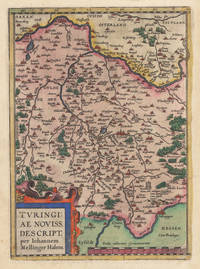
158035928Antwerpen: Platin 1580. In ausgezeichnetem Erhaltungszustand. 29.2 x 207 cm 11.5 x 825 inches. Hand-Colored Original Copperplate Engraving by Abraham Ortelius depicting Turingiae Noviss. Descript. per Iohannem Mellinger Halens. Published Antwerpen Platin 1580. Sheet: 29.2 x 207 cm 11.5 x 825 inches. A fine and original hand-colored example of Ortelius's celebrated cartographic work documenting this region of Germany with the precision and decorative artistry characteristic of the 15800s. Abraham Ortelius 1527-1598 was a Flemish cartographer and geographer from Antwerp widely regarded as the creator of the first modern atlas. His landmark publication Theatrum Orbis Terrarum 1570 set the standard for atlas-making for the next century presenting uniform copper-engraved maps with scholarly commentary. By Ortelius's death the Theatrum had appeared in 25 editions in seven languages. In 1575 King Philip II of Spain appointed him Royal Geographer. His maps engraved with extraordinary precision are among the most sought-after in antique cartography held in collections including the Plantin-Moretus Museum in Antwerp the Library of Congress and the British Library.This plate presents a original copperplate engraving with original hand coloring depicting the city of Turingiae Noviss. Descript. per Iohannem Mellinger Halens. published in Antwerpen Platin 1580. Such topographic views from Ortelius's workshop are primary historical documents of German urban history in the 1500s now prized equally by historians map collectors and interior decorators. Sheet measures 29.2 x 207 cm 11.5 x 825 inches. In good condition overall with minor signs of age appropriate for a 16th-century engraving. Ready to frame. Koeman Ort. 16A; Broe. 96. Platin unknown
158415872Antwerp 1584. Maps. Original hand color map of Italy showing Tuscany. Based on Bellamarti's map of Tuscany supplemented by classical sources. Part of a series of historical maps compiled by Ortelius called the Parergon Theatri which appeared from 1579 on. With three ornate cartouches and a sailing ship. French text on verso of the right side. Image size:19 1/8 x 12 5/8". Paper size: 21 1/2 x 15 1/2". With some faint offsetting at the right hand border and in the area of the two cartouches otherwise very good. unknown