987 résultats
1864WRCAM45849Boston 1864. 88110pp. plus folding map. Antique-style three-quarter calf and marbled boards. 19th-century ink stamp on titlepage contemporary inscription on second leaf. Internally clean. Very good. Devoted almost entirely to the Massachusetts war effort published early in January 1864. The folding map shows the Soldier's National Cemetery at Gettysburg dedicated Nov. 19 1863 with the long speech of Edward Everett of Massachusetts and the short "Dedicatory Speech by President Lincoln" better known as the Gettysburg Address. Also printed is the "Programme of Arrangements" of that day a list of Massachusetts soldiers killed at Gettysburg and buried there and details of the cemetery. Monaghan notes this as an early printing of the Gettysburg Address. MONAGHAN 48. hardcover books
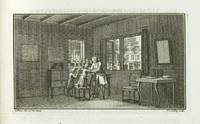
5031Thirteen folding engraved plates & four finely engraved large headpieces. xv 1 324 pp. one leaf of instructions to the binder. Large 4to cont. speckled calf spine nicely gilt. Leyden: J. & H. Verbeek 1744. First edition and a fine copy of this handsomely illustrated book. "Trembley discovered the hydra and was the first to observe in its asexual reproduction regeneration and photosensitivity in an animal without eyes. His experiments were of great importance in the study of regeneration of lost parts. He was the first to make permanent grafts and to witness cell-division."-Garrison-Morton 307. Trembley performed much of his research for the present book his most important while living as tutor in the household of William Bentinck in the mansion of Sorgvliet near The Hague. The four fine headpieces by Jan van der Schley after C. Pronk represent the fish ponds and the laboratory showing Trembley and his two students. Handsome copy. Old library stamp at foot of title with release stamp. ❧ D.S.B. XIII pp. 457-58. unknown books
186022476Columbus OH 1860. Hardcover. Fine. Book. Political Debates Between Hon. Abraham Lincoln and Hon. Stephen A. Douglas in the Celebrated Campaign of 1858 in Illinois. Columbus Ohio: Follett Foster and Co. 1860. 3rd edition with publisher's advertisements bound in. 268 pp. 6 1/2 x 9 1/2 in. Historical BackgroundLincoln's debates with incumbent Illinois Senator Stephen Douglas earned him national prominence. Slavery was the pressing national issue especially regarding its expansion into the western territories. Douglas authored the Kansas-Nebraska Act 1854 which effectively repealed the free-slave dividing line set by the Missouri Compromise 1820 at 36° 30' north latitude. Instead of banning slavery north of the line and banning south of it new states would instead decide on slavery's status within their borders by ""popular sovereignty."" On its surface Douglas's bill appeared to offer the nation a middle path on the contentious issue of slavery. Instead it would only muddy the waters on slavery.The Kansas-Nebraska Act was only one of a long list of compromises in the middle decades of the nineteenth century. Despite these attempts the slavery debate only became more heated throughout the 1850s. Northerners seeing the hypocrisy of ""states rights"" advocates chafed when a new Fugitive Slave Act 1850 required the use of federal marshals to return escaped slaves. An unintended consequence of Douglas's bill resulted in fraudulent elections and violence in Kansas in 1855 and 1856. South Carolina Representative Preston Brooks bludgeoned Massachusetts anti-slavery Senator Charles Sumner on the Senate floor after an 1856 speech. In 1857 the Supreme Court handed down the Dred Scott decision which decreed that African Americans could not be citizens and based on one's right to bring property across state lines effectively erased the division between free and slave states. Slavery unspoken but protected in the Constitution and mitigated by antebellum compromisers was a tinderbox about to roar to fire.Lincoln recognized the problems slavery presented for the nation and in his debates with Douglas focused his attention on the nationalization of slavery both West and North. After he was nominated as the Republican candidate for the Senate he spoke to the convention famously asserting that ""a house divided against itself cannot stand."" The House Divided speech delivered at Springfield Illinois on June 17 1858 is the opening piece of this book. Though he would lose the Senate race the rest of the book details Lincoln's intellectual combat with Douglas over slavery. This book is a third edition identified by the line over publisher's imprint on the back of the title page the numeral ""2"" at bottom of page 13 and publisher's advertisements bound in at head.Harrison Yerkes 1841-1899 enlisted as soon as the Civil War erupted but since he was under 21 years of age in 1861 his father removed him from service. As soon as he reached the age of majority he enlisted in the 31st Michigan Infantry Company and remained in the Army for the remained of the war. He returned to Michigan purchased two tracts of land which he farmed until retiring in 1891. He was a lifelong Republican though never held office.ConditionLight green boards faded blind stamped gilt lettering on spine ""Harrison Yerkes Northville Mich 1860"" erased from free front endpaper same present minus date on verso of ffep bep and back paste down. Very minor scattered foxing. Publishers advertisements bound into headmatter Minor shelf wear. Tight.SourcesPaul Leake History of Detroit Volume II Chicago: Lewis 1912 pp. 765.http://books.google.com/booksid=ZkUOAQAAMAAJ&pg=PA765&lpg=PA765&dq=harrisonyerkes&source=bl&ots=B-C-cmyauC&sig=gYKZ0sLD9AIMK2XCYuUZOEFn6eA&hl=en&ei=Wq7oTpO-CsLx0gHdisX-Bg&sa=X&oi=book_result&ct=result&resnum=8&sqi=2&ved=0CEwQ6AEwBw#v=onepage&q=harrison%20yerkes&f=false hardcover books
183719688Ooroomiah Urmia West Azerbaijan Iran March 3rd 1837. 3.5 pages in autograph ink in English on an unlined foolscap folio 13.75 x 8.75 inches approx. 850 words no cover. Docketed in autograph ink "Letter from Priest Abraham to Prof. Tyler March 2 1837. <br /><br />"Permit me to inform you that the year Mr. Perkins came to the county of Persia to the city of Tabreez; Mr. Perkins and Mr. Haas a German Preacher came to the country of Ooroomiah- first to Gavalan the village of Mar Yanna i.e Mar Yohanna who accompanied them to the city of Ooroomiah. They remained in the city a few days and then came to my village- viz. Geog Tapa which is four miles distant from the city and we accompanied them to Tabreez. There we read your language the English and Mr. Perkins read our language the Syriac about eight months. Then the Plague entered Tabreez and Mar Yohana and myself took leave of Mr. Perkins and returned to Ooroomiah. After about five months Mr. Perkins came again to Ooroomiah also Mrs. Perkins and Dr. Grant and Mrs. Grant." <br /><br />A lengthy letter in English from one of the earliest Nestorian Christians to assist the American mission to Persia launched in November 1835 by the arrival in Urmia of "the Apostle to the Persians" Justin Perkins 1805-1869 with his wife Charlotte Bass Perkins missionary physician Asahel Grant 1807-1844 and Grant's wife Judith Campbell Grant. <br /><br />Qasha Auraham this the Syriac rendering of Priest Abraham was a native of the village of Georgtapa just to the southeast of Urmia the nephew to village elder Muqdasi Mormezd who had suggested Auraham as the suitable local assistant for the missionary team; along with Mar Yohannon Auraham was instrumental in teaching the missionaries modern Syriac and in creating written vernacular Syriac. <br /><br />The goal of the American Board of Missions with the Perkins mission had been the revival of the Assyrian Church of the East rather than planting an independent Protestant church and Perkins worked with Auraham and other local scholars to create a written modern Syriac in order to translate Nestorian religious texts out of ancient Syriac into the vernacular. Linguistics in that period was something of a rugged pursuit in Azerbaijan and Auraham was instrumental in recruiting a noted scholar to the translation mission as later reported by Perkins in <i>Nestorian Biography</i>: <br /><br />"A few months after the missionaries arrived at Oroomiah Mr. Perkins sent priest Abraham of Geog Tapa and a Nestorian deacon to the mountains to obtain from thence an ecclesiastic to assist him in reducing the modern Syriac to writing and in the translation of the Scriptures. . . . There was real advantage in uniting the labors of a translator from the mountains with one on the Plain to harmonize so far as practicable the different dialects in the first reduction of the language to a written form. The messengers were charged to obtain 'the most learned' priest they could find. They boldly set off on foot—entered the formidable mountains and penetrated as far as Marbeshoo a large village in a secluded glen forty miles west of the Plain of Oroomiah. It was a fearful journey at that period. . . . At Marbeshoo they found priest Dunkha who had come down to that place from his more distant home on business. His fame as a very learned man was already known to the messengers and they at once engaged him to return with them to Oroomiah. A week after they left the missionary they introduced to his study priest Dunkha who though grotesquely clad in wild Koordish costume struck him as a very pleasant man." <br /><br />The collaboration with Dunkha is alluded to here by Auraham: <br /><br />"I would also inform you that we four viz. Mar Yohanna -- myself -- Joseph a brother of Mar Yohannan -- and little John the son of my uncle study your language. And Mr. Perkins and Mrs. Perkins and Mr. Grant and Mrs. Grant study our language the Syriac. We learn your language by little and little but Mr. Perkins learns our language very well. And I would further inform you that Mr. Perkins and Priest M'dunka i.e. Qasha Dunkha and myself are translating the Old and New Testament from the Syriac language into our dialect. Of the Old Testament we have translated the first book which as you know gives an account of the creation and three chapters of the second book. And of the New Testament we have translated the first fifteen chapters. If God smile upon us we shall be and by finish complete this good work." <br /><br />Since the first mission press would not be operational in Urmia until the arrival of printer Edward Breath in 1840 this earliest translation of the New Testament from the Peshitta rather than the Greek would not be published until 1846. Professor William S. Tyler of Amherst seems the likeliest recipient of this missive given that he had both been a friend and fellow-student of Perkins at Andover Theological Seminary and had taught with Perkins at the Amherst Academy; presumably this firsthand account from Auraham was meant both as English practice and—with its mixture of exotic romance and good works to drum up for support for the mission among kindred scholars in America. <br /><br />Some short closed tears along old folds but no loss; some light toning a little old creasing; in very good condition quite legible. With a preliminary typescript.<br /><br /><br /><br /><i>References: </i><br /><br />American Sunday-School Union.<i> The Nestorians of Persia: a history of the origin and progress of that people and of missionary labours among them.</i> Philadelphia: American Sunday-School Union 1848. <br /><br />Campbell William S. editor. <i>A Memoir of Mrs. Judith S. Grant Late Missionary to Persia.</i> New York: J. Winchester 1844. <br /><br />Murre-van den Berg H. L. "The Missionaries' Assistants: The Role of Assyrians in the Development of Written Urmia Aramaic." <i>Journal of the Assyrian Academic Society.</i> Volume X issue 2. October 1996. <br /><br />Perkins Justin and Fidelia Fiske. <i>Nestorian biography: being sketches of pious Nestorians who have died at Oroomiah Persia.</i> Boston: Massachusetts Sabbath School Society 1857. <br /><br />Tyler Cornelius ed. <i>Autobiography of William Seymour Tyler D. D. LL. D.</i> n. p.: Privately Printed 1912. <br /><br />See also the <i>Missionary Herald</i> December 1840 <i>inter alia</i> for extracts from Perkins' journal in Urmia and his accounts of both Priest Abraham and of Priest Dunka. books
183435602Rochester Boston MA 1834. A collection of six letters ranging in size from 8-1/2" x 11" to 8-1/2" x 12-3/4" five complete and one partial letter. All in ink manuscript on unlined paper. Old folds light toning occasional light foxing two on untrimmed paper. Most are addressed on final blank page and have wax seal remnants with the usual tear where wax was torn open occasional loss to a few letters. Overall Very Good. <br/><br/> Abraham Holmes was a Massachusetts legislator and attorney. Opposing ratification of the Constitution he was allied with the Anti-Federalist Otis family of Barnstable and Freeman family of Sandwich. He was an Anti-Federalist delegate from Rochester MA to the Massachusetts Ratifying Convention of 1788. He served as Sergeant in Capt. Barnabas Doty's company Col. Ebenezer Sproat's regiment during the Revolutionary War. He was admitted to the Plymouth County Bar in April 1800 at the age of forty-six. Though he had no formal legal education his admission to the Bar was permitted in consideration of his respectable official character learning and abilities and on the condition that he study three months in an attorney's office. He served as president of the Court of Sessions prior to his bar admission practiced law in Rochester until the early 1830s was a member of the State Constitutional Convention of 1820 and a member of the Executive Council from 1821 to 1823. Davis William T.: BENCH AND BAR OF THE COMMONWEALTH OF MASSACHUSETTS IN TWO VOLUMES VOLUME II. Boston: 1895. Page 235; Daughters of the American Revolution: LINEAGE BOOK VOLUME 12 1900 Page 15. <br/> William Baylies 1776-1865 and Francis Baylies 1783-1852 were brothers and partners in a Massachusetts law firm. William served as a U.S. Representative from Massachusetts in 1809 1813-1817 and 1833-1835; was a member of the Massachusetts House of Representatives from 1808-1809 1812-1813 and 1820-1821; and a member of the Massachusetts Senate from 1825-1826 and 1830-1831. Francis was a Congressman from 1821-1827; a member of the Massachusetts House of Representatives from 1827-1832 and in 1835; and the United States Charge d'Affaires Argentina in 1832. <br/> Holmes's Letters are as follows:<br/> 1 Letter to Francis Baylies Member of Congress dated at Boston January 19 1822. Holmes then member of the Massachusetts Executive Council awaits reports of the State legislative committees the incorporation of Boston "which will serve to procrastinate the session" the "suspense of the acceptance of office of the Judge of the Municipal Court" and issues such as criminal trials and the death sentence. "We pass our time here in Boston. the frequent application for appointments of both proper and improper candidates is rather an uncomfortable circumstance; but not so distressing as in affixing the time when convicts shall live no longer. to determine whether a convict shall die or not. It is probable we shall have the trial of both soon as there has been three capital convictions since I was here; one for murder and two for highway robbery. Those trials I attended; a Mr. Simmons formerly of Taunton as I am told managed the Defence; I can not record him as possessing great oratorical abilities but for integrity of arrangement and strength and argument perhaps no man of his years stands higher." Boston was incorporated March 4 1822 and the same year the Boston Police Court for criminal cases and Justice's Court for the County of Suffolk for civil claims were established. <br/> 2 Holmes's Letter to Francis Baylies dated at Boston March 28 1822. Holmes notes that the State legislative session is coming to a close. He anticipates orations which would "cause Tully to wish that he hadn't ever learned to speak; and all this for the good of the Nation."<br/> 3 Letter to William Baylies Counsellor at Law dated at Rochester MA October 24 1828 docketed October 25. An interesting three pages for lawyers anyway written in small yet legible hand on legal size paper. Holmes discusses with "great anxiety" and detail strategies and implications of the case entitled Rounseville Spooner versus Davis et ux. presentation of which had just concluded in the Massachusetts Supreme Court. Holmes and Baylies had represented Rounseville. Judge Wilde issued his decision on the following day October 25th. <br/> The case involved land in Fairhaven conveyed by Alden Spooner to Walter Spooner which later descended to Humphrey Davis's wife; but Alden Spooner later conveyed it again to Rounseville Spooner. What will be done in the case Holmes says "God only knows." Judge Wilde's Opinion reported at page 147 of Pickering's Reports Boston: 1830 gives the victory to Holmes and Baylies. <br/> 4 Letter to William Baylies Nov. 21 1828. Holmes discusses his excitement over a favorable verdict. "I rode into the yard. Mr. Bassett's son met me and informed me that the verdict of the jury was in favour of our client. Do you think I was sorry My heart jumped to my throat and with some difficulty I prevented my immortal spirit from bursting thro' the clay tenement. I am glad now that we did not use Joshua Vincent's Deposition for they would have objected and the point next word illegible for the Whole Court./ The next enquiry is Compensation. But I must stop with my hearty congratulations." Docketed on final page in part "Thomas v. D. & wife Nov. 21 1828."<br/> 5 Letter to William Baylies dated Rochester MA April 11 1834. A lengthy poignant letter discussing his advanced age and retirement. He no longer views political issues with the same interest; despite his overall good health he is troubled with lameness and currently lives with his son and his son's wife. "Some of my old customers are not willing to apply to anyone else."<br/> 6 Partial Letter to Francis Baylies December 1821. ". I dread the power of some of your colleagues. Mr. Saltonstall whose abilities are competent to make white and black synonymous terms I understand -which God forbid is strongly intrenched in a. Battery of Bankruptcy. unknown books
166035775London: Printed for Henry Herringman 1660. Hardcover. Very good/No dust jacket. London: Printed for Henry Herringman 1660. title page 19 pp. Hardcover. 4to. Bound in red cloth covered boards. "Ode Cowley" stamped in gilt on the front board. All edges dyed red. Signatures: A-B4 C-C3 A A3 A4 B2 B4 C3 unsigned. Light wear to boards with small patch of rubbing on spine. Corners slightly bumped. Pages have been trimmed leading to loss of text on title page top half of "Ode" page 9 most of the final line of text and the second set of page numbers near the top margin of each page. A small section at the lower margin of the final three leaves has chipped away not affecting text. Previous owner and bookseller notations on added ffep. Inked note on title page. With faults as noted quite good. Very good/No dust jacket. Cowley 1618-1667 a poet and sometime diplomat/secretary to Queen Henrietta Maria wife of Charles I may have worked as a spy for the royalists during the late Cromwell era. His collections "The Mistress" 1647 and "Poems" 1656 were immensely popular during the poet's lifetime. MacLean writes of this piece "Cowley's Ode is highly figurative blending biblical and classical allusions with motifs from astrology and medicine. Highly dynastic in argument the poem is structured as a royal entry in which the king other members of the royal family Monk and members of the two houses of parliament mingle with allegorical personifications of Liberty Plenty Riches Honour and Safety. Along the way Cowley notices the slightly embarrassing absence of Henrietta Maria who had stayed behind in France having become estranged from Charles as a result of her Catholicism." Samuel Johnson who made Cowley his first subject in "The Lives of the Poets" wrote that he had been "at one time too much praised and too much neglected at another." A lovely example of Restoration-era political verse. ESTCR202041; Wing 1994 C6677; Pforzheimer 229. Insurance required to ship this item. Printed for Henry Herringman hardcover books
186037152New York: Currier & Ives 1860. Lithograph broadside 13-1/2" x 18." Several closed tears two of them repaired with old tape on verso tear line affecting Seward's midsection. Good.<br/><br/> This scarce lithograph is a detailed humorous "parody on the field of presidential candidates and their supporters in the 1860 campaign." Bell and Everett for the Constitutional Union Party are there: Bell a muscle man holds Everett aloft on a barbell. Horace Greeley's "political ambitions are mocked by the artist who shows him vainly attempting to climb up a horizontal bar." Lincoln is at the center: he has "successfully mounted a balance beam constructed of wooden rails." The New York Courier's James Watson Webb's does a backward somersault in the foreground. <br/> The broadside evidently issued after the parties' nominating Conventions because Seward is depicted as a cripple "on crutches and with bandaged feet." Breckinridge and Douglas "the two sectional Democratic candidates compete in a boxing match."<br/>Reilly 1860-34 quotations are from Reilly. Weitenkampf 123. OCLC records copies at AAS Clements and Lincoln Pres. Lib. under three accession numbers as of October 2020. Currier & Ives unknown books
1864WB163441864. Hardcover. Very Good. Rare broadside tipped into a copy of The Early Life of Abraham Lincoln: Containing many unpublished documents and unpublished reminiscences of Lincoln's early friends. TARBELL Ida M. Assisted by James McCann Davis. Published by McClure New York 1896. The broadside printed in two columns presents the platforms of the Republicans who in June in Baltimore nominated Lincoln and the Democrats who in August in Chicago nominated McClellan. <br/><br/> hardcover books
18602741Columbus: Follett Foster and Company 1860. First edition. Original publisher's cloth binding with some rubbing to spine and extremities. First issue with all points as called for by Monaghan no line over the publisher's slug on title verso and the number 2 at the foot of page 17. Collates viii 268 pages: lacking front endpaper else complete. Some light scattered foxing as is common in American imprints of this era but in all a tight pleasing copy of this book documenting an important moment in American politics.<br/><br/>Documenting Lincoln and Douglas' rivalry for the 1858 U.S. Senate race this title captures an important moment of flux for American politics. Just beginning his political career the young Lincoln earned the Republican nomination right as the party was forming; and he already had proven himself "a leading figure because of his adroit and earnest dealing with the problem of slavery" Oxford Companion. One of his great strenghts was his eloquence -- something Lincoln put on full display in these debates against Douglas including the utterance of one of his most memorable lines that "A house divided against itself cannot stand." Though Lincoln lost the Senate in 1858 he had managed to develop a national reputation and in 1860 the year of this book's release would win the Presidency.<br/><br/>Monaghan 69. Follett, Foster and Company unknown books
1667016836London: Printed by James Cotterel 1667. Book. Good condition. Hardcover. First Edition. Quarto 4to. Two works bound in one volume. "Poems" iii 68 pages of text. Heavily browned and irregularly discolored with some minor early marginalia with several corners or small chips repaired. "A Sermon." v 30 pages; Printed for Brabazon Aylmer London 1683. Title continues ".Chappel Octob. 29. 1682." Wing 2nd ed.; M685. There are a few small stains but the text reamains clean and in excellent condition. Bound in circa 1840 three quarter leather with marbled paper-covered boards; minor to moderate ubbing and shelfwear to the binding. Both of these are highly uncommon rarely offered on the market. Both are first editions. While these measure only 8 inches in height they are indeed quartos. Printed by James Cotterel Hardcover books
1932157782New York: Liveright Inc Publishers 1932. Octavo pp. 1-8 9-295 296: blank original decorated black cloth front and spine panels stamped in gold top edge stained yellow fore and bottom edges rough-trimmed. First edition. Barron ed Fantasy Literature 3-242. Bleiler The Guide to Supernatural Fiction 1159. Clareson Science Fiction in America 1870s-1930s 554. Schlobin The Literature of Fantasy 741. In 333. Bleiler 1978 p. 138. Reginald 10061. Tiny rubber-stamped name J. M. Walsh on front free endpaper with rubber-stamped date of receipt 9 June 1932. A fine copy in very good four-color pictorial dust jacket with some wrinkling to front panel and clipped price the price is clipped because this copy was sold resold in the UK; the book ticket of The American Book Supply Co. Ltd." is affixed to the front paste-down. Quite a nice copy. #157782 Liveright Inc Publishers unknown books
186322448.01New York N.Y. 1863. No binding. Fine. New York Journal of Commerce. Newspaper. New York Journal of Commerce. New York N.Y. January 3 1863. 4 pp. 24 x 32 1/2 in. An early report of the Emancipation Proclamation where the editors describe Lincoln's bold move as ""a farce coming in after a long tragedy.Most of the people regard it as a very foolish piece of business."" Historical BackgroundThe Emancipation Proclamation was the single most important act of Lincoln's presidency. Its text reveals the major themes of the Civil War: the importance of slavery to the war effort on both sides; the courting of border states; Lincoln's hopes that the rebellious states could somehow be convinced to reenter the Union; the role of black soldiers; Constitutional and popular constraints on emancipation; the place of African Americans in the United States and America's place in a worldwide movement toward the abolition of slavery. In sounding the death knell for slavery and the ""Slave power"" the President took a decisive stand on the most contentious issue in American history and the United States joined other western nations in embracing a future of free labor.In addition to the moral impact of this ""sincerely believed.act of justice"" the Proclamation aided the Union cause tangibly and decisively. Because it focused on territory still held by the Confederacy only small numbers of slaves compared to the total slave population were immediately freed. However the Proclamation deprived the South of essential labor by giving all slaves a reason to escape to Union lines. Failing that it freed slaves immediately upon the Union Army's occupation of Confederate territory. The Proclamation also encouraged the enlistment of black soldiers who made a crucial contribution to the Union war effort. Moreover England and France who had already abolished slavery were restrained from supporting the Confederacy which would have been in their own economic interests. Lincoln summed up the Proclamation's importance in 1864: ""no human power can subdue this rebellion without using the Emancipation lever as I have done.""Nonetheless the editors of the Journal of Commerce disagreed and their opinion reflects the truly controversial nature of the act for many contemporary Americans. books
15860Abraham Lincoln. "The Gettysburg Address" contained in "Report of the Select Committee Relative to the Soldiers' National Cemetery Together with the Accompanying Documents as reported to the House of Representatives of the Commonwealth of Pennsylvania March 31 1864." Harrisburg: Singerly & Myers State Printers 1864. Lincoln's famous speech was originally delivered at the Dedication of the Soldiers' National Cemetery in Gettysburg; this early volume following shortly after that dedication records the events of the day details of the cemetery and the soldiers interred there and the original text of the Gettysburg Address. <br/><br/>The Gettysburg Address is a speech that U.S. President Abraham Lincoln delivered during the American Civil War at the dedication of the Soldiers' National Cemetery in Gettysburg Pennsylvania on the afternoon of Thursday November 19 1863 four and a half months after the Union armies defeated those of the Confederacy at the Battle of Gettysburg. It is one of the best-known speeches in American history. This is the first Pennsylvania printing of the Address. It occupies the second unnumbered page of this volume on the recent consecration of the Soldier's National Cemetary near the end. Included also in the Report is material on the creation of the cemetery with statistical data names of the soldiers buried there and the program at the dedicatory ceremonies including the benedictions and the oration of the featured speaker Edward Everett. Wills's study of the Address discusses its textual variations and the surprising difficulty in determining precisely what Lincoln said. As printed here it tracks what Wills has identified as the likely text spoken by Lincoln; but differs in several respects from the 'final version' for example the omission of 'poor' in 'our poor power to add or detract.' In fair condition. Foxed frequent margin spotting. Original cloth worn at spine and extremities of boards with cardboard below cloth revealed. One full-page map of the battlefield and hospitals; one folding map of the cemetery grounds. unknown books
18661009808vo one sheet printed on both sides. Even toning and aging small closed tear to the upper margin; otherwise very good. This is a rather scarce government document that informs the military that the "Thirteenth Amendment" has passed and slavery is officially abolished. Article XIII states "Neither slavery nor involuntary servitude except as a punishment for a crime whereby the party shall have been duly convicted shall exist within the United States or any place subject to their jurisdiction." This document is signed in type by William H. Seward 1801-1872 as the Secretary of State. Congress would follow with a Civil Rights Act of 1866 to give African Americans the same rights as all citizens but this small printed document presenting the essence of the "Thirteenth Amendment" is an important piece of history. ANB. books
186323577.01<p>"<i>and that Government of the people for the people and for all people shall not perish from earth.</i>"</p><p>As printing technology advanced through the middle decades of the nineteenth century illustrated newspapers grew in popularity even though their engravings added a few weeks to press time. <i>Leslie's</i>printing—from December 5—includes an article containing the full text of Lincoln's timeless speech page 11. Illustrations include a centerfold spread with the formal dedication ceremony prominently placed and smaller views of Union and rebel graves defensive works Meade's headquarters and a view of the town centerfold. A large illustration of "<i>The War in Tennessee—Lookout Mountain and Its Vicinity</i>" appears on the front page.</p><p>There is no definitive text that captures exactly how Lincoln spoke that day though the AP reporter's text is most familiar. <i>Leslie's</i> printing following the <i>Philadelphia Enquirer</i>version contains variations most notably in the final two sentences regarding the nation's unfinished work and closing phrase of "<i>Government of the people for the people and for all people</i>" rather than "<i>of the people by the people and for the people.</i>"</p> <b>ABRAHAM LINCOLN. GETTYSBURG ADDRESS.</b>Newspaper <i>Frank Leslie's Illustrated Newspaper</i> New York December 5 1863. 16 pp. complete.<p><b><br /></b></p><p><b>Excerpt:</b></p><p>"<i>Fourscore and seven years ago our fathers brought forth upon this Continent a new nation conceived in liberty and dedicated to the proposition that all men are created equal. Now we are engaged in a great civil war testing the question whether this nation or any nation so conceived so dedicated can long endure. We are met on the great battle-field of that war. We are met to dedicate it on a portion of the field set apart as the final resting place of those who gave their lives for the nation's life; but the nation must live and it is altogether fitting and proper that we should do this. In a larger sense we cannot dedicate we cannot consecrate we cannot hallow this ground in reality. The number of men living and dead who struggled here have consecrated it far above our poor attempts to add to its consecration. The world will little know and nothing remember of what we see here but we cannot forget what these brave men did here. We own this offering to our dead. We imbibe increased devotion to that cause for which they here gave the last full measure of devotion; we here might resolve that they shall not have died in vain; that the nation shall under God have a new birth of freedom and that Government of the people for the people and for all people shall not perish from earth.</i>"</p><p><b>Historical Background</b></p><p>Though November 20th imprints are the most valuable newspaper publications of the Gettysburg Address none are as lavish as this issue of <i>Leslie's</i> and none show the cemetery or provide images of the ceremony. It is also interesting to note that the leading illustrated newspaper <i>Harper's Weekly</i> did not publish the Address or illustrate the ceremony. This <i>Leslie's</i> issue published in far smaller quantities than <i>Harper's</i> is quite scarce.</p><p><i>Frank Leslie's Illustrated Newspaper</i> was founded in 1852 and published until 1922. Originally established by <i>Illustrated London News</i>owner Frank Leslie 1821-1880 the weekly continued under the guidance of his widow suffragette Miriam Florence Leslie from 1880 until 1902 when she sold the highly recognizable brand. Specializing in patriotic topics and heavily reporting war efforts from the Civil War to World War I the newspaper also covered Arctic exploration the Klondike Gold Rush strikes and sporting events. Civil War reporting and illustration was among the paper's most successful ventures.</p><p><b>Historical Background</b></p><p>Lincoln's speech delivered at Gettysburg National Cemetery on November 19 1863 has endured as a supreme distillation of American values. Over the past 150 years it has become a compelling testament to the sacrifices required to achieve freedom for all Americans. Lincoln made his speech at the cemetery's dedication some four months after the bloody and pivotal battle that turned the tide of the Civil War in favor of the Union. Edward Everett the most famous orator of his day spoke first and his address took some ninety minutes to deliver. He evoked the ancient Greeks who save their society by defeating the Persians at Marathon drew upon Wellington's victory over Napoleon at Waterloo and then moved to a history of the Battle of Gettysburg—America's decisive victory in the struggle to save the nation. Though a masterpiece of period it has been largely forgotten.</p><p>Lincoln's speech delivered in only a few minutes has persisted despite his assertion that "the world will little note nor long remember what we say here." Much has been written about Lincoln's famous speech from whether he read it or memorized it to when and where he wrote it. Many Americans believe Lincoln wrote the speech on the back of an envelope while riding the train to Gettysburg. This charming piece of fiction originated in Mary Shipman Andrews's 1906 book <i>The Perfect Tribute</i>. The real Address's writing is more complex. When Secretary of State William Seward gave a prepared speech on the evening of November 18 he gave a copy to the Associated Press. Reporters then repeatedly harassed John Hay one of Lincoln's personal secretaries for a copy of the President's speech. Hay demurred having neither the text nor any idea when it would be available. Based on the paper Lincoln used for his two drafts one page of Executive Mansion stationery and a page of lined paper then 2 identical pages of lined paper historian Gabor Boritt has concluded that the "likelihood remains that having written the first part of his speech in Washington Lincoln finished his First Draft in the evening in Gettysburg and then hurriedly wrote his Second Draft the next morning" Boritt 273. The text of the second draft is closest to the words recorded by reporters at the scene and is generally considered to be Lincoln's reading copy.</p><p>Newspaper copies and reports are another story one complicated by the fact that most witnesses to the dedication ceremony and speech outlived Lincoln by decades. But the words he spoke at Gettysburg only gained traction as his seminal contribution in the 1880s. As both the Lincoln legend and the speech's significance grew following the Civil War Reconstruction the Centennial and the rise of Jim Crow many more people than could have been possibly involved in the event have staked their claims to a Gettysburg Address connection.</p><p>With the advent of the telegraph news reporting had become big business and Lincoln surrounded himself with the press corps. Roy Basler editor of the <i>Collected Works of Abraham Lincoln</i> noted four reporters making shorthand notes of the speech: Associated Press and <i>New York Herald</i> reporter Joseph Gilbert <i>Boston Daily Advertiser</i> reporter Charles Hale and reporters from the <i>Chicago Tribune</i> and <i>Philadelphia Enquirer</i>. Gabor Boritt author of the definitive <i>The Gettysburg Gospel</i> adds John Hay one of Lincoln's personal secretaries to the list and refers to at least 23 additional reporters on the scene including many of Lincoln's allies in the Republican press. Known as "Lincoln's dog" <i>Philadelphia Press</i>owner John Forney offered a drunken pro-Lincoln rant on the evening before the speech but he was sober enough to wait for a slew of correspondents to arrive to take down his words.</p><p>What has come down as the standard version of the Address was compiled from Lincoln's drafts reports of what he spoke at the time and later revisions made by Lincoln himself. What is certain however is that "variations of the AP version reached more Americans in 1863 than any other" Boritt 239. The <i>New York Herald</i> received the text by telegraph and published it the next day. Later when Lincoln penned copies of his speech he is said to have referenced the AP report. A longtime story credits Joseph I. Gilbertof the Associated Press as having had "actually consulted Lincoln's delivery text briefly after the ceremony." This noted Garry Wills in 1992 "makes his version more authoritative for some scholars." Wills correctly credits the AP text as authoritative and in terms of cultural significance no other version had the reach of the AP's wording. The AP version and its slight variants usually comma placement and capitalization are easily identifiable because of the phrase "dedicated here to the refinished work…" rather than the correct "unfinished work."</p><p>However Gilbert's claim to be the reporter who delivered the AP's text does not withstand scrutiny. Gilbert did work for the AP at the time of the speech but he only made his assertion in 1914. In the ensuing fifty-four years the event's stature had grown to near-Biblical proportions. Gilbert recalled being so taken with Lincoln's words that he stopped recording the speech in shorthand. He claimed the President fortuitously allowed him to look at the manuscript copy and Gilbert insisted that "the press report was made from the copy no transcription from shorthand notes was necessary Boritt 371. However the AP version missed the word "poor" which other reporters caught and was present in the second draft; it also contained the phrase "under God" which was absent from the draft and notes five interruptions for applause followed by sustained applause at the speech's conclusion. When asked in 1917 Gilbert denied hearing any applause at all. These and other critical elements of the AP text cast serious doubt on Gilbert's claims.</p><p>Gabor Boritt writes that <i>Boston Daily Advertiser</i> reporter Charles Hale's eyewitness handwritten version should be preferred since it relied only on what Lincoln said; although one could counter-argue that he may not have captured Lincoln's words exactly. Both Boritt and Wills agree that while many other reporters' transcripts are generally inferior they nevertheless captured the word "poor" that both the AP and Hale missed. Interestingly when Hale's paper the <i>Boston Daily Advertiser</i> first published the Address on November 20 the paper incorrectly printed "The world will note nor long remember what we say here but it can never forbid what they did here" omitting the word "little" before "note" and changing "forget" to "forbid" —an odd discontinuity for a claim to the authoritative text though the reporter lamented that the speech had "suffered somewhat at the hands of telegraphers."</p><p>Versions printed on November 20 1863 are the Address's first appearance anywhere and are highly desirable as are other early printings. The <i>Washington Daily Chronicle</i> also owned by John Forney published Edward Everett's speech in its entirety but failed to include Lincoln's words in their November 20 edition so the paper published a 16-page pamphlet entitled "The Gettysburg Solemnities" dated November 22. It contained a number of the day's speeches and was the first time Lincoln's speech was printed separately. There are only three known copies a fourth disappeared from a library the last one on the market having sold at auction and then resold privately for approximately $650000. The first publication in book form printed by Baker and Godwin of New York was entitled <i>An Oration Delivered on The Battlefield of Gettysburg November 19 1863 at the Consecration of the Cemetery Prepared for the Interment of the Remains of Those Who Fell in the Battles of July 1st 2d and 3d 1863</i> also appeared within the week. Copies have sold privately for over $30000.</p><p><b>Gettysburg Address Manuscripts</b></p><p>Five manuscript versions written in Lincoln's hand are known. Library of Congress.</p><p>1. First draft the Nicolay copy after Lincoln's personal secretary John Nicolay. Library of Congress.</p><p>2. Second draft the Hay copy after Lincoln's personal secretary John Hay.</p><p>Much ink has been spilled over which of the first two was the copy Lincoln read; the answer is probably neither.</p><p>Three more versions were written later for charitable purposes and more closely approximate the words that Lincoln actually spoke.</p><p>3. The copy given to Edward Everett was intended as a fundraiser for the New York Metropolitan Fair; it is now at the Abraham Lincoln Presidential Library in Springfield Illinois.</p><p>4. George Bancroft requested a copy to be lithographed and sold at the Baltimore Sanitary Fair to support the troops. Lincoln agreed but did not pen a title or signature and ran into the margins. Cornell University.</p><p>5. Because the Bancroft copy was impractical to reproduce Lincoln penned another adding the title and his signature. This known as the Bliss copy after Bancroft's stepson is at the White House.</p><p><b>Condition</b></p><p>Some loss to the gutter margin; the only text/engravings affected are along the vertical fold of the center spread on pages 8-9 168-69. The majority of the issue including the text of Lincoln's Address is in good or better condition.</p> books
1643178066Paris: Pierre Des-Hayes 1643. Hardcover. Good staining to boards and text block book plate inside front cover age toning throughout as expected with age. Text and illustrations are otherwise very clear!. Tan vellum boards with faded off-white title block on spine 8 28 pages 2 68 pages 34 unnumbered leaves of plates bw illustrations throughout. Text in French. The Universal Way of Mr. Desargues Lyonnois: To Lay The Axle & Place The Hours & Other Things on the Sun Dials. Added engraved illustrated title page special engraved title page with ornamental border following p. 28. The plates are mostly printed on both sides of the leaves and many appear multiple times final plate numbered '28'. Engravings by Abraham Bosse. Pierre Des-Hayes hardcover books
109210Rare chromolithographic portrait of Abraham Lincoln in the style of E.C. Middleton. In near fine condition. Framed. The entire piece measures 22 inches by 19 inches. Abraham Lincoln served as the 16th President of the United States from March 1861 until his assassination in April 1865. He led the United States through its Civil War and in doing so preserved the Union of the United States of America abolished slavery and strengthened the federal government. Lincoln began constructing his cabinet on election night and sought to create a cabinet that would unite the Republican party. His eventual cabinet would include his primary rivals for the Republican nomination and although his appointees held differing views on economic issues all were opposed to the expansion of slavery into the territories of the United States. The most senior cabinet post of Secretary of State was appointed to William Seward who had recently failed to win the 1860 Republican presidential nomination and Lincoln's choice for Secretary of the Treasury was Ohio Senator Salmon P. Chase Seward's primary political rival and the leader of a radical faction of the Republican party that sought the immediate abolition of slavery. unknown books
1863021633New York City: New York Daily Tribune. Good with no dust jacket. 1863. Newspaper. Original issue of the New York Daily Tribune November 21 1863 featuring a very early printing of Abraham Lincoln's Gettysburg Address. Paper measures 15 5/8 x 19 7/8 inches. Typical disbound tears to spine not intruding into text save for a couple tears to final leaf but no loss of text. Uneven trimming to bottom edge with loss of a line of text on several pages. Front page headlines include "Entire Success of the Rio Grande Expedition" "Siege of Charleston" and "From the Army of the Ohio". The report from the Gettysburg Ceremonies and Consecration of the National Cemetery fill three columns on page 2. Lincoln's short speech was preceded by several other orators including Edward Everett's ninety minute speech. Lincoln's 271 word speech remains one of America's best known and memorable speeches soon to be published in newspapers throughout the United States. Some Eastern papers published the speech on November 20th. Versions printed on the 20th are the Addresss first appearance and are highly desirable as are other early printings such as this copy. ; 12 pp . New York Daily Tribune unknown books
1860WRCAM54620New York 1860. 117pp. plus 4pp. of ads including rear wrapper. Frontispiece portrait. Original printed wrappers. Wrappers chipped and worn spine perished lower quarter of rear wrapper torn away. Very light dampstaining occasional spotting. Good. A rare campaign biography of Lincoln with a portrait of a beardless Lincoln and his first name spelled incorrectly. Prints many of his speeches and glorifies his backwoods origin and includes a very brief biographical sketch of Hannibal Hamlin. ".This was the first life of Lincoln in book form" - Howes. HOWES L341 "aa". STREETER SALE 1744. SABIN 41200. MONAGHAN LINCOLNIANA 92. unknown books
1865235590Boston: Oliver Ditson & Co 1865. First edition front wrapper without portrait of Lincoln appearing in later issues. Engraved title and piano score; 5 pp. 1 vols. Folio. Loose as issued; split along spine with some chipping to extremities. First edition front wrapper without portrait of Lincoln appearing in later issues. Engraved title and piano score; 5 pp. 1 vols. Folio. Donizetti died 17 years before Lincoln having gone mad from syphilis. His Funeral March gained a measure of recognition in America after it was performed during Lincoln's funeral ceremonies. It is a heavy solemn piece in a minor with droning octaves in the bass a haunting chromatic figure in the middle register and a lyrical upper voice. see Barret Sale Lot 693; Stern Collection of Lincolniana Oliver Ditson & Co unknown books
1860116741Columbus: Follett Foster and Company 1860. First edition second issue with the Table of Contents on page ii of "the most important series of American political debates" Howes L338. Octavo original publisher's brown cloth with gilt titles to the spine and elaborate blind stamping to the front and rear panels. In very good condition. Ownership name. Although the debates were originally performed during the Illinois Senatorial race in 1858 they were published when both men became presidential candidates in 1860. Douglas won the race for senator but the debates were his undoing in the presidential race as Lincoln reminded voters repeatedly of the inconsistency between Douglas' principle of "popular sovereignty" in which the new territories would individually determine the status of slavery and the Dred Scott decision in which the Supreme Court declared that slavery would not be excluded from the territories by Congress. As a result Douglas was too tolerant of slavery for many northerners and not vigorous enough for Southern Democrats. Somewhat surprisingly for an attorney Lincoln did not seek Douglas' permission to publish a book of their combined speeches although Douglas was later given the last-minute opportunity--he declined--to make corrections to his own remarks" Morris 121. Follett, Foster and Company hardcover books
168643445Nuremberg: Johann Georg Endter 1686. <p>Linden Johannes Antonides van der 1609-64. Lindenius renovatus sive . . . de scriptis medicis libri duo . . . noviter praeter haec addita plurimorum authorum . . . a Georg. Abrah. Mercklino . . . 4to. 22 210 221-1101 55pp. Lacking Part II "Cynosura medica" approx. 170pp. containing Mercklin's subject index to Lindenius renovatus. Engraved frontispiece. Nuremberg: Endter 1686. 200 x 163 mm. Vellum ca. 1686 head of spine and hinges repaired. Occasional light foxing but fine. From the library of anthropologist Johann Friedrich Blumenbach 1752-1840 with booklabel bearing his autograph signature on the front pastedown and annotations and underlinings possibly his on at least 50 leaves. Modern bookplate of Gordon W. Jones M.D.</p> <p>First Edition of Georg Abraham Mercklin's considerably expanded version of van der Linden's bibliography of medicine. First published in 1637 Van der Linden's was the most complete medical bibliography of its time; it was also the most modern of early medical bibliographies both in its contents and format. Mercklin 1664-1702 supplied corrections biographical material on authors and additions that included the innovative listing of articles from the publications of learned societies.</p> <p>This copy is from the library of Johann Friedrich Blumenbach the founder of modern anthropology. He was the author of De generis humani varietate nativa 1775 in which he divided humanity into four races based on head shape skin color and hair type; he later added a fifth race and in the expanded third edition of De generis 1795 he introduced the famous terms "Caucasian Mongolian Ethiopian American and Malayan" to describe the "white yellow black red and brown" varieties of mankind. Brodman Development of Medical Bibliography pp. 29-33; no. 14. Fulton Great Medical Bibliographers pp. 35-36. </p> . Johann Georg Endter unknown books
1910WRCAM52703New York 1910. 65pp. plus photographic frontispiece portrait. Original printed wrappers. Corners somewhat worn. Internally clean. Very good. Prospectus for the quite rare visual biography THE PHOTOGRAPHS OF ABRAHAM LINCOLN made up of prints from the photograph collection of Frederick Hill Meserve. Meserve purchased nearly the entire Brady archive of Lincoln material and arranged for facsimiles of the numerous photographs to be published in the advertised volume which was limited to 102 copies. The book was published the following year. Meserve is considered to be the first great American photograph collector and he amassed the definitive collection of Abraham Lincoln photographs during his pursuits. The collection is now at Yale. <br> <br> A rare piece of printing in and of itself with a photographic frontispiece portrait of Lincoln. unknown books
1657012951Nurnberg: Zufinden bey Paulus Fursten Kuntsthandler 1657. Book. Very good condition. Hardcover. First Edition. Oblong 16mo. Engraved title page 20 leaves of introductory text followed by 71 leaves of text followed by four leaves of black and white copper-engraved plates numbered I-IIII followed by 226 leaves of black and white copper-engraved plates numbered 1-226. Each engraved leaf is engraved on one side only. Original full leather binding is moderately worn on the exterior hinges and extremities with minor warping of front board. Front endpapers are lacking. Minor staining to the fore-edge of the majority of pages affecting the margins only. Minor foxing scattered throughout in several instances affecting the plates. Previous owner's stamp circa 1900 on title page and half title page and bookplate on front pastedown endpaper: Henry von Wackerbarth Chicago. The final two leaves of plates are creased on the edge not affecting the engravings and the rear endpapers are heavily creased. A very attractive first edition of this work. No author is stated on the title page but Sibmacher is mentioned in the text. "gedruckt bey Christoff Gerhard zufinden bey Paulus Fursten." Title continues "aussgebildet zuersehen. Erste-Theil.". Zufinden bey Paulus Fursten Kuntsthandler Hardcover books
1587239611Antwerp: Abraham Ortelius 1587. unbound. Map. Uncolored engraving. Image measures 14" x 19.5".<br/><br/> These two maps on one sheet detail areas of western Mexico above and the Greater Antilles below. Ortelius created them from information compiled by other mapmakers such as Mercator Guttierez and Alsons de Sata Cruz. These sources allowed him to include a wealth of detailed information that is mostly if not entirely accurate. Above the map of western Mexico shows the area around Culiacan and the Spanish settlement of Villa S. Michaels which was notable in the period for its silver mines. It begins at the Yucatan and extends through the Cayman Magnus and the Caymanes. The map below illustrates the Greater Antilles including Cuba Hispaniola Jamaica St. Jois Insula St. Johns the Bahamas Virgin Islands and the Windward Islands all in impressive detail. The section of South Florida also shows suggestion of the Florida Keys which was uncommon for these period. A notable error is that the Tropic of Cancer is labelled as the Tropic of Capricorn. A highly decorative note with strapwork and foliage fills the acific Ocean to the left of Mexico and provides information about the upper map. The lower map also has a framed cartouche with birds perched atop it. Two ship illustrations float in the choppy seas around the islands. The map is a first state from the 1587 French edition of Ortelius's "Theatrum Orbis Terrarum." It is in good condition with no chips or tears. Stain at the center seam in the lower margin not affecting the image some overall stains. French text on verso. Abraham Ortelius 1527--1598 a Flemish cartographer and geographer is widely regarded as one of the important and influential cartographers in history. He is known for his "Theatrum Orbis Terrarum" which was the first modern atlas. This map is an uncommon uncolored example of this wonderful map by Ortelius.<br/><br/> Abraham Ortelius unknown books