312 résultats
175532315-315Altenburg Richter 1755. With engr. title-vignette by G. L. Crusius showing a bearded scholar with a telescope and 22 engr. folding plates. Title 10 unn. leaves 531 pp. 5 pp. table of contents and errata. 4to. Contemp. plain boards somewhat rubbed. Altenburg Richter 1755. First German edition of Robert Smith's 1689-1768 "A compleat system of opticks in four books" 1738. It was translated and revised by Abraham Gotthelf Kästner 1719-1800 professor of mathematics at Leipzig later of mathematics and physics at Göttingen teacher of Lessing and Lichtenberg friend of Gottsched. Smith's work "became probably the most influential optical textbook of the eighteenth century. It was also published in Dutch in 1753 in German in 1755 and in two different French translations in 1767" DSB. The work consists of two books a general text on light reflection the eye colors etc.; and a second book divided into three parts: analytical catoptrics analytical dioptrics and the manufacturing of optical instruments; the remaining texts are Kästner's own contributions. - Light browning throughout otherwise a good wide-margined copy. - Poggendorff I 1219; DSB XII 477 Smith and VII 206 Kästner. SCIENCE: OPTICS ; Altenburg, Richter hardcover
1787713561787. WEST Benjamin. PANTHER Abraham. Bickerstaff's Almanack for the Year of Our Lord 1788. Being Bissextile of Leap Year and Twelfth of American Independence. Norwich. 1787. 24pp. Original plain wrappers stitched as issued. Faint contemporary ink notations on covers. Minor toning light foxing. Very good. A rare and important Bickerstaff's almanac containing the first printing of the famous Abraham Panther Indian Captivity. Titled "A Surprising account of the Discovery of a Lady who was taken by the Indians in the year 1787 and after making her escape she retired to a lonely Cave where she lived nine years" the captivity narrative covers pp.19-24 of the almanac. The captivity account was found to be fictional but was nonetheless popular and reprinted more than twenty times between this first appearance and 1814. Rare with only three copies reported in ESTC. EVANS 20875. DRAKE 416. TRUMBULL 1846. VAIL 767. SABIN 93891. AYER SUPPLEMENT 13. JONES CHECKLIST 608. ESTC W25617. unknown
1714355Leiden 1714. Avec un Mémoire instructif sur les Causes de la Guerre arrivé en Suisse l'an 1712 par Gottlieb Kypseler de Munster 4 tomes Guter Zustand Originalausgabe Pierre van der Aa Kl.-8°. Ldr. Raetica/ Helvetica unknown
1776133671Milan: Giuseppe Galeazzi 1776. First edition in Italian of part of de Moivre's early and important contribution to the calculus of games of chance and probability theory one of the first instructional texts on the subject which together with the works of Montmort and Bernoulli was one of the most important books written on the subject in the early eighteenth century. His introduction contains an overview of main concepts such as probability conditional probability expectation dependent and independent events the multiplication rule and the binomial distribution. The translator Roberto Gaeto of the University of Pavia translates the parts of de Moivre's work dealing with the application of the doctrine of chance to annuities tontines life expectancies and mortallity tables. Gaeta has added an introduction notes and appendices comparing other European writers on lifetime annuities such as Deparcieux Kersseboom Süssmilch and Bernoulli with a useful bibliography of works of mortality tables and statistics pages lix-lxviii. Two works bound in a single vol. octavo 207 x 130 mm. Printer's woodcut device on title tables and vignettes in the text. Contemporary half mottled calf and sprinkled boards rebacked preserving the original spine red morocco label sprinkled edges. Spine neatly repaired and lined where split recased with new endpapers board edges worn. Second work has the half title cut away. Pale damp mark to lower margin extending into the text in places occasional light foxing marginal worming to last 4 leaves of the second work; good copies of two scarce works. hardcover
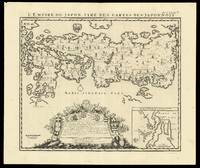
171915847Amsterdam: François L'Honoré & Compagnie Libraries 1719. 440 by 520mm. 17.25 by 20.5 inches. Engraved map. Henri Chatelain's edition of Adrien Reland's important map of Japan 1715 including the place-names in phonetic Dutch. Reland's map of Japan represents a radical departure from prior European maps of Japan and is the first map printed in Japan to use Sino-Japanese characters. Instead of using the existing European geographical sources of Japan Reland utilized Japanese maps most notably a map from the library of Benjamin Dutry 1668-1751 a former director of the Dutch VOC. This was a tremendous leap forward in the geographical depiction of Japan such as in the treatment of Kyushu Island and in naming the 66 provinces. Large inset of the area around Nagasaki and an ornate dedication cartouche with about twenty coats of arms. Published in the fifth volume of the Châtelain family's 'Atlas historique ou Nouvelle introduction à l'Histoire à la Chronologie & à la Géographie Ancienne et Moderne ' 1719 when eventually extended to 7 volumes. With an inset 'Vue de la Ville de Nangasacki & de l'ile'. Zacharie Châtelain d. 1723 was the father of Henri Abraham 1684-1743 and Zacharie Junior 1690-1754. They worked as a partnership publishing the 'Atlas ' under several different Châtelain imprints depending on the Châtelain family partnerships at the time of publication. The atlas was published in seven volumes between 1705 and 1720 with a second edition appearing in 1732. The maps were accompanied by information pertaining to cosmography geography history chronology genealogy topography heraldry and costume of the world. The maps in the "Atlas Historique" were mainly based on those of the French cartographer Guillaume De L'Isle but were presented by the Châtelains in an encyclopaedia form. The accompanying text is in French and often is printed in two columns on the page with maps and other illustrations interspersed. Each map and table is numbered consecutively within its volume and all maps bear the privileges of the States of Holland and West-Friesland. Hubbard 73. François L'Honoré & Compagnie Libraries, unknown
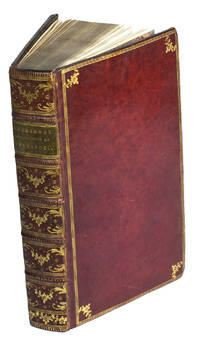
17816457Dordrecht 1781. 8vo. Abraham Blussé and son colophon: printed by Johan Joseph Besseling Utrecht Contemporary red morocco richly gold-tooled spine gold-tooled boards triple fillets with floral ornaments in each corner board edges and turn-ins gilt edges. Bound by the Dutch court bookbinder Abraham van Rossum active in Amsterdam 1812-1854 one of the major binders Storm van Leeuwen of that period with his letterpress ticket on paste-down A.v. Rossum hof-boekbinder. 2 works in 1 volume. 5 1 339 5; 68 pp. Rare first and only edition of the much expanded Dutch translation of a philosophical treatise for law students on natural morality as the basis for all law together with the second edition of the same treatise in the original French. The Monthly review vol. LII 1775 p. 596 praises the author's "penetration wit and erudition" but on the other hand the original treatise "is one of those productions which even an attentive reader totally forgets the very moment he has done perusing it". The Dutch translation is followed by four other philosophical treatises by the author also concerning natural law discussing the problems of divine law moral obligations moral sense and the question whether the existence of God can be proved by reason.Abraham de Perrenot 1726-1784 was a Swiss lawyer of Huguenot-descent who worked as councillor for the Prince of Orange in the Netherlands.With the bookplate of Thomas Otho Travers 1785-1844 friend of Stamford Raffles. With some minor waterstain at the foot of the French treatise and the corners slightly bumped otherwise in very good condition and well bound.l Dekkers Bibl. Belg. juridica p. 133 no. 5; STCN 4 copies; WorldCat 6 copies incl. 3 the same; ad 2: cf. Dekkers p. 133 no. 4 1779 ed.; Quérard VII p. 63 1775 ed.; for Perrenot: V.d. Aa XV p. 205; for the binder: J. Storm van Leeuwen 1725-1830 Bookbinding on www.bibliopolis.nl. hardcover
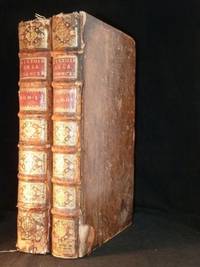
171042386à Paris: Chez Pierre Emery 1710. Fine. Chez Pierre Emery à Paris 1710 26 x 38.50 cm 2 volumes reliés New expanded edition the first in two volumes with important tables published at the Chancellor's request. The original first appeared in 1676; it was continued in this edition by René Le Comte for the supporting documents for the period 1676-1705 furthermore the material compiled by Tessereau was entirely reworked for this new edition. Contemporary full brown sheep binding. Spine with six raised bands decorated with gilt compartments and fleurons as well as red morocco title and volume labels. All edges speckled red. Spine worn lacking headcaps and with losses to the sheep. Scuffing and corners slightly bumped. Contemporary bookplate pasted on pastedowns. Major source on the history of the Chancellery in France; this institution as ancient as the monarchy was formed by the body of chancellors such as the chancellor the keeper of the seals the great auditors secretaries of the king of the grand college the treasurers controllers wax-heaters and other officers the chancellery being today nothing more than the ministry of justice. Tessereau assembled a collection of precious documents for the historian on the officers of the chancellery their functions and prerogatives on the various chancelleries in the kingdom. It is more a compilation and publication of documents than a historian's work but the work is no less important. Chez Pierre Emery hardcover
1758135914Paris: Charles-Antoine Jombert 1758. period marbled calf binding marbled endpapers and pastedowns five raised bands all edges stained red. 8vo. period marbled calf binding marbled endpapers and pastedowns five raised bands all edges stained red. xxxii 205 3 pages. The fourth and most extensive edition expanded from the original edition of 1645 by the noted engraved Cochin. Cicognara 255. Bigmore / W. 72. Cohen / R. 177. When issued in 1645 the work was "notable for its completeness for the time of its production and for its plates which have been reproduced by most subsequent writers on the art." This edition has additions by Jombert and Cochin of Bosse's classic work. With an engraved frontispiece and 21 foldout plates. The first page of the dedicatory Epistle entirely engraved in intaglio is taken from the original 1643 edition. Very light shelfwear to the edges and hinges. Spine rubbed lacking the leather spine label with title. Some very light dampstaining in the margins. Textblock split between pages 146 and 147. A good copy of this very scarce work. Charles-Antoine Jombert unknown
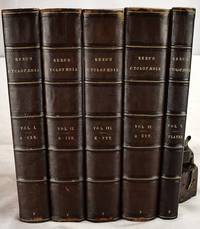
17862106150015London : J.F. & C. Rivington A. Hamilton et al 1786. Hardcover. Good. One of the First Great British Encyclopedias Five volume set. Includes the plate volume. Folio 16 3/4 x 10 inches. Bound in 19th century 3/4 morocco. Marbled endsheets. Approximately 5010 pages. Text printed in two columns. Frontispiece illustrations. Many illustrations in v.5 some folding. Generally clean and sound. Some toning occasional spotting. Small stamp of the Edwin Forrest Home on front pastedown. Volume 5 has 144 engraved plates 3 folding. Wing G1445A. <br> An important British scientific technical and general reference of the late 18th century. Rees edited and greatly expanded Chambers' earlier work. "Rees says that he has added more than 4400 new articles." - Enc.Brit.v.9 374 p. <br> This is an oversized or heavy book which requires additional postage for international delivery outside the US. London : J.F. & C. Rivington, A. Hamilton, et al hardcover
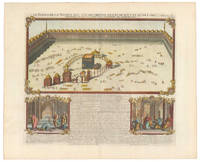
1719NL-02162<p>This is Henri Chatelain's dramatic and detailed capture of the <em>Haram</em> or Sacred Precinct in Mecca—the holiest site in Islam. It provides a detailed view of the historic complex which draws millions of pilgrims annually. In the center of the view the quadratic black Kaaba dominates. According to Islamic tradition this complex stands on the remains of the first temple that Abraham and his son Ishmael built for God.</p><p>In addition to the Kaaba several shrines and other buildings have been drawn in their relative positions and domed porticoes frame the enormous courtyard holding it all. In this manner the view almost takes on the character of a plan. Chatelain brings his view to life by including many worshippers within the complex.</p><p>While the view of the Holy Precinct occupies the upper register of the print in the lower register we find two smaller vignettes depicting the various positions that Muslims assume during prayer. Between the vignettes is a text that includes a legend and key related to the larger view as well as an introduction to the Islamic faith and tradition.</p><p><strong>Census</strong></p><p>The copper-engraved view comes from Chatelain's seminal seven-volume <em>Atlas Historique</em> published in Amsterdam between 1705 and 1720. The atlas combines the finest engraving and cartographic craftsmanship with academic studies of geography history ethnology heraldry and cosmography and it was one of the most widely distributed atlases in the 18th century.</p><p><strong>Context is Everything</strong></p><p>When Chatelain's detailed plan of Mecca was first published it was a true rarity. Few European travelers had ventured so profoundly into Arabia and the accounts of Muslims did not resonate broadly among the European intelligentsia at the time. Western Arabia particularly Mecca had been subjugated by the Ottoman Empire when Selim I defeated and dissolved the Mamluk Sultanate in Egypt. For centuries the Mamluks had controlled access to the sacred cities but now Barakat bin Muhammed the Sharif of Mecca was forced to acknowledge Ottoman supremacy. The only European to ever truly penetrate Mamluk Arabia was the Italian traveler Ludovico di Varthema who in 1502-03 visited Mecca with a Hajj caravan on his journey to India.</p><p>But a French traveler truly opened Western Arabia to the world. The Parisian Jean Chardin 1643-1712 was a distinguished French traveler merchant and polyglot whose extensive travels in the Middle East and beyond significantly impacted the European understanding of Islam and its holy sites in the 18th century. Chardin spent eleven years exploring the Middle East where he gained access to the Persian court being appointed a royal merchant by Shah 'Abbas II. His journeys took him through Persia Turkey India and Georgia before he eventually settled in England. Among the most notable aspects of Chardin's voyages was his attempt to depict Islam's holy places particularly Mecca and Medina. His depictions were mainly based on information he acquired from Muslims who had performed the Hajj.</p><p>Depictions of Islam's holiest sites were virtually non-existent in Europe at his time and Chardin's drawings constitute some of the earliest and best sources available. There is an unfinished manuscript plan of the Prophet's Tomb in Medina at the Royal Society in London. Still the more impactful image was Chardin's completed plan of the Kaaba precinct in Mecca. While this pioneering plan accurately captures the individual buildings and minarets including the colonnaded porticoes surrounding the central courtyard it also conflated elements from Medina and Mecca the circular colonnade around the Kaaba.</p><p>Despite traveling with two professional artists including Grélot the drawings attributed to Chardin were most likely his work demonstrating his engagement with documenting his experiences. His detailed accounts and illustrations were later included in his publication <em>Voyages en Perse et Autres Lieux de l'Orient</em> the first volume published in 1686. Further volumes followed in 1711. These works were praised for their detailed observations and accuracy providing a valuable non-Persian perspective on the Safavid and Ottoman empires and it is clear that they were the source for Chatelain's view.</p><p>Chardin's extensive travels and keen observations earned him a knighthood from Charles II of England for his services to the East India Company. His pioneering contributions remain crucial sources on Persia and Arabia's political history and cultural landscapes.</p><p>Cartographer:</p><p><strong>Henri Abraham Chatelain 1684 – 1743</strong> was a Protestant pastor Huguenot from Paris who due to his faith was forced to flee his native France. He settled first in London and later in Holland where he worked from both The Hague and Amsterdam during the early 18th century. While his primary calling was as a preacher his <em>Atlas Historique</em>became a huge success partly due to the vivacious decoration and abundance of information on his charts.</p>
171025803Amsterdam 1710. Copper-engraved map period hand-colouring in outline. Tables upper left and along the right side. Attractive map of North America based upon De L'Isle's highly influential map of North America published in 1700.<br/> <br/> By combining a wealth of information and geographical observation with delicate engraving and an uncomplicated composition this elegant map is a superb example from the golden age of French mapmaking and was published in Chatelain's Atlas Historique an important encyclopaedic historical atlas. California is shown as a peninsula with a number of villages and mountains; the Mississippi River extends far north of its true source. The table along the right side details the various native tribes from each region with lettered references for locating on the map.<br/> <br/> Lowery 263; Phillips 579. unknown
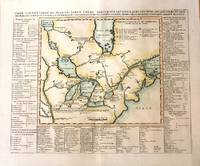
1719M1126Paris c.1719. Very Good;. Notes: From Chatelain's Atlas Historique.<br>This map is based on the 1703 map by Lahontan. The map covers the area of South Hudson Bay and concentrates on the Great Lakes. The St. Laurent is shown running into the Great Lakes from present day Lake Winnipeg. Georgian Bay is named "Baye de Toronto". English French Iroquois treaty is shown and many early settlements forts trading posts missions friendly and hostile Indian Villages are clearly marked. This is a highly significant and informative fur trade map. Surrounding the map are a number of descriptive panels contained lists of the birds fish plants and insects of Canada. Also the Indian tribes of the different regions together with a list of various trade goods including whiskey which were popular among the Indians. Size : 368x458 mm 14.49x18.03 Inches Coloring: Hand Colored Reference: Koeman II: Cha 7; Sellers and Van Ee 2; Kershaw II: 307. Category: Maps Canada; Maps North America Great Lakes; unknown
177819980Paris: P-M. Lamy 1778. First edition. leather_bound. Contemporary mottled calf covers rehinged. Two Vols. in one. Very good. 8 & 10 pages in text. 22 x 17 cm. Engraved frontispieces 283 plates. An antiquary of Flemish descent his early interest in gem collecting as part of his cabinet of curiosities eventually spawned interest in Greco-Roman intaglio gems; his collection purchased in 1609 on behalf of Henry Prince of Wales -- with more than a representative sampling of specimens here. His first work "Dactiliotheca" published 1609. BRUNET Vol. II p.1671. Index of plates in each volume generally clean wide margined plate pages book label and small ownership inscription dated 1857 of same individual corner wear raised bands leather spine label spine compartments decorated in blind. P-M. Lamy unknown
175043277London.: Printed for the Author. 1750. Full reverse calf front and rear boards ruled in blind and with pattern decoration in blind banded spine in seven compartments. Binding worn and rubbed corners bumped joints cracking head and foot of spine worn. Folio. 414 x 270 mm. Printed title 3 leaves with Swan's introduction 10 leaves with text and 60 engraved plates all printed recto only and numbered I - LX the five plates depicting the 'Orders' printed half-page vertically at right with explanatory text at left. PROVENANCE: Unidentified armorial bookplate to front pastedown with the motto 'rapido contrarius orbi'. A good unsophisticated copy of the second edition of Swan's building manual with the explanation of the 'Orders'.Swan's comprehensive work includes the following: 'The work contains: 'I. An easier more intelligible and expeditious Method of drawing the Five Orders than has been hitherto been published by a Scale of Twelve equal Parts free from those troublesome Divisions call'd Aliquot Parts. Shewing also how to glue up their Columns and Capitals.II. Likewise Stair-Cases those most useful ornamental and necessary Parts of a Building though never before sufficiently described in any Book Ancient or Modern; shewing their most convenient Situation and the Form of their Ascending in the most grand Manner: With a great Variety of curious Ornaments whereby any Gentleman may fix on what will suit him best there being Examples of all Kinds; and necessary Directions for such Persons as are unacquainted with the Branch.III. Designs of Arches Doors and Windows.IV. A great Variety of New and Curious Chimney-Pieces in the most elegant and modern Taste.V. Corbels Shields and other beautiful Decorations.VI. Several useful and necessary Rules of Carpentry; with the Manner of Truss'd Roofs and the Nature of a splay'd circular Soffit both in a streight and circular Wall never published before. Together with Raking Cornices Groins and Angle Brackets described.' From the title-page.'This is one of the books that had great influence on the builders and architects of eighteenth-century America.' Fowler.Park 79 first edition 1745 but citing other eds. including the present; Fowler 341 second American edition 1794; Printed for the Author. hardcover
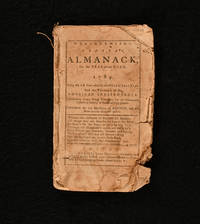
1788702L27Boston: John Norman 1788. First edition. Disbound. Fair. 7" by 4". None. An extremely scarce American almanac from the eighteenth century containing ephemerides. An early publication following American independence this work contains many astronomical notes. The first edition of this almanac containing many tables of ephemerides for the year 1789. Undated dated using Library Hub as 1788. Very scarce only seen at auction twice in the last forty years. Both times disbound - as issued Abraham Weatherwise was a pseudonym used for many almanacks from the years 1784 to 1788. It is believed that this is a pseudonym for Samuel Bullard. This is because the astronomical notes on the calendar pages parallle those in his 'An almanach for the year of the Christian aera 1789 Boston'. Disbound as issued lacking the half-title and bookseller's advertisement occasionally seen. This astronomical calendar was calculated for the meridian of Bostonm 'but will serve for the adjacent states'. A very scarce work. Disbound. Externally chipped to the extremities with handling marks and a light tidemark to the front wrap. Internally firmly bound. Chipping has affected the bottom seven entries of the tables which are slightly obscured due to a spill burn. Tidemark to the final three leaves not affecting the text. Occasional spots to pages. Fair John Norman unknown
179085995J.F. & C. Rivington London 1790. Hardcover. Used - Acceptable. London: J.F. & C. Rivington ca 1790 80 page Index 7p Arrangement & Analysis of Plates 145 plates extra unlisted Algebra/Analysis; 4 folding 2 folding broadside Type Specimens Alex. Wilson & Sons; Joseph Fry & Sons 8p William Caslon Type Specimen. 16.75 x 10.5" leather. Shipping only within United States. Binding worn hinges cracked boards loose upper blank detached plates clean VG. J.F. & C. Rivington, London hardcover
174578052London:: Printed for the Author 1745. First edition. later old half calf and marbled boards. Large chips to the spine at both ends; leather worn at edges; rear joint cracked and weak. Contents very attractive. . Folio. Illustrated with sixty fine engravings; most of them full-page. . Printed for the Author, hardcover
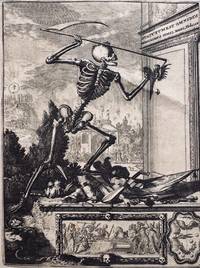
1702251118002Amsterdam: George Gallet 1702. 1st Edition. Hardcover. Good. De Chertablon. SCARCE EMBLEMATA 1ST EDITION IN GERMAN ON PREPARING FOR DEATH TO REACH HEAVENLY SALVATION THROUGH JESUS <br /> <br /> TRANSLATED TITLE : Dying and inheriting that is the most beautiful preparation for death. Or the surest way to die and inherit salvation by contemplating the bitter suffering and death of our only and dearest Savior Jesus Christ <br /> <br /> Condition: GOOD COMPLETE ORIGINAL <br /> <br /> I see no other copy currently for sale and this title scarcely comes up for auction. Worldcat shows only a handful of copies held by institutions. <br /> <br /> ABOUT THE BOOK <br /> <br /> Published in 1702 by George Gallet in Amsterdam. First edition in German. Text primarily in Gothic. In contemporary full dark brown calf. Covers with blind stamped bordering and five raised spine bands. All edges speckled red. Quarto 10.5" x 8.5". Collated and complete: 22 108 pp. and all 42 copper engraved plates. A few embellished initials and chapter headers. Title page in red and black. Wide-margined thick pages.<br /> <br /> IMPORTANCE<br /> <br /> The book is an emblemata of the German Baroque literature movement of the seventeenth century through early eighteenth century. It is comprised mostly of plates of a man on his deathbed awaiting his fate on the recto of leaves and scripture from the Bible and description of the plate scene on the verso. The engravings by De Chertablon are striking in composition highly detailed and rich with religious and moral symbolism. Only two plates are actual 'Dance of Death' images the others show dynamic scenes surrounding the dying person. The remarkable thing about the depictions is that personified Death does not appear as usual as a skeleton or a mummy but as an angel. He often points to a painting in the background held by putti which depicts scenes from the Life and Passion of Christ. In a few striking scenes the path to salvation appears closed. In one instance the devil presents a list of all the sins the dying man has committed. Unlike the majority of scenes there are no angels pointing the way to salvation. The foreboding description for this scene says that faith and belief are not enough for heavenly salvation: you will be judged by your acts and deeds while on Earth. <br /> <br /> ABOUT THE AUTHOR <br /> <br /> Abraham a Sancta Clara born Johann Ulrich Megerle; 1644 - 1709 was an Augustinian friar. He gained a great reputation for pulpit eloquence early on. He was appointed imperial court preacher of Vienna in 1669. The people flocked to hear him attracted by the force and simplicity of his language the grotesqueness of his humor and the impartial severity with which he lashed the follies of all social classes. <br /> <br /> CONDITION REPORT <br /> <br /> GOOD for a 320-year-old book <br /> <br /> Exterior and binding: Some spine lean and front hinge cracked. Rear hinge starting to crack at its head. Binding and boards holding firm but strained in places. Heavily rubbed and worn leather that is dry and cracking and pitting. Has a beautiful texture of authentic aging. Spine label mostly perished. Multiple pen-tip sized wormholes on covers. <br /> <br /> Interior: Grubby endpapers. Toned pages. Mostly light to scattered foxing on the text block itself; heavier foxing along the gutters at times. Browning and dust along page margins. A single pen-tip sized wormhole throughout the entire text block gradually expanding to more same sized holes toward the last quartile of the book. The final leaf has about 12 pin-tipped sized holes. These holes slightly affect text and images. The plate impressions are strong and are visible on the verso and form an unintended but quite nice bordering of the descriptive text. No writing beyond a few scribbles in red on front pastedown. No marginalia or underlining. A few margin tears. <br /> <br /> All in all a beautifully illustrated scarce work of religious emblemata depicting deathbed scenes and the path to heavenly salvation. George Gallet hardcover
17641509200002Printed by Hugh Gaine at his book-store and printing office at the Bible & Crown in Hanover-Square. M DCC 1764-01-01. First Edition. Hardcover. Good. Volume 1 only. Large folio. 38 cm. Vol. I. Bound in publisher's full sheep. Bound by Rob. McAlprine signed by him. Red morocco spine label. Scuffs/rubbing to cover. Creasing to title page. Engraving of Royal arms on title Reilly 862. iv 840 i.e. 838 2 p. Contains an Act for reversing the attainder of Jacob Leisler etc at appendix which Evans states if often absent. Printed by Hugh Gaine, at his book-store and printing office at the Bible & Crown, in Hanover-Square. M, DCC, hardcover
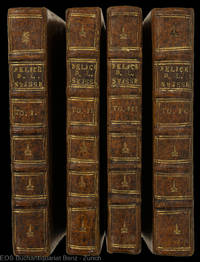
17147878CB1714. 4 Bände. Leiden Pierre van der Aa 1714. Kl.-8°. 18 Bl. 220 recte 224 S.; 2 Bl. S. 221228 233434; 2 Bl. S. 435676; 2 Bl. S. 6771027. Mit gest. Titelblatt doppelblattseitig 1 gest. Frontispiz doppelblattseitig 68 davon 50 gef. und 5 von 6 gef. Kupferkarten. Lederbände der Zeit mit reicher Rückenvergoldung. Lonchamp 812. Haller I 718. Barth 17210. Feller/Bonjour 529. e-hls für den Autor. Erste Ausgabe. Abraham Ruchat 16801750 veröffentlichte das vorliegende Werk unter dem Pseudonym Gottlieb Kypseler von Münster. In der Vorrede beschreibt er sein Anliegen die West- und Deutschschweizer einander näherzubringen. Ruchat geboren in Vevey gilt als der erste bekannte Geschichtsschreiber der Waadt. Er studierte in Lausanne Bern Berlin und Leiden Theologie und war ab 1721 als Professor für Redekunst in Lausanne tätig. Es fehlt die Gesamtkarte der Schweiz ansonsten ein sehr gutes Exemplar. Das Papier vereinzelt stockfleckig. Die Vorsätze leimschattig. Die schönen Einbände minim berieben. unknown
17787902CB1778. Nouvelle édition. 2 Bände. Neuchâtel Fauche 1778. 4°. 4 IV 454 2 S.; 4 391 1 S. Mit 2 gest. Frontisp. und 77 Kupfertafeln davon 15 gef. Lederbände der Zeit mit Rückenschild und Rückenvergoldung. Haller I 718. Brunet VI 25894. Haller I 718. Wäber I 38. Lonchamp 2560. Vierte nach Haller und Wäber die «beste» Ausgabe. «Diese Ausgabe ist vollkommen umgearbeitet und weit richtiger als die vorigen» Haller. Die Kupfer mit zahlreichen Orten der ganzen Schweiz diverse Karten und paläontologische sowie archäologische Darstellungen. Das Papier durchgehend gebräunt und stockfleckig. Die Einbände berieben. unknown
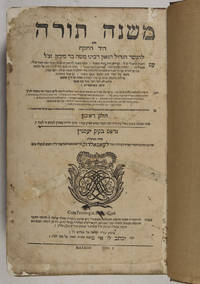
173927896Jessnitz Saxony-Anhalt: Bi-defus Yisrael bar Avraham 1739. Hardcover. Good. Four volumes folio published between 1739 and 1742. Woodcut printer's device at titles; woodcut endpieces in first volume. Hebrew text opens from right to left; leaf numbers in Hebrew characters. Hebrew chronograms yield Jewish dates of publication 5499-5502. Brown library buckram scuffed at extremities spines lettered in gilt. Endleaves renewed. A good set. See foliation and condition notes for each volume below.<br /> <br /> Scarce eighteenth-century edition of this seminal compendium of Jewish law halakhah. Compiled between 1170 and 1180 while Maimonides was living in Egypt the Mishneh Torah is regarded as the author's magnum opus. It is the only Medieval-era work that surveys the full panoply of Jewish observance including those laws that are only applicable when the Jerusalem Temple is in existence. The present edition is the first to contain Judah Rosanes' commentary Mishneh le-melekh. "Mishneh Torah" The Repetition of the Law is an appellation originally applied to the biblical book of Deuteronomy; the subtitle "ha-Yad ha-Hazakah" The Book of the Strong Hand plays on its subdivision into fourteen books: the numerical value fourteen is represented in Hebrew letters as Yud 10 Dalet 4 which forms the word "yad" hand. Maimonides sought to provide a complete statement of the Oral Law so that a person who mastered first the Written Torah and then the Mishneh Torah would be in no need of any other book. Contemporary reaction was mixed with strong and immediate opposition focusing on the absence of sources and the belief that the work appeared to be intended to supersede study of the Talmud itself. Maimonides responded to these criticisms and the Mishneh Torah endures as an influential work in Jewish religious thought. According to several authorities a decision may not be rendered in opposition to a view of Maimonides even where he apparently militated against the sense of a Talmudic passage for in such cases the presumption was that the words of the Talmud were incorrectly interpreted. Likewise: One must follow Maimonides even when the latter opposed his teachers since he surely knew their views and if he decided against them he must have disapproved their interpretation.<br /> <br /> Vol. 1: 1 title 8 234 102 3 ff. Repairs at title page with very slight loss of text at verso following leaf and the final leaf. Text embrowned often heavily in first half with some light marginal dampstains throughout. Old manuscript entries in Hebrew at title in at least three hands.<br /> <br /> Vol. 2: 1 title 148 112 2 ff. Marginal repairs to first and last two leaves no loss of text. Moderately dampstained throughout with some mild embrowning. Old manuscript entries in Hebrew at title in at least two hands; three old stamps at title including at least one censor's approbation.<br /> <br /> Vol. 3: 1 title 221 169 ff. Repairs at bottom margin to title with loss of some text below imprint and at final lines of rabbinic approbations at verso and at bottom margin following leaf with some text loss and obscuration by translucent paper tape. Small marginal repair at final leaf. Light dampstaining in first half; remaining text with mild embrowning. Old manuscript entries in Hebrew at title in at least two hands; two old stamps at title including at least one censor's approbation.<br /> <br /> Vol. 4: 1 title 135 138-154 157 1 ff. Marginal repairs to title and final leaf no loss of text. Sporadic light embrowning and marginal stains. Old manuscript entry in Hebrew at title.<br /> <br /> A complete set with only minimal text loss in a few places -- a very usable scholar's copy. References: Vinograd Jessnitz 46; Fürst 2: p. 295; Zenker p. 583<br /> <br /> Title in Hebrew: ×ž×©× ×” תורה ×”×•× ×”×™×“ ×”×—×–×§×” ×œ×”× ×©×¨ הגדול ×”×’×ון ×¨×‘×™× ×• משה בר מימון זצ׳׳ל ×¢× ×”×©×’×ª הר×ב׳׳ד זצ׳׳ל ופירוש הרב מגיד ×ž×©× ×” וכסף ×ž×©× ×” להג×ון המשביר ×¨×‘×™× ×• יוסף ×§×רו זצ׳׳ל ומגדל עוז והגהות ×ž×™×ž×•× ×™×™×•×ª ופירוש ×¨×‘×™× ×• עובדי והרב המוסמך מדר׳׳ל ן׳ חביב על הלכות קידוש החדש ×¢× ×›×œ הצורות השייכות להלכות ×לו ולהלכות שבת וסוכה ×•×¢× ×ž×•×¨×” ×ž×§×•× ×¢×œ דברי הרב המגיד וכסף ×ž×©× ×” ×’× ×©×ª×™ מפתחות גדולות ורחבות ×חת על סדר ×”×¤×¨×§×™× ×•×חת על דרך ××œ×¤× ×‘×™×ª×” ×œ× ×—×¡×¨ דבר מכל כפי ×שר × ×“×¤×¡ ב×משטרד×<br /> <br /> Rabbi Moses Maimonides the Rambam was a 12th century Jewish philosopher and halachic legal scholar. A highly controversial figure both during his lifetime and after his death he is generally acknowledged as the preeminent Jewish thinker of the Middle Ages. He was born in Córdoba Spain but fled as a child from the Almohad persecution. He eventually settled in Egypt where he served as a rabbi physician and philosopher. His fourteen-volume Mishneh Torah his only work not in Arabic still carries canonical authority particularly within the Yemenite Jewish community as the codification of Talmudic law. His other works include "Kitab al-Siraj" a commentary on the Mishnah "Kitab al-Fara'I" a book on precepts and the celebrated philosophical work "Dalalat al-Ha'irin" known in Hebrew as the "Moreh Nevukhim" The Guide to the Perplexed. In this latter work Maimonides attempted a philosophical/theological reconciliation of the Hebrew Bible and Greek knowledge. This work came to play a central role in all subsequent major controversies over philosophy within the Jewish community during the Middle Ages. Bi-defus Yisrael bar Avraham hardcover
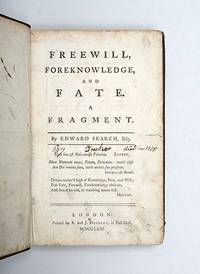
1763160235London: Printed for R. and J. Dodsley 1763. The prelude to his magnum opus First edition of the prelude to Tucker's nine-volume magnum opus The Light of Nature Pursued which outlined a vast and idiosyncratic philosophical system and which had a noted influence on his philosophical contemporaries. Tucker was an empiricist in the tradition of John Locke holding that the mind begins as a blank slate. In his moral philosophy he proposed that our own satisfaction is the motive of our actions and that the maximum satisfaction of this is the ultimate moral good. He can consequently be seen as an early precursor of utilitarianism. This work published pseudonymously was not well received by the critics. "The 1763 fragment was strongly criticized in the Monthly Review to which Tucker provided a humorous reply Man in Quest of Himself under the new pseudonym Cuthbert Comment" ODNB. The Light of Nature Pursued however enjoyed a high reputation from its first appearance and was a noted influence on William Paley Thomas Malthus and James MacIntosh. Octavo 198 x 124 mm. Contemporary calf double gilt fillet to bands and covers. Contemporary ownership inscription of James Drummond of Bridgend in ink to front free endpaper and in pencil to front pastedown; 18th-century note of author and their death date on title. Minor restoration at head of rear joint short closed tear at fore edge of title neatly taped on verso light finger soiling ink splash to p. 153. A good copy. ESTC T117455. unknown