26 503 résultats
2022x-3030913457Springer Nature 2022. Hardcover. New. 2137 pages. 9.25x6.10x4.96 inches. Springer Nature hardcover
182718472Stockholm: Johan Horberg 1827. First edition. leather_bound. Contemporary half polished russet calf and marbled boards. All edges yellow. Fine. 137 pages. 27 1/2 x 22 cm. Forty-seven hand-colored engraved plates with tissue guards plus hand-colored vignette title and two engraved plates of music. Grafstrom poet and historian wrote the text and Forssell made the engravings. Index. List of Plates and errata. Costumes from Dalarna Helsingland Lappland Sodermanland Westergothland Smaland Blekinge and Skane. Lovely copy plates and text clean fresh and bright; bookplate raised bands spine panels richly guilt in floral motifs marbled endpapers maroon morocco spine label printed in gilt. Johan Horberg unknown
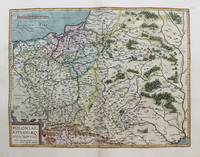
1598M3122Antwerp c.1598. Very Good. Notes: Scarce map of Poland and Lithuania during the late 16th century. <br>The map shows major cities and towns as well as geographical features. Includes a charming image of a horse-drawn sleigh in the bottom right corner. <br>Dutch text on verso. Size : 369x482 mm 14.53x18.98 Inches Coloring: Hand Colored Category: Maps Europe Poland Lithuania; unknown
16671000441667. Paris Abraham Bosse 1667. Engraved frontispiece 87220pp. With an engraved dedication page. 8vo. Contemporary full mottled calf spine and corners expertly restored. Some browning. Bound in at the end the last 20 pages are: 1 - A. Bosse au lecteur sur les causes qu'il croit avoir euës de discontinuer le cours de ses leçons geometrales et perspectives dedans l'Academie Royale de la Peinture et de la Sculpture & mesme de s'en retirer. Paris A. Bosse 1667. 15pp. And: 2 - Discours tendant a desabuser ceux qui ont creu que l'Auteur d'un Traité qui a pour Titre Entretiens sur les vies et sur les ouvrages des plus excellens peintres anciens et modernes; avoit pretendu m'attaquer dans sa Préface. Paris A. Bosse 1667. 4pp. This scarce book is written in the form of a dialogue between Ariste an amateur who would like to build an architect a painter a "disciple" and the author himself. All the representatives of these different arts are asking for Bosse's advice. This allows Bosse to express once again his ideas regarding perspective in painting and architecture. Abraham Bosse who was born in Tours in 1602 is best known as an engraver but he was also the first professor of perspective at the newly founded Académie Royale from 1648 to 1661 when he was forced to leave due to disagreements with other Académicians. The two addresses that follow the book explain why in Bosse's own opinion he had been forced to leave his lob at the Académie and they also respond to comments made about Bosse by Félibien in the preface to the first part of the latter's Entretiens published a year earlier. c.f. Cicognara 91; Berlin cat. 2381; Abraham Bosse Savant Graveur # 310 311 & 312. unknown
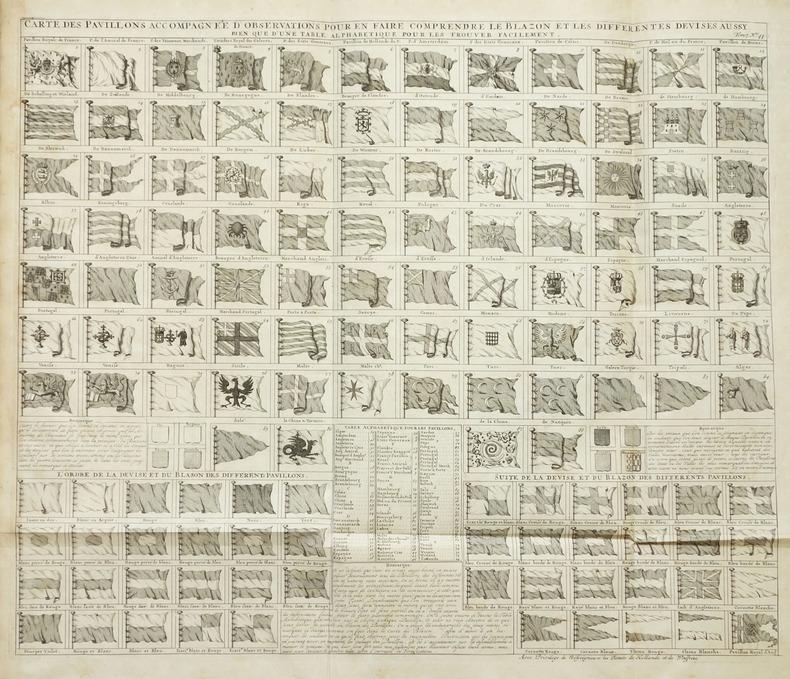
1720LBW-2016Amsterdam, circa 1720. 490 x 585 mm.
0516243160New. Brand new and still unused unknown
0201567172New. Brand new and still unused unknown
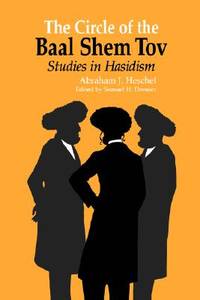
0226329607New. Brand new and still unused unknown
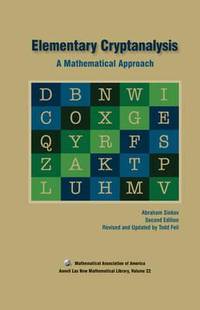
0883856476New. Brand new and still unused unknown
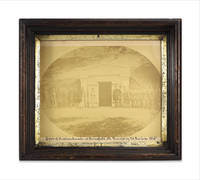
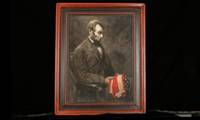
3733424<p>Springfield Illinois 1865. Photographic image: 7½ x 9 inches on mount with handwritten caption. Period deep-set walnut and gilt frame glazed 9¾ x 11¼ inches overall. Evenly-lightened with the image likely taken on a bright sunlit day.</p> <p>Unpublished and previously unknown. A rare photographic print created from a large format albumen photograph taken in 1865. The image captures Lincoln’s tomb being guarded by the Veteran Reserve Corps. The Reserve Corps were active from May to November 1865 helping to date when this image was first taken.</p> <p>As President Lincoln’s funeral train wended its way from Washington D.C. to Springfield “non-commissioned officers of the Veteran Reserve Corps were detailed to act as a body-guard and major generals of the army were directed to attend the train and keep watch so that at all times during the journey the coffin should be under their special guardianship.†Isaac N. Arnold</p> <p>The majority of photographs of Lincoln’s tomb taken in Springfield in 1865 were captured by two local photographers Ingmire and Tresize. They had a thriving business photographing various delegations in front of the Lincoln home and at the receiving tomb. Jonathan H. Mann</p> <p>Over the past two decades new examples of these tomb photographs have emerged suggesting that many individuals involved in the procession including honor guards made a pilgrimage and posed for the camera. Most of these images are found in carte-de-visite format. Larger formats like the present print hold greater significance and desirability. While the members of the Reserve Corps in this image may remain anonymous there are four individuals of higher rank depicted on the opposite side of the vault door who might be identifiable with closer examination. ibid</p> unknown
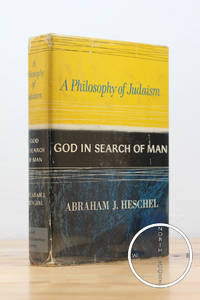
195531549New York: The Jewish Publication Society of America 1955. Hardcover. Stated First Edition First Printing. 5.75 x 8.5in. 437pp. Publisher's cloth boards. Signed and dated by the author on the front free endpaper: "Abraham J. Heschel. March 22 1958. B'nai Amoona." The Congregation B'nai Amoona is a conservative synagogue in St. Louis where Heschel delivered an address. NEAR FINE in Very Good dust jacket protected in a removable archival cover. The book itself shows a handsome former owner bookplate at the front paste-down marginal shelf rubbing of the edges otherwise remains Fine/As New. The dust jacket shows the extremities shelf rubbed some surface scuffing and handling shallow chips from the head and foot of the spine otherwise is not price-clipped remaining bright colorful and distinct. As pictured. The Jewish Publication Society of America hardcover
257151/1/88. <p><strong>Print of Abraham Lincoln</strong> well framed approximately 2 ft by 3 ft color commemorating the fallen president's work in saving the nation at the expense of his life.</p><p><img class=""alignnone wp-image-25018 size-post-window"" src=""https://cdn.raabcollection.com/wp-content/uploads/20231204144051/Folder-site-11-1600x1327.jpg"" alt="""" width=""1600"" height=""1327"" /></p> unknown
186022476Columbus OH 1860. Hardcover. Fine. Book. Political Debates Between Hon. Abraham Lincoln and Hon. Stephen A. Douglas in the Celebrated Campaign of 1858 in Illinois. Columbus Ohio: Follett Foster and Co. 1860. 3rd edition with publisher's advertisements bound in. 268 pp. 6 1/2 x 9 1/2 in. Historical BackgroundLincoln's debates with incumbent Illinois Senator Stephen Douglas earned him national prominence. Slavery was the pressing national issue especially regarding its expansion into the western territories. Douglas authored the Kansas-Nebraska Act 1854 which effectively repealed the free-slave dividing line set by the Missouri Compromise 1820 at 36° 30' north latitude. Instead of banning slavery north of the line and banning south of it new states would instead decide on slavery's status within their borders by ""popular sovereignty."" On its surface Douglas's bill appeared to offer the nation a middle path on the contentious issue of slavery. Instead it would only muddy the waters on slavery.The Kansas-Nebraska Act was only one of a long list of compromises in the middle decades of the nineteenth century. Despite these attempts the slavery debate only became more heated throughout the 1850s. Northerners seeing the hypocrisy of ""states rights"" advocates chafed when a new Fugitive Slave Act 1850 required the use of federal marshals to return escaped slaves. An unintended consequence of Douglas's bill resulted in fraudulent elections and violence in Kansas in 1855 and 1856. South Carolina Representative Preston Brooks bludgeoned Massachusetts anti-slavery Senator Charles Sumner on the Senate floor after an 1856 speech. In 1857 the Supreme Court handed down the Dred Scott decision which decreed that African Americans could not be citizens and based on one's right to bring property across state lines effectively erased the division between free and slave states. Slavery unspoken but protected in the Constitution and mitigated by antebellum compromisers was a tinderbox about to roar to fire.Lincoln recognized the problems slavery presented for the nation and in his debates with Douglas focused his attention on the nationalization of slavery both West and North. After he was nominated as the Republican candidate for the Senate he spoke to the convention famously asserting that ""a house divided against itself cannot stand."" The House Divided speech delivered at Springfield Illinois on June 17 1858 is the opening piece of this book. Though he would lose the Senate race the rest of the book details Lincoln's intellectual combat with Douglas over slavery. This book is a third edition identified by the line over publisher's imprint on the back of the title page the numeral ""2"" at bottom of page 13 and publisher's advertisements bound in at head.Harrison Yerkes 1841-1899 enlisted as soon as the Civil War erupted but since he was under 21 years of age in 1861 his father removed him from service. As soon as he reached the age of majority he enlisted in the 31st Michigan Infantry Company and remained in the Army for the remained of the war. He returned to Michigan purchased two tracts of land which he farmed until retiring in 1891. He was a lifelong Republican though never held office.ConditionLight green boards faded blind stamped gilt lettering on spine ""Harrison Yerkes Northville Mich 1860"" erased from free front endpaper same present minus date on verso of ffep bep and back paste down. Very minor scattered foxing. Publishers advertisements bound into headmatter Minor shelf wear. Tight.SourcesPaul Leake History of Detroit Volume II Chicago: Lewis 1912 pp. 765.http://books.google.com/booksid=ZkUOAQAAMAAJ&pg=PA765&lpg=PA765&dq=harrisonyerkes&source=bl&ots=B-C-cmyauC&sig=gYKZ0sLD9AIMK2XCYuUZOEFn6eA&hl=en&ei=Wq7oTpO-CsLx0gHdisX-Bg&sa=X&oi=book_result&ct=result&resnum=8&sqi=2&ved=0CEwQ6AEwBw#v=onepage&q=harrison%20yerkes&f=false hardcover books
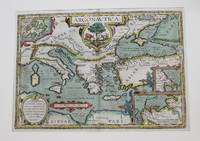
1606M8988Antwerp c.1606. Very Good. Notes: English text on verso. Size : 341x495 mm 13.43x19.49 Inches Coloring: Original Hand Coloring Reference: Van den Broecke 226. Category: Maps Mediterranean Sea; Maps Asia Near East Turkey; Maps Europe Greece Macedonia; Maps Europe Italy; unknown
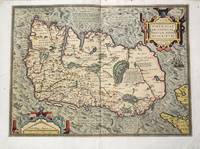
1581M10680Antwerp c.1581. Very Good backed on old paper. Notes: First separate printed map of Ireland by Ortelius in his "Theatrum Orbis Terrarum".<br> Size : 350x478 mm 13.78x18.82 Inches Coloring: Original Hand Coloring Reference: Van den Broecke #22. Category: Maps Europe Ireland; unknown
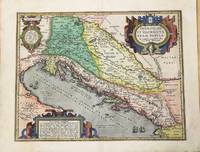
1590M9803Antwerp c.1590. Very Good. Notes: Latin text on verso. A beautiful map of the Balkans. Size : 352x455 mm 13.86x17.91 Inches Coloring: Original Hand Coloring Category: Maps Europe Balkans; unknown
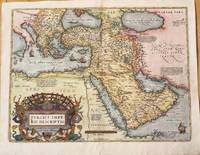
1574M10044Antwerp Belgium 1574. Very Good. Notes: Detailed and decorative map of the Ottoman Empire.<br>It depicts the Middle East by one of the founding fathers of cartography during the late 16th century. This important map features a decorative cartouche. The map depicts cities towns geographical features and has short paragraphs giving the reader information on certain areas. <br>Latin text on verso.<br>Abraham Ortelius April 1527 – June 1598 was a Flemish cartographer geographer and cosmographer from Antwerp in the Spanish Netherlands. He is recognized as the creator of the first modern atlas the Theatrum Orbis Terrarum Theatre of the World. Along with Gemma Frisius and Gerardus Mercator Ortelius is generally considered one of the founders of the Netherlandish school of cartography and geography. He was a notable figure of this school in its golden age approximately 1570s–1670s and an important geographer of Spain during the age of discovery. The publication of his atlas in 1570 is often considered as the official beginning of the Golden Age of Netherlandish cartography. Size : 375x500 mm 14.76x19.69 Inches Coloring: Hand Colored Reference: Marcel P.R. van den Broecke pg.168 Category: Maps Asia Near East Turkey; Maps Asia Middle East Arabia; unknown
183719688Ooroomiah Urmia West Azerbaijan Iran March 3rd 1837. 3.5 pages in autograph ink in English on an unlined foolscap folio 13.75 x 8.75 inches approx. 850 words no cover. Docketed in autograph ink "Letter from Priest Abraham to Prof. Tyler March 2 1837. <br /><br />"Permit me to inform you that the year Mr. Perkins came to the county of Persia to the city of Tabreez; Mr. Perkins and Mr. Haas a German Preacher came to the country of Ooroomiah- first to Gavalan the village of Mar Yanna i.e Mar Yohanna who accompanied them to the city of Ooroomiah. They remained in the city a few days and then came to my village- viz. Geog Tapa which is four miles distant from the city and we accompanied them to Tabreez. There we read your language the English and Mr. Perkins read our language the Syriac about eight months. Then the Plague entered Tabreez and Mar Yohana and myself took leave of Mr. Perkins and returned to Ooroomiah. After about five months Mr. Perkins came again to Ooroomiah also Mrs. Perkins and Dr. Grant and Mrs. Grant." <br /><br />A lengthy letter in English from one of the earliest Nestorian Christians to assist the American mission to Persia launched in November 1835 by the arrival in Urmia of "the Apostle to the Persians" Justin Perkins 1805-1869 with his wife Charlotte Bass Perkins missionary physician Asahel Grant 1807-1844 and Grant's wife Judith Campbell Grant. <br /><br />Qasha Auraham this the Syriac rendering of Priest Abraham was a native of the village of Georgtapa just to the southeast of Urmia the nephew to village elder Muqdasi Mormezd who had suggested Auraham as the suitable local assistant for the missionary team; along with Mar Yohannon Auraham was instrumental in teaching the missionaries modern Syriac and in creating written vernacular Syriac. <br /><br />The goal of the American Board of Missions with the Perkins mission had been the revival of the Assyrian Church of the East rather than planting an independent Protestant church and Perkins worked with Auraham and other local scholars to create a written modern Syriac in order to translate Nestorian religious texts out of ancient Syriac into the vernacular. Linguistics in that period was something of a rugged pursuit in Azerbaijan and Auraham was instrumental in recruiting a noted scholar to the translation mission as later reported by Perkins in <i>Nestorian Biography</i>: <br /><br />"A few months after the missionaries arrived at Oroomiah Mr. Perkins sent priest Abraham of Geog Tapa and a Nestorian deacon to the mountains to obtain from thence an ecclesiastic to assist him in reducing the modern Syriac to writing and in the translation of the Scriptures. . . . There was real advantage in uniting the labors of a translator from the mountains with one on the Plain to harmonize so far as practicable the different dialects in the first reduction of the language to a written form. The messengers were charged to obtain 'the most learned' priest they could find. They boldly set off on foot—entered the formidable mountains and penetrated as far as Marbeshoo a large village in a secluded glen forty miles west of the Plain of Oroomiah. It was a fearful journey at that period. . . . At Marbeshoo they found priest Dunkha who had come down to that place from his more distant home on business. His fame as a very learned man was already known to the messengers and they at once engaged him to return with them to Oroomiah. A week after they left the missionary they introduced to his study priest Dunkha who though grotesquely clad in wild Koordish costume struck him as a very pleasant man." <br /><br />The collaboration with Dunkha is alluded to here by Auraham: <br /><br />"I would also inform you that we four viz. Mar Yohanna -- myself -- Joseph a brother of Mar Yohannan -- and little John the son of my uncle study your language. And Mr. Perkins and Mrs. Perkins and Mr. Grant and Mrs. Grant study our language the Syriac. We learn your language by little and little but Mr. Perkins learns our language very well. And I would further inform you that Mr. Perkins and Priest M'dunka i.e. Qasha Dunkha and myself are translating the Old and New Testament from the Syriac language into our dialect. Of the Old Testament we have translated the first book which as you know gives an account of the creation and three chapters of the second book. And of the New Testament we have translated the first fifteen chapters. If God smile upon us we shall be and by finish complete this good work." <br /><br />Since the first mission press would not be operational in Urmia until the arrival of printer Edward Breath in 1840 this earliest translation of the New Testament from the Peshitta rather than the Greek would not be published until 1846. Professor William S. Tyler of Amherst seems the likeliest recipient of this missive given that he had both been a friend and fellow-student of Perkins at Andover Theological Seminary and had taught with Perkins at the Amherst Academy; presumably this firsthand account from Auraham was meant both as English practice and—with its mixture of exotic romance and good works to drum up for support for the mission among kindred scholars in America. <br /><br />Some short closed tears along old folds but no loss; some light toning a little old creasing; in very good condition quite legible. With a preliminary typescript.<br /><br /><br /><br /><i>References: </i><br /><br />American Sunday-School Union.<i> The Nestorians of Persia: a history of the origin and progress of that people and of missionary labours among them.</i> Philadelphia: American Sunday-School Union 1848. <br /><br />Campbell William S. editor. <i>A Memoir of Mrs. Judith S. Grant Late Missionary to Persia.</i> New York: J. Winchester 1844. <br /><br />Murre-van den Berg H. L. "The Missionaries' Assistants: The Role of Assyrians in the Development of Written Urmia Aramaic." <i>Journal of the Assyrian Academic Society.</i> Volume X issue 2. October 1996. <br /><br />Perkins Justin and Fidelia Fiske. <i>Nestorian biography: being sketches of pious Nestorians who have died at Oroomiah Persia.</i> Boston: Massachusetts Sabbath School Society 1857. <br /><br />Tyler Cornelius ed. <i>Autobiography of William Seymour Tyler D. D. LL. D.</i> n. p.: Privately Printed 1912. <br /><br />See also the <i>Missionary Herald</i> December 1840 <i>inter alia</i> for extracts from Perkins' journal in Urmia and his accounts of both Priest Abraham and of Priest Dunka. books
183435602Rochester Boston MA 1834. A collection of six letters ranging in size from 8-1/2" x 11" to 8-1/2" x 12-3/4" five complete and one partial letter. All in ink manuscript on unlined paper. Old folds light toning occasional light foxing two on untrimmed paper. Most are addressed on final blank page and have wax seal remnants with the usual tear where wax was torn open occasional loss to a few letters. Overall Very Good. <br/><br/> Abraham Holmes was a Massachusetts legislator and attorney. Opposing ratification of the Constitution he was allied with the Anti-Federalist Otis family of Barnstable and Freeman family of Sandwich. He was an Anti-Federalist delegate from Rochester MA to the Massachusetts Ratifying Convention of 1788. He served as Sergeant in Capt. Barnabas Doty's company Col. Ebenezer Sproat's regiment during the Revolutionary War. He was admitted to the Plymouth County Bar in April 1800 at the age of forty-six. Though he had no formal legal education his admission to the Bar was permitted in consideration of his respectable official character learning and abilities and on the condition that he study three months in an attorney's office. He served as president of the Court of Sessions prior to his bar admission practiced law in Rochester until the early 1830s was a member of the State Constitutional Convention of 1820 and a member of the Executive Council from 1821 to 1823. Davis William T.: BENCH AND BAR OF THE COMMONWEALTH OF MASSACHUSETTS IN TWO VOLUMES VOLUME II. Boston: 1895. Page 235; Daughters of the American Revolution: LINEAGE BOOK VOLUME 12 1900 Page 15. <br/> William Baylies 1776-1865 and Francis Baylies 1783-1852 were brothers and partners in a Massachusetts law firm. William served as a U.S. Representative from Massachusetts in 1809 1813-1817 and 1833-1835; was a member of the Massachusetts House of Representatives from 1808-1809 1812-1813 and 1820-1821; and a member of the Massachusetts Senate from 1825-1826 and 1830-1831. Francis was a Congressman from 1821-1827; a member of the Massachusetts House of Representatives from 1827-1832 and in 1835; and the United States Charge d'Affaires Argentina in 1832. <br/> Holmes's Letters are as follows:<br/> 1 Letter to Francis Baylies Member of Congress dated at Boston January 19 1822. Holmes then member of the Massachusetts Executive Council awaits reports of the State legislative committees the incorporation of Boston "which will serve to procrastinate the session" the "suspense of the acceptance of office of the Judge of the Municipal Court" and issues such as criminal trials and the death sentence. "We pass our time here in Boston. the frequent application for appointments of both proper and improper candidates is rather an uncomfortable circumstance; but not so distressing as in affixing the time when convicts shall live no longer. to determine whether a convict shall die or not. It is probable we shall have the trial of both soon as there has been three capital convictions since I was here; one for murder and two for highway robbery. Those trials I attended; a Mr. Simmons formerly of Taunton as I am told managed the Defence; I can not record him as possessing great oratorical abilities but for integrity of arrangement and strength and argument perhaps no man of his years stands higher." Boston was incorporated March 4 1822 and the same year the Boston Police Court for criminal cases and Justice's Court for the County of Suffolk for civil claims were established. <br/> 2 Holmes's Letter to Francis Baylies dated at Boston March 28 1822. Holmes notes that the State legislative session is coming to a close. He anticipates orations which would "cause Tully to wish that he hadn't ever learned to speak; and all this for the good of the Nation."<br/> 3 Letter to William Baylies Counsellor at Law dated at Rochester MA October 24 1828 docketed October 25. An interesting three pages for lawyers anyway written in small yet legible hand on legal size paper. Holmes discusses with "great anxiety" and detail strategies and implications of the case entitled Rounseville Spooner versus Davis et ux. presentation of which had just concluded in the Massachusetts Supreme Court. Holmes and Baylies had represented Rounseville. Judge Wilde issued his decision on the following day October 25th. <br/> The case involved land in Fairhaven conveyed by Alden Spooner to Walter Spooner which later descended to Humphrey Davis's wife; but Alden Spooner later conveyed it again to Rounseville Spooner. What will be done in the case Holmes says "God only knows." Judge Wilde's Opinion reported at page 147 of Pickering's Reports Boston: 1830 gives the victory to Holmes and Baylies. <br/> 4 Letter to William Baylies Nov. 21 1828. Holmes discusses his excitement over a favorable verdict. "I rode into the yard. Mr. Bassett's son met me and informed me that the verdict of the jury was in favour of our client. Do you think I was sorry My heart jumped to my throat and with some difficulty I prevented my immortal spirit from bursting thro' the clay tenement. I am glad now that we did not use Joshua Vincent's Deposition for they would have objected and the point next word illegible for the Whole Court./ The next enquiry is Compensation. But I must stop with my hearty congratulations." Docketed on final page in part "Thomas v. D. & wife Nov. 21 1828."<br/> 5 Letter to William Baylies dated Rochester MA April 11 1834. A lengthy poignant letter discussing his advanced age and retirement. He no longer views political issues with the same interest; despite his overall good health he is troubled with lameness and currently lives with his son and his son's wife. "Some of my old customers are not willing to apply to anyone else."<br/> 6 Partial Letter to Francis Baylies December 1821. ". I dread the power of some of your colleagues. Mr. Saltonstall whose abilities are competent to make white and black synonymous terms I understand -which God forbid is strongly intrenched in a. Battery of Bankruptcy. unknown books
183435602Rochester Boston MA 1834. A collection of six letters ranging in size from 8-1/2" x 11" to 8-1/2" x 12-3/4" five complete and one partial letter. All in ink manuscript on unlined paper. Old folds light toning occasional light foxing two on untrimmed paper. Most are addressed on final blank page and have wax seal remnants with the usual tear where wax was torn open occasional loss to a few letters. Overall Very Good. <br /> <br /> Abraham Holmes was a Massachusetts legislator and attorney. Opposing ratification of the Constitution he was allied with the Anti-Federalist Otis family of Barnstable and Freeman family of Sandwich. He was an Anti-Federalist delegate from Rochester MA to the Massachusetts Ratifying Convention of 1788. He served as Sergeant in Capt. Barnabas Doty's company Col. Ebenezer Sproat's regiment during the Revolutionary War. He was admitted to the Plymouth County Bar in April 1800 at the age of forty-six. Though he had no formal legal education his admission to the Bar was permitted in consideration of his respectable official character learning and abilities and on the condition that he study three months in an attorney's office. He served as president of the Court of Sessions prior to his bar admission practiced law in Rochester until the early 1830s was a member of the State Constitutional Convention of 1820 and a member of the Executive Council from 1821 to 1823. Davis William T.: BENCH AND BAR OF THE COMMONWEALTH OF MASSACHUSETTS IN TWO VOLUMES VOLUME II. Boston: 1895. Page 235; Daughters of the American Revolution: LINEAGE BOOK VOLUME 12 1900 Page 15. <br /> William Baylies 1776-1865 and Francis Baylies 1783-1852 were brothers and partners in a Massachusetts law firm. William served as a U.S. Representative from Massachusetts in 1809 1813-1817 and 1833-1835; was a member of the Massachusetts House of Representatives from 1808-1809 1812-1813 and 1820-1821; and a member of the Massachusetts Senate from 1825-1826 and 1830-1831. Francis was a Congressman from 1821-1827; a member of the Massachusetts House of Representatives from 1827-1832 and in 1835; and the United States Charge d'Affaires Argentina in 1832. <br /> Holmes's Letters are as follows:<br /> 1 Letter to Francis Baylies Member of Congress dated at Boston January 19 1822. Holmes then member of the Massachusetts Executive Council awaits reports of the State legislative committees the incorporation of Boston "which will serve to procrastinate the session" the "suspense of the acceptance of office of the Judge of the Municipal Court" and issues such as criminal trials and the death sentence. "We pass our time here in Boston. the frequent application for appointments of both proper and improper candidates is rather an uncomfortable circumstance; but not so distressing as in affixing the time when convicts shall live no longer. to determine whether a convict shall die or not. It is probable we shall have the trial of both soon as there has been three capital convictions since I was here; one for murder and two for highway robbery. Those trials I attended; a Mr. Simmons formerly of Taunton as I am told managed the Defence; I can not record him as possessing great oratorical abilities but for integrity of arrangement and strength and argument perhaps no man of his years stands higher." Boston was incorporated March 4 1822 and the same year the Boston Police Court for criminal cases and Justice's Court for the County of Suffolk for civil claims were established. <br /> 2 Holmes's Letter to Francis Baylies dated at Boston March 28 1822. Holmes notes that the State legislative session is coming to a close. He anticipates orations which would "cause Tully to wish that he hadn't ever learned to speak; and all this for the good of the Nation."<br /> 3 Letter to William Baylies Counsellor at Law dated at Rochester MA October 24 1828 docketed October 25. An interesting three pages for lawyers anyway written in small yet legible hand on legal size paper. Holmes discusses with "great anxiety" and detail strategies and implications of the case entitled Rounseville Spooner versus Davis et ux. presentation of which had just concluded in the Massachusetts Supreme Court. Holmes and Baylies had represented Rounseville. Judge Wilde issued his decision on the following day October 25th. <br /> The case involved land in Fairhaven conveyed by Alden Spooner to Walter Spooner which later descended to Humphrey Davis's wife; but Alden Spooner later conveyed it again to Rounseville Spooner. What will be done in the case Holmes says "God only knows." Judge Wilde's Opinion reported at page 147 of Pickering's Reports Boston: 1830 gives the victory to Holmes and Baylies. <br /> 4 Letter to William Baylies Nov. 21 1828. Holmes discusses his excitement over a favorable verdict. "I rode into the yard. Mr. Bassett's son met me and informed me that the verdict of the jury was in favour of our client. Do you think I was sorry My heart jumped to my throat and with some difficulty I prevented my immortal spirit from bursting thro' the clay tenement. I am glad now that we did not use Joshua Vincent's Deposition for they would have objected and the point next word illegible for the Whole Court./ The next enquiry is Compensation. But I must stop with my hearty congratulations." Docketed on final page in part "Thomas v. D. & wife Nov. 21 1828."<br /> 5 Letter to William Baylies dated Rochester MA April 11 1834. A lengthy poignant letter discussing his advanced age and retirement. He no longer views political issues with the same interest; despite his overall good health he is troubled with lameness and currently lives with his son and his son's wife. "Some of my old customers are not willing to apply to anyone else."<br /> 6 Partial Letter to Francis Baylies December 1821. ". I dread the power of some of your colleagues. Mr. Saltonstall whose abilities are competent to make white and black synonymous terms I understand -which God forbid is strongly intrenched in a. Battery of Bankruptcy. unknown
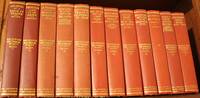
1931022770Glendale CA: The Arthur H. Clark Co. 1931. Book. Very Good. Hardcover. First Edition. Red cloth top edge gilt all 1st editions illustrations maps very nice set all VG to near fine with just the slightest edge wear the cloth on volumes 1 & 2 are a little darker than the other 10. Vol. 1. Adventures in the Santa Fe Trade by James Josiah Webb 1931 301 pages Vol. 2. Frontier Life in the Army 1854-1861 by Eugene Bandel 1932 330 pages Vol. 3. Journal of a Soldier Under Kearney and Doniphan 1846-1847 by George Rutledge Gibson 1935 371 pages. Vol. 4. Marching With the Army of the West 1846-1848 by Abraham Robinson Johnston 1936 368 pages. Vol. 5. Southern Trails to California in 1849 edited by Ralph Bieber 1937 386 pages. Vol. 6. WAH-TO-YAH and the Taos Trail by Lewis H. Garrard 1938 377 pages. Vol. 7. Exploring Northwestern Trails 1846-1854 by Philip St. George Cooke 1938 383 pages. Vol. 8. Historical Sketches of the Cattle Trade of the West and Southwest by Joseph G. McCoy 1940 435 pages. Vol. 9. Pike's Peak Gold Rush Guidebooks of 1859 by Luke Tierney 1941 346 pages. Vol. 10. Colorado Gold Rush Contemporary Letters and Reports 1858-1859 edited by LeRoy R. Hafen 1941 386 pages. Vol. 11. Overland Routes to the Gold Fields 1859 from Contemporary Diaries edited by LeRoy R. Hafen 1942 320 pages. Vol. 12. Southwest Historical Series Analytical Index 1943 364 pages. Herd 1385 Mintz 21 Rittenhouse 20 47 49 52 240 268 625. Wagner-camp 182 305:2 339a 346. Six-Score 76 Howes S791 G70 H72 Rader 3592. . The Arthur H. Clark Co. Hardcover
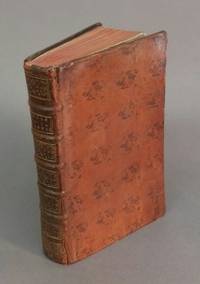
1648001623Paris: Pierre Des-Hayes 1648. Book. Very good- condition. Hardcover. First Edition. 16mo - over 5¾" - 6¾" tall. xviii 342 pages of text. Defective copy lacking five plates the frontis and a final engraved table. Attractive early-to-mid-18th century leather binding with moderate wear to the hinges spine extremities and corners. Raised bands gilt tooling and lettering on spine. Decorative marbled endpapers and blank endsheets supplied at time of binding. Present is the full-page engraved portrait of Michel Larcher engraved armorial dedication to Larcher and the engraved title page following page 58. A complete copy has the plate numbers 151 and 156 used twice totalling 158 plates showing plans and designs of perspective of which 153 only are present in this copy. Lacks plate numbers 110 151 both 154 and 155. However early hand-drawn facsimiles of plates 151 one of two and 155 are supplied and bound-in leaving three images unrepresented. The majority of the plates are double-sided. Plate 156 is in less than good condition with heavy staining and soiling. Engraved title page is repaired with early conservator's tape with no loss. Pages 168 through 193 are bound out of order. Several leaves are affected by damp staining and minor rippling; approximately 15 front and 30 rear. The title page and several adjacent leaves as well as a few at the rear of the text are heavily stained. Some of the staining appears to originate from washed-out markings -- notations to which an attempt at removal were made -- that are in blank areas mainly in the front and rear pages but also in the blank areas in the introduction. Includes Desargues New Theory at the end with demonstrations. Protected in a modern circa 1950 slipcase decorated with marbled endpaper the seams of which are detached at the top edge. Desargues 1593-1661 was a French mathemetician and a founder of modern Geometry. With Pascal he introduced the method of perspective; treated conic sections as projections of circles formulated the so-called Arguesian transformation; developed the theory of involution and of transversals; defined parallels as lines that intersect at infinity. Measures 6-5/8" tall by 4-1/2" wide; printed on thick paper with ample margins. 20th century bookplate of Paul and Verner Mac Alister on front pastedown and a neatly handwritten identification on the 2nd front endpaper. On the same leaf is a contemporary name or marking. French France Fortifications Conics Cartography Projective and Descriptive Geometry. Early editions of Desargues works are quite uncommon. Pierre Des-Hayes Hardcover
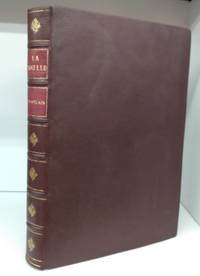
1656151129Paris: Chez Augustin Courbe 1656. First Edition. Hardcover. Very good. 45 522 12 p. 39 cm folio. Engraved frontispiece title page vignette decorations on dedication page and preface. Each chapter has full-page engraving and page top decoration making 12 of each as well as decorated first letters. Illustrations are by painter Claude Vignon engraved by Abraham Bosse. Two called-for portraits by Robert de Nanteuil are not present. Rebound in burgundy leather with 6 raised bands gilt impressing on spine. New endpapers. Title has chipped top corner. Faint dampstain on text block edge. Some small stains and darkened pages. French text. <br/><br/>Note the dedication to the Duke of Longueville. Chapelain received a pension from this nobleman allowing him to write this heroic epic about Joan of Arc. The poem's subject also allowed him to celebrate Jean de Dunois a medieval ancestor of the house of Longueville who was one of the great military leaders of the Hundred Years War. Apparently Chapelain let thirty years go by before he published the first half of this masterpiece leading some to argue that Chapelain wished to spin out his pension as long as he could. <br /> <br />This is one of the first French books engraved by a painter. Claude Vignon 1593 1670 was a French painter printmaker and illustrator who worked in a wide range of genres. Abraham Bosse ca. 1604 1676 was another French artist mainly as a printmaker and etcher. Most of his output was illustrations for books but many were also sold separately. Chez Augustin Courbe hardcover
166035775London: Printed for Henry Herringman 1660. Hardcover. Very good/No dust jacket. London: Printed for Henry Herringman 1660. title page 19 pp. Hardcover. 4to. Bound in red cloth covered boards. "Ode Cowley" stamped in gilt on the front board. All edges dyed red. Signatures: A-B4 C-C3 A A3 A4 B2 B4 C3 unsigned. Light wear to boards with small patch of rubbing on spine. Corners slightly bumped. Pages have been trimmed leading to loss of text on title page top half of "Ode" page 9 most of the final line of text and the second set of page numbers near the top margin of each page. A small section at the lower margin of the final three leaves has chipped away not affecting text. Previous owner and bookseller notations on added ffep. Inked note on title page. With faults as noted quite good. Very good/No dust jacket. Cowley 1618-1667 a poet and sometime diplomat/secretary to Queen Henrietta Maria wife of Charles I may have worked as a spy for the royalists during the late Cromwell era. His collections "The Mistress" 1647 and "Poems" 1656 were immensely popular during the poet's lifetime. MacLean writes of this piece "Cowley's Ode is highly figurative blending biblical and classical allusions with motifs from astrology and medicine. Highly dynastic in argument the poem is structured as a royal entry in which the king other members of the royal family Monk and members of the two houses of parliament mingle with allegorical personifications of Liberty Plenty Riches Honour and Safety. Along the way Cowley notices the slightly embarrassing absence of Henrietta Maria who had stayed behind in France having become estranged from Charles as a result of her Catholicism." Samuel Johnson who made Cowley his first subject in "The Lives of the Poets" wrote that he had been "at one time too much praised and too much neglected at another." A lovely example of Restoration-era political verse. ESTCR202041; Wing 1994 C6677; Pforzheimer 229. Insurance required to ship this item. Printed for Henry Herringman hardcover books
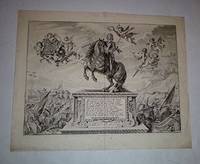
16-5579Londres: J. Brindley 1737. Original engraving. 46.6 x 58cm. sheet size. Centerfold. Tear without loss in upper margin .National; Portrait Gallery NPG D38714; OCLC Number 228726949Text on the print:"Apres l’homme le Cheval le plus noble animalEst rendu par ce Seigneur si juste et si égalPar cette Methode que tout le monde admireQu’on voit aisément qu’il est sujet de Son EmpireSon assiette si belle ses aides si secrettes;Tout à la neglicence encore si bien faittesNous sont un argument assés valide et puissantQu’il est à ses talons et Bride obeïssantEt que tous les Chevaux sont assujettis à sa loÿ;Puis qu’ils luy obeïssent comme à leur propre Roy. S’il montoit un Diable tres-robusteCe Diable jroit en touts Airs fort Iuste.M.D.V.".References : Huth 23; Podeschi 26 and 49; Lowndes 1663; Wing N884-87; Brunet I 1700; Graesse II 93; Mellon Books on the Horse and Horsemanship 1783 p. 49; Mennessier de la Lance II p. 250; Nissen ZBI 848. Londres: J. Brindley, 1737 unknown