Adam Olearius, Vander AaBiblio.com
387 résultats
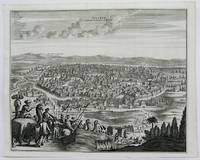
1727P1227Leiden 1727. Excellent. Notes: from the book "Voyages tres-curieux et tres-renommez faits en Moscovie Tartarie et Perse." Image Size : 270x355 mm 10.625x14 Inches Platemark Size : 275x360 mm 10.875x14.125 Inches Paper Size : 310x405 mm 12.25x15.875 Inches Coloring: Black & White Medium: Copper Engraving Categories: Views Asia Middle East Iran; unknown
176640581Vindobonae: Jo. Thom. Nob. de Trattnern 1766. 8vo 20.3 cm 8". 24 246 2 pp. <br><br>Uncommon first edition. The Belgian-born physician Chenot 17211789 who studied medicine at the University of Vienna before being sent by imperial command to Transylvania to assist in fighting outbreaks of the plague was a prominent voice in the debate over how to conduct quarantines hygiene and sanitary treatments and other protective measures; he was a staunch opponent of the theory that air itself could carry the disease. Here he offers his firsthand perspective on the plague having contracted it himself and survived!<br>Â Â Â Â WorldCat finds => only six U.S. institutions Harvard National Library of Medicine New York Academy of Medicine Stanford University of Pennsylvania University of Wisconsin reporting holding a hard copy. In the present example as in others reported the last leaf of the preface appears at the back of the volume where it was originally printed being leaf Q4.<br>Â Â Â Â Provenance: From the residue of the stock of the F. Thomas Heller bookselling firm est. ca. 1928. <br>Â Â Â Â <br>Â Â Â Â Blake NLM 18th Century p. 86; Wellcome II 334. Not in Garrison & Morton. Early plain papercovered boards spine with hand-inked paper shelving label; binding much worn overall with joints cracked loss of paper at corners and spine head. Pages waterstained. Early underlining and occasional marks of emphasis in red pencil to roughly first half of volume. => Another sort of survivor Jo. Thom. Nob. de Trattnern hardcover books
17851352917Edinburgh: John Bell and William Creech 1785. Third Edition. Hardcover. Small 6mo. xvi 317 pages; VG; Half bound in modern black leather with black cloth boards; green leather label with gilt lettering to spine; Earlier label included but not bound in; Previous owner's name written on title page; Text block slightly age-toned and foxed. RW consignment. Shelved in Room X. 1352917. Special Collections - Downstairs. John Bell and William Creech hardcover
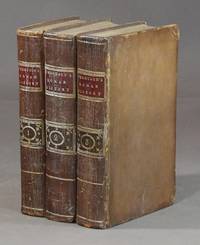
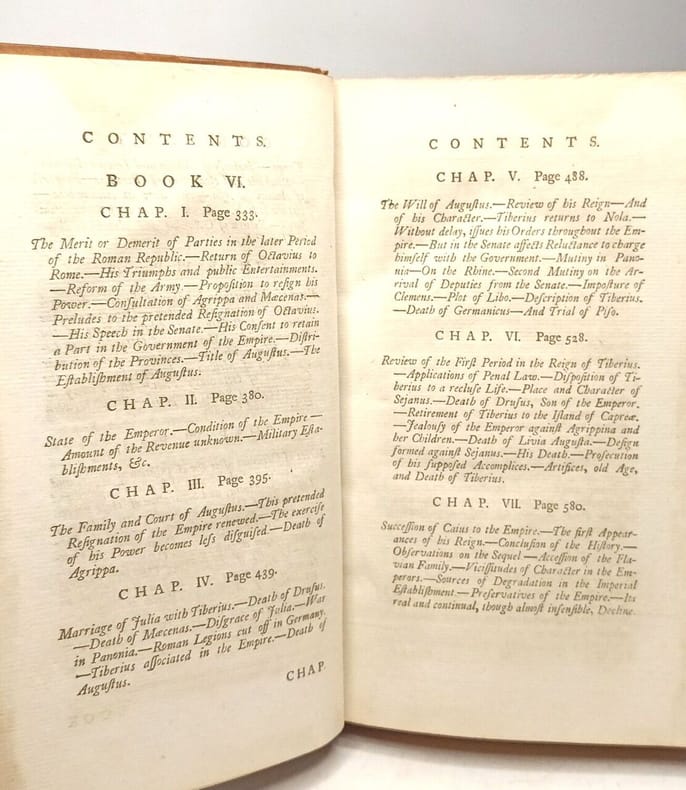
178328002Dublin: printed for Price Whitestone Colles et al. 1783. First Dublin edition 3 vols. 8vo pp. 10 492 2; 8 608; 8 600; first page of table of contents in vol. I misbound at the back; all else very good in contemporary full calf red and brown morocco labels on spines. This edition is printed the same year as the first London edition. <br/><br/> printed for Price, Whitestone, Colles, [et al.] unknown books
178328002Dublin: printed for Price Whitestone Colles et al. 1783. First Dublin edition 3 vols. 8vo pp. 10 492 2; 8 608; 8 600; first page of table of contents in vol. I misbound at the back; all else very good in contemporary full calf red and brown morocco labels on spines. This edition is printed the same year as the first London edition. printed for Price, Whitestone, Colles, [et al.] unknown
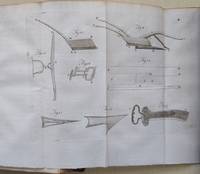
1770018436Edinburgh and London: A. Kincaid & J. Bell; T. Longman & T. Caddel 1770. Two volumes; with two engraved plates slightly marked at the margins small thick octavo pp lxvi 487; 8 564 edpapers age-toned at the margins the first volume suffers from some marginal worm holes early on but between pages 365 & 386 the little beast has eaten the upper margin so much that several pieces are nearly detached see illustration otherwise the volumes are both clean and tight internally with just a few turned corners; contemporary roan marked and scuffed joints a little worn the upper joint cracked slightly in each volume leather labels in black and red on the spines. Dickson was born in 1721 at Aberlady and studied at Edinburgh University where he took the degree of M.A. He passed his life between his cherished country employments on a large farm of his father's where he lost no opportunity of gathering experience from the conversation of the neighbouring farmers and the duties of his holy office. Having early shown a great taste for agriculture he watched its processes carefully and made rapid progress in it as he always connected practice with theory. On moving to Dunse he found more real improvements in the art and also more difficulties to be surmounted than had been the case in East Lothian. Observing that English works on agriculture were ill adapted to the soil and climate of Scotland and consisted of theories rather than facts supported by experience he determined to compose a "Treatise on Agriculture" on a new plan. The first edition of this appeared in 1762 and was followed by a second in 1770. This treatise is practical and excellently adapted to the farming of Scotland its first four books treating of soils tillage and manures in general the other four of schemes of managing farms usual in Scotland at that time and suggestions for their improvement. "Probably the most important of the authors of the period". And fifty years later J.C. Loudon wrote "decidedly the best work on tillage which has appeared in the English language and was and still is held in universal esteem among the practical farmers of Scotland". New Edition. Full Leather. Good. A. Kincaid & J. Bell; T. Longman & T. Caddel Hardcover
173233240-153Amsterdam Janssonius van Waesberge 1732. With 27 of 28 engr. folding plates numbered II-XXVIII lacks plate 1: frontispiece illus. 16/17 and 22/23 equalling two plates woodcut end-pieces. 2 cols. 6 unn. leaves incl. title 179 10 leaves. 8vo. Contemp. calf slightly rubbed. Sm. stamp J.A. Schmid on title. Amsterdam Janssonius van Waesberge 1732. A work on anatomy for medical students by the Danzig physician J. A. Kulmus or Kulm 1689-1745 first published in Latin in 1722. Incorporated are the latest researches of Verheyen Bartholinus and others. The author's sources in what amounts to a history of anatomy are detailed in the first chapter. The remaining 28 sections are given to a detailed description and illustration of anatomy and histology. With its detailed plates this work attained a wide circulation all over Europe; there were numerous editions and translations wiht partly new plates. It was the first Western book to be translated and published in Japan 1774. A final German edition was done by Carl Gottlob Kühn in 1814.- Slightly foxed throughout. - Cf. Choulant History and bibliography of Anatomic Illustration p. 34. SCIENCE: MEDICINE ; ANATOMY ; MED ; Amsterdam, Janssonius van Waesberge unknown
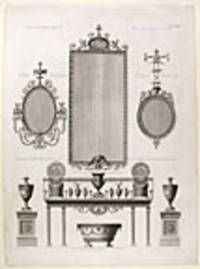
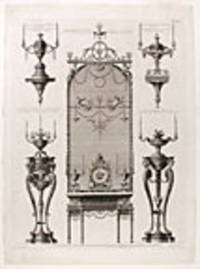
177517573London 1775. Engraving by P. Begbie. In excellent condition with the exception of two tears on right margin. A fine architectural engraving of ornate mirrors and tables from Robert Adam's seminal work on British architecture.<br/> <br/>Robert and his brother James Adam forever changed the face of British architecture by introducing innovative Classical design ideas. From 1754-57 Robert lived in Italy where he had a long productive friendship with Piranesi which was inspirational for both men. Adam's first book on Diocletian's palace in Dalmatia is clearly very like the archaeological investigations Piranesi was making at the same time of similar ruins. Piranesi's friendship and passion for Roman Classicism were seminal influences on Adam and the greatest single factor other than his own talent in the work Adam produced on his return to England. Upon his return the brothers launched their career by building the Adelphi from the Thames to the Strand in London which although not a commercial success at the time included one of London's most cherished buildings the Adlephi Theatre. Together the Adam brothers designed and built some of the most famous buildings in England including such bastions of English architecture as Kenwood House Keddlestone Manor and Syon House. To the interiors of their English country houses the Adams brought wonderful ornamental elements in niches lunettes festoons and reliefs. Their classically designed buildings were so numerous in London that they changed the prevailing feel of the city and established their brand of neo-Classicism as the model of elegance and importance. It is asserted that the brothers originated the concept of the uniform facade attached to the typical English row house an architectural device that distinguishes London buildings. This monumental contribution is evidenced in the Adams' designs for Portland Place and Fitzroy Square and these were used as architectural models for the whole city. The brothers brought their talents into other areas by designing furniture to complement their beautiful interiors and by creating and publishing a treatise of design entitled 'Works in Architecture'. The work was published in three volumes over an extended span of time beginning in 1773 with the final volume being published posthumously in 1822.<br/> <br/>Cf. Brunet I.47; cf. Lowndes I p.8; DNB; Wilton-Ely The Mind and Art of Giovanni Battista Piranesi. unknown books
177517101London 1775. Copper engraving with hand colour. Engraving by P. Begbie. In excellent condition with the exception of being trimmed just on the platemark on the left margin. Mild soiling mostly marginal. A fine engraving of an ornate harpsichord designed for the Empress of Russia.<br/> <br/>Robert and his brother James Adam forever changed the face of British architecture by introducing innovative Classical design ideas. From 1754-57 Robert lived in Italy where he had a long productive friendship with Piranesi which was inspirational for both men. Adam's first book on Diocletian's palace in Dalmatia is clearly very like the archaeological investigations Piranesi was making at the same time of similar ruins. Piranesi's friendship and passion for Roman Classicism were seminal influences on Adam and the greatest single factor other than his own talent in the work Adam produced on his return to England. Upon his return the brothers launched their career by building the Adelphi from the Thames to the Strand in London which although not a commercial success at the time included one of London's most cherished buildings the Adlephi Theatre. Together the Adam brothers designed and built some of the most famous buildings in England including such bastions of English architecture as Kenwood House Keddlestone Manor and Syon House. To the interiors of their English country houses the Adams brought wonderful ornamental elements in niches lunettes festoons and reliefs. Their classically designed buildings were so numerous in London that they changed the prevailing feel of the city and established their brand of neo-Classicism as the model of elegance and importance. It is asserted that the brothers originated the concept of the uniform facade attached to the typical English row house an architectural device that distinguishes London buildings. This monumental contribution is evidenced in the Adams' designs for Portland Place and Fitzroy Square and these were used as architectural models for the whole city. The brothers brought their talents into other areas by designing furniture to complement their beautiful interiors and by creating and publishing a treatise of design entitled 'Works in Architecture'. The work was published in three volumes over an extended span of time beginning in 1773 with the final volume being published posthumously in 1822.<br/> <br/>Cf. Brunet I.47; cf. Lowndes I p.8; DNB; Wilton-Ely The Mind and Art of Giovanni Battista Piranesi. unknown books
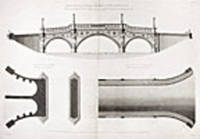
177517103London 1775. Engraving by T. Miller. In excellent condition with the exception of some very faint off-setting. A fine engraving of a proposed bridge over the river at Sion House in London.<br/> <br/>Robert and his brother James Adam forever changed the face of British architecture by introducing innovative Classical design ideas. From 1754-57 Robert lived in Italy where he had a long productive friendship with Piranesi which was inspirational for both men. Adam's first book on Diocletian's palace in Dalmatia is clearly very like the archaeological investigations Piranesi was making at the same time of similar ruins. Piranesi's friendship and passion for Roman Classicism were seminal influences on Adam and the greatest single factor other than his own talent in the work Adam produced on his return to England. Upon his return the brothers launched their career by building the Adelphi from the Thames to the Strand in London which although not a commercial success at the time included one of London's most cherished buildings the Adlephi Theatre. Together the Adam brothers designed and built some of the most famous buildings in England including such bastions of English architecture as Kenwood House Keddlestone Manor and Syon House. To the interiors of their English country houses the Adams brought wonderful ornamental elements in niches lunettes festoons and reliefs. Their classically designed buildings were so numerous in London that they changed the prevailing feel of the city and established their brand of neo-Classicism as the model of elegance and importance. It is asserted that the brothers originated the concept of the uniform facade attached to the typical English row house an architectural device that distinguishes London buildings. This monumental contribution is evidenced in the Adams' designs for Portland Place and Fitzroy Square and these were used as architectural models for the whole city. The brothers brought their talents into other areas by designing furniture to complement their beautiful interiors and by creating and publishing a treatise of design entitled 'Works in Architecture'. The work was published in three volumes over an extended span of time beginning in 1773 with the final volume being published posthumously in 1822.<br/> <br/>Cf. Brunet I.47; cf. Lowndes I p.8; DNB; Wilton-Ely The Mind and Art of Giovanni Battista Piranesi. unknown books
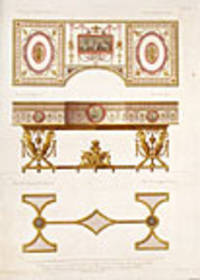
177717127London 1777. Copper engraving with lovely early colour. Engraved by B. Pastorini. In excellent condition. An elegant engraving depicting a collection of ornate furniture in the Earl of Derby's celebrated house in Grosvenor Square London.<br/> <br/>Robert and his brother James Adam forever changed the face of British architecture by introducing innovative Classical design ideas. From 1754-57 Robert lived in Italy where he had a long productive friendship with Piranesi which was inspirational for both men. Adam's first book on Diocletian's palace in Dalmatia is clearly very like the archaeological investigations Piranesi was making at the same time of similar ruins. Piranesi's friendship and passion for Roman Classicism were seminal influences on Adam and the greatest single factor other than his own talent in the work Adam produced on his return to England. Upon his return the brothers launched their career by building the Adelphi from the Thames to the Strand in London which although not a commercial success at the time included one of London's most cherished buildings the Adlephi Theatre. Together the Adam brothers designed and built some of the most famous buildings in England including such bastions of English architecture as Kenwood House Keddlestone Manor and Syon House. To the interiors of their English country houses the Adams brought wonderful ornamental elements in niches lunettes festoons and reliefs. Their classically designed buildings were so numerous in London that they changed the prevailing feel of the city and established their brand of neo-Classicism as the model of elegance and importance. It is asserted that the brothers originated the concept of the uniform facade attached to the typical English row house an architectural device that distinguishes London buildings. This monumental contribution is evidenced in the Adams' designs for Portland Place and Fitzroy Square and these were used as architectural models for the whole city. The brothers brought their talents into other areas by designing furniture to complement their beautiful interiors and by creating and publishing a treatise of design entitled 'Works in Architecture'. The work was published in three volumes over an extended span of time beginning in 1773 with the final volume being published posthumously in 1822.<br/> <br/>Cf. Brunet I.47; cf. Lowndes I p.8; DNB; Wilton-Ely The Mind and Art of Giovanni Battista Piranesi. unknown books
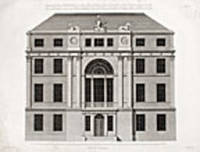
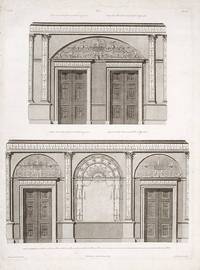
177517117London 1775. Engraving by R. Blyth. In excellent condition except for mild discolouration lower left. An elegant engraving showing the facade of a house in Whitehall used as the offices for Chelsea Hospital.<br/> <br/>Robert and his brother James Adam forever changed the face of British architecture by introducing innovative Classical design ideas. From 1754-57 Robert lived in Italy where he had a long productive friendship with Piranesi which was inspirational for both men. Adam's first book on Diocletian's palace in Dalmatia is clearly very like the archaeological investigations Piranesi was making at the same time of similar ruins. Piranesi's friendship and passion for Roman Classicism were seminal influences on Adam and the greatest single factor other than his own talent in the work Adam produced on his return to England. Upon his return the brothers launched their career by building the Adelphi from the Thames to the Strand in London which although not a commercial success at the time included one of London's most cherished buildings the Adlephi Theatre. Together the Adam brothers designed and built some of the most famous buildings in England including such bastions of English architecture as Kenwood House Keddlestone Manor and Syon House. To the interiors of their English country houses the Adams brought wonderful ornamental elements in niches lunettes festoons and reliefs. Their classically designed buildings were so numerous in London that they changed the prevailing feel of the city and established their brand of neo-Classicism as the model of elegance and importance. It is asserted that the brothers originated the concept of the uniform facade attached to the typical English row house an architectural device that distinguishes London buildings. This monumental contribution is evidenced in the Adams' designs for Portland Place and Fitzroy Square and these were used as architectural models for the whole city. The brothers brought their talents into other areas by designing furniture to complement their beautiful interiors and by creating and publishing a treatise of design entitled 'Works in Architecture'. The work was published in three volumes over an extended span of time beginning in 1773 with the final volume being published posthumously in 1822.<br/> <br/>Cf. Brunet I.47; cf. Lowndes I p.8; DNB; Wilton-Ely The Mind and Art of Giovanni Battista Piranesi. unknown books
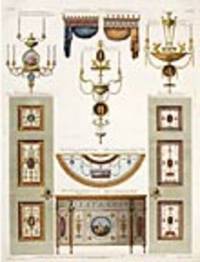
177517575London 1775. Engraving by B. Pastorini. In excellent condition. A fine engraving of various pieces of ornate furniture from Robert Adam's seminal work on British architecture.<br/> <br/>Robert and his brother James Adam forever changed the face of British architecture by introducing innovative Classical design ideas. From 1754-57 Robert lived in Italy where he had a long productive friendship with Piranesi which was inspirational for both men. Adam's first book on Diocletian's palace in Dalmatia is clearly very like the archaeological investigations Piranesi was making at the same time of similar ruins. Piranesi's friendship and passion for Roman Classicism were seminal influences on Adam and the greatest single factor other than his own talent in the work Adam produced on his return to England. Upon his return the brothers launched their career by building the Adelphi from the Thames to the Strand in London which although not a commercial success at the time included one of London's most cherished buildings the Adlephi Theatre. Together the Adam brothers designed and built some of the most famous buildings in England including such bastions of English architecture as Kenwood House Keddlestone Manor and Syon House. To the interiors of their English country houses the Adams brought wonderful ornamental elements in niches lunettes festoons and reliefs. Their classically designed buildings were so numerous in London that they changed the prevailing feel of the city and established their brand of neo-Classicism as the model of elegance and importance. It is asserted that the brothers originated the concept of the uniform facade attached to the typical English row house an architectural device that distinguishes London buildings. This monumental contribution is evidenced in the Adams' designs for Portland Place and Fitzroy Square and these were used as architectural models for the whole city. The brothers brought their talents into other areas by designing furniture to complement their beautiful interiors and by creating and publishing a treatise of design entitled 'Works in Architecture'. The work was published in three volumes over an extended span of time beginning in 1773 with the final volume being published posthumously in 1822.<br/> <br/>Cf. Brunet I.47; cf. Lowndes I p.8; DNB; Wilton-Ely The Mind and Art of Giovanni Battista Piranesi. unknown books
177517122London 1775. Engraving by Joshua Record. In excellent condition. An elegant engraving showing the chimney in the anteroom of Lord Derby's house in Grosvenor Square London.<br/> <br/>Robert and his brother James Adam forever changed the face of British architecture by introducing innovative Classical design ideas. From 1754-57 Robert lived in Italy where he had a long productive friendship with Piranesi which was inspirational for both men. Adam's first book on Diocletian's palace in Dalmatia is clearly very like the archaeological investigations Piranesi was making at the same time of similar ruins. Piranesi's friendship and passion for Roman Classicism were seminal influences on Adam and the greatest single factor other than his own talent in the work Adam produced on his return to England. Upon his return the brothers launched their career by building the Adelphi from the Thames to the Strand in London which although not a commercial success at the time included one of London's most cherished buildings the Adlephi Theatre. Together the Adam brothers designed and built some of the most famous buildings in England including such bastions of English architecture as Kenwood House Keddlestone Manor and Syon House. To the interiors of their English country houses the Adams brought wonderful ornamental elements in niches lunettes festoons and reliefs. Their classically designed buildings were so numerous in London that they changed the prevailing feel of the city and established their brand of neo-Classicism as the model of elegance and importance. It is asserted that the brothers originated the concept of the uniform facade attached to the typical English row house an architectural device that distinguishes London buildings. This monumental contribution is evidenced in the Adams' designs for Portland Place and Fitzroy Square and these were used as architectural models for the whole city. The brothers brought their talents into other areas by designing furniture to complement their beautiful interiors and by creating and publishing a treatise of design entitled 'Works in Architecture'. The work was published in three volumes over an extended span of time beginning in 1773 with the final volume being published posthumously in 1822.<br/> <br/>Cf. Brunet I.47; cf. Lowndes I p.8; DNB; Wilton-Ely The Mind and Art of Giovanni Battista Piranesi. unknown books
1727P1228Leiden 1727. Excellent. Notes: from the book "Voyages tres-curieux et tres-renommez faits en Moscovie Tartarie et Perse." Image Size : 285x355 mm 11.25x14 Inches Platemark Size : 290x365 mm 11.375x14.375 Inches Paper Size : 310x390 mm 12.25x15.375 Inches Coloring: Black & White Medium: Copper Engraving Categories: Views Asia Middle East Iran; unknown
179727583Paris: H. Agasse 1797. Very Good . Paris: H. Agasse 1797. First French Edition. Two volumes bound in one; octavo; 19th-century calf over papier-peint boards gilt-tooled spine; 4316; 42831pp. collated complete with half titles. Small abrasions to boards somewhat clumsily repaired else a Very Good or better internally clean and exceptionally fresh copy.<br /> <br /> First appearance in French of Adam Smith's posthumously collected work "Essays on Philosophical Subjects" which includes most notably his "Principles which lead and direct philosophical enquiries illustrated by the history of astronomy." This edition as with the first in English preceded by a lengthy account of Smith's Life by the Scottish philosopher and mathematician Dugald Stewart. H. Agasse unknown
177517573London 1775. Engraving by P. Begbie. In excellent condition with the exception of two tears on right margin. A fine architectural engraving of ornate mirrors and tables from Robert Adam's seminal work on British architecture.<br/> <br/> Robert and his brother James Adam forever changed the face of British architecture by introducing innovative Classical design ideas. From 1754-57 Robert lived in Italy where he had a long productive friendship with Piranesi which was inspirational for both men. Adam's first book on Diocletian's palace in Dalmatia is clearly very like the archaeological investigations Piranesi was making at the same time of similar ruins. Piranesi's friendship and passion for Roman Classicism were seminal influences on Adam and the greatest single factor other than his own talent in the work Adam produced on his return to England. Upon his return the brothers launched their career by building the Adelphi from the Thames to the Strand in London which although not a commercial success at the time included one of London's most cherished buildings the Adlephi Theatre. Together the Adam brothers designed and built some of the most famous buildings in England including such bastions of English architecture as Kenwood House Keddlestone Manor and Syon House. To the interiors of their English country houses the Adams brought wonderful ornamental elements in niches lunettes festoons and reliefs. Their classically designed buildings were so numerous in London that they changed the prevailing feel of the city and established their brand of neo-Classicism as the model of elegance and importance. It is asserted that the brothers originated the concept of the uniform facade attached to the typical English row house an architectural device that distinguishes London buildings. This monumental contribution is evidenced in the Adams' designs for Portland Place and Fitzroy Square and these were used as architectural models for the whole city. The brothers brought their talents into other areas by designing furniture to complement their beautiful interiors and by creating and publishing a treatise of design entitled 'Works in Architecture'. The work was published in three volumes over an extended span of time beginning in 1773 with the final volume being published posthumously in 1822.<br/> <br/> Cf. Brunet I.47; cf. Lowndes I p.8; DNB; Wilton-Ely The Mind and Art of Giovanni Battista Piranesi. unknown
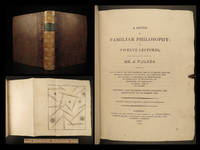
179921091<p><b>1799 Science Lectures Adam Walker Electricity Astronomy Optics Chemistry Physics</b></p><p>Adam Walker was an 18th-century scientist known for his numerous lectures on a variety of topics including mechanics hydrostatics hydraulics pneumatics and electricity. Many of these lectures were included in this 1799 printing of the '<i>Familiar Philosophy</i>'. The first lecture is of particular interest – discussion on light zodiac and the power of fire! It should be noted that this <b>impressive edition contains 47 copper engravings.</b></p><p>Item number: #21091</p><p>Price: $750</p><p>WALKER Adam</p><p><b><i>A System of familiar philosophy in twelve lectures</i></b></p><p>London: Printed for the author 1799. 1st edition</p><p><br /></p><p><u>Details</u>:</p><p>· Collation: Complete with all pages</p><p>o xviii 571 5</p><p>o <b>47 engravings</b></p><p>· Provenance: Armorial bookplate – John Plumptre</p><p>o John Pemberton Plumptre 1791–1864 was a British politician. He was elected as a Conservative Member of Parliament for East Kent in 1832 and resigned on 29 January 1852 through appointment as Steward of the Chiltern Hundreds. Motto: SUFFICIT MERUISSE</p><p>· Language: English</p><p>· Binding: Leather; tight and secure</p><p>· Size: ~11.25in X 9.25in 28.5cm x 23.5cm</p><p>· Quite rare </p><p>Our Guarantee:</p><p>Very Fast. Very Safe. Free Shipping Worldwide.</p><p>Customer satisfaction is our priority! Notify us with 7 days of receiving and we will offer a full refund without reservation!</p><p>21091</p><p>Photos available upon request. </p> for the author hardcover
172251685BBKassel, Johann Bertram Cramer 1722. Folio. 6 n.n. Bl., 51 S., 1 n.n. S., 19 S. Mit 2 gestochenen Tafeln mit geometrischen Figuren und 6 zum Teil mehrfach gefalteten gestochenen Tafeln. Halbleinwandband um 1840.
177517124London 1775. Engraving by Joshua Record. In excellent condition with the exception of some minor foxing across the sheet and some waterstaining along the upper margin. A decorative engraving by the celebrated architect Robert Adam depicting an elegant room in Lord Derby's house in Grosvenor Square London.<br/> <br/>Robert and his brother James Adam forever changed the face of British architecture by introducing innovative Classical design ideas. From 1754-57 Robert lived in Italy where he had a long productive friendship with Piranesi which was inspirational for both men. Adam's first book on Diocletian's palace in Dalmatia is clearly very like the archaeological investigations Piranesi was making at the same time of similar ruins. Piranesi's friendship and passion for Roman Classicism were seminal influences on Adam and the greatest single factor other than his own talent in the work Adam produced on his return to England. Upon his return the brothers launched their career by building the Adelphi from the Thames to the Strand in London which although not a commercial success at the time included one of London's most cherished buildings the Adlephi Theatre. Together the Adam brothers designed and built some of the most famous buildings in England including such bastions of English architecture as Kenwood House Keddlestone Manor and Syon House. To the interiors of their English country houses the Adams brought wonderful ornamental elements in niches lunettes festoons and reliefs. Their classically designed buildings were so numerous in London that they changed the prevailing feel of the city and established their brand of neo-Classicism as the model of elegance and importance. It is asserted that the brothers originated the concept of the uniform facade attached to the typical English row house an architectural device that distinguishes London buildings. This monumental contribution is evidenced in the Adams' designs for Portland Place and Fitzroy Square and these were used as architectural models for the whole city. The brothers brought their talents into other areas by designing furniture to complement their beautiful interiors and by creating and publishing a treatise of design entitled 'Works in Architecture'. The work was published in three volumes over an extended span of time beginning in 1773 with the final volume being published posthumously in 1822.<br/> <br/>Cf. Brunet I.47; cf. Lowndes I p.8; DNB; Wilton-Ely The Mind and Art of Giovanni Battista Piranesi. unknown books
1706019498Johann Maximilian von Sand. 1706. 3rd Edition . Hardcover. Very Good. Contemporary sprinkled calf spine gilt red morocco label half-title title in red & black with engraved vignette. Spine ends rubbed corners bumped. Edge wear to the cover. Pages heavily toned. Complete in one volume. Library label dated 1860 to the back of the front cover. <br/> <br/> Johann Maximilian von Sand. hardcover
1783100134605Printed for Moffin Paice Whittetone Collis Moncrieffe Jerkin Walker Esshaw Beatty White Burton Ryrie Caine and Sleator 1783 in8. 1783. Relié. 3 volume(s).
1783100134605Printed for Moffin Paice Whittetone Collis Moncrieffe Jerkin Walker Esshaw Beatty White Burton Ryrie Caine and Sleator 1783. Bon état de conservation bords un peu frottés tranches ternies rousseurs aux abords des plats intérieurs intérieurs propre par ailleurs. in8. 1783. Relié. 3 volumes. Printed for Moffin Paice Whittetone Collis Moncrieffe Jerkin Walker Esshaw Beatty White Burton Ryrie Caine and Slea unknown
17745327London 1774. Engraving by T. Miller expert repairs to old fold touching image area. A fine architectural engraving of Kenwood House in Hampstead London re-modelled in 1761-1773 and now home to the Iveagh Bequest picture collection.<br/> <br/>Robert and his brother James Adam forever changed the face of British architecture by introducing innovative Classical design ideas. From 1754-57 Robert lived in Italy where he had a long productive friendship with Piranesi which was inspirational for both men. Adam's first book on Diocletian's palace in Dalmatia is clearly very like the archaeological investigations Piranesi was making at the same time of similar ruins. Piranesi's friendship and passion for Roman Classicism were seminal influences on Adam and the greatest single factor other than his own talent in the work Adam produced on his return to England. Upon his return the brothers launched their career by building the Adelphi from the Thames to the Strand in London which although not a commercial success at the time included one of London's most cherished buildings the Adlephi Theatre. Together the Adam brothers designed and built some of the most famous buildings in England including such bastions of English architecture as Kenwood House Keddlestone Manor and Syon House. To the interiors of their English country houses the Adams brought wonderful ornamental elements in niches lunettes festoons and reliefs. Their classically designed buildings were so numerous in London that they changed the prevailing feel of the city and established their brand of neo-Classicism as the model of elegance and importance. It is asserted that the brothers originated the concept of the uniform facade attached to the typical English row house an architectural device that distinguishes London buildings. This monumental contribution is evidenced in the Adams' designs for Portland Place and Fitzroy Square and these were used as architectural models for the whole city. The brothers brought their talents into other areas by designing furniture to complement their beautiful interiors and by creating and publishing a treatise of design entitled 'Works in Architecture'. The work was published in three volumes over an extended span of time beginning in 1773 with the final volume being published posthumously in 1822.<br/> <br/>Cf. Brunet I.47; cf. Lowndes I p.8. unknown books
177434076London 1774. Engraving coloured by hand by B. Pastorini old dampstain to upper left margin. A fine engraving with contemporary hand colouring of a painted plaster and stucco ceiling from the interior at Kenwood House in Hampstead London re-modelled in 1761-1773 and now home to the Iveagh Bequest picture collection.<br/> <br/> Robert and his brother James Adam forever changed the face of British architecture by introducing innovative Classical design ideas. From 1754-57 Robert lived in Italy where he had a long productive friendship with Piranesi which was inspirational for both men. Adam's first book on Diocletian's palace in Dalmatia is clearly very like the archaeological investigations Piranesi was making at the same time of similar ruins. Piranesi's friendship and passion for Roman Classicism were seminal influences on Adam and the greatest single factor other than his own talent in the work Adam produced on his return to England. Upon his return the brothers launched their career by building the Adelphi from the Thames to the Strand in London which although not a commercial success at the time included one of London's most cherished buildings the Adlephi Theatre. Together the Adam brothers designed and built some of the most famous buildings in England including such bastions of English architecture as Kenwood House Keddlestone Manor and Syon House. To the interiors of their English country houses the Adams brought wonderful ornamental elements in niches lunettes festoons and reliefs. Their classically designed buildings were so numerous in London that they changed the prevailing feel of the city and established their brand of neo-Classicism as the model of elegance and importance. It is asserted that the brothers originated the concept of the uniform facade attached to the typical English row house an architectural device that distinguishes London buildings. This monumental contribution is evidenced in the Adams' designs for Portland Place and Fitzroy Square and these were used as architectural models for the whole city. The brothers brought their talents into other areas by designing furniture to complement their beautiful interiors and by creating and publishing a treatise of design entitled 'Works in Architecture'. The work was published in three volumes over an extended span of time beginning in 1773 with the final volume being published posthumously in 1822.<br/> <br/> Cf. Brunet I.47; cf. Lowndes I p.8; DNB; Wilton-Ely The Mind and Art of Giovanni Battista Piranesi. unknown