387 résultats
17745327London 1774. Engraving by T. Miller expert repairs to old fold touching image area. A fine architectural engraving of Kenwood House in Hampstead London re-modelled in 1761-1773 and now home to the Iveagh Bequest picture collection.<br/> <br/> Robert and his brother James Adam forever changed the face of British architecture by introducing innovative Classical design ideas. From 1754-57 Robert lived in Italy where he had a long productive friendship with Piranesi which was inspirational for both men. Adam's first book on Diocletian's palace in Dalmatia is clearly very like the archaeological investigations Piranesi was making at the same time of similar ruins. Piranesi's friendship and passion for Roman Classicism were seminal influences on Adam and the greatest single factor other than his own talent in the work Adam produced on his return to England. Upon his return the brothers launched their career by building the Adelphi from the Thames to the Strand in London which although not a commercial success at the time included one of London's most cherished buildings the Adlephi Theatre. Together the Adam brothers designed and built some of the most famous buildings in England including such bastions of English architecture as Kenwood House Keddlestone Manor and Syon House. To the interiors of their English country houses the Adams brought wonderful ornamental elements in niches lunettes festoons and reliefs. Their classically designed buildings were so numerous in London that they changed the prevailing feel of the city and established their brand of neo-Classicism as the model of elegance and importance. It is asserted that the brothers originated the concept of the uniform facade attached to the typical English row house an architectural device that distinguishes London buildings. This monumental contribution is evidenced in the Adams' designs for Portland Place and Fitzroy Square and these were used as architectural models for the whole city. The brothers brought their talents into other areas by designing furniture to complement their beautiful interiors and by creating and publishing a treatise of design entitled 'Works in Architecture'. The work was published in three volumes over an extended span of time beginning in 1773 with the final volume being published posthumously in 1822.<br/> <br/> Cf. Brunet I.47; cf. Lowndes I p.8. unknown
177531064London 1775. Engraving by D. Cunego. Adam's design for a surprise for George III's 25th birthday<br/> <br/> Robert Adam was probably introduced to the Royal Family by Lord Bute fellow Scotsman and patron. Queen Charlotte employed him to create a large temporary folly in the garden of Buckingham House. As shown here several portals held large painted linens. These were allegories showing George III as a bringer of peace and prosperity the Treaty of Paris ending the Seven Years' War had recently been signed. These painting were illuminated from behind and the overall effect must have been quite grand. Adam clearly succeeded in making a structure that was festive triumphant and regal. Robert and his brother James Adam forever changed the face of British architecture by introducing innovative Classical design ideas. From 1754-57 Robert lived in Italy where he had a long productive friendship with Piranesi which was inspirational for both men. Adam's first book on Diocletian's palace in Dalmatia is clearly very like the archaeological investigations Piranesi was making at the same time of similar ruins. Piranesi's friendship and passion for Roman Classicism were seminal influences on Adam and the greatest single factor other than his own talent in the work Adam produced on his return to England. Upon his return the brothers launched their career by building the Adelphi from the Thames to the Strand in London which although not a commercial success at the time included one of London's most cherished buildings the Adlephi Theatre. Together the Adam brothers designed and built some of the most famous buildings in England including such bastions of English architecture as Kenwood House Keddlestone Manor and Syon House. To the interiors of their English country houses the Adams brought wonderful ornamental elements in niches lunettes festoons and reliefs. Their classically designed buildings were so numerous in London that they changed the prevailing feel of the city and established their brand of neo-Classicism as the model of elegance and importance. It is asserted that the brothers originated the concept of the uniform facade attached to the typical English row house an architectural device that distinguishes London buildings. This monumental contribution is evidenced in the Adams' designs for Portland Place and Fitzroy Square and these were used as architectural models for the whole city. The brothers brought their talents into other areas by designing furniture to complement their beautiful interiors and by creating and publishing a treatise of design entitled 'Works in Architecture'. The work was published in three volumes over an extended span of time beginning in 1773 with the final volume being published posthumously in 1822.<br/> <br/> Cf. Brunet I.47; cf. Lowndes I p.8. unknown
1785JC14369Edinburgh: John Bell & William Creech 1785. Third Edition Enlarged. Hardcover. Near Fine. 12mo; xvi; 317 pp. Previous owner's armorial bookplate Abercromby of Birkenbog Bart. Full contemporary calf a lovely copy. <br/><br/>An important work of Scottish Philosophy. It holds a distinction of being one of about a dozen books by Scottish authors that James Madison thought fit to import to America in 1782 for The Library of the U.S. Congress. John Bell & William Creech hardcover books
1749677611749. 1749 Treatise on the Game Laws of Bavaria Austria and Mainz Ickstatt Johann Adam von 1701-1776. Klett Johann Friedrich Editor and Translator. Grundliche Abhandlungen von den Jagdrechten: Wie sich Solche aus den Allgemeinen Naturlichen Und Besondern Staatsrechten Erweisen Lassen. Mit einer Vorrede von dem Verschiedenen Zustande der Jagden bey den Romern und Deutschen und einem Anhang von den Neuesten Mehrentheils Ungedruckten Churmaynzischen Churbayerischen Erzherzoglich-Oesterreichischen Und Andern Jagdordnungen. Nebst einem Entwurf von einer Vorteilhaft Eingerichteten Waldordnung. Herausgegeben und mit einem Register Versehen von Johann Friedrich Klett. Nuremberg: Auf Kosten Johann Georg Lochners 1749. xlvi 428 16; 172 pp. Two parts each with title page. Title page of second part with title beginning Wald-Ordnung dated 1748. Quarto 7-3/4" x 6-1/4". Contemporary speckled calf blind rules to boards raised bands and lettering piece to spine marbled pastedowns. Light rubbing and a few minor worm holes to boards moderate rubbing to extremities light chipping to spine ends corners bumped and somewhat worn later library bookplate to front pastedown later owner bookplate to front free endpaper. Title page of first part printed in red and black attractive woodcut head and tail-pieces. Light toning to text light foxing in places early owner signatures to verso of front free endpaper and head of title page later library stamp to title page's verso. A handsome copy. $850. Only edition Part II a reissue of a work first published in 1748. The first part is overview of Bavarian forestry hunting and fishing laws from 1664-1742 followed by similar sets of laws promulgated in Austria in 1743 and in Mainz in 1744. The second part is a translation of the Bavarian laws with editorial commentary by Klett who also translated Part I. Early game and land laws record the earliest attempts to preserve the environment. They also offer fascinating insights into social history due to their relevance to topics ranging from class structure to foodways. Das Verzeichnis Deutscher Drucke des 18. Jahrhunderts 14598590-006. unknown books
1749677611749. 1749 Treatise on the Game Laws of Bavaria Austria and Mainz Ickstatt Johann Adam von 1701-1776. Klett Johann Friedrich Editor and Translator. Grundliche Abhandlungen von den Jagdrechten: Wie sich Solche aus den Allgemeinen Naturlichen Und Besondern Staatsrechten Erweisen Lassen. Mit einer Vorrede von dem Verschiedenen Zustande der Jagden bey den Romern und Deutschen und einem Anhang von den Neuesten Mehrentheils Ungedruckten Churmaynzischen Churbayerischen Erzherzoglich-Oesterreichischen Und Andern Jagdordnungen. Nebst einem Entwurf von einer Vorteilhaft Eingerichteten Waldordnung. Herausgegeben und mit einem Register Versehen von Johann Friedrich Klett. Nuremberg: Auf Kosten Johann Georg Lochners 1749. xlvi 428 16; 172 pp. Two parts each with title page. Title page of second part with title beginning Wald-Ordnung dated 1748. Quarto 7-3/4" x 6-1/4". Contemporary speckled calf blind rules to boards raised bands and lettering piece to spine marbled pastedowns. Light rubbing and a few minor worm holes to boards moderate rubbing to extremities light chipping to spine ends corners bumped and somewhat worn later library bookplate to front pastedown later owner bookplate to front free endpaper. Title page of first part printed in red and black attractive woodcut head and tail-pieces. Light toning to text light foxing in places early owner signatures to verso of front free endpaper illegible and head of title page "Collegii Diessensis" later library stamp to title page's verso. A handsome copy. $850. Only edition Part II a reissue of a work first published in 1748. The first part is an overview of Bavarian forestry hunting and fishing laws from 1664-1742 followed by similar sets of laws promulgated in Austria in 1743 and in Mainz in 1744. The second part is a translation of the Bavarian laws with editorial commentary by Klett who also translated Part I. Early game and land laws record the earliest attempts to preserve the environment. They also offer fascinating insights into social history due to their relevance to topics ranging from class structure to foodways. Das Verzeichnis Deutscher Drucke des 18. Jahrhunderts 14598590-006. unknown
179048326Dublin: printed by P. Byrne 1790. 6 volumes 8vo engraved frontispiece 2 folding engraved maps and 5 folding tables; contemporary full mottled calf red and black morocco labels on spines 2 lacking; spine ends chipped extremities rubbed and worn but in all a good serviceable set. Engraved bookplates of Alexander Crofts. First published in 2 volumes folio in 1762. Anderson 1693-1765 was a Scottish economist and for 40 years was a clerk in South Sea House the headquarters of the South Sea Company. Late in his life Anderson traveled to the American colonies begetting a son Adam E. Anderson later noted for being an early settler and planner of the Ohio Territory. <br/><br/> printed by P. Byrne unknown books
179048326Dublin: printed by P. Byrne 1790. 6 volumes 8vo engraved frontispiece 2 folding engraved maps and 5 folding tables; contemporary full mottled calf red and black morocco labels on spines 2 lacking; spine ends chipped extremities rubbed and worn but in all a good serviceable set. Engraved bookplates of Alexander Crofts. First published in 2 volumes folio in 1762. Anderson 1693-1765 was a Scottish economist and for 40 years was a clerk in South Sea House the headquarters of the South Sea Company. Late in his life Anderson traveled to the American colonies begetting a son Adam E. Anderson later noted for being an early settler and planner of the Ohio Territory. printed by P. Byrne unknown
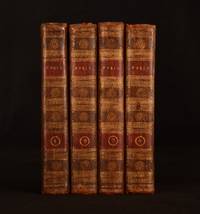
1794643P40London: P. Dodsley R. Owen 1794. Leather. Very Good. 7" by 4". None. A complete set of Edward Moore's fashionable satirical periodical 'The World'. Complete in four volumes.Each volume is bound with the half-title.A collection of the weekly newspaper 'The World' which was published from 1753 to 1756 with a total of two-hundred and nine publications.The newspaper saw contributions from people such as Horace Walpole E. S. Dallas Edward Lovibond and Charles Hanbury Williams. It was devoted to the satirising the follies and vices of the fashionable society of the eighteenth century.The publication typically saw a circulation that averaged from two to three thousand copies.Edited by Edward Moore under the pseudonym 'Adam Fitz-Adam'. He became the editor through the influence of Lord Lyttelton. Moore was a dramatist who wrote 'The Foundling' 'Gil Blas' 'Fables From the Female Sex' and more. In a full calf binding. Externally generally smart. A little loss to the head and tail of the spines. Minor bumping to the extremities. Rubbing to the rear board of Volume I. Front hinge of Volume I is starting but firm. Hinges of Volume IV are starting but firm. Volume IV is lacking the endpapers. Prior owner's ink inscription to the recto to the front free endpaper and to the verso to the rear endpaper of Volume I. Ink mark to the rear pastedown of Volumes II and IV. Internally firmly bound. Pages are very lightly age-toned with the occasional mark. Very Good P. Dodsley, R. Owen hardcover
17872227London, J. Walter, 1787-89. 4to. Mit allegorischem Frontispiz, 2 gefalteten Weltkarten u. 1 gefalteten Tabelle. Neue Halbleder mit je 2 Rückenschildern u. etwas Rückenvergoldung. [2 Warenabbildungen]
1784150233(Paris), ohne Verlag, 1784. CLIX (Introduction), 352; VII, 536; VIII, 468 S. Mit 1 Falttabelle. Halbleder d. Zeit mit je 2 Rückenschildern (Rücken leicht berieben, Ecken bestoßen, 3 Gelenke oben mit kurzen Einrissen).
1790018055Paris: Buisson 1790-91. Quattro volumi in 8° di XI-570pp; 4-312pp; 4-602pp; 4-591pp. Legatura in piena pelle del tempo cornice dorata ai piatti; dorso liscio ornato. Mancanza al piatto del vol I; spellature e mancanze a piatti angoli e cuffia al vol II; spellature e mancanze ai piatti cerniera spaccata al vol. III; spellature e mancanze ai piatti al vol IV. Prima edizione di questa traduzione del Roucher la terza in lingua francese. Il titolo annuncia suivi d'un volume de Notes par M. le Marquis de Condorcet ma queste note non furono mai stampate. Einaudi 5338. Buisson unknown
17867893Chez Poinçot 9,5 x 17 A Londres et Se Trouve à Paris, Chez Poinçot 1786 Six volumes in-12, reliure plein veau raciné de l'époque, dos lisse orné de quatre fleurs/grenades encadrées de palmettes et de filets dorés, pièces de titre de maroquin rouge, et de tomaison de maroquin vert, titre et tomaison dorés, tranches rouges, filets dorés sur les coupes, gardes à la coquille, [4]-VIII-298, [4]-266, [4]-292, [4]-239, [4]-310, [4]-368 pp. Le célèbre traité d'Adam Smith (1723-1790) avait paru en Angleterre en 1776. Notre exemplaire en est l'édition pirate, qui est la remise en vente, sous couvert d'une édition londonienne, de l'édition suisse d'Yverdon de 1781 en 6 volumes in-12. Cette dernière était la première traduction française de "La richesse des nations" publiée initialement, en feuilleton et sans nom de traducteur, dans le "Journal de l'agriculture, des arts et du commerce et des finances", en 1779 et 1780. Le traducteur en était en fait l'abbé Jean-Louis Blavet, qui était en relations avec Adam Smith pour avoir traduit sa "Théorie des sentiments moraux" (1774), par l'intermédiaire du salon anglophile de la marquise de Bouffers, maîtresse du prince de Conti, dont Blavet était le bibliothécaire. Le libraire Poinçot était établi à Versailles. Selon Robert Darnton (Editer et pirater, Gallimard, 2021), il était " coriace" en affaires et semblait jouer un rôle de "mouchard", tout en ayant des relations commerciales suivies avec la Société typographique de Neuchâtel (S.T.N.), dont l'habitude était de pirater les éditions françaises. (cf. Darnton, p. 442, note 22). Contrefaçon peu fréquente, notre exemplaire participe pleinement à l'histoire de la diffusion en France de "La richesse des nations" au XVIIIe siècle.. Agréable reliure, petit manque au bas du plat supérieur du tome 3, quelques très légères épidermures, partie inférieure de la page de titre du tome 6 absente, galerie de vers en queue du tome 4. Très bon exemplaire. (Bbis6)PHOTOS NUMERIQUES DISPONIBLES PAR EMAIL SUR SIMPLE DEMANDE-DIGITAL PHOTOGRAPS MAY BE AVAILABLE ON REQUEST.
17867893Chez Poinçot 9,5 x 17 A Londres et Se Trouve à Paris, Chez Poinçot 1786 Six volumes in-12, reliure plein veau raciné de l'époque, dos lisse orné de quatre fleurs/grenades encadrées de palmettes et de filets dorés, pièces de titre de maroquin rouge, et de tomaison de maroquin vert, titre et tomaison dorés, tranches rouges, filets dorés sur les coupes, gardes à la coquille, [4]-VIII-298, [4]-266, [4]-292, [4]-239, [4]-310, [4]-368 pp. Le célèbre traité d'Adam Smith (1723-1790) avait paru en Angleterre en 1776. Notre exemplaire en est l'édition pirate, qui est la remise en vente, sous couvert d'une édition londonienne, de l'édition suisse d'Yverdon de 1781 en 6 volumes in-12. Cette dernière était la première traduction française de "La richesse des nations" publiée initialement, en feuilleton et sans nom de traducteur, dans le "Journal de l'agriculture, des arts et du commerce et des finances", en 1779 et 1780. Le traducteur en était en fait l'abbé Jean-Louis Blavet, qui était en relations avec Adam Smith pour avoir traduit sa "Théorie des sentiments moraux" (1774), par l'intermédiaire du salon anglophile de la marquise de Bouffers, maîtresse du prince de Conti, dont Blavet était le bibliothécaire. Le libraire Poinçot était établi à Versailles. Selon Robert Darnton (Editer et pirater, Gallimard, 2021), il était " coriace" en affaires et semblait jouer un rôle de "mouchard", tout en ayant des relations commerciales suivies avec la Société typographique de Neuchâtel (S.T.N.), dont l'habitude était de pirater les éditions françaises. (cf. Darnton, p. 442, note 22). Contrefaçon peu fréquente, notre exemplaire participe pleinement à l'histoire de la diffusion en France de "La richesse des nations" au XVIIIe siècle.. Agréable reliure, petit manque au bas du plat supérieur du tome 3, quelques très légères épidermures, partie inférieure de la page de titre du tome 6 absente, galerie de vers en queue du tome 4. Très bon exemplaire. (Bbis6)PHOTOS NUMERIQUES DISPONIBLES PAR EMAIL SUR SIMPLE DEMANDE-DIGITAL PHOTOGRAPS MAY BE AVAILABLE ON REQUEST.
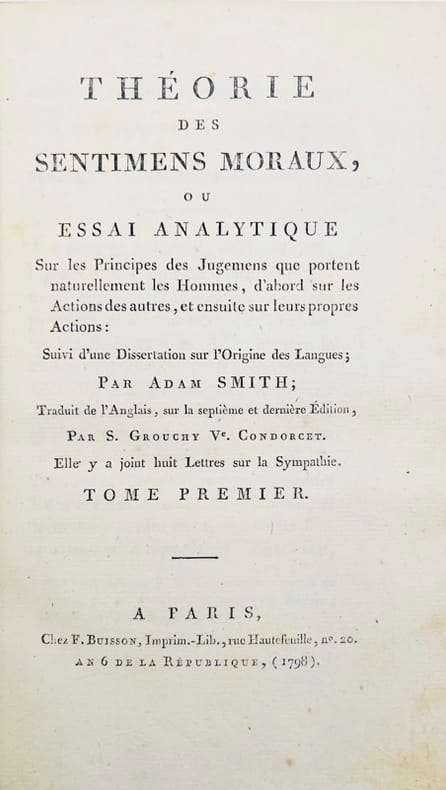
179810443A Paris, chez F. Buisson, 1798. 2 vol. in-8 de VIII-466 pp. et (4)-511 pp., demi-veau taupe, dos lisse orné de filets dorés (reliure de l'époque).
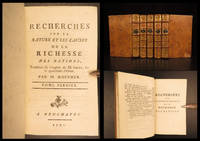
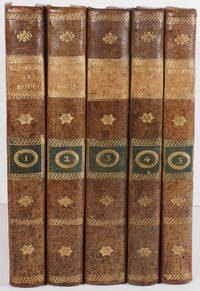
179250300<p>This 1792 Neuchatel edition of Adam Smith's "Recherches sur la Nature et les Causes de la Richesse des Nations" is an early French translation by Jean-Antoine Roucher a poet and political writer associated with Enlightenment thought who later died during the French Revolution. Issued in five volumes this edition contributed to the spread of Smith's economic ideas across continental Europe. It is noted that the volume containing Condorcet's commentary was likely never published adding bibliographic interest. The work examines labor trade and national wealth and remains a landmark in economic literature. Near Fine. Full leather bindings remain tight and secure with gilt retained on the spines pages clean and free of tears or stains and corners showing minimal wear. 12mo 5 volumes. Collation: each volume separately paged. Illustrations: none stated. Edition: French edition 1792. References: PMM 221; Goldsmith 14106. Item Number SKU: 50300. PHOTOS AVAILABLE UPON REQUEST.</p> Jean-Antoine Roucher hardcover
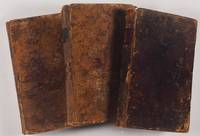
179655618London: Printed for A. Strahan; T. Cadell jun. and W. Davis 1796. Eigth edition/ Seventh edition Vol.s 2 3. Hardcover. Fair to good condition. Octavo. x 499 vi 512 5 v. 465 50pp. Original brown leather marbled for vols. 2 and 3 with gilt lettering and ruling on spine Vol. 1 volumes two and three with gilt lettering on black and red labels of spine gilt ruling and tooling. <br /> <br /> Magnus opus of Scottish economist and philosopher Adam Smith reflecting on economics at the beginning of the industrial revolution. Contains index of fifty pages at rear of vol. 3. Smith was one of the commissioners of his Majesty's Customs in Scotland; and formerly Professor of Moral Philosophy in the University of Glasgow.<br /> <br /> Binding of volume one with wear along edges front joint cracked back joint partially cracked both holding together. Volumes two and three with light to medium wear along edges and three to four inches of front joints cracked. Binding of volume one rubbed some light damp-staining of first and last few pages. Front free endpapers of volume one with some staining. Initials and name inked to title page of all volumes name offsetting to facing page. Printed for A. Strahan; T. Cadell jun. and W. Davis hardcover
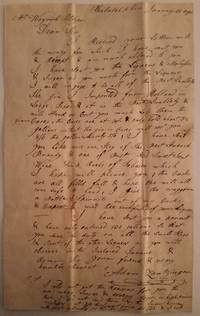
1790319Philadelphia 1790. Autograph Letter Signed. Folio sheet folded. 1 page of text with address on the verso. Folded with small tears at the folds blank piece missing at the wax seal. Highly legible hand. Watermark paper " I R ".Letter from Adam Zantzinger concern the receipt of money and shipment of "Liquers and Molasses and Sugar . . all of the best quality. The gin I imported from Holland in large Pipes & it is the best Quality & will cost you much less then the gin in cases; the cases are at 30/ only hold about 3 1/2 gallons so that the gin in cases will cost you 8/6 the gallon & this only 5/6. I have sent you like wise on keg of the best French Brandy & one of the best Red Sweet Wines and a Roal of Tobacco which I hope will please you. The casks are all filled full and hope thy will all com safe to hand. I give the waggoner a bottle of Spirrits out of my casks & expect he will see carefully of your liquor."Adam Zantzinger was a member of the Pennsylvania Militia 1775-1783 and is listed in the Revolutionar War Batallion Index. In 1775 he purchased a 9 acre parcel of land north of the City of Philadelphia called the Norther Liberites on Ridge Avenue across the street from what is now Girard College. He was listed in the membership rolls of the Carpenters Company for 1786 and became a shareholder in the Library Company of Philadelphia in 1790. unknown
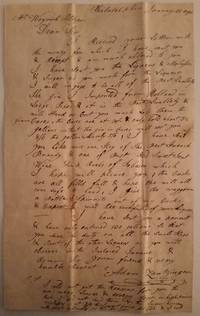
1790549Philadelphia 1790. Autograph Letter Signed. Folio sheet folded. 1 page of text with address on the verso. Folded with small tears at the folds blank piece missing at the wax seal. Highly legible hand. Watermark paper "I R". Letter from Adam Zantzinger concern the receipt of money and shipment of "Liquers and Molasses and Sugar . . all of the best quality. The gin I imported from Holland in large Pipes & it is the best Quality & will cost you much less than the gin in cases; the cases are at 30/ only hold about 3 1/2 gallons so that the gin in cases will cost you 8/6 the gallon & this only 5/6. I have sent you like wise one keg of the best French Brandy & one of the best Red Sweet Wines and a Roal of Tobacco which I hope will please you. The casks are all filled full and hope they will all com safe to hand. I give the waggoner a bottle of Spirrits out of my casks & expect he will see carefully of your liquor." Adam Zantzinger was a member of the Pennsylvania Militia 1775-1783 and is listed in the Revolutionary War Batallion Index. In 1775 he purchased a 9-acre parcel of land north of the City of Philadelphia called the Norther Liberites on Ridge Avenue across the street from what is now Girard College. He was listed in the membership rolls of the Carpenters Company for 1786 and became a shareholder in the Library Company of Philadelphia in 1790. 319 549. unknown
1790549Philadelphia 1790. Autograph Letter Signed. Folio sheet folded. 1 page of text with address on the verso. Folded with small tears at the folds blank piece missing at the wax seal. Highly legible hand. Watermark paper "I R". Letter from Adam Zantzinger concern the receipt of money and shipment of "Liquers and Molasses and Sugar . . all of the best quality. The gin I imported from Holland in large Pipes & it is the best Quality & will cost you much less than the gin in cases; the cases are at 30/ only hold about 3 1/2 gallons so that the gin in cases will cost you 8/6 the gallon & this only 5/6. I have sent you like wise one keg of the best French Brandy & one of the best Red Sweet Wines and a Roal of Tobacco which I hope will please you. The casks are all filled full and hope they will all com safe to hand. I give the waggoner a bottle of Spirrits out of my casks & expect he will see carefully of your liquor." Adam Zantzinger was a member of the Pennsylvania Militia 1775-1783 and is listed in the Revolutionary War Batallion Index. In 1775 he purchased a 9-acre parcel of land north of the City of Philadelphia called the Norther Liberites on Ridge Avenue across the street from what is now Girard College. He was listed in the membership rolls of the Carpenters Company for 1786 and became a shareholder in the Library Company of Philadelphia in 1790. 319 549. unknown books
1790319Philadelphia 1790. Autograph Letter Signed. Folio sheet folded. 1 page of text with address on the verso. Folded with small tears at the folds blank piece missing at the wax seal. Highly legible hand. Watermark paper " I R ".Letter from Adam Zantzinger concern the receipt of money and shipment of "Liquers and Molasses and Sugar . . all of the best quality. The gin I imported from Holland in large Pipes & it is the best Quality & will cost you much less then the gin in cases; the cases are at 30/ only hold about 3 1/2 gallons so that the gin in cases will cost you 8/6 the gallon & this only 5/6. I have sent you like wise on keg of the best French Brandy & one of the best Red Sweet Wines and a Roal of Tobacco which I hope will please you. The casks are all filled full and hope thy will all com safe to hand. I give the waggoner a bottle of Spirrits out of my casks & expect he will see carefully of your liquor."Adam Zantzinger was a member of the Pennsylvania Militia 1775-1783 and is listed in the Revolutionar War Batallion Index. In 1775 he purchased a 9 acre parcel of land north of the City of Philadelphia called the Norther Liberites on Ridge Avenue across the street from what is now Girard College. He was listed in the membership rolls of the Carpenters Company for 1786 and became a shareholder in the Library Company of Philadelphia in 1790. unknown books
178842376Londres, Pierre J. Duplain, 1788. 8vo, Two nice uniform contemporary full calf bindings with gilt spines. Some loss of leather to back hinge and lower capital of volume one and minor loos of leather to spine of volume two, all due to worming. Worming is not bad and does not affect anything but outer layer of small parts of the bindings. Apart from the worming a very nice, fresh and clean copy indeed. (8), IV, 503" (4), 496 pp. With both half-titles, the advertisment, both prefaces and the table of contents.
178842376Londres Pierre J. Duplain 1788. 8vo Two nice uniform contemporary full calf bindings with gilt spines. Some loss of leather to back hinge and lower capital of volume one and minor loos of leather to spine of volume two all due to worming. Worming is not bad and does not affect anything but outer layer of small parts of the bindings. Apart from the worming a very nice fresh and clean copy indeed. 8 IV 503; 4 496 pp. With both half-titles the advertisment both prefaces and the table of contents. <br/><br/><em>Rare early French translation of Adam Smith's political and economic classic the "Wealth of Nations". Translated by Blavet. The present edition constitutes the third reprint of the second French translation. The second French translation was done by Blavet and is the first translation into French of which the translator and publisher are known. "The reprint of Blavet's version appeared at Yverdon in 1781 in 6 volumes 12mo and at Paris in the same year in 3 volumes 12mo and again at London and Paris in 1788 in 2 volumes 8vo the present edition and revised and corrected with Blavet's name as translator at Paris An ix 1800-01 in 4 volumes 8vo.He Blavet had no intention of publishing it until his friend M. Ameilhon happened to complain of scarcity of interesting articles for his Journal de l'Agriculture du Commerce des Arts et des Finances which had just come under the control of the Mercantilist. It struck him that he might offer it to him which he did with the explanation that it was far from perfect. It was accepted and appeared in the issues of the Journal between January 1779 and December 1780. He did not anticipate that it would go further. The edition of 1788 likewise appeared without his knowledge or consent and was still more marred by errors than that of Yverdon". Lai Cheng-chung. Adam Smith Across Nations: Translations and Receptions of The Wealth of Nations Clarendon Press UK 2000. Hailed as the "first and greatest classic of modern thought" PMM 221 Adam Smith's tremendously influential main work has had a profound impact on thought and politics and is considered the main foundation of the era of liberal free trade that dominated the nineteenth century. Adam Smith 1723-1790 is considered the founder of Political Economy in Britain mainly due to his groundbreaking work the "Wealth of Nations" from 1776. The work took him 12 years to write and was probably in contemplation 12 years before that. It was originally published in two volumes in 4to and was published later the same year in Dublin in three volumes in 8vo. The book sold well and the first edition the number of which is unknown sold out within six months which came as a surprise to the publisher and probably also to Smith himself partly because the work "requires much thought and reflection qualities that do not abound among modern readers to peruse to any purpose." Letter from David Hume In: Rae Life of Adam Smith 1895 p. 286 partly because it was hardly reviewed or noticed by magazines or annuals. In spite of this it did evoke immense interest in the learned and the political world and Buckle's words that the work is "in its ultimate results probably the most important book that has ever been written" and that it has "done more towards the happiness of man than has been effected by the united abilities of all the statesmen and legislators of whom history has preserved an authentic account" History of Civilisation 1869 I:214 well describes the opinion of a great part of important thinkers then as well as now. Considering the groundbreaking views presented in "Wealth of Nations" it comes as no surprise that the work was considered part of the revolutionary cultural development in France. As Adam Smith's friend the Marquis of Lansdowne said after quoting Smith's work: "With respect to French principles as they had been denominated those principles had been exported from us to France and could not be said to have originated among the population of the latter country." Quoted in: Rae p. 291. The ideas of Adam Smith were often considered so dangerously closely connected with French ideas at the time that the term "political economy" almost became synonymous with questions concerning the constitution of governments. "The French Revolution seems to have checked for a time the growing vogue of Smith's book and the advance of his principles in this country just as it checked the progress of parliamentary and social reform because it filled men's mind with a fear of change with a suspicion of all novelty with an unreasoning dislike of anything in the nature of general principle." Rae p. 293. There can be no question that this seminal work greatly influenced French opinion at the time. </em> hardcover
17152091202133211835D.Brown A and F.hurchill M.Lawrence etc. 1715. Soft Cover. Fine. Volume: 1 D.Brown, A and F.hurchill, M.Lawrence etc. paperback
17958592a<p>Smith's Wealth of Nations had first appeared in French in 1778-9 in an anonymous translation followed by a second by Jean-Louis Blavet in 1781. Roucher's translation first appeared in four volumes in 1790-1. Jean-Antoine Roucher 1745–94 was a poet from Montpellier friend and admirer of J.-J. Rousseau. He welcomed the Revolution but was arrested in the Terror and went to the guillotine.</p><p>Rochedieu 304; Goldsmiths 14106; Kress B 1986. K. E. Carpenter The Dissemination of The Wealth of Nations in French and in France New York 2002 pp. 85-87.</p><p>5 vols 8vo 195 × 110 mm pp. 6 vi 438; 4 494; 4 624 4 411 1; 4 370 one leaf of index in final vol pp. 211-2 bound out of order complete with half-titles the first with printed facsimile of Buisson's signature. Very occasional paper flaws with very minor losses of a few letters here and there. Contemporary quarter sprinkled sheep spines gilt with tan and green labels. A very good set.</p> Buisson ... An 3e [
17994947London: Printed for the Author. 1799. First edition. First edition. Lg. 4to. xviii572pp. Index. Plus 4pp. subscriber's list bound in near front. Lacking the half-title. Illustrated with 47 copper engraved folding plates. Cont. spotted calf nicely rebacked red calf spine label. The 1799 original edition is quite scarce. With some great engravings such as the "Extinguishing Fire Machine" "Walker's Improved Steam Engine" etc. Printed for the Author. unknown books