Adam Smith, Dugald Stewart, P. Prévost (traduction)Livre Rare Book
387 résultats
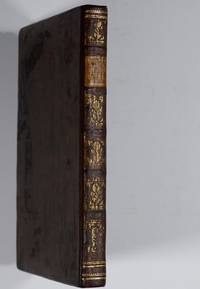
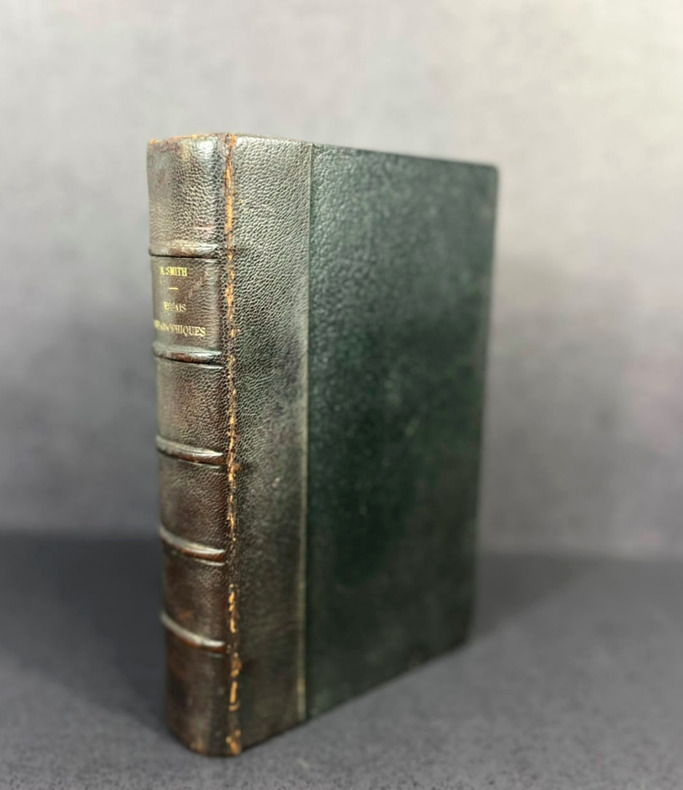
1797571Paris, Agasse, "An V de la République" (1797). Édition originale. Deux volumes reliés en un. Frontispice bien présent, intertitres bien présents. Fort in-8, 13,5 x 20 cm, (2 ff.) (3 ff.) 283 pp., (1 ff.) 316 pp. (2 ff.) Relié demi-maroquin noir. Dos janséniste à 5 nerfs, nom d'auteur et titre frappés en doré et séparés d'un mince trait doré, plats couverts de tissu noir. Gardes marbrées. Mince tranchefile. 2 ff. reliure dont un avec ex-dono à la plume de 1860. 3 ff. originaux, faux-titre avec tampon bleu en haut à droite, frontispice et page de titre du premier volume. Avertissement de Joseph Black et Jacques Hutton, Précis de la vie et des écrits d'Adam Smith par Dugald Stewart, Histoire de l'astronomie en IV sections avec notes des éditeurs anglais. Second volume : Histoire de la physique ancienne, Histoire de la logique et de la métaphysique des anciens, De la nature de l'imitation dans les arts imitatifs, Des arts imitatifs, Des sens externes, Réflexions sur les oeuvres posthumes d'Adam Smith par le traducteur, Avis du traducteur sur la lettre suivante. Lettre aux auteurs du journal d'Édimbourg, Notes du traducteur signalées comme "très-intéressantes".
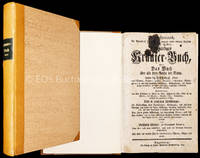
17834143DB1783. 2 Teile in 1 Band von 2. Augsburg Wolf 1783. 4 Bl. 566 S. Mit zahlr. Textholzschnitten Moderner Halblederband. Nissen 1218. Äusserst erfolgreiches Destillier- und Kräuterbuch erschien erstmals 1557 in Frankfurt. Es fehlt der zoologische und der mineralogische Teil. Das Papier durchgehend stockfleckig. Das Titelblatt mit grösserem Titenfleck. unknown
17834143DB2 Teile in 1 Band (von 2). Augsburg, Wolf, 1783. (4) Bl., 566 S. Mit zahlr. Textholzschnitten Moderner Halblederband.
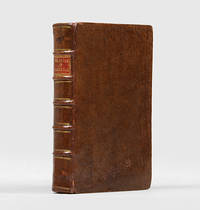
1785PRGstFER60Edinburgh: Printed for John Bell & William Creech Sold in London by T.Cadell and G.Robinson 1785. 1785. 12mo. pp. xvi 317. with half-title. contemporary calf joints cracked spine worn small piece chipped from upper rear joint. Third Enlarged Edition. Jessop p. 122. Edinburgh: Printed for John Bell & William Creech, Sold in London by T.Cadell and G.Robinson, 1785. unknown
1792018054Neuchatel Hambourg Leipzig: Fauche-Borel 1792. Cinque volumi in 8° piccolo di 4-XII-384pp.; 4-406pp.; 4-400pp; 4-437pp; 4-432pp. Il primo volume ha un faux-titre non gli altri. Legatura in mezza pelle marrone dei primi dell800. Seconda edizione della traduzione di Jean Antoine Roucher 1745-1794 poeta e letterato che aderì alla Rivoluzione ma venne ghigliottinato durante il Secondo Terrore dopo essere stato in cella con André Chenier. Jammes Cat2001: "Deuxième édition peu connue". Fauche-Borel unknown
1753000698<p>London: London: Printed for Robert. Dodsley in Pall-Mall where letters to the author are taken in and sold by Mary. Cooper at the Globe in Pater-Noster-Row 1753. 1st Printing. Full leather. Very Good. First edition four volumes in two folio; 1-628; 629-1258 16pp In contemporary tree calf lightly worn hinges cracked but firm spines gilt red and green gilt-lettered leather spine labels contemporary marbled endpapers woodcut headpieces opening each number a very clean copy. Very attractive example of this full bound-up run of Edward Moore's weekly periodical in handsome period binding with original collective title-pages added to each volume. Contributors include Horace Walpole Soame Jenyns and John Boyle Earl of Orrery and with Chesterfield's articles of late 1754 extolling Johnson's imminent Dictionary on the eve of its publication ESTC P1858 citing 14 examples in the UK 5 of which at British Library and 4 at Cambridge and 8 examples in US 3 of which at University of Virginia.</p> London: Printed for R[obert]. Dodsley in Pall-Mall, (where letters to the author are taken in) and sold by M[ary]. Cooper at the hardcover
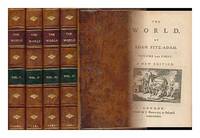
178294149London Printed For J. Dodsley 1782. New Edition. Hardback. Full contemporary analine calf recased. Raised bands with gilt cross-bands uniform spine-tooling and contrasting gilt-blocked Morocco lables. An exceptional set of presentation quality - scans and additional bibliographic detail on request. ; 0 pages; ""Names of the Authors of the World"": v. 4 p. 342-344. Referenced by: English Short Title Catalog ESTCT101133. Originally published in 209 weekly numbers from Jan. 4 1753 to Dec. 30 1756 with Edward Moore The earl of Chesterfield Richard Owen Cambridge and Horace Walpole as principal contributors. Moore was editor and contributed 61 papers. London, Printed For J. Dodsley hardcover
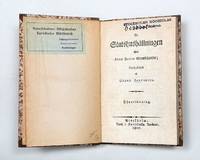
1800152848Stockholm: Tryckt i Kumblinska Tryckeriet 1800. First translation in Swedish of Georg Sartorius's abbreviated edition of the Wealth of Nations first published in German in 1796 aimed as a university textbook. "Sartorius' indisputable contribution to economic science consists in the fact that he was one of the first German professors to grasp the significance of Adam Smith's system. At a time when German academic and political life was still dominated by the cameralist tradition he enthusiastically undertook the propagation of the Smithian doctrine using the lecture hall as his principal forum. His selections from the Wealth of Nations published as early as 1796 'for use in academic lectures' revealed a capacity to present the principles and implications of laissez faire in a manner suited to the tastes and needs of German students" ESS. This abridged version intended as a textbook marked a radical reduction of the work - at around 40000 words it is a tenth the size of the original. The Swedish translation by the jurist Johan Holmbergsson 1764-1840 was important in introducing Smith's ideas to Sweden. Prior to this publication only excepts of Smith's work had been available in Swedish in the journal Läsning i blandade ämnen 1799. The section on income tax is omitted possibly for political reasons since it suggested that there were some forms of taxation that should be applied to all. The preface is an abbreviated and revised version of Sartorius's original introduction. Octavo 163 x 106 mm. Late 19th-century purple quarter cloth spine lettered in gilt marbled sides blue speckled edges. Library label of Stockholms Högskolas Juridiska Bibliotek to front pastedown and their stamp to title pp. 17 and 236. Inner hinges a little weak. A very good copy. Tribe 73. Kress B.4270; not in Goldsmiths' or Vanderblue. hardcover
179327911London: A. Strahan and T. Cadell. Very Good with no dust jacket. 1793. Seventh Edition. Hardcover. All three volumes professionally rebacked keeping the original speckled leather boards. Not xlib. Owner's sticker inside the front c overs Bloomfield Jervis Beach 1820-1894. A very nice clean attractive set. ; 8vo 8" - 9" tall . A. Strahan and T. Cadell hardcover
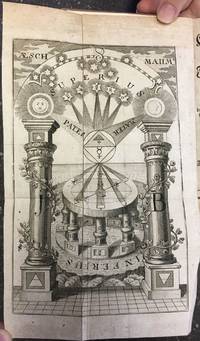
17821334227Berlin: Friedrich Maurer 1782. Second Edition. Hardcover. Octavo 16 429 1; VG; bound in brown library cloth gilt titling to spine; ex-library label removed from spine pencil erased from recto of title page; 2 vignettes folding frontispiece plate symbolic content some tape repair to rear wear and separation at folds; very mild foxing; faint orange underlining to three words on title page scattered pencil to title page;<br /> <br><br /> <br><br /> Scarce; AG consignment; shelved case 3. Rare and early freemasonry work by the German Adam Michael Birkholz. The First Masonic Grand Lodge was founded in England in 1717 spreading to the continent in the decades following. This history was first published in 1779 and republished in 1782.;<br /> <br><br /> <br><br /> "Birkholz was a Rosicrucian writer.Der Compass der Weisen.is a well known work though not trustworthy as to history. He wrote under the name of Adamah Booy" Adolph Frederick Alexander Woodford;<br /> <br><br /> <br><br /> "Birkholz maintained that he was one of the "members of the inner Constitution of the genuine and right Freemasonry" and with this book he intended "to present clearly and faithfully the history of this illustrious Order from the beginning of its founding." Florian Ebeling;<br /> <br><br /> <br><br /> "The history of the Order was described in detail in the book The Compass of Wisemen which was extremely popular in the masonic milieu" Konstantin Burmistrov Maria Endel;. 1334227. Shelved Dupont Bookstore. Friedrich Maurer hardcover books
179651283London A. Strahan and T. Cadell and W. Davies 1796. Hardcover. In a 20th century binding quarter morocco over marbled boards with gold-on-black spine labels. Bound without half titles. Three different circular embossed stamps blind stamps are noted each about 1.5 inches in diameter. The first reading "LIBRARY OF ARTHUR BEISS" on the circumference and "ABJ" in the center appears on an early blank in each volume. The second is essentially the same but reads "LIBRARY OF JUDITH BEISS" on the circumference and "JBA" in the center and is found on a rear blank in each volume. A third circular embossed stamp of the same size is not entirely legible. It reads "THE illegible LIBRARY ASSOCIATION" on the circumference with two smaller illegible lines and a year probably 1885 in the center. It is found on page 5 of each volume and also on page 345 of volume 2 and page 327 of volume 3. The volumes contain no other ownership markings or annotations or markings of any kind. The pages are mildly foxed but without tears or other damage. . Three volumes separately paged. London, A. Strahan and T. Cadell and W. Davies hardcover
171956262Cedar Falls IA & Tigard OR: Wagner Manufacturing Co.; Orlo R.W. Hossack Architect & Salesman for H.F. Bonesteele 1917-1927. 1st - 4to. Approx. 150 pp sections separately paginated inserts. w/ four linen-backed silver gelatin photos sized 6.5 x 7 in. up to 8 x 10 in. 3 mounted on white linen hinges w/ whole punches at gutter margin colour inserts mimeographed price lists & order forms over 100 text illustrations & diagrams blue printed softcovers all preserved in limp leather 3-ring binder gilt lettering stamped on front cover minor shelfwear rubbing; 2nd - 4to. 15 1 pp. With text illustrations photos self-printed colour softcovers cover art of garage door being opened minor shelfwear; 3rd - 4to. 32 pp unpaginated. colour-printed title numerous text illustrations Gray-green illustrated softcovers split-pin binding yapp edges minor rubbing edgewear creasing to couple corners; 5th -- 2 copies. 16mo. 8 pp unpaginated. printed leporello accordion-style format illustrated & printed in red & black minor shelfwear; 6th - Folio. 9 x 16 in. 4 pieces. 2 pp unpaginated. broadsides text illustrations photos fold creases still VG; 7th -- 8vo. Approx. 100 leaves mostly carbon copies of orders all written in manuscript most located dated and signed at lower right corner by Hossack salesman limp red leatherette covers silk moire endpapers gilt stamping front cover some chipping edgewear rubbing; together with 8th -- Salesman Sample Case containing garage door sliding Model No. 58 from quarter-sawn oak featuring full-sized hardware sized 18.5 x 18 in. two Wagner rolling garage door & elevator door sets steel brackets all preserved in hardshell sample case sized 20 x 30.25 x 5 in. fitted w/ nickel-plated corners bosses on bottom handle and clasps khaki-coloured cloth lining and pockets scuffing edgewear still VG exemplar originally owned and used by Orlo Ray William Hossack 1891-1937 a Portland architect real estate developer and salesman for Bonesteele to his clients. First editions thus of these catalogues and exceedingly rare complete salesman sample kit for the Wagner Manufacturing garage door hardware in the 1920s. After World War I the explosion and popularity of automobile ownership in the United States created a desperate need to house these often cantankerous and essential machines for homes businesses and commercial fleets. By quickly adapting their hardware sets for elevator doors first introduced before World War I Wagner was able to quickly capitalize on the market growth and need for door hardware to retrofit existing garages as well as new construction. Often coupled with doors produced by Johnson Fimbel Hartford Barber-Colman Overhead and Crawford the Wagner hardware sets proved durable and popular. In addition this sample kit features the specialized steel stud brackets developed by Wagner to help brace garages and sheds adapted for garage doors to hold automobiles as the weight of the doors could damage existing construction as Americans were interested in rolling doors and sectional garage doors rather than traditional swing-out barn-type doors. Wagner 1871-1937 originally founded his company in Cedar Falls IA in 1904 to manufacture children’s sleds coaster wagons and hay rack fixtures with a variety of door hardware. They merge with Star Elevator Doors before World War I and later with Boardman Elevator Control of Chicago with primary customers as Otis Elevator and Westinghouse. In 1934 Wagner began producing the iconic Wagner Overhead Garage Door and by the 1950s had become one of the largest garage door manufacturers in the country. Worldcat locates 1 copy of No. 25 Harvard; and 1 of Wagner-Star Elevator Door Cat Univ. of Kansas; no copies of the other catalogues or examples of the Salesman Sample Model in case. Wagner Manufacturing Co.; Orlo R.W. Hossack, Architect & Salesman for H.F. Bonesteele, paperback
1759636031759. Neue vermehrtes und verbesserte Auflage. - Leipzig Caspar Fritschen Handlung 1759 8° 10 121 6 pp. mit 26 Kupfertafeln inkl. Portr.-Frontisp num. II bis XXVIII Halbledereinband der Zeit; feines Expl. Vollständiges Exemplar dieses bekanntesten Kompendiums der Anatomie des 18.Jhdts. Johann Adam Kulmus aus Breslau 1689-1745 studierte an verschiedenen europäischen Universitäten. Nach einer Studienreise durch Holland war er als Arzt in Danzig tätig. Durch holländische Seefahrer gelangte sein Werk auch nach Japan und wurde übersetzt und unter dem Titel "Kaitai shinsho" von R. Mayeno herausgegeben. Dieses Buch war der Grundstein westlicher Medizin in Japan. Kulmus practiced at Danzig and his Tabulae anatomicae were very popular and have been repeatedly reprinted and translated. The "Anatomische Tabellen" were even translated into Japanese after a Japanese physician named MAYENO had satisfied himself by a dissection of a Japanese woman Aocha-Baba that they presented the true anatomical relations and thus demonstrated that such anatomy as had been taught in Japan up to that time was absolutely false. cf. Hirsch-H. III 632; Choulant-Frank p.34 unknown
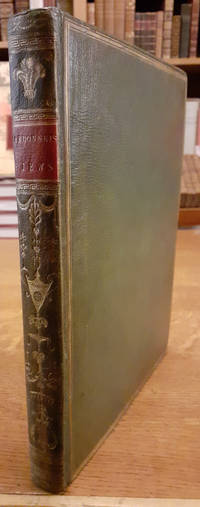
17889851London: for the author and sold by Edwards in Pall Mall also by Edwards's in Halifax 1788. 2 parts only of 4 in one volume 4to. pp. iv 27 i 25 leaves; 11 i 25 leaves the 50 unnumbered leaves printed on the rectos only: etched illustrations on india paper somewhat browned are mounted as headpieces on each leaf with a letterpress description below. Contemporary olive morocco gilt light wear probably by Staggemeir and Welcher who often worked for Edwards of Halifax: triple fillet border flat-backed spine with overall rococo design composed from various tools including swags an urn a lyre prince-of-wales feathers and incorporating a red morocco lettering-piece turn-ins with metope-and-pentaglyph roll all edges gilt. Neat early bibliophiles inscription on front free endpaper describing this as a proof impression and noting the price paid as two guineas; 19th century armorial bookplate of Simeon Warner. Parts three and four were published in 1793. Adam de Cardonnel 1746/7-1820 trained as a surgeon but his easy circumstances left him leisure to indulge his interest in the study of antiquities and numismatics ODNB. He was a founding fellow of the Society of Antiquaries of Scotland and assisted Francis Grose in his antiquarian researches during Groses Scottish travels. Part of lot 94 sold by Christies 22 October 1992 in their sale 4852. Book for the author and sold by Edwards in Pall Mall, also by Edwards's in Halifax, unknown
1762124180Edinburgh: Printed by A. Donaldson and J. Reid 1762. Scottish agriculture First edition. Adam Dickson 1721-1776 a Scottish clergyman observed that much of the literature on agriculture was based on English farming and took no account of Scotland's different soil and climate. His Treatise was highly popular with Scottish farmers going through six editions in the 18th century with a second volume being added in 1769. Octavo 190 x 119 mm. With 2 engraved folding plates. Contemporary polished sprinkled calf red label to spine lettered in gilt red speckled edges. Contemporary note on the author on verso of front free endpaper. Faded shelf mark at head of spine tiny markings to covers occasional light foxing; still a fine copy. ESTC T72210; Goldsmiths' 9746; Fussell More Old English Farming Books p. 56. unknown
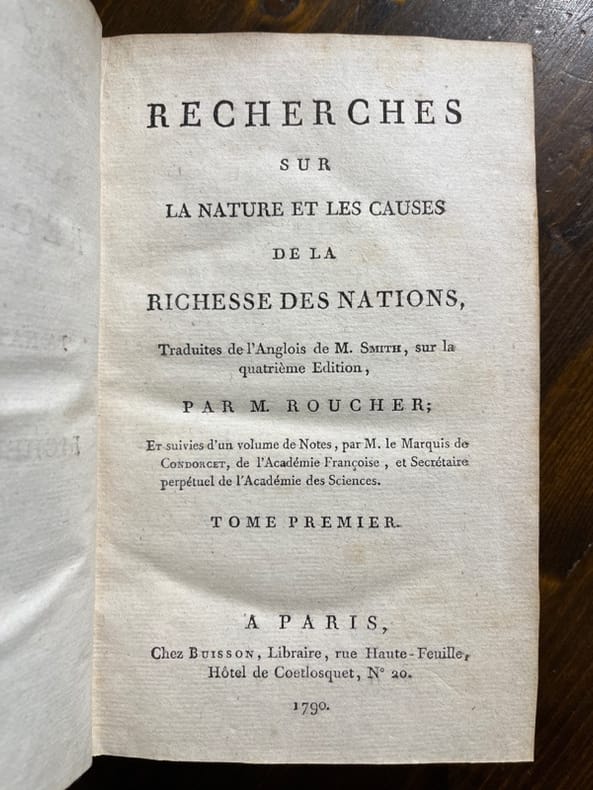
179020118Paris, chez Buisson, 1790. 4 volumes in-8 XI-[1]-570; [4]-312; [4]-602 et [4]-591 pages, demi-chagrin vert à grains longs, à coins, dos lisses ornés de filets dorés, pièce de titre et tomaison fauve (et ovale pour ces dernières), tranches jaunes.
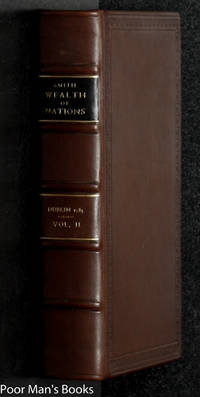
178534376Dublin: W. W. Colles R. Montcrieffe G. Burnet Et Al. Near Fine with no dust jacket. 1785. Fourth Edition. Hardcover. 8vo 8" - 9" tall; 4894 59 pages; Rebound in rich full calf leather. Contents clean and bright with minor water stains at inner upper spine. Vol II of 2 4th edition but 2nd Dublin edition. Light owner name at top of title. Exceptional. . W. W. Colles, R. Montcrieffe, G. Burnet, Et Al. hardcover
1791286London: A. Strahan and T. Cadell 1791. First edition. 1/2 near contemporary calf. Very Good. <p>VERY RARE. Reprinted numerous times throughout the late 1700s and into the 1800s this is the impressively hard to find first edition. WorldCat only identifies six institutions with a copy including the British Library. RareBookHub shows only later editions coming to a recorded auction including the scarce second edition but never the first edition.<br /> <br /> Condition: VG. Complete including errata leaf.<br /> <br /> Roman antiquities ; or an account of the manners and customs of the Romans; Respecting Their Government Magistracy Laws Judicial Proceedings Religion Games Military & Naval Affairs Dress Exercises Baths Marriages Divorces. Funerals Weights & Measures Coins Method of Writing Houses Gardens Agriculture Carriages Public Buildings &c. &c. Designed chiefly to illustrate the Latin classics. By Alexander Adam LL. D. Rector of the High School of Edinburgh<br /> <br /> </p> <br /> <p>BOOK INFO<br /> <br /> Published in 1791 by A. Strahan and T. Cadell in London. First edition. Bound in near contemporary 1/2 fine calf over finely woven cloth. Spine with gilt ruled compartments separated by raised bands; gilt-lettered spine label in compartment two. All edges marbled. Duodecimo 12mo 6 3/4" x 4 3/8". Collated and complete: xiii 1 594 2 pp.<br /> <br /> ABOUT THE AUTHOR<br /> <br /> Alexander Adam June 1741 – December 1809 was a Scottish teacher and writer on Roman antiquities. His popularity and his success as a teacher are strikingly illustrated by the great increase in the number of his pupils many of whom subsequently became distinguished men among them being Walter Scott Lord Brougham and Francis Jeffrey. Roman Antiquities is his best work which passed through a large number of editions and received the unusual compliment of a German translation.<br /> <br /> CONDITION REPORT<br /> <br /> The book is in Very Good antiquarian condition. Complete. Refreshed endpapers.<br /> <br /> Exterior and binding: Firmly bound with joint ends starting to crack. Slight loss of leather at head of spine. Rubbed edges wear and bumping to corners. Spine sunned dry and cracking a bit. Top edge darkened per usual.<br /> <br /> Interior: VG. Pages are mostly clean bright and lightly toned with some slightly darker toning in a few sections an infrequent spot of foxing on occasion or light sign of handling. The endpapers and blanks are a little toned and grubby and there are a previous owner's bookplate and a couple of inked previous owners' names. One leaf with some slight insect nibbling to fore-edge not affecting text. <br /> <br /> All in all a lovely collectible copy of an exceedingly rare first edition of an influential work on antiquarian Roman history and culture by a favorite teacher of Sir Walter Scott.</p> . A. Strahan, and T. Cadell unknown
1797009266Paris: Agasse 1797. Due volumi in 8vo 12x20 cm di 4-283 pp e 4-316 pp. Ritratto inciso di Smith all'antiporta del primo volume. Graziosa legatura ottocentesca in mezza pelle avana dorso dorato e ornato piatti con carta marmorizzata. First edition in French of Smith's "Essays on philosophical subjects 1795. Traduits de l'anglais par P. Prevost. Ottime condizioni. Agasse unknown
1788018056Paris Londres: Duplain 1788. Due volumi in 8° di 4-IV-503pp-4; e 4-496pp. Bella legatura coeva in piena pelle del tempo dorso liscio ornato e dorato. Bell'esemplare di questa traduzione che contribuì non poco alla diffusione delle idee di Smith in Francia. La traduzione è di Jean-Louis Blavet anche se a lungo circolò la voce che in realtà fosse di Morellet che stava in effetti pensando in quello stesso tempo di procedere ad una sua versione. "The Blavet's version appeared at Yverdon in 1781 in 6 volumes 12mo and at Paris in the same year in 3 volumes 12mo and again at London and Paris in 1788 in 2 volumes 8vo the present edition. He had no intention of publishing it until his friend M. Ameilhon happened to complain of scarcity of interesting articles for his Journal de l'Agriculture du Commerce des Arts et des Finances which had just come under the control of the Mercantilist. It struck him that he might offer it to him which he did with the explanation that it was far from perfect. It was accepted and appeared in the issues of the Journal between January 1779 and December 1780. He did not anticipate that it would go further. The edition of 1788 likewise appeared without his knowledge or consent and was still more marred by errors than that of Yverdon". Lai Cheng-chung. Adam Smith Across Nations. Duplain unknown
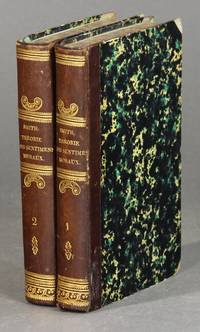
179854493Paris: F. Buisson 1798. 2 volumes 8vo pp. viii 466; 4 51 1; sporadic foxing; pencil notes in the top margins of C6v and C7r in volume I and K5r in volume II; paper flaw in C4 of the second volume affecting 4 or 5 letters; F1 in volume II with blank corner torn no loss and the second A gathering in volume II substantially toned; all else quite nice in contemporary brown calf-backed marbled boards with vellum tips; smooth gilt-decorated spine laid out in three compartments gilt-lettered direct in 1; very pretty marbled edges green silk bookmarkers; near fine. There's a wonderful abstract of an article on line compliments of Laurie Breban and Jean Dellemotte at the Sorbonne which "aims at providing a critical analysis of Sophie de Grouchy's translation and commentary of Adam Smith's Theory of Moral Sentiments . This paper focuses on Sophie de Grouchy's translation of the Theory of Moral Sentiments 1759 published in 1798." At that time her translation was not the first attempt to spread Adam Smith's moral philosophy in France. However the two previous translations did not succeed there. The first one from Marc-Antoine Eidous and entitled Metaphysique des moeurs 1764 was unanimously criticized because of its bad quality. Smith himself looked at it as responsible for the bad reception of his work across the Channel. As for the second translation 1774-75 from Jean-Louis Blavet it seems to have been poorly disseminated. This contrasts with the reputation of Grouchy's translation which was praised from the very moment of its publication for its accurateness with respect to the original text. The success was such that it has been viewed for two centuries as the definite French translation of the Theory of Moral Sentiments. And Grouchy is even sometimes considered as "Smith's best-known contemporary translator." <br/><br/> F. Buisson hardcover books
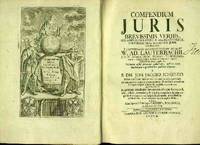
1722950613Tübingen Frankfurt & Leipzig: Cotta ca. 1722. hardcover. Gut. 8 Blatt 745 Seiten 7 Blatt. Halbpergament der Zeit mit Pergamentecken und handschriftlichem Rückenschild. Oktav 215 x 175 cm Rücken mit Fehlstelle im Pergament Einband berieben bestoßen und etwas fleckig Besitzvermerk von alter Hand auf Titel sehr zahlreiche zeitgenössische Marginalien innen wenig fleckig im Ganzen ordentlich erhalten. "Wolfgang Adam Lauterbach 1618 - 1678 war einer der bedeutendsten Juristen des usus modernus pandectarum in Württemberg. Im November 1648 erhielt er an der Universität Tübingen einen Lehrstuhl für Pandekten. . Neben der Lehrtätigkeit hatte Lauterbach auch mehrfach Ämter in der Universitätsverwaltung inne er wurde achtmal zum "rector magnificus" und oft zum Dekan der juristischen Fakultät gewählt. . Sein bekanntestes Werk ist das >Compendium Juris<. Dieses Werk wurde aber nicht von ihm selbst sondern von seinem Schüler Johann Jacob Schütz Pietist und Jurist 1640 - 1690 herausgegeben. Das Buch war eine der verbreitetsten Erläuterungen der Pandekten es wurde von 1679 bis 1744 vielfach aufgelegt." vgl. wikipedia. Seine besondere Bedeutung bekommt das vorliegende sehr breitrandige Exemplar durch die überbordenden Marginalien von Johann Friedrich Anton Meier Hildesheim 1724 - 1796 Paderborn der seinen vollen Namen selbstbewußt auf dem Vorsatz zu wissen gibt. Der Eintrag ist "Erfurt 1745" datiert Meier war damals dort Student. Später wurde er einer der angesehensten Juristen in Paderborn wo er Hofrichter Geheimer Rat und Kanzler war. vgl. Zeitschrift für vaterländische Geschichte und Alterthumskunde Westfalens 1843 Seite 311 ff. - Weitere Bilder auf Anfrage oder auf unserer Homepage. Wegen Urlaub kann Ihre Bestellung / Anfrage erst nach dem 21.06.2026 bearbeitet werden. - Because of holidays your order / question can be handled only after 06/21/2026. Cotta hardcover
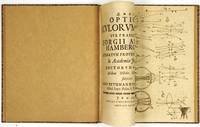
1707524801707. Jena : Literis Gollnerianis 1707 Kl.-4° 2 64 pp. mit 1 Kupfertafel feiner Pappband im Stil d. Zeit. Rare - Second Edition of the first monograph on refractive errors ! "Physiology in general and physiologic optics in specific made great progress during the 18th century. These advances were at first made not by practicing ophthalmologists but the mathematicians and physicists. This situation is therefore similar to that of the 17th century when progress was achieved by Kepler Scheiner Kircher Mariotte Hooke Rohault Deschales Huygens and others. The mathematician Georg Albrecht Hamberger 1662-1716 was the author of a most curios monograph which was printed toward of the end of the 17th century. Modern historian did not know about it and it is not mentioned by A. Hirsch not by Helmholtz in the second edition of his Physiological Optik. It is difficult to determine how much this book influenced the thought progress of the 18th century. It is only mentioned in the review of the literature by Julius Beer in his first 'Augenheilkunde' of 1792 and Haller quotes it in his 'Elementa physiologiae humani' ." The book is called: Optica oculorum vitia sub praesidio Geogrii Alberti Hambergeri . This is the first monograph on refractive errors - the root so to speak from which 170 years later the classical book by Donders evolved; the monograph is for its time extraordinarily clear strictly mathematical and physical written in an entirely different spirit from the scholastic descriptions of the fourth book by Plempius "Opthalmographia" 1632 and also far superior to the corresponding remarks in Boerhaave's lectures on ophtahlmology 1708 printed in 1746 to 1771. These two publications are usually regarded as the beginning of physiologic optics. . Also Modern ocular hygiene was created by Professor Hamberger in Jena in 1696 . Only the reform of ophthalmology during the middle of the 19th century which was based on the ophthalmoscope and the correct recognition of refraction changed the situation." Hirschberg/Blodi IV pp.284-291 "Es ist dies die erste Sonderschrift über die Fehler der Einstellung des Auges . für die damalige Zeit außerordentlich klar streng mathematisch-physikalisch . geschrieben . Die Hygiene des Auges . ist in den zahllosen Schriften über diesen Gegenstand die um die Wende des 18. zum 19. Jahrhundert . erschienen sind nur wenig verbessert und erweitert worden " Hirschberg unknown
177431062London 1774. Engraving by B. Pastorini. A fine engraving of a painted plaster and stucco ceiling from the interior at Kenwood House in Hampstead London re-modelled in 1761-1773 and now home to the Iveagh Bequest picture collection.<br/> <br/>Robert and his brother James Adam forever changed the face of British architecture by introducing innovative Classical design ideas. From 1754-57 Robert lived in Italy where he had a long productive friendship with Piranesi which was inspirational for both men. Adam's first book on Diocletian's palace in Dalmatia is clearly very like the archaeological investigations Piranesi was making at the same time of similar ruins. Piranesi's friendship and passion for Roman Classicism were seminal influences on Adam and the greatest single factor other than his own talent in the work Adam produced on his return to England. Upon his return the brothers launched their career by building the Adelphi from the Thames to the Strand in London which although not a commercial success at the time included one of London's most cherished buildings the Adlephi Theatre. Together the Adam brothers designed and built some of the most famous buildings in England including such bastions of English architecture as Kenwood House Keddlestone Manor and Syon House. To the interiors of their English country houses the Adams brought wonderful ornamental elements in niches lunettes festoons and reliefs. Their classically designed buildings were so numerous in London that they changed the prevailing feel of the city and established their brand of neo-Classicism as the model of elegance and importance. It is asserted that the brothers originated the concept of the uniform facade attached to the typical English row house an architectural device that distinguishes London buildings. This monumental contribution is evidenced in the Adams' designs for Portland Place and Fitzroy Square and these were used as architectural models for the whole city. The brothers brought their talents into other areas by designing furniture to complement their beautiful interiors and by creating and publishing a treatise of design entitled 'Works in Architecture'. The work was published in three volumes over an extended span of time beginning in 1773 with the final volume being published posthumously in 1822.<br/> <br/>Cf. Brunet I.47; cf. Lowndes I p.8; DNB; Wilton-Ely The Mind and Art of Giovanni Battista Piranesi. unknown books
177434076London 1774. Engraving coloured by hand by B. Pastorini old dampstain to upper left margin. A fine engraving with contemporary hand colouring of a painted plaster and stucco ceiling from the interior at Kenwood House in Hampstead London re-modelled in 1761-1773 and now home to the Iveagh Bequest picture collection.<br/> <br/>Robert and his brother James Adam forever changed the face of British architecture by introducing innovative Classical design ideas. From 1754-57 Robert lived in Italy where he had a long productive friendship with Piranesi which was inspirational for both men. Adam's first book on Diocletian's palace in Dalmatia is clearly very like the archaeological investigations Piranesi was making at the same time of similar ruins. Piranesi's friendship and passion for Roman Classicism were seminal influences on Adam and the greatest single factor other than his own talent in the work Adam produced on his return to England. Upon his return the brothers launched their career by building the Adelphi from the Thames to the Strand in London which although not a commercial success at the time included one of London's most cherished buildings the Adlephi Theatre. Together the Adam brothers designed and built some of the most famous buildings in England including such bastions of English architecture as Kenwood House Keddlestone Manor and Syon House. To the interiors of their English country houses the Adams brought wonderful ornamental elements in niches lunettes festoons and reliefs. Their classically designed buildings were so numerous in London that they changed the prevailing feel of the city and established their brand of neo-Classicism as the model of elegance and importance. It is asserted that the brothers originated the concept of the uniform facade attached to the typical English row house an architectural device that distinguishes London buildings. This monumental contribution is evidenced in the Adams' designs for Portland Place and Fitzroy Square and these were used as architectural models for the whole city. The brothers brought their talents into other areas by designing furniture to complement their beautiful interiors and by creating and publishing a treatise of design entitled 'Works in Architecture'. The work was published in three volumes over an extended span of time beginning in 1773 with the final volume being published posthumously in 1822.<br/> <br/>Cf. Brunet I.47; cf. Lowndes I p.8; DNB; Wilton-Ely The Mind and Art of Giovanni Battista Piranesi. unknown books