ADAM SUTTON, ADRIAN CHERNEY, ET ALBiblio.com
42 895 résultats
2011Adhya-9780521899420CAMBRIDGE UNIVERSITY PRESS 2011. Hardcover. New. CAMBRIDGE UNIVERSITY PRESS hardcover
2011Adhya-9780521899420CAMBRIDGE UNIVERSITY PRESS 2011. Hardcover. New. CAMBRIDGE UNIVERSITY PRESS hardcover
SLIVCN-9781617288890NOVA SCIENCE PUBLISHERS INC (10/2011)
182091340Brissot-Thivars | Paris 1820 | 12 x 20 cm | Relié
STLL0029Wienn bey Leopold Voigt 1670. Kl-8°. Gest. Frontisp. Im Lerch del. et sc. Titelbl. 13 nn. Bll. 404 S. mit 6 gest. Taf. 6 nn. Bll. mit Initialen Kopfleisten u. Schlussvignetten. Halblederband aus neuerer Zeit Lederrücken mit Beschriftung und Verzierung in Goldprägung sow. e. kleinen Klebeschildchen mit gedruckter Zählung Einbanddeckel mit Leinenüberzug Buchschnitt rotgefärbt Seiten fast weiß nur einige fleckig. Mit Klebeschildchen mit Zählung am vorderen Schmutzumschlag avers u. e. Namensstempel Thejl am Titelblatt. VD17 23:240492V elektronische Quelle. Cernik: Augustiner 205f. Röhrig Stangler: Der heilige Leopold. Ausstellungskatalog. 1985. S. 19. Vgl. Thieme-B. 23110 - wichtige und vielzitierte Quelle zur Geschichte Leopold III. 1073-1136 u. d. Stiftes Klosterneuburg. Der Verfasser A. Scharrer 1631-1681 Augustiner-Chorherr war seit 1667 Dechant u. ab 1675 Probst von Klosterneuburg. Die gut erhaltenen Kupfertafeln in kräftigen Abzügen stammen von Johann Martin Lerch 1643-1693. Wienn, bey Leopold Voigt 1670. unknown
2022Atlantic-9780367444334Routledge 2022. 1. Hardcover. New. Routledge hardcover
2022Atlantic-9780367444334Routledge 2022. 1. Hardcover. New. Routledge hardcover
2010COD-04844Rizzoli 2010-10-26. hardcover. New. In shrink wrap. Rizzoli hardcover
16747050No Place, 1674. 4to. Nice later boards. Gilt back. 72,(4),148,(8) pp. a. 1 fold. engraved plate.
16747050No Place 1674. 4to. Nice later boards. Gilt back. 7241488 pp. a. 1 fold. engraved plate. hardcover
2022CBS-9781644351383Medicare Health Science Exclusive 2022. New. Medicare Health Science (Exclusive) unknown
2022CBS-9781644351383Medicare Health Science Exclusive 2022. New. Medicare Health Science (Exclusive) unknown
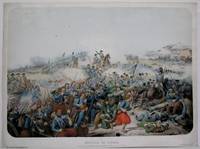
1854P1158Paris 1854. Very Good a tear from the left repaired professionally. Image Size : 415x600 mm 16.375x23.625 Inches Platemark Size : Paper Size : 465x630 mm 18.25x24.75 Inches Coloring: Hand Colored Medium: Lithograph Categories: Views Europe Ukraine; Military Others; unknown
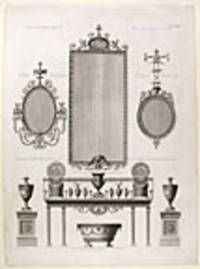
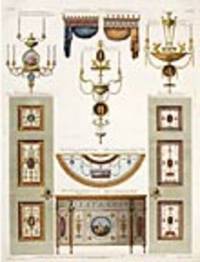
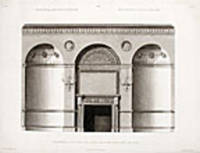
177517573London 1775. Engraving by P. Begbie. In excellent condition with the exception of two tears on right margin. A fine architectural engraving of ornate mirrors and tables from Robert Adam's seminal work on British architecture.<br/> <br/>Robert and his brother James Adam forever changed the face of British architecture by introducing innovative Classical design ideas. From 1754-57 Robert lived in Italy where he had a long productive friendship with Piranesi which was inspirational for both men. Adam's first book on Diocletian's palace in Dalmatia is clearly very like the archaeological investigations Piranesi was making at the same time of similar ruins. Piranesi's friendship and passion for Roman Classicism were seminal influences on Adam and the greatest single factor other than his own talent in the work Adam produced on his return to England. Upon his return the brothers launched their career by building the Adelphi from the Thames to the Strand in London which although not a commercial success at the time included one of London's most cherished buildings the Adlephi Theatre. Together the Adam brothers designed and built some of the most famous buildings in England including such bastions of English architecture as Kenwood House Keddlestone Manor and Syon House. To the interiors of their English country houses the Adams brought wonderful ornamental elements in niches lunettes festoons and reliefs. Their classically designed buildings were so numerous in London that they changed the prevailing feel of the city and established their brand of neo-Classicism as the model of elegance and importance. It is asserted that the brothers originated the concept of the uniform facade attached to the typical English row house an architectural device that distinguishes London buildings. This monumental contribution is evidenced in the Adams' designs for Portland Place and Fitzroy Square and these were used as architectural models for the whole city. The brothers brought their talents into other areas by designing furniture to complement their beautiful interiors and by creating and publishing a treatise of design entitled 'Works in Architecture'. The work was published in three volumes over an extended span of time beginning in 1773 with the final volume being published posthumously in 1822.<br/> <br/>Cf. Brunet I.47; cf. Lowndes I p.8; DNB; Wilton-Ely The Mind and Art of Giovanni Battista Piranesi. unknown books
177517101London 1775. Copper engraving with hand colour. Engraving by P. Begbie. In excellent condition with the exception of being trimmed just on the platemark on the left margin. Mild soiling mostly marginal. A fine engraving of an ornate harpsichord designed for the Empress of Russia.<br/> <br/>Robert and his brother James Adam forever changed the face of British architecture by introducing innovative Classical design ideas. From 1754-57 Robert lived in Italy where he had a long productive friendship with Piranesi which was inspirational for both men. Adam's first book on Diocletian's palace in Dalmatia is clearly very like the archaeological investigations Piranesi was making at the same time of similar ruins. Piranesi's friendship and passion for Roman Classicism were seminal influences on Adam and the greatest single factor other than his own talent in the work Adam produced on his return to England. Upon his return the brothers launched their career by building the Adelphi from the Thames to the Strand in London which although not a commercial success at the time included one of London's most cherished buildings the Adlephi Theatre. Together the Adam brothers designed and built some of the most famous buildings in England including such bastions of English architecture as Kenwood House Keddlestone Manor and Syon House. To the interiors of their English country houses the Adams brought wonderful ornamental elements in niches lunettes festoons and reliefs. Their classically designed buildings were so numerous in London that they changed the prevailing feel of the city and established their brand of neo-Classicism as the model of elegance and importance. It is asserted that the brothers originated the concept of the uniform facade attached to the typical English row house an architectural device that distinguishes London buildings. This monumental contribution is evidenced in the Adams' designs for Portland Place and Fitzroy Square and these were used as architectural models for the whole city. The brothers brought their talents into other areas by designing furniture to complement their beautiful interiors and by creating and publishing a treatise of design entitled 'Works in Architecture'. The work was published in three volumes over an extended span of time beginning in 1773 with the final volume being published posthumously in 1822.<br/> <br/>Cf. Brunet I.47; cf. Lowndes I p.8; DNB; Wilton-Ely The Mind and Art of Giovanni Battista Piranesi. unknown books
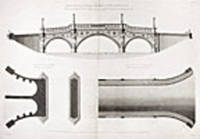
177517103London 1775. Engraving by T. Miller. In excellent condition with the exception of some very faint off-setting. A fine engraving of a proposed bridge over the river at Sion House in London.<br/> <br/>Robert and his brother James Adam forever changed the face of British architecture by introducing innovative Classical design ideas. From 1754-57 Robert lived in Italy where he had a long productive friendship with Piranesi which was inspirational for both men. Adam's first book on Diocletian's palace in Dalmatia is clearly very like the archaeological investigations Piranesi was making at the same time of similar ruins. Piranesi's friendship and passion for Roman Classicism were seminal influences on Adam and the greatest single factor other than his own talent in the work Adam produced on his return to England. Upon his return the brothers launched their career by building the Adelphi from the Thames to the Strand in London which although not a commercial success at the time included one of London's most cherished buildings the Adlephi Theatre. Together the Adam brothers designed and built some of the most famous buildings in England including such bastions of English architecture as Kenwood House Keddlestone Manor and Syon House. To the interiors of their English country houses the Adams brought wonderful ornamental elements in niches lunettes festoons and reliefs. Their classically designed buildings were so numerous in London that they changed the prevailing feel of the city and established their brand of neo-Classicism as the model of elegance and importance. It is asserted that the brothers originated the concept of the uniform facade attached to the typical English row house an architectural device that distinguishes London buildings. This monumental contribution is evidenced in the Adams' designs for Portland Place and Fitzroy Square and these were used as architectural models for the whole city. The brothers brought their talents into other areas by designing furniture to complement their beautiful interiors and by creating and publishing a treatise of design entitled 'Works in Architecture'. The work was published in three volumes over an extended span of time beginning in 1773 with the final volume being published posthumously in 1822.<br/> <br/>Cf. Brunet I.47; cf. Lowndes I p.8; DNB; Wilton-Ely The Mind and Art of Giovanni Battista Piranesi. unknown books
177717127London 1777. Copper engraving with lovely early colour. Engraved by B. Pastorini. In excellent condition. An elegant engraving depicting a collection of ornate furniture in the Earl of Derby's celebrated house in Grosvenor Square London.<br/> <br/>Robert and his brother James Adam forever changed the face of British architecture by introducing innovative Classical design ideas. From 1754-57 Robert lived in Italy where he had a long productive friendship with Piranesi which was inspirational for both men. Adam's first book on Diocletian's palace in Dalmatia is clearly very like the archaeological investigations Piranesi was making at the same time of similar ruins. Piranesi's friendship and passion for Roman Classicism were seminal influences on Adam and the greatest single factor other than his own talent in the work Adam produced on his return to England. Upon his return the brothers launched their career by building the Adelphi from the Thames to the Strand in London which although not a commercial success at the time included one of London's most cherished buildings the Adlephi Theatre. Together the Adam brothers designed and built some of the most famous buildings in England including such bastions of English architecture as Kenwood House Keddlestone Manor and Syon House. To the interiors of their English country houses the Adams brought wonderful ornamental elements in niches lunettes festoons and reliefs. Their classically designed buildings were so numerous in London that they changed the prevailing feel of the city and established their brand of neo-Classicism as the model of elegance and importance. It is asserted that the brothers originated the concept of the uniform facade attached to the typical English row house an architectural device that distinguishes London buildings. This monumental contribution is evidenced in the Adams' designs for Portland Place and Fitzroy Square and these were used as architectural models for the whole city. The brothers brought their talents into other areas by designing furniture to complement their beautiful interiors and by creating and publishing a treatise of design entitled 'Works in Architecture'. The work was published in three volumes over an extended span of time beginning in 1773 with the final volume being published posthumously in 1822.<br/> <br/>Cf. Brunet I.47; cf. Lowndes I p.8; DNB; Wilton-Ely The Mind and Art of Giovanni Battista Piranesi. unknown books
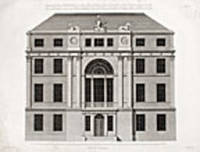
177517117London 1775. Engraving by R. Blyth. In excellent condition except for mild discolouration lower left. An elegant engraving showing the facade of a house in Whitehall used as the offices for Chelsea Hospital.<br/> <br/>Robert and his brother James Adam forever changed the face of British architecture by introducing innovative Classical design ideas. From 1754-57 Robert lived in Italy where he had a long productive friendship with Piranesi which was inspirational for both men. Adam's first book on Diocletian's palace in Dalmatia is clearly very like the archaeological investigations Piranesi was making at the same time of similar ruins. Piranesi's friendship and passion for Roman Classicism were seminal influences on Adam and the greatest single factor other than his own talent in the work Adam produced on his return to England. Upon his return the brothers launched their career by building the Adelphi from the Thames to the Strand in London which although not a commercial success at the time included one of London's most cherished buildings the Adlephi Theatre. Together the Adam brothers designed and built some of the most famous buildings in England including such bastions of English architecture as Kenwood House Keddlestone Manor and Syon House. To the interiors of their English country houses the Adams brought wonderful ornamental elements in niches lunettes festoons and reliefs. Their classically designed buildings were so numerous in London that they changed the prevailing feel of the city and established their brand of neo-Classicism as the model of elegance and importance. It is asserted that the brothers originated the concept of the uniform facade attached to the typical English row house an architectural device that distinguishes London buildings. This monumental contribution is evidenced in the Adams' designs for Portland Place and Fitzroy Square and these were used as architectural models for the whole city. The brothers brought their talents into other areas by designing furniture to complement their beautiful interiors and by creating and publishing a treatise of design entitled 'Works in Architecture'. The work was published in three volumes over an extended span of time beginning in 1773 with the final volume being published posthumously in 1822.<br/> <br/>Cf. Brunet I.47; cf. Lowndes I p.8; DNB; Wilton-Ely The Mind and Art of Giovanni Battista Piranesi. unknown books
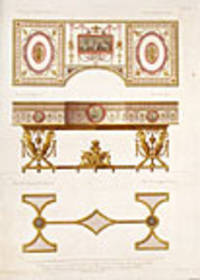
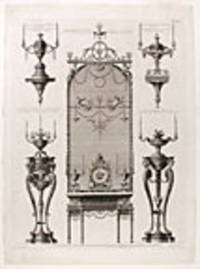
177517575London 1775. Engraving by B. Pastorini. In excellent condition. A fine engraving of various pieces of ornate furniture from Robert Adam's seminal work on British architecture.<br/> <br/>Robert and his brother James Adam forever changed the face of British architecture by introducing innovative Classical design ideas. From 1754-57 Robert lived in Italy where he had a long productive friendship with Piranesi which was inspirational for both men. Adam's first book on Diocletian's palace in Dalmatia is clearly very like the archaeological investigations Piranesi was making at the same time of similar ruins. Piranesi's friendship and passion for Roman Classicism were seminal influences on Adam and the greatest single factor other than his own talent in the work Adam produced on his return to England. Upon his return the brothers launched their career by building the Adelphi from the Thames to the Strand in London which although not a commercial success at the time included one of London's most cherished buildings the Adlephi Theatre. Together the Adam brothers designed and built some of the most famous buildings in England including such bastions of English architecture as Kenwood House Keddlestone Manor and Syon House. To the interiors of their English country houses the Adams brought wonderful ornamental elements in niches lunettes festoons and reliefs. Their classically designed buildings were so numerous in London that they changed the prevailing feel of the city and established their brand of neo-Classicism as the model of elegance and importance. It is asserted that the brothers originated the concept of the uniform facade attached to the typical English row house an architectural device that distinguishes London buildings. This monumental contribution is evidenced in the Adams' designs for Portland Place and Fitzroy Square and these were used as architectural models for the whole city. The brothers brought their talents into other areas by designing furniture to complement their beautiful interiors and by creating and publishing a treatise of design entitled 'Works in Architecture'. The work was published in three volumes over an extended span of time beginning in 1773 with the final volume being published posthumously in 1822.<br/> <br/>Cf. Brunet I.47; cf. Lowndes I p.8; DNB; Wilton-Ely The Mind and Art of Giovanni Battista Piranesi. unknown books
177517122London 1775. Engraving by Joshua Record. In excellent condition. An elegant engraving showing the chimney in the anteroom of Lord Derby's house in Grosvenor Square London.<br/> <br/>Robert and his brother James Adam forever changed the face of British architecture by introducing innovative Classical design ideas. From 1754-57 Robert lived in Italy where he had a long productive friendship with Piranesi which was inspirational for both men. Adam's first book on Diocletian's palace in Dalmatia is clearly very like the archaeological investigations Piranesi was making at the same time of similar ruins. Piranesi's friendship and passion for Roman Classicism were seminal influences on Adam and the greatest single factor other than his own talent in the work Adam produced on his return to England. Upon his return the brothers launched their career by building the Adelphi from the Thames to the Strand in London which although not a commercial success at the time included one of London's most cherished buildings the Adlephi Theatre. Together the Adam brothers designed and built some of the most famous buildings in England including such bastions of English architecture as Kenwood House Keddlestone Manor and Syon House. To the interiors of their English country houses the Adams brought wonderful ornamental elements in niches lunettes festoons and reliefs. Their classically designed buildings were so numerous in London that they changed the prevailing feel of the city and established their brand of neo-Classicism as the model of elegance and importance. It is asserted that the brothers originated the concept of the uniform facade attached to the typical English row house an architectural device that distinguishes London buildings. This monumental contribution is evidenced in the Adams' designs for Portland Place and Fitzroy Square and these were used as architectural models for the whole city. The brothers brought their talents into other areas by designing furniture to complement their beautiful interiors and by creating and publishing a treatise of design entitled 'Works in Architecture'. The work was published in three volumes over an extended span of time beginning in 1773 with the final volume being published posthumously in 1822.<br/> <br/>Cf. Brunet I.47; cf. Lowndes I p.8; DNB; Wilton-Ely The Mind and Art of Giovanni Battista Piranesi. unknown books
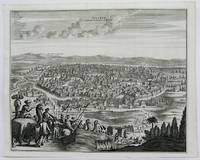
1727P1228Leiden 1727. Excellent. Notes: from the book "Voyages tres-curieux et tres-renommez faits en Moscovie Tartarie et Perse." Image Size : 285x355 mm 11.25x14 Inches Platemark Size : 290x365 mm 11.375x14.375 Inches Paper Size : 310x390 mm 12.25x15.375 Inches Coloring: Black & White Medium: Copper Engraving Categories: Views Asia Middle East Iran; unknown
18056000078J.&J. Scrymgeour and Mundell & Son 1805. Hardcvoer. Fair/No jacket. 3 volumes. 11th edition the first with a biography of the author by W. Playfair. Cloth bindings worn with the front cover of first volume partially detached. Spines very worn and partially missing. Some foxing at the beginning and end of each volume. As-Is. A perfect candidate for a nice rebinding. J.&J. Scrymgeour and Mundell & Son unknown
179727583Paris: H. Agasse 1797. Very Good . Paris: H. Agasse 1797. First French Edition. Two volumes bound in one; octavo; 19th-century calf over papier-peint boards gilt-tooled spine; 4316; 42831pp. collated complete with half titles. Small abrasions to boards somewhat clumsily repaired else a Very Good or better internally clean and exceptionally fresh copy.<br /> <br /> First appearance in French of Adam Smith's posthumously collected work "Essays on Philosophical Subjects" which includes most notably his "Principles which lead and direct philosophical enquiries illustrated by the history of astronomy." This edition as with the first in English preceded by a lengthy account of Smith's Life by the Scottish philosopher and mathematician Dugald Stewart. H. Agasse unknown
177517573London 1775. Engraving by P. Begbie. In excellent condition with the exception of two tears on right margin. A fine architectural engraving of ornate mirrors and tables from Robert Adam's seminal work on British architecture.<br/> <br/> Robert and his brother James Adam forever changed the face of British architecture by introducing innovative Classical design ideas. From 1754-57 Robert lived in Italy where he had a long productive friendship with Piranesi which was inspirational for both men. Adam's first book on Diocletian's palace in Dalmatia is clearly very like the archaeological investigations Piranesi was making at the same time of similar ruins. Piranesi's friendship and passion for Roman Classicism were seminal influences on Adam and the greatest single factor other than his own talent in the work Adam produced on his return to England. Upon his return the brothers launched their career by building the Adelphi from the Thames to the Strand in London which although not a commercial success at the time included one of London's most cherished buildings the Adlephi Theatre. Together the Adam brothers designed and built some of the most famous buildings in England including such bastions of English architecture as Kenwood House Keddlestone Manor and Syon House. To the interiors of their English country houses the Adams brought wonderful ornamental elements in niches lunettes festoons and reliefs. Their classically designed buildings were so numerous in London that they changed the prevailing feel of the city and established their brand of neo-Classicism as the model of elegance and importance. It is asserted that the brothers originated the concept of the uniform facade attached to the typical English row house an architectural device that distinguishes London buildings. This monumental contribution is evidenced in the Adams' designs for Portland Place and Fitzroy Square and these were used as architectural models for the whole city. The brothers brought their talents into other areas by designing furniture to complement their beautiful interiors and by creating and publishing a treatise of design entitled 'Works in Architecture'. The work was published in three volumes over an extended span of time beginning in 1773 with the final volume being published posthumously in 1822.<br/> <br/> Cf. Brunet I.47; cf. Lowndes I p.8; DNB; Wilton-Ely The Mind and Art of Giovanni Battista Piranesi. unknown
1881731151881. BADEAU Adam. Military History of Ulysses S. Grant from April 1816 to April 1865. New York: D. Appleton and Company 1881. 1st ed. 3 Vols. Portrait frontis. maps folding maps. Orig. cloth. A near fine set. "A detailed and overly sympathetic account of Grant's campaigns' written by his military secretary and aide" Nevins I p. 22. unknown