Adam Olearius; Vander AaBiblio.com
37 325 résultats
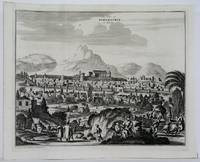
1727P1224Leiden 1727. Excellent. Notes: Located in the country of Azerbaijan. Shamakhi or Shamakhy Azerbaijani: Şamaxı is a rayon of the Republic of Azerbaijan and a town in the rayon. It is the historical center of the region of Shirvan. This view is from the book "Voyages tres-curieux et tres-renommez faits en Moscovie Tartarie et Perse." Image Size : 270x345 mm 10.625x13.625 Inches Platemark Size : 290x355 mm 11.375x14 Inches Paper Size : 312x390 mm 12.25x15.375 Inches Coloring: Black & White Medium: Copper Engraving Categories: Views Asia Others; Views Europe Russia; unknown
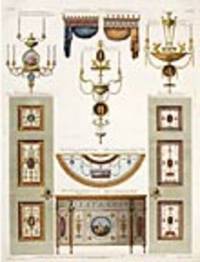
177717127London 1777. Copper engraving with original hand colouring. Engraved by B. Pastorini. An elegant engraving depicting a collection of ornate furniture in the Earl of Derby's celebrated house in Grosvenor Square London.<br/> <br/> Robert and his brother James Adam forever changed the face of British architecture by introducing innovative Classical design ideas. From 1754-57 Robert lived in Italy where he had a long productive friendship with Piranesi which was inspirational for both men. Adam's first book on Diocletian's palace in Dalmatia is clearly very like the archaeological investigations Piranesi was making at the same time of similar ruins. Piranesi's friendship and passion for Roman Classicism were seminal influences on Adam and the greatest single factor other than his own talent in the work Adam produced on his return to England. Upon his return the brothers launched their career by building the Adelphi from the Thames to the Strand in London which although not a commercial success at the time included one of London's most cherished buildings the Adelphi Theatre. Together the Adam brothers designed and built some of the most famous buildings in England including such bastions of English architecture as Kenwood House Keddlestone Manor and Syon House. To the interiors of their English country houses the Adams brought wonderful ornamental elements in niches lunettes festoons and reliefs. Their classically designed buildings were so numerous in London that they changed the prevailing feel of the city and established their brand of neo-Classicism as the model of elegance and importance. It is asserted that the brothers originated the concept of the uniform facade attached to the typical English row house an architectural device that distinguishes London buildings. This monumental contribution is evidenced in the Adams' designs for Portland Place and Fitzroy Square and these were used as architectural models for the whole city. The brothers brought their talents into other areas by designing furniture to complement their beautiful interiors and by creating and publishing a treatise of design entitled 'Works in Architecture'. The work was published in three volumes over an extended span of time beginning in 1773 with the final volume being published posthumously in 1822.<br/> <br/> Cf. Brunet I.47; cf. Lowndes I p.8; DNB; Wilton-Ely The Mind and Art of Giovanni Battista Piranesi. unknown
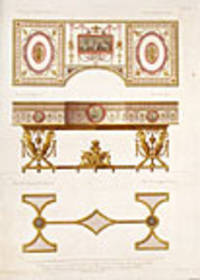
177517110London 1775. Engraving by P. Begbie. In excellent condition with the exception of two tears on right margin. A fine architectural engraving of ornate mirrors and tables from Robert Adam's seminal work on British architecture.<br/> <br/> Robert and his brother James Adam forever changed the face of British architecture by introducing innovative Classical design ideas. From 1754-57 Robert lived in Italy where he had a long productive friendship with Piranesi which was inspirational for both men. Adam's first book on Diocletian's palace in Dalmatia is clearly very like the archaeological investigations Piranesi was making at the same time of similar ruins. Piranesi's friendship and passion for Roman Classicism were seminal influences on Adam and the greatest single factor other than his own talent in the work Adam produced on his return to England. Upon his return the brothers launched their career by building the Adelphi from the Thames to the Strand in London which although not a commercial success at the time included one of London's most cherished buildings the Adlephi Theatre. Together the Adam brothers designed and built some of the most famous buildings in England including such bastions of English architecture as Kenwood House Keddlestone Manor and Syon House. To the interiors of their English country houses the Adams brought wonderful ornamental elements in niches lunettes festoons and reliefs. Their classically designed buildings were so numerous in London that they changed the prevailing feel of the city and established their brand of neo-Classicism as the model of elegance and importance. It is asserted that the brothers originated the concept of the uniform facade attached to the typical English row house an architectural device that distinguishes London buildings. This monumental contribution is evidenced in the Adams' designs for Portland Place and Fitzroy Square and these were used as architectural models for the whole city. The brothers brought their talents into other areas by designing furniture to complement their beautiful interiors and by creating and publishing a treatise of design entitled 'Works in Architecture'. The work was published in three volumes over an extended span of time beginning in 1773 with the final volume being published posthumously in 1822.<br/> <br/> Cf. Brunet I.47; cf. Lowndes I p.8; DNB; Wilton-Ely The Mind and Art of Giovanni Battista Piranesi. unknown
177517101London 1775. Copper engraving with original hand colouring. Engraving by P. Begbie. A fine engraving of an ornate harpsichord designed for the Empress of Russia.<br/> <br/> Robert and his brother James Adam forever changed the face of British architecture by introducing innovative Classical design ideas. From 1754-57 Robert lived in Italy where he had a long productive friendship with Piranesi which was inspirational for both men. Adam's first book on Diocletian's palace in Dalmatia is clearly very like the archaeological investigations Piranesi was making at the same time of similar ruins. Piranesi's friendship and passion for Roman Classicism were seminal influences on Adam and the greatest single factor other than his own talent in the work Adam produced on his return to England. Upon his return the brothers launched their career by building the Adelphi from the Thames to the Strand in London which although not a commercial success at the time included one of London's most cherished buildings the Adelphi Theatre. Together the Adam brothers designed and built some of the most famous buildings in England including such bastions of English architecture as Kenwood House Keddlestone Manor and Syon House. To the interiors of their English country houses the Adams brought wonderful ornamental elements in niches lunettes festoons and reliefs. Their classically designed buildings were so numerous in London that they changed the prevailing feel of the city and established their brand of neo-Classicism as the model of elegance and importance. It is asserted that the brothers originated the concept of the uniform facade attached to the typical English row house an architectural device that distinguishes London buildings. This monumental contribution is evidenced in the Adams' designs for Portland Place and Fitzroy Square and these were used as architectural models for the whole city. The brothers brought their talents into other areas by designing furniture to complement their beautiful interiors and by creating and publishing a treatise of design entitled 'Works in Architecture'. The work was published in three volumes over an extended span of time beginning in 1773 with the final volume being published posthumously in 1822.<br/> <br/> Cf. Brunet I.47; cf. Lowndes I p.8; DNB; Wilton-Ely The Mind and Art of Giovanni Battista Piranesi. unknown
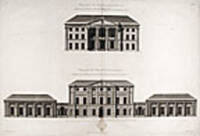
177517106London 1775. Engraving by T. Miller. In excellent condition with the exception of a water stain at the bottom of the sheet. Top left corner of sheet is missing. A fine architectural engraving of Kenwood House in Hampstead London re-modelled in 1761-1773 and now home to the Iveagh Bequest picture collection.<br/> <br/> Robert and his brother James Adam forever changed the face of British architecture by introducing innovative Classical design ideas. From 1754-57 Robert lived in Italy where he had a long productive friendship with Piranesi which was inspirational for both men. Adam's first book on Diocletian's palace in Dalmatia is clearly very like the archaeological investigations Piranesi was making at the same time of similar ruins. Piranesi's friendship and passion for Roman Classicism were seminal influences on Adam and the greatest single factor other than his own talent in the work Adam produced on his return to England. Upon his return the brothers launched their career by building the Adelphi from the Thames to the Strand in London which although not a commercial success at the time included one of London's most cherished buildings the Adlephi Theatre. Together the Adam brothers designed and built some of the most famous buildings in England including such bastions of English architecture as Kenwood House Keddlestone Manor and Syon House. To the interiors of their English country houses the Adams brought wonderful ornamental elements in niches lunettes festoons and reliefs. Their classically designed buildings were so numerous in London that they changed the prevailing feel of the city and established their brand of neo-Classicism as the model of elegance and importance. It is asserted that the brothers originated the concept of the uniform facade attached to the typical English row house an architectural device that distinguishes London buildings. This monumental contribution is evidenced in the Adams' designs for Portland Place and Fitzroy Square and these were used as architectural models for the whole city. The brothers brought their talents into other areas by designing furniture to complement their beautiful interiors and by creating and publishing a treatise of design entitled 'Works in Architecture'. The work was published in three volumes over an extended span of time beginning in 1773 with the final volume being published posthumously in 1822.<br/> <br/> Cf. Brunet I.47; cf. Lowndes I p.8; DNB; Wilton-Ely The Mind and Art of Giovanni Battista Piranesi. unknown
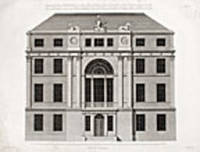
177517117London 1775. Engraving by R. Blyth. In excellent condition except for mild discolouration lower left. An elegant engraving showing the facade of a house in Whitehall used as the offices for Chelsea Hospital.<br/> <br/> Robert and his brother James Adam forever changed the face of British architecture by introducing innovative Classical design ideas. From 1754-57 Robert lived in Italy where he had a long productive friendship with Piranesi which was inspirational for both men. Adam's first book on Diocletian's palace in Dalmatia is clearly very like the archaeological investigations Piranesi was making at the same time of similar ruins. Piranesi's friendship and passion for Roman Classicism were seminal influences on Adam and the greatest single factor other than his own talent in the work Adam produced on his return to England. Upon his return the brothers launched their career by building the Adelphi from the Thames to the Strand in London which although not a commercial success at the time included one of London's most cherished buildings the Adlephi Theatre. Together the Adam brothers designed and built some of the most famous buildings in England including such bastions of English architecture as Kenwood House Keddlestone Manor and Syon House. To the interiors of their English country houses the Adams brought wonderful ornamental elements in niches lunettes festoons and reliefs. Their classically designed buildings were so numerous in London that they changed the prevailing feel of the city and established their brand of neo-Classicism as the model of elegance and importance. It is asserted that the brothers originated the concept of the uniform facade attached to the typical English row house an architectural device that distinguishes London buildings. This monumental contribution is evidenced in the Adams' designs for Portland Place and Fitzroy Square and these were used as architectural models for the whole city. The brothers brought their talents into other areas by designing furniture to complement their beautiful interiors and by creating and publishing a treatise of design entitled 'Works in Architecture'. The work was published in three volumes over an extended span of time beginning in 1773 with the final volume being published posthumously in 1822.<br/> <br/> Cf. Brunet I.47; cf. Lowndes I p.8; DNB; Wilton-Ely The Mind and Art of Giovanni Battista Piranesi. unknown
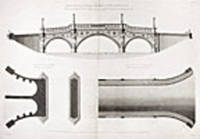
177517103London 1775. Engraving by T. Miller. In excellent condition with the exception of some very faint off-setting. A fine engraving of a proposed bridge over the river at Sion House in London.<br/> <br/> Robert and his brother James Adam forever changed the face of British architecture by introducing innovative Classical design ideas. From 1754-57 Robert lived in Italy where he had a long productive friendship with Piranesi which was inspirational for both men. Adam's first book on Diocletian's palace in Dalmatia is clearly very like the archaeological investigations Piranesi was making at the same time of similar ruins. Piranesi's friendship and passion for Roman Classicism were seminal influences on Adam and the greatest single factor other than his own talent in the work Adam produced on his return to England. Upon his return the brothers launched their career by building the Adelphi from the Thames to the Strand in London which although not a commercial success at the time included one of London's most cherished buildings the Adlephi Theatre. Together the Adam brothers designed and built some of the most famous buildings in England including such bastions of English architecture as Kenwood House Keddlestone Manor and Syon House. To the interiors of their English country houses the Adams brought wonderful ornamental elements in niches lunettes festoons and reliefs. Their classically designed buildings were so numerous in London that they changed the prevailing feel of the city and established their brand of neo-Classicism as the model of elegance and importance. It is asserted that the brothers originated the concept of the uniform facade attached to the typical English row house an architectural device that distinguishes London buildings. This monumental contribution is evidenced in the Adams' designs for Portland Place and Fitzroy Square and these were used as architectural models for the whole city. The brothers brought their talents into other areas by designing furniture to complement their beautiful interiors and by creating and publishing a treatise of design entitled 'Works in Architecture'. The work was published in three volumes over an extended span of time beginning in 1773 with the final volume being published posthumously in 1822.<br/> <br/> Cf. Brunet I.47; cf. Lowndes I p.8; DNB; Wilton-Ely The Mind and Art of Giovanni Battista Piranesi. unknown
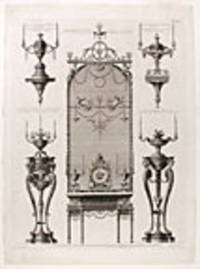
177517575London 1775. Engraving by B. Pastorini. In excellent condition. A fine engraving of various pieces of ornate furniture from Robert Adam's seminal work on British architecture.<br/> <br/> Robert and his brother James Adam forever changed the face of British architecture by introducing innovative Classical design ideas. From 1754-57 Robert lived in Italy where he had a long productive friendship with Piranesi which was inspirational for both men. Adam's first book on Diocletian's palace in Dalmatia is clearly very like the archaeological investigations Piranesi was making at the same time of similar ruins. Piranesi's friendship and passion for Roman Classicism were seminal influences on Adam and the greatest single factor other than his own talent in the work Adam produced on his return to England. Upon his return the brothers launched their career by building the Adelphi from the Thames to the Strand in London which although not a commercial success at the time included one of London's most cherished buildings the Adlephi Theatre. Together the Adam brothers designed and built some of the most famous buildings in England including such bastions of English architecture as Kenwood House Keddlestone Manor and Syon House. To the interiors of their English country houses the Adams brought wonderful ornamental elements in niches lunettes festoons and reliefs. Their classically designed buildings were so numerous in London that they changed the prevailing feel of the city and established their brand of neo-Classicism as the model of elegance and importance. It is asserted that the brothers originated the concept of the uniform facade attached to the typical English row house an architectural device that distinguishes London buildings. This monumental contribution is evidenced in the Adams' designs for Portland Place and Fitzroy Square and these were used as architectural models for the whole city. The brothers brought their talents into other areas by designing furniture to complement their beautiful interiors and by creating and publishing a treatise of design entitled 'Works in Architecture'. The work was published in three volumes over an extended span of time beginning in 1773 with the final volume being published posthumously in 1822.<br/> <br/> Cf. Brunet I.47; cf. Lowndes I p.8; DNB; Wilton-Ely The Mind and Art of Giovanni Battista Piranesi. unknown
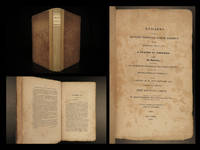
182316086<p><b>1823 SLAVERY 1ed Hodgson Journey in America Indians Cherokee Chocktaw Creeks</b></p><p>Adam Hodgson's "<i>Remarks During a Journey Through North America</i>" is a collection of 20 letters recounting expeditions from 1819 through 1821. During these years Hodgson encounters Native American Indian tribes including the Creeks Chocktaw Chickasaw and Cherokee Indians Field. In addition to Indians this work is an excellent source on slavery. <b>One letter in particular discusses the financial benefit of slave labor and the exponential costs of emancipation!</b></p><p>Item number: #16086</p><p>Price: $550</p><p>HODGSON Adam </p><p><b><i>Remarks during a journey through North America in the years 1819 1820 and 1821 in a series of letters : with an appendix containing an account of several of the Indian tribes the principal missionary stations</i></b></p><p>New York: Samuel Whiting 1823. First edition.</p><p><br /></p><p><u>Details</u>:</p><p>· Collation: Complete with all pages</p><p>o vii 335 1</p><p>· References: Howes H 560; Field 704; Sabin 32358</p><p>· Language: English</p><p>· Binding: Hardcover; tight and secure</p><p>· Size: ~9.25in X 6in 23.5cm x 15cm</p><p>Our Guarantee:</p><p>Very Fast. Very Safe. Free Shipping Worldwide.</p><p>Customer satisfaction is our priority! Notify us with 7 days of receiving and we will offer a full refund without reservation!</p><p>16086</p><p>Photos available upon request. </p> Samuel Whiting hardcover
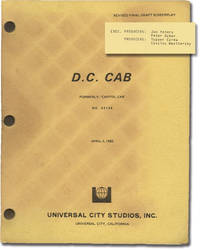
1983145600Universal City: Universal 1983. Archive of three scripts for the 1983 film including a Second Draft Third Draft and Revised Final Draft with the Second and Third Draft scripts appearing under the working title "Capitol Cab." Scripts belonging to producer Cassius Weathersby with his name on the cover sheet for revision pages dated 5/16/83 laid into the Revised Final script. Also included is a borderless double weight photograph of Weathersby conferring with star Mr. T on the set and a promotional button for the film. <br /> <br /> The dead-end drivers of a rundown cab company must band together with the help of their naive newest member to save themselves from a rival company and to help Mr. T teach kids to say no to drugs. <br /> <br /> Set and shot on location in Washington DC. <br /> <br /> Second Draft: Yellow titled wrappers noted as Second Draft on the front wrapper. Title page present dated January 4 1983 noted as Second Draft with credits for screenwriter Joel Schumacher. 94 leaves with last page of text numbered 93. Xerographic duplication rectos only. Pages Fine wrapper Near Fine bound with two gold brads. <br /> <br /> Third Draft: Orange titled wrappers noted as Third Draft on the front wrapper noted as production No. 00864 dated February 10 1983. Title page present dated February 10 1983 noted as Third Draft with credits for screenwriter Joel Schumacher and producers Jon Peters Peter Gruber Topper Carew and Cassius Weathersby. 90 leaves with last leaf of text numbered 89. Xerographically reproduced on eye-rest green stock with pink and blue revision pages dated 2/14/83 and undated. Pages Fine wrapper Near Fine lacking the rear wrapper bound with three gold brads.<br /> <br /> Revised Final Draft: Yellow titled wrappers noted as Revised Final Draft on the front wrapper and production No. 02156 dated April 5 1983. Title page present dated April 5 1983 noted as Revised Final Draft with credits for screenwriter Joel Schumacher and producers Jon Peters Peter Gruber Topper Carew and Cassius Weathersby. 94 leaves with last leaf of text numbered 88. Xerographic duplication with pink and yellow revision pages throughout dated variously between 4/11/83 and 5/30/83. Pages Near Fine front wrapper lightly soiled else wrappers Near Fine bound with three gold brads. <br /> <br /> Parish and Hill Black Action Film. Universal unknown
1961140159France: N.p. 1961. Archive of 91 vintage candid photographs featuring director René Clair and members of the cast and crew at release parties for the 1961 film. Clair is seen with fans giving a speech signing autographs conducting a recorded interview and cavorting with stars of the film like Colette Castel Alfred Adam and Annie Fratellini. The festivities seem to take place in a large music hall with musicians and traditional instruments appearing in a few photos. Bourvil is also present in two contact prints seen traveling cavorting with Clair getting a shave and playing bocce. Several with brief numerical annotations in manuscript pencil and a few double weight photographs with rubberstamps crediting photographer Martin on the versos. <br /> <br /> A businessman Noiret wants to buy land around the village of Cabosse claiming his desire for seclusion but with intentions to sell the water from the village fountain purportedly a fountain of youth. <br /> <br /> Shot on location throughout France. <br /> <br /> Photos range from 4.5 x 7 inches to 8 x 10.5 inches most are 7.25 x 9.25 inches with 87 frames on 35mm and medium-format negative strips. Very Good plus overall with light curling and foxing negatives lightly rubbed. N.p. unknown
FORT365162Glasgow Brook & Company. Used - Very Good. Twenty-three volume complete set 23 Volumes Volumes 1-22 and Index. Archives Edition. Canada and its Provinces: A History of the Canadian People and their Institutions by One Hundred Associates. All volumes half-bound in green leather; Gilt lettering on spines. Green and gilt marbled boards with matching marbled endpapers. Top edges gilt; Other edges are trimmed roughly. Full-colour and b/w plates throughout some of which fold out. Textblock is generally clean and tight throughout the set. Glasgow, Brook & Company hardcover
1937215343New York: Modern Library 1937. Modern Library Edition. Hardcover. Near Fine in a Very Good dust jacket. Faint chipping alogn spine crown and top of front panel. Modern Library hardcover
1937215409New York: Modern Library 1937. Modern Library Edition. Hardcover. Very Good in a Very Good dust jacket. Front hinge cracked. Rubbing along panel edges. Modern Library hardcover
1571972463-11-1-29Ivy House Pub Group. Very Good. With dust jacket. It's a well-cared-for item that has seen limited use. The item may show minor signs of wear. All the text is legible with all pages included. It may have slight markings and/or highlighting. Ivy House Pub Group unknown
2017Manohar-9781107049604Cambridge University Press 2017. Hardcover. New. Cambridge University Press hardcover
2017Manohar-9781107049604Cambridge University Press 2017. Hardcover. New. Cambridge University Press hardcover
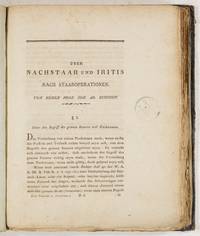
180048396ca. 1800. Abh. k.k. med.-chir. Josephs-Acad. 2. - Wien Bey Albert Camesina 1801 4° 16 435 1 Frontispice Pappband d.Zt.; St.a.Tit. u. Seitenränder; feies Expl. Frist Edition! "Inflammation of the iris was named iritis by Johann Adam Schmidt 1759-1809. In 1801 with Himly he founded the first journal devoted to ophthalmology the ophthalmolische Bibliothek." Further by Johann Adam Schmidt: Reflexionen über die Phänomene einer geschwächten Lebensthätigkeit bey lymphatischen Geschwülsten und über den grund der Tödlichkeit derselben pp.327-324. Ueber eine neue durch Verusche zuverlässig bestättigte Heilungsart der Augenliedlähmung und des Augenliedkrampfes pp.365-386. Garison & Morton No.5836 unknown
B278647-2Berlin Druck und Verlag von Georg Reimer 1913. x 52 50pp. Lrg. 8vo. Orig. cloth. Berlin (Druck und Verlag von Georg Reimer), 1913. hardcover
107822Frankfurt & Leipzig Joh. Georgii Cottae 1698. 8vo. Engr. front 8 745 13 pp. Title printed in red and black. Contemporary vellum red edges. From the library of Christian Hammer with his book plate. Sixth edition of the German jurist Wolfgang Adam Lauterbachs 1618-78 lectures on the pandecta first published in 1679. These lectures is his most known work and it’s edited by his pupil Johann Jacob Schütz 1640-90. It was re-printed in several editions between 1679 and 1744. hardcover
77185Salisburgi Salzburg Johann Bapt. Mayr 1674. . Johann Adam Weber 1611-1686 katholischer Theologe Jurist u. Historiker DBI. - Begriffen u. fleckig Schließen fehlen VDeckel von alter Hand beschriftet "N: 7" kl. Papieretikett a. Rücken; Papier gebräunt bzw. stockfleckig stellenw. schwach wasserrandig; im Ganzen gut. - Selten Salisburgi [Salzburg], Johann Bapt. Mayr, 1674. unknown
0761377697-11-1Lerner Publications Tm. Very Good. It's a well-cared-for item that has seen limited use. The item may show minor signs of wear. All the text is legible with all pages included. It may have slight markings and/or highlighting. Lerner Publications (Tm) unknown
BN91216The Digital Twin <br/><br/>The Digital Twin Crespi Noel; Drobot Adam T. and Minerva Roberto unknown
2022BN129034Taylor & Francis Ltd 2022. 2022. Hardcover. Cybercrime and Digital Forensics <br/><br/>Cybercrime and Digital Forensics Thomas J. Holt Adam M. Bossler Kathryn C. Seigfried-Spellar Taylor & Francis Ltd hardcover
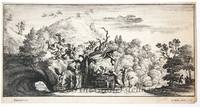
66938On the right Jesus sits under tree with Satan. On the top of the hill in the background Satan also seen showing Jesus the kingdoms of the world. Jesus is also shown at table under canopy suspended from dead branch served by angels. On the left through arch in rock is seen a temple.Lettered below left in margin: 'AElsheimer inu:' and at right: 'W. Hollar fecit 1652' Etching on laid paper trimmed to plate mark; total: 101 x 196 mm; only state; rubbing on corners yet beautiful impression. Pennington 99 New Hollstein 1180. unknown