386 résultats
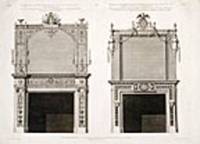
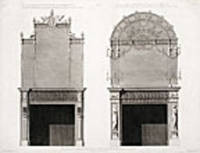
177517123London 1775. Engraving by Joshua Record. In excellent condition. An elegant engraving showing the two chimneys in Lord Derby's house in Grosvenor Square London.<br/> <br/> Robert and his brother James Adam forever changed the face of British architecture by introducing innovative Classical design ideas. From 1754-57 Robert lived in Italy where he had a long productive friendship with Piranesi which was inspirational for both men. Adam's first book on Diocletian's palace in Dalmatia is clearly very like the archaeological investigations Piranesi was making at the same time of similar ruins. Piranesi's friendship and passion for Roman Classicism were seminal influences on Adam and the greatest single factor other than his own talent in the work Adam produced on his return to England. Upon his return the brothers launched their career by building the Adelphi from the Thames to the Strand in London which although not a commercial success at the time included one of London's most cherished buildings the Adlephi Theatre. Together the Adam brothers designed and built some of the most famous buildings in England including such bastions of English architecture as Kenwood House Keddlestone Manor and Syon House. To the interiors of their English country houses the Adams brought wonderful ornamental elements in niches lunettes festoons and reliefs. Their classically designed buildings were so numerous in London that they changed the prevailing feel of the city and established their brand of neo-Classicism as the model of elegance and importance. It is asserted that the brothers originated the concept of the uniform facade attached to the typical English row house an architectural device that distinguishes London buildings. This monumental contribution is evidenced in the Adams' designs for Portland Place and Fitzroy Square and these were used as architectural models for the whole city. The brothers brought their talents into other areas by designing furniture to complement their beautiful interiors and by creating and publishing a treatise of design entitled 'Works in Architecture'. The work was published in three volumes over an extended span of time beginning in 1773 with the final volume being published posthumously in 1822.<br/> <br/> Cf. Brunet I.47; cf. Lowndes I p.8;DNB; Wilton-Ely The Mind and Art of Giovanni Battista Piranesi. unknown
177717125London 1777. Engraving by J. Zucchi. In excellent condition. An elegant engraving depicting two chimneys in Lord Derby's celebrated house in Grosvenor Square London.<br/> <br/> Robert and his brother James Adam forever changed the face of British architecture by introducing innovative Classical design ideas. From 1754-57 Robert lived in Italy where he had a long productive friendship with Piranesi which was inspirational for both men. Adam's first book on Diocletian's palace in Dalmatia is clearly very like the archaeological investigations Piranesi was making at the same time of similar ruins. Piranesi's friendship and passion for Roman Classicism were seminal influences on Adam and the greatest single factor other than his own talent in the work Adam produced on his return to England. Upon his return the brothers launched their career by building the Adelphi from the Thames to the Strand in London which although not a commercial success at the time included one of London's most cherished buildings the Adlephi Theatre. Together the Adam brothers designed and built some of the most famous buildings in England including such bastions of English architecture as Kenwood House Keddlestone Manor and Syon House. To the interiors of their English country houses the Adams brought wonderful ornamental elements in niches lunettes festoons and reliefs. Their classically designed buildings were so numerous in London that they changed the prevailing feel of the city and established their brand of neo-Classicism as the model of elegance and importance. It is asserted that the brothers originated the concept of the uniform facade attached to the typical English row house an architectural device that distinguishes London buildings. This monumental contribution is evidenced in the Adams' designs for Portland Place and Fitzroy Square and these were used as architectural models for the whole city. The brothers brought their talents into other areas by designing furniture to complement their beautiful interiors and by creating and publishing a treatise of design entitled 'Works in Architecture'. The work was published in three volumes over an extended span of time beginning in 1773 with the final volume being published posthumously in 1822.<br/> <br/> Cf. Brunet I.47; cf. Lowndes I p.8; DNB; Wilton-Ely The Mind and Art of Giovanni Battista Piranesi. unknown
177517123London 1775. Engraving by Joshua Record. In excellent condition. An elegant engraving showing the two chimneys in Lord Derby's house in Grosvenor Square London.<br/> <br/>Robert and his brother James Adam forever changed the face of British architecture by introducing innovative Classical design ideas. From 1754-57 Robert lived in Italy where he had a long productive friendship with Piranesi which was inspirational for both men. Adam's first book on Diocletian's palace in Dalmatia is clearly very like the archaeological investigations Piranesi was making at the same time of similar ruins. Piranesi's friendship and passion for Roman Classicism were seminal influences on Adam and the greatest single factor other than his own talent in the work Adam produced on his return to England. Upon his return the brothers launched their career by building the Adelphi from the Thames to the Strand in London which although not a commercial success at the time included one of London's most cherished buildings the Adlephi Theatre. Together the Adam brothers designed and built some of the most famous buildings in England including such bastions of English architecture as Kenwood House Keddlestone Manor and Syon House. To the interiors of their English country houses the Adams brought wonderful ornamental elements in niches lunettes festoons and reliefs. Their classically designed buildings were so numerous in London that they changed the prevailing feel of the city and established their brand of neo-Classicism as the model of elegance and importance. It is asserted that the brothers originated the concept of the uniform facade attached to the typical English row house an architectural device that distinguishes London buildings. This monumental contribution is evidenced in the Adams' designs for Portland Place and Fitzroy Square and these were used as architectural models for the whole city. The brothers brought their talents into other areas by designing furniture to complement their beautiful interiors and by creating and publishing a treatise of design entitled 'Works in Architecture'. The work was published in three volumes over an extended span of time beginning in 1773 with the final volume being published posthumously in 1822.<br/> <br/>Cf. Brunet I.47; cf. Lowndes I p.8;DNB; Wilton-Ely The Mind and Art of Giovanni Battista Piranesi. unknown books
177717125London 1777. Engraving by J. Zucchi. In excellent condition. An elegant engraving depicting two chimneys in Lord Derby's celebrated house in Grosvenor Square London.<br/> <br/>Robert and his brother James Adam forever changed the face of British architecture by introducing innovative Classical design ideas. From 1754-57 Robert lived in Italy where he had a long productive friendship with Piranesi which was inspirational for both men. Adam's first book on Diocletian's palace in Dalmatia is clearly very like the archaeological investigations Piranesi was making at the same time of similar ruins. Piranesi's friendship and passion for Roman Classicism were seminal influences on Adam and the greatest single factor other than his own talent in the work Adam produced on his return to England. Upon his return the brothers launched their career by building the Adelphi from the Thames to the Strand in London which although not a commercial success at the time included one of London's most cherished buildings the Adlephi Theatre. Together the Adam brothers designed and built some of the most famous buildings in England including such bastions of English architecture as Kenwood House Keddlestone Manor and Syon House. To the interiors of their English country houses the Adams brought wonderful ornamental elements in niches lunettes festoons and reliefs. Their classically designed buildings were so numerous in London that they changed the prevailing feel of the city and established their brand of neo-Classicism as the model of elegance and importance. It is asserted that the brothers originated the concept of the uniform facade attached to the typical English row house an architectural device that distinguishes London buildings. This monumental contribution is evidenced in the Adams' designs for Portland Place and Fitzroy Square and these were used as architectural models for the whole city. The brothers brought their talents into other areas by designing furniture to complement their beautiful interiors and by creating and publishing a treatise of design entitled 'Works in Architecture'. The work was published in three volumes over an extended span of time beginning in 1773 with the final volume being published posthumously in 1822.<br/> <br/>Cf. Brunet I.47; cf. Lowndes I p.8; DNB; Wilton-Ely The Mind and Art of Giovanni Battista Piranesi. unknown books
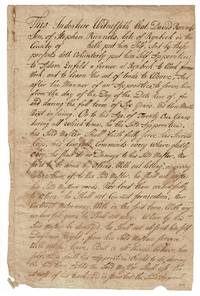
178957019Rhineback N.Y.: May 25 1789. Folio approx. 12" x 8" 42 lines approx. 300 words; a few minor breaks at the edges but overall very good and legible. This indenture binds David Runnels son of Stephen Runnels in the town of "Rynbeck" i.e. Rhinebeck Dutchess County New York to a farmer and weaver named Adam Zufeld 1760-1849 as a servant and apprentice "to work farmers work and to learn the art of trade to weave." Although a wax seal is affixed the document is unsigned. David Runnels b. ca. 1774 signed up for six years and three months until age 21 and vows to "faith fully serve his secrets keep his lawful commands every where gladly obey . not commet fornication nor contract matremony with any lawful games he shall not play nor absent himself from his master's service day or night." In return for this service Zufeld agrees to "teach and instruct the said apprentice in the trade of Weaven and shall send Runnels to school to lern English read and write" and to provide "sufficient meat drink apperal washing and lodging fitting for an apprentice." After the apprenticeship is over Zufelf agrees to "give the said apprentice a new cloth or garment and a mare colt." <br/><br/> May 25 hardcover books
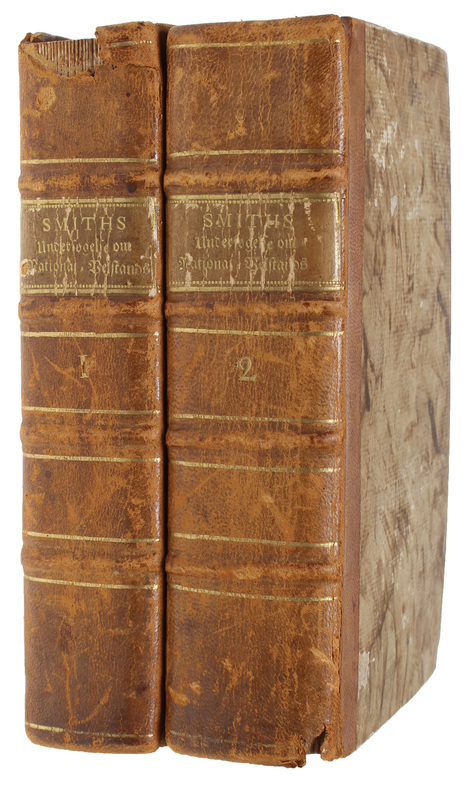
177947455Kiøbenhavn [Copenhagen], 1779-80. 8vo. Two very nice contemporary brown half calf bindings with raised bands, gilt ornamentations and gilt leather title- and tome-labels. Volume two with a bit of wear to upper capital. Corners slightly bumped. Pencil annotations to verso of title-page in volume one" title-page in volume two mounted to cover up a small hole caused by the removal of an old owner's name. Internally very clean and bright. All in all a very nice, clean, fresh, and tight copy. Engraved (by Weise, 1784) armorial book plate to inside of front boards (Gregorius Christianus Comes ab Haxthausen). (12), 575" (8), 775, (3, - errata) pp.
177950523Kiøbenhavn [Copenhagen], 1779-80. 8vo. Two nice contemporary half calf bindings with four raised bands and gilt leather title label to spines. Volume one lacking one cm of upper part of spine. Volume two with a small tear to lower part of spine. Both volumes with light brown spotting throughout, however, mainly affecting first and last five leaves of both volumes. A fine set. (12), 575"" (8), 775, (3, - errata) pp.
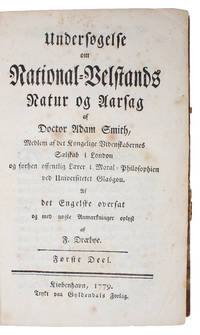
1779158759Copenhagen: Gyldendal 1779-80. Adam Smith in Danish First edition in Danish of The Wealth of Nations translated from the first edition of 1776 by Frants Draebye published together with a translation of Thomas Pownall's critical Letter. to Adam Smith of the same year. Draebye had been in England in 1776 as part of his role of tutor on a continental tour to two sons of a Norwegian merchant James Collett. Smith acknowledged the translation in two letters of 1780 the first written to Andreas Holt Commissioner of the Danish Board of Trade and Economy to whom he wrote "it gives me great pleasure to hear that Mr Dreby has done me the distinguished honour of translating my book into the Danish language." the second to Peter Anker Consul General of Denmark in Great Britain sending him three copies of the second edition of 1778 and asking him to forward them to Draebye and Holt. 2 vols octavo 192 x 114 mm pp. xii 575 1; viii 775 3. Contemporary sprinkled sheep spines decorated in gilt between five raised bands yellow paper labels lettered in gilt marbled paper pastedowns red edges. Joints of vol. I strengthened head and tail of both vols repaired gilt decoration to vol. II largely eroded; marginal tear to one leaf occasional light spotting; a very good set. Tribe 19: Vanderblue p. 23. Mossner & Ross The Correspondence of Adam Smith 1987. hardcover
177947455Kiøbenhavn Copenhagen 1779-80. 8vo. Two very nice contemporary brown half calf bindings with raised bands gilt ornamentations and gilt leather title- and tome-labels. Volume two with a bit of wear to upper capital. Corners slightly bumped. Pencil annotations to verso of title-page in volume one; title-page in volume two mounted to cover up a small hole caused by the removal of an old owner's name. Internally very clean and bright. All in all a very nice clean fresh and tight copy. Engraved by Weise 1784 armorial book plate to inside of front boards Gregorius Christianus Comes ab Haxthausen. 12 575; 8 775 3 - errata pp. <br/><br/><em>The extremely scarce first Danish edition of Adam Smith's seminal main work "the first and greatest classic of modern economic thought" PMM 221 the main foundational work of the era of liberal free trade. This publication constitutes the first Danish work worth mentioning in the history of economic thought - in spite of the great interest in political economy that dominated Danish political thought in the last quarter of the 18th century. The value of Smith's work was not immediately recognized in Denmark at the time of its appearance and a quarter of a century had to go by for its importance to be acknowledged and for Danish political economy to adapt the revolutionizing theories of Adam Smith. Few copies of the translation were published and sold and the book is now a great scarcity. As opposed to for instance the German translation of the work Smith concerned himself a great deal with this Danish translation. As is evident from preserved correspondence about it he reacted passionately to it and was deeply concerned with the reaction to his work in Scandinavia see "Correspondence of Adam Smith" Oxford University Press 1977.- As an example Smith writes in a letter to Andreas Holt on Oct. 26th 1780: "It gives me the greatest pleasure to hear that Mr. Dreby has done me the distinguished honour of translating my Book into the Danish language. I beg you will present to him my most sincere thanks and most respectful Compliments. I am much concerned that I cannot have the pleasure of reading it in his translation as I am so unfortunate as not to understand the Danish language." The translation was made by Frants Dræby 1740-1814 the son a whiskey distiller in Copenhagen who mastered as a theologian and was then hired by the great Norwegian merchant James Collett as tutor to his son. There can be no doubt that Dræbye's relation to the Collett house had a great impact upon his interest in economics. In the middle of the 1770'ies Dræbye accompanied Collett's son on travels throughout Europe which took them to England in the year 1776 the same year that the "Wealth of Nations" was published for the first time. Through the Colletts Dræbye was introduced to the mercantile environment in England and here became thoroughly acquainted with English economics and politics at the time. It is presumably here that he gets acquainted with Adam Smith's freshly published revolutionary work. When Dræbye returned to Denmark at the end of 1776 he was appointed chief of the Norwegian secretariat of the Board of Economics and Trade. He began the translation of the "Wealth of Nations" that he brought back with him from England immediately after his return."WN i.e. Wealth of Nations was translated into Danish by Frants Dræbye and published in 1779 three years after the first English edition. The translation was initiated by Andreas Holt and Peter Anker who were acquainted with Smith. Dræbye was a Dane who lived mainly in Norway reflecting the fact that Norway was much more British-oriented than Denmark proper Denmark and Norway were united until 1814 when Sweden took Norway away from the Danes; in 1905 Norway became an independent state. Norwegian merchants lived from exporting timber to Britain and tended on the whole to be adherents of a liberal economic policy whereas the absolutist government in Copenhagen was more German-oriented and had economic views similar to those in contemporary Prussia." Cheng-chung Lai edt.: "Adam Smith Across Nations" p. 37. The last quarter of the eighteenth century in Denmark was dominated by a lively discussion of monetary policy and the institutional framework best suited to realize that policy. There was a vital interest in questions of economic concern and contemporary Danish sources refer to the period as "this economic age" and state things such as "never was the world more economically minded" both from "Denmark and Norway's Economic Magazine". During this period Smith's revolutionary ideas did not play a major role however and only at the beginning of the 19th century did Danish politicians and economists come to realize the meaning of Smith's views. "Without exaggeration it can essentially be said that a quarter of a century was to pass from the time of the publication of the book in Denmark before Danish political economy fully made Adam Smith's theories and points of view its own. It took so long a time because the economic conditions as a whole in the years from 1780-1800 did not make desirable or necessary the changing of their concepts. That glorious commercial period had to pass before it was understood that we had altogether too little help in our own natural resources and that a different course was therefore necessary. Only when one had come so far could the new thinking find a nourishing soil so that it could develop strength with which to push aside the old ideas."Hans Degen: "On the Danish Translation of Adam Smith and Contemporary Opinion Concerning It." Translated by Henrietta M. Larson. In: Adam Smith Across Nations p. 51. This first Danish translation is one of the very earliest translations of "Wealth of Nations"; it is only preceded by the German 1776-78 and the extremely scarce French 1778-79. As a comparison the Italian translation does not appear until 1790-91 the Spanish 1792 the Swedish 1800-1804 the Russian 1802 etc.Adam Smith Across Nations: A4 - nr. 1. "All five books were translated; appears to be a complete translation. The long letter from Governor Pownall to Adam Smith 25 Sept. 1776 is added as the Appendix vol. 2 pp. 683 ff."PMM 221 - first edition </em> hardcover
177950523Kiøbenhavn Copenhagen 1779-80. 8vo. Two nice contemporary half calf bindings with four raised bands and gilt leather title label to spines. Volume one lacking one cm of upper part of spine. Volume two with a small tear to lower part of spine. Both volumes with light brown spotting throughout however mainly affecting first and last five leaves of both volumes. A fine set. 12 575; 8 775 3 - errata pp. <br/><br/><em>The extremely scarce first Danish edition of Adam Smith's seminal main work "the first and greatest classic of modern economic thought" PMM 221 the main foundational work of the era of liberal free trade. This publication constitutes the first Danish work worth mentioning in the history of economic thought - in spite of the great interest in political economy that dominated Danish political thought in the last quarter of the 18th century. The value of Smith's work was not immediately recognized in Denmark at the time of its appearance and a quarter of a century had to go by for its importance to be acknowledged and for Danish political economy to adapt the revolutionizing theories of Adam Smith. Few copies of the translation were published and sold and the book is now a great scarcity. As opposed to for instance the German translation of the work Smith concerned himself a great deal with this Danish translation. As is evident from preserved correspondence about it he reacted passionately to it and was deeply concerned with the reaction to his work in Scandinavia see "Correspondence of Adam Smith" Oxford University Press 1977.- As an example Smith writes in a letter to Andreas Holt on Oct. 26th 1780: "It gives me the greatest pleasure to hear that Mr. Dreby has done me the distinguished honour of translating my Book into the Danish language. I beg you will present to him my most sincere thanks and most respectful Compliments. I am much concerned that I cannot have the pleasure of reading it in his translation as I am so unfortunate as not to understand the Danish language." The translation was made by Frants Dræby 1740-1814 the son a whiskey distiller in Copenhagen who mastered as a theologian and was then hired by the great Norwegian merchant James Collett as tutor to his son. There can be no doubt that Dræbye's relation to the Collett house had a great impact upon his interest in economics. In the middle of the 1770'ies Dræbye accompanied Collett's son on travels throughout Europe which took them to England in the year 1776 the same year that the "Wealth of Nations" was published for the first time. Through the Colletts Dræbye was introduced to the mercantile environment in England and here became thoroughly acquainted with English economics and politics at the time. It is presumably here that he gets acquainted with Adam Smith's freshly published revolutionary work. When Dræbye returned to Denmark at the end of 1776 he was appointed chief of the Norwegian secretariat of the Board of Economics and Trade. He began the translation of the "Wealth of Nations" that he brought back with him from England immediately after his return."WN i.e. Wealth of Nations was translated into Danish by Frants Dræbye and published in 1779 three years after the first English edition. The translation was initiated by Andreas Holt and Peter Anker who were acquainted with Smith. Dræbye was a Dane who lived mainly in Norway reflecting the fact that Norway was much more British-oriented than Denmark proper Denmark and Norway were united until 1814 when Sweden took Norway away from the Danes; in 1905 Norway became an independent state. Norwegian merchants lived from exporting timber to Britain and tended on the whole to be adherents of a liberal economic policy whereas the absolutist government in Copenhagen was more German-oriented and had economic views similar to those in contemporary Prussia." Cheng-chung Lai edt.: "Adam Smith Across Nations" p. 37. The last quarter of the eighteenth century in Denmark was dominated by a lively discussion of monetary policy and the institutional framework best suited to realize that policy. There was a vital interest in questions of economic concern and contemporary Danish sources refer to the period as "this economic age" and state things such as "never was the world more economically minded" both from "Denmark and Norway's Economic Magazine". During this period Smith's revolutionary ideas did not play a major role however and only at the beginning of the 19th century did Danish politicians and economists come to realize the meaning of Smith's views. "Without exaggeration it can essentially be said that a quarter of a century was to pass from the time of the publication of the book in Denmark before Danish political economy fully made Adam Smith's theories and points of view its own. It took so long a time because the economic conditions as a whole in the years from 1780-1800 did not make desirable or necessary the changing of their concepts. That glorious commercial period had to pass before it was understood that we had altogether too little help in our own natural resources and that a different course was therefore necessary. Only when one had come so far could the new thinking find a nourishing soil so that it could develop strength with which to push aside the old ideas."Hans Degen: "On the Danish Translation of Adam Smith and Contemporary Opinion Concerning It." Translated by Henrietta M. Larson. In: Adam Smith Across Nations p. 51. This first Danish translation is one of the very earliest translations of "Wealth of Nations"; it is only preceded by the German 1776-78 and the extremely scarce French 1778-79. As a comparison the Italian translation does not appear until 1790-91 the Spanish 1792 the Swedish 1800-1804 the Russian 1802 etc.Adam Smith Across Nations: A4 - nr. 1. "All five books were translated; appears to be a complete translation. The long letter from Governor Pownall to Adam Smith 25 Sept. 1776 is added as the Appendix vol. 2 pp. 683 ff." </em> hardcover
177648982Leipzig, Weidmann, 1776-78. 8vo. Bound in two nice uniform contemporary half calf bindings with five raised bands and gilt lettering to spine. Ex-libris pasted on to pasted down front free end-papers and a small embossed stamp to front free end paper on volume 1 (""Buchhändler u. Antiquar Carl Helf""). Stamp to p. 1 of both volumes. Spines with light soiling and capital on volume 1 lacking a small part of the leather. A few light brown spots throught. A fine set. VIII, 632 pp"" XII, 740 pp.
177860523Leipzig, Weidmann, 1776-78. 8vo. Bound in two nice uniform contemporary half calf bindings with five raised bands, black title-label and gilt lettering to spine. Small paper-label to upper compartment (Catalogue-number from an estate-library). Light wear to extremities, otherwise a very nice set. VIII, 632 pp" XII, 740 pp.
177860523Leipzig Weidmann 1776-78. 8vo. Bound in two nice uniform contemporary half calf bindings with five raised bands black title-label and gilt lettering to spine. Small paper-label to upper compartment Catalogue-number from an estate-library. Light wear to extremities otherwise a very nice set. VIII 632 pp; XII 740 pp. <br/><br/><em>First German edition also being the very first overall translation of Adam Smith's ground-breaking main work the "Inquiry into the Nature and Causes of the Wealth of Nations". This seminal first translation of the work was undertaken by J.F. Schiller who finished the first part of the translation in time for it to appear as soon as 1776 the same year as the original English edition. The second part appeared in 1778 the same year as the exceedingly scarce first French translation. This first German translation has been of the utmost importance to the spreading of Smith's ideas throughout Europe and after the true first this must count as the most important edition of the work."The influence of the Wealth of Nations . in Germany . was so great that 'the whole of political economy might be divided into two parts - before and since Adam Smith; the first part being a prelude and the second a sequel." Backhouse Roger E. The Methodology of Economics: Nineteenth-Century British Contributions Routledge 1997."The first review of the translation which appeared in the Göttingische gelehrte Anzeigen for March 10 1777 by J. G. H. Feder professor of Philosophy at the University of Göttingen was very favorable. In the words of the reviewer: "It is a classic; very estimable both for its thorough not too limited often far-sighted political philosophy and for the numerous frequently discursive historical notes" but the exposition suffers from too much repetition." Lai Cheng-chung. Adam Smith Across Nations: Translations and Receptions of The Wealth of Nations Clarendon Press UK 2000.Until 1797 . the work of Adam Smith received scant attention in Germany. While Frederick II was living Cameralism held undisputed sway in Prussia and the economic change which began with the outbreak of the French Revolution had still not gained sufficient momentum to awake the economic theorists from their dogmatic slumber." Lai Cheng-chung. Adam Smith Across Nations: Translations and Receptions of The Wealth of Nations Clarendon Press UK 2000.Various German economist read the german translations and was inspired by it."Christian Garve . must be considered as among the important contributors to the spread of Smith's views. Himself a popularizer of philosophical doctrines he was early attracted by the Scotch writers and became one of their foremost exponents in Germany." In 1791 Garve began a second translation of the Smith's work and in the introduction to the the translation he wrote: "It Smith's work attracted me as only few books have in the course of my studies through the number of new views which it gave me not only concerning the actual abject of his investigations but concerning all related material from the philosophy of civil and social life". Georg Sartorius August Ferdinand Lueder and perhaps the most important economist of the period Christian Jacob Kraus were all important figures in the spread of Smith's thought. "The most significant of Kraus' works and that also which shows his conception of economic science most clearly is the five-volume work entitled State Economy. The first four volumes of this work are little more than a free paraphrase of the Wealth of Nations". Kraus was: "to a large extent responsible for the economic changes which took place in Prussia after 1807 in so far as they can be ascribed to Smithan influence." Lai Cheng-chung. Adam Smith Across Nations: Translations and Receptions of The Wealth of Nations Clarendon Press UK 2000.Kraus wrote of the present volume: "The world has seen no more important book than that of Adam Smith. Certainly since the times of the New Testament no writing has had more beneficial results than this will have. Smith's doctrines form the only true great beautiful just and beneficial system." Fleischacker Samuel A Third Concept of Liberty Princeton University Press 1999._____________Hailed as the "first and greatest classic of modern thought" PMM 221 Adam Smith's tremendously influential main work has had a profound impact on thought and politics and is considered the main foundation of the era of liberal free trade that dominated the nineteenth century. Adam Smith 1723-1790 is considered the founder of Political Economy in Britain mainly due to his groundbreaking work the "Wealth of Nations" from 1776. The work took him 12 years to write and was probably in contemplation 12 years before that. It was originally published in two volumes in 4to and was published later the same year in Dublin in three volumes in 8vo. The book sold well and the first edition the number of which is unknown sold out within six months which came as a surprise to the publisher and probably also to Smith himself partly because the work "requires much thought and reflection qualities that do not abound among modern readers to peruse to any purpose." Letter from David Hume In: Rae Life of Adam Smith 1895 p. 286 partly because it was hardly reviewed or noticed by magazines or annuals. In spite of this it did evoke immense interest in the learned and the political world and Buckle's words that the work is "in its ultimate results probably the most important book that has ever been written" and that it has "done more towards the happiness of man than has been effected by the united abilities of all the statesmen and legislators of whom history has preserved an authentic account" History of Civilisation 1869 I:214 well describes the opinion of a great part of important thinkers then as well as now. Kress S. 2567Goldsmith 11394Menger 521Not in Einaudi </em> hardcover
1794177518Breslau: Wilhelm Gottlieb Korn 1794-96. The Wealth of Nations in the German Enlightenment First edition of the German translation by Garve 1742-1798 the second overall after Schiller's edition of 1776-8. Of the two this second was arguably the more influential in disseminating Smithian economics throughout the German-speaking world as it built on a wider overall familiarity with Scottish philosophy. Garve was a prominent Enlightenment philosopher in his own right and a respected opponent of Kant. 4 vols bound in 2 octavo 204 x 119 mm. Tables in the text woodcut headpieces. Contemporary half sheep spines ruled and lettered in gilt and with yellow morocco labels marbled sides and pastedowns edges green. Light wear to extremities minor browning and foxing short tear to head of spine of first volume contents otherwise clean: a very good copy. Tribe 52. Vanderblue p. 26. Kenneth E. Carpenter: Dialogue in Political Economy 1977 p. 46. unknown
177648982Leipzig Weidmann 1776-78. 8vo. Bound in two nice uniform contemporary half calf bindings with five raised bands and gilt lettering to spine. Ex-libris pasted on to pasted down front free end-papers and a small embossed stamp to front free end paper on volume 1 "Buchhändler u. Antiquar Carl Helf". Stamp to p. 1 of both volumes. Spines with light soiling and capital on volume 1 lacking a small part of the leather. A few light brown spots throught. A fine set. VIII 632 pp; XII 740 pp. <br/><br/><em>First German edition also being the very first overall translation of Adam Smith's ground-breaking main work the "Inquiry into the Nature and Causes of the Wealth of Nations". This seminal first translation of the work was undertaken by J.F. Schiller who finished the first part of the translation in time for it to appear as soon as 1776 the same year as the original English edition. The second part appeared in 1778 the same year as the exceedingly scarce first French translation. This first German translation has been of the utmost importance to the spreading of Smith's ideas throughout Europe and after the true first this must count as the most important edition of the work."The influence of the Wealth of Nations . in Germany . was so great that 'the whole of political economy might be divided into two parts - before and since Adam Smith; the first part being a prelude and the second a sequel." Backhouse Roger E. The Methodology of Economics: Nineteenth-Century British Contributions Routledge 1997."The first review of the translation which appeared in the Göttingische gelehrte Anzeigen for March 10 1777 by J. G. H. Feder professor of Philosophy at the University of Göttingen was very favorable. In the words of the reviewer: "It is a classic; very estimable both for its thorough not too limited often far-sighted political philosophy and for the numerous frequently discursive historical notes" but the exposition suffers from too much repetition." Lai Cheng-chung. Adam Smith Across Nations: Translations and Receptions of The Wealth of Nations Clarendon Press UK 2000.Until 1797 . the work of Adam Smith received scant attention in Germany. While Frederick II was living Cameralism held undisputed sway in Prussia and the economic change which began with the outbreak of the French Revolution had still not gained sufficient momentum to awake the economic theorists from their dogmatic slumber." Lai Cheng-chung. Adam Smith Across Nations: Translations and Receptions of The Wealth of Nations Clarendon Press UK 2000.Various German economist read the german translations and was inspired by it."Christian Garve . must be considered as among the important contributors to the spread of Smith's views. Himself a popularizer of philosophical doctrines he was early attracted by the Scotch writers and became one of their foremost exponents in Germany." In 1791 Garve began a second translation of the Smith's work and in the introduction to the the translation he wrote: "It Smith's work attracted me as only few books have in the course of my studies through the number of new views which it gave me not only concerning the actual abject of his investigations but concerning all related material from the philosophy of civil and social life". Georg Sartorius August Ferdinand Lueder and perhaps the most important economist of the period Christian Jacob Kraus were all important figures in the spread of Smith's thought. "The most significant of Kraus' works and that also which shows his conception of economic science most clearly is the five-volume work entitled State Economy. The first four volumes of this work are little more than a free paraphrase of the Wealth of Nations". Kraus was: "to a large extent responsible for the economic changes which took place in Prussia after 1807 in so far as they can be ascribed to Smithan influence." Lai Cheng-chung. Adam Smith Across Nations: Translations and Receptions of The Wealth of Nations Clarendon Press UK 2000.Kraus wrote of the present volume: "The world has seen no more important book than that of Adam Smith. Certainly since the times of the New Testament no writing has had more beneficial results than this will have. Smith's doctrines form the only true great beautiful just and beneficial system." Fleischacker Samuel A Third Concept of Liberty Princeton University Press 1999._____________Hailed as the "first and greatest classic of modern thought" PMM 221 Adam Smith's tremendously influential main work has had a profound impact on thought and politics and is considered the main foundation of the era of liberal free trade that dominated the nineteenth century. Adam Smith 1723-1790 is considered the founder of Political Economy in Britain mainly due to his groundbreaking work the "Wealth of Nations" from 1776. The work took him 12 years to write and was probably in contemplation 12 years before that. It was originally published in two volumes in 4to and was published later the same year in Dublin in three volumes in 8vo. The book sold well and the first edition the number of which is unknown sold out within six months which came as a surprise to the publisher and probably also to Smith himself partly because the work "requires much thought and reflection qualities that do not abound among modern readers to peruse to any purpose." Letter from David Hume In: Rae Life of Adam Smith 1895 p. 286 partly because it was hardly reviewed or noticed by magazines or annuals. In spite of this it did evoke immense interest in the learned and the political world and Buckle's words that the work is "in its ultimate results probably the most important book that has ever been written" and that it has "done more towards the happiness of man than has been effected by the united abilities of all the statesmen and legislators of whom history has preserved an authentic account" History of Civilisation 1869 I:214 well describes the opinion of a great part of important thinkers then as well as now. Kress S. 2567Goldsmith 11394Menger 521Not in Einaudi </em> hardcover
1799216336Frankfurt und Leipzig 1799. Hardcover kartoniert Zustand: Exemplar einer Privatbibliothek mit Kennungen. Keine Beschädigungen keine Eintragungen. Rücken Ecken Kanten leicht berieben/bestoßen. Frankfurt und Leipzig, hardcover
178618378(Hamburg, 1786-89) Volume 1 bound in cont. hcalf with gilt back, top and bottom of spine taped and 2 fine cont. full calf, richly gilt backs. XXX,(16),678XII,(2),556"XXXIV,526 pp. and folded tables.
179161368(No place nor printer), 1789 - 1791. 8vo. Uniformly bound in three contemporary full calf bindings with five raised bands and richly gilt spines. Light wear to extremities, internally nice and clean. XII, (2), 556 pp. XXXIV, (4), 526 pp. (4), 608 pp.
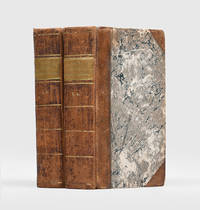
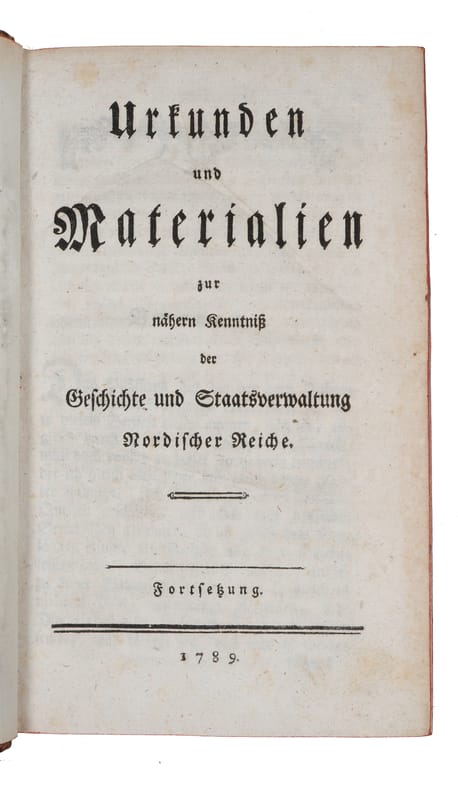
178956256Hamburg 1789. With four folding charts in vol. I. Pp.2 xxx 14 contents 578; xii 2 contents 556. 2 vols. 8vo. Contemporary quarter calf and boards. Rubbed. About very good. With four folding charts in vol. I. Pp.2 xxx 14 contents 578; xii 2 contents 556. 2 vols. 8vo. First and only edition of this important documentary source publishing letters and papers of Frederick IV of Denmark Queen Anna Sophia of Dänemark correspondence with the King of Prussia as well as texts concerning Copenhagen the judiciary police and city council changes in the Danish language etc.<br /> <br /> A further continuation volume appeared in 1790. unknown
179161368No place nor printer 1789 - 1791. 8vo. Uniformly bound in three contemporary full calf bindings with five raised bands and richly gilt spines. Light wear to extremities internally nice and clean. XII 2 556 pp.; XXXIV 4 526 pp.; 4 608 pp. <br/><br/><em>First edition complete with all three volumes of Gaspari’s political history of the Scandinavian countries. </em> hardcover
178618378Hamburg 1786-89 Volume 1 bound in cont. hcalf with gilt back top and bottom of spine taped and 2 fine cont. full calf richly gilt backs. XXX16678;XII2556;XXXIV526 pp. and folded tables. <br/><br/><em>Indeholder bl.a. "Ausführliche Cameralistisch=Ökonomische Beschreibung des Amtes Tondern" af D. Hemmings 192 pp. og "Für Island und des nördlichen Norwegen" pp. 332-379 som omhandler handelen og fiskeriet ved Hvidehavet og Finmarken etc. etc. </em> unknown
178956256Hamburg 1789. With four folding charts in vol. I. Pp.2 xxx 14 contents 578; xii 2 contents 556. 2 vols. 8vo. Contemporary quarter calf and boards. Rubbed. About very good. With four folding charts in vol. I. Pp.2 xxx 14 contents 578; xii 2 contents 556. 2 vols. 8vo. First and only edition of this important documentary source publishing letters and papers of Frederick IV of Denmark Queen Anna Sophia of Dänemark correspondence with the King of Prussia as well as texts concerning Copenhagen the judiciary police and city council changes in the Danish language etc.<br/><br/>A further continuation volume appeared in 1790. unknown books
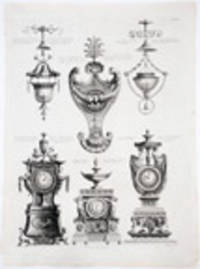
177517121London 1775. Engraving by P. Begbie. In excellent condition with the exception of being trimmed just outside the platemark on the left margin. An elegant engraving depicting various furnishings designed by Robert and James Adam including decorative clocks an ornamental knocker and two elaborate hanging lights.<br/> <br/> Robert and his brother James Adam forever changed the face of British architecture by introducing innovative Classical design ideas. From 1754-57 Robert lived in Italy where he had a long productive friendship with Piranesi which was inspirational for both men. Adam's first book on Diocletian's palace in Dalmatia is clearly very like the archaeological investigations Piranesi was making at the same time of similar ruins. Piranesi's friendship and passion for Roman Classicism were seminal influences on Adam and the greatest single factor other than his own talent in the work Adam produced on his return to England. Upon his return the brothers launched their career by building the Adelphi from the Thames to the Strand in London which although not a commercial success at the time included one of London's most cherished buildings the Adlephi Theatre. Together the Adam brothers designed and built some of the most famous buildings in England including such bastions of English architecture as Kenwood House Keddlestone Manor and Syon House. To the interiors of their English country houses the Adams brought wonderful ornamental elements in niches lunettes festoons and reliefs. Their classically designed buildings were so numerous in London that they changed the prevailing feel of the city and established their brand of neo-Classicism as the model of elegance and importance. It is asserted that the brothers originated the concept of the uniform facade attached to the typical English row house an architectural device that distinguishes London buildings. This monumental contribution is evidenced in the Adams' designs for Portland Place and Fitzroy Square and these were used as architectural models for the whole city. The brothers brought their talents into other areas by designing furniture to complement their beautiful interiors and by creating and publishing a treatise of design entitled 'Works in Architecture'. The work was published in three volumes over an extended span of time beginning in 1773 with the final volume being published posthumously in 1822.<br/> <br/> Cf. Brunet I.47; cf. Lowndes I p.8; DNB; Wilton-Ely The Mind and Art of Giovanni Battista Piranesi. unknown
177517574London 1775. Engraving by P. Begbie. In excellent condition with the exception of being trimmed just outside the platemark on the left margin. An elegant engraving depicting various furnishings designed by Robert and James Adam including decorative clocks an ornamental knocker and two elaborate hanging lights.<br/> <br/> Robert and his brother James Adam forever changed the face of British architecture by introducing innovative Classical design ideas. From 1754-57 Robert lived in Italy where he had a long productive friendship with Piranesi which was inspirational for both men. Adam's first book on Diocletian's palace in Dalmatia is clearly very like the archaeological investigations Piranesi was making at the same time of similar ruins. Piranesi's friendship and passion for Roman Classicism were seminal influences on Adam and the greatest single factor other than his own talent in the work Adam produced on his return to England. Upon his return the brothers launched their career by building the Adelphi from the Thames to the Strand in London which although not a commercial success at the time included one of London's most cherished buildings the Adlephi Theatre. Together the Adam brothers designed and built some of the most famous buildings in England including such bastions of English architecture as Kenwood House Keddlestone Manor and Syon House. To the interiors of their English country houses the Adams brought wonderful ornamental elements in niches lunettes festoons and reliefs. Their classically designed buildings were so numerous in London that they changed the prevailing feel of the city and established their brand of neo-Classicism as the model of elegance and importance. It is asserted that the brothers originated the concept of the uniform facade attached to the typical English row house an architectural device that distinguishes London buildings. This monumental contribution is evidenced in the Adams' designs for Portland Place and Fitzroy Square and these were used as architectural models for the whole city. The brothers brought their talents into other areas by designing furniture to complement their beautiful interiors and by creating and publishing a treatise of design entitled 'Works in Architecture'. The work was published in three volumes over an extended span of time beginning in 1773 with the final volume being published posthumously in 1822.<br/> <br/> Cf. Brunet I.47; cf. Lowndes I p.8; DNB; Wilton-Ely The Mind and Art of Giovanni Battista Piranesi. unknown
177517574London 1775. Engraving by P. Begbie. In excellent condition with the exception of being trimmed just outside the platemark on the left margin. An elegant engraving depicting various furnishings designed by Robert and James Adam including decorative clocks an ornamental knocker and two elaborate hanging lights.<br/> <br/>Robert and his brother James Adam forever changed the face of British architecture by introducing innovative Classical design ideas. From 1754-57 Robert lived in Italy where he had a long productive friendship with Piranesi which was inspirational for both men. Adam's first book on Diocletian's palace in Dalmatia is clearly very like the archaeological investigations Piranesi was making at the same time of similar ruins. Piranesi's friendship and passion for Roman Classicism were seminal influences on Adam and the greatest single factor other than his own talent in the work Adam produced on his return to England. Upon his return the brothers launched their career by building the Adelphi from the Thames to the Strand in London which although not a commercial success at the time included one of London's most cherished buildings the Adlephi Theatre. Together the Adam brothers designed and built some of the most famous buildings in England including such bastions of English architecture as Kenwood House Keddlestone Manor and Syon House. To the interiors of their English country houses the Adams brought wonderful ornamental elements in niches lunettes festoons and reliefs. Their classically designed buildings were so numerous in London that they changed the prevailing feel of the city and established their brand of neo-Classicism as the model of elegance and importance. It is asserted that the brothers originated the concept of the uniform facade attached to the typical English row house an architectural device that distinguishes London buildings. This monumental contribution is evidenced in the Adams' designs for Portland Place and Fitzroy Square and these were used as architectural models for the whole city. The brothers brought their talents into other areas by designing furniture to complement their beautiful interiors and by creating and publishing a treatise of design entitled 'Works in Architecture'. The work was published in three volumes over an extended span of time beginning in 1773 with the final volume being published posthumously in 1822.<br/> <br/>Cf. Brunet I.47; cf. Lowndes I p.8; DNB; Wilton-Ely The Mind and Art of Giovanni Battista Piranesi. unknown books