383 résultats
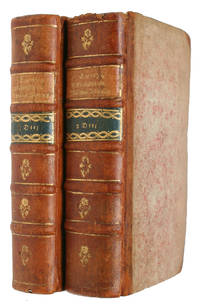
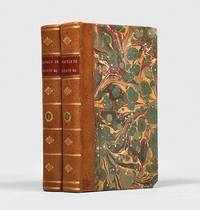
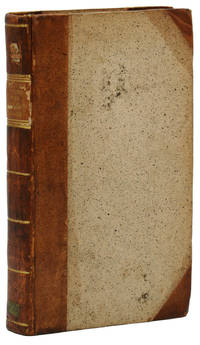
177947455Kiøbenhavn [Copenhagen], 1779-80. 8vo. Two very nice contemporary brown half calf bindings with raised bands, gilt ornamentations and gilt leather title- and tome-labels. Volume two with a bit of wear to upper capital. Corners slightly bumped. Pencil annotations to verso of title-page in volume one" title-page in volume two mounted to cover up a small hole caused by the removal of an old owner's name. Internally very clean and bright. All in all a very nice, clean, fresh, and tight copy. Engraved (by Weise, 1784) armorial book plate to inside of front boards (Gregorius Christianus Comes ab Haxthausen). (12), 575" (8), 775, (3, - errata) pp.
177950523Kiøbenhavn [Copenhagen], 1779-80. 8vo. Two nice contemporary half calf bindings with four raised bands and gilt leather title label to spines. Volume one lacking one cm of upper part of spine. Volume two with a small tear to lower part of spine. Both volumes with light brown spotting throughout, however, mainly affecting first and last five leaves of both volumes. A fine set. (12), 575"" (8), 775, (3, - errata) pp.
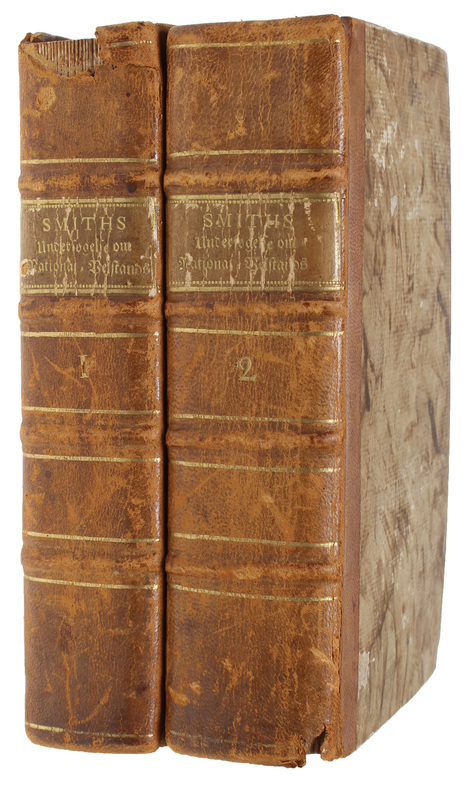
1779158759Copenhagen: Gyldendal 1779-80. Adam Smith in Danish First edition in Danish of The Wealth of Nations translated from the first edition of 1776 by Frants Draebye published together with a translation of Thomas Pownall's critical Letter. to Adam Smith of the same year. Draebye had been in England in 1776 as part of his role of tutor on a continental tour to two sons of a Norwegian merchant James Collett. Smith acknowledged the translation in two letters of 1780 the first written to Andreas Holt Commissioner of the Danish Board of Trade and Economy to whom he wrote "it gives me great pleasure to hear that Mr Dreby has done me the distinguished honour of translating my book into the Danish language." the second to Peter Anker Consul General of Denmark in Great Britain sending him three copies of the second edition of 1778 and asking him to forward them to Draebye and Holt. 2 vols octavo 192 x 114 mm pp. xii 575 1; viii 775 3. Contemporary sprinkled sheep spines decorated in gilt between five raised bands yellow paper labels lettered in gilt marbled paper pastedowns red edges. Joints of vol. I strengthened head and tail of both vols repaired gilt decoration to vol. II largely eroded; marginal tear to one leaf occasional light spotting; a very good set. Tribe 19: Vanderblue p. 23. Mossner & Ross The Correspondence of Adam Smith 1987. hardcover
177947455Kiøbenhavn Copenhagen 1779-80. 8vo. Two very nice contemporary brown half calf bindings with raised bands gilt ornamentations and gilt leather title- and tome-labels. Volume two with a bit of wear to upper capital. Corners slightly bumped. Pencil annotations to verso of title-page in volume one; title-page in volume two mounted to cover up a small hole caused by the removal of an old owner's name. Internally very clean and bright. All in all a very nice clean fresh and tight copy. Engraved by Weise 1784 armorial book plate to inside of front boards Gregorius Christianus Comes ab Haxthausen. 12 575; 8 775 3 - errata pp. <br/><br/><em>The extremely scarce first Danish edition of Adam Smith's seminal main work "the first and greatest classic of modern economic thought" PMM 221 the main foundational work of the era of liberal free trade. This publication constitutes the first Danish work worth mentioning in the history of economic thought - in spite of the great interest in political economy that dominated Danish political thought in the last quarter of the 18th century. The value of Smith's work was not immediately recognized in Denmark at the time of its appearance and a quarter of a century had to go by for its importance to be acknowledged and for Danish political economy to adapt the revolutionizing theories of Adam Smith. Few copies of the translation were published and sold and the book is now a great scarcity. As opposed to for instance the German translation of the work Smith concerned himself a great deal with this Danish translation. As is evident from preserved correspondence about it he reacted passionately to it and was deeply concerned with the reaction to his work in Scandinavia see "Correspondence of Adam Smith" Oxford University Press 1977.- As an example Smith writes in a letter to Andreas Holt on Oct. 26th 1780: "It gives me the greatest pleasure to hear that Mr. Dreby has done me the distinguished honour of translating my Book into the Danish language. I beg you will present to him my most sincere thanks and most respectful Compliments. I am much concerned that I cannot have the pleasure of reading it in his translation as I am so unfortunate as not to understand the Danish language." The translation was made by Frants Dræby 1740-1814 the son a whiskey distiller in Copenhagen who mastered as a theologian and was then hired by the great Norwegian merchant James Collett as tutor to his son. There can be no doubt that Dræbye's relation to the Collett house had a great impact upon his interest in economics. In the middle of the 1770'ies Dræbye accompanied Collett's son on travels throughout Europe which took them to England in the year 1776 the same year that the "Wealth of Nations" was published for the first time. Through the Colletts Dræbye was introduced to the mercantile environment in England and here became thoroughly acquainted with English economics and politics at the time. It is presumably here that he gets acquainted with Adam Smith's freshly published revolutionary work. When Dræbye returned to Denmark at the end of 1776 he was appointed chief of the Norwegian secretariat of the Board of Economics and Trade. He began the translation of the "Wealth of Nations" that he brought back with him from England immediately after his return."WN i.e. Wealth of Nations was translated into Danish by Frants Dræbye and published in 1779 three years after the first English edition. The translation was initiated by Andreas Holt and Peter Anker who were acquainted with Smith. Dræbye was a Dane who lived mainly in Norway reflecting the fact that Norway was much more British-oriented than Denmark proper Denmark and Norway were united until 1814 when Sweden took Norway away from the Danes; in 1905 Norway became an independent state. Norwegian merchants lived from exporting timber to Britain and tended on the whole to be adherents of a liberal economic policy whereas the absolutist government in Copenhagen was more German-oriented and had economic views similar to those in contemporary Prussia." Cheng-chung Lai edt.: "Adam Smith Across Nations" p. 37. The last quarter of the eighteenth century in Denmark was dominated by a lively discussion of monetary policy and the institutional framework best suited to realize that policy. There was a vital interest in questions of economic concern and contemporary Danish sources refer to the period as "this economic age" and state things such as "never was the world more economically minded" both from "Denmark and Norway's Economic Magazine". During this period Smith's revolutionary ideas did not play a major role however and only at the beginning of the 19th century did Danish politicians and economists come to realize the meaning of Smith's views. "Without exaggeration it can essentially be said that a quarter of a century was to pass from the time of the publication of the book in Denmark before Danish political economy fully made Adam Smith's theories and points of view its own. It took so long a time because the economic conditions as a whole in the years from 1780-1800 did not make desirable or necessary the changing of their concepts. That glorious commercial period had to pass before it was understood that we had altogether too little help in our own natural resources and that a different course was therefore necessary. Only when one had come so far could the new thinking find a nourishing soil so that it could develop strength with which to push aside the old ideas."Hans Degen: "On the Danish Translation of Adam Smith and Contemporary Opinion Concerning It." Translated by Henrietta M. Larson. In: Adam Smith Across Nations p. 51. This first Danish translation is one of the very earliest translations of "Wealth of Nations"; it is only preceded by the German 1776-78 and the extremely scarce French 1778-79. As a comparison the Italian translation does not appear until 1790-91 the Spanish 1792 the Swedish 1800-1804 the Russian 1802 etc.Adam Smith Across Nations: A4 - nr. 1. "All five books were translated; appears to be a complete translation. The long letter from Governor Pownall to Adam Smith 25 Sept. 1776 is added as the Appendix vol. 2 pp. 683 ff."PMM 221 - first edition </em> hardcover
177950523Kiøbenhavn Copenhagen 1779-80. 8vo. Two nice contemporary half calf bindings with four raised bands and gilt leather title label to spines. Volume one lacking one cm of upper part of spine. Volume two with a small tear to lower part of spine. Both volumes with light brown spotting throughout however mainly affecting first and last five leaves of both volumes. A fine set. 12 575; 8 775 3 - errata pp. <br/><br/><em>The extremely scarce first Danish edition of Adam Smith's seminal main work "the first and greatest classic of modern economic thought" PMM 221 the main foundational work of the era of liberal free trade. This publication constitutes the first Danish work worth mentioning in the history of economic thought - in spite of the great interest in political economy that dominated Danish political thought in the last quarter of the 18th century. The value of Smith's work was not immediately recognized in Denmark at the time of its appearance and a quarter of a century had to go by for its importance to be acknowledged and for Danish political economy to adapt the revolutionizing theories of Adam Smith. Few copies of the translation were published and sold and the book is now a great scarcity. As opposed to for instance the German translation of the work Smith concerned himself a great deal with this Danish translation. As is evident from preserved correspondence about it he reacted passionately to it and was deeply concerned with the reaction to his work in Scandinavia see "Correspondence of Adam Smith" Oxford University Press 1977.- As an example Smith writes in a letter to Andreas Holt on Oct. 26th 1780: "It gives me the greatest pleasure to hear that Mr. Dreby has done me the distinguished honour of translating my Book into the Danish language. I beg you will present to him my most sincere thanks and most respectful Compliments. I am much concerned that I cannot have the pleasure of reading it in his translation as I am so unfortunate as not to understand the Danish language." The translation was made by Frants Dræby 1740-1814 the son a whiskey distiller in Copenhagen who mastered as a theologian and was then hired by the great Norwegian merchant James Collett as tutor to his son. There can be no doubt that Dræbye's relation to the Collett house had a great impact upon his interest in economics. In the middle of the 1770'ies Dræbye accompanied Collett's son on travels throughout Europe which took them to England in the year 1776 the same year that the "Wealth of Nations" was published for the first time. Through the Colletts Dræbye was introduced to the mercantile environment in England and here became thoroughly acquainted with English economics and politics at the time. It is presumably here that he gets acquainted with Adam Smith's freshly published revolutionary work. When Dræbye returned to Denmark at the end of 1776 he was appointed chief of the Norwegian secretariat of the Board of Economics and Trade. He began the translation of the "Wealth of Nations" that he brought back with him from England immediately after his return."WN i.e. Wealth of Nations was translated into Danish by Frants Dræbye and published in 1779 three years after the first English edition. The translation was initiated by Andreas Holt and Peter Anker who were acquainted with Smith. Dræbye was a Dane who lived mainly in Norway reflecting the fact that Norway was much more British-oriented than Denmark proper Denmark and Norway were united until 1814 when Sweden took Norway away from the Danes; in 1905 Norway became an independent state. Norwegian merchants lived from exporting timber to Britain and tended on the whole to be adherents of a liberal economic policy whereas the absolutist government in Copenhagen was more German-oriented and had economic views similar to those in contemporary Prussia." Cheng-chung Lai edt.: "Adam Smith Across Nations" p. 37. The last quarter of the eighteenth century in Denmark was dominated by a lively discussion of monetary policy and the institutional framework best suited to realize that policy. There was a vital interest in questions of economic concern and contemporary Danish sources refer to the period as "this economic age" and state things such as "never was the world more economically minded" both from "Denmark and Norway's Economic Magazine". During this period Smith's revolutionary ideas did not play a major role however and only at the beginning of the 19th century did Danish politicians and economists come to realize the meaning of Smith's views. "Without exaggeration it can essentially be said that a quarter of a century was to pass from the time of the publication of the book in Denmark before Danish political economy fully made Adam Smith's theories and points of view its own. It took so long a time because the economic conditions as a whole in the years from 1780-1800 did not make desirable or necessary the changing of their concepts. That glorious commercial period had to pass before it was understood that we had altogether too little help in our own natural resources and that a different course was therefore necessary. Only when one had come so far could the new thinking find a nourishing soil so that it could develop strength with which to push aside the old ideas."Hans Degen: "On the Danish Translation of Adam Smith and Contemporary Opinion Concerning It." Translated by Henrietta M. Larson. In: Adam Smith Across Nations p. 51. This first Danish translation is one of the very earliest translations of "Wealth of Nations"; it is only preceded by the German 1776-78 and the extremely scarce French 1778-79. As a comparison the Italian translation does not appear until 1790-91 the Spanish 1792 the Swedish 1800-1804 the Russian 1802 etc.Adam Smith Across Nations: A4 - nr. 1. "All five books were translated; appears to be a complete translation. The long letter from Governor Pownall to Adam Smith 25 Sept. 1776 is added as the Appendix vol. 2 pp. 683 ff." </em> hardcover
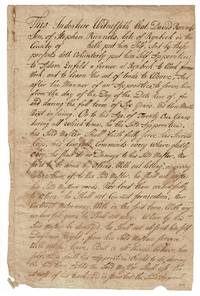
178957019Rhineback N.Y.: May 25 1789. Folio approx. 12" x 8" 42 lines approx. 300 words; a few minor breaks at the edges but overall very good and legible. This indenture binds David Runnels son of Stephen Runnels in the town of "Rynbeck" i.e. Rhinebeck Dutchess County New York to a farmer and weaver named Adam Zufeld 1760-1849 as a servant and apprentice "to work farmers work and to learn the art of trade to weave." Although a wax seal is affixed the document is unsigned. David Runnels b. ca. 1774 signed up for six years and three months until age 21 and vows to "faith fully serve his secrets keep his lawful commands every where gladly obey . not commet fornication nor contract matremony with any lawful games he shall not play nor absent himself from his master's service day or night." In return for this service Zufeld agrees to "teach and instruct the said apprentice in the trade of Weaven and shall send Runnels to school to lern English read and write" and to provide "sufficient meat drink apperal washing and lodging fitting for an apprentice." After the apprenticeship is over Zufelf agrees to "give the said apprentice a new cloth or garment and a mare colt." <br/><br/> May 25 hardcover books
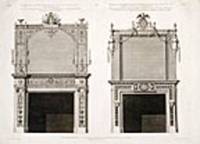
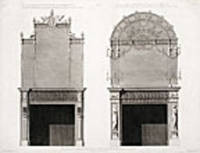
177717125London 1777. Engraving by J. Zucchi. In excellent condition. An elegant engraving depicting two chimneys in Lord Derby's celebrated house in Grosvenor Square London.<br/> <br/>Robert and his brother James Adam forever changed the face of British architecture by introducing innovative Classical design ideas. From 1754-57 Robert lived in Italy where he had a long productive friendship with Piranesi which was inspirational for both men. Adam's first book on Diocletian's palace in Dalmatia is clearly very like the archaeological investigations Piranesi was making at the same time of similar ruins. Piranesi's friendship and passion for Roman Classicism were seminal influences on Adam and the greatest single factor other than his own talent in the work Adam produced on his return to England. Upon his return the brothers launched their career by building the Adelphi from the Thames to the Strand in London which although not a commercial success at the time included one of London's most cherished buildings the Adlephi Theatre. Together the Adam brothers designed and built some of the most famous buildings in England including such bastions of English architecture as Kenwood House Keddlestone Manor and Syon House. To the interiors of their English country houses the Adams brought wonderful ornamental elements in niches lunettes festoons and reliefs. Their classically designed buildings were so numerous in London that they changed the prevailing feel of the city and established their brand of neo-Classicism as the model of elegance and importance. It is asserted that the brothers originated the concept of the uniform facade attached to the typical English row house an architectural device that distinguishes London buildings. This monumental contribution is evidenced in the Adams' designs for Portland Place and Fitzroy Square and these were used as architectural models for the whole city. The brothers brought their talents into other areas by designing furniture to complement their beautiful interiors and by creating and publishing a treatise of design entitled 'Works in Architecture'. The work was published in three volumes over an extended span of time beginning in 1773 with the final volume being published posthumously in 1822.<br/> <br/>Cf. Brunet I.47; cf. Lowndes I p.8; DNB; Wilton-Ely The Mind and Art of Giovanni Battista Piranesi. unknown books
177517123London 1775. Engraving by Joshua Record. In excellent condition. An elegant engraving showing the two chimneys in Lord Derby's house in Grosvenor Square London.<br/> <br/>Robert and his brother James Adam forever changed the face of British architecture by introducing innovative Classical design ideas. From 1754-57 Robert lived in Italy where he had a long productive friendship with Piranesi which was inspirational for both men. Adam's first book on Diocletian's palace in Dalmatia is clearly very like the archaeological investigations Piranesi was making at the same time of similar ruins. Piranesi's friendship and passion for Roman Classicism were seminal influences on Adam and the greatest single factor other than his own talent in the work Adam produced on his return to England. Upon his return the brothers launched their career by building the Adelphi from the Thames to the Strand in London which although not a commercial success at the time included one of London's most cherished buildings the Adlephi Theatre. Together the Adam brothers designed and built some of the most famous buildings in England including such bastions of English architecture as Kenwood House Keddlestone Manor and Syon House. To the interiors of their English country houses the Adams brought wonderful ornamental elements in niches lunettes festoons and reliefs. Their classically designed buildings were so numerous in London that they changed the prevailing feel of the city and established their brand of neo-Classicism as the model of elegance and importance. It is asserted that the brothers originated the concept of the uniform facade attached to the typical English row house an architectural device that distinguishes London buildings. This monumental contribution is evidenced in the Adams' designs for Portland Place and Fitzroy Square and these were used as architectural models for the whole city. The brothers brought their talents into other areas by designing furniture to complement their beautiful interiors and by creating and publishing a treatise of design entitled 'Works in Architecture'. The work was published in three volumes over an extended span of time beginning in 1773 with the final volume being published posthumously in 1822.<br/> <br/>Cf. Brunet I.47; cf. Lowndes I p.8;DNB; Wilton-Ely The Mind and Art of Giovanni Battista Piranesi. unknown books
177517123London 1775. Engraving by Joshua Record. In excellent condition. An elegant engraving showing the two chimneys in Lord Derby's house in Grosvenor Square London.<br/> <br/> Robert and his brother James Adam forever changed the face of British architecture by introducing innovative Classical design ideas. From 1754-57 Robert lived in Italy where he had a long productive friendship with Piranesi which was inspirational for both men. Adam's first book on Diocletian's palace in Dalmatia is clearly very like the archaeological investigations Piranesi was making at the same time of similar ruins. Piranesi's friendship and passion for Roman Classicism were seminal influences on Adam and the greatest single factor other than his own talent in the work Adam produced on his return to England. Upon his return the brothers launched their career by building the Adelphi from the Thames to the Strand in London which although not a commercial success at the time included one of London's most cherished buildings the Adlephi Theatre. Together the Adam brothers designed and built some of the most famous buildings in England including such bastions of English architecture as Kenwood House Keddlestone Manor and Syon House. To the interiors of their English country houses the Adams brought wonderful ornamental elements in niches lunettes festoons and reliefs. Their classically designed buildings were so numerous in London that they changed the prevailing feel of the city and established their brand of neo-Classicism as the model of elegance and importance. It is asserted that the brothers originated the concept of the uniform facade attached to the typical English row house an architectural device that distinguishes London buildings. This monumental contribution is evidenced in the Adams' designs for Portland Place and Fitzroy Square and these were used as architectural models for the whole city. The brothers brought their talents into other areas by designing furniture to complement their beautiful interiors and by creating and publishing a treatise of design entitled 'Works in Architecture'. The work was published in three volumes over an extended span of time beginning in 1773 with the final volume being published posthumously in 1822.<br/> <br/> Cf. Brunet I.47; cf. Lowndes I p.8;DNB; Wilton-Ely The Mind and Art of Giovanni Battista Piranesi. unknown
177717125London 1777. Engraving by J. Zucchi. In excellent condition. An elegant engraving depicting two chimneys in Lord Derby's celebrated house in Grosvenor Square London.<br/> <br/> Robert and his brother James Adam forever changed the face of British architecture by introducing innovative Classical design ideas. From 1754-57 Robert lived in Italy where he had a long productive friendship with Piranesi which was inspirational for both men. Adam's first book on Diocletian's palace in Dalmatia is clearly very like the archaeological investigations Piranesi was making at the same time of similar ruins. Piranesi's friendship and passion for Roman Classicism were seminal influences on Adam and the greatest single factor other than his own talent in the work Adam produced on his return to England. Upon his return the brothers launched their career by building the Adelphi from the Thames to the Strand in London which although not a commercial success at the time included one of London's most cherished buildings the Adlephi Theatre. Together the Adam brothers designed and built some of the most famous buildings in England including such bastions of English architecture as Kenwood House Keddlestone Manor and Syon House. To the interiors of their English country houses the Adams brought wonderful ornamental elements in niches lunettes festoons and reliefs. Their classically designed buildings were so numerous in London that they changed the prevailing feel of the city and established their brand of neo-Classicism as the model of elegance and importance. It is asserted that the brothers originated the concept of the uniform facade attached to the typical English row house an architectural device that distinguishes London buildings. This monumental contribution is evidenced in the Adams' designs for Portland Place and Fitzroy Square and these were used as architectural models for the whole city. The brothers brought their talents into other areas by designing furniture to complement their beautiful interiors and by creating and publishing a treatise of design entitled 'Works in Architecture'. The work was published in three volumes over an extended span of time beginning in 1773 with the final volume being published posthumously in 1822.<br/> <br/> Cf. Brunet I.47; cf. Lowndes I p.8; DNB; Wilton-Ely The Mind and Art of Giovanni Battista Piranesi. unknown
1782143496London: Printed for J. Murray 1782. First edition of this anonymously published epistolary account in 72 letters written during the course of a trip to India dealing largely with the government and economies of the East Indies and with notes on Adam Smith's Wealth of Nations. At the Cape of Good Hope in April 1799 one Daniel Barwell lent the author his copy of Adam Smith's Wealth of Nations - 'a work of great labour and ingenuity; I had heard of it and anxiously desired to see it because it treated of such commercial and political matters as have long furnished a subject of speculation in my solitude. It is a performance that every statesman and legislator should study and digest. - Yet I have presumed to differ in opinion in a few instances from that great source of knowledge' I 206-7. The 'Observations' written 'on a cursory reading' of Smith are provided in an lengthy two-column appendix in volume II pp. 432-479 which juxtaposes quotations with insightful commentary especially on the relationship of labour and value and real and nominal prices. Macintosh presented a copy of his Travels to Smith 'With Mr. MacIntosh's compliments. Mr. M - having been abroad when these letters were printed had not an opportunity of transmiting sic them in manuscripts'. The Travels' authorship although attributed by DNB Halkett & Laing Kress and Allibone to William Thomson 1746-1817 who was a clergyman in Perthshire until October 1778 and whose role was most probably editorial has also been credited to the Irish-born British politician and pamphleteer Sir Philip Francis 1740-1818 who was also the chief antagonist of the first Governor-General of Bengal Warren Hastings. It is however generally accepted as being William MacIntosh's: "the author was given out to be one Macintosh whose name occurs in Philip Francis's Indian journal. But it runs so minutely into defence of Francis and vituperation of his enemies especially of Hastings. that some assigned the authorship of these portions of it to Francis in person" Parkes. In his Memoirs of Sir Philip Francis 1867 Parkes notes "some people indeed denied the existence of Macintosh altogether. But one of Captain Price's grotesque pamphlets describes him as 'a swarthy and ill-looking man'. of colour born in the West Indies" p. 206. These Travels were translated into German Des Herrn Macintosh's Reisen in 1785 and twice so in French: 1786 and 1792. This copy has the crested bookplate of the banker Thomas Coutts "Strand London" one of the wealthiest men in Britain to the front pastedowns transposed over from an earlier binding. 2 vols octavo 211 x 126 mm. Recent quarter calf red and green morocco labels marbled sides vellum tips. Bindings fine interior remarkably clean and fresh occasionally foxed; a very good copy. ESTC T97734; Goldsmiths' 12256; Kress B.523; Mizuta "Adam Smith's Library" 1660; Joseph Parkes "Memoirs of Sir Philip Francis K.C.B." vol. 2 pp. 205-6; Sowerby E.M. Catalogue of the Library of Thomas Jefferson 3934; Zachs 314; not in Vanderblue. hardcover
175427646A Amsterdam et à Berlin et se vend à Paris, chez Jean Neaulme / cheé Guérin & Delatour, 1754. Un vol. au format in-12 (178 x 108 mm) de xii - 483 pp. Reliure légèrement postérieure (caractéristique de l'époque révolutionnaire) de demi-cartonnage vert absinthe à petits coins, dos lisse orné de doubles filets dorés, filets en pointillés dorés, pièce de titre de maroquin brique, titre doré.
178928374A Reims, chez Jeunehomme Père et Fils, 1789 - A Paris, chez Allut, 1806. 2 ouvrages reliés en un fort vol. au format in-8 (203 x 128 mm) de 1 f. bl., 7 ff. n.fol. et 251 pp. ; xiv - 304 pp. Reliure XIXème de demi-chagrin maroquiné violine, dos lisse orné de filets gras en noir, doubles filets maigres dorés, titre doré, tranches mouchetées.
17337893CBParis, Chéz la Veuve Saugrain & P. Prault, 1733. 8°. 462, (10) S. Pappband der Zeit.
17337893CB1733. Paris Chéz la Veuve Saugrain & P. Prault 1733. 8°. 462 10 S. Pappband der Zeit. Barth 23956. Haller VI 1807. HBLS VII 286 für die Erstausgabe und für den Verfasser. Zweite Ausgabe erschien erstmals 1731. Franz Adam Vogel 1749 war Grossrichter der Schweizergarde in Paris. Seine erste Ausgabe von 1731 war in Frankreich verboten. Vorliegende Ausgabe gemäss Haller nicht in Paris sondern in Bern «gesondert» verlegt «und auch mit den Bündnissen selbst abgedruckt worden». Das Papier durchgehend stockfleckig. Der Einband berieben und bestossen. unknown
1789283741789. A Reims chez Jeunehomme PÂre et Fils 1789 - A Paris chez Allut 1806. 2 ouvrages reliÂŽs en un fort vol. au format in-8 203 x 128 mm de 1 f. bl. 7 ff. n.fol. et 251 pp. ; xiv - 304 pp. Reliure XIXÂme de demi-chagrin maroquinÂŽ violine dos lisse ornÂŽ de filets gras en noir doubles filets maigres dorÂŽs titre dorÂŽ tranches mouchetÂŽes. Deux ouvrages reliÂŽs en un volume le second est ici amputÂŽ de son deuxiÂme tome. Edition originale pour le premier ; imprimÂŽ ˆ Reims. ''Je n'ai eu d'autre objet en composant cet ÂŽcrit que de substituer une vÂŽritÂŽ prÂŽcieuse ˆ une erreur funeste. Car l'inoculation a toujours beaucoup de sectateurs et d'ennemis mais ne cesserai de dire que ses bienfaits en sont certains.'' LÂŽgÂres altÂŽrations superficielles affectant la reliure. Claires rousseurs dans le corps d'ouvrage du second volume. Du reste belle condition. Rare. b42961 unknown
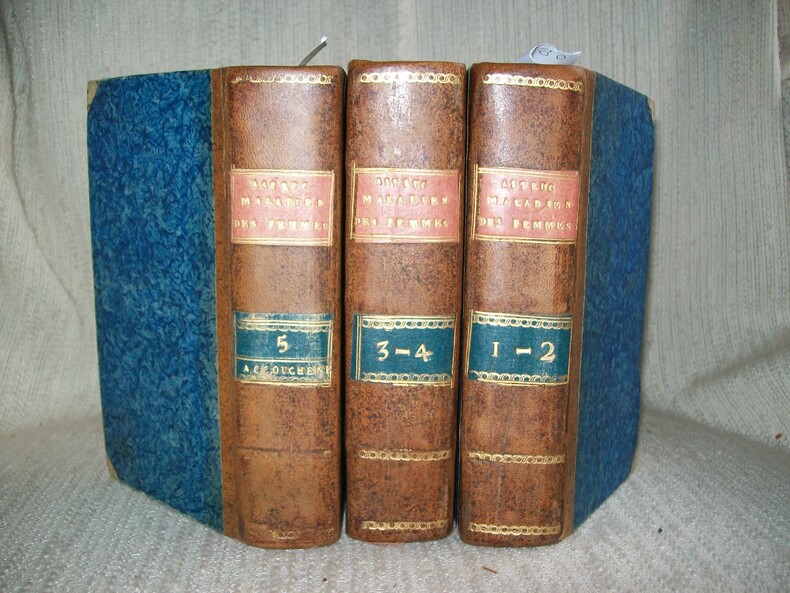
1770GITj151A paris chez P-G Cavelier 1770-1771. 2 ouvrages en 3 volumes in-12 *Maladies des femmes (5 volumes) XXIII 272pp, VI 372pp, VI 382pp, XII 263pp, VI 258pp. *L'art d'accoucher LX 312pp. Demi basane havane à coins de vélin ivoire, dos lisse orné de chaînettes dorées (2 premiers volumes) ou de filets à froid (3e volume), pièces de titre vieux rose et de tomaison vert émeraude encadrées de filets et chaînettes dorés, plats de papier marbré bleu, reliure de l'époque. Orné de 7 planches (4 dans le Tome I réunies sur 1 feuillet dépliant, 3 en tête du Tome V regroupant plusieurs figures). Auréola claire ancienne et papier légèrement bruni pages 93 à 122 dans le tome II. Exemplaire complet dans une reliure strictement de l'époque en excellent état et décorative.
176640581Vindobonae: Jo. Thom. Nob. de Trattnern 1766. 8vo 20.3 cm 8". 24 246 2 pp. <br><br>Uncommon first edition. The Belgian-born physician Chenot 17211789 who studied medicine at the University of Vienna before being sent by imperial command to Transylvania to assist in fighting outbreaks of the plague was a prominent voice in the debate over how to conduct quarantines hygiene and sanitary treatments and other protective measures; he was a staunch opponent of the theory that air itself could carry the disease. Here he offers his firsthand perspective on the plague having contracted it himself and survived!<br>Â Â Â Â WorldCat finds => only six U.S. institutions Harvard National Library of Medicine New York Academy of Medicine Stanford University of Pennsylvania University of Wisconsin reporting holding a hard copy. In the present example as in others reported the last leaf of the preface appears at the back of the volume where it was originally printed being leaf Q4.<br>Â Â Â Â Provenance: From the residue of the stock of the F. Thomas Heller bookselling firm est. ca. 1928. <br>Â Â Â Â <br>Â Â Â Â Blake NLM 18th Century p. 86; Wellcome II 334. Not in Garrison & Morton. Early plain papercovered boards spine with hand-inked paper shelving label; binding much worn overall with joints cracked loss of paper at corners and spine head. Pages waterstained. Early underlining and occasional marks of emphasis in red pencil to roughly first half of volume. => Another sort of survivor Jo. Thom. Nob. de Trattnern hardcover books
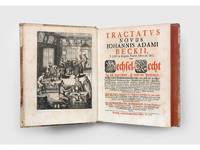
1729173121Nuremberg: Johann Georg Lochner 1729. Currency conversion First edition of this manual of the law and practice of currency exchange in the Holy Roman Empire including a striking frontispiece showing a busy exchange office overseen by Mercury the patron of trade. It covers promissory note and bills of exchange and demonstrates the strictness of imperial exchange law. Quarto 208 x 166 mm pp. 8 512. Engraved frontispiece folding table title page printed in red and black. Contemporary half vellum and marbled boards spine lettered in gilt red edges. Very slight soiling and rubbing to binding light browning and foxing to contents. A very good copy. hardcover
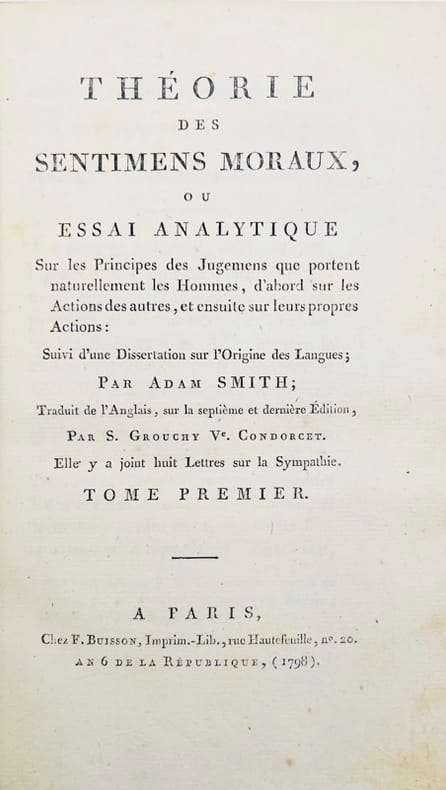
179810443A Paris, chez F. Buisson, 1798. 2 vol. in-8 de VIII-466 pp. et (4)-511 pp., demi-veau taupe, dos lisse orné de filets dorés (reliure de l'époque).
1774146600Paris: Chez Valade 1774-75. First edition of the second French translation of Scottish moral philosopher and economist Adam Smith's ground-breaking first work The Theory of Moral Sentiments London 1759 in an attractive contemporary binding. This work introduced the concept of the "invisible hand" guiding individuals to advance community interest laying the philosophical ground work for his Wealth of Nations. Smith evidently dissatisfied in the quality of the first French translation Metaphysique de l'ame Paris 1764 made by Marc-Antoine Eidous and based on the second English edition is reported by the translator of this edition as having been "mortified" by the first attempt. Jean-Louis Blavet 1719-1809 translator and librarian of the Prince de Conti was recommended to Smith by Madame des Boufflers the Prince's mistress and duly undertook this entirely new translation from the third English edition of 1767 adding an extensive table of contents. The work was far from a commercial success which according to Dugald Stewart Smith blamed on Blavet leading to the eventual commission of a third French translation by Sophie de Grouchy the prominent salon hostess during the early French Revolution and under Napoleon and was the wife of the philosopher the Marquis de Condorcet. 2 vols duodecimo 168 x 97 mm. Contemporary cat's paw calf titles in gilt to red morocco spine labels floral motifs tooled in gilt direct to spine French curl marbled endpapers blued mottled edges. A hint of wear to extremities the bindings otherwise firm and unrestored very occasional faint damp staining else internally fresh; a very good set indeed. Tribe 7; Vanderblue p. 41. unknown
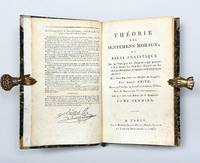
1798157475Paris: chez F. Buisson 1798. Containing the first appearance of de Grouchy's Lettres sur la sympathie First edition of Sophie de Grouchy's translation "the best available in her language" Ross p. 365 which brought Smith's work to a much broader French audience following two ineffectual translations and which remains the standard French text. The edition includes the first appearance of de Grouchy's Lettres sur la sympathie her major contribution to moral philosophy. The translation was preceded in French editions by Marc-Antoine Eidous's translation of 1764 roundly criticized for its low quality and held by Smith to be responsible for the poor reception of his work on the continent and Jean-Louis Blavet's translation of 1774-5 which was poorly disseminated. A manuscript translation by Louis Alexandre Duc de la Rochefoucauld 1774 was abandoned and unpublished. In contrast de Grouchy's translation was praised from the start and commended for its faithfulness to the original text. "Smith was no longer alive by the time Grouchy published her own translation 1798; he died in 1790 but it is safe to say that he would have been happier with hers as she followed the text as precisely as she could attempting to capture the tone and rhythm as well as the multilayered meanings of his sentences" Bergès and Schliesser p. 9. The edition also includes a translation of Smith's Dissertation on the Origin of Language first published in The Philological Miscellany and thereafter appended to the third and subsequent editions of the Theory of Moral Sentiments. The translation was reprinted in 1830 1860 and 1981. De Grouchy was a prominent salon hostess during the French Revolution and under Napoleon. The Lettres sur la Sympathie appended to the translation form a response to Smith's Moral Sentiments but also offer an original and important contribution to moral philosophy. The text written from around 1791 to 1793 takes the form of eight letters addressed to C sometimes surmised as her husband the philosopher Condorcet more probably her brother-in-law the physiologist and philosopher Pierre Jean Georges Cabanis. De Grouchy in the first letter sets out her project to find the origins of sympathy and over the following letters sustains her argument that they are physiological based on experienced or imagined pain and pleasure. The Lettres have long been recognized in French scholarship - Jean-Paul de Lagrave's French edition of 1994 lists at least 15 works in French dealing with her from 1887 to 1987. In English scholarship her work has been recognized only more recently. English translations were published - independent from Smith's Theory - in 2008 edited and translated by Karin Brown and James E. McClellan III and 2019 edited and translated by Sandrine Bergès and Eric Schliesser both containing lengthy introductory monographs confirming the originality and importance of the Lettres. Karin Brown in 2008 bemoaned de Grouchy's then-invisibility in English scholarship - "the Lettres are certainly a notable if overlooked Enlightenment text. But more specifically there is significant recent interest in sympathy and sensibility in the literature of the eighteenth century and Sophie de Grouchy is the one contemporary woman philosopher who thought and wrote critically about sympathy. This otherwise informed and eye-opening scholarly reinterpretation of the role of sentiment in late-eighteenth century thought is unaware of Sophie de Grouchy or her contributions" Brown and McClellan p. xvi. 2 vols octavo 192 x 120 mm. With half-titles. Contemporary quarter sheep mottled sides spines lettered in gilt vellum tips plain endpapers marbled edges. Bookplate of Jules C. Alciatore 1901-1974 professor of literature at the University of Georgia whose research focused on the work of Stendhal. A few minor pencilled annotations. Bindings fresh and well preserved with only very minor rubbing contents lightly browned and foxed a few gatherings a little more substantially paper flaw to C4 and F1 in vol. II the former with loss affecting a few letters; an attractive copy in a well-preserved contemporary binding. Tribe 66. Sandrine Bergès & Eric Schliesser introduction to Sophie de Grouchy's Letters on Sympathy Oxford University Press 2019; Karin Brown & James E. McClellan Sophie de Grouchy: Letters on Sympathy 1798 a Critical Edition 2008; Ian Simpson Ross Life of Adam Smith 1995. hardcover
179854493Paris: F. Buisson 1798. 2 volumes 8vo pp. viii 466; 4 51 1; sporadic foxing; pencil notes in the top margins of C6v and C7r in volume I and K5r in volume II; paper flaw in C4 of the second volume affecting 4 or 5 letters; F1 in volume II with blank corner torn no loss and the second A gathering in volume II substantially toned; all else quite nice in contemporary brown calf-backed marbled boards with vellum tips; smooth gilt-decorated spine laid out in three compartments gilt-lettered direct in 1; very pretty marbled edges green silk bookmarkers; near fine. There's a wonderful abstract of an article on line compliments of Laurie Breban and Jean Dellemotte at the Sorbonne which "aims at providing a critical analysis of Sophie de Grouchy's translation and commentary of Adam Smith's Theory of Moral Sentiments . This paper focuses on Sophie de Grouchy's translation of the Theory of Moral Sentiments 1759 published in 1798." At that time her translation was not the first attempt to spread Adam Smith's moral philosophy in France. However the two previous translations did not succeed there. The first one from Marc-Antoine Eidous and entitled Metaphysique des moeurs 1764 was unanimously criticized because of its bad quality. Smith himself looked at it as responsible for the bad reception of his work across the Channel. As for the second translation 1774-75 from Jean-Louis Blavet it seems to have been poorly disseminated. This contrasts with the reputation of Grouchy's translation which was praised from the very moment of its publication for its accurateness with respect to the original text. The success was such that it has been viewed for two centuries as the definite French translation of the Theory of Moral Sentiments. And Grouchy is even sometimes considered as "Smith's best-known contemporary translator." <br/><br/> F. Buisson hardcover books
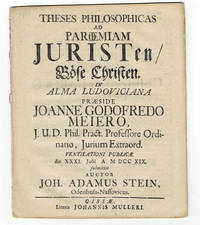
171998283Gissae Giessen: Literis Johannis Mulleri 1719. 1719. Very good. - Small quarto 7-1/8 inches high by 5-7/8 inches wide. Softcover bound in printed self-wrappers. There is an line penned in ink to the right of the title and the rear cover leaf is nearly detached though present. 20 pages illustrated with a headpiece featuring lady justice holding a scale in one hand and a sword in the other set within an oval in a floral decorated panel with a cherub at each side. There are a couple of minor creases to the corners and a tiny chip to the front edge of one leaf. Very good. <p>RARE. First only edition.<p>The work is a University of Giessen thesis. It is in the form of 11 theses followed by a response.<p>Johann Gottfried von Meiern 1664-1721 was a German lawyer and historian. In 1718 he became Professor extraordinarius of law at the University of Giessen. His professorship at Giessen was short-lived due to conflict with his colleagues over his belief in the theory of natural law. He returned to his hometown of Bayreuth in 1720. Von Meiern aka Meyern is probably best known for his contribution to the "Acta Pacis Westphalicae" from 1734. Gissae [Giessen]: Literis Johannis Mulleri, (1719). paperback
1791140940981Leipzig: In der Graffschen Buchhandlung 1791. First Edition Thus. Very Good. 463 pp. First edition of this second German translation overall of The Theory of Moral Sentiments made from the fifth English edition; no other German translation was published until 1926. Contemporary calf over speckled boards. Very Good. Binding lightly rubbed and marked spine with two small paper shelf tickets. Upper joint started but binding remains firm. Pages a little toned and with occasional foxing. In der Graffschen Buchhandlung unknown books