39 448 résultats
London, Printed for John Hearne by J.F. Dove, 1822. Folio. (41 x 33 cm.). Fine later hmorocco, raised bands, gilt spine, titlelabels with gilt lettering. (4),36 pp. and 36 fine handcoloured aquatint-plates. Broad-margined. Very light browning to a few leaves. A few insignificant marginal brownspots. A fine copy.
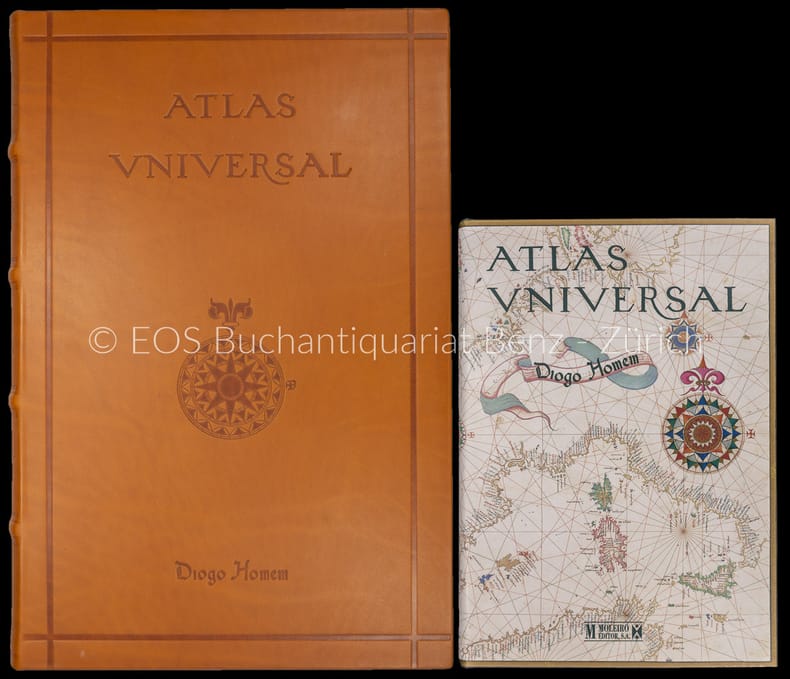
200030664AB2 Bände. Barcelona, Moleiro, 2000–2002. Folio und quart. 331 S. Mit (20) Bl. mit faks. Karten. Leinen- und Lederband in Lederbox.
178167442Chez Jean-Léonard Pellet | Genève 1781 | 12.50 x 20 cm | 10 volumes reliés
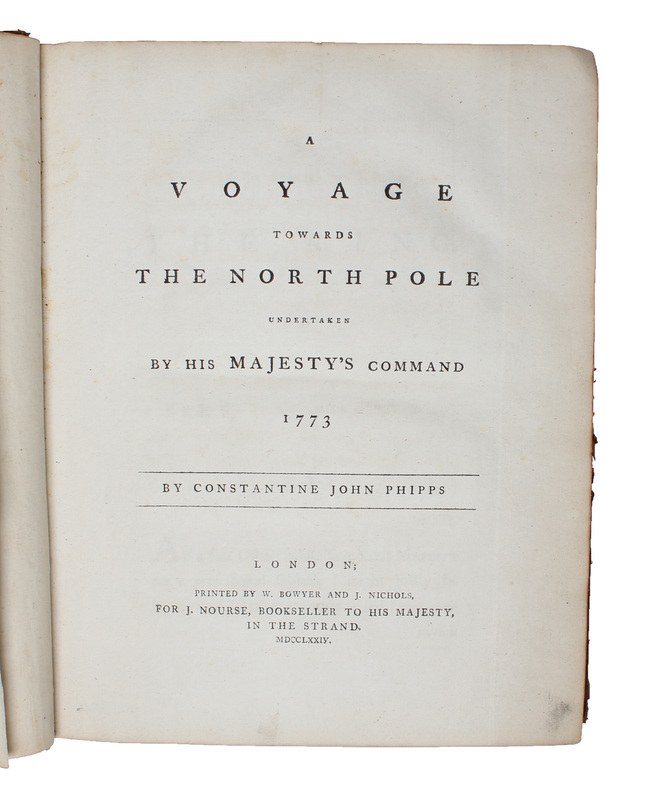
177453867London, Bowyer and J. Nichols, 1774. 4to. Contemp. full sprinkled calf. Raised bands. Richly gilt compartments. Titlelabel with gilt lettering. Light wear to spine ends. Light wear to edges. Corners a bit bumped. Folded engraved maps as frontispiece. VIII,253 pp.,14 folded engraved plates (incl. 2 charts), folded letterpress tables. Wide-margined with a few scattred brownspots. A few leaves and plates with light browning.
London, Bowyer and J. Nichols, 1774. 4to. Contemp. full sprinkled calf. Raised bands. Richly gilt compartments. Titlelabel with gilt lettering. Light wear to spine ends. Light wear to edges. Corners a bit bumped. Folded engraved maps as frontispiece. VIII,253 pp.,14 folded engraved plates (incl. 2 charts), folded letterpress tables. Wide-margined with a few scattred brownspots. A few leaves and plates with light browning.
183819490London: Henry Colburn Publisher. Near Fine. 1838. First Edition. Hardcover. Bound in very attractive decorated leather. Gilt devices etc. Light rubbing to the edges and spine ends. Nice inscription on the fep dated 1851. The binding appears to be contemporary. All the gilt on the spine is nice bright and fresh. ; 8vo 8" - 9" tall; 436443 pages . Henry Colburn, Publisher hardcover
97549London Murray 1821 & 1824 . First edition. 4to. viii xxx ii half-title 310 ii clxxx pp. errata slip at end 20 engraved or aquatint maps and plates; viii clxxxi- cccx pp. half-title 6 engraved plates contemporary diced calf gilt rebacked preserving spine rubbed large chart with tear repaired offsetting from plates to title and text light spotting etc. to plates a very good copy.<br /> The rarely found supplement makes good the omissions from Journal.<br /> Books on Ice 2.8; Hill 2004 1311; Sabin 58860 & 58861; Staton & Tremaine 1205. London, Murray, 1821 & 1824 unknown
Folio (310 x 400 mm). (2), 133, (3) pp. WIth colour-printed photographic frontispiece, a folding, partly coloured lithographed map, 18 photogravure plates (5 double-page), 5 numbered full-page tinted plates, and ca. 60 illustrations in text (mostly tinted). Publisher's original pictorial beige cloth with a lion's head on the front board and zebra-patterned endpapers. Well-illustrated first edition, in the original Polish, of "one of the rarest of all African big game hunting books" (Czech) by the Polish count Józef Potocki (1862-1922), a renowned big game hunter and breeder of Arabian horses. In 1895 he went on safari to Somaliland and afterwards wrote the present volume to commemorate the trip. The illustrations are by the notable Polish painter and illustrator Piotr Stachiewicz (1858-1938) and include eighteen beautiful photogravures of his paintings, including five in double-page size. The book was translated into English a few years later as "Sport in Somaliland" (1900), a much sought-after publication and usually much more expensive, but equally rare. - Some foxing throughout, a tear in the fold of the map. Binding slightly soiled and one hinge slightly damaged. A good copy. K. P. Czech, African Big Game Hunting, p. 133.
2958P., Imprimerie Royale, 1751, un volume i 4 relié en plein veau moucheté, dos orné de fers dorés, filets dorés sur les plats, toutes tranches dorées (reliure de l'époque), (petite épidermure au second plat), (1), 36pp., 280pp., 15pp., 1 carte dépliante, 1 tableau dépliant, 5 planches
19104[Paris, Dufour et Cie, 1829]. In-folio, non paginé, demi-basane brune, dos à nerfs, tranches marbrées (minuscules frottements, rares rousseurs, petite mouillure marginale à qq ff. du 1er vol., quelques petites déchirures sans atteinte aux images, planche 135 manquante).
17843611651London 1784. Engraving 253 x 533 mm. to plate mark paper size 290 x 540 mm.; a little light old creasing at right side; in fine condition. <p><p>Rare proof impression of one of the most atmospheric views made by Webber to illustrate Cook's third voyage: the St Peter and Paul ostrog as seen during the expedition's first visit to Avacha Bay.</p> <p>This wonderful panorama of St Peter and St Paul with Cook's ships at anchor in the bay would later appear as plate 74 in the atlas to the official account of the third voyage. Webber's image depicts the small Kamchatkan settlement with its inhabitants fishing in front of their distinctive dwellings all in an untouched landscape with wooded coastline and distant snow-covered mountains. It offers an arcadian vision of the place wildly at variance with what it would become: modern Petropavlovsk-Kamchatsky now a major commercial port and the home of Russia's nuclear submarine fleet. It was at St Peter and St Paul that the battered vessels called in late April 1779 and here that Major Behm agreed to take the news of Cook's death overland to St. Petersburg.</p> <p>This is an early state of the print before letters. The temporary credits here scratched into the plate are differently worded to the final version that would appear in the publication: here there is no caption identifying the view and the image is identified as "Drawn from Nature by J. Webber" and "Engraved by B.T. Pouncy". In the finished version these would be differently expressed as "J. Webber del." and "B.T. Pouncy sc.". The proof engraving is printed on a noticeably different paper and its inking is distinctly finer than the examples of the finished version with which we have compared it. The result is a greater tonal quality.</p> <p>Joppien and Smith discuss the Kamchatkan visit at some length in both text and catalogue volumes of their study of the art of Cook's third voyage. In their description of the related watercolour view now in the Dixson Library in Sydney they note that the original version has probably been lost and that the Dixson watercolour is probably related to the engraving process. </p> <p>This is a desirable and rare version of one of Webber's most successful images from Cook's third voyage. `</p> </p> . unknown
17843712595London: Stockdale Scatcherd and Whitaker Fielding & Hardy 1784. A few spots and stains but a good set. Four volumes octavo with two folding maps and 49 plates in a smart modern binding of polished half calf with gilt labels edges rough-trimmed only with the often discarded half-titles present. <p><p>First octavo edition of the third voyage account with a large chart of the world as discovered by Captain Cook and a finely engraved folding map of the Hawaiian Islands. Intense public interest in the fabulous discoveries of the third voyage and widespread consternation over the death of England's beloved mariner resulted in copies of the quarto edition selling out quickly. The demand prompted two London octavo editions of 1784-1785 including this set printed for John Stockdale and a group of entrepreneurial publishers. The text was abridged omitting some technical and navigation details and as a result reads more like an adventure than the official quarto edition. The list of subscribers is considerable indicating the fervent public interest and a modest price considerably reduced from that of the expensive quarto edition.</p> <p>In addition to the two impressive maps the plates have been re-engraved for the smaller format. Aside from the large chart accompanying the first volume showing the progress of the expedition the two folding plates are noteworthy. The first depicts the death of Cook and was engraved after the original by Dodd. It ignominiously depicts the last moments of the great navigator here shown lying face down and clutching the shore whilst dragged by the calves by a Hawaiian warrior in a tapa cape. The second folding plate is a map of the Hawaiian Islands with a separate chart of Karakakooa Bay marked with soundings details of native villages and areas under cultivation - and the location 'Here Capt. Cook was killed' duly noted.</p> <p>This edition was originally issued in weekly parts with printed wrappers; half-titles for this edition seem to be usually absent though this set includes those for volumes 2 to 4 none is called for in volume 1. The title pages are dated 1784 although the span of publication passed into the following year.</p> </p> . Stockdale, Scatcherd and Whitaker, Fielding, & Hardy unknown
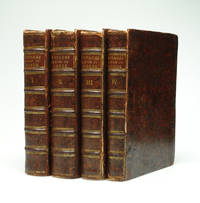
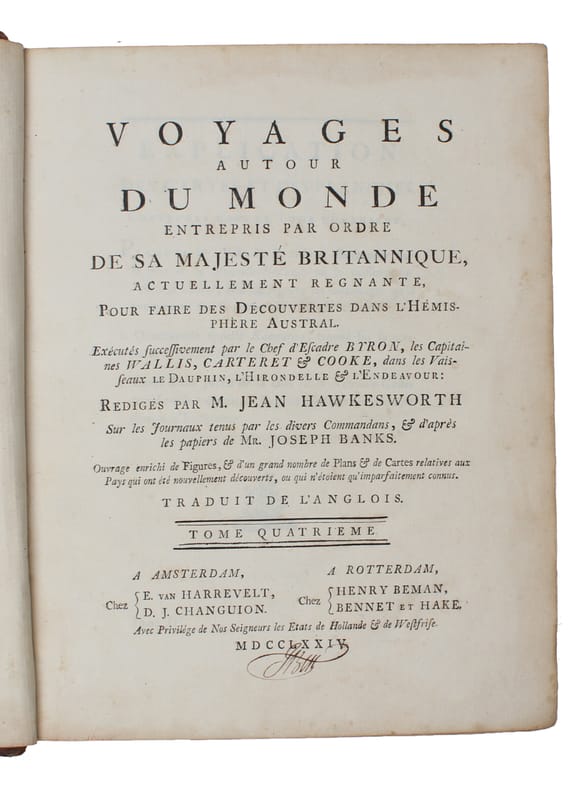
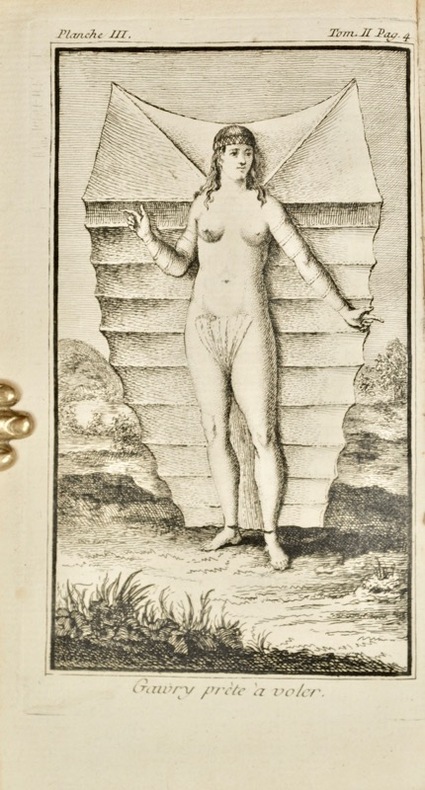
177419257Amsterdam Rotterdam E. van Harrevelt Henry Beman 1774. 4to. Bound in 4 cont. full mottled calf. 6 raised bands gilt titlelabels. Backs a little rubbed some cracking to leather along hinges but covers not detached. Corners bumped. Ocasionally somewhat brownspotted a few tears in plates no loss. A few corners dampstained. With all 4 halftitles. 8XXXII388 - 6536 - 6394 - VIII3673 pp. and 52 engraved plates mostly large and folded among these are 28 folded maps. all. <br/><br/><em> First French edition of Cooke's first travel a title-issue identical with the Paris-edition from the same year only with a different title-page and a printed Privilege in Dutch for the Dutch publisher. It is the 4to-edition not one of the 8vo -editions published the same year. - Sabin 30941. </em> hardcover
177419257Amsterdam, Rotterdam, E. van Harrevelt, Henry Beman, 1774. 4to. Bound in 4 cont. full mottled calf. 6 raised bands, gilt titlelabels. Backs a little rubbed, some cracking to leather along hinges, but covers not detached. Corners bumped. Ocasionally somewhat brownspotted, a few tears in plates (no loss). A few corners dampstained. With all 4 halftitles. (8),XXXII,388 - (6),536 - (6),394 - VIII,367,(3) pp. and 52 engraved plates, mostly large and folded, among these are 28 folded maps. (all).
London, W. Bulmer and Co., 1806. 4to. No wrappers as extracted from ""Philosophical Transactions"" 1806 - Part II. Pp. 239-268. Having also the titlepage to the volume (Part II, 1806). A faint bit of soiling to outer right margin of the first 2 leaves, otherwise clean and wide-margined.
Paris, Arthus Bertrand, 1860. 8vo. In later half cloth with the original printed wrappers pasted on to boards. With dedication from the author to front board: ""a. m. le pr. Henri Barth / hommage XXX de l'Auteur / at. Malte:Brun"". Small stamp to front board and verso of front board. Printed on good paper. Internally very fine and clean. 32 pp. (missing the map).
Amsterdam, Rotterdam, E. van Harrevelt, Henry Beman, 1774. 4to. Bound in 4 cont. full mottled calf. 6 raised bands, gilt titlelabels. Backs a little rubbed, some cracking to leather along hinges, but covers not detached. Corners bumped. Ocasionally somewhat brownspotted, a few tears in plates (no loss). A few corners dampstained. With all 4 halftitles. (8),XXXII,388 - (6),536 - (6),394 - VIII,367,(3) pp. and 52 engraved plates, mostly large and folded, among these are 28 folded maps. (all).
1706129303Paris, Frédéric Léonard 1706 In-folio, veau fauve, dos orné, tranches jaspées Reliure de l'époque, 12 ff., 592 pp., ccxxiij pp., 12 ff. de table. L'illustration comprend un frontispice gravé d'après Boulogne le jeune gravée en taille-douce par J.B. de Poilly, 12 planches hors texte à double page gravées d'après Leblond et Lebrun, un plan de la ville de Saint-Denis dressé par Dumesnil Voyer et gravé par Anselin et 13 vignettes d'après Rubens, Hallé, Boulogne le jeune et Oppenord, 12 lettrines et 5 culs-de-lampe gravés en taille-douce.
2 volumes in-8 (193 x 117 mm), demi-basane marbrée de l'époque à coins, dos lisses ornés de filets gras dorés, pièces de titre et de tomaison de veau havane encadrées d'une roulette torsadée, plats de papier caillouté (reliure de l'époque), (4), lxxj, 334 p., planche frontispice gravée et (4), 496 p., (4) pages d’avis de l'imprimeur et d’errata pour les 2 tomes. Edition originale sous pages de titre renouvelées à la date de 1795, entièrement conforme à la première. Frontispice gravé par Delaunay d'après Marillier: "Emblème du gouvernement Félicien". Les deux feuillets d'errata sont reliés en fin du tome second. "La seule utopie physiocratique, conçue dans le but de propager les idéaux de l'École par son plus habile représentant". Lemercier de La Rivière était conscient du fait que les productions théoriques des physiocrates étaient trop arides pour le grand public. Par cette oeuvre, la dernière qu'il publia, il ambitionna de diffuser la doctrine à travers un récit utopique situé dans le pays de la "Félicie" : son régime politique et économique, les institutions, les moeurs de ses habitants et les valeurs philosophiques et morales qui le fondent. "Lemercier de La Rivière attribue au couple économique/politique une vocation morale: ‘Le bonheur particulier des individus’, écrit-il, ‘ne peut être établi que sur le bonheur général de l'espèce’. Cet universalisme l'amène à envisager une union des peuples fondée sur le commerce. A la fin de sa vie, alors qu'il travaille à une constitution pour la France, il définit la paix et la confiance comme fondements essentiels du commerce et propose d'interdire les guerres de conquête. Il introduit la fraternité, la bienfaisance et la mutuelle assistance que les hommes se doivent entre eux et explicite l'idée d'une confédération internationale fondée sur le principe d'une fraternité des nations " (B. Herencia, "L'Europe des physiocrates : Lemercier de La Rivière ", ‘Encyclopédie d'histoire numérique de l'Europe’ [en ligne]). Paul-Pierre Lemercier de La Rivière (1719-1801), économiste physiocrate est également l'auteur de l'une des Bibles du mouvement physiocratique: ‘L'Ordre naturel et essentiel des sociétés politiques’ (1767) loué par Diderot comme par Adam Smith. (Cf. Hartig & Soboul, ‚Utopies‘, p. 17. Einaudi, 3304. INED, 2790. Martin-Walter, 20861 [tous pour l'édition de 1792]). WorldCat ne recense aucun exemplaire dans le monde semblable à celui-ci, sous pages de titre renouvelées à la date de 1795. Quelques rousseurs. Très bon exemplaire, bien relié à l'époque.
2 ouvrages reliés en 2 volumes in-8 (196 x 123 mm), plein maroquin rouge de l'époque, dos lisses ornés de compartiments richement fleuronnés et cloisonnés, pièces de titre de maroquin vert bronze, plats encadrés de triples filets garnis de fleurons d'angle, roulettes sur les coupes et les chasses, tranches dorées, gardes de tabis bleu. Exemplaire d'auteur (?) 1- Édition originale et unique de ce projet de réformes politiques, économiques et administratives, donné sous forme d'un voyage imaginaire utopique: un naufragé aborde le pays des Sérosages… Planche gravée en regard de la p. 531, qui figure un curieux: "Tableau de culture, pendant vingt-quatre ans". L'originalité du projet, par ailleurs inspiré des idéaux physiocratiques, réside en ce que l'auteur, en disciple de Rousseau, fait reposer son modèle sur l'hypothèse anthropologique d'une bonté originelle de l'homme et sur un principe d’autorité fondé sur celui de la famille. Ainsi, le narrateur s'adresse-t-il au roi Alcidor pour préconiser prioritairement l'éradication des vices inhérents à la société avant toute réforme structurelle: "Sire , en détruisant le luxe, les moeurs s'épurent d'eux-mêmes , les villes se débarrassent, les campagnes se repeuplent, les terres se défrichent, la population augmente, l'émulation renaît, la circulation se rétablit, le Royaume devient un Paradis terrestre & Votre Majesté verra sous son règne un second âge d'or" (p. 696). (Goldsmiths, 10717. Higgs, 5385. INED, 3938. Kress, 6818. Weller, II, p. 188). 2- Édition originale. L'auteur soumet, sous forme de dictionnaire philosophique classé par article, un vade-mecum des idéaux économiques, politiques et sociaux fondés sur le populationnisme, la défense de l'agriculture et la liberté du commerce. On y trouve des articles sur l'accouchement, l'adoption, l'adultère, l'agriculture, les banqueroutes, le cadastre, le célibat, les courtisanes, le divorce, la famine, les fêtes, l'hôpital, les loteries, les salaires... "Très varié et fort intéressant. Théories sur l'excellence de la population et de l'agriculture, sur la nécessité de modérer l'industrie, sur les dangers du luxe, des colonies, etc." (cf. longue analyse in INED, 3937 sq.). (Goldsmiths, 10955. Higgs, 5646. Kress, 6975). Homme des Lumières, acquis aux idées physiocratiques, Gaspard Louis Rouillé d'Orfeuil (1732-1791) devint conseiller, puis maître des requêtes au parlement de Paris, président au Grand Conseil, intendant de La Rochelle, puis de Champagne. Tenu en grande estime par Diderot, il a laissé une réputation "d'intendant modèle". Exemplaire de l'auteur, sans doute, comportant deux rajouts manuscrits repliés en marge (p. 136 et 320) et une petite correction (p. 513). Les pièces d'auteur aux dos portent "L'Ami des Francois". Deux papillons imprimés, collés l'un au verso du titre de "l'Alambic" ; l'un pour signaler que "le manuscrit de cet ouvrage a été enlevé beaucoup trop tôt à l'auteur" et regretter les trop nombreuses erreurs non corrigées. L'autre p. 551 pour annoncer d'autres titres du même auteur à paraître. Quelques petits trous en pied d'une reliure. Certains feuillets légèrement froissés. Autre provenance: Viscount Mersey Bignor Park (ex-libris imprimé) Bel exemplaire très bien relié en maroquin rouge à l'époque, imprimé sur beau papier vergé.
183688741Charpentier | Paris 1836 | 13.2 x 21 cm | 4volumes reliés
176341433A Londres et se vend à Paris, Chez la Veuve Brunet, 1763. 3 vol. in-12 de (2)-XVI-312 pp. ; (2)-330 pp. ; (2)-318 pp., veau marbré, dos lisse orné, pièces de titre et de tomaison en maroquin rouge et havane, tranches rouges (reliure de l'époque).
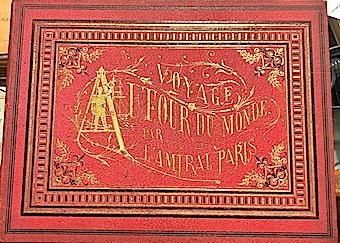
188315515Noblet Paris 1883 1 vol. Grand in-4 oblong (27 x 36,5 cm) de 2 ff.n.ch. 8 pp., 25 feuillets non chiffrés sous serpentes. Pleine percaline rouge de l'époque, dos lisse avec titre doré, premier plat orné d'un décor doré, gardes moirées, tranches dorées (reliure éditeur).
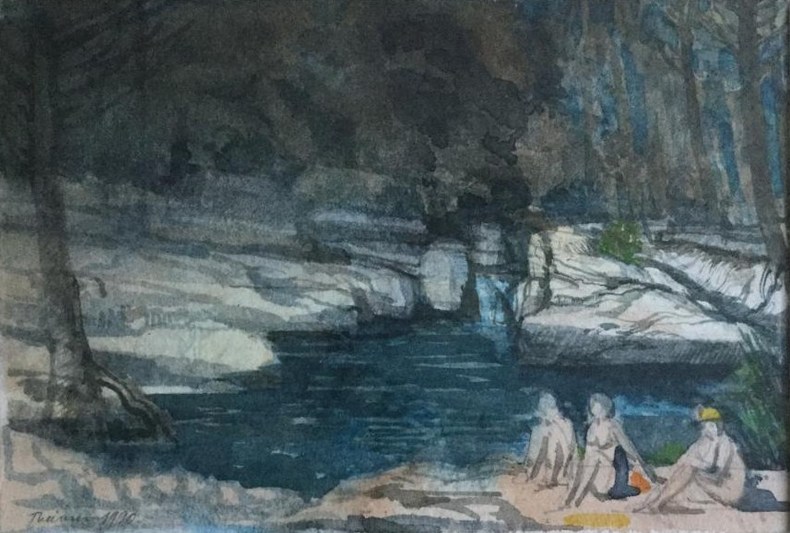
1990217131990 Aquarelle, signée et datée en bas à gauche, titrée Corsica, 1990, 13 x 19 cm., encadrée.
190380856San Francisco jeudi 8 et samedi 11 janvier 1903 | 13 x 20 cm | 6 pages sur 3 feuillets