Alexandria InnesBiblio.com

1 898 résultats
ria9781137495952_inpHardcover. New. New Book; Fast Shipping from UK; Not signed; Not First Edition; This study focuses on the field of security studies through the prism of migration. Using ethnographic methods to illustrate an experiential theory of security taken from the perspective of migrants and asylum seekers in Europe it effe hardcover
B9781137495952Hardback. New. This study focuses on the field of security studies through the prism of migration. Using ethnographic methods to illustrate an experiential theory of security taken from the perspective of migrants and asylum seekers in Europe it effectively offers a means of moving beyond state-based and state-centric theories in International Relations. hardcover
2015x-1137495952Palgrave Macmillan 2015. Hardcover. New. 192 pages. 9.00x6.00x0.50 inches. Palgrave Macmillan hardcover
44060165like new. unknown
43731064like new. unknown
44125978like new. unknown
1665537418.Ghardcover. Good. Access codes and supplements are not guaranteed with used items. May be an ex-library book. hardcover
1665546654.Ghardcover. Good. Access codes and supplements are not guaranteed with used items. May be an ex-library book. hardcover
1665544260.Ghardcover. Good. Access codes and supplements are not guaranteed with used items. May be an ex-library book. hardcover
20121354221PN. New. 2012. Soft Cover. Date is original print. This is a reprint edition. . PN paperback
1024653366.Ghardcover. Good. Access codes and supplements are not guaranteed with used items. May be an ex-library book. hardcover
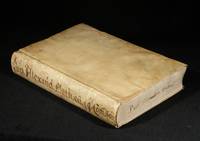
1566002448Venice: Curtio Troiano 1566 Bound in vellum with hand written spine titles 351 632 pp. numerous illustrations. Title page dated 1565 colophon dated 1566. Second Tataglia translation with the first Tatarglia translation being the first translation of Euclid into a modern language. This copy with cancel between pages 8 and 9 few marginal notes marginal worming affecting at most two letters and that on few pages front cover first nine leaves and last leaves from page 309 to end with damp stain light intermittent damp stain between. Otherwise still a very good copy. Curtio Troiano hardcover
1998LFA00aa5Hors-série n° 9 - Mars 1998 : une revue de 130 pages, format 210 x 275 mm, illustrée, brochée couverture couleurs, bon état
20121355341PN. New. 2012. Soft Cover. Date is original print. This is a reprint edition. . PN paperback
20111353335PN. New. 2011. Soft Cover. Date is original print. This is a reprint edition. . PN paperback
1993262123PN. New. 1993. Soft Cover. Date is original print. This is a reprint edition . PN paperback
1981763991PN. New. 1981. Soft Cover. Date is original print. This is a reprint edition. . PN paperback
1988786270PN. New. 1988. Soft Cover. Date is original print. This is a reprint edition. . PN paperback
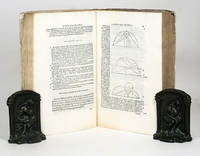
399Numerous woodcut illus. & diagrams in the text. 4 p.l. the last a blank 334 i.e. 332 pp. Folio cont. limp vellum title a bit soiled last two leaves with some light dampstaining ties gone. Pesaro: H. Concordia 1588. First edition and a very fine and fresh copy of this uncommon book; this edition providing the complete extant text was the final work to be edited by Commandino and completes his life's work of reviving Renaissance mathematics by making available the best mathematical writings of antiquity. "In the silver age of Greek mathematics Pappus stands out as an accomplished and versatile geometer. His treatise known as the Synagoge or Collection is a chief and sometimes the only source for our knowledge of his predecessors' achievements. The Collection is in eight books perhaps originally in twelve of which the first and part of the second are missing. "Book VII is the most fascinating in the whole Collection not merely by its intrinsic interest and by what it preserves of earlier writers but by its influence on modern mathematics."D.S.B. X p. 293-95and see pp. 294-98 for a full discussion of the contents. This concerns in a passage on Apollonius' Conics the attempt to conceive of the product of more than three straight lines as geometrical entities known as "Pappus' Problem." Descartes devoted a major part of his own Géométrie to this and solved it by the use of algebraic notation. "Pappus' problem thus inspired the new method of analytical geometry that has proved such a powerful tool in subsequent centuries. In his Principia 1687 Newton also found inspiration in Pappus; he proved in a purely geometrical manner that the locus with respect to four lines is a conic section which may degenerate into a circle."D.S.B. X p. 296. Topics discussed in the other books include astronomy and mechanics. A very fine copy preserved in a green morocco-backed box. Rose The Italian Renaissance of Mathematics p. 214"Within 25 years of Commandino's death the first step in founding the mechanics of the seventeenth century was to be taken by Galileo when in criticising the inclined plane theorem of Pappus the Tuscan mathematician adumbrated the notion of inertia. This step was not taken in an intellectual vacuum but represents the culmination of the mathematical renaissance that had been achieved by the Restauratores."& see the whole of Chap. 9 for Commandino and this book. Smith History of Mathematics I pp. 136-37. hardcover books
15882080Pesaro: Girolamo Concordia 1588. First edition. original boards. Very Good. FIRST EDITION of arguably the most important source book for the works of the Greek mathematicians. The magnificent Horblit copy in contemporary probably original boards. Pappus of Alexandria fl 320AD was "the most important mathematical author writing in Greek during the later Roman Empire known for his Synagoge "Collection" a voluminous account of the most important work done in ancient Greek mathematics. Pappus seldom claimed to present original discoveries but he had an eye for interesting material in his predecessors' writings many of which have not survived outside of his work. As a source of information concerning the history of Greek mathematics he has few rivals." Pappus's principal work "was the Synagoge c. 340 a composition in at least eight books corresponding to the individual rolls of papyrus on which it was originally written. The only Greek copy of the Synagoge to pass through the Middle Ages lost several pages at both the beginning and the end; thus only Books 3 through 7 and portions of Books 2 and 8 have survived. A complete version of Book 8 does survive however in an Arabic translation. Book 1 is entirely lost along with information on its contents. Such a range of topics is covered that the Synagoge has with some justice been described as a mathematical encyclopedia. "The Synagoge deals with an astonishing range of mathematical topics; its richest parts however concern geometry and draw on works from the 3rd century BC the so-called Golden Age of Greek mathematics. The longest part of the Synagoge Book 7 is Pappus's commentary on a group of geometry books by Euclid Apollo Eratosthenes of Cyrene and Aristaeus collectively referred to as the "Treasury of Analysis." "Analysis" was a method used in Greek geometry for establishing the possibility of constructing a particular geometric object from a set of given objects. The analytic proof involved demonstrating a relationship between the sought object and the given ones such that one was assured of the existence of a sequence of basic constructions leading from the known to the unknown rather as in algebra. The books of the "Treasury" according to Pappus provided the equipment for performing analysis. With three exceptions the books are lost and hence the information that Pappus gives concerning them is invaluable. "Pappus's Synagoge first became widely known among European mathematicians after 1588 when a posthumous Latin translation by Federico Commandino was printed in Italy. For more than a century afterward Pappus's accounts of geometric principles and methods stimulated new mathematical research and his influence is conspicuous in the work of René Descartes 1596-1650 Pierre de Fermat 1601-1665 and Isaac Newton 1642 Old Style-1727 among many others. As late as the 19th century his commentary on Euclid's lost Porisms in Book 7 was a subject of living interest for Jean-Victor Poncelet 1788-1867 and Michel Chasles 1793-1880 in their development of projective geometry" Britannica. Provenance: Harrison D. Horblit with his bookplate on front pastedown. Pesaro: Girolamo Concordia 1588. Folio 315x220mm contemporary probably original boards; old paper spine label and ink "Pappus" written on spine; "Pappi Alexandrini" written neatly on bottom edge. Soiling and light wear to boards. Early cross-out of early signature on title very light marginal dampstaining to a few early gatherings. An outstanding copy with exceptionally wide margins. Girolamo Concordia unknown books
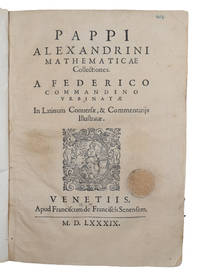
158862780Colophon: Pisauri (Pesaro), Hieronymum Concordiam, 1588. (Having the reprinted title-page: Venetiis, Franciscum de Franciscis Senemsem, 1589). Folio. Contemporary limp vellum. Repairs to upper part of spine and small nicks to back repaired. Edges of covers with tiny loss of vellum. Covers slightly soiled. Calligraphed title on back. Title-page with and old, partly erased stamp. Woodcut printer's device on title-page. Ff (3), 334 (332) (= 664 pp). Numerous woodcut diagrams and illustrations in the text. Printed on good paper. Ff. 2-3 with an old repair to inner margin (no loss). F2 browned, but otherwise remarkably clean with only a few brownspots. A few small worm-tracts to some margins. In spite of its flaws, a very good copy of this monumental work.
2025__1470464594John Wiley & Sons 2025. Paperback. New. 182 pages. 10.00x7.00x0.38 inches. John Wiley & Sons paperback
50115151-nnew. unknown
50115151like new. unknown
158862780Colophon: Pisauri Pesaro Hieronymum Concordiam 1588. Having the reprinted title-page: Venetiis Franciscum de Franciscis Senemsem 1589. Folio. Contemporary limp vellum. Repairs to upper part of spine and small nicks to back repaired. Edges of covers with tiny loss of vellum. Covers slightly soiled. Calligraphed title on back. Title-page with and old partly erased stamp. Woodcut printer's device on title-page. Ff 3 334 332 = 664 pp. Numerous woodcut diagrams and illustrations in the text. Printed on good paper. Ff. 2-3 with an old repair to inner margin no loss. F2 browned but otherwise remarkably clean with only a few brownspots. A few small worm-tracts to some margins. In spite of its flaws a very good copy of this monumental work. <br/><br/><em>First edition title-issue with the fresh title-page stating 1589 but with nothing else reprinted and otherwise through and through the 1588-printing of Commandino's seminal Latin translation of the work that constitutes the culmination of Greek Mathematics. This printing which contains the complete extant text of Pappos in Latin translation is responsible for reviving ancient mathematics in the Renaissance and shaping much modern mathematics profoundly influencing the likes of Descartes and Newton. "Pappos was the greatest mathematician of the final period of ancient science and no one emulated him in Byzantine times. He was the last mathematical giant of antiquity." George Sarton Ancient Science and Modern Civilization. p.82. "Pappus of Alexandria in ab. 320 composed a work with the title Collection Synagoge which is important for several reasons. In the first place it provides a most valuable historical record of parts of Greek Mathematics that otherwise would be unknown to us. For instance it is in Book V of the Collection that we learn of Archimedes' discovery of the thirteen semiregular polyhedra or "Archimedian solids". Then too the Collection includes alternative proofs and supplementary lemmas for propositions in Euclid Archimedes Appolonius and Ptolemy. Finally the treatise includes new discoveries and generalizations not found in any earlier work. The Collection Pappus' most important treatise contained eight Books but the first Book and the first part of the second Book are now lost" Boyer A History of Mathematics p. 205. "Each book 8 is preceded by general reflexions which give to that group of problems its philosophical and historical setting. The prefaces are of deep interest to historians of mathematics and therefore it is a great pity that three of them are lost . Book VII is far the longest book of the Collection . and here we find in it the famous Pappo's problem: "given several straight lines in a plane to find the locus point such that when straight lines are drawn from it to the given lines at a given angle the products of certain of the segments shall be in a given ratio to the product of the remaining ones". This problem is important in itself but even so because it exercized Descartes' mind and caused him to invent the method of coordinates explained in his Geométrie 1637. Think of a seed lying asleep for more than thirteen centuries and then helping to produce that magnificent flowering analytical geometry . The final Book VIII is mechanical and is largely derived from Heron of Alexandria. Following Heron Pappos distinguished various parts of theoretical mechanics geometry arithmetic astronomy and physics. The Book is considered the climax of Greek mechanics and helps us to realize the great variety of problems to which the Hellenistic mechanicians addressed themselves. If Book VIII is the climax of Greek mechanics we may say as well that the whole collection is a treasury and to some extent the culmination of Greek mathematics. . The ideas collected or invented by Pappos did not stimulate Western mathematicians until very late but when they finally did they caused the birth of modern mathematics- analytical geometry projective geometry centrobaric method. That birth or rebirth from Pappos' ashes occurred within four years 1637-40. This was modern geometry connected immediately with the ancient one as if nothing had happened between." Georg Sarton op.cit. - It is from Pappus we have the famous words of Archimedes: "Give me a place to stand and I will move the earth" Se PMM No 72. - "Without pretending to great originality the whole work shows on the part of the author a thorough grasp of all the subjects treated independent of judgement mastery of technique; the style is terse and clear; in short Pappus stands out as an accomplished and versatile mathematician a worthy representative of the classical Greek geometry." Heath A History of Greek mathematics Vol. II: p.358. Adams P 224 The sheets of the Pisauris edition with a fresh title. </em> hardcover