JOURNAL DE BORD DU JUPITER DU 4 JUIN AU 1ER OCTOBRE 1856Livre Rare Book
716 résultats
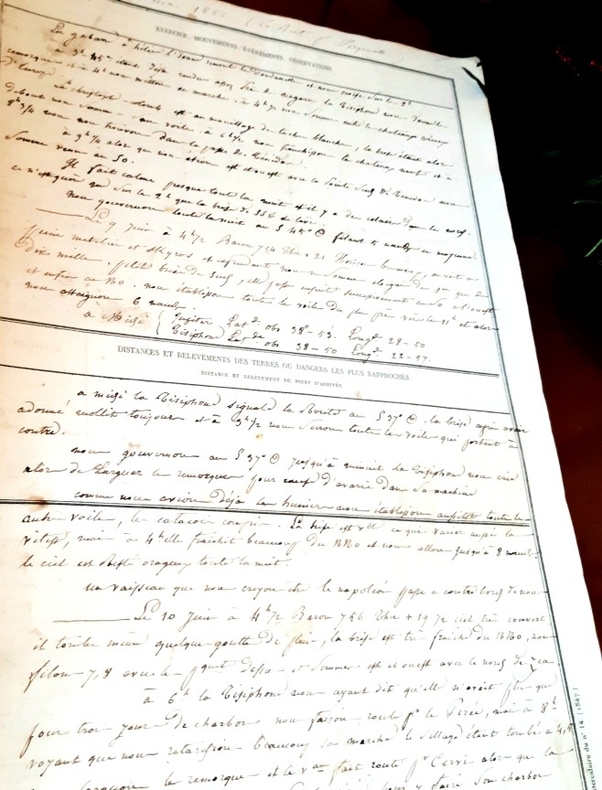
1856466Entièrement manuscrit, rempli sur le registre intitulé Journal du Capitaine , des officiers et des élèves, modèle n° 7 de l'ordonnance du 31 octobre 1827 sur le service à bord, complet depuis le départ jusqu'à sa destination de Rochefort (Kamiesh, Cervé, Malte, Porquerolles, Toulon. Ile d'Aix, Rochefort) soit 26 pages de 28X74 cm .(le registre compte 100p. ).
3459612 pages in8 - En tête: "Ministre d'Etat et de la Maison de l'Empereur" - bon état -
In 8, pp. VIII + 298. Frontespizio polveroso. Br. ed. muta con segni d'uso e manc. al d. Es. in barbe. Edizione originale di questa rara pubblicazione dedicata alla storia naturale della Tauride, in pratica della Crimea. L'opera divisa in tre parti tratta nella prima sezione della descrizione fisica e geologica del paese, comprese le fonti termali e non. A seguire tratta del clima. La seconda parte descrive poi il regno vegetale e i prodotti del suolo. Alcune pagine sono dedicate alla descrizione dei vari vitigni presenti, cosi' come sono descritte le foreste e gli alberi che ivi allignano, i fiori selvatici e le piante medicinali. La terza parte, infine, e' dedicata al regno animale. Nell'intenzione dell'autore quest'opera sarebbe dovuta servire di complemento a una descrizione della russia e dell'Asia minore comparsa circa dieci anni prima. In realta' si tratta di un'opera a se' stante, nonostante l'annuncio che compare al frontespizio. L'autore fu un diplomatico russo, cultore di mineralogia e scienze geologiche.
189135600768, vers 1891 ; carnet in-12 recouvert de carton souple façon cuir de Russie noir, 29 pages remplies d'une fine écritureRécit d'un voyage diplomatique et militaire en Russie, en Lettonie et dans le Caucase vers 1891, voyage qui semble avoir été effectué dans le cadre de l'alliance franco-russe.L'auteur qui ne se nomme pas voyage en compagnie de M. de La Ferronnays et de M. de Saint-Phalle.Saint Pétersbourg : anecdotes sur la Cour, banquet à l'Hôtel de Ville, visite de l'ambassade de France, du musée de l'Hermitage, de l'Arsenal, à Tsarskoye Selo. À Moscou il décrit la ville et les fastes du Kremlin. Le voyage se poursuit à Sébastopol, Yalta, Bakou où il décrit longuement l'industrie pétrolière, Tiflis, Erevan...Parmi les personnalités rencontrées: la famille impériale, le baron Wulf, Gervais, le comte de Vauvineux, Moustiers, le grand duc Georges, le comte Alexis Tolstoi, le comte Tatischef, etc.Le première page du volume, notée à la mine de plomb, relate une visite à Wahnfried chez Wagner à Bayreuth à l'occasion d'une représentation de Tristan et Iseult. Ce récit ne semble pas avoir de rapport avec le texte qui suit.
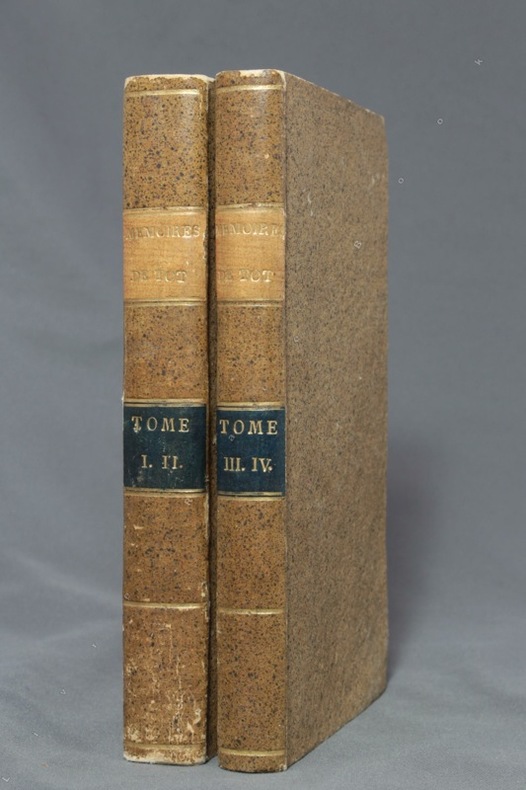
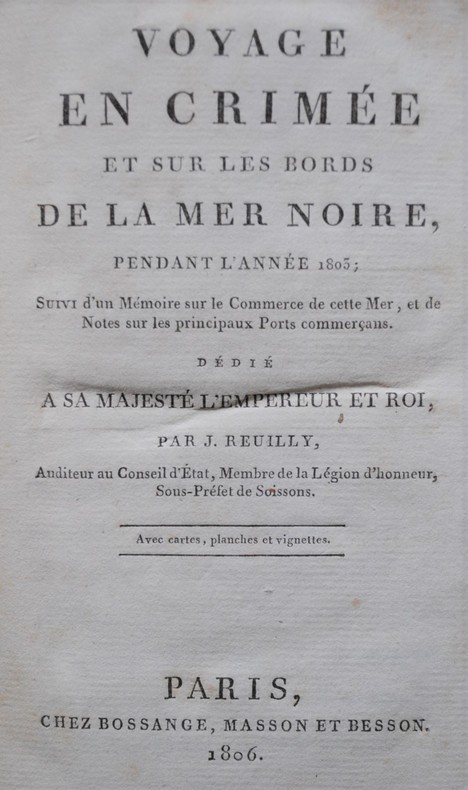
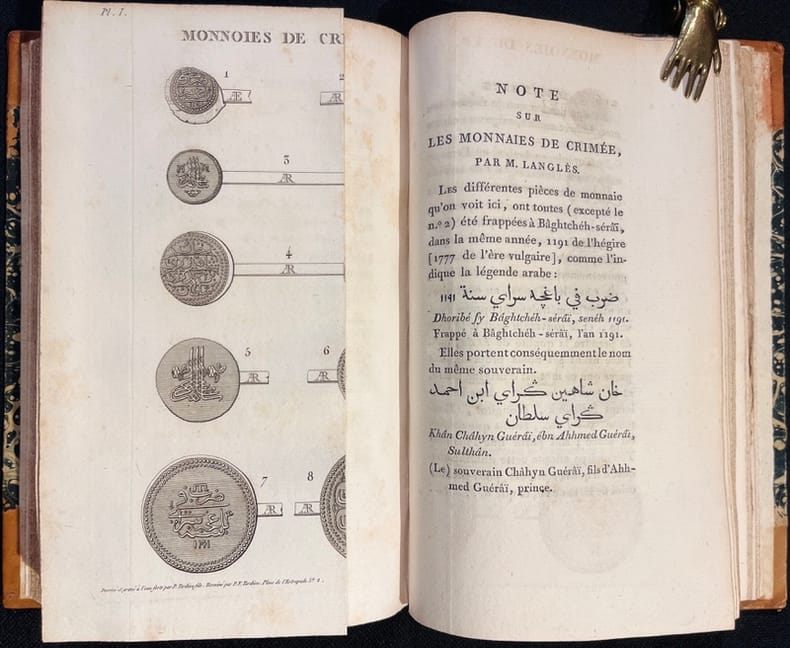
180694431Paris, Bossange, Masson et Besson 1806 In-8, demi- maroquin rouge à coins, dos lisse orné de filets argentés, 4- XIX- 302 pp. Un plan dépliant de Sébastopol dressé par Tardieu, 3 tableaux dépliants état des marchandises exportées d’Odessa, dans le courant de l’an 1802 - état des marchandises importées d’Odessa, dans le courant de la navigation 1802 – prix des marchandises d’exportation et d’importation, le 14 mars 1803, une grande carte dépliante faite en 1803 par Jean Reuilly dressée par J. B. Poirson petite déchirure angulaire avec restauration adhésive, trois planches dont deux de monnaies et médailles trouvées par J. Reuilly accompagnée d’une note de M. Langlès sur les monnaies de Crimée et d’une note de M. Millin sur les médailles.
17022The account of 'Events in 1855 and 1856' dated by Wrench from Park Lodge Baslow Derbyshire 1902. The duplicated letter dated 12 December 1880. The printed advertisement for talk at the School Baslow and dated 14 January 1881. Wrench was the son of a clergyman and well connected being presented to the Prince of Wales and staying at Chatsworth in his old age. His obituary in the British Medical Journal 27 April 1812 describes how he went out to the Crimea in 1854. 'He had been gazetted Assistant Surgeon to the 34th Regiment in November and joined it on its arrival in the Crimea. He served during the terrible winter of that year and was present at the capture of the quarries the successful assault on the Redan of June 18th and the final capture of Sebastopol on September 8th 1855. He was mentioned in despatches and received the Crimean medal and clasp for Sebastopol and the Turkish medal.' Wrench's own account of his experiences in the Crimea Item One below – entirely unpublished – is a personal one vividly-written and full of detail. It does not appear to be present in the collection of his family papers at Nottingham University Library. ONE: Manuscript consisting of 'Events in 1855' 4pp and '1856 12pp making a total of 16pp. 8vo on twelve leaves attached with a stud. In good condition on aged and dogeared paper. The first page of the 1855 manuscript is headed '12 sic Pages in this Year' but comprises four numbered pages. The beginning of account sets the scene and gives an indication of the level of detail: 'The 1st Janry found me doing duty with the 28th Foot or Slashers in the 3rd. Divt of the army before Sebastopol having landed at Balaclava from the Ship "Queen of the South" on the 20th. Nov. 1854. On the 6th July I was ordered to do duty with the 50th. Foot but as I did not wish to move the weather being very bad and my tent being as comfortable or rather as little uncomfortable as it could be made except to join my own Regt. the 34th. to which I had been gazetted on the 1st. of December 1854. I applied to be sent to it and was ordered to join which I did on 9th of Janry.' The account is made up from diary entries and is none the less vivid and interesting for that: 'On the following morning a wounded Russian named Alexo was brought into our Hospital and we amputated his leg he did really well and was eventually exchanged at Odessa. Poor Jordan's death threw a great damp on the Regiment as he was the first Officer we had had killed. On the 9th. of April being Easter Monday the 2nd. Bombardment took place. It was a fearfully wet windy day so that no one was able to go out to see what damage was done. On the 10th. I was on trenches and the noise was terrific but nothing to what I have since heard. I had a very narrow escape from a round shot which hopped over the parapet close to where I was.' In June 'after 68 hours bombardment an assault was made on the Quarries by ourselves . I did not go down till about 8 with Robinson Scott & Peel and 100 men. We were marching about the Trenches half the night and were finally sent to the middle ravine just below Mamelon. The scene there was most horrible the ground being strewn with dead & wounded. English French & Russians. One poor Russian boy was dragged up by two Zouaves but fainted just opposite to where we were lying. I got a light and found he was shot through the belly and that nothing could be done for him. I gave him some water and he lie sic by me some time but died before morning. I got an amulet off his neck & his cap pouch which I sent home'. The 1856 account begins in dramatic style: 'The first entry in this Diary relates to the explosion which took place within the British Lines during the Siege of Sebastopol. Feb 3rd. I was not many hundred yards from this explosion when it took place & will here relate now Janry 1900 my recollection of it. It took place in Novr. or Decr. 1855. I had just come in from a ride & had given my horse to my Batman when I noticed a vast cloud of smoke shoot up from the Right Siege train an open air arsenal about 500 yds from my house - a tremendous noise of explosion followed & knowing that there would be a rain of missiles from above to fall immediately I jumped under my doorway - hoping the strong lintel would protect me . a shower of fragments fell around me rattling on my iron roof - and wounding many men in the Regiment - 70 men were killed by the explosion some over half a mile off. The artillery horses were passing in front of my door to water & stampeded hurting several men in their rush. Both my horse and my dog bolted. I got the horse back in a few hours - but my dog taken sic a few weeks before out of Sebastopol returned to her old home and was found there weeks afterwards I brought her to England My house that I had just finished building myself did not sustain much damage. .' The account continues packed with incident. At one point he writes: 'I had written the above in 1859 and continue it forty one years after November 4 1900. The events & fights of May 1856 being written so legibly in my brain that I can read much of what we did & said. Alas all the actors except myself are passed away. My notice has been called to the excursion by reading an Illustrated article in a magazine named "Travel" in which Dr. Hy. Lansell has been describing a tour taken last year over the same ground - so little altered from what I saw in 1856 that his description would do for mine'. The diary concludes in fine style. On 2 May 1856 he goes to Yalta where he finds 'the daughters of the English Clerk of the Works of Prince W's Palace were keeping the Hotel a very rough primitive structure low stone built rooms with a long rough wooden verandah overlooking the lovely Bay - We enjoyed an excellent dinner of Turbot & Oyster Sauce & a bottle of excellent local wine like Hock - as we returned we went over the Emperor's Villa Orianda . One day when I remember seeing for the first time a Persian horizontal Water Wheel in a very pretty village embosomed in Walnut Trees where also I bought an embroidered linen neck scarf which I still possess - On another occasion I accompanied Best & Chapman to the Alma & where I picked up the Russian Cannon Ball now on top of the Study Clock - I tried hard to get someone to accompany me to Bagshi Serai & Chuphut Kale but I had to go alone - I wonder now how I dare. For it was in the heart of the Enemies Country. I remember the Priest spit when I went near them in the Church in the Rock and I rode home at night through the Russian Camp on the river Balbec. I certainly felt no fear but that was the Ignorance of youth'. A final note more than half a page long records a meeting at Chatsworth in 1902 with Grand Duke Michael and his wife the Countess Torby. TWO: Duplicated letter by Wrench a hectograph in purple ink intended for circulation among his 'dear children'. 4pp. 12mo. Bifolium. In fair condition on aged and lightly-creased paper. Signed 'E. M. Wrench'. At the beginning is a half-page drawing by Wrench captioned 'Russian Soldier - In the Valley of the Shadow of Death. near Sebastopol - 1855 on Black Sea in the distance'. He describes a lecture he gave at Bakewell the previous Monday on the Siege of Sebastopol beginning 'I began by describing the terrible state of the hospital at Balaclava in November 1854. I had a ward full of wounded from Inkerman with bad cases of fever & cholera - All the windows had been blown out by the great storm of November the 14th. The sick had no beds and often nothing to eat until 3 or 4 oclock in the afternoon. The harbour of Balaclava was crowded with steamers while the coast near was strewn with the wrecks of the 21 ships that had gone down in the storm. .' The letter continues with much valuable detail and a drawing of a 'Section of "sunk" tent with fire place' on the third page. In the final paragraph he reports that 'Lord Edward Cavendish M.P. took the chair at my lecture. The room was quite full and some of the audience had come 8 or 10 miles to hear me.' THREE: Printed handbill advertisement with duplicated illustration another purple hectograph by Wrench on reverse joke featuring two soldiers and a horse and cart. 1p. 12mo. In good condition on lightly-aged paper. The printed advertisement is crisply printed and the date '14th' is added in red ink. It reads: 'A Lecture will be delivered in the School Baslow On Friday January 14th. 1881 At 7.30 p.m. By E. M. Wrench F.R.G.S. entitled Personal recollections of the Siege of Sebastopol. Illustrated by Drawings &c. Admission One Penny. No Change given at the Door.' The account of 'Events in 1855 [and 1856]' dated by Wrench from Park Lodge, Baslow [Derbyshire], 1902. The duplicated letter dat unknown
17859246Amsterdam, [sans nom], 1785. 4 tomes en 2 volumes in-8 de XXXIV-146; 160 et 133; 112 pages, plein cartonnage beige du temps, moucheté de noir, dos lisses ornés de filets dorés, pièce de titre et de tomaisons beige et noire, tranches jaunes, coins un poil frottés. Inscription ancienne :"D'Ivernois Mre, de Colombier".
AQ29397Two volumes. Manuscript on paper. 109; 119pp. Contemporary half- morocco and morocco-backed marbled paper boards respectively. Cocked and a little soiled remaining tight some rear leaves removed from earlier volume. The first and more interesting of this pair of manuscript journals narrates a voyage from London to Balaklava in the transport ship Mary-Ann of Bristol commanded by Captain Lambert. Having departed the English coast on June 9th 1856 the Mary-Ann passes Cape St Vincent on June 16th bound for the Crimea. By the next day she sails abreast of the strait passing the Rock of Gibraltar by the third day. Another transport ship the Onward is pulled alongside by the Chief Mate returning from the Crimea with troops and horses onboard bound for for England. The message is relayed to the captain that ‘all the troops were waiting in Constantinople for ships to convey them home'. So begins the journal of Second Mate Thomas Nunn Hall recently married on his voyage to Balaklava. Hall mentions the other ships he encounters on voyage - the Lady Eglington is signalled and he notes he remembers her from a tour of the Dardanelles the previous year. Also mentioned are the ships sailing in company with the Mary-Ann The Herefordshire 'lazy 1800 tons' being most named. It becomes more apparent that our narrator - a most unwilling and witless seaman - has sailed this voyage before. Though it remains unclear if Hall served actively in the war he later reminisces about 'standing on the deck of the ship 'Chalmers'.from the Crimea to the Holy Land instead of being on the poop deck of the 'Mary-Ann'.' By the 6th of July they pass the island of Malta three days later sight the Greek mainland though it takes a further four days for Mytilene to come into view. Finally they come to anchor at the Dardanelles and by July 20th reach the Sea of Marmara to take on several guests including a Mrs Hunter “a fine handsome woman of about 26 years of age” whom Hall determines to make speak to him. Fortunately she seems none too perturbed. The troops previously thought to be collected are nowhere to be found and the Mary-Ann is to take on stores for England instead. Steam tug Helen Fancet tows the ship up the Golden Horn though a mishap takes place damaging the ship. They later anchor up among the ships of war. During an evening walk in Pera he witnesses some society event with the French military band playing to 'hundreds of people' including 'many beautiful and elegantly dressed English and French ladies'. Given the relative paucity of interesting narrative presented in his frequently introspective often 'vexed' and occasionally calamitous account we should perhaps consider it a blessing that the journal ends before the voyage was completed. . 8vo. hardcover
1416331849-1868 in-8, basane havane, dos lisse orné de filets et fleurons à froid, chiffre "H.D." en pied, armes estampées dorées encadrées d'une couronne de laurier et de chêne au centre des plats, tranches rouges (rel. de l'époque). Traces de galerie de ver sur les plats, quelques rousseurs.
New English Original bdg. HD. Folio. (34 x 22 cm). In English, Russian, and Turkish. 4 volumes set: (476 p.; 540 p.; 552 p.; 754 p.), ills. A very heavy set. Extra shipping fee will be requested. Endangered Turkic languages: Before the last voices are gone. 4 volumes set. Vol. 1: Theoretical and general approaches. Vol. 2-3: Case studies. Vol 4: Interdisciplinary approaches.= Tehlikedeki Türk dilleri: Son sesler kaybolmadan. 4 cilt takim. Vol. 1: Kuramsal ve genel yaklasimlar. Vol. 2-3: Örnek çalismalar. Vol. 4: Disiplinlerarasi yaklasimlar.
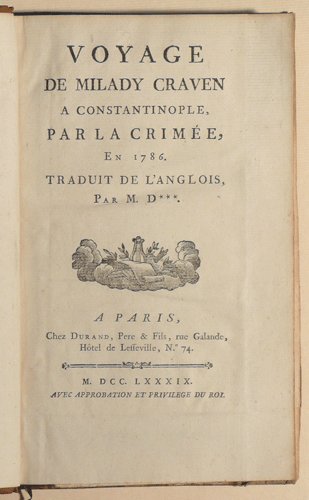
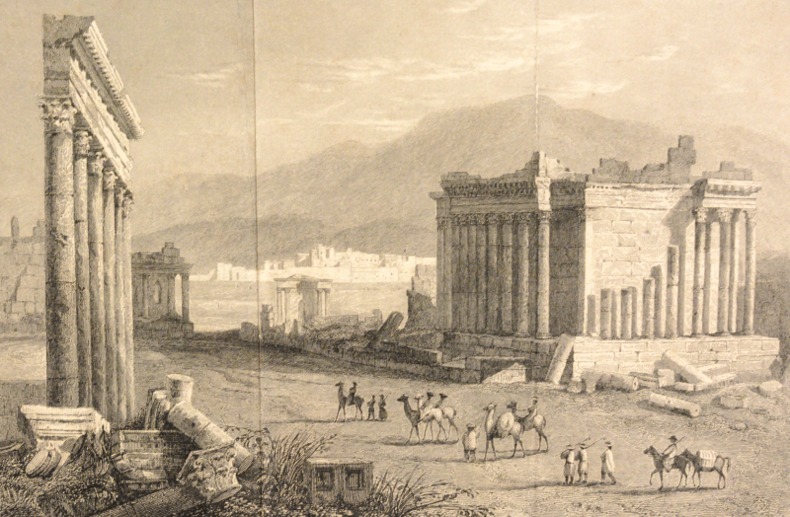
1806P1-2E-1Paris, Bossange, 1806. in-8, cart. papier vert [Rel. de l'époque], accrocs aux coiffes, manque de papier en haut du dos, coins émoussés. 4 ff.n.ch., xix et 302 pp., 1 f.n.ch. d'errata, 3 tableaux hors texte dépliants, 6 jolies vignettes dessinées et gravées par J. Duplessi-Bertaux, et 5 planches hors texte par Tardieu: 1 plan de Sébastopol dépliant, 1 grande carte repliée et 3 planches de médailles, monnaies et bas-relief. Édition originale, Rare. En février 1803, le baron de Reuilly (1780-1810) suivit à Odessa le duc de Richelieu qui venait d'être nommé gouverneur de cette ville ; il visita ainsi la Russie méridionale, surtout la Crimée, et pénétra dans la mer d'Azof dont il reconnut les côtes occidentales. Reuilly correspondait avec le grand naturaliste allemand Peter Simon Pallas qui l'honorait de son amitié et le guidait dans ses explorations. Les pp. 233 à 240 contiennent l'Itinéraire tracé par M. Pallas pour tous les endroits remarquables de la Crimée. "In this important work Reuilly describes the Crimea prior to the Russian conquest. Pallas, resident in the Crimea until 1810, also contributed to the work. Reuilly himself translated Pallas' description of Tibet into French in 1808".
185515126Paris, Garnier-Frères, 1855 ; grand in-8 ; demi-veau glacé rouge sang, dos à faux-nerfs plats noirs à froid, caissons décorés et dorés aux petits fers dans un encadrement de filet doré, titre doré, plats de papier gauffré rouge (reliure de l'époque) ; VII, 528 pp., 18 planches hors-texte finement gravées sur acier d'après Allom, Beutley, Salmon et Leitch, très grande carte dépliante par L. Berthe, lithographiée et coloriée à la main.
In 8°; (2 b.), (2), 102, (2 b.) pp. e una grande c. di tavola della Crimea più volte ripiegata. Qualche lieve traccia di foxing, dovuta alla qualità della carta e nel complesso, in buone-ottime condizioni di conservazione, ancora in barbe e in bellissima ed importante brossura coeva. La magnifica legatura coeva in brossura in bianco e amaranto con motivi floreali e intarsi, è firmata nel margine esterno dall'autore della stessa, quel famoso Carlo Bertinazzi, che a Bologna, nel 1760, fondò una notissima ditta di carta per per rilegare i libri, per avvolgere i mazzi di fiori, per il retro delle carte da gioco, per le pareti delle case, per rivestire mobili e scatole ed altri vari servizi. La ditta stampava in Via Venezia (oggi via Caduti di Cefalonia 3-5) al numero 1749-1750 fino alla seconda metà dell'ottocento. A Carlo Bertinazzi, susseguì il nipote, Carlo Bruera che già verso gli anni 80' del settecento, aveva iniziato a lavorare con Carlo che aveva cambiato il nome della ditta in “Fabbrica dell’antica Ditta cantante Carlo Bertinazzi e Nipote”. Carlo Vittorio Bertinazzi era originario di Torino dove nacque nel 1731. Intorno al 1750 era Parigi dove aveva raggiunto lo zio attore, Carlo Antonio Bertinazzi (1710-1783) che era in Francia, una vera e propria celebrità come uno dei più grandi interpreti di Arelcchino nella Commedia dell'arte. Fu qui che Carlo Vittorio apprese l'arte tipografica, specializzandosi nei papiers peints che all'epoca, era un'arte in forte ascesa in Francia ma ancora poco conosciuta in Italia. Come scrive G.P. Tomasina nella sua monografia “All'uso di Francia” dalla moda all'industria. Carte decorate, papier peint e tessile stampato nel sec. XVIII: la Bottega Bertinazzi (Bologna 1760-1896)", Bologna, 2001, pp. 150-151: “La piccola arte del dipingere le carte a fiori, a drappo, a marmo e in tutte le fogge ‘alla francese' porta infatti a Bologna un'abilità fino ad allora ignorata, proprio negli anni in cui l'illusione di una bellezza altrimenti inaccessibile segna l'età d'oro del papier peint in Europa. Inserendosi nella produzione italiana vasta ed articolata di questo settore, la bottega Bertinazzi replica le novità che giungono d'oltralpe, ovvero carte decorate di ogni tipo, marmorizzate, dorate, goffrate, silografate, a colla…”. Le brossure identificabili a Bertinazzi direttamente su libri, sono pochissime. Prima rara edizione di questa celeberrima storia della Crimea, una seconda edizione, uscì nel 1785, lavoro del celebre poligrafo, storico e giornalista, Francesco Becattini (Firenze, 1743 (?) - Livorno, 1813). Poco si sa della sua vita, tanto che alcuni dati sono ambigui e discordanti. Quello che si sa è che fu un poligrafo di inesauribile vitalità, pubblicando numerosissime opere. Sicuramente si sa che fosse un uomo dagli scarsi mezzi finanziari e che scrivere, per lui era un mezzo per sostenersi. Le sue descrizione storiche sono spesso ricche anche di narrazioni di fatti curiosi, scandali e misteri nella descrizione dei quali, la sua vena letteraria, si esprimeva in tutto il suo potenziale. Proprio le difficili condizioni economiche lo portarono a cambiare spesso città e a scrivere dei temi più disparati, oltre a collaborare con diversi giornali. Come narra, Gian Franco Torcellan nella voce dedicata a Beccatini, nel Dizionario Biografico degli Italiani, Volume 7 (1970): "Tra il 1782 e il 1783, dunque, il B. dovette lasciare senza troppi indugi la Toscana, e finì per stabilirsi poi a Napoli. In questa città usciva infatti in quell'anno una sua compilazione storico-geografica, la Storia della Piccola Tartaria, penisola di Crimea ed altre provincie circonvicine, per le stampe del Pianese; l'opera, di discreta fortuna, ebbe una seconda edizione, che è quella più comunemente nota e diffusa, pubblicata a Venezia nel 1785 col titolo di Storia della Crimea, Piccola Tartaria ed altre provincie circonvicine soggetto delle recenti vertenze tra la Russia e la Porta Ottomana, con un esatto ragguaglio delle usanze, costumi di que' popoli, ultime loro vicende e produzioni del paese inservienti al commercio d'Europa. La piatta andatura della compilazione era interrotta soltanto nel finale dell'opera, nel quale si esprimeva una sentita partecipazione all'avanzata vittoriosa di Caterina II. Curiosamente, accanto al titolo da lui sempre ambito e prodotto su tutti i frontespizi di "accademico apatista", in quest'operetta il B. si designava, non sappiamo su quale base concreta, "professore di geografia e di storia nella sua patria". L'opera rappresenta una dei primi testi italiani, dedicati in modo monografico alla Crimea e alla sua storia, alla presenza dei Tartari, dei Cosacchi, alle guerre e dominazioni che si sono susseguite, nel corso dei secoli. Prima rara edizione in importante brossura coeva. Rif. Bibl.: IT\ICCU\UFIE\005136
185954671P., Gide 1859 In-4 18,5 x 27 cm. Reliure demi-toile moderne, IV + 550 pp., 16 planches hors texte, 30 vignettes dans le texte 1 carte dépliante in fine.
1828002220Paris De Bure, Frères, Rollin 1828
Very Good Turkish, Ottoman (1500-1928) Modern black cloth, Arabic lettered gilt on spine. Roy. 8vo. (23 x 16 cm). In Ottoman script (Old Turkish with Arabic letters). 207 p. First edition of this extremely rare Turkish book, including Qirimi's first-hand account of the Prut War and Treaty (1711) and the defense of the city he participated in during the Russian invasion of Crimea (1735-36). The book was translated into Ottoman Turkish and edited by Turkish turcologist and soldier Necib Asim Yaziksiz, (1861-1935), with annotations, from the original work titled "Umdet al-Akhbar" [i.e. The principle of the news]. Abdulgaffar Qirimi was a Crimean scholar who lived in the Crimean Khanate in the first half of the 18th century and served in various government positions. Qirimi dedicated his work to Genghis Khan, the Golden Horde, and the Crimean Khanate. He reported many original details and, especially for the 18th century, his information is authentic and based on personal descriptions. The main part of the work is devoted to the Golden Horde (starting from Genghis Khan and his descendants), Crimean Khanate, Gerayids, and murzas. When Abdulgaffar Qirimi wrote a history of the descendants of Jochi Khan, he used in his book more than 20 historical works as sources. He stated the names of these works and indicated where he got this or that information. At the same time, he had access to the archives of the Crimean Khanate and used his family legends as well as popular traditions. Plenty of space in his work occupies his own observations as a participant in military campaigns and court life. His work concerning khans Berke, Tokhta, Uzbek, Tokhtamish, and Ulugh Muhammad reflects the popular version and is based on the oral historiography of the Tatars. The Russo-Ottoman War of 1710-1711, also known as the Prut River Campaign, was a brief military conflict between the Tsardom of Russia and the Ottoman Empire. The main battle took place during 18-22 July 1711 in the basin of the Pruth river near Stanile?ti (Stanilesti) after Tsar Peter I invaded Ottoman Moldavia, following the Ottoman Empire's declaration of war on Russia. The ill-prepared 38,000 Russians with 5,000 Moldavians, found themselves surrounded by 200,000 Turks under Grand Vizier Baltaci Mehmet Pasha. After three days of fighting and heavy casualties, the Tsar and his armies were allowed to withdraw after agreeing to abandon the fortress of Azov and its surrounding territory. The Ottoman victory led to the Treaty of the Prut which was confirmed by the Treaty of Adrianople. Özege 21999.; TBTK 479.; OCLC 281773486.
17890033301789 Paris, Durand, Père & Fils, 1789. In-8 (129 X 205 mm) demi-veau fauve marbré à petits coins de vélin ivoire, dos lisse orné d'un double filet doré en place des nerfs, caissons dorés, titre doré, tranches mouchetées en rouge (reliure de l'époque) ; faux-titre, titre, carte dépliante, 306 pages, (1) f. de privilège, 6 planches dépliantes.
iv + 550 + [1] pp. illustré de 30 vignettes dessinées d'après nature (dont 16 planches hors-texte) et d'une carte dépliante dressée au dépot topographique de la guerre à saint Petersbourg, avec dédicace autographe par l'auteur à m.le baron P. Desmaisons, 27cm., reliure cart. (plats marbrés, dos en cuir avec titre doré, usage aucx coins), tranches et feuilles de garde marbrées, bon état, rare
1859X86633Paris, Gide 1859 iv + 550 + [1] pp. illustré de 30 vignettes dessinées d'après nature (dont 16 planches hors-texte) et d'une carte dépliante dressée au dépot topographique de la guerre à saint Petersbourg, avec dédicace autographe par l'auteur à m.le baron P. Desmaisons, 27cm., reliure cart. (plats marbrés, dos en cuir avec titre doré, usage aucx coins), tranches et feuilles de garde marbrées, bon état, rare,
18067425Paris, Bossange, Masson et Besson, 1806. In-8 de [6]-XIX-[1]-302-[2]p., demi-basane brune à coins, dos lisse orné de filets dorés, pièces de titre rouge, reliure du temps avec quelques frottements. Ex-libris de Charles de Constant-Rebecque.
19307901919-1921 Journal d'un peintre Edition "Quatre Vents" , Paris - 1930. Tiré à 305 exemplaires numérotés, plus quelques exemplaires hors commerce numérotés en chiffres romains . Un des exemplaires hors-commerce. Ce volume comprend 16 aquarelles hors-texte, 13 in-texte, 5 bandeaux, 5 lettrines et une couverture reproduites par procédé JACOMET. format : broché, 22.5 x 28.5 cm, 300 pages, couverture rempliée. couverture salie avec une marque de pli, dédicace autographe en page de garde, marques de plis sur le dos, brochage un peu lâche, sinon bel état intérieur Rare ouvrage retraçant le périple du peintre Alexis Gritchenko en Turquie de 1919 à 1921 avant son installation en France magnifiquement illustré .
18370022921837 Paris, Chez Ladvocat, 1837-38. Cinq volumes in-8 (138 X 209) toile chagrinée vert lierre entièrement décorée d'entrelacs à froid, titre et tomaison dorés au dos, gardes papier jonquille (reliure de l'époque). Tome I : (2) ff. de faux-titre et titre, portrait frontispice, 402 pages ; Tome II : (2) ff. de faux-titre et titre, 396 pages, 1 carte et 4 vues dépliantes ; Tome III : (2) ff. de faux-titre et titre, 406 pages, (1) f. de table, 3 cartes et 7 vues ; Tome IV : (2) ff. de faux-titre et titre, 384 pages, 1 carte et une vue dépliantes ; Tome V : (2) ff. de faux-titre et titre, 372 pages, 3 cartes dépliantes. Habile restauration à l'angle inférieur du second plat du tome III, rousseurs claires éparses. Mention fictive de «Quatrième édition » sur le faux-titre des quatre premiers volumes, et de «Troisième édition » sur le titre du cinquième et dernier volume.
206201Paris, Michel Lévy frères, 1855 2 vol. in-8, XXVI-[2]-572 pp. ; [2] ff. n. ch., 606 pp., avec un portrait-frontispice lithographié et un fac-similé dépliant, chagrin noir, dos à nerfs ornés de pointillés, filets, guirlandes et caissons dorés, encadrement de triple filet et guirlande dorés sur les plats, pointillé doré sur les coupes, tranches dorées, dentelle intérieure (reliure de l'époque).
189817Saint-Pétersbourg, Thieblin et Co, 1863-1874 2 vol. in-4, III-VIII-III-XXXVIII-726-125 pp. et 448-356-166 pp., 1 planche et 3 plans dépliants, demi-chagrin vert, dos lisse orné de filets à froid (reliure de l'époque). Rousseurs, cachets (annulés).
Very Good Tatar Original wrappers. Demy 8vo. (21 x 14,5 cm). In Crimean Tatar in Arabic script. 25 p. Chipped on extremities, wear on spine, slightly stained and dusty covers. Overall a good copy. First and only edition of this first regulations consisting of 87 articles under 11 main headings, of the parliamentary (qurultai) of the Crimean People's Republic, which was the first Turkic and Muslim democratic republic in the world, existed from December 1917 to January 1918 in the Crimean Peninsula, a modern day Ukrainian territory currently occupied by the Russian Federation. The Crimean People's Republic was declared by the initiative of the Qurultai of Crimean Tatars, which stipulated the equality of all ethnicities within the peninsula. Noman Çelebicihan (1885-1918) was chosen as the first President of the nascent Republic. The Qurultai, in opposition to the Bolsheviks, published a "Crimean Tatar Basic Law", which convened an All-Crimean Constitutional Assembly, established a Board of Directors as a provisional government, and erected a Council of National Representatives as a provisional parliament. The Board of Directors and the Central Council of Ukraine both mutually recognized each other. This attempt to build a new nation was quickly defeated by the Bolshevik- and anarchist-dominated Black Sea Fleet. Already on 16 December 1917, the Bolsheviks captured Sevastopol where the headquarters of the Black Sea Fleet was located and dissolved the local council of deputies. The power in the city was transferred to the local revkom. The Bolsheviks were supported by some ships of the Black Sea Fleet. To defend itself, the Crimean government created a United Crimean Headquarters on 19 December 1917, that had at its disposal two cavalry and one infantry regiment of Crimean Tatars as well as some Ukrainian and Russian formations that amounted to some thousand people. Several armed incidents took place during January 1918. On 14 January 1918, the Bolsheviks captured Simferopol where they managed to arrest former President of Crimea (Head of Directorate) Noman Çelebicihan who had just resigned on 4 January 1918. He was transferred back to Sevastopol and interned until 23 February 1918, when he was executed without trial. The body of Çelebicihan was thrown into the sea. On the initiative of Çelebicihan on 10 January 1918, the Qurultai created a special commission that conducted talks with the Bolsheviks to stop the armed conflict in Crimea. On the initiative of Çelebicihan on 10 January 1918, the Qurultai created a special commission that conducted talks with the Bolsheviks to stop the armed conflict in Crimea. By the end of January 1918, the Bolsheviks had captured the whole of Crimea and dissolved both the Kurultai as well as the Council of National Representatives. The Red Terror engulfed the peninsula. With Çelebicihan in the Reds' custody, another leader of the Crimean Tatars, Cafer Seydamet Qirimer, managed to escape to the Caucasus across continental Ukraine. Many Crimean military formations retreated to the mountains. The government of Ukraine blockaded Crimea while trying to re-establish control over the Black Sea Fleet and the city of Sevastopol. Any Muslim supporting military formations on the way to Crimea was stopped. That, in turn, triggered a protest from the All-Russian Muslim military council. By the end of January 1918, the Ukrainian government itself was forced to declare war on the Russian SFSR due to the advancement of the Red Guard forces of Moscow and Petrograd into Ukraine without explicit notification. The Bolsheviks briefly established the Taurida Soviet Socialist Republic on Crimean territory in early 1918 before the area was overrun by forces of the Ukrainian People's Republic and the German Empire. Some officials of the national government, such as Seydamet Qirimer who managed to escape the Bolsheviks' terror sought political asylum in Kyiv and petitioned for military help from the advancing Ukrainian Army as w