102 résultats
1652R51924Monachii [Munich], Formis & Impensis Nicolai Henrici [Nicolaus Henricus] 1652 3 parts in 1 volume: [4bl.] [28] 226 pp. & pp.4 - 115 [16] pp. & [10] 340 [10] [10] pp. & 286 [54] pp., full-page engraved title-page (Melchior Küsell sculpt.), engraved printer's device at verso of last page, in folio, percament (with some stains, corners bit bumped), text in latin, printed in two columns, few annotations in margin, vague stain of humidity on first 16 pages (not affecting text nor engraved titlepage), 2 small library stamps on titlepage, good copy, [ARIAS Franciscus S.J., born in Seville 1533, died in 1605, cfr. De Backer-Sommervogel I cols.540-547 no.8 & Dictionnaire de Spiritualité I-844], [contains; Tomus I. Qui Est De Christi D.N. Titulis, T.II : Qui Est De Theologicis, Aliisque Praecipuis Domini Nostri Virtutibus Imitandis, T.III : Qui Est De Reliquis Domini Nostri Virtutibus Imitandis; Nec Non De Gravitate Et Damnis Peccati Mortalis]
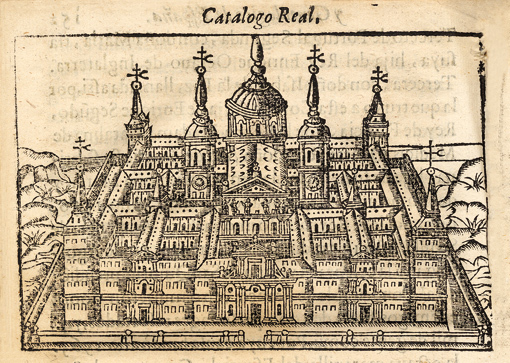
165615736Madrid, doña Mariana del Valle, 1656 ; in-4 ; vélin ancien, titre manuscrit au dos ; (12), 175 ff. recto-verso, 1 blason gravé sur bois (f. préliminaire), vue de Toledo gravée sur bois (f.152 v°), escudo real de España (f.154).
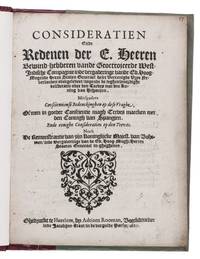
1629K5MCCM62BPJ1Haarlem: Adriaen Roman 1629. Modern red half leather green boards with manuscript short-title on front board. Small 4to 18.5 x 14 cm. With a cast ornament on title-page and 4 woodcut initials. One of four issues published in the same year of a pamphlet concerning the possibility of a truce with Spain containing the "considerations and reasons" proposed by the Dutch West-India Company WIC to the Dutch States General. After the loss of 's Hertogenbosch in 1629 the Spanish King Philip IV proposed a truce which left the Dutch Republic divided also causing debate between the Remonstrants Counter-Remonstrants and Calvinists who first wished to create unity before paying attention to Spain. The directors and shareholders of the WIC dreaded a truce with Spain since capturing Spanish ships was a large source of income for the company Piet Heyn had captured the Zilvervloot in 1628. It would also have thwarted the WIC intentions to conquer some Spanish territory in Brazil.With modern bookplate. Title-page slightly thumbed and a marginal tear in page 15/16 only just touching the text not affecting the legibility. Otherwise in very good condition.l Alden & Landis 1629/102; Knuttel 3911; STCN 830228950; cf. Asher 130; Sabin 15930-15931. Adriaen Roman, hardcover
162210543ABMadrid, Correa para M. Belae, 1622. 29 : 21,5 cm. 4 hojas, 213 hojas numeradas, 17 hojas Con escudo cortado en madera en el titulo. Pergamino de época.
166243613S.l.n.d. (Paris,, , 1662). 3 parties en 1 vol. petit in-8 de (1) f. de titre, 80, 112, (2)-32 pp., veau brun granité, dos orné à nerfs (reliure de l'époque).
16108272Aranda 1610 Dated July 8 1610. 12 1/8 x 7 7/8 inches. 1pp. Printed paper woodcut seal. Minor creases where folded. Right upper edge a bit rough small split to one crease repaired with acid-free document repair tape small light stain to portion of first two lines but a fine example. As with all other Spanish royal signatures Philip has signed "Yo el Rey" I the King. With the words "El Rey" at the top this document grants permission to the town of Canical to withhold 20000 Maravedis coin of the time from the sum it owes in taxes in order to settle a municipal debt. Includes 18 lines in brown ink in a miniscule script. Next to the King's signature is a mounted printed paper woodcut seal with the emblem of the College of Notaries of Madrid. Countersigned in a bold dark script Jorge de Tovar. At the bottom are three lines by officials of the town of Canical acknowledging the permission granted. Philip III was King of Spain and King of Portugal from 1598 until his death. He inherited essentially a bankrupt nation with a disastrous economy. His father Philip II had drained Spain's resources with her wealth based on the silver mines of Latin America. Spain's internal economy was weak with little industry and a backward agriculture and large estates worked by peasants ruined by excessive taxation. This document is typical of the economic weakness of Spain with the town of Canical requiring monetary help. An attractive official document with bold signatures. unknown books
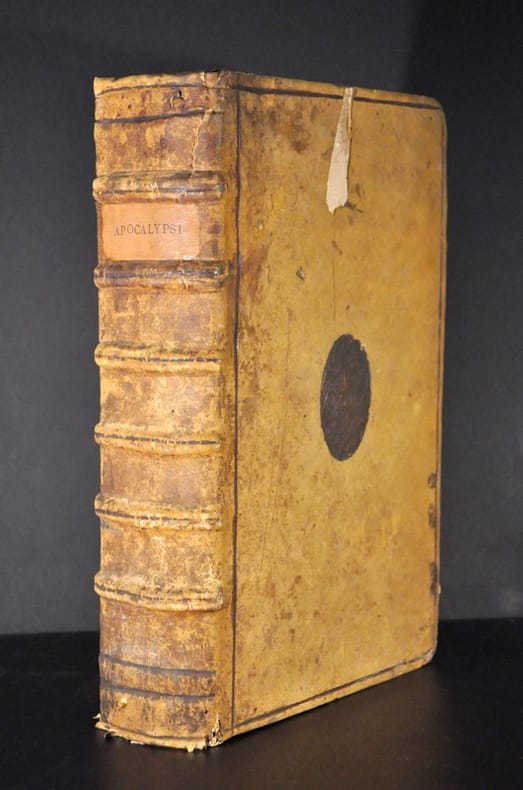
160548560Mogvntiae (Mainz), Andreas Wechsel, 1605. 4to. Contemp. full vellum, raised bands, blindstamped covers. Printers wood-cut device on titlepage. (16),619"638,(36) pp. A bit of browning to the first few leaves. A few scattered brownspots. Printed in double columns.
160548560Mogvntiae Mainz Andreas Wechsel 1605. 4to. Contemp. full vellum raised bands blindstamped covers. Printers wood-cut device on titlepage. 16619;63836 pp. A bit of browning to the first few leaves. A few scattered brownspots. Printed in double columns. <br/><br/><em>This is the first edition containing all 30 books. The first 20 books were published in Spanish in 1601. Marianas's importent history of Spain deals with the country from the first settlements to the death of King Ferdinand who united the Crowns of Castile and Aragon."Among his Maraina's literary labours the most important is undoubtedly his great work on the history of Spain which is still remembered today. There was published as late as 1854 in Madrid an improved and richly illustrated edition continued up to that year. The work first appeared as "Historiæ de rebus Hispaniæ libri XX. Toleti typis P. Roderici 1592". A later edition of the compiler himself carried on still further is "De rebus Hispaniæ libri XXX" published at Mainz in 160 the item offered. This edition bears the imprimatur of the order for the thirty books given by Stephan Hojeda visitor from Dec. 1598 and of the provincial from 1604. The author had in the mean time converted a Latin edition into Spanish and this appeared complete containing the thirty books of the Latin edition at Toledo in 1601. This went through a number of editions during the lifetime of the author and through others after his death" The Catholic Encyclopedia. </em> hardcover
1663Bostonbookfair1Manuscript. 17th century 1663-1695<br /><p>Spanish church register of the village of Montánchez is a municipality located in the province of Cáceres Extremadura Spain. Written in several hands on paper. Folio 29 x 22 cm approx. 135 leaves. Characteristic limp vellum binding. Damage to top cover. First leaves wormed else good.</p>
170017344Amsterdam, de Wit, 1675 (recte um 1700). Ca. 49,5 cm x 57 cm. [4 Warenabbildungen]
17001077-24Barcelona, Juan Jolis/Jayme Suria 1700. Tomo primero [u.] segundo. Ultima impression, mas corrigida y enriquecida de Tablas. 8°. Schmutztitel, Titel mit Rahmnung, 2 Bll., 536 S., 8 Bll.; Titelbl. mit Rahmung, 1 Bl., 524 S., 16 Bll. Flex. Pgmt.-Bde. d. Zeit mit handschriftl. Rückentitel. Mit 4 Schließen, davon 1 intakt. Etwas berieben. Innen gebräunt, stellenweise leicht stockfleckig. [2 Warenabbildungen]
168194308Amberes [Antwerpen], Juan Bautista Verdussen, 1678 / 1681. [3] Bl., 154 S., [11] Bl.; (9) Bl., 34 S., (2) Bl., (4) Bl., 268, (6+1) Bl.; 12 Kupferstich-Portraits auf Tafeln, Titelholzschnitte (Druckermarke), Schlussstücke u. Zierinitale. 31,5 cm. Leder d. Zeit, auf 6 Bünden mit Rückenschild, Goldprägung u. beidseitigem Supralibros Joannes Josephus Comes de Wildenstein.
1660WRCAM35380London: Printed by John Bill and Christopher Barker 1660. Broadside 13 1/2 x 10 3/4 inches. Affixed at corners to a slightly larger sheet. Near fine. Archivally matted protected with mylar sheet. An early diplomatic proclamation by the recently restored British monarch King Charles II and part of his efforts to encourage British colonial and commercial expansion. Though not formally at war hostilities existed between Britain and Spain especially concerning the harassment of commerce at sea and colonies in the Caribbean. Five years earlier the English under Cromwell had seized Jamaica from Spain and in 1656 Spain lent their support to Charles II's restoration to the throne. In this document Charles II proclaims that "all prisoners ships goods merchandize sic or whatsoever else taken upon one another either by any of our subjects or the subjects of our said dear brother since said time of our arrival in England be and shall be upon due proof thereof redelivered and restored." At the same time Charles II was negotiating with the Portuguese against Spanish interests in the New World especially with regard to Jamaica which the British ultimately retained. WING C3287. Printed by John Bill and Christopher Barker unknown books
162020747o.Ort. und Drucker. (Tübingen, J.A. Cellius?), 1620. 3 n.n. Bll., 166 SS., das Titelblatt fehlend. 4° (ca. 16 x 19,5 cm), mod. meisterlicher Pappband unter Verwendung geschmackvollem, altrosanem Kleisterpapiers.
1609WRCAM33906The Hague: Hillebrant Iacobz 1609. 11pp. Large vignette on titlepage. Modern marbled boards. Very good. The original edition of the official Dutch text of the "Twelve Years' Truce" between the United Provinces and Spain. There are thirty- eight articles of which nine deal with foreign trade. The present issue undoubtedly the first contains a few errors which were corrected in later issues. By this treaty the Dutch agreed to stay out of Spanish controlled possessions in the New World. However it conceded the right of the Dutch to trade in the East Indies and on the basis of this and the breathing room the treaty gave them they were able to rout the Spanish in the 1620s. Savelle calls the Twelve Years' Truce "a great international triumph for all the challengers of the Hispano-Portuguese monopoly" on New World colonization since it marked the first explicit recognition of the right of any non- Iberian people to sail to the Americas. Spain tacitly recognized the right of the Dutch to own colonies in the New World a right which the Dutch French and British vigorously pursued in the ensuing decades. An important treaty and quite scarce. OCLC locates three copies. Not in EUROPEAN AMERICANA. DAVENPORT 28. KNUTTEL 1589. SAVELLE THE ORIGINS OF AMERICAN DIPLOMACY pp.31-34. OCLC 8525118 17751928. Hillebrant Iacobz hardcover books
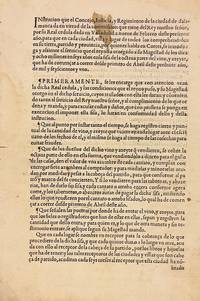
16013683Salamanca: S.n. 1601. First edition. Signed at foot by a municipal officer Diez de la Puente. One-page contemporary manuscript on p. 3 relating to the administration of the tax. Unbound as issued. Pinholes at gutter some edge chipping and small dents brown stain affecting the upper portion throughout. Otherwise a good well-preserved copy. First edition. Signed at foot by a municipal officer Diez de la Puente. One-page contemporary manuscript on p. 3 relating to the administration of the tax. Unbound as issued. 4 last 2 blank p. <p><br /> Unrecorded 1601 ordinance from Salamanca enforcing the Armada-era servicio de millones Spain’s foundational fiscal levy.<br /> <p><p><br /> Printed ordinance issued by the municipal council of Salamanca implementing the royal tax known as the servicio de los dieciocho millones. In accordance with the royal cédula of 9 February 1601 the Concejo Justicia y Regimiento instructs subordinate towns and villages to collect an eighth part of all wine and olive oil sold to be remitted through a chain of local receivers. The text regulates how wine and oil must be measured recorded and taxed forbids additional repartimientos and orders prompt transfer of funds to the city’s main treasury. Dated at Salamanca 10 March 1601 and naming four municipal commissioners appointed for its execution it represents the earliest stage of local enforcement of Philip III’s fiscal scheme transforming the national levy into a functioning municipal excise. A contemporary handwritten endorsement below the text signed by Diez de la Puente attests its execution. Accompanying the printed ordinance is a contemporary manuscript headed on p. 3 “Dudas que se ofrecen en la administración de las sisas†listing practical questions concerning the execution of the tax—registration and measurement of goods roles of administrators and receivers form of payment penalties and conditions of tax farming arrendamiento.<br /> <p><p><br /> The servicio de los dieciocho millones formed part of the broader system of millones taxes created by the Cortes of Castile to meet the Crown’s desperate financial needs after the prolonged wars of Philip II. The servicio de millones had first been introduced by royal request and approved by the Cortes on 4 April 1590 conceived to raise eight million ducats over six years to finance the royal expenditure associated with the Armada campaign against England and other military commitments. Rather than remaining temporary it evolved into a regular levy on six staple items—wine oil vinegar meat soap and tallow candles—collected through local sisas and eventually forming the backbone of Castile’s fiscal structure. By 1600–1601 under Philip III the scheme was renewed and expanded to eighteen million ducats its collection entrusted to municipal governments such as Salamanca’s Concejo Justicia y Regimiento. As described in Bartolomé Yun Casalilla’s Sobre la transición al capitalismo en Castilla this marked a transition from feudal income to a centralized fiscal system financed through municipal taxation embedding local economies within the machinery of the Habsburg war state. The present ordinance captures this process of consolidation—when the monarchy sought tighter control over municipal revenues demanded proper accounting and remittance of surpluses and aimed to prevent arbitrary over-taxation—reflecting both the fiscal strain and administrative centralization characteristic of early-seventeenth-century Spain.<br /> <p><p><br /> Reference: Yun Casalilla B. 1987. Sobre la transición al capitalismo en Castilla: EconomÃa y sociedad en Tierra de Campos 1500–1830. Valladolid: Junta de Castilla y León ConsejerÃa de Educación y Cultura.<br /> <p>. [S.n.] unknown
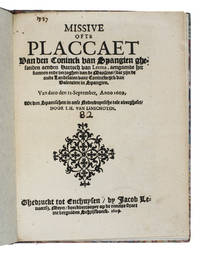
1609ABC_46561Enkhuizen 1609. 4to. Jacob Lenaertsz Meyn Modern marbled paper over boards new endpapers. With an ornamental woodcut title vignette and a woodcut initial. 3 ll. First edition of the Dutch translation by Jan Hughen van Linschoten ca. 1563-1611 of a proclamation decreed on 9 April 1609 by King Philip III of Spain 1578-1621 ordering the Duke of Lerma Francisco Gómez de Sandoval y Rojas 1552/53 - 1625 to expel the Moriscos Spanish muslims who were forced by the Spanish crown and Roman Catholic church to convert into Christianity from Spain. The present decree which was adopted gradually by several Spanish territories first Valencia then Aragon Catalonia Andalusia et cetera provided the Duke of Lerma free reign to carry out the expulsion of the Moriscos by whatever means they see fit to confiscate all their lands and goods and to set an example for everyone who was sympathetic to the Moors. Expelling the Moriscos from Spain however was a real mistake and contributed to the decline of the Spanish reign. The expulsion of the Moriscos led to depopulation and therefore to economic collapse. The present proclamation was therefore of great importance for the Dutch as during the Twelve Years' Truce 1609-1621 the Dutch military war with Spain changed into an economic war. An important decree in the history of the Eight Years' War 1568-1648 between the Dutch Republic and Spain.With some numbers in manuscript on the first two pages. Lacking the blank leaf A4. With a few very minor spots on the first two leaves very slightly browned but overall in good condition.l Knuttel 1630; STCN 830501231; Tiele 790. hardcover
1625154780Madrid. a ultimo de Octubre de mil y seiscientos y venticinco años "last day of October" 1625. Signed royal ordinance for the registration of seamen Important printed state paper signed by the king - "Yo El Rey" - Philip IV 1605-1665 setting out instructions for a large scale registration of sailors in the Spanish royal navy addressing the always pressing issue of impressment. Also signed by one of the king's leading military advisers. Philip is probably best remembered as "a peerless patron"; at Buen Retiro his pleasure palace on the outskirts of Madrid "he was surrounded by a brilliant circle of poets and playwrights - including Lope de Vega Calderón de la Barca Antonio Hurtado de Mendoza Francisco de Quevedo y Luis Quiñones de Benavente" the central hall el Salón de Reinos decorated by his court painters headed by Velásquez. Diccionario Biográfico electrónico. He was somewhat less apt in his policy decisions failing in his efforts at domestic and military reform too reliant on the junta system implemented under his favourite and chief minister Gaspar de Guzmán conde de Olivares. Philip was notably more forward thinking and successful in his handling of the navy to which he applied a "sensible pragmatic approach" Goodman p. 32. Throughout his reign there was no "weakening of the importance attached to naval forces" ibid. p. 156 and the Junta de Armadas was the only such committee to survive the eventual fall of Olivares untouched. The present ordinance created regional administrative officials responsible for the initiation of a registry of mariners and the issue certificates to pilots masters gunners carpenters and other naval tradesmen who for their part were ordered to provide detailed personal information. This data was to be recorded in a ledger a copy of which should be sent to the War Council and regularly updated. Failure to comply could result in a severe fine and two years of exile. The directives were to be implemented "generalmente en estos Reynos in all the territories of the Spanish Empire" thus including Spanish possessions in America and Asia. The creation of this matricula - "a register of all seafaring folk designed to provide central control over their movements and availability for armada service" - is one of the distinctive features of early seventeenth-century Spanish naval organization "Nothing like them would appear anywhere else in Europe until Colbert's famous classes maritimes of the 1660s. Madrid's compulsion would arouse resistance on the coast" ibid. pp. 192-3. The countersignatory Bartolomé Aguilar y Anaya c.1563-c.1630 was an influential military administrator under both Philip IV and his father. He entered the service of Ãlvaro de Bazán marquis of Santa Cruz at the age of 17 taking an active part in his patron's conquest of Portugal his campaigns in the Azores and in the preparation of the Great Armada of 1588. On the death of Santa Cruz his rise continued under the protection of the secretary of war Andrés de Prada who appointed him first officer of the sea section of the war secretariat "primer oficial en la sección de Mar de la SecretarÃa de Guerra" in 1594 DB-e. In 1600 he was granted the formal title of royal secretary and in 1606 himself became secretary of war; during the second decade of the 17th century he was secretary of the board of galleys directing the supply of ammunition for the expedition to Brazil in 1625 at which time he had assumed one of the prized seats on the council of war and in the 1630s he was a member of the highly influential Junta de Armadas. Folio pp. 3 on a single bifolium. Printed order with the king's signature countersigned by his secretary of war Bartolomé Aguilar y Anaya manuscript docketing on the first page. Modern marbled paper wrappers. Light toning some marginal fox spots but overall very good. David Goodman Spanish Naval Power 1589-1665. Reconstruction and Defeat. 1997. unknown
16106653Madrid 1610. Hardcover Tapa dura. 300x210mm. 11¾x8¼". Manuscrito. Dado en Madrid a 2 de noviembre de 1610. En folio 300 x 210mm. 12 folios en pergamino en cuadernillo cosido. Escritura humanística pausada no librada o redonda de privilegios sobre caja de escritura marcada en tinta roja y pautada. Numerales romanos al uso de la cancillería. Invocación destacada en fol. 1r. con letra capital ornamentada. Algunas mayúsculas destacas de módulo superior al resto que marcan el inicio de los distintos traslados documentales que incluye el privilegio. Suscripciones de notario en todos los folios. Marcas de cancelación de folio superior en algunos folios. Algunas adicciones interlineales que corrigen el texto principal de mano posterior a la del texto principal. Suscripciones y anotaciones al final del documento en letra humanística corriente o cursiva. Último folio pautado pero sin texto. Dentro de carpeta. Documento de excepcional interés histórico y literario otorgado por el rey Felipe III a Ana Quijada de Salazar nieta de Alonso Quijada el auténtico nombre del hidalgo don Quijote personaje principal en la novela Don Quijote de la Mancha. Ana Quijada de Salazar 1577-1614 de Esquivas era hija de Juan Quijada de Salazar el cual casó en Illescas con Leonor de Salcedo. Su abuela fue Ana Suárez Medina hija de Gonzalo Medina Godoy alcalde de los hijodalgo que fue procesado por la inquisición pero finalmente liberado por ser a su vez nieto de Diego Muñiz de Godoy caballero de Santiago y por lo tanto cristiano viejo. Su bisabuela sería María de Salazar 1537 hermana de Diego de Salazar el que sería a su vez bisabuelo de la esposa de Miguel de Cervantes. Ambas poseen un tío abuelo común fray Alonso Quijada de la orden de San Agustín modelo del personaje de Quijote. Es en casa de este Alonso Quijada en donde se hospeda Cervantes durante sus estancias en Esquivias. Estudio diplomático y contenido textual: Carta de privilegio real otorgada por Felipe III con traslado de carta de venta de juro y carta de pago emitida a petición de la interesada Ana Quijada de Salazar dada en Madrid el 2 de noviembre de 1610. En fol. 1r. doble invocación explicita gráfica y textual: En el nombre de la Sanctísima Trinidad y de la eterna unidad padre hijo y espíritu sancto Notificación: Quiero que sepan por esta mi carta de privilegio o por su traslado signado de escribano público Intitulación completa: Como yo Don Phelippe por la gracia de dios rey de Castilla . Expositio: Vi una mi carta de venta firmada de mi mano y una carta de pago en ella firmada de don Juan Yváñez de Segovia caballero de la orden de Calatrava y mi tesorero general que son del tenor siguiente. A continuación traslado de la carta de venta y de la carta de pago: Traslado de la carta de venta del rey Felipe III de un juro de al quitar de 187.500 maravedíes a 22.000 el millar por 425.000 maravedíes a favor de Ana Quijada de Salazar dada en Aranda el 28 de agosto de 1610. Intitulación completa: - Directio: A vos el presidente y los del mi consejo de hacienda y contaduría mayor de ella bien sabéis que para ayuda a los grandes gastos que entonces se le ofrecieron al rey mi señor que sancta gloria aya y a mí para la defensa de los reynos contra los turcos y los moros y otros infieles enemigos se han gastado las rentas reales. y teniendo que proveer de mucha suma de dineros para la sustentación de estos reinos y no habiendo ayado manera alguna mejor se acuerda situar en algunas rentas y patrimonios de ellas maravedíes de juro alquitar para aquellas personas a quien se vendieren - Dispositio: Por ende otorgo y conozco que vendo a doña Ana Quisada de Salaçar hija de don Juan Quisada de Salaçar y doña Leonor de Salcedo su mujer vecina del lugar de Esquivias para ellas sic y para sus herederos ciento y ochenta y siete mil quinientos maravedíes en cada un año por quatro ciento y veinte y cinco mil maravedíes que por ello pagó en dineros contados a don Juan Yváñez de Segovia para ayudar a cumplir y pagar lo susodicho Con facultad de poderse quitar para que los tenga situados en ciertas rentas de las alcabalas de la ciudad de Toledo - A continuación cláusulas preceptivas penales y corroborativas pertinentes. - Data y validación: Dada en Aranda a veynte y ocho días del mes de agosto de mil seiscientos y diez años yo el Rey yo Alonso Núñez de Valdivia y Mendoza secretario del Rey nuestro señor la fiz escribir por su mandado. - A continuación en fol. 5v. traslado de la carta de pago de Juan Ibáñez de Segovia tesorero del rey a Ana Quijada de 187.500 maravedíes de juro alquilar a razón de 22.000 maravedíes el millar a disfrutar desde el 17 de junio de 1610 en adelante dada en Madrid a 9 de septiembre de 1610. - A continuación copia de la diligencia de emisión de la carta de privilegio de la venta del juro dada en Madrid a 11 de noviembre de 1610. - A continuación copia de carta de confirmación del rey Felipe III de la carta de venta y carta de pago anteriores a petición de Ana Quijada. - Finalmente data del privilegio real: Dada en la villa de Madrid a dos días del mes de noviembre año del nacimiento de nuestro salvador Jesucristo de mil y seisçientos y diez años. - Validación del privilegio real: numerosas suscripciones del canciller notario contador de rentas escribano etc. El expediente original que se quedó en la Contaduría Mayor de Hacienda se encuentra en el Archivo General de Simancas en el Fondo de Instituciones del Antiguo Régimen sección Contaduría Mayor de Hacienda Contaduría de Mercedes Juros del Reinado de Felipe III con el título: Juro a favor de Ana Quijada Salazar signatura: ES.47161.AGS/2.13.2.3//CME 520 12. Existen además otros tres expedientes sobre juros de esta misma persona uno de ellos de fecha anterior con las signaturas CME 517 74; CME 523 37 y CME 374 53. Ninguno se encuentran digitalizados en PARES Sobre Cervantes en Esquivias Catalina de Palacios y su relación con la familia de Ana Quijada: sacado de http://www.esquivias.es/la-ciudad/informacion-turismo/62-cervantes-esquivias-y-el-quijote. El primer hecho que demuestra la presencia de Cervantes en Esquivias se produce en septiembre de 1584 cuando Cervantes viaja a Esquivias para entrevistarse con Juana Gaitán viuda de su amigo el poeta Pedro Laínez e intentar publicar su obra póstuma: el Cancionero. Cervantes recibe un poder de manos de Juana Gaitán a través de un documento firmado el 22 de septiembre de 1584 ante el escribano de Esquivias Agustín del Castillo. Su cometido es entregar dicho poder así como el Cancionero a Ortega Rosa procurador de causas en los Reales Consejos de Madrid. Así debido a este viaje a Esquivias Cervantes conoce a la que sería su esposa Catalina de Palacios. El noviazgo fue corto ya que contrajeron matrimonio el 12 de diciembre de 1584 en la Iglesia Parroquial de Esquivias bendijo la unión el cura Juan de Palacios tío materno de Catalina y cabe destacar que Miguel alcanzaba ya la edad de 37 años cuando Catalina tenía tan sólo 19. El matrimonio duró 32 años hasta que el 22 de abril de 1616 el Príncipe de los Ingenios encontró la muerte. Vivieron juntos en Valladolid y Madrid volviendo a vivir en Esquivias en determinadas ocasiones donde acudían para visitar a la familia asistir a bautizos donde ejercían como padrinos a la inauguración de la ermita de San Roque en 1602 en 1610 pasaron una temporada en la villa y el último viaje que realizó Cervantes fue precisamente a Esquivias unos meses antes de morir así queda reflejado en el prólogo de su obra póstuma Los Trabajos de Persiles y Segismunda donde dice: ".viniendo otros dos amigos y yo del famoso lugar de Esquivias." Sobre Catalina de Salazar datos sacados de la misma página web: Nació en 1565 en la cuna de una de las familias hidalgas de más rancio abolengo de Esquivias los Salazar. Fueron sus padres: Catalina de Palacios y Fernando de Salazar y Vozmediano. Era la mayor de cuatro hermanos: Nicolás y Gonzalo que murieron siendo niños; Francisco que fue cura de Esquivias y heredero de la familia; y Fernando que terminó siendo fraile franciscano en el convento de San Juan de los Reyes de Toledo con el nombre de fray Antonio de Salazar. Su abuela materna María de Salazar sería hija de Diego García de Salazar. Una hermana de dicho Diego también llamada María de Salazar sería la bisabuela de Ana Quijada de Salazar. En esta última María de Salazar se produce el entronque de las familias Salazar y Quijada. A la boda de Catalina y Miguel de Cervantes no acudieron ni la madre de Catalina ni los padres de Cervantes hecho que también se debe a la reciente viudez de la suegra de Cervantes y a la enfermedad de su padre Rodrigo de Cervantes que murió unos meses después del enlace. Finalmente las familias tuvieron una buena relación como queda patente al contemplar que al hacer testamento Rodrigo de Cervantes nombra como albaceas a su mujer Leonor de Cortinas y a su consuegra Catalina de Palacios. Después de casarse el matrimonio formado por Miguel de Cervantes y Catalina de Palacios se alojó en la casa de fray Alonso Quijada de Salazar pariente lejano de Catalina concretamente era sobrino del bisabuelo de Catalina es decir tío abuelo de Ana Quijada Salazar hermano de su abuelo Gabriel Quijada. En realidad este Alonso Quijada es pariente más cercano de nuestra Ana Quijada que de la propia Catalina como se deduce de sus propios apellidos aunque ambas son sobrinas del mismo en el que Cervantes se basó para escribir el personaje de Don Quijote quedando demostrada su existencia en diversos documentos en los que se puede ver su firma autógrafa. El 9 de agosto de 1586 firma en Toledo dos documentos junto a su suegra. Uno de ellos es una carta de poder de Catalina de Palacios a su yerno Miguel de Cervantes según la cual le otorga toda potestad sobre sus bienes nombrándole administrador absoluto de toda su hacienda y dejándola en sus manos. Por él podría cobrar convenir y vender el documento revela que en el hogar de Esquivias reinaba la concordia y las buenas relaciones que tenía con su suegra cuando demostró tanta confianza en él. El otro documento notable es la carta dotal de Miguel de Cervantes a su esposa en la cual se reseñan los bienes inmuebles que recibe de su suegra y que tenían un valor de algo más de 400 ducados. Miguel se instala con su esposa de momento pero pronto iniciará un permanente peregrinaje que será una constante a lo largo de su vida. A los tres años de casarse debido a su oficio de recaudador de impuestos debe trasladarse a Sevilla pero hace continuos viajes a Esquivias. Permanece en Esquivias hasta el 24 de abril de 1587 cuando se dirige a Toledo siguiendo a la procesión de Santa Leocadia y después se marcha a Sevilla donde obtiene el cargo de comisario real de abastos para la Armada Invencible. Inicia así un constante peregrinaje por Andalucía como recaudador pero también realiza constantes viajes a Esquivias para visitar a la familia y acudir a actos sociales y a Madrid para publicar sus obras. A mediados de junio de 1594 cuando termina su trabajo como comisario Cervantes abandona Sevilla y de paso hacia Madrid vuelve a Esquivias donde permanece dos meses ya que en agosto se instala en Madrid con su esposa. Pero a finales de año recibe comisión para cobrar rentas reales en Granada se dirige a Esquivias con su esposa y comienza la comisión. En febrero de 1599 se traslada de nuevo a Esquivias y en agosto de 1600 se dirige a Toledo junto a Catalina para asistir al ingreso de su cuñado Fernando de Palacios como novicio en San Juan de los Reyes. Toma el nombre de fray Antonio de Salazar cuando se hace franciscano. El 19 de agosto hace testamento antes de ingresar en el monasterio el documento demuestra la cordial relación entre fray Antonio su hermana y Cervantes. A mediados de 1604 Miguel cumple el objetivo de reunir a toda su familia sus hermanas su sobrina y su mujer con la que se instala en Valladolid pero a principios de 1606 con su esposa vuelve a establecerse en Esquivias y realiza viajes a Toledo sin embargo a mediados de año otra vez tras la corte se trasladan a Madrid. En la primavera de 1611 viajan a Esquivias donde permanecen hasta el 31 de enero de 1612 cuando vuelven a Madrid acompañados por su sobrina Constanza. A principios de abril de 1616 Miguel de Cervantes realizó su último viaje a Esquivias donde se quedará pocos días para regresar a Madrid ya enfermo de hidropesía y morirá el 22 de abril. En 1617 su esposa Catalina gestiona con Juan de Villarroel la impresión de Los Trabajos de Persiles y Segismunda su obra póstuma. Catalina morirá el 30 de octubre de 1616 en Madrid y será enterrada junto a su esposo tal y como expresó en su testamento: ".deseo me entierren en el Convento de las Trinitarias junto a mi esposo al que tanto amé en vida." hardcover
161414701614 Antverpiae (Anvers), Apud Ioannem Keerbergium, 1614., Coll : fol 1025 contenant 23 gravures hors-texte et une carte, 80, 36p (table) In folio, en peau de daim teintée médaillons estampés à froid, sur les deux plats dos à 6 nerfs pièce de titre
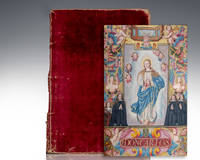
1699107920Madrid May 28 1699. Rare elaborately illuminated nobility diploma signed by King Charles II of Spain appointing Don Martin Damian Mendizabal the title of Marquis of Torre Gines. Quarto bound in full red contemporary velvet covered boards with two metal clasps containing five illuminated leaves two fully illuminated in color with the Royal coat of arms and portrait of King Charles II text in Spanish. Signed by King Charles II "Yo el Rey" and additionally signed by several Royal secretaries. Bound with a printed manuscript of the Oath of Fidelity to the King of Spain with Royal stamps dated 1701 and with two autograph letters laid in the first dated September 17 1701 and signed by Philip V and the second addressed to the Marquis. Exceptionally rare. Referred to as 'the Bewitched' and 'El Hechizado' Charles II of Spain was the last Habsburg ruler of the Spanish Empire. He died childless in 1700 with no immediate Habsburg heir. His will named his successor as 16-year-old Philip of Anjou grandson of Louis XIV and Charles's half-sister Maria Theresa and disputes over the inheritance led to the War of the Spanish Succession. hardcover
1699107920Madrid May 28 1699. Rare elaborately illuminated nobility diploma signed by King Charles II of Spain appointing Don Martin Damian Mendizabal the title of Marquis of Torre Gines. Quarto bound in full red contemporary velvet covered boards with two metal clasps containing five illuminated leaves two fully illuminated in color with the Royal coat of arms and portrait of King Charles II text in Spanish. Signed by King Charles II "Yo el Rey" and additionally signed by several Royal secretaries. Bound with a printed manuscript of the Oath of Fidelity to the King of Spain with Royal stamps dated 1701 and with two autograph letters laid in the first dated September 17 1701 and signed by Philip V and the second addressed to the Marquis. Exceptionally rare. Referred to as 'the Bewitched' and 'El Hechizado' Charles II of Spain was the last Habsburg ruler of the Spanish Empire. He died childless in 1700 with no immediate Habsburg heir. His will named his successor as 16-year-old Philip of Anjou grandson of Louis XIV and Charles's half-sister Maria Theresa and disputes over the inheritance led to the War of the Spanish Succession. hardcover books
1612148287Valladolid Spain 1612. Rare 17th century elaborately illuminated nobility patent of King Philip III of Spain for the brothers Juan and Alonso de Rivera de la Cerda. Quarto bound in full leather with gilt detailing the patent is comprised of 100 leaves numbered 1-99 in contemporary Arabic numerals written in round Spanish script within a frame ruled in brown ink with decorated seven-line cadel initials and some in text illuminations. Decorated with two full-pages of illumination depicting the Virgin and Child in heaven with the brothers Juan de Rivera de la Cerda and Alonso de Rivera de la Cerda kneeling below and an achievement of arms on pages 1 and 2 with red silk curtains between and a smaller illuminated miniature of the king on page 97. In very good condition with the illuminated pages exceptionally bright with some wear and losses to the leather including to the crown and foot of the spine. King Philip III of Spain 1578–1621 is often regarded as a monarch who shifted the balance of power between the Spanish crown and the nobility in a more collaborative direction. Ascending to the throne at a young age Philip III relied heavily on his favorites particularly the Duke of Lerma to manage the kingdom’s affairs. This reliance on the nobility allowed them to gain significant political influence especially within the royal court. While Philip III did not possess the same autocratic control as his father Philip II his reign marked an era where the Spanish nobility enjoyed a degree of increased prominence albeit through the lens of court politics and patronage. However the resulting factionalism and the concentration of power in the hands of a few noble families eventually led to instability weakening the monarchy's control and contributing to the broader challenges faced by Spain in the early 17th century. hardcover
1685148310Valladolid Spain 1685. Rare 17th century elaborately illuminated nobility patent of King Carlos II of Spain for the late Diego Merino de Bargas of Tornavacas represented by two procurators and his sons Rodrigo Francisco and Luis Merino de Bargas residents of Lugar de Cavecuela. Quarto bound in early red velvet over pasteboards with red and yellow silk cord on the spine the patent is comprised of 144 leaves numbered 1-145 in contemporary Arabic numerals partially illegible ink stamps in bottom margins of each page manuscript on vellum written in italic Spanish script within a broad liquid gold border with decorated six-line cadel initials and some in text illuminations. Decorated with two full-pages of illumination depicting the Virgin standing on a crescent moon surrounded by seraphim and cherubim flanked by two kneeling men on the right and two on the left and an achievement of arms on pages 1 and 2 with a blue silk curtain between and a smaller illuminated miniature of the king on page 142. In very good condition with the illuminated pages exceptionally bright. King Carlos II of Spain 1661–1700 the last Habsburg ruler of the Spanish Empire is a pivotal figure in early modern European history due to both his personal condition and the dynastic crisis his death provoked. His reign was marked by severe political and economic decline compounded by his physical and mental disabilities which contemporary and modern historians attribute to generations of Habsburg inbreeding. Lacking a direct heir Carlos II's death triggered the War of the Spanish Succession 1701–1714 a major European conflict over control of the Spanish throne and its vast territories. His reign thus represents both the culmination of Habsburg rule in Spain and the beginning of a transformative shift in the balance of European power ultimately leading to the rise of the Bourbon dynasty under Philip V. hardcover
16154007Ãvila and La Horcajada 1615. <p>Manuscript on parchment 380 x 270 mm. 18. Complete. Contents: ff. 1r-4v: Regla in Spanish in 30 numbered sections inconsistent numbering on ff. 3v-4v in a rounded script in brown ink the first page slightly larger up to 27 lines. F. 1r: incipit first four lines in large lettering with very large calligraphic initial: En el nombre de dios todo poderoso padre y hijo y espiritu sancto tres personas y una esencia. Section 30 f. 4v added in a slightly later hand. The word Cruz symbolized by a red Maltese cross. Text on ff. 2r-2v underlined in red. Calligraphic initials some with marginal extensions in brown purple or red. Marginal drawings of prickly foliage some in the shapes of fantastic animals. Later marginal notes opposite many sections. Ff. 5r-5v: Heading: Este es traslado de un testimonio followed by two notarial subscriptions on f. 5v one partially in cursive signed and dated Ãvila 11 May 1527 the other in italic partly faded including the date 1615. F. 6r: A cerca de la procession de la Resurrection. After an introductory portion in a small round early 16th-century hand in brown ink the text continues from f. 4v with sections 32-37 of the Regla of which sections 33-37 are in a later sixteenth-century hand; these sections ruled through with light diagonal lines. Signatures or notes in lower margin. F. 6v: blank except for five lines heavily cancelled in red. Ff. 7r-7v: five paragraphs in a fine upright italic hand the first and third with headings in red La orden que han de tener en la procession de la Resurxection sic en la faded and illegible…; La orden que sea de tener en la procession de la Resurretion sic en el domingo de pascua es la siguente. Followed on f. 7v by a note in a different hand dated from La Horcajada 21 May 1550. Ff. 7v-8v and back inner cover: later additions some quite faded. A few later marginal annotations throughout.<br /> Rubrication and decoration: headings and line fillers in red a few ornamented line fillers or borders some passages underlined in red or light purple else ruled in dry point numerous calligraphic initials in red or brown ink opening initial with purple filigree extension filling left margin numerous foliate vegetable and zoomorphic ornamental designs in the margins in red purple and brown ink.<br /> Binding: stitched into the original parchment cover with title “Regla de la Pasion†in large letters the R with decorative extensions above a large cross in green ink entwined with the snake and in the margins apparently the instruments of the Passion.<br /> Condition: rubbing and staining vertical crease from folding causing occasional erasure of text outer edge of first page somewhat rubbed affecting legibility of text some words at line ends helpfully written over in a later hand the inks used in the last two leaves quite faded; wrapper worn and darkened with tears at top and 3 small holes in lower cover.<br /> Provenance: Confraternity of the Holy Cross of Horcajada; purchased in France with export license.  <br /> <br /> An early Spanish confraternity manuscript containing the rules and statutes that governed the Confraternity of the Holy Cross referred to as the CofradÃa or Hermandad de la Cruz the word Cruz being supplied by a Maltese cross in red of La Horcajada a town located in Castile y León in the province of Ãvila. As in other Roman Catholic countries confraternities or lay brotherhoods played a vital role in community life in Spain functioning as mutual aid societies and venues for laypeople to express their piety and perform charitable acts. Vernacular manuscript confraternity statutes from the Iberian peninsula surface much more rarely than for example their Italian counterparts although it appears that Spain had a larger number of confraternities proportional to the population especially in Castile y Leon than the other Catholic lands. Virtually every community including small villages had at least one confraternity. While exact numbers of confraternities in sixteenth-century Spain are unknown “studies carried out for a number of cities suggest that the number of confraternities and brotherhoods in the Hispanic kingdoms was larger than elsewhere in Catholic Europe. The reasons behind the extraordinary popularity of confraternities and brotherhoods in the Hispanic kingdoms cannot yet be established however in view of the current state of research on the topic. There has been a tendency for scholars to emphasize the confraternity as a primarily urban phenomenon a reflection perhaps of their early development in Italy where they formed an essential part of civic and urban life. In the Hispanic kingdoms however these institutions were equally important in the religious and social life of the small village. Pastoral visitations carried out by the bishops of Cuenca during the sixteenth century found that `nearly every community had at least one brotherhood’ even small villages of 500 inhabitants. A similar pattern prevailed in villages around Toledo during the late sixteenth century†Callahan pp. 18-19.<br /> <br /> In his article on Spanish confraternities William Callahan further points out their popular nature which “arose from the initiative of the laity rather than the clergy prime examples of the lay piety that began to flourish in late medieval Europe. This piety developed largely on its own uncontrolled by either local bishops or the pope both of whom regarded its manifestations with some suspicion. The resiliency of traditional confraternities and brotherhoods developed from their connection to local religious cultures. It also reflected a fact noted by scholars who have studied specific cities and regions the strongly popular character of membership. There were of course some associations that limited membership to the nobility or clergy but in most cases members were recruited from the popular classes. This was obviously true in the case of peasant villages where only one or two confraternities existed.†pp. 22-23. In spite of the centrality of confraternities to early modern religious life in Spain there is comparatively little modern scholarly literature especially on the rural confraternities. Note the absence for example of any articles on Spain or Portugal in Brill’s recently published Companion to Medieval and Early Modern Confraternities edited by Konrad Eisenbichler.<br /> <br /> This working manuscript bears witness to this central but understudied aspect of Spanish popular religious culture before the restrictions placed on confraternities by the Council of Trent and succeeding Popes. Consulted frequently and contributed to by members of the confraternity the manuscript includes abundant interlinear and marginal additions and corrections and half- or full-page later additions. The town of La Horcajada is identified in the opening page. Ff. 1r to 5v contain the introduction the first 30 statutes and a notarized testimony with heading “Este es traslado de un testimonio†which relates to the apparently recent establishment of the confraternity. The statutes cover admission of new members general rules of comportment requirements of prayer and confession for feast days and for the canonical hours charity for poorer members of the confraternity chants etc. Several paragraphs relate to processions including required habits and admission of non-members into the processions. On f. 6r a paragraph on the procession de la Resurrection is followed by six entries numbered 32 to 37 of which paragraphs 33 to 37 are in a later 16th-century hand. Several light diagonal lines through these five paragraphs may indicate that they were cancelled. The verso f.6v contains only five lines heavily cancelled in red ink and f. 7r continues discussion of the procession of the Resurrection on a feast day the name of the saint is smudged and on Easter Sunday in a different 16th-century upright cursive. This second section of which portions are difficult to read because of fading ends on f. 7v and is followed by a note in a larger hand dated from La Horcajada 21 May 1550. The final leaf and inner back cover contain later additions some quite faded. One late addition in the lower margin of f. 5v is dated 1615.<br /> <br /> The manuscript is decorated in a popular style. Some of the leafy plant designs have a thorny look that may reflect local vegetation. Animals and grotesques include a scorpion-like creature birds and possibly imaginary mammals. A witness to the central role played by religious confraternities in early modern Spain bearing the marks of its use and in original condition it is a rare survival and would repay further study.<br /> <br /> Cf. William Callahan “Confraternities and Brotherhoods in Spain 1500-1800†Confraternitas: The Newsletter of the Society for Confraternity Studies 12:1 2001 17-25. See also William A. Christian Local Religion in Sixteenth Century Spain Princeton 1981; Maureen Flynn Sacred Charity: Confraternities and Social Welfare in Spain 1400-1800 Basingstoke 1989.</p> unknown