23 949 résultats
82611 May 1859. 12mo 4 pp. Bifolium. Watermarked 'TOWGOOD'S SUPER FINE 1859'. Eighty-seven lines of text. Text clear and complete on aged and grubby paper. With little hope of influencing the editor of Punch the author feels compelled to 'write and tell you what I and many others think about your Publication and the malignant spite you display towards individuals who happen to incur your wrath'. This 'malignity' he feels 'must be derived from that murderous old ruffian from whom your publication takes its name and which alone prevents it being an influential publication. Men laugh at the jokes in it and admire the skill of Mr. Leech and his assistants but II have yet to find the Man whose opinions were ever changed by anything he saw in "Punch".' He gives two examples of 'many instances of individuals who have been persecuted' by the magazine: the actor Charles Kean and 'Mr Williams of Lambeth'. What had Kean 'done to incur the wrath of "Punch" Simply offended one of its staff'. As for Williams he had stated 'in a Speech to the Electors of Lambeth . that he had been offered a Title which he rejected - now that was nothing but the truth for you know very well that a Baronetcy really was offered to Mr Williams and rejected'. The author accuses 'Punch' of being 'ready enough to make yourself a mere tool of corruption . trying to do that by ridicule which those in power could not do by flattery'. Quotes 'the advice given this day by the "Weekly Dispatch" to the "Saturday Review" before concluding 'You need not make any funny remarks about any grammatical errors that may appear in this letter. If there are any I admit them for I do not profess to be a Scholar'. 1 May 1859. unknown
8vo., First Edition, with frontispiece and numerous photographs in the text; burgundy cloth, backstrip lettered in silver, a near fine copy in unclipped dustwrapper.
74021810. 'Cox and Son Printers Gt. Queen Str.' London. Printed on one side of a piece of thin laid paper dimensions 320 x 195 mm. Laid down on a piece of brown paper and discoloured by the glue employed. Text clear and entire but with chipping and slight loss to extremities. Twenty-one line notice beginning 'LONDON the 16th May 1810. The COURT of DIRECTORS of the United Company of Merchants of ENGLAND Trading to the EAST INDIES do hereby declare that they will put up to Sale at their present MARCH SALE besides those Goods already declared the undermentioned viz. COMPANY'S Rice - - - Bags 1700 PRIVATE-TRADE AND PRIVILEGE Benjamin Camphire Castor Oil Galls Ginger Gum Lack Lake. Rice Safflower Saffron Sal Ammoniac Spice Sticklac Redwood &c.' The sale also includes 'PRIVATE TRADE AND PRIVILEGE Cornelians Tortoiseshell China-Ware Rattans Ebony &c.' See Image. 1810. 'Cox and Son, Printers, Gt. Queen Str.' [London] unknown
25462The Clarendon Hotel Bond Street London. The entries all said to date from 1831. The Clarendon Hotel was once - as ‘Routledge’s Popular Guide to London’ stated in 1862 - ‘the most fashionable place in London’ and the present collection of autograph signatures from its guestbook all of them said to date from 1831 bear witness to the fact that - as ‘Gilbert’s Visitor’s Guide to London’ 1851 states - it was ‘frequented by the Nobility and Gentry and Foreigners of rank’. Its reputation had been made during the Regency period and in 1820 ‘Leigh’s New Picture of London’ stated that it ‘and Jaquiers are now one hotel’. The hotel’s fame is indicated by the fact that two years after the date of the present collection in 1833 the its pretensions were ridiculed from Scotland by ‘Blackwood’s Magazine’: ‘“I hope†said M‘Goul “it’s a goot house - no sand crunching upon the floor nor the rafters plack with peat reek.â€â€™ Walter Besant provides information regarding the hotel in his ‘Survey of London’ 1911 ‘At No. 169 on the west side of Bond Street was the Clarendon Hotel formerly the town house of the Dukes of Grafton and afterwards the residence about 1741 of the elder Pitt. The hotel was closed in 1877 and replaced by a row of shops.’ The revised ‘Survey’ 1980 provides more information. The present collection of material consists of a large number of autograph signatures on gilt-edged leaves extracted from the Clarendon Hotel guestbook: a total of seven full leaves dating from between 15 October and 2 November 1831 and nine slips cut from leaves seven of them dating from the April 1831. The material is in good condition with minor signs of age. Accompanying the material are two Typed Letters Signed to Mrs I. McArthur of Croydon from the City of Westminster Public Libraries. The first from the City Engineer and Surveyor W. W. Ratcliff 28 January 1953 refers her to the author of the second written three days later from the Archivist G. F. Osborn which states: ‘The Clarendon Hotel was situated on the west side of New Bond Street. Its number in 1831 was 169 but the building of that date covered the approximate frontage now taken up by Nos. 173-178 New Bond Street. At one time in the 1830s but not I think as early as 1831 it extended backwards and included No. 20 Albemarle Street.’ An autograph postscript reads: ‘Asprey corner of Bond St. & Grafton St. is 165 New Bond St. It must have been between Grafton St & the Bond St. entrance of the Royal Arcade backing on to what is now the Royal Institution 21 Albemarle St.’. Also present is a meticulous collection of manuscript material relating to the autographs presumably the work of Mrs. McArthur or associate including a four-page transcription of the material not entirely accurate dated by the writer to the year 1831 in a neat close hand an alphabetical index of names 2pp 4to and six pages of biographical information 6pp 4to relating to signatories. There are around 180 entries of names and titles with addresses occasionally added in another hand. A small percentage for example Talleyrand and Admiral Sir Thomas Hardy are clearly NOT the signatures of the parties named in these cases apparently entered by the same hotel staff who added the addresses but the range of variation between the different entries coupled with some spot-checking indicates that most are genuine signatures of the parties named although on some occasions the names of women are given in the hand of the ‘head of the family’. A few individuals for example the Count of Montara Sir Brook Taylor and the future prime minister Palmerston sign several times. An entire list of the names is as follows: the first four among the non-signatures Lord Southampton; Lord Godrich; Prince de Talleyrande; ‘Mr Wood 13 <> St.’; Lt. Colonel Henry Webster; Lord Palmerston; Mr Ashley; Sir Robert Chester; Sir George Seymour; Sir Charles <Dalbias> Inspector General of Cavalry; Major Sullivan 3rd Dragoon Guards ‘Aidecamp’; Earl Bathurst; Viscount Villiers; ‘The Lord Chancellor’; ‘Koscheleff’; Sir James Graham; Vice Admiral Sir Edward Codrington; Mr Bradshaw; Earl of Jersey; Mr A Vail; Sir Gore Ouseley; General Viscount Combermere; Sylvain Van De Weyer; ‘Colonel Hill Royal Horse Guards’; the following two not signatures Sir John Elley; Lord Cavendish; the following three marked as ‘not autographs’ Marquis Salisbury; Sir A. W. Clifford; Lord W. Russell; note in French by ‘Le Docteur de <Florn> 93 Strand corner of Beaufort Buildings’ paying compliments to ‘S. E. le Comte d’Orloff’; Major General Sir John Macdonald; Mr George Villiers; Lieut General Sir James Kempt; Earl of Beverley; Le Comte de Rochechouart; Lieut. General Sir Hudson Lowe; ‘Lord Grosvenor 15 Grosvenor Sq’; the following five on a slip headed ‘Clarendon Hotel Friday October 14th.’ ‘Le Baron Hy. de Bode general Major et Commandeur de l’Arsénal de St. Petersbourg’ ‘Major Wernick <> Russian Vice Consul / 44 Great <> Street Hanover Square’ ‘Mrs Stuart 13 Bolton Row Piccadilly’ ‘The Marquess of Winchester 27 Cavendish Square’ ‘Earl of Albemarle North Britain’; Sir Brook Taylor ‘55 Portland Place’; Earl of Erroll; Earl of Munster ‘13 Belgrave Street’; ‘His Royal Highness The Duke of Sussex’ ‘Kensington Palace’; Le Baron de Ralamb Charge d’Affaires de Suede et de Norvege’; ‘Lt Colonel Fox Gren. Guards ‘Kensington Square’; Alexy de Wahl; Count Rechberg; second signature ‘Lt Colonel Fox Gren. Guards Ecuyer de S M’; Baron de <>; Cher. d’A<> L<>; Lord Burghersh; Lord Fitzroy Somerset; second signature Alex sic de Wahl; ‘Miss S. Wyngard Kensington Palace’; Captn Sir Geoarge Seymour RN; Dr Francis Seymour Guards; Earl of Morley; Marshal Lord Beresford; Sir William Fremantle; Lady Mary Taylor; both in same hand ‘Earl of Albemarle / Countess of Albemarle’; Lt. Colonel Webster; ‘Duchess Dowr. of Richmond’; Marchioness of Winchester; Countess Bathurst & Lady Georgiana Bathurst; ‘Le Comte D’Aglie Ministre de Sardaigne’; Captain a Court RN; Cte Dietrichstein; second time Marshal Lord Beresford; Cte Donkoff; Earl of Carnarvon; the following three in the same hand and not that of Sir Thomas Hardy Lady Hardy; The Miss Hardy; Sir Thomas Hardy; ‘Mr C W Chastin’; Earl of Denbigh; Earl and Countess of Carlisle; Lord Hill; all in one hand ‘l’ambassadeur des Pays Bas et Md. Falck / le Baron de <> de Wynvelt / Ambassadeur des Pays bas pres de la Sublime porte / la Barone. de Zuylen’; ‘Le Ministre d’Espagne et Mme. de <> B<ermudez>; The Marchioness of Stafford; following two in same hand Countess Gower; Earl Gower; Countess of Sandwich; following two in the same hand Lord Dover; Lady Dover; ‘Lord & Lady William Russell; ‘Lord & Lady Fitzroy Somerset.’; Lord St Helens; Baron de Bode; Lady Mary Fox; Sir Robert Chester; Countess Mengden; Lord Palmerston; ‘Mr. de Gersdorft Ministre-Resident de S. M. le Roi de Saxe’ Mr Temple; ‘The Bavarian Minister & Baroness de Cetto’; Lod Wharncliffe; Lord Clanwilliam; Lord Dudley; Lord Lothian; Ld Stuart de Rothesay; Lady Wharncliffe; Earl Bathurst; Marquess of Landsdowne; Le Baron de Neumann; Lord Falkland; next two in same hand Lord Frederick FitzClarence; Lady Frederick FitzClarence; Lord Holland; next two in same hand Marquis of Clanricarde; Marchioness of Clanricarde; ‘Colonel Porter Aide de Camp to H R H the Duke of Cumberland’; M de <>; next three in same hand Lord Beverley; Countess of Beverley; Lady Louisa Percy; Count de Mortara; Colonel Trench; Sir Stratford Canning; Countess Cowper; Earl Cowper; Lady Ann Beckett; Lord Arthur Lennox; Le Chevalier du Zea Bermudez; Sir V<> L<ambe>; next two in same hand Viscount Falkland; Viscountess Falkland; next two in same hand Lady Frederick FitzClarence; Lord Augustus FitzClarence; Count Mandelsloh; next two in same hand Countess of Grey; Earl of Grey; ‘L’Ambassadeur de France / La Duchesse de Dino’; next two in same hand Lord Lilford; Lady Lilford; next three in same hand Earl of Beverley; Countess of Beverley; Ladies Percy; Earl of Mulgrave; The Marchioness of Stafford; ‘Le Prince Frederic de Hohenlohe Oehringen’; ‘Le Baron Bockelberg Chamberllan de S M. le Roi de Preuss sic’; Lord Howard of Effingham; Earl of Burnley; second Le Comte de Mortara; Lord Arthur Lennox; second ‘The Chevalier du Zea Bermudez’; ‘Sir F: <Lambe>; P. Esterhazy; second ‘Prince Frederic de Hohenlohe Oehringen’; second ‘Le Baron de Bockelberg Chambellan de S. M. le Roi de Prusse’; third Le Comte de Mortara; second Sir Brook Taylor; ‘the Bavarian Minister’; Le Prince de Leiven; Sir John Brooke Pechel; ‘Lt. Col. Greenwood / 2nd Life Guards’; Count Ruhberg; third Prince Frederic de Hohenlohe Oehringen’; third ‘Le Baron de Bockelberg’; fourth Le Comte de Mortara; ‘le Comte Michele Woronzow’; Mr John Talbot; fifth Le Comte de Mortara; third Sir Brook Taylor; Lady Frederick Bentinck; Mrs. L. Fox; ‘Marquess & Marchss. of Westminster’; ‘Le Baron et la Baronne de Bülow’; ‘Le Baron de Neu<>; second Sir John Brooke Pechel; Lord Marcus Hill; ‘Benkhausen’; ‘Tolstoy’ father of the novelist; second Prince Esterazy; ‘Major Genl. Sir George Quentin Kerr’; second Count Mandelsloh; second le Prince de Lieven; ‘<M:> de Paliansky gentilhomme de la Chambre de S. Mé. L Empereur de toutes les Russies’; ‘Le Comte de Ruhberg’; ‘Le Comte De Morel’; ‘Count Danneskiold-Samosoè’; sixth Le Comte de Mortara. The Clarendon Hotel, Bond Street, London. The entries all said to date from 1831. unknown
6740c. 1818 London: Printed by G. Brimmer 15 Water-lane Fleet-street; and sold by G. and I. Offer Postern Row Tower Hill and J. Higham 6 Chiswell Street. On one side of a piece of unwatermarked wove paper 32 x 25 cm. Good on lightly aged and creased paper. Attractively produced within a decorative border with the title in gothic script and the text beginning in a single column before splitting into two. Printer's and publishers' details at foot with advertisement of five works published between 1815 and 1817. After three scriptural quotations begins 'ALL Sinners who are arrested by the HOLY SPIRIT tried in the Court of Conscience cursed and condemned by the just and holy law of God and in consequence thereof become willing to serve his Majesty JEHOVAH in the Royal Regiment of SAINTS and in CAPTAIN IMMANUEL's Company or NEW JERUSALEM where the company now lies; .'. Contains two poems: the first 26 lines beginning 'These soldiers are bold and well they may Since Christ their Captain leads the way;' and the second 16 lines 'GIRD thy loins up Christian Soldier Lo! thy Captain calls thee out;'. The central conceit of this piece - especially effective during the high militarisation resulting from the Napoleonic Wars - would later be taken to the ultimate extreme by the Salvation Army. A single copy of an earlier version produced in 1791 and with significant variations is held by the Bodleian. Excessively scarce: no copy on COPAC. According to BBTI Brimmer was active between 1802 and 1824 and George Offer no G. and I. Offer in Postern Row before 1794 and until 1824. [c. 1818] London: Printed by G. Brimmer, 15, Water-lane, Fleet-street; and sold by G. and I. Offer, Postern Row, Tower Hill, and unknown
192012670Collection Littéraire de la Renaissance du Livre sans date ( 1920 ). In-12 broché de 260 pages au format 19 x 12 cm. Magnifique couverture illustrée par André Hofer. Dos resté carré. Plats avec petites brunissures et minuscules taches. Intérieur frais. Préface de l'éditeur. Edition traduite de l'anglais par Paul Dehesdin. Bel état général. Deuxième édition, mais la première à présenter une couverture illustrée. Peu courant.
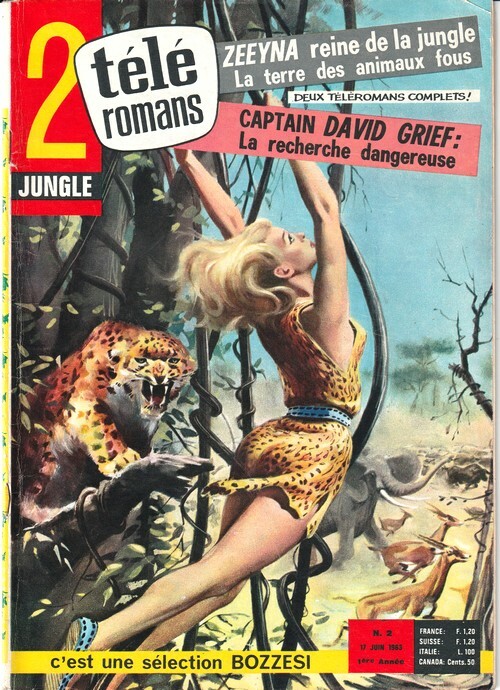
196226295Italie, Rome, Bozzesi Editeur / Série " Télé Romans " n° 2 de 1963. In-8 agrafé de 66 pages au format 26 x 18,5 cm. Couverture illustrée en couleurs. Plats, dos et intérieur frais. Cette publication, intitulée 2 télé romans Jungle, proposait la série télévisée américaine, Sheena, Queen of the Jungle, inédite en France, et qui est une version féminine de Tarzan. Cette dernière était suivie d'un épisode de la série Captain David Grief , d'après Jack London. Les deux titres paraissaient une semaine sur deux. La série télévisée, Sheena, datant de 1955, composée de 26 épisodes, était interprétée par Irish McCalla, et est renommée ici, pour des questions de droits : Zeeyna. Contrairement au succès remporté par la séries Star Ciné, cette série ne connut qu'une existence éphémère, de 12 numéros publiés. Le numéro annoncé dans le fascicule 12, pourrait ne pas avoir été publié. Ce fascicule contient : Zeeyna, Reine de la Jungle : La Terre des Animaux Fous et Captain David Grief : La Recherche Dangereuse. Très rare édition originale, surtout dans un tel état de fraicheur.
1983stela1227London: Institute of Contemporary Arts & The Scottish Arts Council 1983. 1983. oblong 4to. unpaginated. profusely illus. in b/w. included is a catalogue essay to supplement the book pp. 7 wrs. wrs. minor wear to extremities. Published in conjunction with an exhibition. Soft cover. Very Good. [London: Institute of Contemporary Arts & The Scottish Arts Council, 1983]. Paperback
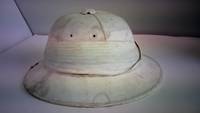
5a1660Charles Owen London um 1930. Mit Lederkinnriemen ohne Größenangabe fleckig/ an den Rändern mit etwas Abrieb . - Aus der Sammlung eines Beamten der deutschen Botschaft in Niamey/ Niger zwischen 1962 und 1966 - unknown
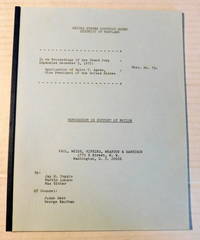
1973100164<p>Washington DC September 28 1973. 1973. Fine. - Quarto 11 inches high by 8-1/2 inches wide. Softcovers printed light blue paper wraps bound with a dark blue plastic spine. 24 mechanically reproduced pages printed on one side of each sheet. Fine.</p><p>Included with the brief are copies of arguments presented to the House of Representatives favoring an impeachment inquiry: 1 "Why the Calhoun Precedent Governs and the Colfax Precedent does not". 2 mechanically reproduced folio pages. and 2 "General Arguments as to Why House of Representatives Should Not Defer to Grand Jury Proceedings". 2 mechanically reproduced folio pages. Each are printed on 13 inch high by 8-1/2 inch wide sheets stapled at top left. There is minor faint creasing to the top edges as the pages of the "arguments" overlap the brief.</p><p>RARE.</p><p>Unbeknownst to the public and most of the Nixon administration a grand jury had been impaneled on December 5 1972 and a federal investigation into political corruption in Maryland was underway. The investigation focused on Spiro Agnew's activities as Baltimore County Executive and as Governor of Maryland. It was found that Agnew had accepted bribes and kickbacks from contractors in exchange for public service contracts. In September of 1973 Agnew engaged the K Street law firm of Paul Weiss Rifkind Wharton & Garrison. Martin London became his lead attorney. London together with Jay H. Topkis and Max Gitter drafted a "Memorandum In Support of Motion" addressing the question as to whether it would be constitutional to indict or criminally try a sitting Vice President. The memorandum puts forth historical arguments as to why "the constitution bars a criminal proceeding against the Vice President of the United States". In the meantime following a precedent set in 1826 by Vice President John C. Calhoun Agnew asked the House of Representatives to initiate an impeachment investigation into bribery charges. The hope was that his name would be cleared by such an investigation. However Speaker Carl Albert after consulting the parliamentarian and other members denied Agnew's request on September 26 1973 stating that the request "relates to matters before the courts. In view of that fact I as Speaker will not take any action.at this time". On October 5 1973 Solicitor General Robert Bork responded negatively to Agnew's request to enjoin the grand jury proceedings investigating him. He provided the United States District Court for the District of Maryland with a brief stating that "considerations based upon the Constitution's text history and rationale which indicate that all civil officers of the United States other than the President are amenable to the federal criminal process either before or after the conclusion of impeachment proceedings." Spiro Agnew resigned from his office on October 10 1973 pleading no contest to a single charge of tax evasion.</p> Washington, DC, September 28, 1973. paperback
16 p. 8vo. Disbound. William, Atkinson (1758-1846), was ordained priest in 1782, and in 1784 was appointed lecturer at the parish church of Bradford, Yorkshire. At Bradford he was embroiled in various controversies, poetical and political. He kept a printing press in his home and often issued pamphlets of his own on ecclesiastical and political topics under the name of the Old Inquirer. Between 1794 and 1829 he published a further twenty-five pamphlets, all of which took an increasingly reactionary approach to a variety of political, religious, and economic subjects. A consistent target was dissent; at one time he brought out a small serial called The Looking Glass, in which he bitterly expressed his views on this topic. He engaged in a short pamphlet war with `Vindex' (Edward Parsons) on the loyalty of dissenters. Atkinson was described as a `man of rare scholarly attainment, but of somewhat eccentric character' (Venn, Alum. Cant.). He was said to have been of Herculean build. We suspect that the subscribers' list here and the large sums pledged may be fictitious, and part of Atkinson's pamphlet war with a supposed 'Constitutional Association, for Suppressing Seditious Publications'. This pamphlet is VERY SCARCE. **PRICE JUST REDUCED! ENGLAND BOX 5
1995stela216London: 1995. 1995. 4to. unpaginated. profusely in colour some b/w. wrs. Exhibition catalogue. Soft cover. Fine. London: 1995. Paperback
1987stela217London: 1987. 1987. 4to. pp. 50. 5 colour fold-out illus. profusely illus. in colour & b/w. wrs. printed acetate dw. Exhibition catalogue. Soft cover. Fine/Dust Jacket Included. London: 1987. Paperback
1965stela626London: 1965. 1965. 8vo. pp. 20. 6 b/w plates. wrs. institutional bookplate & rubber stamp on front endpaper. Exhibition catalogue. Soft cover. Very Good. London: 1965. Paperback
pp. (16), 326, (2) [Publisher's catalogue]. Age stained. Title page torn without loss. XLib stamps on first and last fly leaves. XLib bookplate on front pastedown. 8vo. 190 mm. Original full leather binding, rubbed. Corners worn. Front board fragile. The London Cases, mentioned in the alternate title, refer to a work entitled: 'A Collection of Cases and other Discourses lately written to Recover Dissenters to the Communion of the Church of England' published in 1685. Thomas Bennet (1673-1728) was an English clergyman, known for controversial and polemical writings, and as a Hebrew scholart. SCARCE. **PRICE JUST REDUCED! RELIGION BOX 1
1967stela675London: 1967. 1967. 8vo. unpaginated. profusely illus. in b/w few colour illus. wrs. scuffed at edges spine bit sunned one page has two pink ink scores some surface loss to some interior pages in the outer margin. Exhibition catalogue. Soft cover. Very Good. London: 1967. Paperback
dola2324London: 2013. First Edition. Published on the occasion of an exhibition. 4to. pp. 55 1. numerous illus. some colour. pictorial wrs. mylar dw. small spot of sticker residue on mylar. dola2324 London: 2013 unknown
dola2264London: 1981. Exhibition Catalogue. 8vo. pp. 28. illus. wrs. Signed by Christo. dola2264 London: 1981 unknown
dola2265London: 2017. First Edition. Exhibition Catalogue. 4to. pp. 118 1. profusely illus. most colour. pictorial wrs. Very good copy. dola2265 [London: 2017] unknown
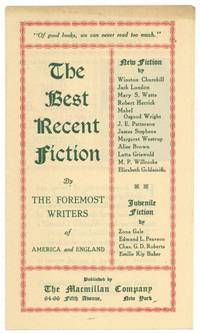
1913591474New York: The Macmillan Company 1913. Unbound. Near Fine. Publisher's advertisement. One sheet folded to make 12 pages. Measuring 3½" x 6" closed. Printed in green and red on pale yellow paper and illustrated with halftones of the author or book cover. Tiny nick at one fold and outer pages slightly tanned along the top edge very near fine. Advertises Churchill's The Inside of The Cup Jack London's The Valley of the Moon and nine other titles. A nice little advertisement. The Macmillan Company unknown
16891420701689. pamphlet. 4 34; 1 32 pages. 2 volumes in one. Thin 4to modern wrappers. London: Richard Baldwin 1689. Some foxing and light contemporary marginalia still very good.<br/> <br/> Wing STC R1515.<br/> <br/> unknown
1987LFA-126737388Un guide de 191 pages, format 120 x 260 mm, broché, illustré, édition de 1987, bon état
1997LFA-126747062Un guide de 390 pages, format 120 x 240 mm, broché couverture couleurs, illustré, édition de 1997, Michelin, bon état
1990LFA-126741603Un guide de 992 pages, format 115 x 180 mm, illustré de plans et cartes, broché couverture souple rempliée, publié en 1990, Hachette, bon état
1960LFA-126725101Une plaquette de 32 pages, format 135 x 200 mm, illustrée, brochée couverture couleurs, publiée en 1960, Her Majesty's Stationnery Office, bon état