1 286 résultats
1980LFA-126741449Un ouvrage de 64 pages, format 190 x 250 mm, illustré, broché couverture couleurs, publié en 1980, Edizioni Ditta Vincenz Carcavallo, bon état
1995LFA-126746691N° 16 (Novembre 1995) : revue de 66 pages, format 215 x 285 mm, illustrée, brochée couverture couleurs, bon état
1993LFA-126736988N° 1 (Décembre 1993) : revue de 66 pages, format 215 x 285 mm, illustrée, brochée couverture couleurs, bon état
1986LFA-126736990Revue de 120 pages, format 200 x 275 mm, illustrée, brochée couverture couleurs, bon état
1988LFA-126723988Revue de 176 pages, format 165 x 240 mm, illustrée, brochée couverture couleurs, publiée en 1988, bon état
Milano, presso Ant. Fort. Stella e figli, 1835, volumi 6 legati in 3, in-32, bella legatura coeva in mezza pelle, dorso con titolo e numero di volume in oro, fregi a secco, pp. XXVI, [3], da 30 a 306, [6] - 235, [3] - 287, [5] - 211, [3] - 211, [5] - 221, [3]. Collana "Piccola biblioteca di gabinetto", voll. 2-7. Edizione dello stesso anno della prima italiana (Milano, Tipografia Pirotta e C., 1835). Bell'esemplare.
2017LFA-126741523Un ouvrage de 104 pages, format 225 x 285 mm, illustré, relié cartonnage couleurs, publié en 2017, National Geographic, bon état
187022998pompei 1870 in-8 oblong pleine percale 1 Album, reliure pleine percaline rouge in-octavo à l'Italienne Editeur (hard-back percale in-8 oblong editor) (19 x 22,4 cm), à plaques spéciales monochromes (or et à froid) pour le dos et les plats (with specials covers editor for the spine and the cover), dos long muet (spine without raised bands), titre frappé "or" au centre du 1er plat (dorure fanée) dans un encadrement décoré à froid (plaque spéciale Editeur), même encadrement à froid pour la 4ème de couverture muette, toutes tranches lisses, orné d'un titre photographié en noir + 12 planches photographiques hors-texte albuminées colorisées (imprimées d'un seul côté), sans date (1870 environ) sans nom de photographe ni nom d'Editeur,
189822997pompei 1898 in-8 oblong pleine percale 1 Album, reliure pleine percaline rouge in-octavo à l'Italienne Editeur (hard-back percale in-8 oblong editor) (16,8 x 23,5 cm), à plaques spéciales monochromes (or, noir et à froid) pour le dos et les plats (with specials covers editor for the spine and the cover), dos long (spine without raised bands), titre frappé or (gilt title), avec mors fendus et accident à la coiffe supérieure, titre frappé "or" au centre du 1er plat (dorure fanée) dans un encadrement décoré "or" en noir et à froid (plaque spéciale Editeur), même encadrement à froid pour la 4ème de couverture muette, toutes tranches lisses, orné de 24 planches photographiques hors-texte albuminées en noir (imprimées d'un seul côté), sans date (seule indication : Pompëi January 1898) cela ne peut donc pas être après mais cela peut dater de 1870 sans nom de photographe ni nom d'Editeur,
201905417Paris, Robert Laffont, 1973 ; in-8, 240 pp., br.
43705Roma, Libreria dello stato (Colelction "Les itinéraires des Musées et Monuments de lItalie"), 1949, in 12 broché, 171 pages.
191061684Napoli: Richter &C. Marca Depositata ca. 1910. Oblong 8vo. 44 pp unpaginated. including 20 colour lithograph plates. Tan decorated softcovers colour lithograph plate mounted front cover of mosaic frieze of cherubs yapp fore-edges minor edgewear rubbing still a VG copy w/ gift ownership markings from “Don†on title dated 1944 presumably a U.S. GI as part of the American invasion force slogging their way up through the Italian peninsula during World War II from the library of Pfc William H. Bishop b. 1922 scion of the Bishop textiles family in Oregon & Washington re-enrolled at USC after his discharge to finish his undergraduate work studied law at Willamette Univ. and by 1950 was directing the Dyeing Department of the Pendleton Woolen Mills in Portland Oregon First edition of this uncommon souvenir celebrating the striking mosaic murals in the ruins of Pompeii and Herculaneum. Included are images of Psyches gathering flowers Fighting Cupids Appolo Victor of the serpent Python Pentheus cilled by the Bacchantes Cupids wearing garlands Punishment of Dirce Winepressing Cupids and more. Richter also released this work as a series of souvenir postcards during the Edwardian era. Richter &C., Marca Depositata, paperback
18549571Naples: Dallo Stabilimento Tipografico di Giuseppe Cataneo 1854. First edition. 28.5x22cm 196pp plus 15 plates several double-page bound at rear. In Italian text in 2 columns. Bound in ornately decorated crimson cloth stamped in gilt and black floral patterned endpapers gilt turn ins all edges gilt. Some rubbing to edges of boards staining to paste downs but clean and bright internally and very good or better. <br /> <br /> Bound volume of the second year of this uncommon Italian archeological periodical edited by Giulio Minervini of the Royal Museum at Naples and issued during the height of Bourbon-era excavations at Pompeii. The finely engraved plates depict Pompeian frescoes figural scenes inscriptions and archaeological objects including detailed renderings of wall paintings and classical motifs. According to OCLC this publication ran from 1842-1860 with the Nuova Serie beginning in 1852. As far as physical holdings OCLC cites perhaps 3 institutions all in Europe. Dallo Stabilimento Tipografico di Giuseppe Cataneo unknown
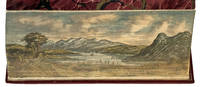
1868FF2551London:: Bell and Daldy 1868. 1868. Thick 8vo. xvi 579 1 pp. 277 woodcuts 8 illus. including frontispiece reattached and large folding plate at rear showing excavations at Pompeii; lacks facing tissue to frontispiece; occasional light foxing. With a handsome full crushed crimson morocco gilt rules surround corner fillets raised bands all edges gilt. Armorial bookplate of Lank. Very good. With a fine fore-edge painting in watercolors found hidden under the gold showing Lake 'Massawhippy' sic The Lake Massawippi Eastern Townships Quebec Canada is painted after an engraving by S. Bradshaw and published by George Virtue 1841 after a drawing by William Henry Bartlett. The image appeared in Bartlett's Canadian Scenery 1842. / This fore-edge painting has been in a private collection for an unknown period of time; the date painted is unknown but likely in the range of the 1960s or 1970s. Thomas Henry Dyer 1804-1888 was an English historical and antiquarian writer. Bell and Daldy, 1868. hardcover
47834P., Grund, 1999, in 4° cartonnage illustré de l'éditeur, jaquette illustrée, 168 pages ; importante iconographie en couleurs.
2005LFA-126750379Une plaquette de 32 pages, format 210 x 270 mm, illustrée, brochée couverture couleurs, publiée en 2005, Soprintendenza Archeologica di Pompéi, bon état
2001LFA-126749127Un ouvrage de 70 pages, format 100 x 150 mm, illustré, broché couverture couleurs, publié en 2001, Incisivo, bon état
2004LFA-126738645Un ouvrage de 145 pages, format 120 x 220 mm, illustré, broché couverture couleurs, publié en 2004, Edizioni Marius, bon état
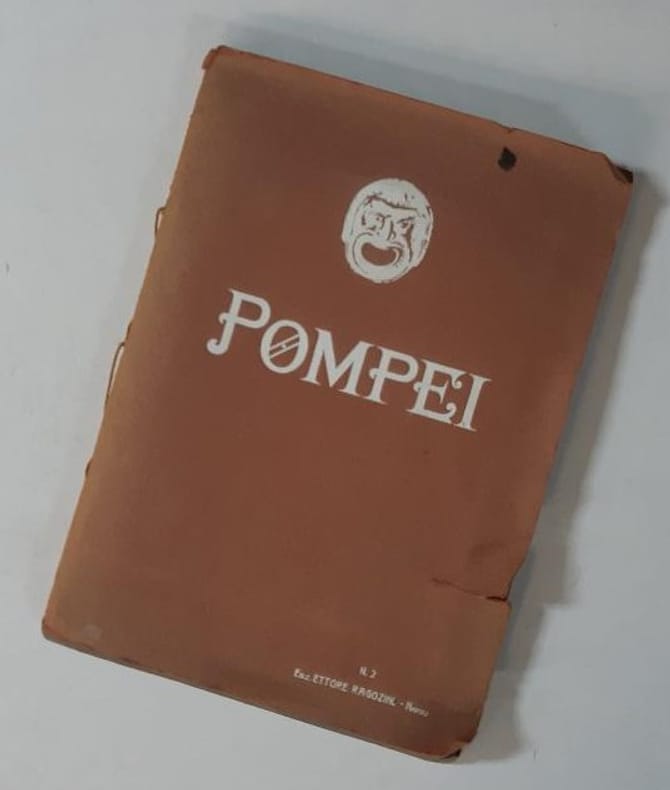
1930114027Napoli, Ediz. Ettore Ragozino 1930 In-4 33,5 x 24 cm. Reliure à cordonnet, couverture havane, titre et figure gaufré en blanc sur le premier plat, 16 feuillets violine non numérotés contenant 30 photographies en sépia sous serpentes légendées en italien. Premier plat avec déchirure marginale.
154388<p>8° mm 151x104; cc. 32. Marca tipografica al frontespizio. Margine superiore un poco rifilato. Pergamena posteriore.</p><p>Seconda edizione del dialogo albertiano - meglio conosciuto sotto il titolo di <em>Theogenius</em> - dopo quella che priva di dati tipografici ISTC cataloga come: "Florence 1500" cfr. L.B. Alberti <em>Opere volgari</em> II <em>Rime e trattati morali</em> a cura di C. Grayson Bari 1966 p. 409.</p><p>Il <em>Theogenius</em> rappresenta un capitolo poco noto della fortuna e dell'influsso dell'epicureismo nel Quattrocento. In questo dialogo infatti l'Alberti illustra diversi temi dell'etica epicurea e <strong>traduce alcuni versi del <em>De rerum natura</em> di Lucrezio </strong>S. Gambino <em>Alberti lettore di Lucrezio: motivi lucreziani nel "Theogenius"</em> "Albertiana" IV 2001 pp. 69-84.</p><p>Leon Battista Alberti's <em>Theogenius</em> revived and revised the ancient view developed in the Hellenistic age according to which philosophy aims to form rather than inform people showing them how to cultivate a specific attitude towards existence through a rational comprehension of the nature of humanity and its place in the cosmos. This view of philosophy as a way of life was challenged by the development of scholastic philosophy seen as a body of speculative doctrines and professional skills ancillary to the superior wisdom of theology. Nevertheless it survived thanks to Renaissance humanists like Petrarch Alberti Erasmus and Montaigne. <strong>On the influence of Lucretius on Italian Humanism after Poggio Bracciolini's discovery of the only surviving manuscript of <em>De rerum natura</em> 1417</strong> cf. A. Brown <em>The Return of Lucretius to Renaissance Florence</em> Harvard University Press 2010 and S. Greenblatt <em>The Swerve: How the Renaissance Began</em> London 2011.</p> Appresso Paulo Girardo, [colophon:] per Venturino Rosinello
LFA-126739739Revue de 50 pages, format 205 x 285 mm, illustrée, brochée couverture couleurs, bon état
2002LFA-126739772Revue de 82 pages, format 220 x 280 mm, illustrée, brochée couverture couleurs, bon état
A. BALDI La Pompei giudaico-cristiana. , Di Mauro 1964 italian, 167 SC658Copertina rigidavolume in ottime condizioni, copertina e interno in condizioni eccellenti, legatura salda, con tavole fuori testo in b\n167 pagine circaCopertina come da foto
1952HIS1556C119GAR1952 / 182 pages. Broché. Editions Fernand Nathan.
A. MAIURI Pompei. Novara, Istituto Grafico De Agostini 1943 italian, 155 SC626Copertina rigidavolume in buone condizioni, rilegato con copertina personalizzata, interno in buono stato, legatura salda, illustrato in b\n155 pagine circaCopertina come da foto