28 523 résultats
1872139091872 broché in-octavo (paperback in-octavo), dos et couverture gris imprimés (grey spine and cover printed), tranches non rognées (edges no smooth), illustrations : 15 gravures-photographies par (15 engraving-photographies by) Deschamps et enrichi de 4 cartes (and 4 additional maps), 360 pages, 1872 à Paris Henri Plon Imprimeur-Editeur,
189230851892 rel. d. chagr. rouge in-quarto double cavalier à coins, dos 5 nefs lég. frottés - titre frappé or -, tête dorée, mouill. en queue / p. de garde, nombr. gr. plans et cartes, 366 p., 1892 librairie delagrave,
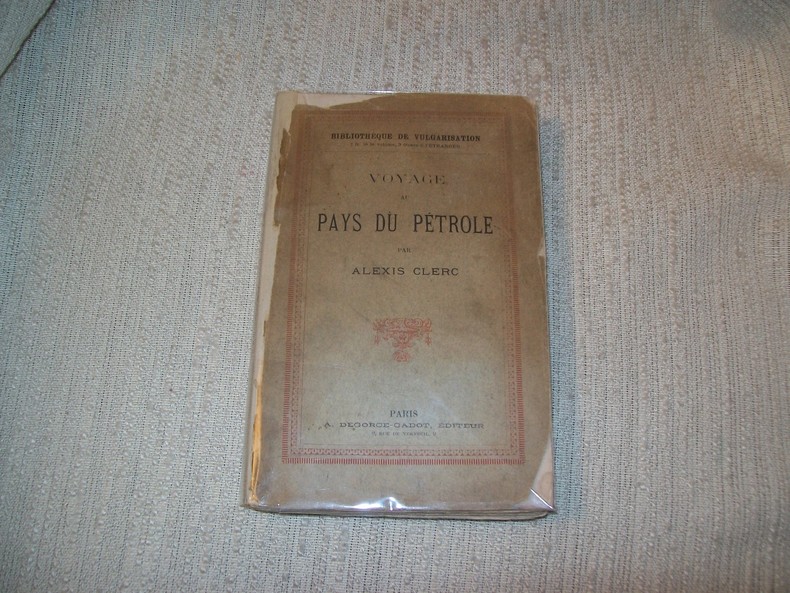
1882GITg711Paris Degorce-Cadot sans date 1882. In-12 broché 323pp. Dos factice, petits manques en bordure de la couverture, intérieur en bon état et complet. Monaghan 453, 1re édition (une 2e édition parue en 1884 sous un titre différent et avec des illustrations).
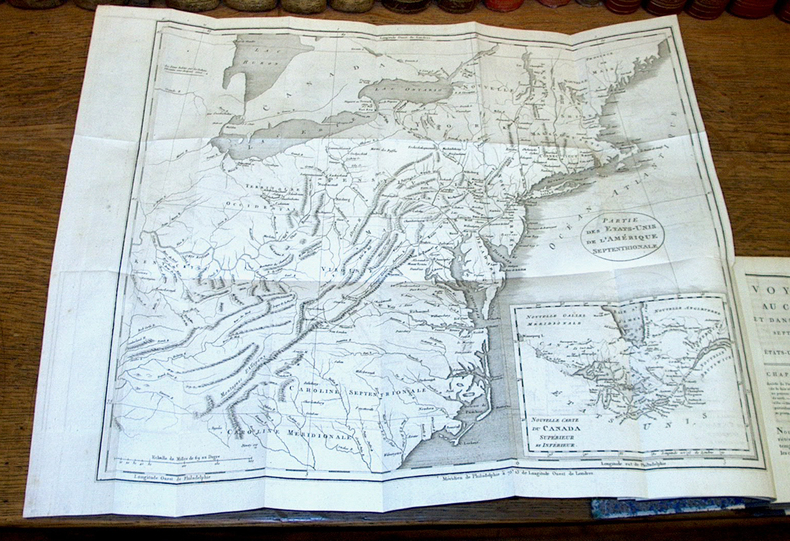
1800P2-6C-1Paris, imprimerie de Munier, chez Lepetit jeune, 8 [1800]. 3 vol. in-8° (210x130mm) ; Illustré de 10 planches (sur 12) h.-t. (qqs pp. lég. brunies, rares taches ou mouill. marg., large mouill. au début du vol. II), carte dépliante du Canada. ÉDITION ORIGINALE DE LA TRADUCTION de ce récit de voyage aux États-Unis et au Canada que l'explorateur irlandais Weld (1774-1856) entreprit afin d'y étudier les conditions de vie car il était persuadé que les Irlandais auraient à y émigrer massivement. Il porte un jugement sévère envers l'Amérique, lui préférant le Canada. L'édition originale en anglais parut à Londres en 1799. Illustré de 9 planches (mont Vernon et maison de Washington, rivière de Patowmac - i.e. rivière Hudson -, chutes du Niagara et de la rivière Mohawk, cap Diamant...) et d'1 carte dépliante figurant l'Amérique du Nord. First French edition of the travel through USA and Canada which Weld also made as research into countries for the Irish to emigrate to. Illustrated with 1 folding map and with 9 (of 11) plates. (REF: P2-6B)
1803001778Paris Chez Gérard, Imprimerie de Munier 1803. Trois volumes in-8 (205 x 130 mm), demi-veau glacé bleu marine, dos lisse orné or et à froid, tranches mouchetées (reliure milieu 19e s.). Seconde édition française, ornée d'une carte dépliante et de 11 planches gravées sur acier d'après les dessins de l'auteur, représentant le Mont Vernon et la maison du Général Washington, les Chutes du Niagara, le Cap-Diamant, etc. Ex-libris Mr de Gaudechart. (dos très légèrement passé, quelques défauts, frottements sur les plats, quelques manques de cuir tome 1, quelques petites déchirures marginales, t. 3 sur les 30 premières pages mouillure angulaire, rousseurs). // Three octavo volumes (205 x 130 mm), dark blue glazed half calf, smooth spine tooled in gilt and blind, sprinkled edges (middle of 19th-cent. binding). Second french edition, illustrated with a folding map and 11 plates engraved on steel after the author's drawings, depicting Mont Vernon and General Washington's house, Niagara Falls, Cap-Diamant, etc. Bookplate Mr de Gaudechart. (spine a little bit faded, some defects, rubbings on covers, some lack of leather vol. 1, some little tears, vol. 3 water-stain on top corner of the 30 first pages, spots).
Broch?. 302 pages.
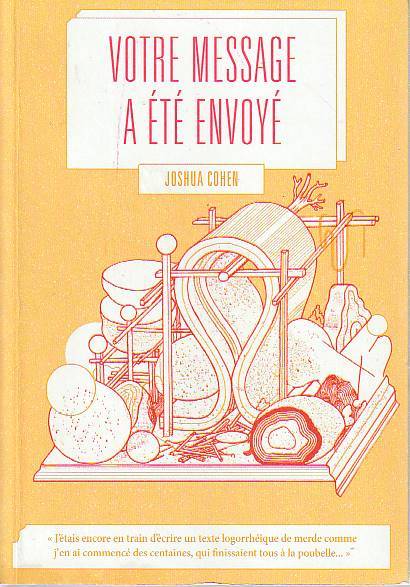
53149Le nouvel Attila, 2018, 217 pp., broché, très bon état.
Le nouvel Attila, 2018, 217 pp., broché, très bon état.
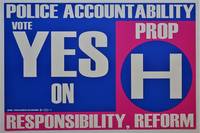
008562San Francisco: Printed By Allied Printing of Northern California No Date 2003. Passed Nov. 4 2003 Proposition H made San Francisco the first city in the nation in which every stage of the police complaint process - from the investigation of the complaint to disciplinary decisions - is controlled by civilians. SCARCE. Near Fine small corner creases. Well suited for framing will be shipped loosely rolled in mailing tube. . First Printing. Poster. Near Fine. 12" x 18". Printed By Allied Printing of Northern California books
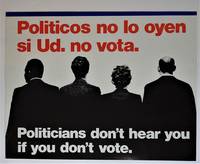
008559No Place: No Publisher No date. Image taken from 1987 poster originally published by Midwest Voter Education Registration Project. titled "Destino '87". Printed on thick cardstock Near Fine a few faint creases at edges. May have been printed as a placard or a sign to carry in a march or at an event. Features a photograph of four men wearing dark suits and with their bcks turned. As topical and relevant today as it was then. Will ship flat. . Poster. Near Fine. 16" x 20 1/2". No Publisher books
008559No Place: No Publisher Poster. Near Fine. Poster. 16" x 20 1/2". No date. Image taken from 1987 poster originally published by Midwest Voter Education Registration Project. titled "Destino '87". Printed on thick cardstock Near Fine a few faint creases at edges. May have been printed as a placard or a sign to carry in a march or at an event. Features a photograph of four men wearing dark suits and with their bcks turned. As topical and relevant today as it was then. Will ship flat. No Publisher unknown
0483704512.Ghardcover. Good. Access codes and supplements are not guaranteed with used items. May be an ex-library book. hardcover
1330929489.Gpaperback. Good. Access codes and supplements are not guaranteed with used items. May be an ex-library book. paperback
200676448Washington DC: U. S. Government Printing Office 2006. Presumed First Edition First printing. Wraps. Good. iii 1 302. 6 pages. Illustrations. Occasional footnotes. Some bottom corners curved at front and back. The chairman stated: Today we will examine the impact that Federal examiners and observers have had on increasing minority participation in the political process and the continued need for these provisions in the future. The Voting Rights Act of 1965 is a landmark piece of federal legislation in the United States that prohibits racial discrimination in voting.78 It was signed into law by President Lyndon B. Johnson during the height of the Civil Rights Movement on August 6 1965 and Congress later amended the Act five times to expand its protections.7 Designed to enforce the voting rights guaranteed by the Fourteenth and Fifteenth Amendments to the United States Constitution the Act secured the right to vote for racial minorities throughout the country especially in the South. According to the U.S. Department of Justice the Act is considered to be the most effective piece of federal civil rights legislation ever enacted in the country. U. S. Government Printing Office paperback
200676534Washington DC: U. S. Government Printing Office 2006. Presumed First Edition First printing. Wraps. Good. Serial No. 109-79. Volume I ONLY. Volume I v 1 1684 6 pages. During this hearing Representative John Lewis of Georgia stated "The Voting Rights Act helped expand our democracy and open up our democracy to elect hundreds of thousands and millions of our citizens who had been kept out let them in. The Voting Rights Act was needed then and it is needed now. The purpose of section 5 is very unique and very important. It prevents discriminatory plans from being enacted in the first place. It put the burden on the judiciary to show that the plan does not discriminate against minority voters. Congress Lewis continued "Prior to section 5 the burden was on the minority voters to challenge the voting practice; and every section was good at coming up with different procedures that had the same result discrimination. Anita Earls' testimony talks in some detail about the recent example how this is still happening. The difference is that we have section 5 to prevent these practices from harming minority voters. Many people like the court said that we have come a long ways; and again today I would say that we've come a distance. We've come a long way and that is true. We're not the same Nation that we were 40 years ago but it's clear today that we have not come far enough. Section 5 is still needed. Today section 5 prevents discrimination and redistricting and changes that move voting locations out of minority neighborhoods into less accessible areas. These are issues that are different from the fight to register to vote but they are no less fundamental." U. S. Government Printing Office paperback
200676537Washington DC: U. S. Government Printing Office 2006. Presumed First Edition First printing. Wraps. Good. Serial No. 109-103. 4 volume set. Volume I v 1 1453 5 pages. Volume II v 1. 1455-2388 2. Volume III v 1 2389-4296. Volume IV v 1 4297-5711 3 pages. Footnotes. Illustrations. The Subcommittee will be holding its tenth hearing examining the Voting Rights Act of 1965 and the temporary provisions that are to expire. They're set to expire in 2007 unless we reauthorize by Congress which I think most of us anticipate will occur. The Subcommittee examined each of the expiring provisions in great detail. This afternoon we examine the evidence of continued discrimination against racial and language minority citizens since 1982 that have been compiled by a number of non-governmental organizations who will be testifying. I'd thank these organizations for the time and effort that they have put into completing these reports and in making sure that this Committee and Congress has before it a complete and accurate record of discrimination over the last 25 years. In continuing to reauthorize the temporary provisions Congress on four separate occasions examined the extent to which discrimination continued to exist by analyzing information such as enforcement statistics minority voter registration rates minority voter turnout and litigation pursued to protect minority voting rights. Federal agencies such as the United States Commission on Civil Rights were instrumental in investigating analyzing and reporting back to Congress on the state of minority voting during each consideration. Each time Congress concluded based upon the evidence presented that the exceptional conditions which existed in 1966 continued to exist in 1970 1975 1982 and in 1992 when it was last reauthorized. This afternoon the Committee continues to examine whether the exceptional conditions warranting the extension of the temporary provisions continue to exist in 2006. U. S. Government Printing Office paperback
200676533Washington DC: U. S. Government Printing Office 2006. Presumed First Edition First printing. Wraps. Good. Serial No. 109-79. Two volumes. Volume I v 1 1684 6 pages Volume II v 1 1685-3375 pages. During this hearing Representative John Lewis of Georgia stated "The Voting Rights Act helped expand our democracy and open up our democracy to elect hundreds of thousands and millions of our citizens who had been kept out let them in. The Voting Rights Act was needed then and it is needed now. The purpose of section 5 is very unique and very important. It prevents discriminatory plans from being enacted in the first place. It put the burden on the judiciary to show that the plan does not discriminate against minority voters. Congress Lewis continued "Prior to section 5 the burden was on the minority voters to challenge the voting practice; and every section was good at coming up with different procedures that had the same result discrimination. Anita Earls' testimony talks in some detail about the recent example how this is still happening. The difference is that we have section 5 to prevent these practices from harming minority voters. Many people like the court said that we have come a long ways; and again today I would say that we've come a distance. We've come a long way and that is true. We're not the same Nation that we were 40 years ago but it's clear today that we have not come far enough. Section 5 is still needed. Today section 5 prevents discrimination and redistricting and changes that move voting locations out of minority neighborhoods into less accessible areas. These are issues that are different from the fight to register to vote but they are no less fundamental." U. S. Government Printing Office paperback
200676535Washington DC: U. S. Government Printing Office 2006. Presumed First Edition First printing. Wraps. Good. Serial No. 109-83. Part I ONLY. Volume I iv 1446 22 pages. This Committee will focus on section 203 the provision authorizing bilingual language assistance to American citizens who are members of covered language minority groups and who have limited English proficiency. Section 203 has not been revisited by Congress since 1992 and like the sections that we have discussed in previous hearings is set to expire in 2007 unless reauthorized. The Voting Rights Act was enacted in 1965 in response to a history of racial discrimination against some of our Nation's citizens. In 1975 Congress expanded the Voting Rights Act to include section 203 and its companion section 4f. Section 203 requires certain jurisdictions to provide bilingual election assistance-including notices instructions information and ballots-to citizens who are members of a designated language minority group and who have limited English proficiency. As cited in the 1975 House Report section 203 was added in response to ''an extensive evidentiary record demonstrating the prevalence of voting discrimination and high illiteracy rates among language minorities.'' This record revealed that similar discrimination patterns and practices that had been used to prevent African-Americans from voting were being administered against Asian-Americans American Indians Native Alaskans and citizens of Hispanic origin. These citizens are more than likely to live in environments in which the dominant language is other than English. Section 203 breaks down these barriers by providing citizens in a language minority group with the assistance necessary to participate in the political process. Section 203 has enabled an increased number of minority citizens to register and cast ballots as revealed in the last Census and latest election records. U. S. Government Printing Office paperback
200676538Washington DC: U. S. Government Printing Office 2006. Presumed First Edition First printing. Wraps. Good. Serial No. 109-103. Volume IV ONLY. Volume IV v 1 4297-5711 3 pages. Footnotes. Illustrations. This volume contains the Appendix to Hearings: Table of Contents and Appendix Materials Continued from the National Commission on the Voting Rights Act. The Subcommittee will be holding its tenth hearing examining the Voting Rights Act of 1965 and the temporary provisions that are to expire. They're set to expire in 2007 unless we reauthorize by Congress which I think most of us anticipate will occur. The Subcommittee examined each of the expiring provisions in great detail. This afternoon we examine the evidence of continued discrimination against racial and language minority citizens since 1982 that have been compiled by a number of non-governmental organizations who will be testifying. I'd thank these organizations for completing these reports and in making sure that this Committee has before it a complete and accurate record of discrimination over the last 25 years. In continuing to reauthorize the temporary provisions Congress on four separate occasions examined the extent to which discrimination continued to exist by analyzing information such as enforcement statistics minority voter registration rates minority voter turnout and litigation pursued to protect minority voting rights. Federal agencies such as the United States Commission on Civil Rights were instrumental in investigating analyzing and reporting back to Congress on the state of minority voting during each consideration. Each time Congress concluded based upon the evidence presented that the exceptional conditions which existed in 1966 continued to exist in 1970 1975 1982 and in 1992 when it was last reauthorized. This afternoon the Committee continues to examine whether the exceptional conditions warranting the extension of the temporary provisions continue to exist in 2006. U. S. Government Printing Office paperback
200676619Washington DC: U. S. Government Printing Office 2006. Presumed First Edition First printing. Wraps. Good. Serial No. 109-103. 3 of 4 volume set. Volume I v 1 1453 5 pages. Volume II v 1. 1455-2388 2. Volume III v 1 2389-4296. Volume IV NOT PRESENT. Footnotes. Illustrations. The Subcommittee will be holding its tenth hearing examining the Voting Rights Act of 1965 and the temporary provisions that are to expire. They're set to expire in 2007 unless we reauthorize by Congress which I think most of us anticipate will occur. The Subcommittee examined each of the expiring provisions in great detail. This afternoon we examine the evidence of continued discrimination against racial and language minority citizens since 1982 that have been compiled by a number of non-governmental organizations who will be testifying. I'd thank these organizations for the time and effort that they have put into completing these reports and in making sure that this Committee and Congress has before it a complete and accurate record of discrimination over the last 25 years. In continuing to reauthorize the temporary provisions Congress on four separate occasions examined the extent to which discrimination continued to exist by analyzing information such as enforcement statistics minority voter registration rates minority voter turnout and litigation pursued to protect minority voting rights. Federal agencies such as the United States Commission on Civil Rights were instrumental in investigating analyzing and reporting back to Congress on the state of minority voting during each consideration. Each time Congress concluded based upon the evidence presented that the exceptional conditions which existed in 1966 continued to exist in 1970 1975 1982 and in 1992 when it was last reauthorized. This afternoon the Committee continues to examine whether the exceptional conditions warranting the extension of the temporary provisions continue to exist in 2006. U. S. Government Printing Office paperback
189p. 8vo. Original full cloth binding. Original glassine wraps. Very scarce. **PRICE JUST REDUCED! Coldwar/Economics 6
1876DEMO004430IChicago: H. F. Kett & Co. 1876. First edition. Hardcover. Good. lithographed portraits. 8vo 342 pages later blue buckram. Rare. <br/><br/>Buck 772. With a two-page hand-colored map of the county and lithographed portraits of notables such as Shabbona the Marsh brothers inventors of the Marsh Harvester and the inventors of barbed wire. H. F. Kett & Co. hardcover
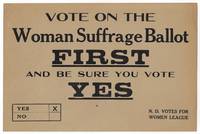
22961N.D. Votes for Women League. First Edition. Near fine. Undated likely either 1914 or 1917. Small broadside or window sign approximately 5.75" x 8.75" printed in black on tan stock slightly thicker than newsprint. Minor corner wear; near fine. The North Dakota Votes for Women League was organized in 1911 and held their first state convention in Fargo in 1912. The first statewide referendum on women's suffrage took place in 1914 but failed. In 1917 women gained the right to vote in municipal and presidential elections in North Dakota. On December 1 1919 North Dakota became the 20th state to ratify the Nineteenth Amendment. N.D. Votes for Women League unknown
189433722Couverture rigide. Reliure demi-basane. 216 pages.
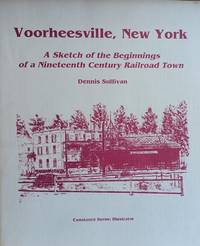
198958656Voorheesville NY: The Village of Voorheesville. Good; Rear cover and last 20 pages wrinkled from prior dampness. 1989. First Printing. Softcover. 0962228206 . Acknowledgments foreword black and white photos and illustrations maps notes references and index. A solid copy of this history of the Albany County village of Voorheesville. ; 4to 11" - 13" tall; 180 pages . The Village of Voorheesville paperback