[Book Club of California] King, ClarenceBiblio.com
8 977 résultats
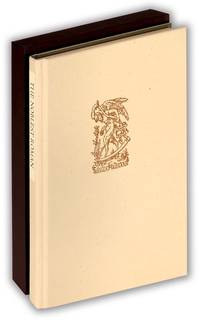
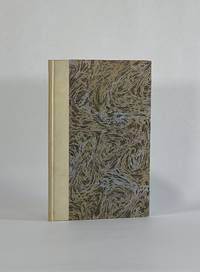
19388331San Francisco: Book Club of California University of California Press 1938. Vellum Binding. Very Good binding. Octavo. xx 2 21 3 pp. Limited edition one of 350 copies. As issued in marbled paper over boards backed in vellum. Spine gilt is a trifle dulled but generally a very nice copy. <br /> <br /> Originally composed as a letter to King's friend the "Bachelor of San Francisco" and first published in Century Magazine in 1886 this delightful tale was inspired by Cervantes and his account of Don Quixote's encounter with the legendary helmet of the Moorish king. Prior to this edition it only appeared in book for in 1904. This copy with an inscription from historian Carl Wheat author of Mapping of the Trans-Mississippi West to Joe Blumenthal of the Spiral Press "a fellow member of WOOFFB." Magee Book Club of California 55. Book Club of California | University of California Press unknown
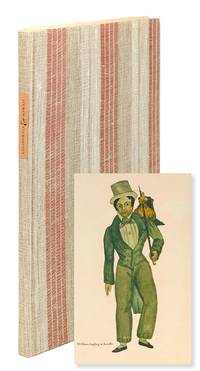
19701268021970. San Francisco: Book Club of California 1970. <br /> <br /> Folio 22 color plates reproducing watercolor sketches by Meyers. Loose woven fabric over brick red boards printed paper backstrip label. A fine copy with two copies of the prospectus laid in each with a sample plate. Bookplate.<br /> <br /> § Limited to 450 copies printed by Robert Grabhorn and Andrew Hoyem. Publication number 136 of the Book Club of California. "This is the long-desired sequel to one of the Club's major works Gunner Meyer's Journal of a Cruise published fifteen years ago". The book presents 22 of Meyers' watercolors of California and Hawaii made between 1841 and 1844 which did not appear in the first publication with commentary by John Haskell Kemble two previously unpublished letters by Meyers and his horoscope cast by him in his journal with an interpretation by a modern astrologist. unknown
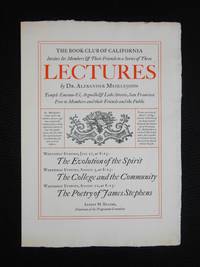
1927CNBR245San Francisco: John Henry Nash for The Book Club of California 1927. No binding. Near fine. Nash John Henry. Folio single leaf folded once to form 4 pp. Dr. Alexander Meiklejohn 1872-1964 was an advocate of free speech and higher education based on the idea of a self-governing community with advisors teaching through tutorials instead of lectures and with an emphasis on the "great books"; he opened the "Experimental College" at the University of Wisconsin in 1927. Unfortunately the experiment failed with the students developing a reputation for "radicalism and wanton anarchy" perhaps an idea ahead of its time resulting in the closing of the College in 1932. <br /> <br /> This scarce BCC broadside printed by John Henry Nash announces three lectures to be given by him: "The Evolution of Spirit" "The College and the Community" and "The Poetry of James Stephens." Undated but we believe it was printed in 1927 based on a mention in the BCC 100 of the first lecture Dr. Meiklejohn gave: "In 1925 under the auspices of the Club but not connected with any planned series Dr. Alexander Meiklejohn spoke at the Palace Hotel on 'Democracy and Excellence' " cf p. xiv BCC 100. The broadside states "Dr. Meiklejohn's lecture before the members two years ago was so favorably received and so many expressed a desire to hear the speaker again that the Club takes special pleasure in announcing this new series of lectures." A quick look at the calendar for 1927 confirms that July 27 August 3 and August 10 did all fall on a Wednesday as the broadside states. Not listed in either O'Day or the BCC 100; seemingly scarce with none currently in the marketplace and a search of OCLC locating one copy at Cal.<br /> <br /> ___DESCRIPTION: A single leaf folded once to four pp. the announcement on the lecture series on the first page in black and red surrounded by a red ruled border two inside pages blank on the final page "The Book Club of California wishes to express its appreciation to the trustees of the Temple Emanu-El for the use of its beautiful building for these lectures" and beneath "San Francisco: John Henry Nash Printer"; folio size measuring 12" by 8.5".<br /> <br /> ___CONDITION: This delicate broadside could almost be called fine; the paper is clean the inks bright it is free of soil and edgewear other than a single short closed tear to the top margin of the first page; some light age-toning else fine.<br /> <br /> ___POSTAGE: International customers please note that additional postage may apply as the standard does not always cover costs; please inquire for details.<br /> <br /> ___Swan's Fine Books is pleased to be a member of the ABAA ILAB and IOBA and we stand behind every book we sell. Please contact us with any questions you may have we are here to help. John Henry Nash for The Book Club of California unknown
201636844San Francisco: The Book Club of California 2016. Hardcover. Fine. Hardcover. 105 of 300 copies signed by both authors. "In this book we will endeavor to unravel some of the key elements of the story of Bruce Rogers's Centaur typeface and set the record straight. Examining the muddled origination of the design the intellectual property issues involved and the curious story of the font's recutting for machine composition we hope to shed new light on the evolution of this seminal typeface" introduction. Set in three digital versions of Bruce Rogers's Centaur Type: the text in a recent revival of the original foundry Centaur rendered by Jerry Kelly and a new caption Centaur by Toshi Omagari used in this book for the first time with monotype Centaur used fro display. Design and typography by Jerry Kelly. Printed in black and dark red. Bound in speckled cream paper covered boards with paper title label to spine panel. Bruce Rogers design to front board in brown. Clean and bright. Housed in a brown paper covered slipcase with minor sunning to edges and light rubbing to panels. 120 pages. PRI/102323. The Book Club of California hardcover
20166236San Francisco: The Book Club of California 2016. First Edition. Hardcover. Fine/near fine. Fine. Hardcover. 207 of 300 copies signed by both authors. Book as new includes the prospectus. Minor wear/aging to slipcase still near fine no paper splits. <br/><br/> The Book Club of California hardcover
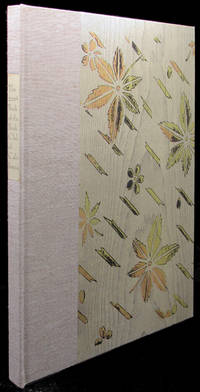
199334322San Francisco: The Book Club of California 1993. First Edition Limited to 500 Copies Only. Printed in red and black and illustrated with full page plates and the prospectus announcing the Alvarado Vignettes. Folio publishers original linen over pictorially decorated paper covered boards the spine with printed lettering label. x 2 62 pp. A pristine copy beautifully preserved as mint. FIRST EDITION OF THE TWO HUNDREDTH BOOK PUBLISHED BY THE BOOK CLUB OF CALIFORNIA. The printing was done by the Mastercraft Press and bound by Cardoza-James both of San Francisco in August 1993. The format and type M&H's Van Dijck follow the design of the original "100" as created for the Club by the Grabhorn Press in 1958. A beautiful book and a firm testament to the ongoing commitment of the Club to producing beautiful and timely works for over 100 years. The Club is currently offering its 243rd book. The Book Club of California hardcover
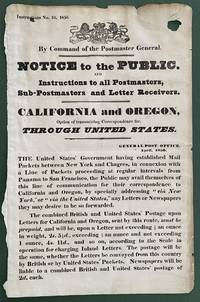
1850List2416Great Britain 1850. Broadside measuring 9 ⅞ x 15 ⅜ inches. Some chipping and wear to edge ink number written in corner two small section of loss due to improper mounting very good overall. Coat of arms of the United Kingdom above printed text. Very Good. A scarce broadside relating to British postal rates across the Panama Route through the Chagres River which supplied mail to California and Oregon beginning in 1848 before eventually being replaced by the Overland route in 1860. The service was characterized by long delay times as steamships on either side of the isthmus were often not coordinated causing major delays in the delivery. Several different steamship companies operated privately some carrying express mail. The letters were transported by canoe or pack animal across the isthmus. Postmaster General Cave Johnson began establishing post offices in California in 1848. Johnson also oversaw the transition to the prepaid delivery system. The broadside here of which we find no other records does state that postage must be prepaid and that the route can be accessed by writing “via New York†on the letters. A scarce postal history item relating to the expansion of mail services to California. We find no other records of this institutionally or in the trade. unknown
201612089Paris, Fernand Nathan, 1967 ; grand in-12, 159 pp., cartonnage de l'éditeur. En bon état pleine toie orange un peu salis - adapté par Jean Portail.
201323512Paris, Gallimard bibliotheque du voyageur, 1997 ; in-8, 394 pp., br.
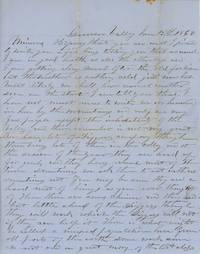
1860List3317Likely Plumas County California 1860. Single four-page letter measuring 7 ½ x 9 ½ inches. Folded with some small tears at folds; excellent. A letter from “Charly†to his wife or fiance written in January of 1860 from “Ganser possibly sic Valley†likely in Plumas County California. Located in the Sierra Nevada Plumas County contained a number of mining towns following the California gold rush; however Charly does not specify his line of work or discuss any particulars. Instead—besides inquiring after the health of family and friends and considering when he would return home—Charly discusses the other residents of the valley. He writes:<br /> <br /> “I can tell you that I have not much news to write we are hemmed in here by the mountains and only see very few people except the inhabitants of the valley and their number is not very great we have lots of Digger company though there being lots of them in the valley and at this season of the year they are hard up for grub and they hang round most of the time sometimes we ask them to eat with us sometimes not You may be sure they are a hard nest of beings as you ever thought of them there are sorry Chinese and they are but little ahead of the Diggers though they will work which the Diggers will not if they can help it There is what might be called a mixed population here from all parts of the earth some work some do not and there are a great many of the last classâ€.<br /> <br /> “Digger†is a derogatory term applied to several Indigenous peoples in the region referring to their diet of root vegetables. In this part of California they would likely have been Northern Paiute or Mono people. Following the US’s acquisition of California and especially after the discovery of gold these groups were decimated by murder enslavement and disease; an 1896 article notes that the Plumas area had proportionally more survivors of American depredations.1<br /> <br /> Of interest to historians of the late gold rush especially relations between Anglo-Americans and other races.<br /> <br /> 1 Mabel L. Miller “The So-Called California ‘Diggers’†Popular Science Monthly 50 December 1896 201–214. unknown
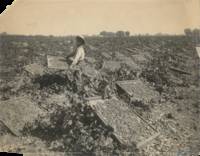
1901List3115Fresno California: Detroit Photographic Co 1901. Single photograph measuring 7 x 8 ¾ inches. Captioned on negative with Brown Brothers and Frank A. Munsey stamps verso. Wear and damage with large folds on right hand side missing upper and lower left corners including intersecting with caption text. Very good plus. A photograph of a young man standing in a grape field and holding a drying rack in Fresno 1901. Grape farming in Fresno began in the early 1870s and by the 1880s grapes including raisin grapes were the area’s main crop. Cultivation in Fresno’s semi-arid climate required a system for irrigation and so was generally up to wealthy capitalists corporations or sometimes farming colonies like the Fresno Colony.1<br /> <br /> 1 Thomas Pinney A History of Wine in America: From the Beginnings to Prohibition University of California Press 1989. Detroit Photographic Co unknown
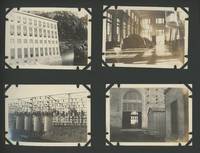
1921List3510California 1921. Photo album measuring 10 x 12 inches containing approximately 360 photographs. Photos are approximately 3 ½ x 4 ½ and smaller with very good to excellent contrast. Album with wear to covers and edges of pages; photos generally excellent to Near Fine. A photo album belonging to an unknown Southern California family; license plates date the album to about 1914 to 1921. Most of the photographs are of family life including farm work: piles of hay; cows pigs chickens turkeys and horse-drawn plows; gigantic watermelons; and family members posing outside vineyards and in cornfields. The family also documented their car and their recreational activities including swimming hiking and fishing picnics and carriage rides. It appears that they were quite proud of their car and were frequent “auto-campers.†They seem to have taken a trip to Mexico or the Southwest as some shots show wide desert landscapes Joshua trees and low Spanish colonial-era buildings.<br /> <br /> Identifiable subjects include the ferry boat Ramona; the Rose Parade in Pasadena showing Culver City Pasadena and Glendale floats; San Gorgonio Mountain Half Dome and the Wawona Tree a giant sequoia in Yosemite; and the Fairview Farm Club parade—a line of cars driving down a dirt road the first decorated with cornstalks—which is probably related to the ranching development located between Huntington Beach and Newport Beach.<br /> <br /> Someone in the family had an interest in hydroelectric power as many shots show ongoing or completed hydroelectric works projects in Southern California. Several show the Southern California Edison Big Creek plant. Located in the Sierra Nevada the Pacific Light & Power Corporation began the Big Creek project in 1910 to provide power to the growing metropolis of Los Angeles. The photographs in this album appear to include both exterior and interior shots. Another set of shots show a dam under construction; this may be Devil’s Gate Dam on the Arroyo Seco which was constructed in 1920.<br /> <br /> Of interest to historians of Southern California in the early twentieth century and some of its public works projects. unknown
76913An album containing 24 silver prints measuring 6 x 4 inches many showing the popular Smith's automotive businesses in downtown San Diego. The automotive service and parts company was founded and operated by Howard B. Smith known to many San Diegans at the time as "Service Smith". A native of Connecticut he trained as an engineer at U.C. Berkeley working his way through college in a repair shop and as a taxi driver. He moved to Michigan to work with the Chalmers Motor Company before relocating to San Diego in 1914 where he became an agent for cheap automobiles. In 1916 he opened the Smith automotive businesses and in 1918 the Owl Taxi with five Ford cabs.<br /> <br /> It would appear from the age of the automobiles in the photographs that the images date from the early 1920s. In 1921 Clemens W. Stose purchased Smith's Savoy Garage Smith's Motor Supply and Smith's Repair Shop. Laid into the album is a handwritten letter on Owl Taxi letterhead postmarked 1922. The album also contains early images of advertisements for tires and batteries along with a few other automotive-related businesses in the area. <br /> <br /> The album and photographs are in very good condition. The photographs are held in place with photo corners. The oblong black cloth album is bound with a string tie. unknown
192130994California: Farmers' Exchange 1921. Ledger. Good. Oblong ledger 7" x 11." Ledger "Made Exclusively by Charles R. Hadley Company Los Angeles California." Ledger has soft cloth covered boards leather corners leather alphabet tabs leather covered joints and round wood pegs. Additional hand made alphabet tabs added top edge. Leather is worn and cracked on the outer front joint. Interior contents mostly clean. <br /> <br /> Approximately 433 pages used for recording lines of credit payments canceling of accounts etc. for individuals and for several companies. Entry dates range from 1921 to 1929. Most of the accounts are from Orosi California. Other places places mentioned include Cutler Dinuba Pasadena Los Angeles Sultana and more. Several of the accounts are agricultural companies. A sampling of company accounts include:<br /> <br /> A. T. & S. F. Ry. Co.; Alamo Packaging Co.; Alta Irrigation Dist. Dinuba; W. Y. Andrews Orosi; Alta District Lumber Co. Cutler; Beckner Motor Co.; Baptist Church Orosi; Orosi Garage; Dinuba Grape Growers Assn; Dundas Fruit Co Orange Cove; Dryden Ranch Orosi; Northern Tulare Citrus Assn Sultana; National Bank of Orosi; Orosi Farms; Orosi Meat Market; Orange Cove Grove; Pacific Fruit Exchange; Pacific Telephone & Telegraph Co Dinuba; Tatums Pharmacy; California Associated Raison Co. and dozens more. Farmers' Exchange unknown
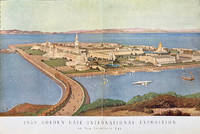
193860408San Francisco CA: Golden Gate International Exposition Division of Publications American Engraving Company Commercial Art & Engraving Company Sterling Engraving Co. 1938. Folio. 11 x 14 in. 34 pp unpaginated. With pictorial colour maps 1 large double-page panoramic plate by Chesley Bonestell text illustrations photos w/ 12 artist’s renderings plates of GGIE laid-in presentation leaf on smaller rough-cut paper signed by Cutler. Colour-illustrated boards in blue gilt & black metallic gold pastedowns & flyleaves plastic comb-binding as issued light foxing & edgewear to a couple leaves minor edgewear to covers slight bumping to couple corners still a VG copy. First edition signed of this exceedingly scarce preview volume offering an artist’s & architect’s rendering excursion through the forthcoming Art Deco marvels of the 1939 Golden Gate International Exposition held on Treasure Island in San Francisco. Roberts & Roberts and Gabriel Moulin were the official photographers and the Chesley Bonestell birds-eye panorama featured in much of the promotional artwork for the fair grace the pages. Celebrating the completion of the iconic bridge as well as drawing from the $ 6250000.00 in funds from the WPA & PWA New Deal programs the 400 acre site was actually to have become the San Francisco Air Terminal but those plans were derailed by World War II. No copies in Worldcat. [Golden Gate International Exposition, Division of Publications, American Engraving Company, Commercial Art & Engraving Company, hardcover
198177149Dallas Texas: R.L. Polk & Co 1981. Hardcover. Very good. Uncommon directory for Shafter and Waso the Kern County communities located northwest of Bakersfield California. Includes a buyers' guide and classified business directory an alphabetical directory a street directory of householders and businesses and a numerical telephone directory. Octavo: 3 8 56 4 166 6 88 28 3 p. with an advertising tab for Becker Insurance Agency. The text is printed on white yellow peach light green and blue stock respectively. Original gilt-stamped burgundy buckram spine over printed buckram boards; issued without a dust jacket. A crisp and clean example. OCLC locates no holdings. R.L. Polk & Co hardcover
194563891San Francisco CA: Carl Frederick Hobby 1211 Jackson Street ca. 1945. One large oil painting on canvas sized 13 x 18 in. preserved as original stretched canvas within the frame as presented to the artist’s niece and with the original green & gilt frame now professionally cleaned and w/ artist’s business card mounted on verso of frame along with numbering & size. Signed in lower corner this painting was presented by the artist following the War to his niece and held in the family until 2025. This original oil painting depicts a young Chinese-American mother and child buying an orange with fruit crates stacked beside in front of the mirror and pedestrian walking by as well as the advertising signage in the doorway in Chinese painted by Hobby. The sign reads 油糖èœèˆ– You tang chai pu — oil and sugar vegetable shop and produce in the crates below the window in the foreground appear to be cabbages oranges and possibly mangoes. Hobby wrote in his 1936 illustrated book “Chinatown San Francisco†that there were a variety of vegetable and produce “Chinese Food Shops†situated from Washington to Jackson Street selling blue-green melons mustard greens water chestnuts and more.Hobby 1886-1964 was the son of an Iowa City IA ophthalmologist and moved with the family as a teenager to San Diego CA about 1900 where he began working at 14 as a sketch artist and later published a book in San Diego in 1919 with his artwork. He studied art at the Cumming School of Art in Des Moines the Art Students League in New York and became portrait and landscape painter in San Diego until 1923. After a divorce from Plooma Crowther he settled in San Francisco in Chinatown where he became an instructor at the Art Center while also painting and sketching the densely populated area publishing “The Street of Dragon Lanterns Chinatown of San Francisco†in 1936 while contracting with the Madison & Burke Agency through World War II. Exhibits of his paintings and pen & ink sketches were displayed at the Oakland Art Gallery in 1928 and the Society for Sanity in Art in 1945. See: Maud McB. Maywood Palm City The Chula Vista Star July 9 1937 p. 6; Sketches of San Diego 1919. Carl Frederick Hobby, 1211 Jackson Street, unknown
1919List1319Los Angeles and Environs 1919. Photograph album measuring 6 ½ x 8 inches with fifty-one photographs each 4 ⅜ x 2 ⅞ inches. Front page captioned “California 1919 / Flowers / Animals.†Fine condition no visible flaws. A visually compelling and very charming relic of early motor tourism this collection of photographs of the flora and fauna of Southern California was taken by a Michigan photographer who judging by the quality of the images was either a professional or a very talented amateur. Most of the images are somewhat formal studies of trees and flowers some of which have been hand-colored. Other images show the Model T parked precariously in the desert others show animals at the zoo one shows the Los Angeles Ostrich Farm opposite Lincoln Park. unknown
1292Los Angeles: Lankershim Branch of the Security Trust & Savings Bank of Los Angeles n. d. Third edition. Near Fine. Circa 1927. 8" x 4-1/4". 56 pp. Green pictorial wrappers with orange lettering in original envelope. B/w half-tone illustrations and maps throughout. Minor wear to extremities else exceptionally clean and bright. Light wear to envelope hint of spotting to front panel. Promotional booklet for the San Fernando Valley with special attention paid to the benefits from the construction of the Los Angeles aquaduct.Uncommon in such nice condition and with the original envelope. Lankershim Branch of the Security Trust & Savings Bank of Los Angeles unknown
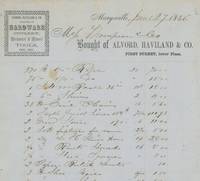
1860List2417Marysville 1860. Marysville 1850s-1860s the bulk mid-1850s. A collection of documents including eleven receipts three manuscript legal documents four manuscript documents relating to land claims; five partially printed documents relating to land claims; two letters from the US Land Office in Marysville 1858 regarding land claims; six billheads from Marysville firms with receipts for a range of goods some illustrated; one letter from Marysville written in 1853 concerning a death in a family. Generally fine condition. Fine. A mini-archive or assemblage of documents relating to the early Euro-American citizens of Marysville and its environs in the 1850s. The population of Marysville grew quickly after the town’s incorporation to 10000 by the mid-1850s due to its strategic location close to the gold fields but the levee system put in place to control flood damage limited the town’s growth beyond this initial phase. The documents here relate to Marysville in this early period of growth and include several quitclaim land deeds as well as illustrated billheads. As a group they offer an ephemeral record of the city in its early period with the legal documents and deeds showing the means with which the area was settled. A well preserved group overall. unknown
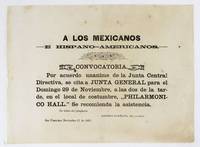
18635596San Francisco: La Voz de Mexico 1863. Very good. Broadside 7.75 x 10.75 inches. Central vertical fold minor creasing light tanning and scattered foxing. A very rare broadside calling a combined meeting of the juntas patrióticas of San Francisco community organizations of Californios and Mexican expatriates convened to support Benito Juarez against the French in the war with Napoleon III. The text announces a meeting at San Francisco’s Philharmonic Hall on Sunday November 29 1863 at 2p.m. Juntas patrióticas like this grew out of a tradition of Latino volunteer organizations in California originally started in 1825 to organize celebrations for Mexican independence. Established in many towns over the following years they continued to promote Mexican culture and traditions after California was annexed by the United States. This largely apolitical role changed however in the face of the twin threats of the Civil War and the French Intervention in Mexico:<br /> <br /> "Despite a time lag of four to eight weeks the newspapers carried stories about the French incursion into Mexico. California's Latinos learned about the landing of the Triple Alliance in Veracruz to collect debts contracted by previous administrations the agreement of Soledad in which President Benito Juarez pled national bankruptcy and asked for an extension the withdrawal of the English and Spanish forces on the strength of Juarez's promises and the menacing French presence continuing after the Spaniards and English had departed. In May 1862 events took a serious turn when the French broke off diplomatic relations with Mexico complaining of 'outrages of which the victims have been French subjects' living in Mexico.<br /> <br /> "But then on May 5 1862 there was a sudden flash of hope -- the outnumbered ragtag Mexican army repelled the seemingly inexorable French advance at Puebla sending the French troops victors of Crimea Sebastopol and the Italian campaign reeling back to Orizaba to lick their wounds. When the news reached California the Spanish-language headlines were enthusiastic: 'Hurrah for Mexico!! Hurrah for independence!!.' For California's Latinos U.S. citizens and immigrants alike this news was a bracing tonic. Suddenly they were part of a force to be reckoned with. Their peers at Puebla had taken a daring stance and had emerged victorious against the odds. Spontaneously Latino residents of the gold country town of Columbia in Tuolumne County celebrated 'our triumph against the French' by firing artillery salutes singing patriotic songs and toasting Mexico's success. Dozens of cities responded and dozens of juntas were formed in the next few months to raise funds to help repel the French invaders from Mexico" – Hayes-Bautista.<br /> <br /> Funneled through a Junta Central Directiva headquartered in San Francisco juntas across California and Nevada raised funds which were sent across the border to the Republican government usually in excess of $1000 every two weeks. This flyer was printed by one such junta known as the Sociedad Patriótica Mexicana and informs its members that the Junta Central Directiva has called a general meeting of all the local juntas on November 29 1863. This was a particularly dark time for the Mexican government in exile – the French had occupied Mexico City in June officially proclaimed the Second Mexican Empire in July and Maximilian was offered the throne at the start of October. This document was most likely printed by La Voz de Méjico a tri-weekly Spanish-language paper centered in San Francisco which became the unofficial organ of the regional juntas. A pencil note on the verso of this copy reads "Mass meeting called to contradict the lies of paper's enemies and newspaper reports this is what I referred to in my 2 notation." A rare piece of ephemera evidencing the active social and political role played by Mexican-American community organizations in the late-19th century. We locate only two recorded copies held by the Bancroft Library and UC Santa Barbara.<br /> David E. Hayes-Bautista et al. "Empowerment Expansion and Engagement: Las Juntas Patrióticas in California 1848-1869" in California History Vol. 85 No. 1 2007 pp.4-23. [La Voz de Mexico?] unknown
192963892San Francisco CA: Carl Frederick Hobby 1353 Post Street 1929. One small oil painting on canvas sized 8.5 x 11 in. preserved as original stretched canvas within the frame as presented to the artist’s sister Ruth Annis Hobby Gibbs 1878-1940 Scouticut Neck Fairhaven Massachusetts with the original wooden frame now professionally cleaned and w/ artist’s signature in lower right corner of painting this painting was presented with a gift inscription in Chinese å二月廿五號一ä¹äºŒä¹ December 25 1929 and given with others by the artist over a 10 year period in the 1920’s-1930’s to his sister and held in the family until 2025. This original oil painting portrays a Chinese-American woman and child strolling past shop windows in Chinatown w/ awnings and fire-escapes looming above while another person carrying large basket walks away and another small child looks on. After settling in San Francisco’s Chinatown less than 6 years before the artist had launched his lifetime work to depict through oil paints and pen & ink the quintessential life to be discovered in Chinatown. Eventually he would issue a book just 7 years later in 1936 of Chinatown sights and attractions filled with his pen & ink illustrations. Hobby 1886-1964 was the son of an Iowa City IA ophthalmologist and moved with the family as a teenager to San Diego CA about 1900 about the time his sister Ruth Annis Hobby voyaged to marry her fiance during the Philippine Insurrection in 1899 in Manila. He studied art at the Cumming School of Art in Des Moines the Art Students League in New York and became portrait and landscape painter in San Diego until 1923. After a divorce from Plooma Crowther he settled in San Francisco in Chinatown where he became an instructor at the Art Center while also painting and sketching the densely populated area publishing “The Street of Dragon Lanterns Chinatown of San Francisco†in 1936 while contracting with the Madison & Burke Agency through World War II. Exhibits of his paintings and pen & ink sketches were displayed at the Oakland Art Gallery in 1928 and the Society for Sanity in Art in 1945. See: Maud McB. Maywood Palm City The Chula Vista Star July 9 1937 p. 6. Carl Frederick Hobby, 1353 Post Street, unknown
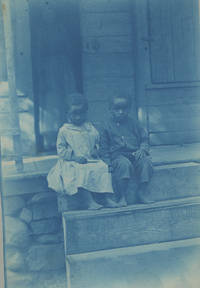
1880List1314Northern California 1880. 4to one album in burgundy cloth the other oblong brown pebbled cloth. Seventy-one sepia-toned and cyanotype photographs most measuring 6 ½ x 4 ½ inches. Near fine with some light wear to albums photographs very good or better with very good contrast some showing a hint of fading. A very early pair of vernacular photograph albums centering on the experiences of a wealthy family in San Francisco Monterey and the surrounding areas in the late 1880s. The bulk of the images show the family and their unidentified circle in domestic scenes with the vernacular architecture and landscapes of the Bay Area on full display. Other images show landmarks including Golden Gate Park the Francis Scott Key monument various views of the first Hotel del Monte in Monterey which would burn in 1887 dating the photographs to the period prior to the fire. The album also includes photographs of African American families. <br /> <br /> The image quality is generally quite strong and the photographer was either a professional assembling the album which includes many portraits of family and presumed friends for themselves or the work of a highly skilled amateur. The Initials on the front pastedown are “M.J.R.†though this could be a later owner. The albums were from the estate of the muralist Clara Fargo Thomas who was a resident of New York and could possibly have been from one of her family members though we are unable to glean much detail from the contents. The few annotations offer little clues one just reading “5/11/89 - Golden Gate Park†and another identifying a house as 509 Webster St. in San Francisco though the typical Victorian architecture and sloped street of the house suggest it could have just been a photograph of San Francisco’s unique architecture. <br /> <br /> The photographs of the people give insight into the lives of the new wealthy class of San Francisco residents of the late 19th century with others interestingly showing rural scenes and people. The photographer also had an eye for the flora of the region which is displayed throughout. It is unclear what the relationship of the African-American subjects was to the photographer and why they appear in the album. Overall a compelling group of images and the earliest example of vernacular photograph albums of California images we can find in the trade. unknown
189357405New York: International League of Press Clubs 1893. 4to. 9 x 11.5 in. 149 1 pp. Photo frontisp. with sepia-tinted illustration of locomotive numerous text illustrations historiated initials decorated initials woodcut-engravings & tail-pieces. Brick-red publisher’s simulated morocco over beveled boards gilt lettering & border decoration in blind dyed fore-edges to textblock minor rubbing to corners light rubbing head & foot of spine still VG bright copy. First edition of this nicely illustrated souvenir travel account of the International League of Press Clubs traveling to the Press Club Convention organized to promote the West Coast and the forthcoming 1894 California Midwinter International Exposition. Michael Henry de Young 1849-1925 noted Jewish-American co-founder of the San Francisco Chronicle arranged for the Eastern Press Clubs and Midwestern Clubs to travel in the lavishly appointed Wagner train with stops in Denver side trip to Salt Lake City UT the Citrus Fair in Auburn CA and Sacramento lunched with the Sutros stayed at the palatial Hotel Del Monte in Monterey visited the Lick Observatory & Los Angeles. The memorable dinner banquet included courses of California Oysters Kennebec Salmon in Holland Sauce Broiled Mushrooms Filet of Beef Richelieu and the Canvas-Back Duck with Celery Sauce. Return stops included viewing the Mojave Indians the Apache in Needles the pueblos in New Mexico and a stop later at Niagara Falls. International League of Press Clubs, hardcover
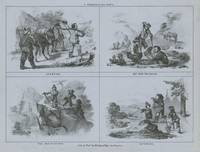
1850List1315Britton and Rey 1850. Single sheet measuring 8 ¼ x 10 ¾ inches on blue wove paper. Small chip to corner not affecting image some older tape repairs verso at margins else fine very good plus overall and quite attractive. Very Good. A series of four illustrations telling the story of a mining party that heads out with a pack mule only to fail to find gold and lose their mule before returning to a new prospect with their clothes in shambles. This is entry 209 in Baird’s California’s Pictorial Letter Sheets in which he sets the publication date as being prior to 1855. The series possibly illustrates scenes from a song. A particularly fine example on the classic blue wove paper of the period. unknown