Harkort, Johann CasparAntiquariat.de

817 résultats
18704120(Kunstwerken. Lijn H. Sectie 1.) Brug over de Lek bij Kuilenburg [heute: Culemborg]. Mit 30 doppelblattgr. lithogr. Tafeln aus der Lith. Druckerei der Brückenbau-Anstalt von Johann Caspar Harkort (22) u. vom Königl. Hof-Lith. Louis Veit, Berlin (8). [Duisburg u. Berlin, 1870]. Groß-Folio (60,0 x 50,0 cm). Halbleinwandband d. Zt. mit montiertem Titelschild auf dem Vorderdeckel. [8 Warenabbildungen]
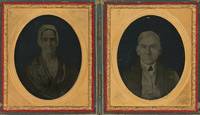
1854List1708Philadelphia 1854. Ninth plate ambrotypes in a union case measuring 2 ½ x 2 ⅛ inches visible in larger case. With the identification of Isaac Rehn with his imprint and “Patented July 4 & 11 1854†imprinted on the case. A fine pair. A striking pair of ambrotypes of Mary and Moses Pennock who were members of the Kennett Square Underground Railroad network as well as active members of the Kennett Square abolitionist and Quaker community. Moses was one of the founders of the Longwood Progressive Meeting. In R.C. Smedley’s History of the Underground Railroad in Chester and Neighboring Counties of Pennsylvania Lancaster Office of the Journal 1883 the Pennocks are mentioned on p. 301 as working as part of the network surrounding Isaac and Thamazine Meredity. Their son Samuel who would go on to secure important agricultural patents is also mentioned twice. <br /> <br /> The images are notable from a photographic history perspective as well as being early examples of the ambrotype process that had been patented in part by fellow Quaker and spiritualist Isaac Rehn. Rehn held a partial patent on ambrotypes along with James Ambrose Cutting of Boston and became unpopular among other photographers for his efforts to extend his patent. He later practiced spiritual photography and was a Professor of Chemistry at Pennsylvania Medical University in Philadelphia. Rehn was also involved in radical politics as a founder and leader of the Philadelphia section of the International Workingmen’s Association which was later disenfranchised by Karl Marx along with several other American sections. Examples of Rehn’s work are held at the National Gallery of Art the Library Company of Philadelphia and Yale’s Sterling Memorial Library. <br /> <br /> Overall a very fine and significant pair of images. unknown
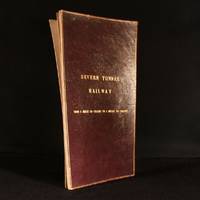
1890948F10London: Not Stated c1890 . Leather. Good. 17.5" by 9.5". Anonymous. An annotated and hand coloured lithograph map of the Severn Tunnel Railway belonging to the office of the Great Western Railway's Chief Engineer's Office. A vanishingly scarce lithograph map of the Severn Tunnel a tunnel linking South Gloucestershire to Monmouthshire built under the estuary of the River Severn and reaching a length of 4 miles 628 yards or 7012 m.Large portions of the map have been partially hand coloured with extensive annotations in both pencil and ink.With several stamps reading both 'Great Western Railway Chief Engineers Office Paddington' and 'To Be Returned to Chief Engineer's Plan Office G. W. R. Paddington' to both the recto and verso of the map.During the period of the tunnel railway's construction Chief Engineers of GWR included Joseph Armstrong William Dean and George Armstrong.The map is divided into fourteen plates mounted on linen and folding concertina style bound in morocco boards. The front board reads 'Severn Tunnel Railway: From 54 Miles 60 Chains to 7 Miles 50 Chains'.The majority of the pencil annotations detail the owner's and acreage of the pieces of land the railway runs through with the local Parishes of different sections of the railway also detailed. Further annotations include measurements and depths reference numbers for deeds and details of freeholds.A fascinating and very scarce map with a clear association to GWR the company responsible for constructing the tunnel offering insight into the land surrounding the tunnel. In the original limp morocco covered boards. Light rubbing to boards. Internally map mounted on linen and folding concertina style. Map significantly age toned with handling marks throughout. Large portion of map hand coloured with extensive pencil and ink annotations. Stamps throughout to both the recto and verso of the map. Good Not Stated hardcover
18604490Dessins d'exécution du pont métallique construit sur la Garonne à Bordeaux par les compagnies d'Orléans et du Midi pour relier le chemin de Paris à Bordeaux au réseau du Midi. Ouvrage projeté et dirigé par les Ingénieurs de la Compagnie des Chemins de Fer du Midi, commencé sous les ordres de [Amédée Alexandre Hippolyte] Bommart ... et achevé sous les ordres de [Alexandre Charles] Surell ... Exécuté par la Compagnie de Matériels de Chemins de Fer, représentée par [Felix Charles Christophe] Pauwels ... [Charles] Nepveu et [Alexandre Gustave] Eiffel. Mit 27 (5 doppelblattgr.) lithogr. Tafeln. Ohne Ort, Drucker u. Jahr, (nicht vor dem 15. August 1860). Groß-Folio (69 x 55 cm). Titelblatt. Lose in neuer Halbleinwandmappe mit montiertem Orig.-Vorderumschlag. [4 Warenabbildungen]
18633809Nach den Materialien Grosh. Oberdirection des Wasser- und Strassenbaues geordnet, zusammengestellt & gezeichnet im Studienjahr 1862/63 durch die Eleven des II.ten Curses der Ingenieur-Schule am Grosh. Polytechnicum zu Carlsruhe. Mit gefalt. lithogr. Titel mit Titelvignette (Ansicht von Heidelberg) u. 64 (3 farbigen, 1 getönten) doppelblattgr. (1 zusätzl. gefaltet) lithogr. Tafeln. Karlsruhe, Druck & Verlag v. J. Veith, 1862-1863. Folio (43,5 x 30,3 cm). 2 gefalt. Bl. Text. Halblederband d. Zt. [6 Warenabbildungen]
1900373823St. Louis 1900. 34 photographs mounted recto and verso on 17 cards with printed album title on each the images captioned in the negative on linen guards. Oblong small folio 10-1/8x12-1/2 inches. Contemporary half calf and cloth covered boards titled in gilt on the upper cover leather perished contents loose. The images generally dark printings in good condition. Provenance: Battery Park Hotel Asheville NC presentation in gilt on the upper cover from H. C. Townsend Gen'l Pass'r and Ticket Agent St. Louis. 34 photographs mounted recto and verso on 17 cards with printed album title on each the images captioned in the negative on linen guards. Oblong small folio 10-1/8x12-1/2 inches. The images by an unindentifed photographer comprise lovely compositions of buildings and scenes along the route in Missouri Kansas Nebraska and Arkansas. OCLC locates only a single example at University of Texas Austin. unknown
18592792Nach den zur Verfügung gestellt gewesenen Materialien der Ingenieurschule des Grosh. bad. Polÿtechnikums zu Carlsruhe. Zusammengestellt, geordnet & gezeichnet durch Eleven der genannten Fachschule im Laufe des Studienjahres 1857/58. 120 doppelblattgr. lithogr. (7 mit Tonplatte) oder gestochenen Tafeln (inkl. Titel mit lithogr. Titelvign.). Karlsruhe, J. Veith, [1857-1859]. Folio (44,0 x 30,8 cm). Doppelblattgr. Inhaltsblatt. 4 Halbleinwandbände d. Zt. [8 Warenabbildungen]
18654796(Hrsg. von der) Köln-Mindener Eisenbahn-Gesellschaft. Mit lithogr. Titel u. 48 (1 gefalt., 7 doppelblattgr. u. 1 koloriert) lithogr. Tafeln von Jakob Scheiner. [Köln, 1865]. Gr.-Folio (49,0 x 34,0 cm). 63 S. Halblederband d. Zt. mit goldgeprägtem Deckeltitel u. Blindprägung.
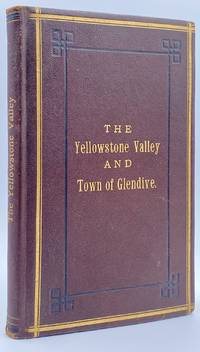
188210945St. Paul MN: The Pioneer Press Co 1882. First Edition First State. 100pp. Octavo 24 cm Presentation binding. Publisher's full grained brown leather with the title gilt stamped on the front board and backstrip. A.E.G. Satin moire endsheets. Near fine. Inscribed on the front free endsheet. 'Mr. Minnie with compliments of the author. Map of the Yellowstone Valley 42 cm x 70 cm and the Plat map of Glendive 40 cm x 56 cm present and both linen backed and in nice condition. Presentation copy. The trade edition of this work was bound in green printed wrappers with 10 pages of advertisements in the front and 3 to 10 pages of advertisements in the rear. Map of transcontinental was attached to the rear free endsheet. Our copy predates the various issues with advertisements and the map attached to the rear free endsheet. Eberstadt and Yale copies and others only list the plat and cattle trails maps. Early Montana promotional item from the Northern Pacific Railroad a year before they opened the Gardiner Gateway at the north end of Yellowstone Park. An important descriptive tract of the new country at the time of its settlement with a fine large map showing the towns and cattle trails. Eberstadt 132: 478. Howes Y8. Rampaging Herd 1535. This is the first time that we've handled or encountered this title. Rare. The Pioneer Press Co unknown
186895331868. <p>The Transcontinental Railroad made possible the winning settlement and development of the American West. It led to a revolution in interstate and international trade opening the markets of the west coast and Asia to the east and Europe while bringing products of eastern or European industry to the growing populace west of the Mississippi and beyond. The railroad caused a great production boom and was in a sense America’s first technology corridor. As it encouraged the growth of American trade and business so too did the railroad impact the nation's public discourse and intellectual life by making it possible to come and go across the length of the continent in just over a week. Now for the first time the beauties and riches of the central part of the continent could be accessed any anyone in days. Nothing was the same afterwards. Many people consider the Transcontinental Railroad the greatest technological feat of the 19th century and one of the most consequential major construction projects ever undertaken.</p><p>Before the advent of the Transcontinental Railroad a journey across the continent to the west coast meant months of careful preparation and acquisition of a conveyance and supplies then a dangerous six month trek over rivers deserts and mountains all the way risking the loss of necessities and encounters with blizzards and Indians. Alternatively a traveler could hazard a three to six month sea voyage around ferociously stormy Cape Horn which proved a graveyard to many ships or sail to Central America and cross the Isthmus of Panama through the jungle in part by pack animal and in part by rail which took five or six weeks risking exposure to any number of deadly diseases in the crossing. So it is no surprise that interest in building a railroad uniting the east and west coasts of the continent began soon after the advent of the locomotive.</p><p><strong>Early Trains in the US and the Idea to Build a Train Connecting East and West Coasts</strong></p><p>The first trains began to run in the U.S. in the 1830s along the East Coast and by the 1840s the nation's railway networks extended throughout the East South and Midwest. The annexation of the western territories including California following the Mexican War the almost immediately subsequent discovery of gold in the region in 1848 the resultant Gold Rush starting in 1849 and statehood for California in 1850 brought momentum to the idea of building a railroad across the nation to the Pacific. Meanwhile thousands of immigrants and miners sought their fortune in the West. During the 1850s Congress sponsored numerous survey parties to investigate possible routes for a transcontinental railroad. No particular route emerged as a clear favorite as the project became yet one more point of contention between the North and South before the Civil War with each wanting the railroad to go through their section.</p><p>Theodore Judah was a civil engineer who helped build the first railroad in California and he became obsessed with the idea of a transcontinental railroad running through Nebraska Wyoming Utah Nevada and California. In 1859 he drew up letters of incorporation for the Central Pacific Railroad Company. Judah surveyed the route creating maps that he used to bolster a presentation of the scheme he made to Congress in October 1861. Many Congressmen were leery of beginning such an expensive venture especially with the Civil War underway but President Abraham Lincoln a long-time supporter of railroads saw in the proposal an important additional opportunity: to help knit California and the West to the Union. He agreed with Judah and on July 1 1862 Lincoln signed the Pacific Railway Act authorizing land grants and government support which amounted to $32000 per mile of track laid to two companies the Central Pacific Railroad and the Union Pacific Railroad. The Central would start at California’s eastern rail point in Sacramento cross the Sierras go through Nevada and into northern Utah where it would meet up with the Union Pacific. The Central Pacific Railroad spiked the first rail on October 26 1863 and its construction crews began building the line east from Sacramento.</p><p>At the eastern end of the project Gen. Grenville Dodge and his assistant Peter Dey surveyed the potential route the Union Pacific would take. They recommended a line that would follow Nebraska’s Platt River along the North Fork would then cross the Continental Divide at South Pass in Wyoming and continue along to Green River then head into Utah. President Lincoln favored this route and made the decision that the eastern terminus of the Transcontinental Railroad would be Council Bluffs Iowa across the Missouri River from Omaha Nebraska.</p><p><strong>The Union Pacific</strong></p><p>Thomas Durant a medical doctor turned businessman gained control of the Union Pacific Railroad Company in July 1863. Though Durant took the office of vice president he was the actual leader of the railroad. In 1864 Congress passed the second Pacific Railway Act which doubled the size of the land grants and allowed the railroads to sell their own bonds. The Union Pacific began to lay tracks at Omaha Nebraska in July 1865. But Durant's management of the actual building of the rail line was sub par and lacked both organization and people with sufficient knowledge and skills to accomplish its ambitious task.</p><p>So as 1866 dawned Durant hired Grenville Dodge as chief engineer of the railroad Dodge began advising Durant immediately although he would not leave the service until May and Dodge insisted up front that Jack Casement and his brother be hired to lay the track and actually construct the Union Pacific line. John S. Jack Casement had worked as a railroad contractor on the Ohio Railroad prior to the Civil War. During the war he rose to the rank of General and Brigade commander and was admired for his bravery management skills and railroad experience. Jack and his brother Daniel had formed the firm of J.S. & D.T. Casement; “General Jack†was construction leader while Daniel handled financial matters.</p><p><strong>Jack and Dan Casement Build the Railroad</strong></p><p>The Casements came to an understanding with Durant and they agreed upon a proposal letter dated February 6 1866. That letter provided that the Casement firm would ""lay and fill the track on the Union Pacific Rail Road for seven hundred fifty dollars per mile on the following terms and conditions. The Rail Road Company to furnish motive power cars wood and water and tracks for boarding cars and pay for delays of over three consecutive days caused by want of material motive power or other default or neglect of Company. The track to be laid in a good and workmanlike manner and filled and surfaced with material taken from the side of the road the whole to be subject to the approval and acceptance of the Engineer of the Company in charge of the work and the track to be accepted on the completion of every twenty miles and approximate estimates to be made by the Engineer in charge and paid monthly. We will lay the track as fast as required not to exceed one mile per day and will at the option of the Company on ten days notice reduce our gang to a force sufficient to lay one half mile per day. We will furnish engineer men and all other help for the trains used in distribution of material and take the materials for track at any point on the Rail Road within one hundred feet of the track and we will furnish oil waste etc for trains in our employ. All trains used in construction or for any purpose by us are to be run subject to the regulations & schedule time of the Company & under the general control of the Superintendent of the Company. We will make no extra charge in cutting and filling in leveling ties unless it exceeds six inches. No extra charge for putting in frogs and switches for all necessary sidings. And we will place the labor of all our men at the disposal of the Company whenever the delays exceed three days and charge for their time as per our payroll. We will commence as soon as the Company requires & will lay track during the whole of the present season and longer if the Company requires.†This proposal was signed “J.S. & D.T. Casement.†Durant responded to the Casements two days later on February 8 1866. His letter stated: “J.S. & D. T. Casement Painesville Ohio. Gentlemen: Your proposition to the Union Pacific Railroad Company under date of Feb. 6 1866 in relation to track-laying is received and has been considered. The Company decides to regard your proposition and this acceptance as the agreement upon the subject. The Company reserves the right to terminate this arrangement in case you do not perform the agreement on your part. Yours truly Thomas C. Durant V. P.""</p><p>Jack Casement was responsible for all matters relating to building the Union Pacific. He hired the workers many of whom were former military personal gathered the materials and supplies and went into the field. As during the war his post was at the front in the construction camps which he ran like an army at the end of the line where the work was being done or in his car at the tail of the work train. Scrappy and hard-working he oversaw not just the laying but the grading of the track as well. As one of the necessities of his job to get to and from the work sites the Union Pacific presented him with annual passes to use their cars.</p><p><strong>Jack Casement’s engraved Union Pacific pass for 1868</strong> used by him to manage and supervise work on the Transcontinental Railroad signed by Company President John D. Perry. This pass was retained by Casement’s descendants until recently when we obtained it directly from them.</p><p>Under Casement’s leadership the Union Pacific laid 1087 miles of track from Fremont Nebraska west to Utah where the Central Pacific and Union Pacific Railroads met to form the transcontinental railroad. His was a magnificent achievement that compares well with the Central Pacific Railroad which laid 690 miles.</p><p>On April 9 1869 with construction work nearing a conclusion and both the Union Pacific and Central Pacific needing a meeting point Congress established it as Promontory Summit north of the Great Salt Lake in Utah. Less than one month later on the morning of May 10 1869 locomotives from the two railroads met nose-to-nose to signal the joining of the two lines. At 12:57 p.m. local time at a ceremony planned to connect the railroads Leland Stanford Governor of California and president of the Central Pacific and Durant as vice-president of the Union Pacific were to pound in the golden spike with silver hammers. Both men proved unable to hit the spike so Jack Casement stepped up to do the job accompanied by much cheering from the workers surrounding him. Telegraphers announced the completion of the Pacific Railway. Canons boomed in San Francisco and Washington. Bells rang and fire whistles shrieked as people celebrated across the country. The nation was indeed united.</p> unknown
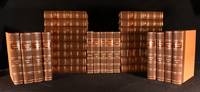
1839965Z28DLondon: The Railway Times Office 1839-63. First edition. Leather. Very Good Indeed. 11" by 9". None stated. An impressive run of early issues of the 'Railway Times' periodical an important railway periodical which documented developments and current news in the railway industry during the 1800s. A beautifully bound set of a very scarce periodical. An extensive twenty-nine volume set featuring a collection of the 'Railway Times' periodical from 1839-1863. All being the first edition. The periodical provides an impressive historical account of the current news and developments in the railway industry during the early to mid nineteenth century. The articles range from finances stock information new patents and inventions accidents and updates on railways from across the globe. Notable articles include; an article on Mr Robert Stephenson's new 1842 locomotive which proposed to use less fuel and a Testimonial to Isambard Kingdom Brunel the legendary engineer. This set includes; '1839' Vol II No. 71-72 85-94 and '1840' Vol III No. 27-41 and Vol II No. 52 of the 'Railways Magazine & Commercial Journal' bound into one volume. The rest of the years are bound over two volumes and feature complete runs of the magazine for that year with these being; '1841' Vol I- No.157 Vol III No. 1 - No.182 Vol Iv-No. 26. Vol II- No.183 Vol IV No.27 - No. 208 Vol IV No.52. '1842' Vol I- No. 209 Vol IV No.1 - No.234 Vol V-No.26. Vol II- No.235 Vol V No.27 - No.261 Vol V No.53. '1846' Vol I- No.418 Vol IX No.1 - No.443 Vol IX No.26. Vol II- nO.44 Vol IX No.27 - No.469 Vol IX No. 52. '1847' Vol I- No.470 Vol X No.1 - No.495 Vol X No.26. Vol II- No.496. Vol X No.27 - No.521 Vol X No.52. '1854' Vol I - No.836 Vol XVII No.1 - No.860 Vol XVII No.25.Vol II - No.861 Vol XXII No.26 - No.887 Vol XVII No. 52. '1855' Vol I - No.888 Vol xviii No.1 - No.913 Vol xviii No.26. Vol II - No. 914 Vol XVII No.27-No.939 Vol XVIII No. 52. '1856' Vol I - No. 940 Vol XIX No.1 - No.965 Vol XIX No.26.Vol II - No. 966 Vol XIX No.27 - No.991 Vol XIX No.52. '1857' Vol I- No.992 Vol XX No.1 - No.1017 Vol XX No.26. Vol II - No.1018 Vol XX No.27 - No.1043 Vol XX No.52. No. 18-22 have been misnumbered with No.18 numbered twice and missing No.21 however the work is complete with the pagination continuous as is expected. '1858' Vol I-No.1044 Vol XXI No.1 - No.1069 Vol XXI No.26. Two of the issues are numbered '23' but nothing is lacking. Vol II- No.1070 Vol XXI No.27-No.1094 Vol XXI No.52. '1859' Vol I- No.1095 Vol XXII No.1 - No.1120 Vol XXII No.26. Vol II - No.1121 Vol XXII No.27 - No.1147 Vol XXII No.53. '1860' Vol I- No.1148 Vol XXIII No.1 - No.1173 XXIII No.26. Vol II- No.1174 XXIII No.27 - No.1199 Vol XXIII No.52. '1861' Vol I- No.1200 Vol XXIV No.1 - No.1225 Vol XXIV No.26.Vol II - No.1251 Vol XXIV No.27 - No.1251 XXIV No.52.'1862' Vol I - No.1252 Vol XXV No.1 - No.1277 Vol XXV No.26. Vol II - No.1278 Vol XXV No.27 - No.1303 Vol XXV No.52. '1863' Vol I - No.1305 Vol XXVI No.1 - No.1329 Vol XXVI No.26.Vol II - No.1330 Vol XXVI No.27 - No.1355 Vol XXVI No.52. Illustrated heavily with numerous monochrome vignettes and the occasional full page illustration. Volume '1854' contains a folding map to pp. 356. A very scarce and important periodical with this being some of the earliest examples of the magazine currently on the market. A beautifully bound and uniform set. Bound in modern crushed quarter morocco with cloth to the boards. Endpapers renewed.All pages and issues present after the 1839-40 volumes. The occasional article clipped. Bound in modern crushed quarter morocco with cloth to the boards. Endpapers renewed. Externally lovely with only very minimal edge wear and slight leans to the odd volume. Internally generally firmly bound with the title page to pp.22 to '1854' tender and minimal strain in places otherwise firmly bound. Pages generally bright with only light age toning to the odd volume. Pages generally clean with only the odd spot slightly heavier to '1855' the occasional ink mark to '1841' and a more significant tidemark to '1856' pp. 569. Very minimal handling marks and occasional 'Railway Times' stamps to all the volumes. The odd page closely cropped to '1839-40' and the odd small closed tear and chip to the extremities. Several articles have been clipped from the pages heavier to the earlier volumes. Minor ink notations to '1847'. Hand written notes written on separate papers inserted into the odd volume. All in all a beautifully bound set with generally clean and bright pages with only the odd clipped article and mark. Very Good Indeed The Railway Times Office hardcover
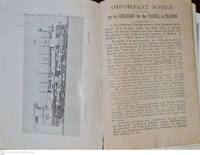
1900000209<p>10 p. Of text in English Ottoman Turkish Arabic Urdu and Russian with 9 full page plates. A hajj travel brochure printed in İstanbul supposed to be by an Armenian press in c. 1900. Rare</p> An Armenian press paperback
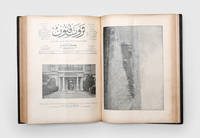
1900164829Istanbul: Ahmed hsan 1900-06. The birth of the Hejaz railway First editions first printings of 82 issues of this influential Ottoman magazine notably with illustrated reports covering the establishment of the Hejaz Railway between 1901 and 1906. Striking images include the transportation of the track itself from Beirut Issue 547 the inauguration of the line between Dar'a and Muzayrib Issue 553 and an inspection of the line by the governor of Damascus Issue 555. Numerous issues contain images charting the progress of the construction. The documentary quality of these pictures is particularly unusual. In Issue 688 for example the front cover depicts a group of Ottoman soldiers at work at Haifa station on the railway's Palestinian branch line while the cover of Issue 701 shows Sultan Abdülhamid II inspecting the section from Damascus to Ma'an on the anniversary of his accession. These latter images were taken by a special reporter appointed by the magazine. Servet-i funün began to be published in 1891 under the direction of its owner Ahmed hsan and continued its activities until 1944. It occupies a special place within the history of Turkish periodicals of which it was considered the most intellectual. Initially an illustrated supplement of the newspaper Servet it took on a more literary character from 1895 when the editorship was handed to Tevfik Fikret and printed the work of famous contemporary writers including Cenab ehabeddin Halit Ziya Mehmed Rauf and Ali Ekrem. Despite these literary leanings the magazine maintained robust coverage of current affairs as is evinced by the political supplements and the many documentary images of contemporary events in the Ottoman Empire which are found in these issues. Volume 22 contains the consecutive issues 547-572 and the unnumbered volume holds issues 599-625 followed by the political supplements to issues 599-624. The last bound volume contains the consecutive issues 781-806 followed by the political supplements to each issue. The unbound issues are 507 687 688 696 and 701. Folio 335 x 235 mm 3 bound vols and 5 unbound issues. Bound vols: one vol. in contemporary half brown morocco rebacked retaining original title lettering piece spine with raised bands unnumbered cloth sides; two vols in contemporary sheep spines with raised bands gilt lettered direct both numbered in gilt in third compartment "22" and "31" cloth sides. Unbound issues: spines hand stitched and sometime strengthened with paper. Gilt stamp of "Doctor Essad" at foot of spine of vol. 31. Lacking a few leaves only: pp. 211-2 from supplement to vol. 31; pp. 133-4 161-2 and 187-8 from political supplements of unnumbered volume. Unnumbered volume: Judiciously restored contents with faint damp stains at ends and margins creased in places repair to p.41 with clear tape. Numbered vols: Extremities judiciously repaired and strengthened scuffed and recoloured in places some stripping of leather and wear to edges minor loss to spine of vol. 31 some issues printed on lighter paper stock. Unbound issues: four issues with neat recent repairs to spines occasional light damp staining one issue with repaired tear to front wrapper and a few small holes throughout. Overall some toning mild scattered foxing or staining and a few marginal tears or chips. A good set overall. hardcover