Tsvetaeva, Marina IvanovnaBiblio.com
11 815 résultats
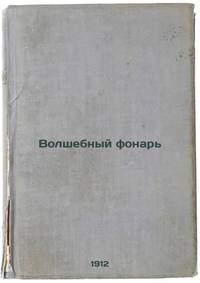
4222962Short description: In Russian. Tsvetaeva Marina Ivanovna. Magic Lantern. Moscow: Ole Lukoye 1912. The image is provided for reference only. It may reflect condition of one of the available copies or only help in identifying the edition. Please feel free to contact us for a detailed description of the copies available. SKU4222962 unknown
18522202020008Philadelphia: P.S. Duval & Co. Philadelphia: Lippincott Granbo and New York: Horstmann Bros. & Allen 1852. First Edition. Paperback. Good. Rare American Military Costume Plate Book Bound in contemporary wraps. Held in modern cloth folder. Folio 14 x 11 1/2 inches. Moderate wear to wraps spine cloth. 14 of 15 plates 12 of which are chromolithographs. 15 1 pages. Marginal tears along bottom margin. Moderate foxing and soiling. A seminal work on naval uniforms including the full set of regulations in effect at that time and finely executed plates. Lithographed by C. Schuessele after drawings by J. Goldsborough Bruff and printed by the Philadelphia firm of P.S. Duval & Co. Sabin 68960. P.S. Duval & Co. (Philadelphia: Lippincott, Granbo and New York: Horstmann Bros. & Allen) paperback
190731197N.p. Japan ca 1907. Pair of large trapunto banners both removed from original frames. First 82cm x 60cm ca 32" x 24"; embroidered in silk with trapunto elements on a black silk ground; photographic portrait on cabinet card inserted in embroidered pocket at center inscribed "Mellie McKeever" on verso. Silk ground fragile with a few thin tears but no significant losses; light soil; embroidered portions generally well-preserved and colors bright. Very Good. Second banner 65cm x 50cm ca 25" x 20"; photo-transfer on silk with embroidered ornaments. Slight fading to embroidered portions but generally well-preserved and sound; Very Good. Both banners with firm provenance purchased from the descendants of Mellie McKeever of Richwood West Virginia. Two exceptional and well-preserved examples of the ornamental trapunto banners that were popular souvenirs among U.S. sailors and marines during the late 19th and early 20th century. Yokohama was the principal point of production for these naval souvenirs but we have also seen examples from the Philippines and mainland China; Japanese examples such as these are generally distinguished by a higher quality of embroidery and more sophisticated composition. The banners became popular among British and American sailors beginning as early as the Boxer Rebellion and the Spanish-American War but seem to have reached their peak of popularity with the arrival in the Far East of Teddy Roosevelt's Great White Fleet in 1908. Some 14000 sailors and marines made land at various Japanese ports-of-call in that year and given the regularity with which these textiles still appear one imagines that every sailor must have brought at least one of these souvenirs home with him. <br /> <br /> The first example though of an unusually impressive size is of a type frequently seen displaying typical naval iconography right down to the hand-painted battleship portrait of a two-stack battleship of the Kearsarge class its hull painted white reflecting its peace-time mission at bottom center. The embroidered frame to hold a cabinet portrait of the sailor or perhaps a loved one is a typical feature found on more elaborate examples. The American Eagle in full battle stance is a nearly universal element of these banners. <br /> <br /> The second banner is of a style we have not previously seen and for which we can find no analogues in the extensive literature of naval souvenirs. It is clearly a family portrait probably a composite made from cartes-des-visites carried by McKeever; the portraits are printed by silkscreen using a photo-transfer process with applied trapunto decorations. The likenesses are clearly enlarged -- it is highly unlikely that a common sailor would have had room aboard a battleship to carry full-size portraits -- and it strikes us that this must have seemed an almost magical process at the time of creation especially to a young man from a tiny lumber-and-coal town in central West Virginia. <br /> <br /> Aside from their obvious virtues as objects of art and handicraft we regard these banners as compelling pieces of material culture from a period of tremendous social transformation in the United States. According to the Naval Historical Center U.S. naval rolls expanded by nearly 400% between the beginning of the Spanish-American War and the launching of the Great White Fleet. To meet this demand for the first time in its history the Navy began recruiting from the American heartland rather than solely from the Eastern Seaboard states. The generation of inland farmers and mechanics to follow was thus the first in American history to experience first-hand cultures as diverse and divergent from their own as those of Europe Asia and the Pacific Islands; they represented not only the beginning of the American imperialist enterprise but also the first stirrings of America's global consciousness. That so many of these banners have survived in good condition is evidence of the degree to which they were treasured by their owners for whom they represented an experience that must have been transformative and definitive. unknown
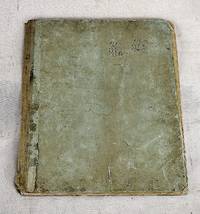
18750001913ASEA ABOARD THE HMS ROYAL YACHT SERAPIS TO INDIA. Good. 1875. On offer is a superb manuscript relic of Victorian Era travel detailing a well documented trip by H R H Prince Edward and various dignitaries to India traveling by way of HMS Royal Yacht Serapis. The journal of the trip begins with the author we believe to be M. Harwell Royal Marine as was marked the chest from which this manuscript was rescued though we note a later childish hand circa 1900s wrote the name of Kenneth Ellicott among other scribbles and drawings a later relative we suspect being based on a hulk in Portsmouth awaiting the ship being prepared for the 9 month voyage. Researchers and historians of Victorian travel or the global politics and commerce behind this trip will relish the large folio sized 12½ x 8½ inch 86 well filled pages with super detail by this crew man giving good account of movements of crew HRH visitors deaths accidents in harbor receiving gifts such as ostriches. Binding still complete spine cover gone some blank pages removed but the journal is complete and overall G. ; Manuscript; Folio - over 12" - 15" tall; KEYWORDS: HISTORY OF ROYAL YACHT SERAPIS NAVAL M HARWELL ROYAL MARINE ROYAL NAVY VICTORIAN ERA 19TH CENTURY MARINE NAUTICAL OCEAN TRAVEL ASIAN SUBCONTINENT INDIA STEAM SHIPS SAILING SHIPS BRITANNIA BRITANNICA HANDWRITTEN MANUSCRIPT AUTOGRAPHED AUTHORS MANUSCRIPT DOCUMENT LETTER AUTOGRAPH KEEPSAKE WRITER HAND WRITTEN DOCUMENTS SIGNED LETTERS MANUSCRIPTS HISTORICAL HOLOGRAPH WRITERS AUTOGRAPHS PERSONAL MEMOIR MEMORIAL PERSONAL HISTORY ARCHIVE DIARY DIARIES ANTIQUITÉ CONTRAT VÉLIN DOCUMENT MANUSCRIT PAPIER ANTIKE BRIEF PERGAMENT DOKUMENT MANUSKRIPT PAPIER OGGETTO D'ANTIQUARIATO ATTO VELINA DOCUMENTO MANOSCRITTO CARTA ANTIGÜEDAD HECHO VITELA DOCUMENTO MANUSCRITO PAPEL . unknown
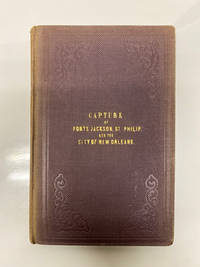
1862blb05571<p>Washington D.C.: Government Printing Office 1862. 1st. Hardcover. Very Good. Signed by the Secretary of the U.S. Navy during the Civil War Gideon Welles and inscribed to the Vice President under Abraham Lincoln's first term Hannibal Hamlin - ""Honorable Hannibal Hamlin from his friend Gideon Welles"" on the FFEP. Fantastic and ultimate association copy updating the Vice President during the Civil War of the current status on the naval engagements. Two striking color plates in front one on ""the Ram Louisiana as she appeared prior to the explosion"" and the other ""the Ram Manassas as she appeared in passing the Harriet Lane after receiving a broadside from the ship the Mississippi."" Reddish brown heavy textured cloth on boards with blind stamped decorations to front and gilt titling in center. Rear has eagle and shields blind stamped with decorative borders. Multiple fold-out maps throughout all in Very Good condition. The maps include a detailed view of the water and railroad approaches to New Orleans from the south; the Mississippi River below forts Jackson and St. Philip before Farragut's victory; and a plan of Fort Jackson. The well-executed maps and illustrations are all by the Bowen firm of Philadelphia. INSCRIBED</p> Government Printing Office hardcover
2011102364Edizioni Dei Soncino. New. 2011. Hardcover. 889049025X . FREE UPGRADE to Courier/Priority Shipping Upon Request - IN STOCK AND IMMEDIATELY AVAILABLE FOR SHIPMENT - FLAWLESS COPY BRAND NEW PRISTINE NEVER OPENED -- Text in Italian. 348 pages; illustrated in color and in black and white. Catalogue Raisonne Catalog Raisonné Complete Works Catalogo Ragionato Catalogo delle Opere L'Opera Completa Raisonnee Edizioni Dei Soncino hardcover
198894121Neri Pozza Editore. New. 1988. Paperback. FREE UPGRADE to Courier/Priority Shipping Upon Request - IN STOCK AND IMMEDIATELY AVAILABLE FOR SHIPMENT - FLAWLESS COPY BRAND NEW PRISTINE NEVER OPENED -- Text in Italian. 314 pages; 199 illustrations in black and white; 8 in color. Catalogue Raisonne Catalog Raisonné Complete Works Catalogo Ragionato Catalogo delle Opere L'Opera Completa Raisonnee Neri Pozza Editore paperback
200094054Gallimard. New. 2000. Hardcover. FREE UPGRADE to Courier/Priority Shipping Upon Request - IN STOCK AND IMMEDIATELY AVAILABLE FOR SHIPMENT - Flawless copy brand new pristine never opened -- Text in French. 430 pages; over 600 illustrations including a number in color. Catalogue Raisonne Catalog Raisonné Complete Works La Vie et L'uvre Oeuvre Raisonnee -- with a bonus offer . Gallimard hardcover
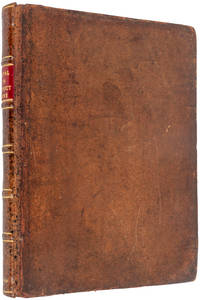
2111005London: no printer. 1757. 4to. Contemporary calf sympathetically rebacked with raised bands and red morocco lettering-piece; pp. 2 231 folding table at the end paginated 232; title with engraved vignettes a few finely engraved head- and tailpieces; rebacked light wear to extremities title-page with old expert repair occasional very light toning or spotting a very good copy of a beautiful and rare work.In 1731 the King's Regulations and Admiralty Instructions were first issued. Before that Captains devised their own rules and regulations for the vessels they were in command of. All early edition are very rare. This enlarged and revised edition was issued the year after the outbreak of the Seven Years' War which was the first global military conflict with much naval activity in the Americas.ESTC T206853 locating copies in the British Library the National Library of Ireland and at RUSI Library of Military History; WorldCat adds copies in the National Library of Scotland in the Wellcome and at St. Andrews. hardcover
19110001529ASEA. Good. 1911. On offer is the original pre-World War I and early commencement of the War manuscript diary of Commander Alfred Frederick Bell "AFB" Woodhouse Royal Navy. Entries date from June - August 1911 and May 1914 - April 1915 providing a unique pre-War commentary and then leading up to the actual conflict. Woodhouse begins on HMS Fantome off north west coast of Australia surveying: ".Shifted camp to Byron Islands for 4 days. Got there by 11am. Comber went away sounding in steamboat. I first saw the camp rigged up & then went away coastlining in 2 whaler.Away coastlining again at 7am nearly finished Byron Islands by evening. Enormous number of small islands had to be put in.Coastlining longcreek about 5 miles in & then small mangrove swamp.Dozens of flies about appallingly stung.Practically no sleep last night owing to bites. Away 7am started near Beehive. Fixed one point & when turning found myself in whirlpool pass. Went down with flood. Whaler hole in side. Camp - no rum no sugar no flour no tea very little water.". Then HMS Research May 1914 off Ireland and Scotland: ".Weighed at 9.30 after the first mail had come on board & proceeded to the entrance to Wexford. Picked up tide pole & then to Blackwater Bank. Went away in motor boat with Hazlefoot but too misty to see anything. Returned at 3.30 & ship started for Larne. Then HMS King Alfred August 1914: ".After dinner joined King Alfred from Research as my war appointment.We are at present ammunitioning & getting ready as quickly as possible. Invincible in harbour. List of officers.12 Midnight War declared against Germany.My first gun crew do not appear to know much about their drill but they are enthusiastic which is something & I have an excellent gun-layer.Submarine gun crews told off & stationed.Everyone pleased we are getting away but do not know where we are to go. Azores seems popular.Received orders to proceed to Scapa Flow.Ships here are all King Edwards 1st Battle Cruiser Squadron. Drake & 2 Edgar Cyclops & a good number of scouts light cruisers & destroyer. All are painted light grey in different parts & black elsewhere so as to be difficult to take ranges on & also distinguishes them very well.We are painting our funnels & masts light grey & are chipping as much paint as possible off the ship.proceeded round west of Orkneys. At about 11.30 the Drake stopped a Russian barquentine but allowed her to proceed later. We stood by for firing practise.The Drake stopped & boarded a Norweigan steamer but let her proceed afterwards. Sighted a battle cruiser in evening. Heard that a German submarine had been sighted.Received news that German ships were in Norweigan fjords. Ordered by c-in-c to support Alsatian who is to patrol 20 miles from coast.Sighted Alsatian an enormous liner carrying as far as I could see only 8 4.7in or 6in. One shell would probably finish her.In afternoon intercepted signal from c-in-c to destroyers to attack enemies submarines which were apparently sheltering in Linza Sound Stronsea Orkney Is.Our army according to Poldhu message has held its own in Belgium but has had 2000 casualties German losses unknown but believed to be very heavy.Heard the Monarch had a torpedo fired at her which only just missed.Sighted Drake in dog watches she told us that 1 BCS had had a scrap on friday morning with a good deal of success. Light cruisers destroyers & 1 BCS raided near Heligoland & intercepted German cruisers & destroyers returning on friday early. Result 2 German L cruisers & 2 destroyers sunk 1 L cruiser & several destroyers badly damaged.At 6.30 suddenly sounded off night defence stations. Falmouth had seen a submarine following the G into harbour & had waited till her conning tower came up & then fired at her. She says she hit her twice.Superb fired twice at supposed submarine.First shots fired in earnest today.We have received orders to convoy floating dock from Pentland Firth to Cromarty.The Pathfinder & Speedy have been blown up by mines but little loss of life.Got news that the Aboukir was sunk by submarine & that the Hague & Cressy going to her assistance were also sunk. It appears that a flotilla of submarines attacked them. 21 is the first score to their submarines. Ships are not much but loss of life was heavy I believe.Ships company & officers warned by captain about spreading any information about movements of ships or anything else.Proceeding to the HMS Devonshire October 1914 ".Drove to Scabster in a motor lorry got the mail packet at 4am to go to Scapa Flow. Arrived 7am got on board at 9am The Anglia one of the LNWR steamers which is acting as a fleet .There was a big submarine scare during the day & all ships have left. Destroyers were hunting the submarines & say they got 3 but I rather doubt it.Went to a funeral in charge.Received orders to proceed on board Cyclops for passage to Devonshire in the Dryad.At 7pm the Dryad ran on to the rocks near Stromness.By 6pm I was on board the Devonshire after a week trying to get to her.I am to be tanky & prize officer & keep 4 watches.Proceeded on 24th 4pm & swept down to Heligoland way. Our aeroplanes bombed Cushaven & ships there on christmas day.Rear Admiral Pakenham hoisted his flag in Devonshire.Rendezvous with grand fleet & proceeded southward. Battle cruisers & light cruisers fought an action with German B Cruisers sinking the Blucher & severely damaging Deiflinger & Molke. We chased after them.The Lion was badly damaged by mine or torpedo as well as gun fire. The ships hit were only Lion 18 times Tiger 3 times the rest not at all.There are some dummy ships in harbour Liverpool with wooden turrets & superstructures they are very good imitations from a little distance.Left Scapa Flow & joined 3rd CS at sea. While proceeding into harbour on afternoon of 14th we passed down a whole line of submarines each one near a sailing ship painted white. We opened fire at them all but I dont think hit. They did not seem to fire at us but one cannot be sure.". Covers measure approx 7 1/4" x 4 3/4" 18cm x 12cm Cloth bound with 91 sides of entries. Covers heavily marked with some ink staining and wear some minor marking inside about fair condition. Overall G.; 12mo - over 6¾" - 7¾" tall; KEYWORDS: ALFRED FREDERICK BELL WOODHOUSE HMS RESEARCH HMS KING ALFRED NORWAY NORWEIGAN COAST PATROL ROYAL NAVY BRITAIN BRITISH NAVY NAVAL NAVY MARINE NAUTICAL HISTORY OF WORLD WAR I WWI THE GREAT WAR HANDWRITTEN HAND WRITTEN AUTOGRAPH AUTOGRAPHS SIGNED LETTERS DOCUMENT DOCUMENTS MANUSCRIPT MANUSCRIPTS WRITERS WRITER AUTHOR HOLOGRAPH PERSONAL AMERICANA ANTIQUITÉ CONTRAT VÉLIN MANUSCRIT PAPIER ANTIKE BRIEF PERGAMENT DOKUMENT LETTER AUTOGRAPH DIARY JOURNAL LOG KEEPSAKE WRITER HAND WRITTEN DOCUMENTS SIGNED LETTERS MANUSCRIPTS HISTORICAL HOLOGRAPH WRITERS DIARIES JOURNALS LOGS AUTOGRAPHS PERSONAL MEMOIR MEMORIAL PERSONAL HISTORY . hardcover
199293976Cantini. New. 1992. Paperback. FREE UPGRADE to Courier/Priority Shipping Upon Request - IN STOCK AND IMMEDIATELY AVAILABLE FOR SHIPMENT - Flawless copy brand new pristine never opened -- Text in Italian. 159 pages; illustrated with black and white and color images. Catalogue Raisonne Catalog Raisonné Complete Works Catalogo Ragionato Catalogo delle Opere L'Opera Completa Raisonnee Cantini paperback
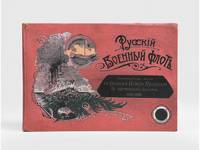
1905189053St. Petersburg: Typolithography Evg. Tile 1905. Rare illustrated chronicle of the Imperial Russian Navy First edition just one institutional copy traced at Stanford. This excellent pictorial history comprises images of ships battle scenes and portraits. Published at the time of the Russo-Japanese War the front cover incorporates an image of the cruiser Varyag celebrated for the stoicism of her crew at the Battle of Chemulpo Bay 1904. At the time of publication Apostoli 1861-1937 a captain in the Russian Navy was already established as a photographer and captured many images of the fleet his work being published in a number of manuals and reference books. From 1905 to 1910 he was successively staff officer at Kronstadt then head of the communications service of the Baltic Fleet. Following the Revolution he managed the photo laboratory of the Baltic Fleet Political Directorate Pubalt although in 1919 he was arrested by the Petrograd Cheka for attempting to cross the Finnish border and sent to Vologda for "community service". Released in 1920 he was stationed in Petrograd later in the decade teaching photography at the M. V. Frunze Higher Naval School now the Saint Petersburg Naval Institute. He also had a reputation as a camera designer developing twin-lens and underwater cameras and wrote a number of books including A Guide to the Study of Practical Photography for Naval Officers and Tourists 1893. Landscape quarto. Illustrated throughout from engravings and photographs red decorative borders to each page. Original reddish-brown pictorial pebble-grain cloth back cover with publisher's name in blind within blind-stamped borders. Contemporary Russian bookseller's stamp to rear pastedown. Front cover dulled spine ends chafed some edge wear corners rubbed through ink stain to back cover internally some finger soiling and general light signs of handling closed tear into images of one leaf another closed tear across final leaf the latter repaired with opaque tape: just about very good. hardcover
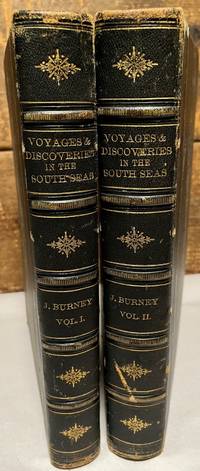
180631885London: Printed by Luke Hansford & Sons near Lincoln's-Inn Fields 1806. First Edition. Hardcover. Good. Folios. Dark cloth covered boards with black leather spines and corners. Raised bands gilt decorations and gilt lettered titles on the spines. Reddish marbled end papers. Later bindings with reddish marbled end sheets and newer blank end sheets. A couple of tiny worm holes bottom edges in the text of volume 2. The first worm hole ends in the contents section. The second worm hole the size of a tiny pin head extends to page 80 lower margin. Another small worm hole located bottom edges of the appendix in back of volume 2. Volume 1 unaffected. Interior contents are clean both volumes. Small tear bottom corner of the Trinidad map volume 2. Leather sections are rubbed on the corners outer joints and spine of volume 2. Binding cords and thin cracks are visible in the hinges but the covers are very secure and the text blocks sturdy. Collation as follows:<br /> <br /> Volume I: Commencing with the earliest Discovery of the South Sea by Europeans; and terminating with the Voyage of Francis Drake in 1579: 1 xii 8 pages contents errata directions for binder 391 pages. Illustrated with folding frontispiece titled "Chart of the Discoveries made in the South Sea or Pacific Ocean" and 4 more folding plans. <br /> <br /> Volume II - "From the Year 1579 to the Year 1620": 2 vi 10 pages contents errata 482 pages. Volume II illustrated with floding plates in text illustrations and the frontispiece. There is a binder's error in placement of the illustrations. The current frontispiece is supposed to face page 385. The instructions for placement of the original frontispiece now faces page 1. <br /> <br /> This set was expanded to five volumes with additional volumes published in 1813 1816 and 1817. James Burney 1750-1821 was an English Rear Admiral. He accompanied Captain Cook on his last two voyages. <br /> <br /> Reference Howes B 1002; Sabin 9387. Printed by Luke Hansford & Sons, near Lincoln's-Inn Fields hardcover
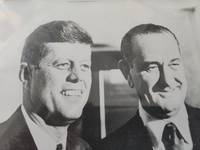
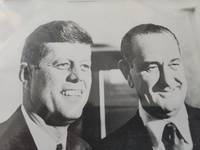
196115402Department of Defense / Marine Corps 1961 This photograph was found in a big estate sale in Arizona hidden in a huge lot of 1960s photographs of politicians and entertainers- all signed. It is a TYPE 1 Original made from the negative and is in Black and White on 8 x 10 semi-gloss thick paper stock. Both signatures match and appear to be hand-signed. The photograph was taken by a Marine Corps /Defense Dept photographer during JFKs Inauguration in January 1961. The other Inauguration photos in the batch have official DOD Marine Corps Photographer ink stamp on back. This one does not so I am thinking it was gifted by JFK to a staffer or the Marine Corps photographer. The signatures were signed by the same pen. It looks to be a fine tip black ink marker. The signatures are not auto penned. They have age smears and different ink wear in places. NO COA. SOLD AS IS. Photo is in VG condition no tears no holes no additions. A nice wood frame is Included. No Binding. Very Good. Department of Defense / Marine Corps unknown
196115402Department of Defense / Marine Corps 1961 This photograph was found in a big estate sale in Arizona hidden in a huge lot of 1960s photographs of politicians and entertainers- all signed. It is a TYPE 1 Original made from the negative and is in Black and White on 8 x 10 semi-gloss thick paper stock. Both signatures match and appear to be hand-signed. The photograph was taken by a Marine Corps /Defense Dept photographer during JFKs Inauguration in January 1961. The other Inauguration photos in the batch have official DOD Marine Corps Photographer ink stamp on back. This one does not so I am thinking it was gifted by JFK to a staffer or the Marine Corps photographer. The signatures were signed by the same pen. It looks to be a fine tip black ink marker. The signatures are not auto penned. They have age smears and different ink wear in places. NO COA. SOLD AS IS. Photo is in VG condition no tears no holes no additions. A nice wood frame is Included. No Binding. Very Good. Department of Defense / Marine Corps unknown
181330902MADRID: Imprenta de Fermín Villalpando 1813. Primera edición.- Folio menor.- Plena pasta española de época lomera con doble tejuelo florones y ruedas doradas.- I: XCVI de Portada y Prólogo.- 1 hoja Tabla.- 311 páginas.- II: 1 hoja Portada.- 490 páginas.- 2 hojas Indice.- III: Apendices.- 4 hojas.- Portada y Tabla de Documentos.- 206 páginas.- 1 hoja blanca.- 107 páginas. Errores en Palau en la descripción de la obra. Ligeros amarronamientos de papel en algunas hojas por lo demás muy buen ejemplar. Obra fundamental para el estudio de las cortes españolas y la de 1812 en particular. Mereciendo una segunda edición en 1820 y traducción al francés en 1822 y 1824. El sacerdote y escritor Francisco Martínez Mariana nació en Oviedo en 1754 y murió en Zaragoza en 1833. Estudió en las universidades de Oviedo Alcalá de Henares y Toledo siendo en esta última biblioteca rector pertenecían a las Academias de Historia y de la Lengua figurando en su ""Catalogo de Autoridades"" siendo en dos ocasiones 1801 y 1816 Director de la Academia de la Historia. Debido a sus pensamientos e ideas liberales sufrió persecución en 1814 y 1823. Publicándose años más tarde 1861 su obra póstuma en defensa de su ""Teoría de la Cortes"" bajo el título de: Defensa del autor contra las censuras dadas por el tribunal de la Inquisición en sus dos obras Teoría de las Cortes Ensayo histórico crítico sobre la antigua legislación de España. Uno de sus biógrafos al hacer la crítica de su Teoría de las Cortes dice de él: "" Si en lo político los libros de Martínez Marina y muy especialmente su Teoría de las Cortes deben considerarse como uno de los guías preciados de la renovación social que llevaban consigo las doctrinas inspiradoras de las Cortes de Cádiz en lo Económico Martínez Marina figura entre los individuos más notables de la escuela colectivista española en la cual figuran autores de tanta nombría como Luis Vives el Padre Mariana Martínez de Mata Campomanes etc. . . "". Palau 155246 - No en Aguilar Piñal Imprenta de Fermín Villalpando hardcover
19952082702114901221Benseisha 1995. Soft Cover. Fine. Size: 23x17 cm Number of books: 3 Benseisha paperback
1846NNJT77/81France. Very Good. 1846. Manuscript. On offer is an outstanding archive of forty-seven 47 letters from the personal files of famed Admiral of the French Navy and Great Astronomer Amédée Ernest Barthélemy Mouchez. The archive dates 1846 through 1891 and is made up of a few letters from his sister a letter to his mother and then the balance from colleagues notables and friends; a number are on stationery of the Republic of France; Sociedad Cientifica "Antonio Alzate" Mexico; Ecole Normale Superieure Laboratoire de Chime; Senat and some French Ministerial Office letterheads. This fascinating archive touches upon many of Mouchez' career highlights as the letters deal with a number of different areas - Mouchez' work in China matters of the Observatory Mexico personal communications of friends and colleagues etc. Mouchez had a spectacular career embarking on a career in the French Navy as an ensign in 1843. This was a period of relative international maritime peace and much of the navy's activities were dedicated to exploration and discovery. Mouchez was initially occupied with hydrographic studies along the coasts of Korea China and South America penetrating 320 km up the Paraguay River and exploring the Abrolhos Islands. He improved the practice of surveying at sea adapting terrestrial instruments for naval use and was especially concerned with the problems of determining longitude. He developed the use of the theodolite and meridian telescope to improve the error in establishing longitude. Attaining the rank of Captain in 1868 he embarked on a series of expeditions to chart the coast of Algeria. At the conclusion of his project in 1873 he was elected to the Bureau des Longitudes and in the following year was sponsored by the Académie des Sciences to observe the transit of Venus from St. Paul Island in the Indian Ocean. On December 9 he made a sequence of superb photographic plates of the event. In 1875 the Académie elected him a member of the astronomy section and in 1878 he was promoted to rear admiral and awarded the role of director of the Paris Observatory. The observatory had fallen into disrepair and disrepute since the chaos of the Franco-Prussian War of 1870 and the Paris Commune of 1871. Mouchez set about a programme of reconstruction but failed to persuade the government to fund a new observatory outside the centre of Paris. In 1887 he collaborated with Sir David Gill to host an international astronomical conference in Paris. The principal outcome of the conference was a multi-national project to compile and index a photographic atlas of the heavens the Carte du Ciel. The project consumed massive effort over several decades before it was rendered obsolete by modern astronomical methods. He is also credited with founding Mountsouris Observatory and he is the author of six books on astronomy navigation nautical instruction etc. A grand boulevard in Le Havre and a village in Algeria are named for Mouchez. This is a great archive of intersecting and diverse worlds being astronomy France and her Navy Algeria militaria geography cartography and South America. VG.; 12mo - over 6¾" - 7¾" tall; CLIMATE CLIMATOLOGY METEOROLOGICAL WEATHER ASTRONOMY ASTRONOMER NAVY NAVAL MARITIME MONTSOURIS HANDWRITTEN MANUSCRIPT DOCUMENT LETTER AUTOGRAPH WRITER HAND WRITTEN DOCUMENTS SIGNED LETTERS MANUSCRIPTS HISTORICAL HOLOGRAPH WRITERS AUTOGRAPHS PERSONAL PERSONAL HISTORY MEMOIR MEMORIAL OBSERVATORY ORRERIES SCIENCE NAUTICAL NAVIGATION MAPS CARTOGRAPHY ALGERIA AFRICA antiquité contrat vélin document manuscrit papier Antike Brief Pergament Dokument Manuskript Papier oggetto d'antiquariato atto velina documento manoscritto carta antigüedad hecho vitela documento manuscrito Papel; Signed by Autograph . unknown
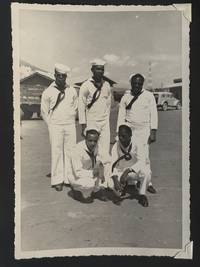
1950215431950. African American sailors aboard the USS Leyte CV-32 photo album compiled circa 1950-1951 documents daily life labor and camaraderie among Black enlisted men serving during the opening phase of the Korean War and in the early implementation of military desegregation under Harry S. Truman's Executive Order 9981. Created while the carrier was deployed in Atlantic and Caribbean waters and later in support of Korean War operations the album offers sustained visual evidence of African American naval presence during a transitional period when the U.S. Navy was moving unevenly from segregation toward formal integration. Of particular historical significance is the inclusion of the 15 December 1950 Christmas edition of 32's News containing an obituary and photograph of Ensign Jesse L. Brown who was killed in action on 4 December 1950 near the Chosin Reservoir in North Korea when his F4U-4 Corsair was struck by enemy fire making the album an immediate shipboard witness to the death of the Navy's first Black aviator. The archive supports research in African American military history Korean War studies naval integration and the social worlds of Black servicemen abroad.<br /> <br /> Photo Album with approximately 100 black-and-white silver gelatin photographs ranging from 2.75 x 1.75 inches to 10 x 8 inches most mounted recto and verso on 22 black paper album leaves with several images unmounted accompanied by loose and mounted ephemeral materials including mimeographed wartime reports clippings and shipboard newspapers. Notable among these are the 14 October 1950 issue of Daily Press News and the 15 December 1950 issue of 32's News Vol. 1 No. 5. Identified sailors include Harvey Thomas James Kincaid Leo Bowser "Lippy Connor" "Stockson" "Boby Mitchell" and James G. Watson the latter represented by photographs captioned "Watson" and accompanied by 1949-1951 W-2 forms documenting his service at Naval Air Station Quonset Point and aboard USS Leyte. A large-format photograph captioned "The GTMO Four" depicts four African American sailors in dress whites at Guantánamo Bay while other images captioned "Mindoro" situate the crew in the Philippines during operational deployment.<br /> <br /> The album interweaves formal portraits group military images and informal scenes of athletic recreation swimming nightlife and cross-cultural encounters with Filipino civilians as well as studio portraits labeled "School Days" and images of family members and sweethearts grounding naval service within networks of kinship and memory. Interior views of barracks communal meals and experimental aircraft armament work-contextualized by a mimeographed article describing the so-called "mercy bomb" perfected aboard Leyte-further illuminate the technical and social dimensions of shipboard life. Produced at a moment when Black servicemen were asserting dignity and professional competence within historically exclusionary institutions the archive offers unusually cohesive visual testimony to African American presence in a modernizing desegregating Navy at the outset of a global Cold War conflict. Photographs exhibit minor fading light corner wear and typical album mounting abrasions; mimeographed documents show toning creasing and several edge tears. Overall very good condition. A substantial and visually integrated record of African American naval service during the Korean War's opening year anchored by contemporaneous memorialization of Jesse L. Brown and richly documenting everyday Black military life at sea and abroad. unknown
1917233411917. U.S. Navy photo archive documenting the Mexican Patrol mission of USS Rainier a Pacific Fleet auxiliary schoonerduring World War I. This archive documents U.S. naval personnel moved between shipboard duty shore stations and regional exploration in Mexican and California waters. Taken by Lieutenant junior grade Dr. Louis Henry Clerf the ship's medical officer these photographs place a named naval physician inside the working life of a little-documented auxiliary vessel assigned to Division 2 Pacific Fleet and the Mexican Patrol after the Navy acquired and commissioned the former civilian schooner in 1917. Rather than isolating military routine from observational practice the archive shows how officers aboard a small auxiliary ship simultaneously functioned as servicemen medical staff coastal travelers and recorders of local environments and natural science during a period of expanding American naval movement along the Pacific and Baja coastline.<br /> <br /> <br /> Photo archive of 41 silver gelatin photographs with many captions most measure 3.5" x 4.5" aboard USS Rainier and in Pacific coastal locations including San Diego and the Guaymas region circa 1917 to 1919. Several photographs focus on animals aboard ship including dogs kept by the crew birds fish catches and larger game animals associated with hunting and provisioning activities carried out during the patrol. Other images depict sailors handling fish and displaying catches beside the vessel revealing the practical realities of subsistence and food sourcing aboard a small auxiliary ship operating in relatively isolated Pacific waters. Together the photographs document the intersection of military hierarchy environmental encounter maritime labor and animal life aboard a World War I patrol. The images include repeated shipboard views of sailors and officers in white tropical uniforms and darker service dress posed singly and in groups on deck among rigging spars deck fittings railings and a mounted gun firmly establishing the operational setting aboard a naval auxiliary rather than a private voyage. Several photographs show relaxed mess scenes beneath awnings men seated at tables or gathered informally at sea while others picture uniformed personnel beside an automobile ashore and in front of a large urban hotel or institutional building. A large formal group portrait taken before an ornate Spanish colonial church further extends the coastal location. One verso identifies "Duck shooting at Ensenada de Francisco Bay about 20 miles north of Guaymas" while another reads "Hospital. Navy Training camp San Diego" linking the group to both field excursion and medical infrastructure. The captions combined with views of harbor craft shore architecture and regional movement show the same photographic hand operating across military environmental and natural science subjects. There are also many photos of the fishes and animals of the Baha region with captions.<br /> <br /> <br /> USS Rainier built in Portland in 1917 as the civilian schooner Patrol and later renamed Angel entered Navy service as a Pacific auxiliary during World War I. Commissioned at Mare Island on July 30 1917 and assigned to Division 2 Pacific Fleet she served on the Mexican Patrol off Southern California and Baja California placing this archive within the history of continued U.S. naval surveillance and mobility in Mexican waters during World War I rather than in a purely European war frame. The archive is attributable to a trained Navy physician who later went on to a long and prominent civilian medical career Dr. Louis Henry Clerf of Washington state. this archive preserve the operational world of a Navy auxiliary schooner where smaller patrol and support vessels were essential to maritime presence but far less frequently documented than battleships or major transports. Clerf's position as medical officer gives the archive unusual coherence since the photographs join shipboard hierarchy working naval space coastal circulation and natural-history attention within one attributable officer's record of service during the final years of World War I and the Mexican Patrol. Dr. Cliff also seem to have a deep interest in natural sciences and has included many photographs of the fish and animals that could be found at the time in the Baha region. Light surface wear scattered fading and minor edge or corner wear; captions present on some versos with images generally clean and legible. The archive offers an identified record of Mexican Patrol service aboard USS Rainier and of the broader naval presence that connected California Baja California and the Gulf of California during the final years of World War I. unknown
190756101New York & Brooklyn NY; Boston MA Wilmington CA San Pedro CA Los Angeles CA: Curtis D. Mabry Lambie & Mabry William Gardner John G. Alden et al 1907-1940. 24 cyanotype blueprints diazo blueprints manuscript blueprints on linen oilskin paper some on glassine sized from 11.5 x 12.5 in. up to 27 x 94 in. w/ several sized primarily between 16 x 27.75 in. to 22 x 48 in. nearly all w/ draftsman specifications w/in the image many w/ pencil or grease pencil annotations and/or markings at margins of blueprints or on versos several signed w/in image and separately by Mabry chipping & edgewear to most the largest piece on glassine diazo paper is quite fragile and chipped w/ minor losses many w/ minor closed tears a couple w/ slight fading still VG- grouping. Eighteen “Specifications & Block Lists†most folio. 11 x 13 in. some typescript others mimeographed and several blueprint w/ nearly all clasped at upper margin: C 14 leaves; 42 leaves; E 38 leaves; 14 1 leaves; 2 8 leaves; 15 leaves unnumbered. - 2 copies; 5 leaves unnumbered.; 5 leaves unnumbered.; 7 2 leaves; 6 leaves unnumbered.; 5 1 leaves; 2 25 4 leaves -- 2 copies; 2 8 leaves; 8 leaves; 10 leaves; 5 leaves nearly all stapled to backing paper as issued. File folder containing over 50 offprint clippings for sail plans newspaper clippings 4 TLS & ALS 2 on letterhead 1 5 x 7 in. photo of Mabry and more. These extraordinary sail plans designs specifications and clippings trace the career arc of a marine architect career with some of the most significant yacht and ship designers in New York and Boston and Southern California. Mabry 1882-1949 launched his career with the storied Gardner & Cox Naval Architects of New York later William Gardner as chief draftsman and later inspector for the firm. He was responsible for designing the earliest version of the Star Class keelboat which produced a large chunk of the top U.S. sailors for years and served as pipeline for training America’s Cup Racers as one of the older one-design classes. His initial design made its regatta debut on Long Island in the Spring of 1907 which was then adapted by storied designer Francis Sweisguth who adapted the size of the hull and sail plan. This archive includes the blueprint Hull Body Plan Lines and Sail Plan for the Cyric a Class “S†32 foot sloop built for Eldon H. Trimingham which raced for the LIpton Cup on Gravesend Bay and later carried the Trimingham colours until the Royal Bermuda Yacht Club brought in a fleet of seven one-design sloops in 1925. It later raced in the 1930 International Yacht Races. Also included are the Block List Body Plan and Lines for Hull No. 254 by Gardner which was a 46 foot Class “S†finished in 1912 originally for Seward Prosser who also owned the yacht Constance. Of additional significance are the Hull Plans and Specifications for the Larchmont “O†Class sloops built in 1917 with six sister ships -- Georgia Varuna Nimbus Grey Dawn Maisie and Betty with all except for the Varuna fitted with Gaff rigs. The Varuna fitted with a groundbreaking Marconi Rig proved to be the fastest design at the close of World War I. The tragic Sea Call one of yachting’s greatest schooners as well as one of its greatest lost opportunities is well represented here including the Main Mast Head Mizzen Mast Head Sail Plan designs together with the typescript Block List. In the design Gardner specified a combination of vanadium steel and monel metal which resulted in violent electrolysis and within three weeks of her first sea trial the decision was made to scrap her. She was designed to hold 10-12 guests with a private owner’s deckhouse. During World War I subsequent to working on the Larchmont “O†Class for Gardner Mabry contracted with J.F. Duthne & Co. in Seattle as chief draftsman and after the War set up in Los Angeles as a Naval Architect. While working for the Los Angeles Shipbuilding & Dry Dock Co. he drafted the designs and plans for the Steamers “Yale†& “Harvard†which had originally served as coastal steamers for the Admiral Line with the Pacific Steamship Co. and taken into Government Service during World War I and then purchased and rebuilt by Harry & Ralph Chandler forming the LS Steamship Co. and operating subsequently as popular steamships on the Pacific Coast. SS Yale was later scrapped in 1949. Included with this archive is a manuscript Hull Design signed by Mabry. In 1925 he also designs the plan for a Los Angeles Fireboat with manuscript plan and Mabry’s signature included here dated June 13 1925. He then contracts with the famed yacht designer John G. Alden in Boston. Specifications for No. 274 the Waterline Auxiliary Ketch “Danai†which was designed and built in 1926 built by Kenneth McAlpine of Shelbourne N.S. Canada and was later renamed Wawa Valdora Nira and Polaris. Of significance is the specifications for Hull No. 435 “Puritan†designed by Mabry and commissioned by Edward Brown and built as a 126 foot gaff-rigged schooner. The Yacht still serves as a charter vessel with the Classic Yacht Experience after extended refit in 2015. Sometime between 1929 and 1930 Mabry partners with noted Southern California Naval Architect William Lambie and their partnership would last about two years. The pair would design many power yacht designs including a fast 88 foot cruiser a 55 foot schooner a cruiser for N. Paul Whittier of Hollywood CA and 110 foot steel auxiliary schooner for H. Wilhelm Rohl who also owned at the time the famed Te Vega yacht. They may be best remembered for designing the glass bottomed “Phoenix†the popular sightseeing side-wheeler paddle boat for tourists sightseeing over the undersea gardens of Santa Catalina Island. Lambie 1886-1963 was a Scottish-American Southern California naval architect who had worked with Southwestern Shipbuilding then with the Seacraft Corporation and well known as the designer of the popular Lambie propellers whose efficiency was first recognized when installed on the SS Catalina. The letters included in this archive reflect the impact of the Great Depression and the Stock Market Crash on shipbuilding with the owner of the Philadelphia based Tunnel & Mine Machinery Co. lamenting that “It has been pretty stringent this year but some of my things are showing signs of coming back . . . which may enable me to complete Sapphire Seas.†While the letter sent by Lambie to W.F. McMahon in Riverside California explaining how he unwittingly may have offended Mabry his former partner as well as Mr. McMahon over the proposed design and build of a yacht in 1932. Mabry would remain in Los Angeles until the mid-1930s before moving again to the East Coast to work for the Cramp Shipbuilding Co. in Philadelphia and then later the EB Company in New London CT. Worldcat lists no copies or examples of designs by Curtis Darling Mabry or for the firm Lambie & Mabrie; See: The Big White Steamer The Branding Iron Los Angeles Westerners Corral No. 101 1971 pp. 5-7; Martin Cox Los Angeles Steamship Company 2010; Francis Sweisguth William Gardner Yacht Designer; John Valois The Centennial History of the Woods Hole Yacht Club 1996. Curtis D. Mabry, Lambie & Mabry, William Gardner, John G. Alden, et al, unknown
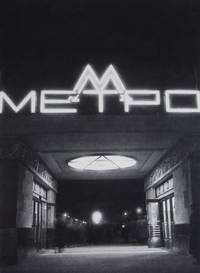
201641030МоÑква Moscow: AрабеÑка" Arabesque 2016. Limited First edition. Hardcover. vg. 1/250. Folio 17 x 13". 2 leaves Title and Introductory text; 60 leaves Plates 1 leaf Color map of the Moscow subway 1 leaf List of Contents as issued Volume 1 WITH 2 leaves Title and Introductory text; 60 leaves Plates 1 leaf Folded color map of the Moscow subway 1 leaf List of Contents as issued Volume 2. Original grey cloth portfolio with blind-stamped lettering to spine and title laid on each front cover. Each title page in grey lettering.<br /> <br /> Published to commemorate the 80th anniversary of the Moscow subway this two-volume set is a splendid photographic journey through the Russian capital's gorgeous underground. Indeed the Moscow subway was one of the Soviet Union's most revolutionary architectural projects with stations constructed as luxurious "palaces for the people" with its chandeliers reflective marble walls intricate mosaics high ceilings and heroic statues all of which creating an opulent space that was accessible for the city's workers. <br /> <br /> The first designs for Moscow's subway were submitted to city officials under the reign of Czar Nicholas II in 1902. Moscow wanted to rival earlier systems in London Paris and Berlin but the Russian city's plans were repeatedly postponed due to the uprising of 1905 WWI 1914-1918 and the Bolshevik revolution of 1917. Metro plans were finally approved by Joseph Stalin in 1931 and construction work began two years later under the supervision of Lazar Moiseyevich Kaganovich. The Moscow metro finally opened on May 15 1935. <br /> <br /> Of the 120 plates contained in this work 60 per portfolio 104 are b/w photographic reproductions showing subway operators at work people waiting for their train passengers boarding and onboard trains as well as outside and inside views of the Russian capital's subway infrastructure. Some photographs depict bas-reliefs friezes marble and bronze statues. 16 plates are color illustrations of various stations. All the photographs were taken between 1935 and 1940 by some of the best Russian photographers of the period. <br /> <br /> The captioned photographic reproductions and color illustrations are tipped-in onto a 17 x 13" white cardstock with image size varying from 12 1/4 x 9 1/4" to 7 1/4 x 9 1/4". <br /> <br /> Text and captions in Russian. Both portfolios and interior in overall very good condition. Lazar Moiseyevich Kaganovich 1893-1991 was a Soviet politician and administrator and one of the main associates of Joseph Stalin. In the 1930s Kaganovich along with project managers Ivan Kuznetsov and later Isaac Segal organized and contributed greatly to the building of the first Soviet underground rapid-transport system the Moscow Metro known as "Метро им. Л. Ðœ. Кагановича" Metropoliten imeni L.M. Kaganovicha after him. AрабеÑка" (Arabesque) hardcover
2011C102364Edizioni Dei Soncino. As New. 2011. Hardcover. 889049025X . FREE UPGRADE to Courier/Priority Shipping Upon Request - IN STOCK AND IMMEDIATELY AVAILABLE FOR SHIPMENT - FLAWLESS COPY BRAND NEW PRISTINE NEVER OPENED -- Text in Italian. 348 pages; illustrated in color and in black and white. Catalogue Raisonne Catalog Raisonné Complete Works Catalogo Ragionato Catalogo delle Opere L'Opera Completa Raisonnee -- with a bonus offer-- - May be EITHER: out of print OOP and extremely rare in this pristine condition; signed by author or contributor; or a first or special edition; inquire for details . Edizioni Dei Soncino hardcover
1988C94121Neri Pozza Editore. As New. 1988. Paperback. FREE UPGRADE to Courier/Priority Shipping Upon Request - IN STOCK AND IMMEDIATELY AVAILABLE FOR SHIPMENT - FLAWLESS COPY BRAND NEW PRISTINE NEVER OPENED -- Text in Italian. 314 pages; 199 illustrations in black and white; 8 in color. Catalogue Raisonne Catalog Raisonné Complete Works Catalogo Ragionato Catalogo delle Opere L'Opera Completa Raisonnee -- with a bonus offer-- - May be EITHER: out of print OOP and extremely rare in this pristine condition; signed by author or contributor; or a first or special edition; inquire for details . Neri Pozza Editore paperback
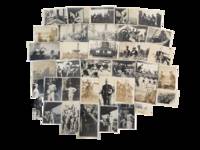
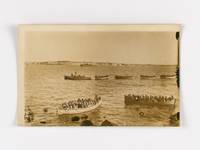
107814This very small and relatively unknown unit formed in February 1915 was diverted to Gallipoli and put under the control of the British Army. On 7 August during the August Offensive the Bridging Train went ashore at Suvla Bay and built a number of essential piers. The unit remained at Gallipoli until the final evacuation on 18 December; it was based in Egypt throughout 1916 before being disbanded in early 1917. WO Shalless joined the 4th Pioneer Battalion in March 1916. These 54 images 47 of them captioned in detail some printed ephemera and a hand-made Xmas card from 'My Dug Out Suvla Bay Gallipoli 17-11-15' sent home to his wife and son are a very rare record of the activities of the 1st RANBT. <p>The bulk of the images are presented on 33 contemporary postcard-format prints on stiff card stock the other three are slightly smaller prints on thinner stock; 18 of the prints each contain images of two original snapshots. From Gallipoli there are 11 single prints and one double print and all 13 images captioned; from Egypt and voyage over there are seven single prints and 17 double prints 34 of the 41 images are captioned. unknown