MAO'S CHINABiblio.com
3 141 résultats
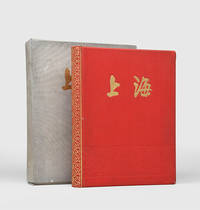
1959168621Shanghai: Shanghai renmin meishu chubanshe c.1959. The preferred deluxe issue First edition first printing of this photobook issued by the Shanghai Municipal Government to celebrate ten years of Communist rule as well as Chinese culture history and art. Shanghai's status as the country's economic powerhouse is stressed through numerous pictures of heavy and light industries smiling workers and modern housing developments as well as of consumer goods such as fountain pens sewing machines and bicycles. Space is given to healthcare culture and the arts the historic architecture of the Bund parades and tourism. Unlike other propaganda from the period the message is uniformly forward-looking centring on developments achieved under socialism rather than recycling shop-worn condemnations of the Republican and imperial eras. Copies of this extravagant production were also issued housed in a paper box. Folio. With 21 tipped-in plates 16 colour 2 folding colour and black and white illustrations throughout. Title page printed in brown and grey. Binding designed by Ren Yi Chen Zhichu Zhang Suyu Cai Zhenhua and Qian Zhenzhi. Original red cloth spine elaborately decorated in gilt gilt calligraphic title on front cover foot of front board blocked in blind floral-patterned endpapers. Housed in publisher's folding grey cloth case title to front panel in gilt bone ties. Spine bright boards lightly soiled extremities worn spine ends and tips a little finger soiling internally else bright. A very good copy indeed in very good case with some soiling lining foxed. Parr & WassinkLundgren The Chinese Photobook: From the 1900s to the Present pp. 189-92. hardcover
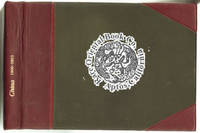
41046101China 1891-1903. Leather spine & corners over green cloth oblong: 33 x 24 cm.249 b.w. & 3 hand-colored photos firm clean & solidly bound all photos laid downmost with pencil captions & date. STUNNING COLLECTION OF EARLY IMAGES . . . ORIGINAL DATED 1891-1903 PHOTOGRAPHIC ALBUM . . . PLACES IN MASSACHUSETTS NEW YORK U.S. EAST COAST HAWAII . . . CHINA MANCHURIA &c. . THE PHOTOS: The album contains various sizes & types of photos for the most part they are either silver-gelatin types or glossy finish most are black & white finish with a few hand-colored. All photos are laid down. Size in centimeters range from the smallest: 2.8 x 4.2 cm to the largest: 28 x 21 cm. There are 249 various kinds of photo processed black & whites and 3 hand-colored Japanese photos in all. . PHOTO DESCRIPTIONS BY PAGE NUMBERS PENCILED IN UPPER CORNERS 52 PAGES IN ALL: . Most with pencil captions & some with dates: . 1. 1 Photo: THE "STARS & STRIPES" photo of the U.S. Flag . 8 x 8 cm. . 2. & 3. Pictures of 2 lions 2 horse not photos clips from . unknown source. . 4. 2 Photos: most likely around the Massachusetts area: a. Tipped over house. "After the storm Atlantic Coast U.S.A. b. Beached ship. "After the storm Atlantic coast U.S.A." . 16.5 x 11.5 cm. . 5. 2 Photos: a. U.S.A. General Putnam's house. Revolutionary War . Rutland Mass.16.5 x 11.5 cm. b. U.S.A. Birch grove in the Adirondacks New York 16.5 x . 11.5 cm. . 6. & 7. 2 Photos all the same size. a. PORT ARTHUR CHINA 1900 16.5 x 11.5 cm. b. ditto c. ditto d. ditto . 8. 4 Photos: oval square round a. Claude L. Hall Roxbury 1899 cutout portrait5.5 x 5.5 cm b. Douglas Huntington New York 1900 2.3 x 3.5 cm. oval c. Capt. Hatch U.S.S. New Orleans 3 x 4.2 cm. square d. Susie A. Nye Sugamore U.S.A. albumen type 9.5 cm. roun e. Gertrude E. Spurr 1899. Melrose 4.2 x 7.2 cm. square . 9. 4 Photos: all oval cut outs albumen types. a. Charles S. Fuller Cambridge 1891 8 x 11.2 cm. b. E. Gertrude Dymond 91 Roxbury size ditto c. Alice J. Raymond Cambridge 1891 size ditto d. Gertrude E. Spurr Boston 1891 size ditto . 10. 3 Photos: a. Mama at Leomuslir U.S.A. May 1903 5.4 x 8 cm. b. Mrs. Caleb Saundres of Lawrence U.S.A. and her tiny lap . dog 1903 10 x 18 cm. c. Massachusetts U.S.A. Shows 4 horse-team buggy with . riders. 16.5 x 11.5 cm. . 11. 9 Photos:Aboard Steamship Heading to China actually 3: a. Captain Patterson of the China Merchants Steamship . Navigation Company 4 & 4 photos per print 7 in all of . him 10.8 x 4.3 & 5.8 x 4/3 cm. b. Hsing Fung in Chinese waters: captions for each of the . 4 people: Mrs. Nye Mrs. Roller Captain Patterson . Captain Roller on board 1902 8.4 x 8.3 cm. c. 4 people: Captain Patterson Mrs. Roller Captain Roller . Dr. Nye China on board C.M. Hsing Fun 19028.4 x 8.3 cm . 12. 3 Tientsin Photos: a. Coolies carrying wool Tientsin. 1902 8.4 x 8.3 cm. . b. Hoisting sail on Chinese boat Island canal Tientsin . 1901 8.4 x 8.3 cm. c. Tientsin Posing for their picture 1903 8.4 x 8.3 cm. . 13. 4 Tientsin Photos: a. Chinese kids fishing Tientsin 1903 8.4 x 8.3 cm. b. Our tennis orator Tientsin 1902 10 x 14.2 cm. c. Chinese soldiers on Chinese ponies Tientsin 1903 10 x . 14.2 cm. d. Chinese kids Tientsin 1902 9 x 6 cm. . 14. 6 Photos: a. Harry S. Nye Los Angeles Ca. Sept.16 1900 11.8 x 2.4 . cm. 6 views. b. Edwin H. Jose Jr. 1898 Whiteface N.H. c. U.S.A. Horvace F. Cooks & Joto Leominster Mass. 1902 . 5.5 x 8.3 cm. d. Ellen R. Nye Sagamore Bach 1899 5.5 x 8.3 cm. e. Harold J. Cook Alice L Jose Grace P. Cook Susan C. . Will Leominster Mass U.S.A. 1898 8.5 x 8 cm. f. Jor Leominster Mass U.S.A. 1902 83 x 55 cm. . 15. 5 Tientsin Photos all the same size: a. 1902 Mrs. Daniel B. Nye Tientsin China riding . rickshaw 8.5 x 8 cm. cm. b. One corner of our home Tientsin China 1902 Rue de . France. c. 1902 Dr. Daniel B. Nye Tientsin China riding rickshaw. d. Rue de France 1902 our home Tientsin China. e. Rue de France 1902 our home Tientsin China. . 16. 4 Tientsin Photos: a. Mary Allen as "Old Lady who Lived in the shoe" at church . of England's fair Tientsin China 1902 13.7 x 9.3 cm. b. A typical Chinese temple pagoda 8.5 x 8 cm. cm. c. At the mouth of a pottery kiln China 1902 ditto size. d. Children who took part in the Church of England fair at . Tientsin China 1912 13.7 x 9.3 cm. . 17. 1 Large Tientsin photo: a. Tientsin China 1904 photo of 14 foreign women each . dressed in the same kind of dress similar to 15 a "old . lady who lived in a shoe" 27.5 x 21.5 cm. . 18. 5 Mass. Photos first 4 faded: a. Witch house Salem Mass. U.S.A. 11.5 x 9.2 cm. b. House in which was born a famous witch Ann Hutchinson . Dainero Mass U.S.A. 11.5 x 9.2 cm. c. Edwin H. Jose Jr. Cambridge Mass U.S.A. 4.5. x 10 cm. d. Old Fort Sewall Marblehead Mass. U.S.A. 9.7 x 9.5 cm. e. Cutout portrait Ellen Nye Crowell Sagamore Mass. . U.S.A. 5 x 4.5 cm. . 19. 4 China Photos all the same size.: a. Dr. Drake rowing Major O'Brian washing boat Grand . Canal China 1902 8.5 x 8 cm. b. Speaks for itself. c. Mrs. D.B. Nye Grand Canal China sampan 1902 d. A yard of roses Hsi-Ku China 1902. . 20. 1 Large Chefoo photo: a. Chefoo China from Temple hill. Panoramic view of the . city 1903 20 x 14.7 cm. . 21. 4 Galesburg Il. Photos all same size; a. Uncle Alpheus' house at Galesburg Illinois 12 x 9.5 cm. b. Willard Dean New years' Day 1902 Galesburg U.S.A. c. At aunt Lizzie's Galesburg Aug. 1901. d. Uncle Alpheus & Aunt Lizzie in the library 1901 . 22. 2 Chefoo China Photos: a. Chow time at Deaf & Dup school Chefoo China9.7 x 7 cm. b. Mrs. Mills teaching sound to the deaf & dumb children . Chefoo China 1902 size ditto. . 23. 4 PHOTOS; HONOLULU & MT. PLEASANT MASS.: a. Leaving Honolulu H.T.on Hong Kong Maru 19018.5 x 8 cm b. Mama. Mt Pleasant St. Cambridge Mass 1903 12 x 9.5 cm. c. Mamma Mt Pleasant St. Cambridge Mass 1903 12 x 9.5 cm. d. Leaving Honolulu H.T.8.5 x 8 cm. cm. . H.T. means Hawaiian Territory now commonly called "T.H. . 24. 1 China Photo: a. The old Cedar Grove at the Ming Tombs Trees 300 years . old June 1903. China 9.7 x 7 cm. . 25. Three Naukow Pass China photos all same size: a. A laden camel caravan passing through Naukow Pass to . Kalgan June 1903 9.7 x 7 cm. b. Mr. Westerdorf and a caravan at rest at a hamlet in the . Naukow Pass June 1903. c. A difficult road Through Naukow Pass June 1903 Boy on a . Donkey. . 26. 4 Photos of Japan all same size: a. Japan 1901 Hakone Lake 13.3 x 9 cm. b. Japan 1901 Yumoto hand colored. c. Fujiya Miyanoshita hand colored c. Miyanoshita Japan 1901 hand colored 2 left corners . torn away. . 27. 6 Photos of Chefoo China: a. En route to Temple Hill Chefoo China 1903 she is . being carried by two coolies ca. 8 x 6 cm. b. Qu Lieuws Ryukyu Mud World 1902 4.5 x 5.8 cm. c. Same caption as b ca. 8 x 6 cm. d. Same caption as a ca. 8 x 6 cm. e. Chefoo Harbor in the background 1903 ca. 8 x 6 cm. d. same caption as e ca. 8 x 6 cm. . 28. 5 Peking & near Peking China photos: a. Mr. Westerdorf ready to start from the inn at . Tschong-ping-Jir June 1903 9.7 x 7 cm. b. Peking from drum tower looking toward the Forbidden City . ditto size c. Mr. Westerdorf on Rice Road Techong-ping-jir June 1903 . ditto size. d. Queen's Hotel at Wei-hai-Wei August 1903 oval 6.2 x . 6.8 cm. e. The main street and South Gate with bell in it . Tschong-ping-Jir June 1903 9.7 x 7 cm. . 29. 4 Peking China Photos 1903. all same size 9.7 x 7 cm.: a. A whole in the Great Wall at Pa li-ling June. b. Native bridge near Sehah-ho-chow on the way to the Great . Wall from Peking June. c. The main entrance to the largest Ming Tombs June. d. 3000 years old stones at Confucius Temple Peking 1903. . 30-38 A series of 10 RARE original photos of the YAO people and other views of northwestern "Kwangtung Guangdong area 9 of 10 are large size: 19 x 14 cm. dated 1903. . The American visitors go to see the native Yao people in their primitive villages and environs. . Excellent ethnographic examples clear fine RARE images. . a. Family scene in primitive mud-brick hut thatched roof dirt poor but in native home-spun embroidered & stitched clothing. Grandma & another woman wears the traditional "Bow" elaborate hair dress. With a long caption: "A group of Yao people Kwantung province." . b. "Dwelling house of the Yao people made of bamboo & grass." Thatched hut in the rocky hillside wilderness. . c. Terraced cultivated hillsides in the Yao peoples country." d. Yao woman and her son working in the tea fields." . c. "Rain clothing worn by the Chinese in Kwantung.bamboo hats grass capes and skirts." Shows two river craft. . 36. "Wall washed away at time of cloud burst at Chefoo-China July 1903" 8.5 x 6.5 cm. . Continue with large format photos 19 x 14 cm. dated 1903 of northwest northern part of Kwangtung: . 37. "In the northern part of Kwantung province nearly every village has a large house beside the village which is intended as a place of retreat for the villages in attack by robbers. fort house." . 38. "Temple Dr. Drake lived in for a short time." . 39. Return to the first format: 4 China photos 1903: a. "Chinese beggar at Chefoo" 7 x 9 cm. b. "Typical entrance to Chinese Temples" Peking 14.5 x 10 . cm. c. "View of Chefoo North China" ditto size. d. "Temple built to the Gods by a young Chinese who vowed to . built of if the Gods would cure him of sickness 100 mile . from Peking" 7 x 9 cm. . 40. 4 Photos of USA: a. The U.S.S. Olympia going down the Hudson River to . anchor after saluting at Grant's tomb During the Dewey . celebrations. The U.S.S. Chicago behind her. USA. Compose . of 2 separate but adjoining photostogether:16.8 x 12 cm . b. Blanch Jewel Boston U.S.A. 1891 outline photo 3 x 8 . cm. 1891. c. Mr. ad Mrs. Caleb Saunders Laurence Mass. 7 x 12.5 cm. . An elaborately dressed couple. . 41. 3 Famous Forbidden city Peking China photos all the . same size: 9.8 x 8 cm.: a. Dr. Westerdorf at one of the gates to Confucius Temple. b. Sacred stone dragon Confucius Temple c. Mr. Westerdorf and 'boy" under the Marble Arch of Llama . Temple Peking. . 42. 6 Photos Sagamore Mass. & Honolulu 1901: a. "Our Home" Sagamore Mass. 8.5 x 7.5 cm. b. 1900 Falls at Newton Mass. round photo: 7.8 x 8 cm. c. Honolulu Hawaii 1901 8 x 5 cm. d. Our barn Sagamore Mass. 8 x 5 cm. e. "Winchester U.S.A. duds" shows 3 kids 1 in American . Indian dress the others cowboy "duds" 4.5 x 6 cm. f. Mr. Stowell leaving 1901 Honolulu 8.5 x 6.5 cm. . 43. 3 Photos Tientsin China 1902 all 8.5 x 6.5 cm.: a. "Rue de France: Dr. Nye in his Tientsin office Mr. . Roding in the dental chair." b. Daniel Butler Nye DDS in his office at Tientsin. c. Dest in Rue de France office. . 44. 5 Photos aboard ship in China all 8.5 x 6.5 cm.1901: . corners clipped: a. Lt. Morgan asleep in his bunk on U.S.S. Monocacy Tanku b. Drill aboard U.S.S. Monocacy Tangku c. U.S.S. Monocacy leaving dry dock Tongku d. " " ditto e. " " " . 45. 5 China Photos of the U.S.S. Moncacy Tongku 1901 a. Captain Roller of the U.S.S. Monocacy 8.5 x 6.5 cm. b. Mrs. Roller " " " ditto c. U.S.S. Monocacy leaving dry dockTongku faded7.5 x 6.5 d. ditto above e. ditto above not faded same size . 46. 6 China Tientsin & U.S.A. photos 1902-03: a. Part of front room at Rue de France 1902 8.5 x 6.5 cm. b. Mama on Amb. Emmuii's Piazzco Leominster Mass 1903 . 5.5 x 8 cm. c. "Ah Chin" in dining room Rue de France 6.6 x 4.8 cm. d. Corner of front room at Rue de France 19024.2 x 8.2 cm. e. Round photo "Enjoying Kipling 1902 4 x 4.5 cm. f. Side board in dining room at Rue de France 8.5 x 6.5 cm. . 47. 8 Blue pictures of photos of family & friends. . 48. 2 Photos of Peking & Shanghai China: a. Temple in which the Emperor was imprisoned . Empress Dowager Peking 1900 14.5 x 10 cm. by the b. Chinese pagoda Shanghai ca. 9 x 12 cm. . 49. blank . 50. 6 Photos of Tientsin China: a. Grand StandTientsin Race Club in Race Way 19027.8 x 5. b. Japanese Temple 8.5 x 11 cm. c. Hsi Shan Terrace Tongshan 1903 Residence of Me and . Mrs. G.B. Wikow 12 x 9.5 cm. d. French market Tientsin 1902 8.7 x 3 cm. e. Chinese children Tientsin 1902 2.5 x 4 cm. . 51. 3 Photos of China: a. Old tombs in interior of China. Where a man became old and useless he would have this tomb built around him with only small opening at top where his family put in food each day until he died. 15 x 10 cm.Korean penciled above this . b. Making pottery Tientsin 1902 9.7 x 7 cm. c. Blind musician Chefoo 1903 9 x 10.5 cm. . 52. 4 China Photos. a. God of Transmigration In Buddhist Hall breaking the bones of wicked Chinese on the Wheel of torture by the Monkey King 15 x 10.5 cm. . b. Rear view of the 'steam roller' making roads Tientsin . 1902 7.5 x 6 cm. c. Chinese prisoners going for trial British concession . Tientsin 1902 7 x 8.5 cm. d. Photo of Boxer placard 1900 15 x 10.5 cm. . End of photo album. . A rough list of names places dates &c. in order of appearance: . 1900 Los Angeles Sept. 151900: Harry S. Nye 1898 Whiteface N.H. Edwin H. Jose Jr. 1898 Mass. Horace F. cook Alice F. Jose Grace P. Cook Samuel C. Willard Leominster Mass. 1902 Horvath F. Cook and "Joe" dog Leominster Mass. 1902 "Joe" Leominster Mass. 1898 Ellen R. Ne Sagamore Beach Tientsin 1902-1903 . OF ANTHROPOLOGICAL INTEREST: PHOTOS OF YAO PEOPLE: . The album contains 5 superb images large size: 19.5 x 14 cm. illustrating the Yao minority in native costume their hand-made dwellings terraced rice paddy sea-worthy vessels tea fields &c. Each with lengthy pencil caption dated 1903 documenting Yao living in Kwantung province. Located in southern tip of the Liaodong Peninsula near Port Arthur Manchuria. . About the Yao nationality its great majority branch is also known as Mien or Pinyin: Yáo zú; and as "Ngui Dao" in Vietnamese. They form one of the 55 ethnic minority groups officially recognized by the People's Republic of China where they reside in the mountainous terrain of the southwest and south. They also form one of the 54 ethnic groups officially recognized by Vietnam. In the last census in 2000 they numbered 2637421 in China and roughly 470000 in Vietnam. . Origins of the Yao Iu-Mien can be traced back 2000 years ago starting in Hunan Province. . The Yao people were among the rebels during the Miao Rebellions Ming Dynasty along with the Miao people against the Ming dynasty. . Around 1890 the Guangdong government started taking action against Yao in northwestern Guangdong. . Emigration from the late 1800s to early 19th century the Yao migrated into Thailand Vietnam and the highlands of Laos. The migration was agitated by the opium trade said by the Chinese government. But The Iu Mien say all the emigration was because of the Chinese taking their land. . A group of 61000 people on the island of Hainan speak the Yao language Kim Mun 139000 speakers of Kim Mun live in other parts of China Yunnan and Guangxi and 174500 live in Laos and Vietnam. . Color photos are posted to our website. . CONDITION: THE IMAGES: The photographs are for the most part very clear vivid most little or no fading saying that there are a few each noted that are faded. There are 3 hand-colored Japanese images. Naturally there is some of the typical fading of some of the photos depending on the process. By and large overall an excellent examples. . Prior to coming to us there was a small number of photos extracted from the album the above list and count are accurate for what is present. . The captions are original in pencil in some places for better understanding we added "." to capture the creator's affect or to separate our comments. . THE ALBUM: The album has red 3/4 leather binding the spine is neatly re-backed the corners also neatly replaced with matching leather with gold-stamped cover title: "PHOTOGRAPHIEN" & spine title: "CHINA 1900-1903." . The balance of the covers are in green cloth which has gold rule lines with cover title: "Photographien" most likely of German/Austrian origin ca. 1880-90's vintage. . Album pages are solidly cloth hinged firm and serviceable there are no stains or other obtrusive marks inside. . There are a few lower right page corners rubbed chipped a few broken away typical for an item 120 years old. . BIBLIOGRAPHY: en-wikipedia-org/wiki/Yao_people . . unknown
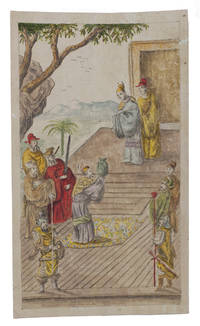
1788314738Paris: chez l'auteur . et chez Ponce 1788. First editions. Vol 1: Title 24 plates and 24 leaves of text; vol 2: title dedication 24 plates and 24 leaves of text. 4to. Contemporary green morocco with gilt Greek key borders pink silk endpapers a.e.g. Corners rubbed spine a touch browned marginal foxing in first volume and to a few leaves in second. First editions. Vol 1: Title 24 plates and 24 leaves of text; vol 2: title dedication 24 plates and 24 leaves of text. 4to. First editions beautifully and fully engraved. The first volume is on the life of Confucius the second details notable events in the reigns of various Chinese emperors. The plates were made after a series of drawings by the Jesuit missionary Joseph Marie Amiot. Cohen-De Ricci 479; Lust 729 1133. Provenance: Francis John Hughes bookplate chez l'auteur ... et chez Ponce unknown
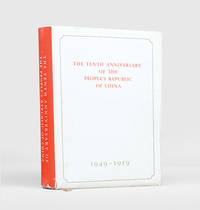
1959185410Beijing: no stated publisher 1959. A grandiose photobook First and only edition with a printed compliments card from the preparatory committee for the anniversary celebrations. Though unmarked as such this copy was owned by Solomon Adler one of the select group of Westerners permanently resident in China during the Mao era. The 1959 festivities signalled China's growing independence on the international stage and its stepping out of the Kremlin's shadow. This lavish production carefully compiled and printed at great expense is a comprehensive pictorial review of events held on and around 1 October 1959. It begins with the text of addresses by Liu Shaoqi Zhou Enlai Lin Biao Deng Xiaoping and Song Qingling followed by vistas of famous architectural landmarks such as Tiananmen Square and the Museum of the Chinese Revolution. Photos of a meeting and banquet held in the Great Hall of the People accompany shots from the National Day parade showing fireworks dancing and flowers. Mao and Khrushchev feature prominently as do images of diplomatic events and of politicians inspecting industrial exhibits architectural landmarks and cultural artefacts. An economist by training Adler 1909-1994 worked in the US in the 1940s but later fell under suspicion during the "red scare." After a period spent at Cambridge University he moved to China in 1962 living in Beijing until his death three decades later and working on the official Chinese translation into English of Mao's Selected Works. Folio. With tissue-guarded portrait frontispieces of Mao Zedong and Liu Shaoqi tipped in many illustrations 9 folding in text. Original white cloth spine lettered in gilt on red ground compartments elaborately tooled in gilt front board with gilt and red emblem of the People's Republic of China "1949-1959" lettered below in gilt silver silk bookmarker. With dust jacket. Housed in original card box. Binding with touch of wear couple of illustrations slightly proud where incorrectly refolded; jacket flaps without price as issued a few closed tears and chips scuffing: a near-fine copy in very good jacket and like box with some toning and marking. hardcover
19732091202133213203Gakushu Kenkyusha 1973. Soft Cover. Fine. Number of books: 4 books in total Gakushu Kenkyusha paperback
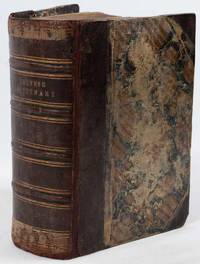
1865219705Shanghae sic & London.: London Mission Press and Trubner & Co. 1865. Two volumes in one: <br>Volume I. ii Title i-x Advertisement Preface 762 pp including Index of Chinese characters pp 1-99 pagination duplicated for pp 224 & 239. <br>Volume II. ii Title 724pp iv List of the Radicals of the Chinese Language. <br> <br>22 x 15 cms contemporary half calf spine gilt between raised bands expertly rebacked mounting the original spine numerous annotations and underlinings in pencil a handful in ink at the head the final blanks with notes and translation age-toned and worn boards rubbed but a good complete copy of the scarce reprint. <br> <br>Provenance: <br>With the early inked signature of "Hugh Wadell Newchwang 1869" the pioneering missionary whose work laid the foundation for the Irish Presbyterian Church's long-term presence in East Asia. In 1869 Waddell 1839–1901 landed at Newchwang now Yingkou where he established a mission station that included a church school and dispensary. His daughter was Helen Waddell poet scholar and theological novelist. <br> <br>Recent signature of A. Allan Shearer Wellington. Scarce reprint of the second part of Morrison's Dictionary first published between 1815 and 1823 with a notable provenance. The 1865 reprint was issued as a single volume combining the second part of the dictionary with an index of characters arranged according to the Kangxi radicals. <br> <br>"The Second Part of Morrison's Dictionary has been generally commended by experienced Sinologues as the most perfect and useful of the whole. The present is merely a reprint of it with such slight modifications as are mentioned at the close of the original preface." Preface <br>Löwendahl 1334 . London Mission Press [and] Trubner & Co. hardcover
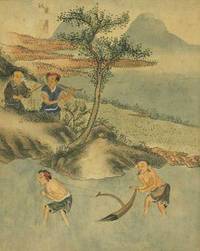
1920218778China Late 19th or early 20th century. 34 scenes on paper each featuring several figures in traditional dress disporting themselves amid landscapes and in a few instances houses all done by the same artist. Each picture is a separate scene; subjects include fishing visiting boating farming wrestling courting harvesting rice and hunting--a particularly effective image shows a tiger hunt and several scenes include wild and domestic animals. 1 vols. Images measure 8-3/4 x 7 inches plus margins bringing the overall page size to 11 x 8 inches. The mounted leaves are linked in the Oriental accordion fashion and contained within two substantial wood covers. Fine condition. 34 scenes on paper each featuring several figures in traditional dress disporting themselves amid landscapes and in a few instances houses all done by the same artist. Each picture is a separate scene; subjects include fishing visiting boating farming wrestling courting harvesting rice and hunting--a particularly effective image shows a tiger hunt and several scenes include wild and domestic animals. 1 vols. Images measure 8-3/4 x 7 inches plus margins bringing the overall page size to 11 x 8 inches. A very interesting and engaging collection of genre scenes. The trees rocks and landscapes are particularly well rendered and the figures are full of life. unknown
181038599Canton Guangzhou workshop 1810. Watercolour and opaque body-colour with ink on thick chinese paper depicitng 1. A Temple Compound and 2. An Imperial Pleasure Garden. Sheet size: 16 1/8 x 22 inches. An exceptional pair of Chinese export watercolours rich in architectural detail exemplifying the pictorial conventions developed to frame China for European eyes.<br/> <br/> A fine pair of large-scale architectural fantasy views produced in a Canton workshop for the export trade at the height of the China Trade period. The compositions exemplify the hybrid artistic language developed for Western patrons by Chinese painters trained in native techniques yet attuned to foreign tastes for picturesque and monumental subjects. The first painting depicts a two-courtyard Buddhist or Taoist temple approached through a three-bay shan-men ceremonial gateway flanked symmetrically by drum and bell towers. A painted screen wall in the inner court displays guardian deities in brilliant red while the gilded Buddha presides from an elevated rear hall. The temples architecture is stylized but evocative of southern Chinese religious compounds. Above the gateway a plaque bears brush-written characters reading "Beautiful Hall of Profound Reverence" a fictive name likely invented by the workshop for decorative effect rather than to identify a specific site. The second painting shows a walled palace complex centered around a multi-tiered pavilion rising from a lotus pond filled with sculptural rocks and pleasure boats. Dragon grottoes stone causeways and ornamental bridges evoke the fantastical terrain of imperial parks such as the Yuanmingyuan rendered here in a compressed stage-set perspective. White elephants bearing crimson banners guard the main gate signaling a courtly or ceremonial setting. While reminiscent of northern gardens the details are compositional inventions rather than topographical records. The palette vermilion malachite green gamboge and carbon black and the use of crisp ink outlines are typical of late 18th-century Canton export workshops. Unlike smaller pith-paper images destined for albums these works were painted on thick laid paper of generous dimensions. Loose drawings such as these were often compiled into custom albums in British India where Chinese watercolours were often combined with Indian and Persian material to appeal to the tastes of British collectors. The Persian-Urdu foliation on the verso indicates their inclusion in such a collection likely assembled in Calcutta or Lucknow in the early 19th century. While drawing upon recognizable architectural forms and cultural symbols the views are best understood as imaginary or composite constructions designed to satisfy European curiosity about China. The temple compound reflects generic southern typologies while the palace garden borrows selectively from northern models such as the Yuanmingyuan. unknown
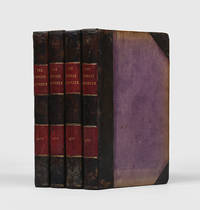
1875160133Shanghai: American Presbyterian Mission Press 1875-78. The most important interdenominational missionary journal of the time A collection of four scarce early volumes of this Shanghai-based periodical which served as the expatriate missionary community's premier forum for sinological exchange including contributions on philosophy social history linguistics literature and religion. Early volumes are now seldom encountered in commerce. The Chinese Recorder and Missionary Journal was first published in 1868 in Fuzhou under the editorship of Stephen Livingstone Baldwin and then Justus Doolittle. In 1874 editorial responsibilities were passed to Alexander Wylie 1815-1887 the agent of the British and Foreign Bible Society in Shanghai with the city's American Presbyterian Mission Press taking over printing and distribution. Issued every two months the journal featured articles by leading missionary-sinologists including Emil Bretschneider Henry Yule Timothy Richard and Samuel Wells Williams. 24 parts in 4 vols octavo 235 x 153. With 4 folding plans and maps 3 woodblock and printed on delicate rice paper illustrations in text. Vol. VIII bound without the index. Contemporary black half sheep A. H. Chen Shantou recently rebacked with original spines laid down red spine labels purple wavy-grain cloth sides. Bindings somewhat worn and faded small piece of leather reglued at head contents generally fresh folding plans with occasional creasing and stub tears. A very good set. Francesca Torocco The Cultural Practices of Modern Chinese Buddhism 2007. hardcover
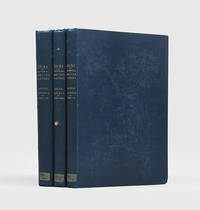
1895182165Shanghai: Published at the Statistical Department of the Inspectorate General of Customs 1895-1905. I believe the Inspectorate aided by its Medical Officers can do good work A lengthy run of this valuable specialist compendium. Each issue had a circulation of around 500 copies only the majority sent to customs stations and libraries as well as diplomats and naval officers and copies are therefore rare in commerce. The Chinese Maritime Customs Service was founded in 1854 by Britain and other foreign powers to collect taxes on maritime trade for the Chinese government but its remit quickly expanded to include domestic customs administration the postal service waterway and harbour management and scientific research. In 1870 Inspector-General Sir Robert Hart instituted this series information to be provided by the medical officers assigned to customs stations. Issues were issued on a yearly or half-yearly basis sometimes in double numbers. "This network of epidemic monitoring and ecological investigation which was gradually built up by the medical officers and medical missionaries extended throughout East Asia and created a huge medical database" Gao p. 54. 17 works bound in 3 quarto 271 x 220 mm. With plates charts maps and diagrams throughout some folding and a few in colour; occasional text in French. Contemporary blue library cloth spines lettered in gilt top edges sprinkled brown other edges untrimmed original yellow wrappers bound in. Ex-Bodleian Library with its shelf labels on spines pencilled pressmarks and accession and cancellation ink stamps. Bindings lightly worn and rubbed one spine with abrasions to cloth occasional short closed tears internally the odd repair and loss but a very good usable collection. Gao Xi "Discovering Diseases: Research on the Globalization of Medical Knowledge in Nineteenth-Century China" in David Luesink William H. Schneider and Zhang Daqing eds China and the Globalization of Biomedicine 2019. hardcover
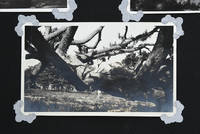
1920152667China: 1920. From palace to park lake to shining sea A collection of 230 vernacular photographs recording a couple's trip to Beijing Jinan and Qingdao a decade after the abdication of the last Qing emperor. Arranged chronologically the album combines landscape and architectural views with candid shots of the travellers and the people they met. The appearance of many easily identifiable landmarks more than compensates for a lack of captions. The travellers begin their holiday in Beijing recently the site of the May Fourth demonstrations. The first 35 images capture the serenity of the Summer Palace once an imperial retreat with images showing the East Palace Gate and the exterior Hall of Joyful Longevity. The visitors strike jaunty individual poses on a stone lion and ride regally on the back of a bronze deer statue. The lady is captured from a distance on a balcony overlooking the Kunming Lake the largest body of water in the palace complex with the famous 17-arch bridge visible in the background. Like many before them these travellers are drawn to such architectural wonders as the Glowing Clouds and Holy Land Archway as well as the full-size marble boat restored by the Empress Cixi in the 19th century using funds allocated for outfitting a real navy. Several vistas of the lake show its solitude and remoteness - qualities accentuated by the palace's transition in 1914 from a working royal residence into a publicly accessible monument to China's imperial past. Until 1924 the Forbidden City remained the private residence of the last emperor Pu Yi and this album thus contains only a few images taken in the accessible outer court. The travellers find more freedom however in nearby Beihai Park climbing up to the imposing White Pagoda and snapping several views of Beijing from on high. Also captured here are two soldiers on duty by one of the bridge archways as well as the classic view of the pagoda looming over the park's picturesque lake. China's rapidly growing network of railway lines afforded travellers conveniences unknown even a couple of decades before. The visitors record their journey on the Beijing-Zhangjiakou line the first stretch of railway built by the Chinese government rather than foreign investors alighting near Nankou. There the lady poses in a sedan chair and later with three young children fascinated by a camera held by one of the couple's acquaintances. Visiting the Ming tombs affords many opportunities to photograph and be photographed with the famous stone animal sculptures while in one image the lady lies comfortably in a tree. Back on the train they travel to the Great Wall near Badaling and Qinglongqiao. A dozen pictures taken on the wall show the brickwork in a state of disrepair as was common with sections of the wall by this time and the travellers take refreshments on a level section with some local children for company. A well-earned rest on the return train refreshes them for a visit to the Jade Peak Pagoda on Jade Spring Hill today the site of residences for top political leaders with the camera capturing several nice landscape views of the pagoda and a temple desecrated inside. Following further excursions to the unmissable Temple of Heaven and the Cishou Pagoda they follow the steel rails to Jinan admiring the Yangtze River and waterfront industries in the company of local perhaps warlord troops. The holiday ends in the Japan-controlled coastal resort of Qingdao its station platform teeming with adult and child passengers and its seafront peppered with colonial architecture including the Grand Hotel. The final photographs commemorate time spent at the beach and climbing a nearby mountain most likely Laoshan - the relaxing denouement to a holiday of considerable excitement. Landscape folio 260 x 335 mm. Original brown pebble-grain leatherette tied with brown chord through punch holes front cover lettered in gilt within blind frame covers lined with black moiré-patterned cloth 52 black card leaves with 230 gelatin silver photographs each c. 75 x 130 mm mounted with silver photo corners first blank with pencilled title "China 1920". With 3 gelatin silver photographs 63 x 40 mm loosely inserted. 2 photographs no longer present. Photographs clear most with silver mirroring and a few with corners lifting image loose from its mount and another partially split vertically a few leaves beginning to split at gutter couple of expertly repaired tears: a very good example. hardcover
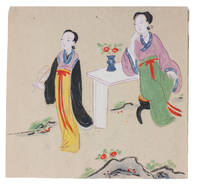
1655E9PFZ6Y3Z0MCChina 1655. Colour drawings 3 ca. 28 x 18 cm the 4th cut down to 16.5 x 17.5 cm apparently showing Manchurian scenes. A series of 4 colour drawings of Manchurian scenes. All mounted on Dutch paper probably from the period 1650-1660. The paper of the drawings themselves ranges in three cases from 27 x 16 cm to 30 x 19.5 cm; the fourth has been cut down to 16.5 x 17.5 cm. The drawings show the following all outdoor scenes:1 a dignitary on horseback with his attendant on foot carrying a parasol.2 2 ladies 1 holding the other's sleeve with a flowering tree and an octagonal stone basin.3 a lady with a flowering plant in a basket with a deer at her side.4 2 ladies: 1 with a fan; the other leaning on a table with a vase of flowers.All 4 backed with matching European paper watermarked with a 7-point foolscap above "4" and 3 balls. The closest matches in the literature Laurentius 431-437 especially 431 and 435 date from 1651 to 1658. unknown
1797035987London: G. Nicol 1797. 1st Edition 1st Printing. Hardcover. Very Good . 11 1/8" Tall. Frontispieces Plates And Illustrations. Ii Xxxiv518; Ii Xx 626. The Two Complete Text Volumes In Full Size Text Blocks 10 5/8" Tall; The Plates Were Issued 1796 In A Separate Volume Not Present Here; But The Plate Of The Camellia Sesanqua Is Present Between Pp 466 And 467. Original Quarter Morocco Binding Five Bands Morocco Spine Labels Over Boards Covered With Marbled Paper Original Off-White Endpapers Preliminary And Final Blank In Each Volume. Bindings With Old Wear But Nicely Furbished Morocco Labels Clean With Brilliant Gilt A Little Loss Of Leather At Tops Of Spines And At Top Right Front Spine Edge Paper Frayed Along All Edges Of Boards Hinges Tight Contents Clean Just A Few Tiny Foxing Spots. Small Very Old Booksellers' Label Of The China Times Bookseller 94 Consular Road Tientsin. And Another From Sydney. Former Owner's Signature Dated 1894 Erased In Volume 1 Of George Ernest Morrison And A Few Marginalia Which Appear To Be His; George Ernest "G. E." Morrison 1862 - 1920 Also Known As Morrison Of Peking Or Chinese Morrison Was An Australian Adventurer Appointed In February 1897 As The Times Correspondent In Peking Despite His Lack Of Knowledge In The Chinese Language. He Traveled To Vladivostok And Reported To The Times That Russian Engineers Were Making Preliminary Surveys From Kirin Towards Port Arthur Then Sent A Telegram To Say That Russia Had Presented A Five-Day Ultimatum To China Demanding The Right To Construct A Railway To Port Arthur. This Was A Triumph For The Times And Its Correspondent But He Had Also Shown Prophetic Insight In Another Phrase Of His Dispatch When He Stated That "The Importance Of Japan In Relation To The Future Of Manchuria Cannot Be Disregarded". After A Visit To Siam And England Then To Australia 1899-1900 He Returned To Peking. When The Boxer Uprising Broke Out And During The Siege Of The Legations From June To August Morrison As An Acting-Lieutenant Showed Great Courage Always Ready To Volunteer For Every Service Of Danger. After A Siege Of 55 Days The Legations Were Relieved By A Multinational Force Which Then Ransacked Much Of The Palaces In Peking With Morrison Taking Part In The Looting. There Was Great Uncertainty Regarding The Future Of China In The Following Months And Through The Times Morrison Managed To Depict A Skewed Picture Before The British Public. While Russia And Japan United In Opposing Any Dismemberment Of China The Country Was Nevertheless Punished By The Imposition Of A Heavy Indemnity. In 1904 Morrison Became A Correspondent With The Japanese Army. He Was Present At The Entry Of The Japanese Into Port Arthur Early In 1905 And Represented The Times At The Usa Peace Conference. In 1907 He Crossed China From Peking To The French Border Of Tonkin And In 1910 Rode From Honan Across Asia To Russian Turkestan. From Andijan He Took A Train To St Petersburg And Then Traveled To London Arriving On 29 July 1910. A Great Chinese Physician Dr. Wu Lien-Teh Succeeded In Staying The Spread Of This Mortal Sickness Which Seemed To Threaten The Whole World. Morrison Published A Series Of Articles Advocating The Launching Of A Modern Scientific Public Health Service In China. When The Chinese Revolution Began In 1911 Morrison Took The Side Of The Revolutionaries. In August Morrison Resigned His Position On The Times To Become Political Adviser To The Chinese Government And Immediately Went To London To Assist In Floating A Chinese Loan Of £10 Million. In China During The Following Years He Had An Anxious Time Advising And Endeavoring To Deal With The Political Intrigues That Were Continually Going On. He Visited Australia Again In December 1917 And Returned To Peking In February 1918. He Represented China During The Peace Discussions At Versailles In 1919 But His Health Began To Give Way And He Retired To England Well Aware That He Had Only A Short Time To Live. He Died On 30 May 1920 . A Nice Historical Association. Later Ownership Signatures Of G B Wilson. <br/> <br/> G. Nicol hardcover
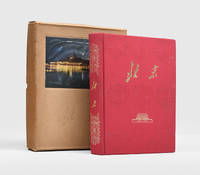
1959185404Beijing: "Beijing" huace bianji weiyuanhui 1959. The splendours of a socialist capital First edition deluxe issue published to mark the tenth anniversary of the founding of the People's Republic of China. Though unmarked as such this copy was owned by Solomon Adler one of the select group of Westerners permanently resident in China during the Mao era. The celebratory photobooks published in 1959 - equivalents were produced for Shanghai and other major cities - were predominantly distributed as gifts to party officials and foreign VIPs the latter group also receiving brochures containing translations of the captions. Among the many plates is an impressive folding panorama of Tiananmen Square and its vicinity showing the Great Hall of the People and the history museums which were all built in record time by a state keen to display communism's accomplishments. Immediately following the title page is a high-quality reproduction of Dong Xiwen's famous painting Kaiguo dadian "The Founding Ceremony". The work was repainted several times over the course of the 1950s as several party leaders present at the founding ceremony fell out of favour with Mao. An economist by training Adler 1909-1994 worked in the US in the 1940s but later fell under suspicion during the "red scare." After a period spent at Cambridge University he moved to China in 1962 living in Beijing until his death three decades later and working on the official Chinese translation into English of Mao's Selected Works. Parr & WassinkLundgren note three other issues: "a special deluxe clothbound issue with a gold brocade box and red cover;. a third edition with 120 selected photos printed on loose pages and placed in a brocade box; and a fourth edition with a silver brocade case". Quarto. With 64 tipped-in colour plates 8 folding 2 folding colour plates; illustrations throughout; title page printed in dark and light brown. Text in Chinese. With publisher's 8-page brochures of English and Russian captions loosely inserted. Original red silk over bevelled boards spine and front cover lettered in gilt spine with decorative gilt patterns front board decoratively blocked in blind with gilt vignette of Tiananmen cream patterned endpapers. Housed in original textured cardboard box front cover with calligraphic title in blind and photographic onlay showing fireworks in Beihai park. Silk bright with just light soiling and marking couple of edge creases to folding plates: a near-fine copy in very good box the onlay with some cockling. Parr & WassinkLundgren The Chinese Photobook: From the 1900s to the Present pp. 180-1. hardcover
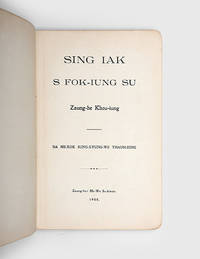
1905184601Shanghai: American Bible Society 1905. The Word on the street First edition traced in two institutions only designed to aid Christian missionaries preaching to China's 18 million Shanghainese speakers. Although unstated on the title page this version was prepared by John Alfred Silsby a presbyterian missionary eventually resident in the city for four decades. During the 19th century Christian missionaries produced transliteration and romanization systems for over 20 Chinese dialects. The first romanized Shanghainese gospel was published in 1856 Matthew edited by Chao Yin Sung and the first romanized New Testament appeared in 1870-1. Silsby 1858-1939 issued the Gospel of Matthew as a standalone work in 1895 and this edition of the gospels followed a decade later. In 1913 he completed his important reference An English-Chinese Vocabulary of the Shanghai Dialect. This work was printed by the Presbyterian Mission Press on behalf of the American Bible Society. Copies are held by Cambridge University and National Taiwan University. Octavo in 4 parts. Original brown moiré cloth over limp card covers spine lettered in gilt. A few contemporary pencilled notes on one page. Spine sunned tidemarks at foot of inner front cover and first blank endleaves browned: very good. Thousand Tongues 252. hardcover
20202081502111900463Chinese book office 2020. Soft Cover. Fine. Size: Hardcover Chinese book office paperback
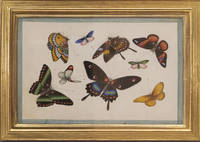
109513Canton ca. 1860. . Watercolour and gouache studies on pith paper overall dimensions 33 x 23.5cm. framed and glazed.<br /> Pith seems not to have been adopted for painting until about 1820. Some European museums claim that their paintings on pith often erroneously called "rice paper" or "mulberry pith" come from the end of the eighteenth century but there do not seem to be any dateable examples that are so early. There is a record of the Kaiser Franz of Austria buying some albums from an English Consul-General Watts in 1826. We know of an Italian Count who visited Canton in 1828 and had over 350 paintings on pith in his baggage when he died in Ambon two years later. In the British Library there is a scrap-book containing six pith paintings and a journal entry by a serving British officer who sent them home from India in 1829. These examples and contemporary accounts by visitors to Canton suggest that there was a flourishing trade in pith paintings by the early 1830s.<br /><br />Pith presumably came into use for painting to satisfy the increasing demand for small inexpensive and easily transported souvenirs following the massive growth in the China Trade in the first quarter of the nineteenth century. Paintings in oils on board and canvas were costly and difficult to carry home. Earlier and more prestigious export water-colours had often been on a larger scale and painted on fine Chinese paper or on paper imported from Europe. The albums of pith paintings and later the little glass-fronted boxes were inexpensive light easy to pack and gave the pictures some protection on the long voyage home. Because many were sold in albums and hence protected from the light they retain their bright colours to this day.<br /><br />Pith comes from the central column of spongy cellular tissue in the stem of a small tree called Tetrapanax Papyrifera native to south-west China. It has had a variety of uses some going back many centuries. At the imperial court both men and women wore coloured flowers made from pith in their hair. For use in painting it is cut by hand with a knife into thin sheets from short lengths of the spongy tissue. Cutting is highly skilled and the constraints of the process mean that the finished sheets for painting seldom if ever measure more than about 30cms by 20cms. The sheets are dried trimmed and used for painting without any further processing.<br /><br />Because of the nature of pith and its cellular structure the gouache used by the Chinese sat on the surface and produced a bright and even sparkling effect. Very fine detail could be achieved but pith did not lend itself to the flat wash of colour favoured for European watercolours. <br /><br />Carl Crossman in his book The Decorative Arts of the China Trade originally published under the title The China Trade gives an excellent list of export painters with a note of those known to have painted on pith. These include Tingqua Sunqua and Youqua. From 1757 until 1842 Canton was the only Chinese port open to trade with the west and it is no surprise that of the eight studios identified by Crossman as producing works on pith six were in Canton. <br /><br />It seems that the 1830s and 1840s may have been the heyday of pith painting. The international trading bases the waterfront 'factories' on the 'Hongs' in Canton where they were produced were partially burnt during the First Opium War 1839-41 and totally destroyed in a fire of 1856. The foreign trading companies then moved to Honan and subsequently put up splendid new offices on reclaimed land at Shamian Island a little up river. As the result of the Treaty of Nanking in 1842 additional Chinese ports were opened up for foreign trade and Hong Kong was established as a major trading centre. <br /><br />By 1860 references to China in the Illustrated London News plentiful three years earlier were few and far between. That is not to say that painting on pith ceased. Nicholas the second was given paintings on pith when he visited Canton in 1891 and the last Emperor is said to have sent him a gift which included pith paintings in 1907 though these could have been examples of much earlier work. <br /><br />Painters on pith did not in general sign their work the sole exception is Sunqua whose name can be found on the face of three paintings on pith. <br /><br />There are collections of paintings on pith in the Ashmolean the British Museum the Fitzwilliam the Hermitage the Peabody/Essex Museum in Massachusetts and the Hong Kong Museum of Art. However because paintings on pith are not in general regarded as fine art they are usually to be found in ethnographic or specialised collections.<br /> Canton, ca. 1860. unknown
19332111902160200105North China Water Conservancy Commission 1933. Soft Cover. Fine. Number of pages: 317 pages of the main volume additional maps Size: 26cm x 18cm Number of books: 4 North China Water Conservancy Commission paperback
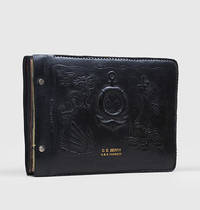
1934115861Chefoo Yantai Shanghai Singapore: 1934-37. Battleships baseball and the Bund An evocative album containing over 300 photographs both personal and from commercial studios recording the active service of the USS Parrott DD-218 on the China Station with the Asiatic Fleet - part of Destroyer Division 58 - including the Asiatic neutrality patrol in 1935 and 1936 offering a wealth of images of China Japan the Philippines and the South Pacific on the eve of the Second Sino-Japanese War 7 July 1937-9 September 1945 and the Second World War. Studio photographs include a number from the renowned commercial photographers Afong based in Yantai formerly Chefoo Joseffa and Skvirsky both established in Shanghai. It was compiled by Yeoman 2nd Class E-5 Charles Edmond Berry and opens with two fine photographs of the officers and crew of the Parrott on deck two colour-tinted photographs showing the ship at anchor and a humorous pictorial advertising photo from the Afong studio including an image of the studio exterior - clearly issued to all ships passing through Yantai - and featuring the Parrott at the centre. There follows an often joyful evocation of life onboard a US Navy destroyer prior to the Second World War with photos of the after-parties at the famed Beach Cafe in Chefoo which featured White Russian "hostesses" and tremendous amounts of alcohol as well as the morning-after breakfasts. Berry has also included panoramic photos of the Asiatic fleet in harbour at Chefoo Yantai and Hong Kong even including a humorous photographic pictorial "Bootlegger's Map of the United States." There are a series of photos showing the other US Navy Clemson-class destroyers on station with the Parrott the USS Pillsbury USS Bulmer USS John D. Ford USS Paul Jones USS Smith Thompson and USS Pope as well as various shipboard shenanigans baseball games battleships and destroyers on maneuvers gunnery practice loading of shells crew pets Liberty parties sailors carousing down the Bund in Shanghai buying souvenirs in Cuba sailing through the Panama Canal sightseeing trips to a walled city in Northern China the Great Wall of China cremation ceremonies in Bali riding rickshaws snake charmers and more. There are photos of Pan American Airways flying boats landing and unloading passengers in China many street scenes in Shanghai Hong Kong Tsing Tao Qingdao including the beheading of Chinese robbers outside the town Peking and Singapore. Of special interest are the series of photos showing Chinese Naval Ships from the Republic of China Navy in the mid-1930s including the CNS Yixian sunk by Japanese aircraft in September 1937; CNS Yisheng which had been converted into a gunboat in 1928 later sunk the CNS Shin Shey built in 1911 converted to a gunboat in 1929 sunk in 1938 and many others. There are also images of Kobe Yokohama street cars in Shanghai parks in Tokyo street scenes in Kyoto and views of the temples there. The USS Parrott DD-218 was a Clemson-class destroyer laid down by William Cramp & Sons Philadelphia and launched in 1919 commissioned in 1920 with a complement of 157 officers and enlisted men. The Parrott spent most of her career sailing with the Asiatic Fleet was awarded the Yangztze Service Medal in part for humanitarian assistance during the flooding of 1931-32 operating through the Chinese Civil War which resulted in considerable naval activity in Chinese waters collecting hydrographic data in and around Saigon then French Indochina in 1935. By 1940 she had served successively as station ship at Amoy Xiamen and Swatow Shantou China. From 7 July to 4 October she patrolled China waters based at Tsing Tao Qingdao and then made calls to other northern Chinese ports returning to Manila on 11 October. There in the early months of 1941 she was refitted with anti-mine and detection gear for anti-submarine warfare. The Parrott saw action in several theatres of war: South China Sea Battle of the Java Sea Atlantic Convoys and the bombardment of Spanish Morocco. She was accidentally rammed by the SS John Morton in Norfolk Naval Shipyard in 1944 and so severely damaged that she was decommissioned that same year and saw no further active service. Thick oblong quarto 380 x 280 x 51 mm. 319 corner-mounted original photographs ranging in size from 102 x 63 mm to 292 x 240 mm including 6 colour-tinted images and 4 panoramas 292 x 145 mm many studio prints captioned in the negative often with the photographer's stamp at lower corner a few with manuscript annotations verso coloured and patterned tissue guards intact white pink blue and jade-green. Contemporary heavily embossed black padded-calf post-binder photo album front board with devices of a Chinese Dragon a junk the Great Wall a life-preserver and anchor title in gilt as above nickel-plate posts rounded corners 52 leaves of black heavy card-stock most of the original tissue guards preserved. Together with a very appealing group of related ephemera and publications including: The Missions to Seamen The Sailors' Institute Anson Road Singapore; The Short Cut to Beauty: Hong Kong's Peak Tram; jocular Subpoena and Summons Extraordinary Royal High Court of the Raging Main Domain of Neptunus Rex two copies; U.S. Naval Despatch USS Parrott; Voyage Smoker USS Henderson en route to Honolulu T.H. to Guam M.I.; Radio Press News en route Manila P.I. to Guam M.I. 23 March 1937; Map of Shanghai dog tags and Bakelite Jesus medallion all preserved together in the original canvas sailcloth bag with stud fasteners. A few slight scuffs to binding occasional creasing to the mounting leaves very minor damage to a couple photographs overall in excellent condition. hardcover
1670E9PF9I9C81WOChina 1670. A series of 8 Chinese drawings ca. 24 x 14.5 cm: 5 coloured 1 also highlighted in gold showing scenes from a Chinese novel many military or diplomatic plus a Chinese watercolour drawing and a Japanese woodblock print. A series of 8 pen and ink drawings 5 coloured 1 also highlighted in gold drawn from Chinese books possibly the 14th-century Sanguo yanyi or Romance of the Three Kingdoms. All mounted on European paper 6 on 3 different patterns of decorated paper. The paper of the drawings ranges from 23.5 x 14 cm to 24 x 15 cm. They show the following outdoor and indoor scenes:1 2 warriors on horseback one of whom has just beheaded the other and carries his head away the beheaded warrior has not yet fallen from his horse while his superior watches on horseback with 2 attendants.2 a man standing with a spear in the prow of a boat while 2 men and a woman sit at a tea table in the boat which flies a flag and pennant.3 5 people on 2 boats one flying a flag and pennant.4 4 soldiers bringing a woman to a dignitary at his house.5 a delegation visiting a dignitary.6 2 men playing go with 4 attendants and a guard.7 a dignitary at a writing table with attendants and visitors.8 a seated dignitary with 6 standing figures 1 with a document at a table.In the backing paper of number 7 one can make out an Amsterdam coat of arms watermark. It is difficult to see clearly but seems to follow the general style of Laurentius 71-95 1662-1675. The 3 patterns of decorated backing paper show: a flower pattern printed in gold on green; 2 patterns with more abstract decorations in a diamond pattern printed in gold on white.With this series we include a watercolour drawing and a woodblock print:9 watercolour drawing of irises along a stream with hills in the background 17 x 22.5 cm.10 rectangular woodblock print of a Samurai at a tea ceremony 14 x 10 cm possibly derived from a Japanese book.Some edges of the drawings a little frayed but otherwise in very good condition. unknown
19422091502135500862Not Available 1942. Soft Cover. Fine. Number of pages: 444p Size: B5 size 17x25 cm Not Available paperback
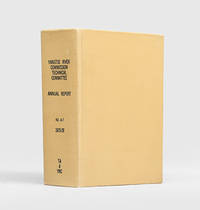
1925188317Beijing & Shanghai: Yangtse River Commission 1925-26-28. Measuring China's longest river First editions of these invaluable technical publications which record a wealth of data from gauging stations across hundreds of charts and diagrams. The Yangtse River Commission was formed by presidential order in December 1922 and the American engineer George Gottlieb Stroebe 1877-1965 served as the first head of its survey department. After several years of operation the commission switched its focus to the middle section of the river stretching from Hankou to Yichang. In 1925 it installed new gauges and discharge measurement stations while also collecting data with equipment maintained by the customs service. Until 1926 inclusive reports were released in the name of the commission's technical committee before responsibility transferred to the Ministry of Communications. The table of contents for the fifth annual report 1926 calls for 221 plates but numbers 150-221 were not issued. 3 works bound in 1 octavo 255 x 180 mm. Together 351 diagrammatic plates 2 folding tables; tables in text. Text in English and Chinese. 1966 tan buckram by the Heckman Bindery Indiana label on rear pastedown spine lettered in black original green card wrappers bound in. Ex-Library of Congress with its ink stamps and shelf-marks on the original wrappers index card holder on rear pastedown and "duplicate" deaccession stamp on front free endpaper. Contents toned one original wrapper creased at foot occasional marking and offsetting internally couple of short closed tears: very good. hardcover
19802090202120414273Heibonsha 1980. Soft Cover. Fine. Number of books: 1 Heibonsha paperback
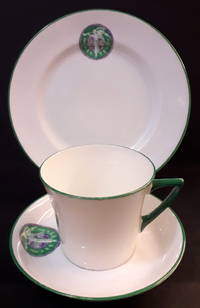
3210181<p><em>Cup saucer and side plate; white china has strikingly clean straight lines and is rimmed in dark green with a green handle to the cup each piece carries the motif designed by Sylvia Pankhurst of the 'angel of freedom' blowing her trumpet and flying the banner of 'Freedom in the background are the initials 'WSPU' set against dark prison bars surrounded by the thistle shamrock and rose and dangling chains; the cup has one minor hairline crack otherwise all pieces are in fine condition.</em></p><p>Rare survival of an original Suffragette cup saucer and side plate complete with the 'Angel of Freedom' designed by Sylvia Pankhurst. Initially for use in the refreshment room of the Prince's Skating Rink Exhibition and then sold in aid of funds.</p><p>The Women's Exhibition of 1909 all but forgotten today was a tipping point in women's struggle for equal rights. The event was open to both sexes and cleverly calculated to show men that suffragettes were not the dangerous 'shrieking sisterhood' they were painted but were in fact the wives mothers and sisters they knew women safely interested in the same female pursuits they always had been women dedicated to creating beautiful things not destroying them.</p><p>'The winged angel logo was repeated on almost all promotional material. It was especially striking on the elegant white tea service specially commissioned from a pottery in Staffordshire used in the traditional tea and refreshment room during the exhibition and for sale after the event. Commemorative china was a relatively new idea and this early understanding of branding as a way of advertising was a key element of the exhibition's success making the WSPU one of the first campaign groups to understand the significance of logos' http://annesebba.com/journalism/the-womens-exhibition-of-1909/</p>
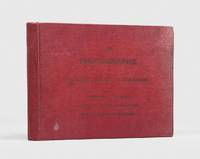
1900176895Shanghai: Brewer & Co. c.1900. From the Chefoo Bluff to Lamtong Head Sole edition untraced institutionally the copy of Vice-Admiral Seymour's chief of staff in Tianjin during the Boxer Uprising. This photographic guide is designed for "the navigator of this changeable and frequently foggy locality" preface. We have traced only one other copy which appeared in commerce in 2017. Navigators in the late Qing period could rely on only a small network of lighthouses and fixed navigational aids when sailing the Chinese coast. "In thick weather even a person familiar with the coast is at a loss to identify a well-known Islands with its summit" preface. The thirty views include the Chefoo Bluff in the Pechili Gulf the waters near the Hieshans Light House Zhejiang and Hong Kong's Lamtong Head. A concerted period of lighthouse-building in the 1910s and 1920s obviated the need for further publications of this kind. Provenance: though unmarked as such this copy was owned by Captain Edward Henry Bayly C.B. 1849-1904 Commander of the International Forces at Tianjin in June 1900. Bayly had a lifelong career in the Royal Navy. He was promoted to the rank of lieutenant in September 1873 commander in June 1887 and captain in January 1894 having served overseas in numerous ships. Bayly captained HMS Pelorus during the fleet review for Queen Victoria's diamond jubilee in 1897 and in 1899 became captain of the armoured cruiser HMS Aurora on the China station. During the Boxer Uprising he replaced the wounded John Jellicoe as chief of staff to Seymour was mentioned by Seymour in dispatches and remained at Tianjin until the withdrawal of naval forces. He retired at his own request in February 1904. Landscape octavo. With 30 mounted collotypes within red frames. Original red cloth front cover lettered in gilt white coated endpapers leaves hinged with white linen as issued. A little shaken binding sunned and stained contents well preserved a little toning at fore edges: a very good copy. hardcover