(PERIODICAL - CHINA)Biblio.com
3 141 résultats
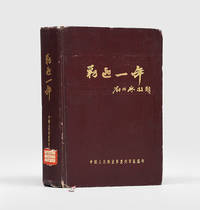
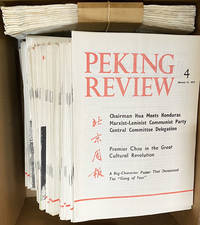
19631008<p><i><b>621 issues</b></i></p><p><i><b>Beijing Review</b></i> Chinese: åŒ—äº¬å‘¨å ±; pinyin: <i>BÄ›ijÄ«ng ZhÅubà o</i>; Wade–Giles: <i>Pei-ching Yu-pao</i> previously <i><b>Peking Review</b></i> is China's only national news magazine in English published by the Chinese Communist Party-owned China International Publishing Group. In 2006 it claimed a per-issue circulation of 70000 and distribution "throughout China and 150 countries and regions worldwide." Founded in March 1958 as the weekly <i>Peking Review</i> it was an important tool for the Chinese government to communicate to the rest of world. The first issue included an editor's note explaining that the magazine was meant to "provide timely accurate first-hand information on economic political and cultural developments in China and her relations with the rest of the world." The U.S. Postal Service initially restricted distribution of the magazine but the U.S. Supreme Court overturned this policy in <i>Lamont v. Postmaster General</i>. In October 2020 the United States Department of State designated <i>Beijing Review</i> as a "foreign mission" of China. An important time period covering the entire Cultural Revolution through the death of Chairman Mao the policies of Deng Xiaoping and the establishment of modern China.</p><p>Each issue in original printed wrappers: 1963: No. 10 11 13 15 25 30 32-36 38 41-45 52; 1964: No. 1-52; 1965: No. 1-19 21-22 24-52; 1966: No. 5-30; 1970: No. special issue 8 May 21 31; 1972: No. 1-33 35-52; 1973: No. 1-52; 1974: No. 1-35 37-49 51-52; 1975: No. 1-52; 1976: No. 1-52; 1977: No. 1-52; 1978: No. 1-52; 1979: No. 1-43; 1980 No. 10 12-15 21 33 38 40 47 48; 1981: No. 1 2 5 23 27 28 37 42 44 51; 1982: No. 31 33 35 37 38 48 50-52; 1984: No. 36 40 42 1985: No. 9 11 12; 1986: No. 1 3 13 14 30 36 43 46; 1987: No. 8 9 27 28 37 42 44-46; 1988: No. 10; 1989: No. 3 5 6 9 19 21-23 27-29 41; 1995: No. 4 8</p><p>The name change of this journal under President Deng presaged a new direction. From being a revolutionary magazine presenting the ideas and aspirations of a young and relatively weak Socialist state struggling along the road to the construction of Communism it was now displaying its open statement of aims of an outright capitalist and imperialist state – with global ambitions. From the very beginning the new Socialist state had to face many obstacles. There was opposition from within and without the country from within and without the Party. Those who might have played an important role in the past in the fight for liberation were not necessarily the ones who were needed to build a radically new society. All revolutions bring with it old baggage from the past but some leaders found it more difficult than others to throw it away and start fresh. </p><p>《北京周报》创刊于1958å¹´3月1,最åˆè‹±æ–‡å为"Peking Review",在ä¸å›½å…¨é¢æ”¹ç”¨æ±‰è¯æ‹¼éŸ³ä½œä¸ºè¯‘åæ ‡å‡†åŽæ”¹ä¸ºçŽ°å。æ‚志主è¦æŠ¥é“ä¸å›½çš„政治ç»æµŽçŽ°çŠ¶ï¼Œä»‹ç»ä¸å›½æ”¿åºœå¯¹å†…对外的é‡å¤§æ–¹é’ˆæ”¿ç–ç‰2。《北京周报》也曾出版过法文ã€è¥¿ç牙文ã€æ—¥æ–‡åŠå¾·æ–‡ç‰ˆå®žä½“刊,ä¸è¿‡é™¤è‹±æ–‡ç‰ˆä»ä¿ç•™å®žä½“刊外,其他è¯è¨€ç‰ˆæœ¬å‡å·²äºŽ2000å¹´12月åœåˆŠï¼Œä»…ä¿ç•™ç½‘络版。</p><p><br /></p> Published by Guozi Shudian for the Foreign Language Press, paperback
19832080702109502880Nigensha 1983. Soft Cover. Fine. Number of pages: 1 volume 1 commentary Nigensha paperback
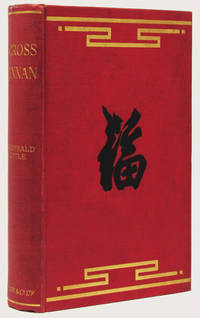
191033716London: Sampson Low Marston & Co. Ltd. 1910. Very Rare First Edition. No Copies Currently Exist in Commerce. This copy with excellent provenance having come from the War Office marked received on 22 Apr 1910. Illustrated with many full-page plates from period photographs and a large folding map. 8vo publisher's original red cloth the spine lettered in gilt the upper cover decorated with Chinese bordrs in gilt and a central calligraphic ornament in black. 164 pp. A very fine copy as close to pristine as one could hope already unusually rare this copy is also extremely well preserved. VERY RARE FIRST EDITION AND ONE OF THE FIRST BOOKS IN ENGLISH TO DESCRIBE THE PROVINCE OF YUNNAN. Archibald Little wrote a number of books on China as did his wife Alicia who called herself Mrs. Archibald Little. Little was a merchant scholar and later travel writer who'd spent many years in China. With his wife they moved to Chungking an isolated city to the far west of the country. Impossibly hot in the summer the couple had planned to build a holiday home in the cooler countryside but the authorities blocked the idea after concern that the locals would not take kindly to foreigners. An idea was then hatched for the Littles to move onto a local farm by the Yangtse River for a few months with the hope that it might get the locals used to their presence.<br> Published posthumously in 1910 Archibald Little's memoir of his journey across the Yunnan Province in Southwest China was one of the first comprehensive accounts of the region to be published in English. Little a skilled linguist worked as a merchant in China for over fifty years and opened up the Upper Yangtze area to steam-powered commerce. He was well known for his intrepid travels into territories not yet explored by Westerners and his record of this journey was originally published as a series of letters to the North China Herald. This book also contains Little's account of the building of the French Railway Line to Yunnan-Fu which provided a trade route from India to the Upper Yangtze region. Across Yunnan was completed and edited by Little's wife after his death in 1908. The book includes a detailed map of the area and several photographs. Research Gate<br> Mrs. Archibald Little began a prolific two decade literary career in London focused primarily on highlighting the plight of women. During this time she was also active politically in the feminist movement penning pamphlets lecturing and campaigning around women's property rights suffrage. Both she and her husband traveled around China although Mrs. Little had to dress as a male to avoid attracting attention which had on occasion resulted in items being thrown at her.<br> The book offered here is very rare. At the present time no copies appear in the marketplace or in commerce. Additionally this copy comes with very fine provenance having been owned by the British War Office. The War Office has referred to several British government organizations in history all relating to the army. It was a department of the British Government responsible for the administration of the British Army between 1857 and 1964 when its functions were transferred to the new Ministry of Defence MoD. It was at that time equivalent to the Admiralty responsible for the Royal Navy RN and much later the Air Ministry which oversaw the Royal Air Force RAF. The name 'War Office' is also given to the former home of the department located at the junction of Horse Guards Avenue and Whitehall in central London. Sampson Low, Marston & Co., Ltd. hardcover
19371006EAST ASIA<br /><i>Zuijin zhi Dongya Xingshi Tujie </i><i>Map Explaining the Latest Situation in East Asia</i>. Mainichi Shimbun Osaka Office Japan Showa period 1937.<br />Highly pictorial Japanese propaganda map of East Asia issued just six months before the outbreak of the second Sino-Japanese War. The map focuses on China's military situation and shows a separate Manchuria and Jidong Autonomous Region. Heavy industry military communication and supply lines airfields and foreign military bases are delineated with the note that there are '200000 Communists' at the Chinese Communist Party's northern Shaanxi base. The projection of the map is such that it illustrates the 'horseshoe formation' showing Manchuria 'the lifeline of Japan' as being surrounded by Japan's enemies.<br /><br />Chomo-lithographic map of East Asia 780 x 1065 mm. Territories in yellow and identified with a red cross other parts of the globe colored in green or red explanatory title at foot inset world map at lower left labelled mainly in Japanese and Chinese characters. Mild toning long closed tear repaired with old tape some other tears edgewear. Mainichi Shimbun Osaka Office, Japan, Showa period,
191026122Shanghai 1910. Hardcover. Good condition. A remarkable album of images and postcards many taken by a British police officer of the Shanghai Municipal Police which includes numerous vernacular snap shots titled in period ink bound in an elaborately decorated lacquer album.<br /> <br /> The Shanghai Municipal Police SMP was the police force of the Shanghai Municipal Council which governed the Shanghai International Settlement between 1854 and 1943. The SMP's role was to provide stability in the settlement and to protect Western trade interests against pirates and various Chinese nationalist movements and uprisings.<br /> <br /> The SMP was initially made up mostly of Britons; after 1864 it included Chinese. Over the years it grew to include a Sikh Branch 1884 a Japanese contingent 1916 a volunteer part time special police 1918 and a Russian Auxiliary Detachment 1941. <br /> <br /> When the SMP began in 1854 the first detachment of 31 British was on loan from the Hong Kong Police and led by Samuel Clifton. Additional men were recruited from the Royal Irish Constabulary London's Metropolitan Police and from the military presence in Shanghai. .<br /> <br /> The police officer who took these snap shots is identified only by his first name Andy and he appears in one of the 56 original snap shots which he entitles "Chinese Soldiers and your humble". He appears in another which he captions "girls running away from me in country village".<br /> <br /> The album consists of 12 photographs of Shanghai 10 3/4 x 8 1/2" and 8 x 5 3/4" of which<br /> 9 are entitled "Police on Parade" showing the men wearing the ‘Custodian’ police helmet including Indian police and Indian mounted police Sikhs; 4 of Chinese Punishments 3 scenes of decapitations; 1 of people confined in a cangue 6 x 4"; 56 original vernacular snap shots 5 x 4 1/4"; 1 "Parade in Egypt" showing mounted troops in the desert signed G. Lekegian who was the official photographer for the British Army in Egypt beginning in the 1890s; printed color postcards mostly by Kingshill postally unused split backs in fine condition; and 2 period newspapers loosely inserted one Chinese and one American The Catholic News November 14 1914. <br /> <br /> The 56 original vernacular snap shots create a layered impression of contemporary life in China taken by the author and 3 British friends as they travel about the country. They include: the harbour; the jettee; a native court; the race course; street scenes; Up country trip snowy mountain scenes; a country temple; a resort "Mokanshan" sic; Soochow; our boat in Hangchow; trying to bargain market place stall; one of the British men in a wooden cage; getting the bamboos together in the river; a noted gateway up country; Chinese river life; famous bridge; religious ceremony on boat; beggars boats; the Great Lake; Fishing; and hairdressing in the street.<br /> <br /> The 108 postcards include: color printed views of Shanghai one of German consulate & Astor House Garden; Chinese people gardens "thea house" festivals Mandarins opium smoker Chinese trades people; Peking scenes; Yan Chow scenes; and more. <br /> <br /> Oblong 4to 14 x 11" album albumen and silvertone photographs. Black lacquer album cover decorated with inlays of bone and mother of pearl in the form of a rooster 1909 was the year of the rooster. Edges rubbed spine lacking first 5 leaves are loose otherwise all fascicles are bound in. The photographs and postcards bright and clean. Newspapers loosely inserted chipped at edges. Ink manuscript inscription "From Andy" at the front end paper. hardcover
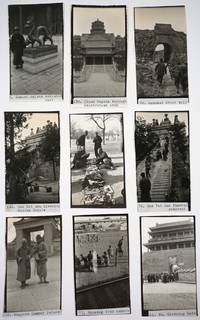
1942287481942. Photography. Very good condition. A collection of black & white photographs in and around Pekin Beijing taken in about 1925. While the photographer is unidentified the photos are clear and well framed. These are unusual images as they seem to have been taken by an American but no American is ever shown in the photographs. The photos illustrate the sites and trades of China and there are also images that refer to Sun Yat Sen including a photo captioned with his name possibly him with a group of others walking in a square. Shot number 76 is of 'Sun Yat Sen Funeral rehersal' sic at the Temple of Azure Clouds" which took place in 1925. <br /> <br /> Famous buildings include the Summer Palace Temple of Heaven Great Wall Altar of Heaven Forbidden City Sleeping Buddha Temple Cloud Tower Taoist Shrine Temple of Universe Summer Palace Marble Boat Pagoda Tientsin Dock the Great Wall etc. There are many street scenes with local people and merchants Tibetans at Lama Temple Pekin Donkey ready for shoeing Toy Peddlar sic with Gong Pekin old man and 2 bird cages Paint Shop Pekin camels Iceman Pekin Coal Carrier Defile near Wall Pekin Beggar Pekin Barber. <br /> <br /> "Unique among 20th-century Chinese leaders Sun is revered by both the Republic of China on Taiwan where he is officially the "Father of the Nation" as well as the People's Republic of China where he is officially the "Forerunner of the Revolution" for his instrumental role in the 1911 Revolution that successfully overthrew the Qing dynasty." wikipedia.<br /> <br /> One additional snapshot of a snowy American scene entitled 'Winter 1941-2" that was developed at the Westchester Photo Finishing Co. with Nutone process 4 1/8 x 5 1/8". The typewritten caption on this photo is consistent with the captions on the photos so it appears to be a cohesive group belonging to one person.<br /> <br /> 154 photographs 2 5/8 x 4 1/2". They are printed on card and are possibly from contact sheets as they there are some slightly rough edges. The majority have a label affixed to the bottom of photo with identifying number and caption which corresponds with a 3pp typewritten index. The list number 157 photos 154 present here so nearly complete. Very good condition. unknown
193117541London: George W. Jones 1931. 1st. Hardcover. Near Fine. 12.9x10.4x1.7in. Signed by Authors. #257 of 300 copies signed by Leonard Gow; rubbing to covers and scratch to back panel bookseller's sticker on rear pastedown. <br>A lavishly produced catalogue of a superb collection of ceramics of the Kangxi period blue-and-white powder blue familles verte jaune and noire and monochrome. Illustrated with 86 plates most in color. <br>108pp 7.18lb 12.9x10.4x1.7in <br>EXTRA SHIPPING CHARGES NECESSARY George W. Jones hardcover
20212081502111901423Asa hana shubbansha 2021. Soft Cover. Fine. The book is in fine condition. Asa hana shubbansha paperback
880171908 - 14. . 102 photographs size range from 8 x 6 cm to 11 x 16 cm including 2 with stamps of Lai Chong studio on reverse some inscribed in German; margins chipped some with creases several images faded. <br /> A collection of photographs recording German presence in China and Japan in the years 1908 1914. <br /><br />Decades before WWI Germany competed with other industrialised nations to acquire colonies and create "spheres of influence" in the non-European areas interfering in the Chinese domestic affairs. <br />In the wake that followed the murder of two German missionaries in 1898 Chinese government agreed to lease the territory of Tsingtao to Germany as a colony for the period of 99 years in order to appease the German government. Consequently the Germans began to assert their influence across the rest of the province of Shandong. They built the city and port of Tsingtao which became the base of the German Navy's East Asia Squadron that operated in support of German territories in the Pacific.<br /><br />When the WWI erupted in summer 1914 Japan issued an ultimatum ordering the German government to withdraw their warships from Chinese and Japanese waters and transfer control over Tsingtao to Japan. When the ultimatum expired Japan began a bombardment of the port on 2 September 1914. Britain wary of Japanese intentions in the region decided to send troops to assist the Japanese and to keep a watchful eye upon proceedings. The Germany garrison held out for over two months before finally surrendering on 7 November 1914 and handing over the port three days later. The surrender of Tsingtao marked the end of the Germans in China and was a great morale booster to the Japanese.<br /><br />Several photographs show SS Patricia a passenger liner built in 1899 in Germany for the Hamburg-America Packet Steamship Company. In 1914 during WWI she was chartered to the German Government who used it as a troop transport to Tsingtao.<br /> 1908 - 14. unknown
86795ca.1880. . A pair of gelatin silver prints 21 x 28 and 21 x 26.5 cm. <br /> <br /> ca.1880]. unknown
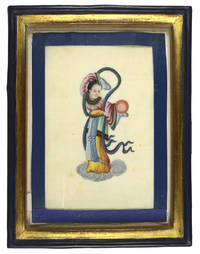
86239Canton c.1860. . A set of 6 watercolour and gouache studies on pith paper each surrounded by blue fabric borders.<br /> Pith seems not to have been adopted for painting until about 1820. Some European museums claim that their paintings on pith often erroneously called "rice paper" or "mulberry pith" come from the end of the eighteenth century but there do not seem to be any dateable examples that are so early. There is a record of the Kaiser Franz of Austria buying some albums from an English Consul-General Watts in 1826. We know of an Italian Count who visited Canton in 1828 and had over 350 paintings on pith in his baggage when he died in Ambon two years later. In the British Library there is a scrap-book containing six pith paintings and a journal entry by a serving British officer who sent them home from India in 1829. These examples and contemporary accounts by visitors to Canton suggest that there was a flourishing trade in pith paintings by the early 1830s.<br /><br />Pith presumably came into use for painting to satisfy the increasing demand for small inexpensive and easily transported souvenirs following the massive growth in the China Trade in the first quarter of the nineteenth century. Paintings in oils on board and canvas were costly and difficult to carry home. Earlier and more prestigious export water-colours had often been on a larger scale and painted on fine Chinese paper or on paper imported from Europe. The albums of pith paintings and later the little glass-fronted boxes were inexpensive light easy to pack and gave the pictures some protection on the long voyage home. Because many were sold in albums and hence protected from the light they retain their bright colours to this day.<br /><br />Pith comes from the central column of spongy cellular tissue in the stem of a small tree called Tetrapanax Papyrifera native to south-west China. It has had a variety of uses some going back many centuries. At the imperial court both men and women wore coloured flowers made from pith in their hair. For use in painting it is cut by hand with a knife into thin sheets from short lengths of the spongy tissue. Cutting is highly skilled and the constraints of the process mean that the finished sheets for painting seldom if ever measure more than about 30cms by 20cms. The sheets are dried trimmed and used for painting without any further processing.<br /><br />Because of the nature of pith and its cellular structure the gouache used by the Chinese sat on the surface and produced a bright and even sparkling effect. Very fine detail could be achieved but pith did not lend itself to the flat wash of colour favoured for European watercolours. <br /><br />Carl Crossman in his book The Decorative Arts of the China Trade originally published under the title The China Trade gives an excellent list of export painters with a note of those known to have painted on pith. These include Tingqua Sunqua and Youqua. From 1757 until 1842 Canton was the only Chinese port open to trade with the west and it is no surprise that of the eight studios identified by Crossman as producing works on pith six were in Canton. <br /><br />It seems that the 1830s and 1840s may have been the heyday of pith painting. The international trading bases the waterfront 'factories' on the 'Hongs' in Canton where they were produced were partially burnt during the First Opium War 1839-41 and totally destroyed in a fire of 1856. The foreign trading companies then moved to Honan and subsequently put up splendid new offices on reclaimed land at Shamian Island a little up river. As the result of the Treaty of Nanking in 1842 additional Chinese ports were opened up for foreign trade and Hong Kong was established as a major trading centre. <br /><br />By 1860 references to China in the Illustrated London News plentiful three years earlier were few and far between. That is not to say that painting on pith ceased. Nicholas the second was given paintings on pith when he visited Canton in 1891 and the last Emperor is said to have sent him a gift which included pith paintings in 1907 though these could have been examples of much earlier work. <br /><br />Painters on pith did not in general sign their work the sole exception is Sunqua whose name can be found on the face of three paintings on pith. <br /><br />There are collections of paintings on pith in the Ashmolean the British Museum the Fitzwilliam the Hermitage the Peabody/Essex Museum in Massachusetts and the Hong Kong Museum of Art. However because paintings on pith are not in general regarded as fine art they are usually to be found in ethnographic or specialised collections.<br /> Canton, c.1860]. unknown
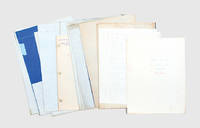
1822188322Various cities and architects: c.1918-22. Building Republican China An appealing collection highlighting the role of foreign finance and architectural expertise in the modernization of Republican China's major commercial centres. The blueprints show business premises Western-style houses and apartments and a theatre. Seven were issued by the architectural firm of Henry Charrey and Marcel Conversy. Based in Jinan the firm was employed from 1918 by the Belgian-French company Crédit Foncier d'Extrême-Orient which financed and oversaw construction in Beijing Shanghai Tianjin and other cities with a foreign presence. In Jinan Charrey & Conversy were involved in the laying out of a new post office compound and designing Western-style houses. Also present are blueprints for offices for the Danish outfit Andersen Meyer & Co. which arrived in the city in 1916 and a hong for the Asiatic Petroleum Company. A second group relates to the Tianjin civil engineers Brossard Mopin & Co. Founded in 1910 it specialized in buildings made with reinforced concrete. A large plan shows the imposing front face of a proposed building for the Gongxian Arsenal one of China's main manufacturers of weaponry and ammunition. In Tianjin Brossard Mopin also contracted for apartments and a new theatre and clubhouse for the China Theatre Company the floorplans here accompanied by textual overviews of the projects. Accompanying these two groups are a 1919 plan of Tsinghua University Beijing and seven blueprints for houses in a "Peking model residential centre" which was proposed by the city authorities in the early 1920s. This collection belonged to the engineer G. Gregoire who worked for the Crédit Foncier d'Extrême-Orient in partnership with both Charrey & Conversy and Brossard-Mopin & Co. His signature as the lead architect appears in the seven Charrey & Conversy blueprints and his ink stamp is on nearly all of the material suggesting his involvement in the wide range of projects. 21 blueprints 217 x 255 mm to 625 x 1130 mm; 2 project booklets in French each 6 pp. duplicate typescript and typescript cover sheet fixed with 3 butterfly clips. Various ink stamps numbers and annotations on booklets and verso of blueprints. General browning and light creasing couple of short splits plan of Tsinghua University slightly faded and lacking contrast but generally a well-preserved collection. unknown
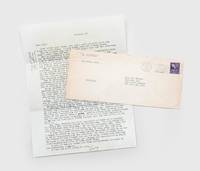
1948178144Higganum Connecticut: 30 November 1948. I hope you won't reply to this" - a sinological circle rent asunder A window onto the collapse of the marriage of Edgar and Helen Snow the 20th century's most important bridges between China and the Western world. As shown in this terse exchange between two of their friends the split sowed distrust and trapped some of the leading lights of American sinology in a quagmire of pettiness. Enjoying privileged access to top Chinese political and social figures Edgar 1905-1972 and Helen Foster Snow 1907-1997 also known as Nym Wales and "Peg" shaped Western views of China and its people to an extent unmatched by any other journalist or academic. Edgar Snow's career was bookended by Red Star Over China 1927 the work that introduced Mao Zedong to the English-speaking world and the historic 1972 Nixon visit to Beijing for which he laid important groundwork in the 1960s. Helen Snow reporting and writing from China in the 1930s and 1940s opened American eyes to the country's deteriorating political and refugee situations earning two nominations for the Nobel Peace Prize. With Rewi Alley the Snows co-founded the Indusco "Gung Ho" co-operative movement to promote economic recovery and they are lionized in China today. Their 1932 marriage ended acrimoniously in the late 1940s following their permanent return to the US and divided their sinological circle. This letter written by the State Department China expert Lawrence Salisbury 1891-1976 was sent in reply to Helen Snow's close friend the medical missionary Ida Pruitt 1888-1985 at the New York headquarters of Indusco. There are no opening niceties. "Your letter just came. You and I must not talk about the Snows to each other. I have known them for fifteen years. Peg is a liar". There follows several paragraphs listing Helen Foster Snow's character faults "unreasonable" "unprincipled" and "willing to blacken people" and her attempts to take advantage of Edgar Snow. "On Ed's side I find no lies. I find that he has been hitched to a selfish self-seeking pathological woman who is set to destroy him financially and/or in reputation. When I told him that Peg was responsible for the arrival at my farm in early this month of two men to serve a writ to attach most unreasonably his car and his river property he would not at first believe me". A pencilled note in the margin states that "I can give many underlined other instances". Salisbury also accuses Helen of greed and money-grabbing and sneers at her "feminist theories" and her inability to produce commercially viable books. In the final third of the letter he flatly rejects Pruitt's suggestion that he intervene to soften Edgar Snow's mind ending with a word of advice: "I hate to see you waste your time and emotional strength in so undeserving a cause. I hope you won't reply to this." Provenance: by descent through the Pruitt family; recently in a private collection in Hong Kong. Single sheet 275 x 215 mm text one side only. With mailing envelope typed address "Miss Ida Pruitt Indusco Inc. 425 Fourth Avenue New York 16 N.Y.". Envelope split along 3 edges otherwise fine. unknown
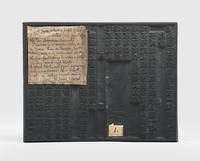
1880183225China: c.1880. China on Thomas Hardy's doorstep Labels on both faces indicate that this artefact of missionary printing was owned by Henry Joseph Moule 1825-1904 a close friend of Thomas Hardy and the brother of two prominent China missionaries. Moule was the first curator of the Dorset County Museum where this woodblock was perhaps displayed to a curious public. Moule's seven brothers included George Evans Moule 1828-1912 consecrated the first Bishop of Mid-China in 1880 and Arthur Evans Moule 1838-1916 who was active in Ningbo and Shanghai and who also wrote prolifically on Chinese history and current affairs. The primary face has the text of the fourth to tenth commandments as given in Deuteronomy and the carving employs a songti character style with serifs. The largest of the labels reads "Block from which a page of a book has been printed; viz. part of the Ten Commandments. Printing is a much older art in China than in Europe but always was and is performed as by the pre-Gutenberg European printers viz. from wood-cut blocks. A rough block with wood-engraving tools accompanies this block; and also an inking brush and a printing pad. The press is used China." Moule is named on a small label on the reverse. Single wooden block 165 x 210 mm engraved in 8-columns on primary face one column of characters and page subdivisions on secondary face 3 manuscript labels the largest covering upper-left quadrant of primary face. Contemporary blue pencil note on secondary face. General signs of handling carved character distinct: very good. unknown
1951173556Guizhou: Junqu zhengzhi bu 1951. Military might. and terror First edition first printing of this internally circulated report on operations undertaken in Guizhou province by the People's Liberation Army. After Chiang Kai-Shek evacuated to Taiwan in early 1949 remnants of his forces in the south-west splintered into different bandit units and mounted a credible threat to the survival of Mao's regime. Of the 1000 copies issued none are located in institutions. In January 1949 Chiang ordered Guizhou's nationalist governor Gu Zhenglun to make the province the final bastion of anti-communist resistance on the mainland. Although Mao proclaimed the founding of a united People's Republic of China in October "the continuing civil war in southwest China pitted ethnic groups local power holders farmers and Nationalist troops against the PLA People's Liberation Army. The occupying army's initial strategy of a rapid military advance leniency and massive grain collection efforts was a recipe for resistance" Brown p. 119. In early 1950 communist cadres and troops withdrew from the majority of the province the party's political control in tatters but a combination of carrot allowing local people to keep more of their agricultural surplus and stick terror eventually brought Guizhou into line. A series of maps demonstrates the oscillating fortunes of anti-communist forces during 1950 Mao's forces being pushed back during the summer months but gaining the decisive upper hand later in the year. Other plans show the grand troop manoeuvres that turned the tide in Beijing's favour. Tables at the end list major battles the names of guerilla organizations and their leaders those leaders killed or captured in the field and those who surrendered. While dated 1950 on the title page the volume was not printed until May 1951. Second and third printings followed in June and July. Octavo. Half-tone portrait photographs of Chairman Mao and Commander-in-Chief Zhu De tipped onto decoratively embossed leaves with tissue guards 5 photographic halftones all with tissue guards showing Liu Bocheng He Long Deng Xiaoping Li Da and Zhang Jichun 15 facsimile calligraphic inscriptions 36 colour maps and battle plans 26 double-page 9 colour bar charts tables in text. Text in Chinese. Original brown cloth spine and front cover lettered in gilt illustrated endpapers green and pink silk bookmarker. Ex-military library with accession stamps on the front free endpaper and title page record card holder on the rear pastedown and "confidential" stamp on the title page; contemporary red pencil marginalia. Extremities rubbed and bumped couple of tips consolidated contents toned as consistent with paper from this period maps plans and graphs well preserved: a very good copy. Jeremy Brown "From Resisting Communists to Resisting America: Civil War and Korean War in Southwest China 1950-51" in Jeremy Brown & Paul G. Pickowicz eds Dilemmas of Victory: The Early Years of the People's Republic of China 2012. hardcover
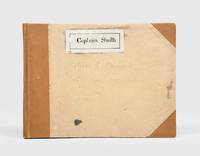
1928174745Likely Shanghai: 1928-34. Mariners are warned to exercise due caution when approaching and when in the waterways A collection of otherwise untraced notices to mariners compiled by a civilian captain who plied the lower Yangtse during the late 1920s and early 1930s. Yangtse shipping was regulated by the Maritime Customs Service which issued around 100 navigational advisories per year. During the late 1920s shipping traffic on the Yangtse rebounded after several years of decline during the Warlord Era. Low water however continued to pose problems for navigators and increased the need for effective river management. The 39 notices are technical directions concerning specific parts of the channel. They specify when vessels may and may not enter stretches of water warning of the persistent presence of Chinese craft not subject to the same notices offer guidance for navigating buoyed channels provide optimum bearings and relay a change to the position of the Bend and Gravener Island beacons due to the erosion of the channel. The majority date from 1929. The identify of the "Captain Smith" referenced on the front cover has proved elusive but he may be the individual pictured in photograph Sw13-045 G. Warren Swire collection SOAS. Landscape octavo. Contemporary brown half cloth binder with metal clasp spine lettered in gilt buff paper sides front board with manuscript label "Captain Smith" boards lined with pink paper typescript list of charts on inner front cover 39 sheets each typed one side only in black or blue most duplicate typescript a few top copy. Boards lightly soiled clasp rusted sheets generally well preserved a few creased or with holes near clasp legibility unaffected typescript list with a few losses to text: a very good example. hardcover
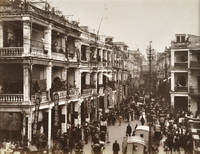
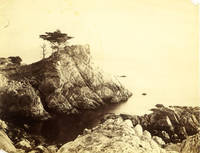
1880J6SGPBJ1IXLV1880. With 12 albumen prints ranging in size from ca. 16.5 x 23 cm to 21 x 28 cm. Collection of 12 vintage photographs from the late 19th century showing China Indonesia the Hawaiian Islands California and Egypt. Of the 4 photographs of China 2 show Hong Kong including one possibly by the famous Chinese photographer Lai Fong ca. 1839-1890 showing Queen's Road Central. The two rarest photographs show several of the 7500 imperial examination cubicles in Canton Guangzhou while a photograph by A Chan Ya Zhen shows the famous five-story pagoda on Kun Yam Hill in 1870. The Indonesian island Java can be seen on 3 photographs including one of lake Telaga Warna by the British firm Woodbury & Page based in Batavia Jakarta. Taken further to the west were 3 photographs of Hawaii probably all taken in or near Honolulu. A rare undated photograph of the statue of King Kamehameha was taken probably right after the unveiling ceremony in 1883 as it shows a small wooden fence around the statue which can be seen in an illustration in The Graphic 28 April 1883 but is absent from all later images. Of the 2 final images one by Isaiah West Taber 1830-1912 shows Midway Point in Monterey California and the other by Hippolyte Arnoux fl. 1860-1890 a group of Arabs and camels waiting for the ferry near El Qantara in Egypt. Most of the photographs are worn at the edges with small tears and folds and a few have small holes; one of the images of Hawaii with a waterstain at the lower margin. unknown
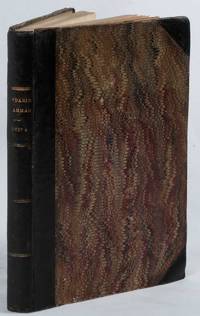
1864223685Shanghai.: Presbyterian Mission Press. 1864. viii 279 pp. contemporary half roan rubbed 23.3 x 16.5cm marbled boards spine gilt lettered a little light rubbing to the boards last two leaves archivally strengthened at the hinge small tidemark to the inner corner of the title-page age-toning and some offsetting to the text inked signature of an early owner Dec. 1870 Fred. P. Napier lettering on spine a little worn a good complete copy. The second work published by the remarkable sinologue missionary and linguist Joseph Edkins 1823-1905. This second edition is noted for its deeper inquiry into the Peking dialect specifically its "laws of tones and accent" <br>The book is divided into three primary parts designed to move a student from basic sounds to complex communication: <br>Part I: On Sound: Detailed exploration of pronunciation the tonal system and phonetics. <br>Part II: Parts of Speech: A categorical breakdown of Mandarin vocabulary and functional grammar. <br>Part III: Syntax: Guidance on sentence structure and verbal interaction. <br>Appendices: Includes discussions on southern Mandarin dialects Mandarin literature and contemporary Chinese philology <br> <br>Lowendahl 1811 Supplement. . Presbyterian Mission Press. hardcover
18041100731804. First Edition. CHINA MASON Major George Henry MILLER William publisher. The Punishments of China Illustrated by Twenty-two Engravings. London: William Miller 1804 i.e. circa 1819. Folio 10-1/2 by 14-1/2 inches contemporary full straight-grain burgundy morocco elaborately gilt-decorated spine all edges gilt. $3200.Later edition of this survey of the punishments of China illustrated with 22 folio engravings each finely hand-colored. A handsome copy in contemporary morocco-gilt.This collection depicts a variety of Chinese punishments for assorted crimes as well as appearing before a magistrate being conveyed to prison and being conducted to trial. This volume originally formed part of publisher William Miller's six-volume series on costume each volume separately issued: The Punishments of China 1801 The Costume of Turkey 1802 The Costume of Russia 1803 The Costume of China 1804 The Costume of Austria 1804 and The Costume of Great Britain 1804. This is a later reprint as is shown by the watermarks text leaves watermarked 1818; plates 1819 of the 1804 edition text printed by Wilson rather than Bulmer. ""The first edition was apparently in 1801"" Abbeyhe had this circa-1819 reprint in his collection. Another edition appeared in 1808. Text in English and French. Abbey Travel 532. Colas 2010-12. Prideaux 317. Lipperheide 1522 1808 edition. Plates clean and fine hand-coloring vivid. Attractive contemporary morocco-gilt binding with expert repairs to joints and corners. An excellent copy. Scarce. unknown
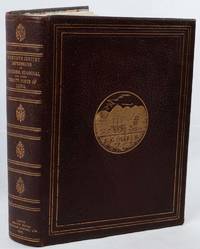
1908217946London Durban Perth Colombo Singapore Hongkong Shanghai Bangkok Batavia and Cairo.: Lloyd's Greater Britain Publishing Company Ltd. 1908. Maps numerous black and white photographic illustrations 848pp; full pebble-grained morocco gilt decorated spine gilt-lettered and ruled between raised compartments edges fully gilt 31 x 24cms modern marbled endpapers and hinges neatly strengthened worming to the boards and mainly affecting the preliminary leaves and the final fifty leaves the boards with a little edgewear a few gatherings a little proud but otherwise a good sound clean and complete copy of a work uncommon on the market. A good copy of a now remarkably scarce work profusely illustrated with remarkable black and white photographic portraits and panoramas and detailed chapters on everything from history geography culture and specific industries like shipping manufacturing agriculture and trade. Whilst earlier works in the series focussed exclusively on British colonial interests Western Australia Natal Ceylon and British Malaya the editor notes that: <br>"More than one half the imports and exports of China passes through the various Treaty Ports and it would have been a negation of one of the avowed objects of these publications if no attempt had been to show the present-day tendency of this trade and how the proportion borne by the British Empire compares with that of its competitors". The series served as a handsome soft power testament to British colonial might and aspiration. . Lloyd's Greater Britain Publishing Company, Ltd. hardcover
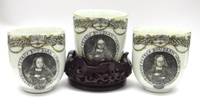
174012377China n.n. 1740-1760. Drie fraaie kopjes van Chinees porselein gedecoreerd in encre de Chine en goud. Met op de buitenwand van de kopjes een portret van Petrus Boudaan vaandels en de tekst 'Petrus Boudaan Ecclesiastes Amstelodamensis'. Langs de mondrand een fijn lijnornament in goud. Niet gemerkt. Portretten naar een gravure van Frederik Ottens. Enkele vergelijkbare exemplaren betreffende Gijsbertus Voetius in 1903 uit een legaat ontvangen zijn te vinden in Museum de Lakenhal te Leiden inventaris nr. 3645. Petrus Boudaan was de oudste zoon van Gualtherus Boudaan en Maria Coymans. Geboren in 1666 te Middelburg in het huis van zijn grootvader Pieter Boudaan. Hij studeerde te Franeker en werd in 1691 predikant te Rijnsburg twee jaar later te Arnhem en in 1710 te Amsterdam. Hij overleed 20 Mei 1734 en werd te Amsterdam in de Oude kerk begraven. H. 65 cm. Fragmentarische stukjes van de rand wat slijtage aan de vergulding één kopje met een haarlijn aan het oor. Literatuur: Jochem Kroes 'Chinese armorial porcelain for the Dutch market' p. 299. A set of three encore de Chine porcelain cups on a wooden stand decorated with a portrait of Petrus Boudaan 1666-1734 a protestant pastor from Amsterdam banners and the text 'Petrus Boudaan Ecclesiastes Amstelodamensis'. Portraits after an engraving by Frederik Ottens. Unmarked. China 1740-1760. H. 6.5 cm. Tiny chips to the rim some wear to the gilding one with hairline to the ear. Literature: Jochem Kroes 'Chinese armorial porcelain for the Dutch market' p. 299. China, n.n. unknown
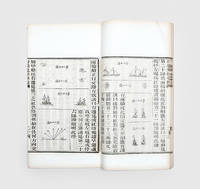
1895188172Shanghai: Jiangnan zhizao ju "Jiangnan Arsenal" 1895. Turning China into an economic powerhouse First edition issued by Shanghai's Jiangnan Arsenal as part of the late-Qing "self-strengthening movement" during which a wave of radical commercial scientific and legal changes aimed to rapidly modernize China's economy. The text was overseen by John Fryer 1839-1928 who translated more Western scientific works into Chinese than any other 19th-century sinologist. In 1868 Fryer was recruited by the Jiangnan Arsenal a hotbed of political and military reform to join its dedicated Translation Office. Over the next three decades he produced dozens perhaps even hundreds of publications for the use of trainee officers and scientists. For the present work Fryer co-operated with the Westernized engineer Zhong Tianwei 1840-1900 and drew inspiration from provisions introduced in successive British parliamentary Acts regulating merchant shipping. Sections discuss systems of signal lights how ships can safely pass alongside each other and best practices for pilots and navigators. Quarto 295 x 175 mm ff. 1 38 25. Illustrations in text; text in Chinese. Near-contemporary brown wrappers renewed xianzhuang stitching Recent bookseller's manuscript ticket on rear binder's blank. Wrappers dust-soiled front cover sometime repaired at foot with repurposed piece of printed paper rear cover with a little worming at head extending into margin of last 2 printed leaves: very good. unknown
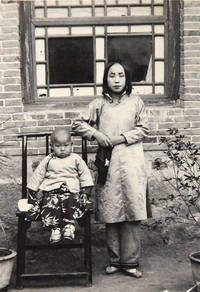
193064035Enshih Shihnan Hubei China: R.J. Mueller Rev. Gebhardt Miss Simon LCMS ca. 1930-1937. Two vols. 1st - Oblong folio. 11.25 x 15 in. 48 pp unpaginated. thick black paper stock w/ 103 original silver gelatin photographs sized 2.75 x 3.5 in. all neatly numbered in ink MS at corners affixed to the leaves. Contemporary black flexible board post-binder punch-sewn & glued at spine in black paper paper title label partially torn on front cover Building Committee title label affixed to first page minor chipping edgewear to fore-edges some scuffing tidemark to fore-edges still a VG- exemplar w/ all images with bright strong contrast; 2nd - 4to. 8 leaves carbon copy typescript on onion-skin ruled paper some ink annotations corrections 1 pencil MS annotated correction still VG signed by R.J. Mueller on first leaf dated April 24 1937 from the library of David G. Kohl 1946-2025 former art teacher at the Hong Kong International School musician artist and historian. A remarkable photo album with images shot by three different Lutheran Church Missouri Synod LCMS missionaries in China along with the descriptive contents list compiled by Rev. R.J. Mueller detailing the purpose and composition. He writes that the Enshih Shihnan Mission had prepared three albums “one for the Mission Board one for the Building Committee of General Conference and one at the Enshih Station. The numbers all agree. However not all pictures listed appear in all books.†This “Building Committee†album was intended to focus primary on the structures homes chapels of the mission as well as surrounding areas and was intended to aid in speeding up communications for fundraising and building affairs issues as correspondents could then merely refer to the master list of numbers held by all three parties. Enshih China was one of the final mission stations established by the LCMS far from their other missions and when Gebhardt returned to Enshih following the Civil War in 1928 there was significant damage to the mission structures to be repaired. Looting by bandits and marauding soldiers had caused over $ 2000 in damage but was encouraged to find that the Lutheran evangelist Shen had continued the mission chapel school orphanage. He would later be joined by Mueller and others although primarily composed of Chinese Staff. These photos in the album includes views of Mueller’s residence windows frames and gutters looted; screens torn doors boarded up as well as views of the native house and threshing floor adapted into an orphanage at Yao Wan after 1930. Several others show the extent of the protective walls built around the properties farm houses the gates as well as farms bridges and nearby fields at Enshih. Landmarks such as rocks shaped like Elephants in the river and Big and Little Hog creek below farmland. A very nice series of photos depict the Ts’i Ts-ung-fu funeral the blind deaf and other orphans about 1931 as well as textiles drying in the sun. Other photos capture the Ch’i-li-ping market fortune teller temple noodle stand and the T’ai shan shrine at Ch’i-li-p’ing. More photos depict Hu Ping-chih the orphanage secretary Yuen Ye-chih cashier in 1934 Hsieh T’i-ya seminary student who died later in 1937; along with the mission pulpit nearby streets and the rear view of the Yao Wan houses.Of additional interest are the images of the rugged roads to Liang Shui-chin the temple and steep steps drying opium in Kuan-p’e which was a small town between the East Gate and Yao Wan before opium raising was banned in 1934; along with the nearby Ch’ing-Ching Clear River at the high water stage the front of the True Light Chapel in 1934 as well as the gravestone of Mr. & Mrs. Wang Japanese-Lutherans who had died in 1930. The final photo No. 169 again shows the Clear River below the city. Mueller 1905-1998 graduated from seminary in 1929 and left for China with his wife Dorothy for the Evangelical Lutheran Foreign Mission Board returned briefly to the U.S. from 1937-1940 spent 1939-1942 teaching at a Lutheran seminary in China while being bombed by the Japanese and also served in Shanghai where he would supervise the Lutheran Hour and Lutheran Hour offices. Although he and his wife briefly returned to the United States in 1946 following World War II they subsequently served again in Shanghai China into the early years of Communist rule by Mao tse-tung before returning again to the U.S. See: David Kohl Lutherans on the Yangtze: A Hundred Year History of the Missouri Synod in China 2014 pp. 103 124 131 132 166 174 99-131. R.J. Mueller, Rev. Gebhardt, Miss Simon, LCMS, unknown
19852080502106913996Not Available 1985. Soft Cover. Fine. The book is in fine condition. Not Available paperback
1940008960Tientsin China: Reprinted in China 1940. Book. Good. Cloth. Reprint. Small 8vo - over 7¾" - 9¾" Tall. Four volumes bound in blue/grey cloth Good the cloth worn and soiled one hinge each in Vols. I and II and both in Vol. IV broken the bindings still holding well. Faint damping bottom edges Vol. III. Interiors clean and unmarked. Prior owner name stamp of Richard W. Powell noted University of Hawaii anthropologist. From the collection of noted East Asian scholar Ruth Meserve her business card for The Mongolian Society which she served as Secretary laid in. The 1940 Chinese reprint of the original 1834 first edition SCARCE in either edition. The first serious study of Genghis Khan. Three folding genealogical charts one in Vol.I and two in Vol. IV; large 1824 folding map of Asia in the13thcentury in pocket at rear of Vol. IV. The charts and the map are Fine. A sturdy and usable set of this important history. Reprinted in China Hardcover