KEATE ,George et WILSON ,HenryLivre Rare Book
821 résultats
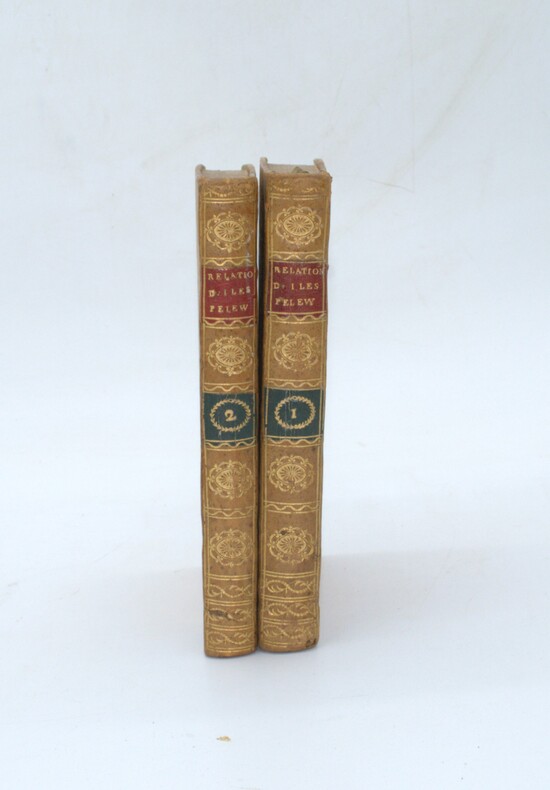
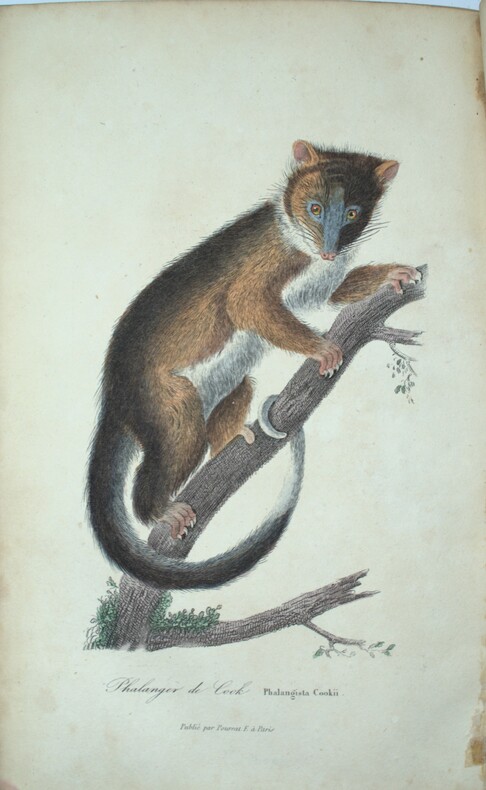
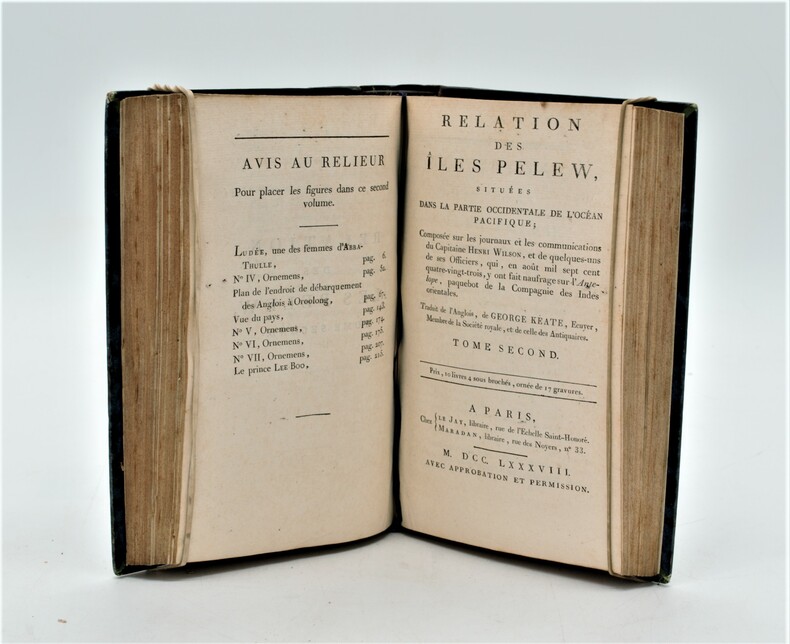
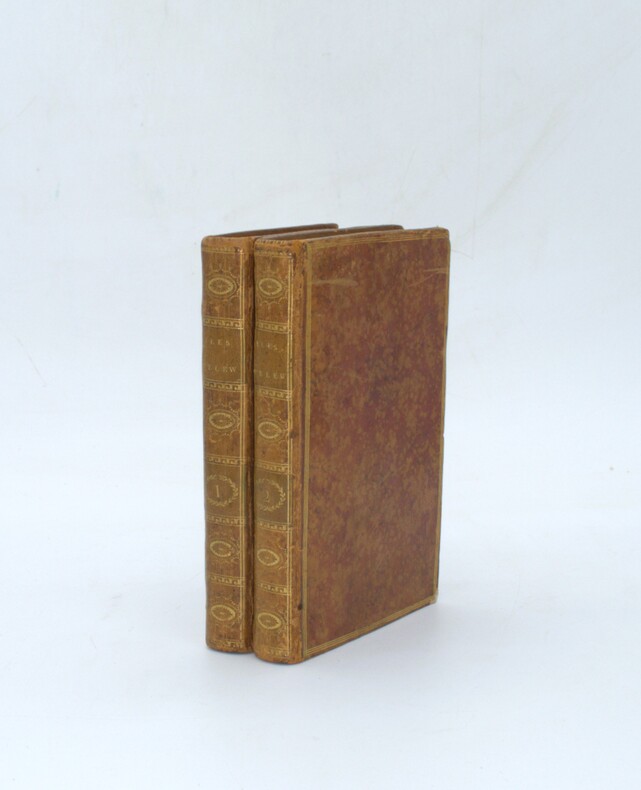
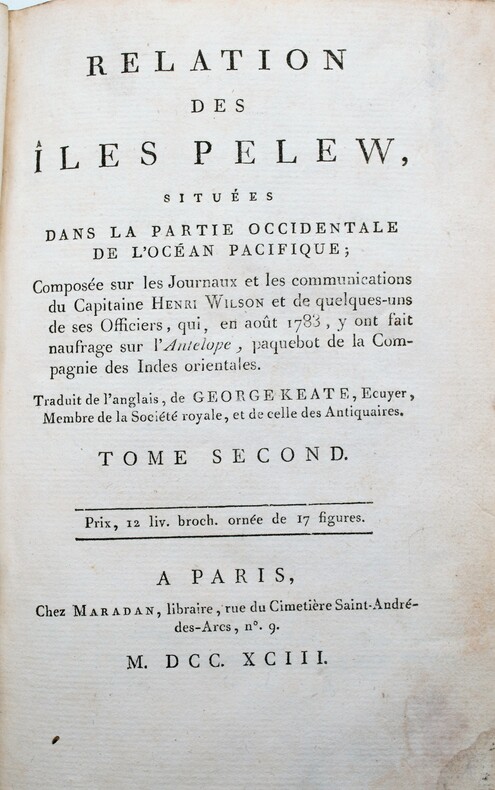
1793PHO-1088Paris, Maradan, 1793. 2 volumes in-8 (19,5 x 13 cm), veau racinée, roulette dorée en encadrement, dos lisse orné, pièces de titre rouge et de tomaison verte, (reliure époque). Seconde édition de la traduction française établie par le comte de Mirabeau, illustrée de 3 portraits gravés Massard, Madame de Gouy et Mademoiselle Jouan, dont ceux du roi Abba Thulle et de sa famille ; et de 13 planches dépliantes (carte, plan, vues et objets ethnographiques), certaines signées par Pierre-François Tardieu.
26504aafParis, Amyot, 1854, gr. in-8°, 1 f. n. ch. + VI + 386 p., reliure artisanale en demi-cuir, titre doré au dos, bon exemplaire.
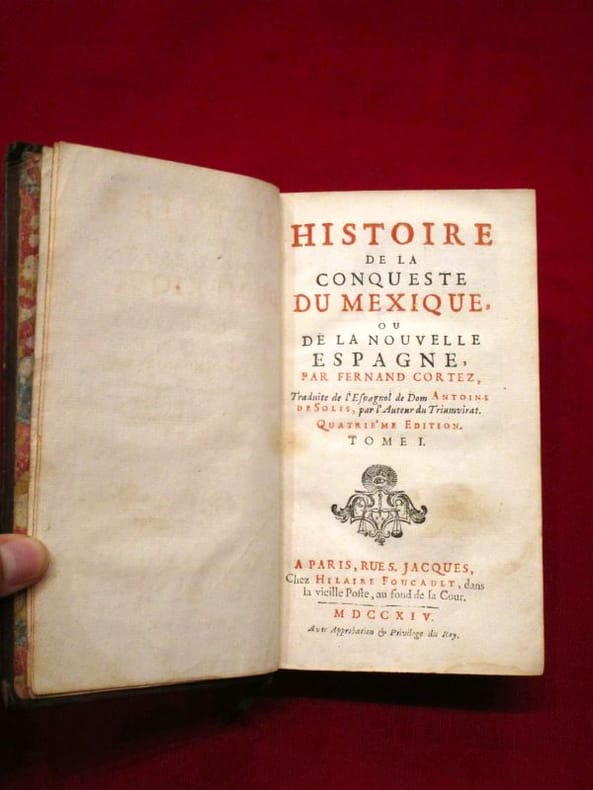
1714117802Hilaire Foucault 1714 A Paris, Chez Hilaire Foucault, 1714, 2 volumes petit in-8 de 95x170 mm environ, tome I : (17) ff., 537 pages, (9) ff. - tome II : (7) ff., 494 pages, (9) ff. Pleine reliure d'époque, dos à nerfs portant titres et tomaisons dorés sur maroquin bordeaux, filet d'encadrement à froid sur les plats, roulette dorées sur les coupes, tranches rouges, gardes marbrées. Avec 14 cartes, planches dépliantes et figures à pleine page. Coiffes manquantes, coins frottés, petits manques de cuir, rares rousseurs, taches marginales tout au long du tome II, état satisfaisant.
1377312Madrid: Ana & Antonio Casanovas, 2024 in-4, 404 pages, nombreuses illustrations. Bibliographie. Cartonné jaquette, état neuf. "The book SEA ART, acronym of South East Asian Art, gathers a fine selection of primitive artworks from this region of the world carefully chosen by the publishers and experts in the field Ana & Antonio Casanovas, complemented by three essays written by professionals specialized in different fields: the art historian Jerome Feldman who studies the common stylistic links found in the arts of South East Asia and Oceania, the art journalist Philippe Bourgoin who explores the relation of South East Asian Art and the avant garde artists of the XX century and the archeologist Wil Roebroeks who explains in detail the discovery of cave art in Maros, Sulawesi, dating back 45.000 years thus becoming the oldest art manifestation of mankind in the history of art."
1808P2-2DParis, Maradan, 1808. 8 volumes in-8° (210x130mm) reliés plein basane époque, dos lisses richement décorés, pièces de titre maroquin rouge et de tomaison verte, lisière or sur les plats, frontispice, chaque volume comprend entre 400 et 500pp., coins émoussés, coiffes usés, mouillure sur 30 pages en fin de 2 volumes, bel ensemble.
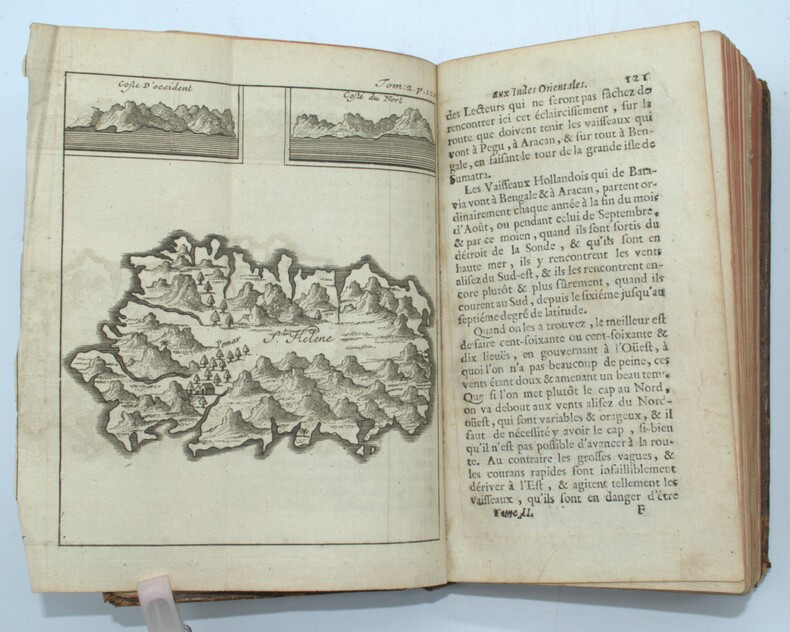
1725PHO-1469Rouen, J.B. Machuel 1725. 1 vol.(2) in-8,582pp., illustré d’un frontispice et 9 planches , relié plein veau, dos à 5 nerfs ornés, tranche rouge, reliure de l'époque, frottements , coins usés, feuillets déréglés.
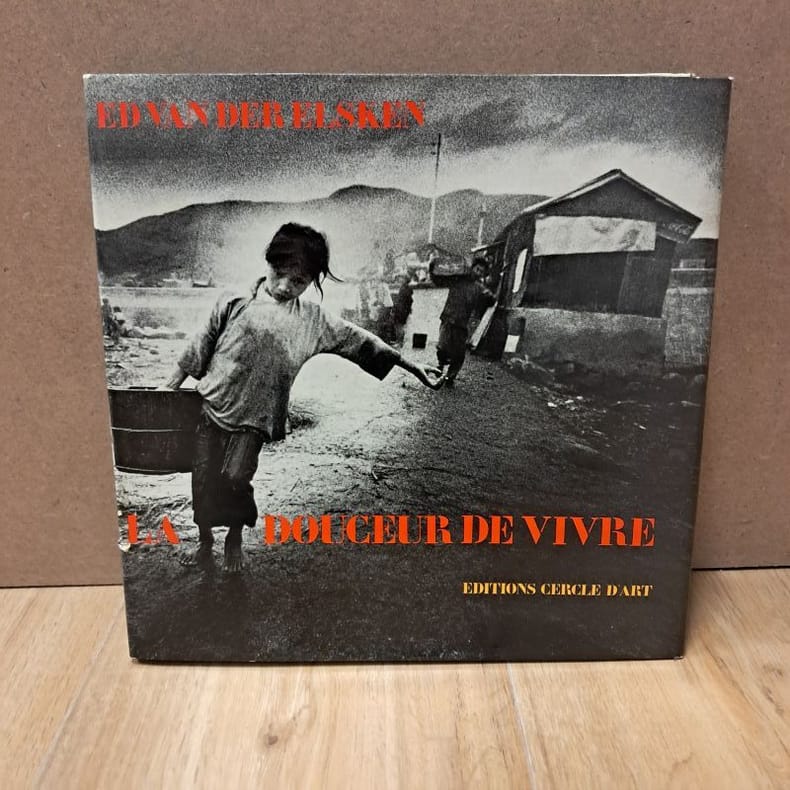
19681571968 - cartonné - Editions Cercle d'Art, Paris et Harry N. Abrams, New York - 1968 - In-folio (30,5 x 30,5 cm) cartonnage toilé noir sous jaquette de l'éditeur - 179 planches de photographies en N&B + Quelques pages de préface
Madrid, C. Moliner y Cía., 1875, 20,5 x 14 cm., cartoné editorial impreso gastado por las esquinas y reforzado por el lomo, dedicatoria manuscrita, 133 págs. + 1 hoja.
Madrid, Viuda de M. Minuesa de los Ríos, 1896, 18,5 x 11 cm., holandesa piel, retrato + XXIII + 437 págs. + 1 h.
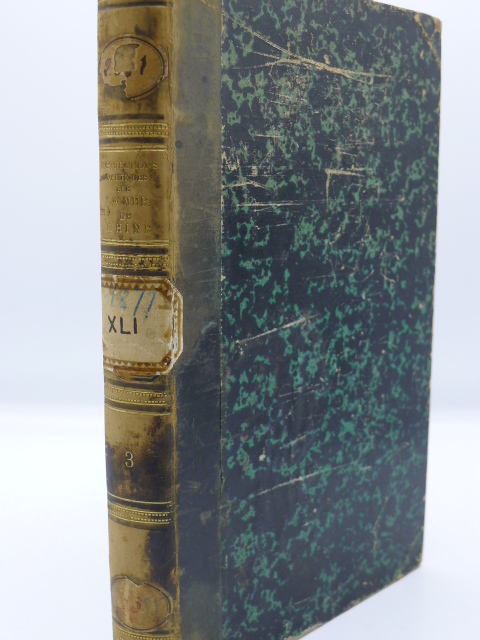
13403Paris, Imprimerie Nationale, MDCCLXXVII (1877). 1 volume in-8, demi- basane, plats cartonnés marbrés, dos frotté et insolé, 387 pp, bon état. Cachets du Ministère de la Marine et des Colonies.
6952Paris, Imprimerie Nationale, MDCCLXXVII (1877). 1 volume in-8, demi- basane, plats cartonnés marbrés, dos frotté et insolé, 387 pp, bon état. Cachets du Ministère de la Marine et des Colonies.
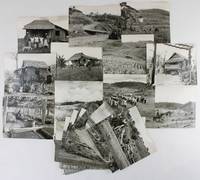
19503741Philippines 1950. Very good. Thirty-one original photographs each measuring 4 x 5 inches. Minor wear and dust soiling. Mostly sharp clean images. Fascinating group of over thirty candid photographs depicting Philippine settlers and their homes on the large southern island of Mindanao just after World War II. Over half over these show settlers and their homes in the Panguantucan and Nabaliwa areas of Bukidnon province in the center of the island as wells as images of coffee and soybean farms a poultry enterprise rural roads and bridges and more. Additional photographs show similar scenes in Lanao del Sur also on Mindanao and a few in the Tinambac municipality of the more central Camarines Sur province -- farmers with their products by the road agricultural families at work a plant nursery and settlers' children in the fields. Mindanao is one of the principal centers of agricultural production in the Philippines and the island was subject to a series of resettlement efforts across the 20th century by both colonial and independent governments aimed at increasing production. The photos are captioned in manuscript in English on the versos and scattered images of crude roads and construction equipment suggest that these images were taken by a U.S. Army engineer or a private contractor after the war. unknown
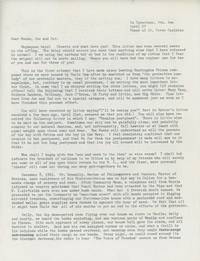
1945List2748Philippines 1945. Single letter; five 8.5 x 11†pages. Pinhole at top of first page missing final pages overall fine. The unknown author of this letter was an American Jesuit missionary in the Philippines who before the war was a novice living in Novaliches just outside Manila. He apparently had not written a significant letter home for a long time: in this letter written in April of what is likely 1945 he recounts his experiences from between December 8 1941 and early January of 1945 shortly before the civilian POW camp in which he was interned was liberated.<br /> <br /> After the “Nips†bomb Pearl Harbor “A feverish month ensuedâ€:<br /> <br /> “We proceeded to put the Community on ‘war-time alert’ with all hands occupied in digging air-raid trenches camouflaging our fortress-like house with a garlanded roof and mud-daubed walls; grain supplies were rushed in against the hour of need. We felt that all it might take Uncle Sam all of six months to put an end to the efforts of the pretender.â€<br /> Around Christmas they evacuated to the Jesuit Ateneo Grade School then in Intramuros as the Japanese were advancing quickly towards Novaliches. Of course this did not prove to be much safer:<br /> <br /> “When darkness came the Japs began their bombing of the Port Area. The bombs began to bounce off the pavement; bombers just skimming our roof-top on their way. We spent the night on our tummies and how we prayed. We thought that each decade of the beads would be our last this side of Purgatory. . When the church sto Domingo was hit the floor beneath us did some tricks and we were lifted up a bit and let down amidst the dust and smoke that poured in from above.â€<br /> <br /> The missionaries try to “salvage important papers and other valuables from the Mission House prior to abandoning it to the fire which threatened the entire Walled City.†During this time they and “a thousand refugees†live in the Ateneo while “Dawn and night raids were supplied by the Japs with nary an American plane to say to them no†– American forces had taken a serious hit and withdrawn outside Manila. It was declared an open city before “the little scrawny but arrogant Japs came into the city and took over†in January of 1942.<br /> <br /> The missionaries persuade the Japanese to let them stay in the Ateneo:<br /> <br /> “We convinced them that it was impossible for us to give up the building because it belonged to the Pope and the Vatican State would hold us responsible. This argument with many ingenious trimmings enabled us to hold on to the Ateneo until June ‘43 when the main building was taken for a military hospitalâ€.<br /> <br /> The author describes how despite what he calls his “partial internment†in Manila he is able to get around checkpoints by pretending to be Belgian. He finishes his studies and begins work at a Belgian convent in Paranaque in February of 1943 living between there and Manila:<br /> <br /> “Incidentally none of this would have been possible if the Japs had gumption enough to find out that I was one of the hated Americans. . All vehicles were obliged to stop here a checkpoint at Baclaran and all passengers get down and file between a Jap sentry and a Filipino constabulary soldier to be searched for hidden arms etc. Since several Belgian Fathers not considered enemy aliens frequently passed this way I was able to walk through unmolested as an unoffending Belgian. . I carefully kept my helmet covering the tell-tale red arm-band which was worn on the arm furtherest away from the Jap. The Filipino would do no more than give me a knowing grin.â€<br /> <br /> On July 10 1944 all of the American civilian POWs are taken to internment camps in Santo Tomas and then Los Baños. In Los Baños the POWs cut wood repair roads and farm. Los Baños would be liberated in February of 1945; the author paints a slightly confusing picture of the leadup to this:<br /> <br /> “Conditions generally ‘worsened’ when on Jan. 8th about the time that the American troops landed at Mindero an island just across from Batangas the Japs got jittery believing that the Yanks were going to do the obvious and cross over the bay to Batangas and they the Japs at Batanga decamped! ‘You are free but remain in camp until the Americans come. Outside your camp Japanese troops will shoot any who leave.’ Great was the joy in Mudville. From nowhere came flag poles on which we quickly unfurled American and British flags .; a short-wave radio was set up and we enjoyed daily Frisco broadcasts .â€<br /> <br /> It sounds as if the missionary was reporting contrary to the usual narrative of the Los Baños raid that the Japanese had essentially given up control of the camp and were like the prisoners simply waiting for the Americans to come get their people. Perhaps something further happened in the nearly two intervening months; however the remainder of the letter is missing.<br /> <br /> Of interest to scholars of modern Jesuit history and of the civilian POW experience during the Second World War. unknown
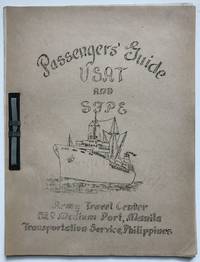
1947475Manila 1947. Very good. 24pp. Quarto. Original printed wrappers bound with folding metal fasteners. Small original photo laid in. A fascinating mimeograph guide published by the U.S. Army in the Philippines to assist soldiers and civilian personnel that were being transported back to the United States or to other posts overseas at the end of World War II. The transports all travelled from Manila to Fort Mason in San Francisco or the Oakland Army Base. The guide is quite detailed and like military manuals everywhere sought to foresee all contingencies from detailed information about the types of vessels used as transports their safety procedures American customs allowances and other procedures at the American ports of entry to very specific advice about how to tip ship stewards and advice on dealing with seasickness "far more a disease of the mind than of the body". The final pages contain several forms required for re-entry and a small section listing the "responsibilities" of military personnel on board the transports. With a small photo of a Filipino band watching a transport departing Manila harbor dated June 13 1947 on the verso. Not in OCLC. unknown books
1793PHO-2399Paris, Maradan, 1793. 2 vol. in-8 (19,5× 12,5 cm), 2ff.-280pp. & 2ff.-272pp., demi-basane fauve mouchetée, dos lisses ornés, pièces de titre rouges et de tomaison vertes (reliures de l’époque). Plats frottés, petites taches et rousseurs
1839PHO-1346Paris, Pourrat frères, 1839. 2 volumes in-8 (220x150), demi veau vert contemporain, dos lisse orné avec titre et auteur ,tranches marbrées ,manque aux dos , charnières frottées ,rousseurs ,mouillure au début tome 2.
1945204557U.S.A.: Mem-O-Map Co. 1945. Colour pictographic / pictorial map 32.1 x 23.8 cms; 35.4 x 26.6 cms sheet very good condition. Rare pictorial map published in 1945 by John G. Drury aTechnical Officer who served with the 214th Ordnance Battalion to mark the end of World War II as souvenirs for the military. Military personnel could fill in banners "came in on good ship." and "departed on good ship." their name organisation and "Line of Advance or movement" blank in this example. Pictographs mark various memorable spots and wildlife including larger-than-life insects. A "Terrible Tillie Typhoon" looms over the coast at Luzon. <br>Drury published a series of five maps: Philippines and Okinawa in 1945; Japan and Korea Oahu and Europe in 1946. They are all scarce. “These almost whimsical maps are designed to support the creation of personalised geographies. At a time when digital mapping is beginning to experiment with the creation of personalised content that would render the same map in different ways for different users Mem-O-Maps demonstrate the principle in action." Kenneth Field ICA Commission on Map Design. . Mem-O-Map Co. unknown
17880049161788 Londres et Paris, Buisson, 1788. Deux volumes in-8 (133 X 204 mm) basane fauve, encadrement de double filet doré sur les plats, dos lisse cloisonné d'un double filet doré, pièces de titre et de tomaison maroquin havane, tranches mouchetées en rouge (reliure de l'époque). Tome I : (2) ff. de faux-titre et titre, XXVIII-311 pages, (1) page et (2) ff. de table des matières - Tome II : (2) ff. de faux-titre et titre, une carte dépliante, 330 pages, (1) f. Habile restauration en pied du mors supérieur du tome I, petites épidermures.
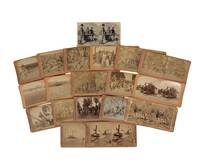
1898231701898. Stereoview archive documenting the rapid overseas deployment of American troops at the moment the Spanish American War gave way to a longer and more revealing imperial presence in the Philippines. This archive marks the transition from the 1898 defeat of Spain to the far more sustained American military occupation that followed. After the U.S. victory over Spain the Treaty of Paris transferred the Philippines to the United States for $20 million. This resulted in a battle between American forces and Filipino nationalists under Emilio Aguinaldo in February 1899 when Filipino hopes for independence collided with the reality of a new colonial ruler. This collection of photos preserves the process of colonialism through troop deployment provisioning medical treatment and the routines of military presence.<br /> Archive of 19 stereoview cards most published by B. W. Kilburn and James M. Davis centered on American military activity in the Philippines with additional views from Puerto Rico Cuba and the United States. Each measure 3.5" x 7". The core of the images remain in Philippine occupation; "The 17th Infantry crossing the river P.I." shows movement through tropical terrain; "Our Volunteers awaiting orders under the tropical sun in the Philippines" captures the idleness and bodily strain of expeditionary service; "2nd Division Hospital established in Angeles Church P.I." reveals improvised medical infrastructure inside a colonial religious building; "Dealing out pork and beans to the Oregon Volunteers P.I." appears in multiple variants and preserves the logistics of feeding American troops in camp; and "The Insurgent House of Congress on Fire Malolos P.I." places the war directly in relation to the destruction of Filipino political institutions. The remaining cards broaden that story outward: "Troop D 5th U.S. Cavalry lining up for dinner Mayaguez P.R." points to U.S. military operations in Puerto Rico; "Modern Krupp Gun Morro Castle Havana Cuba" preserves the Spanish imperial military landscape at Havana just as U.S. power displaced it; and the exhibition drill cards including "The Little Commodore" Boston '98 and "Grand Stand Exhibition Drill Boston '98" connect the overseas war to patriotic spectacle and military display at home. Stereographs were a common late nineteenth century format for circulating military imagery and was used to render mobilization and drill into mass-viewed visual media. <br /> Minor toning edge wear and rubbing; images and printed captions remain legible; overall very good condition. This collection preserves the American campaign in the Philippines not as abstract policy but as a contemporary visual record of how troops were deployed housed fed and sustained while the United States transformed victory over Spain into colonial rule in the Pacific. unknown
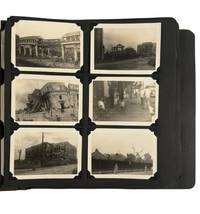
1945212431945. World War II Philippines photo album 1940s documenting United States Army Forces Far East activity and civilian conditions in Luzon during Japanese occupation and subsequent military operations. The album records military presence infrastructure damage and daily life among Filipino civilians providing visual evidence of the Pacific Theater at a critical stage of conflict. The material captures both organized military environments and surrounding local landscapes situating the campaign within its geographic and social context.<br /> <br /> Album comprises 48 silver gelatin photographs each measuring approximately 3" x 4.25" mounted on 8 loose black album pages within faux brown leather covers measuring approximately 10.5" x 12". The photographs depict a range of wartime and civilian scenes including damaged buildings rural and urban environments and Filipino civilians engaged in daily activity. Several images show U.S. soldiers stationed at an encampment with rows of tents including one photograph of a Filipino man possibly affiliated with the Philippine Scouts posed in front of a tent. Additional photographs depict large U.S. naval vessels alongside smaller wooden boats occupied by Filipino men and women approaching or departing from these ships. Other images capture natural landscapes including volcanic terrain and cloud formations above Luzon. The sequence of photographs reflects both military occupation and local life with visual emphasis on interaction between American forces and Filipino civilians.<br /> <br /> Created during the prolonged conflict in the Philippines where American and Filipino forces resisted Japanese occupation from 1941 to 1945 these photographs provide a record of conditions during one of the most significant campaigns in the Pacific Theater. The images reflect both the presence of U.S. military operations and the lived environment of the island during wartime. Album pages are loose within covers; photographs remain clean and well-preserved with minimal wear; overall very good condition. This album offers a concentrated visual record of wartime Luzon and the intersection of military and civilian experience. unknown
18489299Paris, A. Frank, 1848. In-4 de [10]-326-[4] pages, demi-veau brun, dos lisse orné de filets et fleurons dorés et à froid, étiquette de titre verte. Mors fendus et frottés, dos légèrement frotté, quelques rousseurs.
1788PHO-1087Chez Le Jay et Maradan, A Paris 1788, 2 volumes reliés en un , in 8 , (4) 282pp. et (4) 274pp. (3),, relié demi cuir , dos lisse avec titre illustré d’un portrait de Wilson en frontispice, une grande carte dépliante , 15 planches hors texte, petites rousseurs , léger frottements .
Abundant black and white illustrations and reproductions of photos. Features: Cheetah-Hunting - Lewis R. Freeman provides an interesting account of using cheetahs to hunt deer in India - article with photos; The Mad Hatter - two former partners fight it out over a woman in the boom days of the Kalgoorlie mines; Ivory-Poaching in German East Africa - Prior to WWI big game hunter J.A. Jordan set out to poach ivory from the jealously guarded herds of the colony after a German captain confiscated his possessions and left him stranded - article with amazing photos; Adventures of a Wild-Beast Trainer - The thrilling experiences of ex-lion-tamer Alexander Feely; An Errand of Mercy - the dangers and difficulty of travel in the interior of Paraguay; After Outlaws in Unknown New Guinea - pursuit of a band of native murderers who had wiped out a village - article with excellent photos; 'Big-Bang' - the story of a WWI heavy-duty trench mortar invented by a man named X____; The Brothers Alvarez - a Mexican narrative related to the author by the late British Minister to Mexico; A Canadian Lumber-Camp - Part I - A vivid photo-illustrated sketch of the strenuous winter existence of a Canadian lumber-jack; A Five Minutes' Race With Death - a mining engineer's story of a revengeful Matabele and a very narrow escape; The Bunko House - a very narrow escape in Chicago; Bob Trinder's Good Time - at story of the bad old days of San Francisco when men were 'shanghaied' aboard deep-water ships for the sake of advance-money or private vengeance; South African Snakes - their variety and characteristics; A Race With a Typhoon - the remarkable adventure of Yale graduate Dr. E.E. Severy in a remote district of Mindanao in the Philippines; Sensational 16-page photo-illustrated stock offering for the Pruden Coal Carburetor and the Powdered Coal Engineering & Equipment Company; and and more. pp. 4 [ads], [2], 292-382, 22-32 [ads]. Covers beginning to loosen. Unmarked with moderate wear. A quality vintage copy. Book
168 pages. Glossary, index and bibliography. Map endpapers. "From 1934 to 1956, self-taught Filipino photographer Eduardo Masferre dedicated his talent to recording images of the indigenous people in the heart of the Philippine Cordillera mountains - the Bontok, Kankana-ey, Kalinga, Gaddang and Ifugao people. Masferre created in photographs a sensitive portrait of a place and its people. The rice terraces sculpted into the steep mountain slopes and long valleys, the planting, cultivation and harvesting of rice, a family gathered at their hearth, scenes of the village, weavers and potters at work, men engaged in religious rituals and ceremonial dances, and strong faces that meet one's gaze with great integrity - Masferre preserved all of these in timeless images that transcend ethnography and imbue documentary fact with deeper meaning." - dust jacket. Clean and unmarked with moderate wear. Binding open at page 3. Fading to top of dust jacket back panel. Dust jacket now preserved in archival-grade Brodart. [ISBN 9719108253] Book
1793PHO-2402Paris, Maradan, 1793. 2 volumes in-8 (20 x 12,5 cm), 2ff.-280pp. & 2ff.-272pp., veau porphyre, dos lisse orné avec titre et tomaison, triples filets aux plats, tranches jaspées. Petits frottements, 2 coins usés, 1 cahier bruni, déchirure au pli de la grande carte.