LESSON (René-Primevère)Livre Rare Book
821 résultats
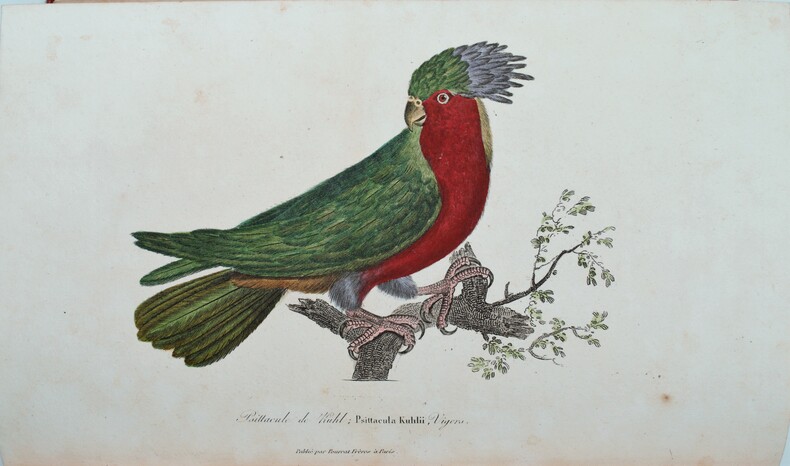
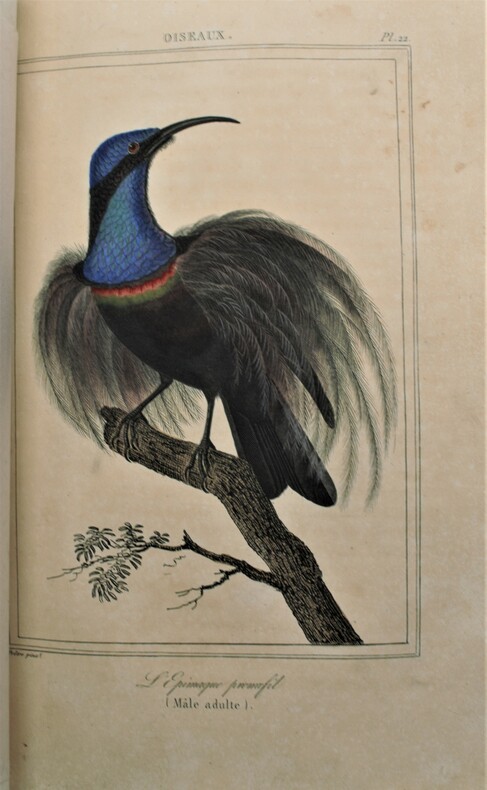
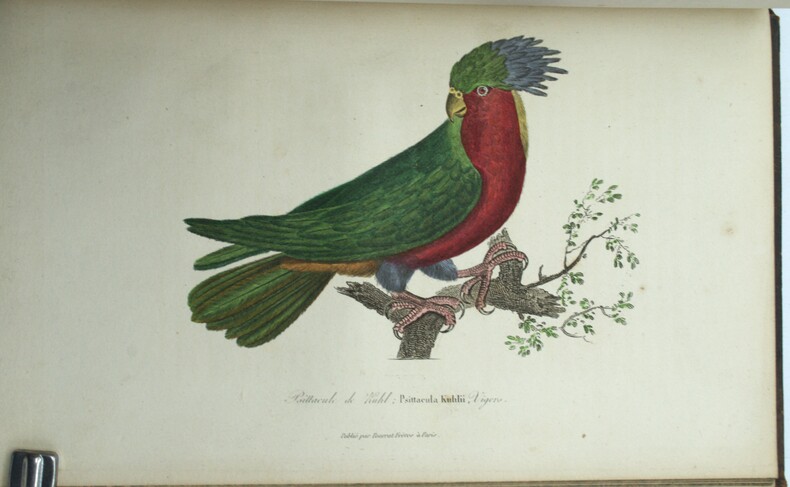
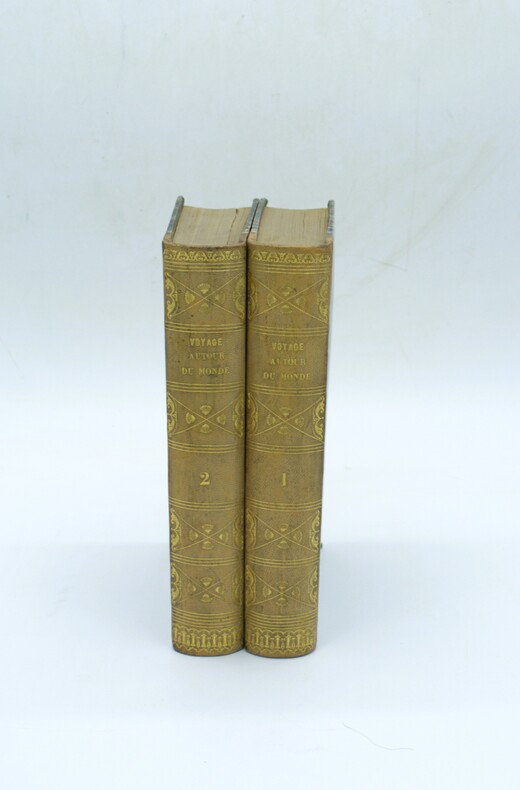
1839PHO-2300Paris, Pourrat frères, 1839. 2 volumes in-8 (24x16cm), 2ff.-510pp.-1f. , 2ff.-547pp.-2ff. , illustré d’un frontispice et de 41 planches dont 19 en couleurs d’époque représentant des animaux, des poissons et des oiseaux, demi basane époque, dos lisse orné avec titre et tomaison, étiquette de bibliothèque, 2 feuillets détachés, quelques rousseurs, dos insolé, petits frottements.
ORD-19121Tome X contenant Voyage dans l'Indoustan, la description des îles Marianes, des Philippines, de Célèbes, du Japon, etc. Paris. Didot. 1752. 1 volume in-4 (205 x 260 mm) pleine basane racinée, dos à 5 nerfs orné or, gardes peignées, tranches rougies, VI, 688, (3) pages. Complet des 8 cartes et plans et 17 figures sur 18 hors texte Seule la planche représentant la cour du Grand Mogol manque. Coiffes un peu arasées, papier lgt insolé par endroits, petits défauts mais bon état intérieur et bonne reliure. Étiquette de Raoul Pascalis au revers du 1er plat.
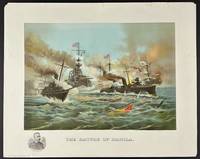
189813092New York: Muller Luchsinger & Co 1898. Color chromolithograph 16 x 20 inches printed on thick glossy paper. Corners a bit chipped several short closed edge tears minor surface wear. Image area still vibrant and clean. Very good overall. A striking and very rare lithograph capturing an important moment during the Spanish-American War specifically the American Navy's assault on Manila Bay in the Philippines in 1898. In the present scene three U.S. warships from the Asiatic Squadron in the left and middle including Admiral Dewey's flagship the U.S.S. Olympia fire their guns toward a few retreating ships flying the Spanish flag. A Spanish ship at middle right is almost completely sunken with just a portion of the flag peaking above the water. The scene depicts the first major engagement of the Spanish-American War a decisive victory for the American Navy that stands as one of the most lop-sided naval battles in history. During the course of the encounter the Spanish Pacific Squadron was destroyed and effectively ended Spanish colonial rule in the Philippines. The bombardment was commanded by Rear Admiral George Dewey 1837-1917 whose head-and-shoulders portrait appears in the bottom left corner.<br /> <br /> The work was accomplished by the New York firm of Muller Luchsinger & Company a prolific but still somewhat obscure producer of prints lithographs and chromolithographs in the latter-19th and early-20th centuries. OCLC records just two institutional copies at the Library of Congress and the Clements Library. A dynamic and patriotic American naval scene picturing the United States Navy's obliteration of the Spanish Navy in Manila. Muller, Luchsinger & Co unknown
Malina, Tipo-Litografía de Chofré y Cía., 1892, 21,5 x 14,5 cm., rústica editorial con la cubierta posterior desprendida, VI + 201 págs. (Sello de anterior poseedor. Carecemos de la segunda parte de esta obra, español-tiruray).
196359482Philadelphia & New York: J.B. Lippincott Co. 1963. Thick 8vo. 12 425 1 pp. Double-page map. Quarter-black over red publisher’s cloth silver stars & lettering front cover & spine slight shelfwear rubbing w/ d.j. cover art by Robert Hallock minor dustsoiling toning to spine price-clipped still NF/VG copy inscribed by Colonel Wendell Welby Fertig 1900-1975 to Eric Offret 1949-1986 upon his graduation from high school in San Diego June 1967 “This is a part of the story of our effort in the Philippines. “Chief†can supply some details. It is a story of a fight against odds -- and we won!†First edition 2nd printing of this work detailing the efforts of self-promoted Brigadier General Fertig a reservist mining engineer who had assisted in the evacuations of Bataan and Corregidor who accepted the offer from Major General Sharp to oversee the resistance in Visayan-Mindanao to the Japanese invasion. Fertig linked up with Filipino-American Luis Morgan a local constabulary officer as Fertig attempted to manage the disparate groups of Filipino guerillas managing non-Americans including Australian soldiers a Syrian engineer and German soldier of fortune and negotiating between Filipino Christians and Lanao Moros. J.B. Lippincott Co., hardcover
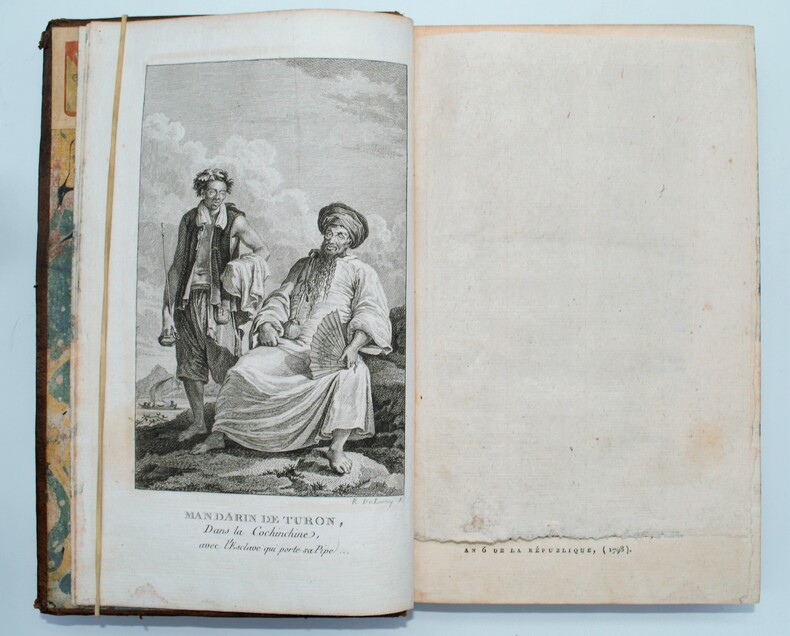
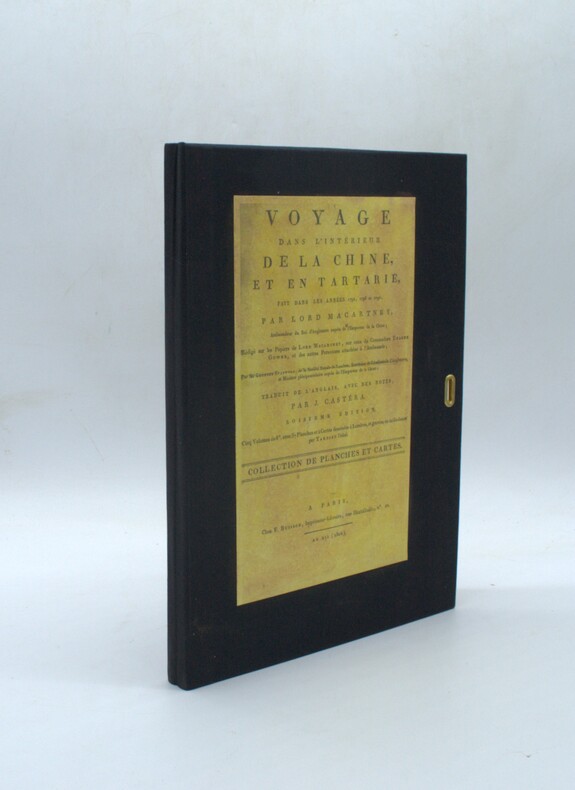
1798PHO-1309Paris, F. Buisson, An 6 de la République (1798). 4 volumes in-8 (21x13,5cm) , relié plein cuir tacheté époque , dos lisse orné avec pièces de titre et de tomaison , tranches marbrées, coins et coiffes usés avec manque, charnière faible au tome 4, (4) viij, 515pp. et (4) 412pp. et (4) 399pp. et (4) 326pp. et (4) ij, 402pp. ; (2) , illustré de 4 frontispices et 3 grandes cartes dépliantes (déchirures sans manques) gravés par Tardieu l’Ainé , mouillure sur quelques pages au tome 1.
1804PHO-2366Paris, Chez Buisson, 1804, in-4 (32x23,5cm), 2ff. et 41 planches dont 3 cartes (complet), reliure d’attente, étiquette au plat dans une pochette en toile bleu, réparations aux cartes.
194044229Manila 1940. Letters housed in a file folder attached at top with two prong paper fastener. Age-toning & staining. Fastener rusted. Folder front cover chipped & detached. A VG cache. 52 leaves most with typescript to recto only. ~ 10-1/2" x 8-1/8" <br/><br/>A cache of 40 typed letters and TLs exchanged between the Office of the President of the Philippines and various officers of the U.S. High Commissioner of the Philippines many on official letterhead and some marked "confidential." The letters ordered chronologically chart the negotiations defense concerns and sometimes uneasy power sharing between the two administrations in regards to the rules and regulations governing aerial photography of the islands. Issues discussed include the advisability of allowing aerial photography by outside entities the feasiblity of specifying no-fly zones for aerial photography without interferring with commercial flights enforcement efforts and the powers afforded the two administrations. The majority of the letters expressing the Commonwealth's position are from and signed by Jorge B. Vargas then serving as Executive Secretary to President Manuel Quezon. Later Vargas administered Manila as an open city during the Japanese occupation in 1942 and served in the puppet government of the Second Philippine Republic; following the war he chaired the National Planning Committee served on the board of regents of the University of the Philippines and became the first Filipino on the International Olympic Committee. In 1960 he was awarded the Legion of Honor by the Republic of the Philippines. Signed letters from the U.S. High Commission include several from Major General R. L. Holbrook as well as Colonel/Acting Chief of Staff E. H. DeArmond. From the first letter dated May 25 1937: "under the present prohibitive measures regarding aerial photography embodied in Proclamation No. 485 of the Governor-General dated August 12 1932 and in the Bureau of Aeronautics rules and regulations it is believed that the granting of permission to aviation companies particularly to an aerial photographic company to take pictures will be exceedingly difficult and complicated. This office is studying the advisability of altering the present rules and regulations." Jorge B. Vargas Secretary to the President. From November 12 1938: "So long as the Philippine Islands remain United States territory the United States is responsible for their defense and that responsibility at least so far as land operations are concerned devolves upon the Commanding General . . . . To say that the Department Commander is supreme in time of war or grave emergency but that in time of peace his responsibilities are limited to administrative control over United States military personnel and United States military reservations and that in peace time he should not interest himself in control or prevention of activities which may have the gravest consequences in time of war or public emergency is manifestly contradictory." Edward H. DeArmond Colonel FS G.S.C. Acting Chief of Staff. From October 26 1939: "I have the honor to inform you that in an investigation conducted by proper authorities of this Government Mr. B. A. Glover airplane pilot in the emply of Elizalde & Co. was found guilty of violation of the provisions of Proclamation No. 364 of the President of the Philippines in view of which he was suspended as transport pilot for a period of one month from October 18 to November 17 1939 inclusive and warned that repetition of a similar offense in the future will be subject of a more drastic action." Jorge B. Vargas Secretary to the President. An interesting cache of material documenting activities of the transitional government of the Philippines just prior to the outbreak of WWII. unknown books
1944224221944. Olson Laverne Edwin vernacular photo album circa 1944-1946 documents U.S. Navy enlisted service across the Philippines and Hawaii during the final phase of World War II and the immediate postwar occupation period providing direct visual and documentary evidence of military presence local communities and wartime social life in the Pacific Theater. The album is anchored by Olson's official U.S. Navy Certificate of Satisfactory Service confirming duty from December 18 1944 through April 23 1946 situating the material within the aftermath of the U.S. return to the Philippines following the Leyte landings and the transition into occupation and reconstruction. The photographs support research into Pacific War military infrastructure American servicemen's daily life and interactions with local populations in recently contested and strategically critical regions.<br /> <br /> Album titled "Snapshots: The Philippines and The Islands of Hawaii" compiled circa 1944-1946 contains 25 items: 23 silver gelatin photographs one wallet-sized U.S. Navy Certificate of Satisfactory Service and one Roosevelt Commemorative Birthday Ball exchange coupon dated January 30 1946. Album measures approximately 4.5 x 3.5 inches with most photographs approximately 4 x 2.5 inches. Images include candid and landscape views from the Philippines likely including Leyte depicting rural villages shoreline activity docked naval vessels and local labor such as fishing and canoe transport. One photograph shows a group of Filipino children and young men gathered along a beach while another captures men and boys navigating shallow coastal waters in a canoe. Hawaiian images include group recreation scenes and coastal landscapes reflecting off-duty life within a major U.S. naval hub. The Roosevelt Birthday Ball coupon printed with the slogan "Dance That Others May Walk" provided access to multiple Honolulu venues and connects the album to wartime charitable campaigns supporting polio treatment through organized social events.<br /> <br /> Created during the closing campaigns of the Pacific War and the first year of U.S. postwar presence in the Philippines the album situates an enlisted sailor within a broader military and geopolitical transformation that included amphibious warfare territorial reoccupation and the reestablishment of American administrative and logistical systems. The Philippines served as a critical site of both combat and reconstruction while Hawaii functioned as a central staging and support base for naval operations. The inclusion of both official documentation and leisure-related ephemera demonstrates how military service encompassed bureaucratic recordkeeping mobility across strategic locations and participation in organized morale and fundraising activities tied to the American home front. Light wear to album covers minor handling and edge wear to photographs with images remaining sharp; service certificate shows toning and wear; pages largely intact. Overall very good condition. unknown
13404Madrid, Tipografia sw Manuel G. Hernandez, 1887. 1 volume in-8, 409 pp., reliure ancinne demi-chagrin, plats cartonnés marbrés, très bon état. Ouvrage publié à Madrid, en langue espagnole.Très rare.
1839PHO-1319Paris, Pourrat frères, 1839. 2 volumes in-8 (220x150), demi-basane maroquinée à grain long fauve , 2ff.-510pp.-1f. , 2ff.-547pp.-2ff. , illustré d’un frontispice et de 36 planches dont 19 en couleurs d’époque représentant des animaux, des poissons et des oiseaux, frottements aux plats , coins usés, très peu de rousseurs .
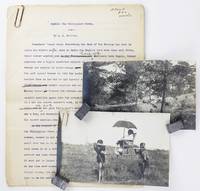
19055191N.p. 1905. About very good. 3pp. rectos only. About 900 words. Folio. Typescript with manuscript corrections and notations. Light wear and soiling slight creasing. Together with two silver gelatin photographs. A short but interesting essay on the mountain city of Baguio. It reads a bit like a travel article or potential newspaper puff piece for tourism and has been edited by hand with manuscript notations and corrections. It opens "Somewhere 'round about Petersburg the Czar of the Russias has what he calls his winter palace; down in Indian the English have what they call Simla their summer capital and here we Americans have Baguio." The author goes on to discuss the oppression of the tropics and therefore the need for cooler cities to enable functional government discussing the needs of the "white man" for livable conditions in such a place: "In the Philippines there are some months of the year that are extraordinarily summer summer in all the sense that the word implies summer until one can't rest and do it comfortably. It is during this time that the summer capital comes in as a life-saving station for the overworked and rundown public servant and such others as care to take advantage of the rural pueblo. . drudging all year in a comparatively warm atmosphere and then to be hit with a blast that seems like a draft from the furnace of the place that has its main thoroughfare paved with good resolutions is more than the average Anglo-Saxon can stand." He continues: "Shortly after the arrival of the civil commission in the islands the Governor wasn't long in deciding.that the English were pretty wise in having their summer capitals. He also decided the Philippines must have one. It was necessary if the white man was to stay indefinitely."<br /> <br /> He describes the process of locating Baguio in the pine forests and establishing a small town there despite the lack of a road and precipitous ascent to the area: "The committee reported the climate fine incomparable just like that of the United States in late fall and that one had to sleep under heavy blankets at night to keep warm. . despite skepticism . it proved a fact and one that was a blessing. Think of the pleasure of residing in the Philippines where flies seldom bother where mosquitos as a rule are few where patent leather shoes never crack.and having a delightfully hilly resort not ninety miles away to go to when one's spleen enlarges from a languid life or the malaria attacks with unrelenting persistence." He goes on to note that it costs nearly as much to go to Baguio as it does to travel to China "so that its full benefit has not yet been felt by the more humble in life". The typescript is accompanied by two photographs of the Philippines one depicting a trail through a pine forest presumably around Baguio and the other showing a Filipino woman being carried by two Filipino men in a sedan chair. unknown
1707PHO-767Amsterdam, Étienne Roger, 1707. 2 volumes in-12 (160x100) ,relié plein veau époque , dos à nerfs orné , tranches rouges , titre en rouge et noir , coiffes usées . 508pp-515pp illustré d’un frontispice et de 15 figures sur 10 planches .Ex-libris Mich Comitis vandalini Mniszech (1742-1806)
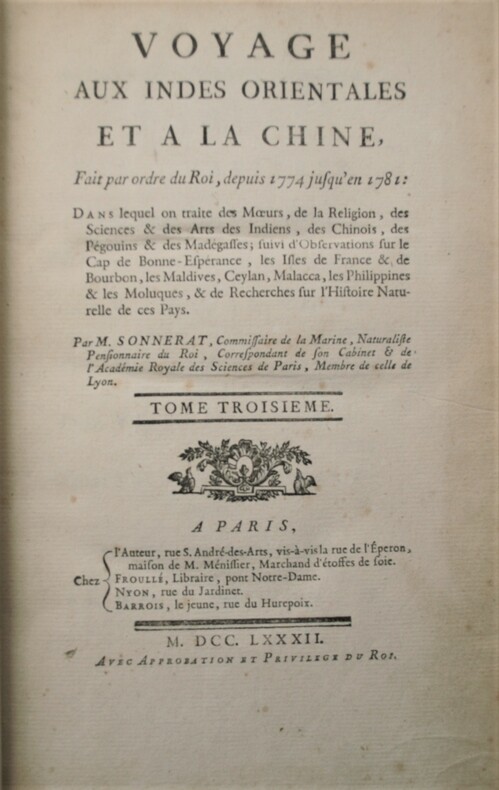
1782PHO-10601782 , A Paris , Chez l'auteur & Froulé & Nyon, In-8 (150x225mm), xxij, 340pp. et (6) 376pp. et (6) 362pp.,illustré de 7 planches dépliantes gravées par Poison d’après l’auteur, relié plein veau marbré époque , dos lisse avec pièces de titre et tomaison vertes, tranches mouchetées rouges, filets sur les plats , dos frottés , coiffes et coins usés , petites rousseurs.
Ambas obras en un volumen, 18 x 12,5 cm., holandesa piel de época con tejuelo y puntas, la primera obra impresa en Madrid, Aribau y Cía., 1876, 321 págs. + 1 hoja. Y la segunda impresan también en Madrid, por Anllo y Rodríguez, 1877, XX + 307 págs. + 4 hojas. (Según Retana La crítica de este libro de F. Cañamaque cayó muy mal en Filipinas hasta el punto que las autoridades prohibieron la entrada y circulación del libro).
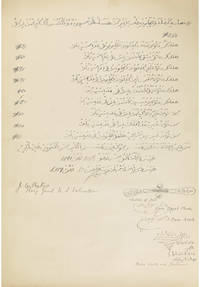
189924064<p><b>PHILIPPINES.</b>Facsimile of original treaty ceding sovereignty of the Archipelago of Jolo to the United States. Jolo Province of Sulu Philippines August 20 1899. Bound in 20th century cloth comprising a large three-page lithographed facsimile of the manuscript treaty written in the Tausug language and signed in print by the Sultan of Jolo and Brig. General John C. Bates 16½ x 12 in. With a small format copy of the document in English the first leaf mimeographed the final leaf lithographed with facsimile signatures. </p><p><b><br /></b></p><p><b>Historical Background</b></p><p>The Sultanate of Sulu began in the early 15th century and once included the northeastern side of Borneo and many islands to the northeast including the island of Jolo. By the late 19th century it had been reduced to a string of islands under Spanish occupation rule. The Treaty of Paris that ended the Spanish-American War transferred control of the Philippines including the Sulu to the United States. The sultanate was home to several ethnic groups including the Moro and Tausug.</p><p>On August 20 1899 the United States signed this treaty with Sultan Hadji Mohammed Jamalul Kiram II and several of his tribal chiefs. The "Bates Treaty" after General John C. Bates recognized U.S. sovereignty over the whole archipelago of Jolo. The U.S. agreed to protect the sultan and his subjects and not to sell any island in the archipelago to any other nation without the sultan's consent. The treaty promised religious freedom especially for the Muslim Moros and free trade with the Philippines. It prohibited piracy and the introduction of war material. The most controversial article recognized slavery but allowed any slave to purchase his or her freedom by paying "the usual market value" to the master. Finally the treaty promised monthly payments to the Sultan and his chiefs totaling 730 Mexican dollars per month approx. $365.</p><p>This treaty theoretically removed the Sultanate of Sulu from participation in the Philippine American War 1899-1902. Some Americans criticized the treaty for granting too much autonomy to the Sultan and for allowing slavery to continue. Over the next five years political conditions deteriorated and there were revolts in several areas even threatening Jolo City where U.S. authorities were stationed.</p><p>In March 1904 the United States abrogated the treaty unilaterally per Secretary of War William Howard Taft's telegram to Gov. General Luke E. Wright 1846-1922: "By order of the President you are hereby directed to notify the sultan of Sulu and the dattos who signed the so-called Bates treaty of August 20 1899 which was a modus vivendi and mere executive agreement that in view of the failure on the part of the sultan … to discharge the duties and fulfill the conditions imposed upon them by said agreement they have forfeited all rights to the annuities therein stipulated to be paid to them and all other considerations… they are subject to the laws enacted therein under the sovereignty of the United States."</p><p>Although the Philippine-American War officially ended in July 1902 with the dissolution of the First Philippine Republic resistance continued for several more years especially in remote areas and the islands occupied by the Moro people. In June 1913 American troops under General John "Black Jack" Pershing 1860-1948 attacked a group of fighters atop Mount Bagsak on the island of Jolo. At the Battle of Bud Bagsak the Americans destroyed the Moro resistance and killed its leader Datu Amil.</p><p>In the text of the treaty there was a critical "translation error." The Treaty in the Tausug version discussed "The support aid and protection of the Jolo Island and Archipelago" but the word "sovereignty" was not used. The English-language version noted that "The sovereignty of the United States over the whole Archipelago of Jolo and its dependencies is declared and acknowledged." In 1946 the English text provided justification for America's decision to incorporate the Sulu Archipelago into the Philippine state.</p><p><b>Sultan Hadji Mohammed Jamalul Kiram II</b> 1868-1936 was a member of the Muslim royal house that ruled the Sulu archipelago from the 15th to the 20th centuries. Proclaimed sultan when his older brother died in 1884 it took ten years to consolidate his authority. In 1912 he took a world tour and visited President William Howard Taft at the White House in Washington D.C. He surrendered his political powers to the United States government in 1915 but retained cultural and religious authority. He died leaving seven daughters but no male heir. His younger brother made an ineffectual claim to the abolished sultanate.</p><p><b>John C. Bates</b> 1842-1919 was born in Missouri the son of Abraham Lincoln's Attorney General Edward Bates and educated at Washington University in St. Louis. During the Civil War John C. Bates served as an aide to General George G. Meade. He served in the Indian Wars of the late nineteenth century and rose to the rank of colonel. In 1898 he received promotion to brigadier general and commanded in the Spanish-American War. He also commanded a division of volunteers in the Philippines during the early stages of the Philippine-American War. He later served as the Chief of Staff of the U.S. Army for several months before his retirement in 1906. He was the last Army Chief of Staff to have served in the American Civil War.</p><p><b>Condition</b></p><p>Dust soiling stains margins strengthened.</p> books
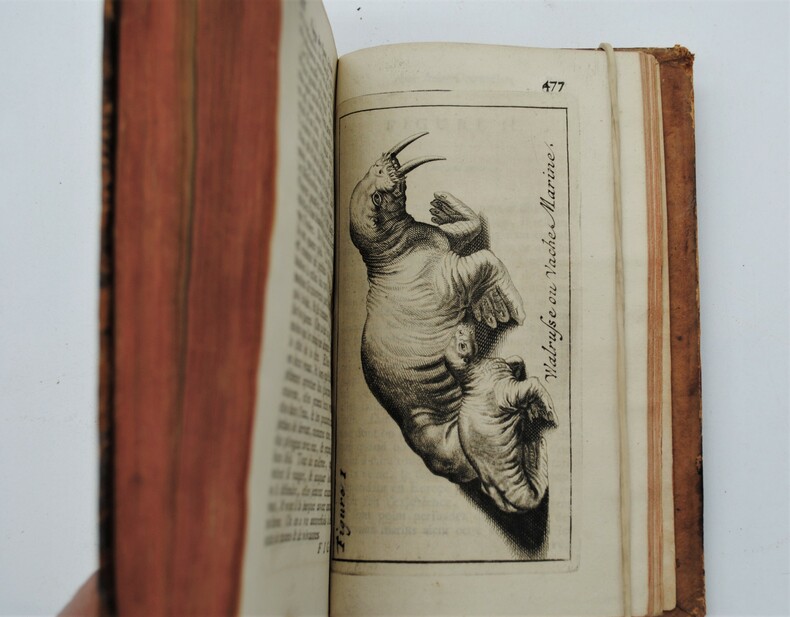
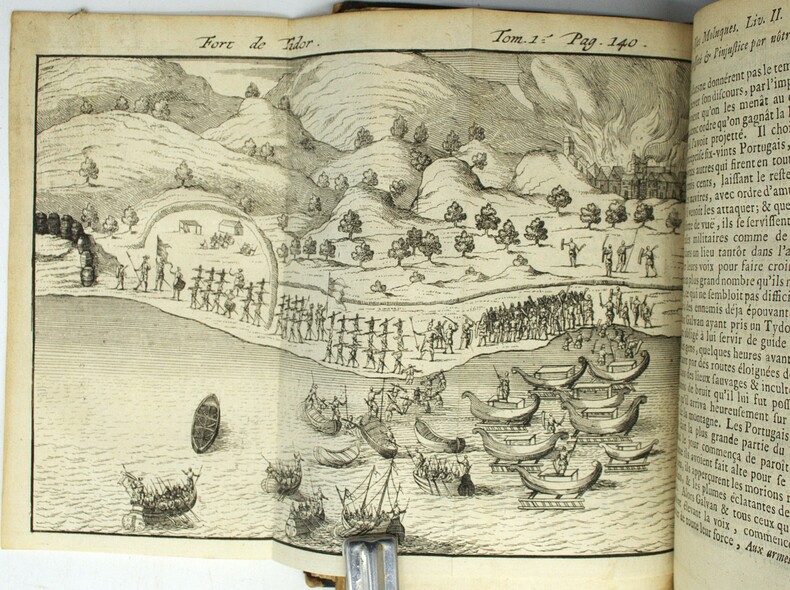
1715PHO-1978Rouen : Jean-Baptiste Machuel le jeune, 1715. 4 volumes in-12 (160 x 97 mm). 3 frontispices gravés sur cuivre et 42 cartes, plans et figures dont de nombreux dépliants. Plein veau époque, dos à nerfs ornés avec tomaison et pièce de titre, tranches rouges. Tome 1, 7ffnch (préface)408pp-12ff (table), illustré d’un frontispice par Scotin le jeune, 3 cartes dont la mappemonde et 6 planches. Tome 2 ,2ff (titre et chapitre) 396pp-5ff (table), contient le traité des vents (p275), illustré d’un frontispice et 9 planches dont la rose des vents et les cartes des 2 hémisphères. Tome 3 ,393pp,5ff (table), illustré d’un frontispice par Scotin le jeune, 2 cartes et 6 planches. Tome 4, 20pp-381pp-8ff (table), illustré de 18 planches dont 3 cartes. L'illustration se compose de 3 titres-frontispices et de 42 planches hors texte, souvent dépliantes : mappemonde, cartes des différentes îles, profils de côtes, vues de ports (Manille, Bahia, Scio) et vues d'îles (Canaries, Cap Vert), monuments, Indiens, scènes de bataille, naufrage, flore (abricotier, cacaotier), oiseaux, poissons, insectes et une curieuse représentation de la « vache de la montagne ou cheval marin ».
1839PHO-1115Paris, Pourrat frères, 1839. 2 volumes in-8 (220x150), demi veau vert contemporain, dos lisse orné avec pièces de titre et auteur , tomaison rouges ,petits frottements aux plats , manque de papier p299 avec atteinte et réparation p301,rousseurs ,mouillures. Édition originale, illustrée d'un portrait de l'auteur et 38 planches gravées sur cuivre et sous serpentes, dont 18 finement coloriées représentant des animaux, des poissons et des oiseaux.
1839PHO-1704Paris, Pourrat frères, 1839. 2 volumes in-8 (220x150), plein veau raciné époque, dos lisse orné avec pièces de titre, auteur et tomaison, frises aux plats et aux coupes, , 2ff.-510pp.-1f. , 2ff.-547pp.-2ff. , illustré d’un frontispice et de 41 planches dont 19 en couleurs d’époque représentant des animaux, des poissons et des oiseaux, un cahier (tome 2) dérelié, 1 planche volante, petits frottements, 1 coin usé, quelques rousseurs .
Barcelona - Madrid, Instituto Padre Enrique Florez - Consejo Superior de Investigaciones Científicas, 1957 - 1989. Cincuenta y tres volúmenes en 4to., con un promedio de 350 pp. por volúmen. Cubiertas originales.
1706PHO-1901Amsterdam, Jacques Desbordes, 1706. 3 volumes in-12° (sur 3), 10ff-405pp-3pp (catalogue); 2ff-402pp-14ff( table) ; 4ff.-388pp.-10ff., illustré de 3 frontispices, 1 portrait et 30 (32) cartes et planches dépliantes dont une belle carte (25x36cm), manque la page de titre tome 1. Relié plein veau époque, dos à nerfs ornés avec pièce de titre et tomaison, tranches rouges, charnières frottées, début de fente (tome 1), coiffes usées, petit manque de cuir au dos, mouillure au tome 3, traces de restauration, manque la grande carte mais la carte de Ceylan est bien présente.
17810042251781 Genève, Pellet, 1781. Dix volumes in-8 (130 X 207 mm) basane fauve marbrée, dos lisse orné à la grotesque de motifs dorés, pièces de titre et de tomaison grenat et vert, coupes ornées d'une guirlande dorée, coiffes filetées, tranches jaspées (reliure de l'époque). Tome I : portrait, XVI pages de faux-titre, titre, avertissement et table, 348 pages, (1) f. d'errata, (2) tableaux dépliants ; Tome II : frontispice, XII pages de faux-titre, titre et table, 378 pages, (1) f. d'errata, (4) tableaux dépliants ; Tome III : frontispice, VII pages de faux-titre, titre et table, 372 pages, (1) f. d'errata ; Tome IV : frontispice, XII pages de faux-titre, titre et table, 308 pages, (1) f. d'errata, (3) tableaux dépliants ; Tome V : frontispice, VII pages de faux-titre, titre et table, 259 pages, (1) f. d'errata, (1) tableau dépliant ; Tome VI : frontispice, XII pages de faux-titre, titre et table, 308 pages, (1) f. d'errata ; Tome VII : frontispice, XVI pages de faux-titre, titre et table, 359 pages, (1) page d'errata, (5) tableaux dépliants ; Tome VIII : frontispice, XII pages de faux-titre, titre et table, 352 pages ; Tome IX : frontispice, VIII pages de faux-titre, titre et table, 262 pages, (1) f. blanc, (1) f. d'errata, (9) tableaux dépliants ; Tome X : frontispice, V pages de faux-titre, titre et table, 348 pages, (1) f. d'errata. Quelques petites restaurations à la reliure.
1810PHO-1157Paris: Arthus Bertrand, 1810. — Atlas in-4, (295x200) (2 ff.), 18 cartes et planches , la plupart dépliantes ,relié demi veau ,dos lisse avec fers de navire , manque au dos .
19622383All volumes near fine in blue cloth. First editions thus. Consisting of the following: Volume 1: GIRONIERE PAUL DE LA. Twenty Years in the Philippines. Frontispiece is "Una Mestiza de Manila" with tissue guard intact. 1962. Volume 2: CARERI GIOVANNI FRANCESCO GEMELLI. A Voyage to the Philippines. Frontispiece is a water color by Alfredo Carmelo b.1896 depicting Manila galleons moored at the mouth of the Pasig River. 1963. Volume 3: BOWRING SIR JOHN. A Visit To The Philippine Islands. Frontispiece is a black and white portrait of Bowring. 1963. Volume 4: SALEEBY NAJEEB M. The History of Sulu. Frontispiece is black and white photo of Saleeby. 1963. The Filipiniana Book Guild publications expanded to 24 volumes in the first series. These first four volumes are extremely rare. The Princeton library has all volumes except these four. Only digital copies are located in the National Archives of the Philippines. Manila, Philippines, Filipiniana Book Guild, 1962-1963. hardcover
1940List2741Philippines and San Francisco 1940. pproximately 205 photographs: twenty 5 x 7†and smaller eighteen 3.75 x 5.5†and smaller and 167 2.5 x 3.5†and smaller. Most are glued into a scrapbook with some loose. Some photographs bent or with tears; some marked with pencil. Generally very good. The US’s military presence in the Philippines is long-standing beginning in 1898 with the Spanish-American War which ended that year with a treaty that sold the islands to the US. The Philippines was then an American colony until the country’s independence was recognized by the US in 1946. In 1947 the two countries signed the Military Bases Agreement allowing the US to keep military bases in the Philippines for a period of 99 years; this was finally overturned in 1991 and the bases were closed by 1992. However agreements signed in 1999 and 2014 allowed US troops to move freely through the Philippines and allowed the US government to build and operate military facilities.<br /> <br /> Offered here is a large archive of photographs likely belonging to—and likely with many taken by—an American soldier stationed in the Philippines. These were probably mainly taken in the 1930s as a photograph appears to show the Golden Gate Bridge under construction. Some are possibly from World War II as one photograph shows men standing on a ship under a large banner reading “CHINA BURMA INDIAâ€. However they are mostly unlikely to have been taken during the war as there is also a photograph of a pristine-looking Manila Central Post Office – the building was severely damaged during the fighting against the Japanese in the Battle of Manila and was rebuilt in 1946.<br /> <br /> In the archive are a mix of military photographs—generally of planes ships and life aboard them—and shots of Philippine life and scenery. One interesting scrapbook page places a photograph of a massive American steamer next to a shot of a wooden riverboat. Aboard the riverboat young Filipino boys pose and smile for the camera. The military shots emphasize the US’s outsized power: a man poses next to and is dwarfed by a seaplane; three men stand behind a chest-high pile of artillery; planes fly in formation straight overhead; men and women eat a lunch spread under the hulking wings of a plane parked on a lawn.<br /> <br /> The shots of Filipino life show the modernization of a largely agrarian society. On the one hand there are rice paddies huts with straw roofs plows and carts pulled by oxen. Women weave on large outdoor looms young people pose in traditional dress a smiling man stands wearing a loincloth and holding a spear and a circle of men and women dance around with drums. On the other hand a long line of cars is parked outside the Sunday market in Baguio men pose outside the Lanao Golf Club a train speeds by the camera and the neoclassical Manila Central Post Office watches over the wooden rowboats in the Pasig River. One set of photos shows penitents or magdarame performing the Good Friday practice of self-flagellation. As an audience looks on men in hoods many with crowns woven from plants whip themselves or are whipped. Though the Catholic Church in the Philippines discourages it these mortifications continue to be practiced to this day.<br /> <br /> Of interest to scholars of the Philippines’ American colonial period particularly for its documentation of ordinary Filipino life during this transitional time. unknown