Creighton, R.MareMagnum

4 751 résultats
Large hand-coloured folding engraved map (ca. 103 x 82 cm). Scale ca. 1:1,000,000. In contemporary red morocco slipcase. Rare 1833 edition of a historical map of Palestine, with a part of Egypt and Arabia. This map is of particular interest for showing the principal roads and travel routes through the desert, with the old Roman road and the route of the Hajj, as well as the route taken by Eyles Irwin in 1777. Occasional browning; slipcase rubbed and bumped, but well preserved on the whole. Cf. Röhricht (Palästina) 633 (London, 1831). Laor, Maps of the Holy Land (1839 edition). Not in Al Ankary or Al-Qasimi.
Hand-coloured engraved map (61 x 46 cm). Detailed map of the Middle East, published by Laurie & Whittle in London. Includes interesting annotations, including a note about the Barren Desert in the interior of the peninsula. Al-Qasimi 211. Not in Tibbetts. Cf. Al Ankary 382.
Engraved map, outline colour (725 x 542 mm). Detailed map of the Middle East, published by Laurie & Whittle in London. Includes interesting annotations, including a note about the Barren Desert in the interior of the peninsula. - Minor soling and spotting near centerfold. Al-Qasimi 211. Not in Tibbetts. Cf. Al Ankary 382.
Hand-coloured engraved map (515 x 470 mm). A highly detailed late 18th Century map of Persia, from an early edition of Cary's atlas. Offers extraordinary detail regarding cities, trade routes and physical geography. In some cases Cary offers annotations on important battle sites and on the ruins of ancient Mesopotamian cities. - A near fine example in beautiful wash color. Al-Qasimi 217.
Engraved map, outline colour (725 x 542 mm). Decorative large format 18th Century map of the Persian Empire, by one of England's leading map publishing firms of the late 18th Century. - Minor soiling and offsetting. Al-Qasimi 212. Not in Tibbetts, Al Ankary.
8vo., First Edition, with title-vignette and several engraved decorations in the text, title and for-edges lightly spotted; green cloth, gilt back, green top, a near fine copy in unclipped dustwrapper.
192821083New York And London: Harper & Brothers. 1928. First US Edition. Hardcover. Very Good. Slight browning to boards and spine label. Light occasional foxing. ; Frontispiece and 7 illustrations from Persian miniatures. "These entertaining sketches are full of wit and humour with an undercurrent of tragedy that rises now and again to the surface . " The Geographical Journal Vol. 72 No. 3 Sep. 1928 p. 284 ; 8vo 8" - 9" tall; 166 pages . Harper & Brothers hardcover
2004100147583Penguin Classics 2004 528 pages 13 1x19 6x2 8cm. 2004. Broché. 528 pages.
8vo. 2 vols. XXXI, (3), 273 pp., final blank page; IX, (3), 283 pp., 1 blank page, 24 pp. of adverts. With 2 woodcut frontispieces (included in pagination), 13 woodcut plates, and several woodcut illustrations in the text, as well as 1 folded map of Northern Arabia. Contemporary full cloth, decorated in black and gold on covers and spine. First edition. A true classic of travel literature, describing the 1879 expedition across the Nejd from Beirut, south into the Great Nefud, north to Baghdad and east to the Arabian Gulf, undertaken by Anne Blunt and her husband Wilfrid Scawen Blunt, a prominent couple of British explorers. Conveying "an ideal of an Arab aristocracy of the desert" (Nash), the travelogue describes the Blunts' interaction with sheikhs and emirs, but also their fascination with Arabian horses, including an account of the stables at Hail. Lady Blunt was, along with her husband, the founder of the Crabbet Arabian Stud, and the first European woman to journey to Central Arabia. Furthermore, the Blunts were the first Europeans to enter the Jebel Shammar in the Nejd "openly and at leisure", free to map and record geographical and physical features. - Apparently received as a gift from the author, with pencil inscription by the recipient on the flyleaf of volume I: "Lady Anne Blunt to Stephen Pearse" (?), additional pencil ownership of Flawn E. Thomas (?); a previous ownership erased. A few annotations and reading notes, also marking the date of beginning and ending each volume, between 6 and 13 October 1928. Later pencil acquisition note referencing Heffers bookshop in Cambridge (for 1/5/-), dated 11 January 1940. - Bindings a bit stained and slighty rubbed. Paper slightly foxed throughout; small tear to inner margin of the map (not touching image), small tear in the lower margin of the map repaired; tear to the contents page of vol. II repaired. Overall a good copy. Macro 555. Nash, Travellers to the Middle East 73. Howgego III, B49. Boyd/P. 16. NYPL Arabia Coll. 164. Henze I, 277.
17 vols. Royal 8vo (24 x 16 cm). With numerous illustrations (including the series by Albert Letchford), repeated on laid paper; the 17 frontispieces repeated in colour. Contemporary three quarter olive green morocco, gold-tooled spine, tops gilt. A handsome edition of Burton's "Arabian Nights", finely illustrated and printed in a limited edition of 100 hand-numbered copies. Bold to a fault, Richard Burton travelled to Mecca, explored the African Great Lakes, shocked his readers with his candid travel accounts, and gained fame and riches with his translation of the Arabian Nights. The first edition was published in 1885-88 and re-issued by the Burton Club shortly thereafter. The present edition is a reprint of the first Burton Club edition, illustrated with, among others, Albert Letchford's famous plates. - Spines slightly faded. Fine set, uncut and partly unopened. Cf. Howgego III, B98 (p. 146, first ed. 1885-88).
Royal 8vo (24 x 16 cm). 14 (instead of 17) vols. With frontispieces and numerous illustrations (vol. 8 lacking one image). Contemporary richly gilt full cloth. Top edges gilt. - (2) The same. The Book of the Thousand Nights and a Night. A Plain and Literal Translation of the Arabian Nights Entertainments. Vol. IV. (Including: Supplemental nights, vol. VI). (Colophons: USA), ibid., [ca. 1940]. Contemporary richly gilt and silvered full cloth. Top edges red. The first Burton Club edition of Richard Burton's celebrated translation of Alf Laylah wa-Laylah, commonly known in English as the Arabian Nights. These Arabic tales, cherished in Europe since the early 18th century, are often erotic in content, and in Burton's unexpurgated translation they outraged Victorian England. Burton included numerous footnotes and a scholarly apparatus, offering a vivid picture of Arabian life, which set his translation apart from earlier English renderings. Bold to a fault, Richard Burton travelled to Mecca, explored the African Great Lakes, shocked his readers with his candid travel accounts, and gained fame and riches with his translation of the Arabian Nights. The first edition was published in 1885-88 and re-issued by the Burton Club shortly thereafter. - The present set lacks volume 4 of the "Nights", as well as volumes 4 and 7 of the "Supplemental Nights". The volumes numbered "IV" and "V" of the "Supplemental Nights" are in fact volumes 5 and 6. In lieu of the missing tomes the collection includes volume 4 of the "Arabian Nights" and volume 6 of the "Supplemental Nights" from a later 16-volume Burton Club edition, which Ross dates ca. 1940. This later date is supported by the fact that this edition is not included in Penzer's thorough bibliography published in 1923. - Spines slightly faded; extremities lightly worn. A fine set, uncut and partly unopened. Penzer 131. (2) Scheherazade's Web: The 1001 Nights & Comparative Literature, J. Ross 10 & 11.
New English Paperback. Demy 8vo. (21 x 14 cm). In English. 151 p. A prolonged residency: Syrian refugees' crises of integration into Turkey. The conflict in Syria between the Asad regime and various opposition groups has, since its advent in 2011, turned into a full-scale civil war. Nearly half the population has been either internally or externally displaced, most of the latter to neighboring countries. Turkey, which is hosting the lion's share of Syrian refugees without foreign aid, can serve as an example to the world. In this effort, Turkey's ciizens are to be applauded for their hospitality towards the war victims. However, as time goes by most of the refugees show no sign of returning, thus creating problems that can only be resolved by the development of a long-term policy. The aim of this book is to investigate the level of understanding their permanence within Turkish society and to explore possible solutions for their permanent integration, For this purpose the Federal Republic of Germany was seen as an immigrant target country in which recent accelerated integration was taken as the model for the study. The applicability of its integration policy was examined for Turkey with the aim of presenting the National Integration Plan of the Federal Republic of Germany, the major dominating Germany's integration policy, as a possible model for future Turkish policy during the integration process.
8vo., First Edition, with plates and endpaper maps; black cloth, backstrip lettered in silver, a near fine copy in unclipped dustwrapper.
Small folio (220 x 276 mm). 99, (1) pp. Illustrated throughout. Original blue cloth with gilt title "GB AVP 41" stamped to upper cover. Commemorative publication "written, compiled and produced by [the] officers and men" of the U.S.S. Greenwich Bay after the ship's first tour of duty to the Persian (Arabian) Gulf as flagship for the Commander of the U.S. Navy Middle East Force. In the foreword, Commander K. G. Hensel acknowledges the Gulf as "one of the oldest yet least known parts of the world", a historic region that has "served for thousands of years as pathway of commerce by caravan and by dhow. Today, these areas are strategically among the most important that exist anywhere on the surface of the globe" (p. 3). - The small seaplane tender "Greenwich Bay" departed Norfolk on 30 April 1949 for a six-month mission, four months of which were spent in the Gulf area based at Bahrein, calling at Kuwait, Ras al Misha'ab, Ras Tanura, Sharjah, and Muscat before returning to Norfolk on 1 November. Every year thereafter the ship would repeat this duty, sailing through the Mediterranean to operate as flagship in the Red Sea, Gulf, and Indian Ocean for 4 to 6 months. In total, the "Greenwich Bay" made 15 Mediterranean deployments. This fully illustrated record contains rare images of a fire at Aramco's Ras Tanura oilfield that scorched the ship's hull, scenes from Manama, Bahrein, the "distinguished guests" who visited aboard (dignitaries of the Gulf countries visited, including a portrait of HRH Faisal al Saud on board the "Greenwich Bay"), etc. In addition to operating with foreign naval units in the Mediterranean, Red Sea, Gulf, and Indian Ocean, the "Greenwich Bay" performed extensive work in the People-to-People programme, particularly in carrying drugs and other medical supplies to Arab and African nations, and operated as an important tool of diplomacy in the region. - Light brownstaining to endpapers, otherwise a fine copy of a rare, privately printed work whose press-run likely did not exceed the number of the crew: 20 officers and 206 men. Inserted are a 3-page assessment form "Military requirements for all men in the Navy" and a Bombay port receipt from the ship's call at Bombay in July 1949.
4to. (6), 112 pp. (but: 108 pp.; pp. 61-64 skipped in pagination). With large engraved map of Vienna and its environs; wants an additional plan. Contemporary calf; spine repaired; leading edges gilt. All edges sprinkled in red. First English translation. The Imperial Councillor of War J. P. a Vaelckeren was sick in Vienna in 1683 when the Turks enclosed the capital. His report of the siege and liberation of the city quickly spread throughout Europe in numerous editions and translations. - Wants the map of Vienna; the corresponding "explanation of figures" is present in the preliminaries. Early 19th c. ownership "H. E. Somerville" to pastedown. A good copy of this rare English imprint. Sturminger 2953. Apponyi II, 1132. ESTC R28429. Gugitz I, 485. Cf. Kábdebo, p. 43f. Cf. Mayer 576ff. Cf. Jöcher IV, 1381.
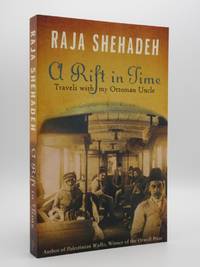
20101204P043London: Profile Books 2010. 1st Edition . Paperback. Printed pages: 237. Very Good Plus. 5.25 x 8.25 inches 13.5 x 21.5 cm. Signed by Author. A few small marks to page edges otherwise excellent. Signed by the author without dedication to title page. A rare signed copy. Overall condition is Very Good Plus. International postage will be less than the stated rate. Actual costs are Europe £11.00; USA £15.00; Oceania £16.00; Rest of World £18.00. A postage refund will be made after the order has been placed. Size: 5.25 x 8.25 inches 13.5 x 21.5 cm. Profile Books paperback
556624Boston, Hairenik Publishing, 1950. In-8, rel. d'éditeur toile noire, VIII-154 pp., texte anglais, carte dépliante en frontispice.
Folio (340 x 490 mm). 2 ff, 24 coloured aquatints (1 folding). Contemp. half calf with giltstamped red morocco label to marbled front cover, spine rebacked and gilt. "The plates in this selection are not re-engraved, but plates available from the stock originally printed for Bowyer, with new title page" (Atabey). Includes views of Constantinople, the Voivode palace of Bucharest, Tripoli and Tortosa, a mosque in Laodicea, as well as antiquities from the Eolian Islands and Ephesus. - The German-Italian artist Luigi Mayer (1755-1803) was one of the foremost late 18th-century European painters of the Ottoman Empire. He was a close friend of Sir Robert Ainslie, British ambassador to Turkey between 1776 and 1792, and the bulk of his paintings and drawings during this period were commissioned by him. Mayer travelled extensively throughout the Ottoman Empire and became well known for his sketches and paintings of panoramic landscapes of ancient sites from the Balkans to Turkey and Egypt, particularly ancient monuments and the Nile. Many of the works were amassed in Ainslie's collection, which was later presented to the British Museum, providing a valuable insight into the Middle East of that period. - Occasional insignificant brownstaining. Formerly in the Ottoman collection of the Swiss industrialist Herry W. Schaefer. Atabey 790. Chatzipanagioti-S. 631. Hage Chahine 56. Cf. Blackmer 1100. Abbey 369.
196882877Voix Ouvrière | Paris s. d. [circa 1968] | 15 x 20 cm | broché
4to. XVI, 400 pp. With 3 folding maps and 3 plates. Contemporary full calf, spine elaborately gilt, leading edges gilt, red morocco label. Second edition (the earliest mentioned). Irwin relates the series of misadventures which occurred on his journey back from India after his dismissal from the East India Company. Following the near wreck of his ship he was taken prisoner by Arabs who took him to the Nile, whence he travelled to Cairo on his release. - The East India Company servant Eyles Irwin, born in Calcutta in 1751, was appointed to survey the Black Town in 1771 and "was made superintendent of the lands belonging to Madras [...] In 1776 he became caught up in the political storm that overtook the governor of Madras, George Pigot, who was placed in confinement by members of his own council. Irwin supported Pigot, and in August he was suspended from the company's service. Early in 1777 he left India in order to seek redress in England. Irwin later published an account of his journey home, which was entitled 'A series of adventures [...]'. In this he displayed his classical education and described his experiences and observations during the journey, which lasted eleven months [...] Irwin returned to India in 1780 as a senior merchant and his route was again overland, but this time via Aleppo, Baghdad, and the Persian Gulf" (ODNB). The author recounts his imprisonment in Yanbu, Arabia, and further voyage to Jeddah, as well as his adventures in Egypt, his journeys through the Peloponnesus and Balkans as well as Persia. He includes an "Ode to the Persian Gulf", which extols the beauties of Bahrain. In 1802, Irwin was to produce a musical play, "The Bedouins, or Arabs of the Desert: a Comic Opera in Three Acts" (1802), which played in Dublin for three nights. - The plates include views of the town of Mocha (al-Mukhah) on the shore of the Red Sea in Yemen, including its early mosques, and of the Straits of Bab al Mandab ("Babelmandel"). Also shown is a detailed view and chart of Yanbu, the port giving access to al Medina. - Macclesfield bookplates to front pastedown and free endpaper. Plates somewhat toned and offset, otherwise an excellent copy, sumptuously bound. Macro 1293. Ibrahim-Hilmy I, 325. Gay 66. Brunet III, 459. Blackmer 865. Cf. Weber II, 576 (3rd ed.).
Large folio (456 x 592 mm). Modern half morocco over marbled covers, spine gilt around raised bands with gilt spine title. 9 tinted lithographs on 8 plates (2 on 1 leaf) after Robert Clive. 3 leaves (1 repeat) of letterpress printed on rectos only. First edition of this rare lithographic plate book of Mesopotamian antiquities and views. The first instalment of a total of three, containing nine lithographs: 1. Sculptures at Nimroud-Lions; 2. Moosul; 3. Hît; 4. Distant view of Mount Ararat; 5. Arab encampment near the Birs Nimroud (on one sheet); 6. Sheikh Adi; 7. Baghdad; 8. Roman ruin on the way to Palmyra; 9. Sculptures in the Mount at Nimroud. The Victoria and Albert Museum ascribes this work to the artist Robert Charles Clive (1827-1902). - Original torn and somewhat defective front wrapper laid down on heavy paper and bound into a modern half calf binding; plates and binding fine. The two-page list of plates with descriptions is also laid on heavy paper. OCLC 785146909. Not recorded in Atabey, Blackmer, Tooley, Röhricht or Tobler.
Folio (322 x 212 mm). 50 watercolour miniatures on paper, ca. 9 x 14 cm, pasted on coloured cardboard within multiple gilt and pen-ruled frames, bound as a fan-fold book with cloth hinges. Near-contemporary black leather covers, stored in blind-stamped black slipcase with top flap. An exceptional series of 50 meticulously executed miniatures, compiled and painted by an anonymous artist. 41 of the delicate watercolours represent famous calligraphers, 5 (1 in grisaille) presumably represent sufis, and one more (not coloured) shows a seated prince, while 3 miniatures (2 in grisaille) depict flowers. - The main series of calligraphers begins with Yaqut al-Musta'simi, who lived in Baghdad under the Abbasid dynasty in the 13th century, and reaches so far as to include artists from the first half of the 19th century (the most recent date of death being that of Aqa Fath-'Ali Sirazi, 1852/53). Their names are captioned under the image, all in the same hand in nasta'liq script (with a single exception in sikasta). Most calligraphers are shown kneeling, with one knee raised on which they rest their paper - the typical posture of a scribe. One is shown writing at a desk, another seated on a low stool; yet another is busy sharpening his pen. The poet Wisal Sirazi is seen writing on his knee, but has a small table with an inkwell and paper in front of him. Nearly all are depicted holding their reed pen in hand, with various writing implements next to or in front of them, such as inkwells, pen cases, extra pens and paper, pen-knife, and sometimes a hookah (indeed, two scribes are shown smoking). Others have in front of them a candle and teapot, flowers or a bowl of fruit. They are shown wearing different kinds of turbans or a black astrakhan "kulah", the Qajar headdress. All the miniatures bear numbers between 1 and 50 on the reverse of the mounting boards, though they are not bound in order. - Provenance: apparently from the collection of Paul Manteau, a French (or Belgian?) official in Iran, with a press-copied salary receipt loosely inserted: "Je reconnais avoir reçu de Son Altesse Impériale Djellal-e-Daulet la somme de Soixante Tomans représentant le montant de mes appointements du mois de Châval année 1310. Téhéran le 11 avril 1893. Paul Manteau". As Shawwal 1310 began on 18 April 1893 AD, Manteau would have received his salary in advance, proving that the capacity in which he served could not have been altogether minor. Sultan Husayn Mirza Jalal al-Dawlih (b. 1868/69), his employer, was the eldest son of prince Mas'ud Mirza Zill al-Sultan (1850-1918) and grandson of the Qajar ruler Nasir al-Din Shah (r. 1848-96). In the later 19th century, numerous French and particularly Belgian officials worked in Iran: especially from 1898 onwards, Belgium posted to Persia a large number of officials whose task was to organize or reorganize various administrative departments. However, Manteau does not appear in Annette Destrée's standard account of "Les fonctionnaires belges au service de la Perse, 1898-1915" (Téhéran/Liège 1976): he clearly arrived before the great Belgian influx and may have left the country before 1898. - Some of the cloth concertina hinges professionally repaired, but finely preserved altogether.
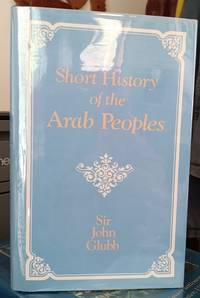
198862000<p>NY: Dorset Press. Very Good; Small newspaper clipping taped to rear endpaper. 1988. Second Edition. Hardcover. 0880292261 . Notes black and white illustrations and maps bibliography and index. Sir John Glubb presents afresh the main substance of his magnificent four volume history with an extension to our own time and sets the history of the Arab peoples in perspective for Western civilization. from the front jacket flap ; 8vo 8" - 9" tall; 318 pages .</p> Dorset Press hardcover
Small folio (219 x 278 mm). 28 pp. With numerous black-and-white photographic prints. Original printed wrappers. Stapled. Illustrated history of the Anglo-Iranian Oil Company. This informative magazine includes high-quality images of the construction of pipelines, views of the Abadan refinery and other oil compounds, the Braim residential area, and an aerial view of Lali county - an area "typical of the difficult terrain in which the Company's main oilfields are situated". - Punched holes. Margins slightly worn.
1959100339New York, Frederick A. Praeger, 1959, in-8°, x-336 pp, 14 cartes, index, reliure pleine toile vermillon de l'éditeur, sans la jaquette, bon état. Texte en anglais