1 365 résultats
38033Payot, 1958. Format 12x19 cm, broche, 270 pages. Bon etat.
New English Paperback. Pbo. Roy. 8vo. (24 x 17 cm). In English. 212 p. Rethinking the late Ottoman Empire. A comparative social and political history of Albania and Yemen, 1878-1918.
Mm 120x180 Volume nella sua brossura originale con titolo su cornice al piatto che mantiene una piccola etichetta di biblioteca privata dismessa, 312 pagine. Copia in ottime condizioni; spedizione in 24 ore dalla conferma dell'ordine.
14478BERREBY J.J. Le golfe persique. Mer de légende - Réservoir de Pétrole: Iran Irak Arabie Saoudite Koweit Bahrein Qatar Côte des Pirates Mascate et Oman. Paris Payot 1959; First Edition. Bibliotheque Historique. 8 vo. 8 vo 228 pp; French text; Illustrated cover with paperback binding including 4 maps 11 b/w photographs Preface de Jacques Vernant. Some yellowing to the spine and covers with remnants of a price sticker on back cover. In good condition. unknown books
1983184664King Saud University Libraries 1983-01-01. Paperback. Good. 0x0x0. 3 volumes complete. Quarto wraps as issued. King Saud University Libraries letter of presentation laid in. Some creasing to spines wear at head. A good sound set of a scarce set. Ships from Dinkytown in Minneapolis Minnesota. Not available for priority/expedited shipping. Due to the size/weight of this set extra charges to apply for international shipping. King Saud University Libraries paperback
24 pages, plus photographic plates and a fold-out sketch map. Original condition with blue wrappers, titles to front, and containing all the ads. This is a complete issue, seldom found in such good and original condition. This is an exceptional report on the Hadhramaut and the author's residency there, who also describes his stay in the Arabian Nights' palace of the Ba Surra brothers. W.H.Ingrams was the first British Resident in Mukalla, he and his wife being referred to as the rain-makers and peace-makers of the Hadhramaut. Residing in the little known region of the Hadhramaut the author takes occasional excursions into unvisited districts, into this arid and mysterious land. He focuses on a new found peace between the Badawin and tribesmen of this mysterious territory and explains a greater contact between different parts of the country, resulting in extended communications, such as the completion of the Al Kaf road. Illustrations include: Armoured car near Al Ghurfa,Trenches at Al Ghurfa,'Azan,capital of the sultanate of Balhaf, The 'aquaba for motors at Tarim, The Kathiri armed Constabulary, A peace meeting under the sanctuary tree at Reidat al Ma'ara, Surrender at Seiyun of the Bin Yamani section of Risib.
28 pages. Plus photographic plates and a large fold-out colour map measuring approximately 10 x 15 inches (26 x 38cm). Original condition with blue wrappers, titles to front, and containing all the ads. This is a complete issue, seldom found in such good and original condition. This is a most insightful first-hand account of the extraordinarily complex social and governmental organization in the Hadhramaut in its time of transition from early social organization to a slightly more developed government. The author discusses the seven distinct classes of society and the order of their importance, provides a thorough description of his journey through wadis and villages, and remarks on tribal raids, caravans, ruins, tombs, and much more. This is a comprehensive account, pre-dating the author's book, entitled "Arabia and the Isles," first published in 1942. The accompanied colour map shows Ingrams' traverse from Mukalla to Seihut of the Aden Protectorate. Ingrams was described by James Lunt as 'a strong man, with a deep understanding of the Arab psychology,' he became known as Al Muslahi, 'the settler [of disputes]'. Ingrams wore quasi-Arab dress—which he claimed was more comfortable and practical and was considered a compliment by the local people—and insisted his British staff did likewise (ODNB)
With vivid descriptions and stunning photographic plates depicting ancient ruins, nomadic Bedouins, famine and relief work,the authors provide first-hand insight into social conditions in the Hadhramaut, including the Wahidi country, Hadhrami communities, Al 'Abr, Shiban and Al Ghuraf, where famine and tribal war prevailed and consumed lives at alraming rates, where relief was imperative and drought was yet another added burden. A fold out colour map illustrates villages and the author's routes in the environs of the "Incense Road".Harold Ingram was the first British Resident Adviser in the Hadhramaut in South Arabia. Doreen Ingrams travelled on donkey and camel to far distant parts of the country, helping him to bring about the peace among the warring tribes which became known throughout Arabia as 'Ingram's Peace'. A fantastic Arabia expedition report at a time when war and savage famine pervaded the hostile country - an exceptional Primary Resource!!! 37 pages; including illustrations. Plus a Large Fold-out Color Map. Original condition with blue wrappers, titles to front, and containing all the ads. This is a complete issue, seldom found in such good and original condition.
8vo. 14 pages including a full page sketch map from the travels of Hermann von Wissman, plus photographic plates for illustration. Original condition with blue wrappers, titles to front, and containing all the ads. This is a complete issue, seldom found in such good and original condition. Escorted by an officer of the Mukalla Irregular Army, Ingrams left Mukalla on 25 March 1939 to visit the Hajr Province, driving up the Wadi [valley] Kherba where the 'Akabira tribes reside, through the settlement of Lijmat replete with date groves, to Al Qerba, and into uncharted little inhabited valleys which revealed the presence of early civilizations. In the environs of a place she calls 'Qarif Ba Dhala' she comes across some stone inscriptions resembling those of ancient Egypt, ad sent some to Mukalla for examination. Also sighted was stating "... many heaps of stones set in circles with large upright ones in the midst of them..." possibly old Islamic gravesites. Finally arriving at the fields of Wadi Yuwan, which was dispersed with eight separate villages and grand date palms, the traveller and peace advocate was hospitably received, presenting an opportunity to describe and assess local custom. Further inscriptions were found at Wadi Mardaha, about three and half hours from Al Jinein, again likening Egyptian hieroglyphics. Ingrams notes differences in the valleys of Kanina and Hajr, from other regions of the Hadhramaut Valley, the dwellings for example being crafted of stone held together with a mud and straw plaster, and being five or six stories high with narrow windows, the Subian women being unveiled, and the men appearing rather fit by comparison. Cave dwelling are also seen, being an encampment of Ba Dubian Badawin, or Bedouin. She also learns of lingering contempt between the Al Zagheib and Ba Rasheid [Al Rasheed], and acts of retaliation. The custom of tattooing is less appreciated by the traveller, but none the less recorded as one of the earliest descriptions, following that of Freya Stark in 1936. Ingrams states... "The percentage of good looks is high in Yuwan, where the women have shapely, tapering faces, broad foreheads, wide full lips and straight noses, but they sometimes mar their appearance by tattooing, and the young married women consider it attractive to paint the upper half of their faces yellow and the lower half green." Harold Ingram was the first British Resident Adviser in the Hadhramaut in South Arabia. Mrs. [Doreen] Ingrams travelled on donkey and camel to far distant parts of the country, helping him to bring about the peace among the warring tribes which became known throughout Arabia as 'Ingram's Peace'.
In 16°, pp. 90. Brossura originale. Dorso rifatto con carta in maniera approssimativa.Rara docuemntazione su un tema così attuale.
2000139647Institut de Monde Arabe 2000 In-8 broché 21 cm sur 21 . 227 pages. État correct d’occasion.
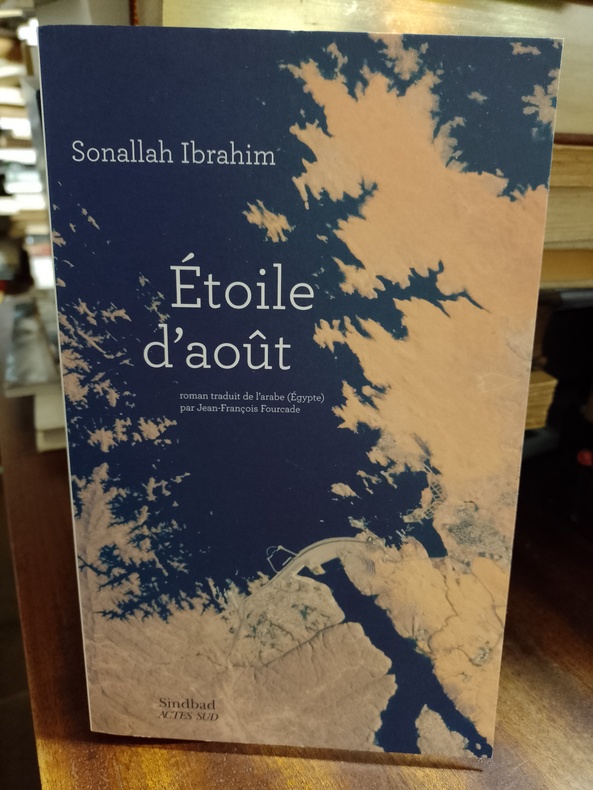
2022LITTEGYPT578990123Actes Sud, "Sindbad, "La bibliothèque arabe - les lectures contemporaines"", 2022, 14 x 22,5, 310 pages sous couverture souple illustrée. Roman traduit de l'arabe par Jean-François Fourcade.
19594968EBWiesbaden, Franz Steiner Verlag, 1959. 4°. 25,5 cm. Nicht durchgehend paginiert. Original-Broschur. (= Bibliotheca islamica, Band 22).
1970250821Continental Publications January 1970. Hardcover . Used Good/yes Jacket with Mylar. Continental Publications hardcover
3 volumes in-16, 476 - 468 - 461 pages, brochés. Très bel ensemble, très frais. [P-2]
arabe 2 tomes en 2 volumes in-8 ; reliure simili-cuir de l'éditeur.
In 8°, pp. 269. Bross. edit.
New New Turkish Original bdg. Dust wrapper. 4to. (33 x 25 cm). In Turkish. 461 p., color ills. Kutsal mekanlarda kutsanmis örtüler. Topkapi Sarayi'ndan örneklerle Kâbe örtüleri.
New New English Original bdg. Dust wrapper. Folio. (33 x 25 cm). In English. 461 p., color ills. Sacred covers of Islam's holy shrines with samples from Topkapi Palace. Contents: 1- The Hajj, 2- Royal families and the pilgrimage, 3- Covers sent to Mecca and Medina, 4- Surra processions and ceremonies, 5- Technical features, Catalogue. 3 kg. This is the expanded second edition of the 1996 title in Arabic Estar'ül Haremeyn-i Serifeyn.
Small tear to spine covering. Spine faded. Previous owner's name to front free endpaper. Slight wear to extremities; A detailed account of a trip through the Middle East under the auspices of Unesco. With 66 photographs taken by the author; B&W & Color Photographs; 8vo; 310 pages
Beirut, Damascus, Hama, Bhamdoun: 28 February 1900 - June 1901. Lot of 5 manuscript letters written and signed by Harvard anthropologist Henry Minor Huxley, concerning anthropological work performed for the Howard Crosby Butler Archaeological Expedition to the Middle East, as well as a noteworthy archaeological discovery of an ancient and curious stone inscription, its location guarded with secrecy by the few expedition members having this knowledge. 8vo. double-leafs varying in size. 24 pages combined, each letter signed in the original. Two letters are on hotel stationery. Occasional light creasing, otherwise in very good condition, clean and bright, a fascinating and candid primary source account. Writing to a trusted source, his mother, Huxley's reveals the discovery of an ancient inscription carved into an overturned stone, in a language possibly not yet identified, stating that he took the first photograph of it, and that only a select few expedition members are privy to knowing its location. His commentary on experiences with the local civilians and officials are straightforward and occasionally blunt. Henry Minor Huxley, A.M. accepted the offer to join the American Archaeological Expedition led by American archaeologist Howard Crosby Butler. The first part of the archaeological work took place from mid-October to mid-December 1899, and a second trip was made for continued work from March to June, 1900. In the summer of 1900, he was devoted to acquiring a working knowledge of the vernacular Arabic. Huxley's work, however, involved a broader scope. During this second trip, he was also tasked with the study of physical anthropology, as is apparent in the present correspondence. This work proved so valuable that Huxley, owing to the patronage of New York businessman and archeological enthusiast B.T. Babbitt Hyde, remained for another year to further these anthropological observations, independently. What does not appear to be officially documented in publications, but is highly fascinating, is what Huxley writes in his last letter of the present lot. That is, in June 1901, just prior to returning to America, he alone returned to the site of a stone inscription discovered during the earlier part of the expedition (presumably in 1899), to copy it, photograph it, and turn it back face down so that no others would see it. This would increase the likelihood that he and one other would have a better chance of being the first to decipher it.
in-16, 414 pp., broché, couverture illustree. Bel exemplaire. [LP-2]
Bross. in-16, pp. 31-(1). Interessante conferenza con lo scopo di indagare sulla posizione geografica del paese di Ofir con accenni a testi sacri, storici e di viaggi. Lievi mende.
20500Amsterdam, François Halma, 1701. In-12, [48]-224-[16] pp. 1 pl., veau havane moucheté, filets à froid en encadrement sur les plats cantonnés de fleurons à froid, dos à nerfs orné de caissons dorés, pièce de titre rouge, tranches mouchetées (petites épidermures, 3 mors fendus, coins émoussés, manque au premier plat, petite mouillure marginale sans atteinte, rares taches, déchirures et manques à la carte).