Iran Qajar PrintBiblio.com
4 534 résultats
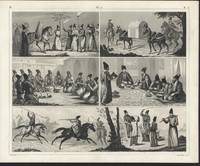
1851144081851. Beautiful original engraving with five scenes of Persian Iran cultural and historical importance. Page is 11.75" by 9.5." Image size is 10" by 8." Engraving by Henry Winkles. Published in 1851 in New York and Germany. An intricate image depicting unique and dramatic aspects of Persian life in the 18th and 19th century presented in five panels on one lage page. The first image depicts a veiled bride riding a horse to meet her betrothed. The second image depicts a Persian woman traveling in a caravan supported by two horses. The third image shows a group of musicians playing wind and percussive intruments in a courtyard. The fourth image is of six men feasting on a decorative carpet. The fifth image depicts a war scene; one horseman aims his rifle at an awother warrier with a raised spear. The other half of the fith image shows a man who is beeing punished for his deeds with blows to his feet. Beautifully engraved with a rich contrast between light and dark. In very good condition. Scarce. unknown
14408Beautiful original engraving with five scenes of Persian Iran cultural and historical importance. Page is 11.75" by 9.5." Image size is 10" by 8." Engraving by Henry Winkles. Published in 1851 in New York and Germany. An intricate image depicting unique and dramatic aspects of Persian life in the 18th and 19th century presented in five panels on one lage page. The first image depicts a veiled bride riding a horse to meet her betrothed. The second image depicts a Persian woman traveling in a caravan supported by two horses. The third image shows a group of musicians playing wind and percussive intruments in a courtyard. The fourth image is of six men feasting on a decorative carpet. The fifth image depicts a war scene; one horseman aims his rifle at an awother warrier with a raised spear. The other half of the fith image shows a man who is beeing punished for his deeds with blows to his feet. Beautifully engraved with a rich contrast between light and dark. In very good condition. Scarce. unknown books
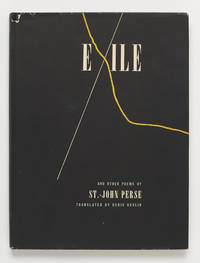
1970McClatchy-491Princeton University Press Bollingen Series Princeton 1970 First printing. A very good copy. A copy with clean text. Note: Light ring stain on front cover small water spot on front cover and light fading on rear cover all as pictured of an otherwise near-fine copy. This book came from the library of poet and literary critic J.D. McClatchy from his estate in Stonington Connecticut. This copy has been SIGNED warmly inscribed and dated by Richard Howard appears to read "Rowdy Richard" the translator opposite the title page as pictured. ASSOCIATION copy. Poetry-P. Inscribed by Authors. 1st Edition. Soft cover. Very Good. Princeton University Press (Bollingen Series), Princeton paperback
1949h01147<p>New York: Pantheon Books 1949. First printing. 4to. 166 pp. Black cloth. Near Fine in Very Good dust jacket. Subtle bump to top corner of rear board. Small chip to jacket's front panel near head of spine mild rubbing to rear panel. Bollingen Series XV. Jacket design by E. McKnight Kauffer.</p> Pantheon Books hardcover
198865928Washington DC: U.S. Government Printing Office 1988. Presumed first edition/first printing. Wraps. Very good. No dust jacket. v 950 p. 23 cm. Illustrations. Title continues: "First Session June 23 24 and 25 1987: Testimony of Glenn A. Robinette Noel C. Koch Henry H. Gaffney Jr. Stanley SPorkin and chalres J. Cooper and Presentation by W. Neil Eggleston. Document Number 100-6. U.S. Government Printing Office paperback
43662795like new. unknown
2 tomi, br. ed originale. XXIV- 350- 496. Ediz. orig. qualche fioritura, dorso fragile ma, nel complesso ottimo esempl. raro.
176011995Halle, Johann Justinus Gebauer, 1760. Gr.-8° (22,5-25 cm). 50, 664 S. Pergamanteinband der Zeit
Very Good Turkish, Ottoman (1500-1928) Original 1/4 leather bdg. Roy. 8vo. (23 x 15 cm). In Ottoman script. [33], 186 p. Hegira 1286 = Gregorian 1869. Özege 4204. Second Edition. 'Alî 'Imâdu d-Dîn Nasîmî, (1369-1417), was a 14th-century Azeri or Iraqi-Turkmen, Hurûfi poet. Known mostly by his pen name (or takhallus) of Nesîmî, he composed one divan in Azerbaijani, one in Persian, and a number of poems in Arabic. He is considered one of the greatest Turkic mystical poets of the late 14th and early 15th centuries and one of the most prominent early divan masters in Turkic / Turkish literary history (the language used in this divan is close to Azerbaijani). Hurufism (Arabic: Hurufiyyah) was a Sufi doctrine based on the mysticism of letters (?urûf), which originated in Astrabad and spread to areas of western Persia and Anatolia in the late 14th and early 15th centuries. Extremely rare.
Very Good English Original color city map of Isfahan. 70x50 cm. In English. Folded. No scale. This detailed Isfahan city map includes a very detailed alphabetical index as well. There are some b/w photos indicated several important places and buildings on the map. Remarks says, "Please note that most Government Departments, Point 4, Fao, Banks etc. are situated around the Shah Sqaure. Ask for Ostandari i.e. the Governor's Office at F6 or find the Information Dept. at D6. All streets, avenues, kuchehs are listed under the name of khiaban eg. Khiaban Abbasssad is under K. not A. Historic places are listed both under their own names e.g. Ali-Qapu, Chehel-Sotoon etc.; and under Mosques, Minarets, etc.".
Very Good French Original copper engraving b/w map. 24,5 x 19,5 cm. In French. Shows Hormuz, on the left side a part of the Island of Kishim, the lower part of the Persian coast, the Island of Hormuz with its fortress, and the entrance of ships. Decorated with ships. "This map probably comes from Raynal's History of the East Indies, and it was earlier published in Prevot's collection of voyages.". Qasimi, p. 203. Jacob van der Schuere was a Dutch Golden Age writer. He was born in Menen but moved north to Haarlem where he became a schoolmaster and wrote educational books. In 1612 he published the work Nederduytsche spellinge, which was a proposal for a comprehensive spelling of the Dutch language and in 1643 he published the math book Arithmetica oft reken-konst. He probably died in Haarlem some time after the publication of his second book, though his death is not recorded.
New Turkish Paperback. 4to. (28 x 22 cm). In Turkish with bilingual title in English and Turkish; preface in English. 2 volumes set: ([xii], 349 p.; [x], 336 p.), facsimile plates. Kemâl Ahmed Dede's verse narrative. Tercüme-i menâkib-i Mevlânâ (A verse version in the Menâkibü'l-Ârifîn tradition). (Sources of Oriental Languages and Literatures 95-96 - Turkish Sources LXXXIV-LXXXV). Pt. I: Introduction, analysis, facsimile. Pt. II: Analysis, transcription.= Kemâl Ahmed Dede'nin Tercüme-i menâkib-i Mevlânâ adli mesnevisi (Menâkibü'l-Ârifîn silsilesinin manzum halkasi). Pt. I: Giris, inceleme, tipkibasim. Pt. II: Inceleme, çeviri. Prep. by Betül Sinan Nizam. Established by Sinasi Tekin.
New Arabic Original bdg. HC. 4to. (29 x 22 cm). Text in English and Persian; facsimile in Arabic. [xiii], [36], 612 p. Mujlî mir'ât al-munjî fî l-kalâm wa-l-hikmatayn wa-l-tasawwuf. Lithograph edition by Ahmad al-Shîrâzî. Reprinted with an introduction, table of contents, and indices by Sabine Schmidtke (Silsilah-'i Mutun va Mutala'ât-i Falsafi va Kalami 10). Al-Ahsai, known as Ibn Abi Jumhur, was the first among the Twelver Shi'is to attempt to forge a synthesis of the various intellectual strands of his time. While he started off as a theologian deeply influenced by Mutazili thought, as can be seen from his early qalam works, he set out in his late work 'Mujli...' to amalgamate Mutazilite and Asharite qalam, Peripatetic and Illuminationist philosophy, as well as philosophical mysticism in an unprecendented and unique manner. (From introduction). "His supercommentary on his Maslak al-afhâm fi?'ilm al-kalâm and on the commentary on al-Maslak entitled al-Nûr al-munjî min al-z?alâm.".
Pages Very slightly tanned. Else fine. ; The third volume, published in two parts, is an account of every aspect of Iranian civilisation from the death of Alexander in 323 BC to the advent of Islam in the seventh century AD. This complex period, of major importance in Iranian history and extending for almost a thousand years, encompasses the reigns of the Seleucid, the Parthian, the Kushan and Sasanian dynasties. As additions to the general objectives of these volumes, Professor Yarshater has included in this volume chapters on the institutional, administrative, legal, numismatic, linguistic and literary aspects of the period; and he further develops the scope of the volume by including studies of Iran's interaction with neighbouring societies, of Iran's mythical and legendary history, and of Iranian settlements outside the geographical boundaries of Iran and Afghanistan. This volume is the most comprehensive study published of this very important period of Iran's history. ; The Cambridge History of Iran; Vol. 3.2; 883 pages
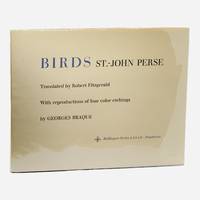
19666717New York: Pantheon Books Bollingen Foundation Collection 1966. Bilingual Edition Bollingen Series LXXXII. Hardcover. pp. 71. Oblong 4to. measuring 11" x 14" 28 x 36 cm. Publisher's original tan cloth over boards with gilt lettering to the spine. Four striking illustrated colour plates by noted French painter draughtsman and printmaker Georges Braques especially reproduced for this book. No detectable flaws: extremities and contents without blemish with firm sound binding; fine and housed in original price-clipped dustjacket now housed in protective mylar cover. Lacking the original slipcase. Near fine. Translation of: L'ordre des oiseaux. Text in English and French. <br/><br/>"When Georges Braque was preparing a series of etchings of birds to be published on the occasion of his eightieth birthday it was learned that St.-John Perse had just completed a poem on the theme of birds. The poet agreed to permit the first publication in the limited edition L'Ordre des Oiseaux with twelve original etchings by Braque. The four reproduced in this book were inspired directly by the poem. Among his last works these etchings mark a change from the static forms in Braque's earlier plates to a more dynamic conception. Perse on his part added to his text several pages of aesthetic meditation referring mainly to the metamorphic vision of the painter and to Braque's birds in general. Braque who with Picasso created cubism and carried it to noble poetic heights embodied in the four plates he created for Perse a generalized sense of power flight grace and space. The poet moves in his text from a particular observation of the flight of birds to reflections on the significance of their movement through space and its impact on man's consciousness. He uses the birds of Braque by relating the process of changing form in flight to the changing form of an etching as the artist carries it through its several states. Robert Fitzgerald poet and Boylston Professor of Rhetoric and Oratory at Harvard University translated St.-John Perse's Chronique and three lyric plays by Paul Valery published in Bollingen Series." Pantheon Books | Bollingen Foundation Collection hardcover
181735475à Paris: De l'imprimerie d'Auguste Delalain 1817. Fine. De l'imprimerie d'Auguste Delalain à Paris 1817 10 x 16.50 cm relié New edition of Persius's Satires translated commented and annotated by Nicolas Selis. Contemporary full cardboard binding. Green paper spine with corners decorated with roulettes. Black paper boards. Red morocco title-label. According to Brunet: ""One of the best translations of Persius"" Brunet IV 522. Nicolas-Joseph Sélis 1737-1802 man of letters and professor at the college Louis-le-Grand replaced abbé Delille to whom he was connected in the chair of Latin poetry at the Collège de France in 1796. Each satire is presented then annotated. A long preface introduces the work as well as a letter from Le Monnier himself translator of the satires who compares his work with that of Selis. De l'imprimerie d'Auguste Delalain hardcover
New English Original decorative bdg. with imitation leather spine. 4to. (30 x 21 cm). In English with only introduction in Persian. 112 [16] p. Avesta grammar and reader: An Avesta grammar in comparison with Sanskrit.= Dastûr-i zabân va guzîdah-'i mutûn-e Avistâyî [REPRINT of 1892 EDITION]. Jackson was born in New York City on February 9, 1862. He graduated from Columbia University in 1883. He was a fellow in letters there from 1883 to 1886, and an instructor in Anglo-Saxon and the Iranian languages from 1887 to 1890. After study at the University of Halle from 1887 to 1889 he became an adjunct professor of English language and literature. In 1895, he was appointed public lecturer and also appointed to the newly founded professorship of Indo-Iranian languages at Columbia University, where he remained until 1935. He was well known as a lecturer on English literature and the Orient. In 1901, during a visit to India and Ceylon, he received special attention from the Parsees, who presented to Columbia a valuable collection of Zoroastrian manuscripts in recognition of the instruction there given by him in their ancient texts. In 1903 he made a second journey to the Orient, this time visiting Iran. He also visited Central Asia sometime before 1918. Jackson's grammar of Avestan, the language used in the Zoroastrian scriptures, is still considered to be the seminal work on the topic. Jackson was one of the directors of the American Oriental Society.
New English Original bdg. C. 4to. (31 x 23 cm). Parallel text in English and Persian. 264 p., color ills. "The mason's script (Khatt-e banna'i) or the Angular Kufic script. In its different materials, compositions, and styles of execution, the Masons' script may be admired on the walls and in the corners of mosques, theological schools, and other holy buildings beside inscriptions in scripts such as naskh, tholth, kufic, etc. The Safavid period (1491-1722) in Iran was the culmination of tilework and along with it, the marvelous maturity of the Mason's script, leaving behind excellent relics to behold...".
New New English Original bdg. Dust wrapper. In publisher's special slip-case. Folio. (34 x 23 cm). Bilingual in English and Persian. 141 p., richly color ills. Collected works of lacquered in Reza Abbasi Museum Exhibition.= Muntakhab-i âsâr-i naqqâshi'hâ-yi lâkî dar Namâyishgâh-i Mûzih-i Rizâ 'Abbâsî. An oversize and very heavy volume.
New New English Original bdg. Dust wrapper. Folio. (33 x 24 cm). In English and Persian. 257, [2] p., color ills. Artistic master pieces of Astan Quds Razavi Library & Museum. The calligraphy selection.= Shahkar'ha-yi hunari dar Astan-i Quds-i Razavi. Muntakhab-i qata'at-i nasta'liq. Printed to 3000 copies.
New New Persian Original bdg. Dust wrapper. 4to. (30 x 23 cm). Text in Persian entirely with a bilingual title in English and Persian. 492 p., richly color ills. The great carpet designers of Iran: A study of the development in carpet designing.= Tarahân bozorg fouroush-e Iran.
41087saying "I have a big envy from my name that I cannot explain this strange feeling. Wish I could conceal myself in the heart of my sweetheart." 1 side 8vo. on monogrammed paper no place no date NASER-AL-DIN 1831-1896 Shah of Persia 4th Ruler of the Qajar Dynasty ascended the Peacock Throne in 1848 at the age of eighteen and ruled as Shah-in-Shah until he was assassinated. Following his succession of his father Mohammed Shah Naser-al-Din initially followed a policy of reform but became increasingly conservative. Although he curbed the power of the clergy in secular affairs introduced telegraph and postal services opened the first school offering education along Western lines opened the first railway and launched Persia's first newspaper later in his reign he steadfastly refused to deal with mounting pressure for more far-reaching reform. He was also the titular head of a considerable part of the Muslim world. The majority of his subjects were Shiite Muslims who looked to him as the legitimate successor and Vice-Regent of the Prophet. Demanding implicit obedience it was on account of his religious position that the Shah was able to exercise despotic power as a temporal ruler. His taxation was severe and arbitrary and he amassed a vast personal fortune and an enormous collection of historic diamonds. Nevertheless he still ran up a huge national debt partly as a result of his expensive foreign tours. He paid his first visit to Europe in 1873 and there are many anecdotes recounting his autocratic and 'Oriental' ways. It is said that he offered to purchase a certain court beauty whose charms he admired. There is the tale of his astonishment on finding a picture of an ass priced at five hundred times the value of the animal itself. On another occasion when he was travelling by rail he was shown the communication cord for stopping the train; he immediately made use of it since he wished the train to remain stationary while he took a nap it was only with the greatest difficulty that he was made to understand that this couldn't be allowed even for the 'King of Kings'. Translation: I have a big envy from my name that I cannot explain this strange feeling Wish I could conceal myself in the heart of my sweetheart unknown
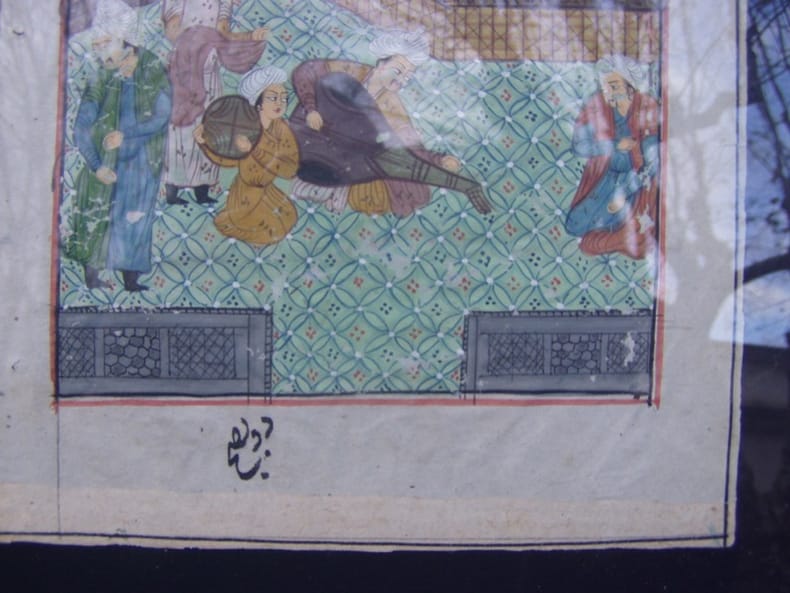
27285sl,sd,un feuillet ,trous de reliure,Largeur: 13,6 centimètres- Hauteur: 20,5 centimètres ;Matériaux : paper, gouache, ink, watercolor - bon état ,sous cadre.
200290943Aarhus, Kunstmuseum 2002. Mit zahlr. tlw. farb. Abbildungen. 107 S. Quer-4to. OLwd. mit OU.
179446191794 London, Laurie & Whittle, 1794 Carte gravée sur cuivre (50,5 x 57 cm hors marges, 54 x 73 cm toutes marges comprises). Tirage de l'époque. Quelques traces d'une autre carte en surimpression. Map on copperplate (50,5 x 57 cm without the margins, 54 x 73 cm with the margins). Contemporary printing. Several light printed marks of another map.