4 538 résultats
in-8°, 317 pp., broche, couverture illustree à rabats. Bel exemplaire. [GE-2]
Broch?. 102 pages. Tr?s bon ?tat.
1960633908vo hardcover, - - , Moskva et 1960 [ Izd-vo vostochno lit-ry, Moskva 1960 ], 489 pp. with illustrations and 4 folding maps
Very Good English Original fine grey-brown cloth bdg. Boards have titled bilingual in Persian and English, with the Iranian Commission for UNESCO logo. Brown endpapers. Large roy. 8vo. (24,5 x 18 cm). In Persian and English, not parallel texts. Text in English pp. i-244; in Persian pp. 1-199. One of a good printing in terms of the accordance of a western and an eastern language. Persian text starts from the right, English one is from left. [xii], [1 blank], 244, 199, 10 p. First Edition, thus. Slightly foxing on edges, a presentation inscription by pen. Overall a very good copy. Abû-Muhammad Muslih al-Dîn bin Abdallâh Shîrâzî, (1193-1292), better known by his pen name Saadi (or, Sadi, Sa'di), was a major Persian poet and prose writer of the medieval period. He is recognized for the quality of his writings and for the depth of his social and moral thoughts. Saadi is widely recognized as one of the greatest poets of the classical literary tradition, earning him the nickname "The Master of Speech" or "The Wordsmith" (Ostâd-e soxan) or simply "Master" [Ostad] among Persian scholars. He has been quoted in the Western traditions as well. Bustan has been ranked as one of the 100 greatest books of all time by The Guardian. Bustan [i.e. The Orchard] completed in 1257and it's entirely in verse (epic meter). It consists of stories aptly illustrating the standard virtues recommended to Muslims (justice, liberality, modesty, contentment) and reflections on the behavior of dervishes and their ecstatic practices. Gulistan is mainly in prose and contains stories and personal anecdotes. The text is interspersed with a variety of short poems that contain aphorisms, advice, and humorous reflections, demonstrating Saadi's profound awareness of the absurdity of human existence. The fate of those who depend on the changeable moods of kings is contrasted with the freedom of the dervishes. Saadi is also remembered as a panegyrist and lyricist, the author of a number of odes portraying human experience, and also of particular odes such as the lament on the fall of Baghdad after the Mongol invasion in 1258. His lyrics are found in Ghazaliyat [i.e. Lyrics] and his odes in Qasa'id [i.e. Odes]. He is also known for a number of works in Arabic. George Michael Wickens, (1918-2006), the translator of this edition, was a distinguished Canadian-British Persianist as well as Arabist, translator, and a University lecturer. Wickens was fluent in Persian and Arabic and was one of the pioneering figures of Persian literature in Canada. He translated several masterpieces of Persian literature as Boostan of Sa'di into English. (Source: Wikipedia).
New Persian, Old(ca. 600-400 B.C.) Original bdg. HC. Demy 8vo. (21 x 14 cm). In Persian and Pahlavi. 63 p. [A]Yâdgâr-i Zarîrân: Matn-i hamâsî az dawrân-i kuhan. [= Ayâdgâr-e Zârêrân]. Ayâdgâr-e Zârêrân, or 'Memorial of Zarer', a short Pahlavi text which is the only surviving specimen in that language of ancient Iranian epic poetry. It is preserved in a unique manuscript, written in A.D. 1322. The chief editions are those of J. M. Jamasp-Asana, The Pahlavi Texts Contained in the Codex MK II, Bombay, 1913, repr. Tehran, [1971-72], pp. 1-16; Pagliaro, Il testo pahlavico Ayâtkâr-i Zarêrân, Rome, 1925; and D. Monchi-Zadeh, Die Geschichte Zarêr's, Uppsala, 1981 (reviewed by D. N. MacKenzie, IIJ 27, 1984, pp. 155-63). It celebrates an event in the early history of Zoroastrianism. Wistâsp, having accepted the "pure religion of the Mazda-worshippers" (dên î abêzag i mâzdesnân)), is challenged on this account by Ardjâsp, lord of the Hyôns. The wise Jâmâsp foretells that Wistâsp's brother Zarêr and many others of his kin will die in the coming encounter. Nevertheless battle is joined. Zarêr, after fighting heroically, is foully slain by a Hyôn, Wîdraf the sorcerer. His son Bastwar, forbidden by Wistâsp to go to the battle-field because of his youth, flouts this command, finds his father's body, and utters a moving lament over it. He slays many Hyons in revenge, and shoots an arrow through Wîdrafs' heart. His cousin Spandyâd, Wistâsp's son, ends the battle by capturing Ardjâsp, mutilating him, and sending him abject away. There are numerous traces in the Pahlavi text of an older Parthian version, with Parthian words, phrases and grammatical usages scattered through it (for these see most fully MacKenzie, loc. cit.). Parthian, and other apparently archaic, certainly obscure, elements are most concentrated in passages of reported speech, notably par. 92, Bastwar's incantation over the arrow with which he is to shoot Wîdrafs; par. 41, an oath-taking formula; and pars. 84-87, Bastwar's elegy for his father... (Encyclopediae Iranica).
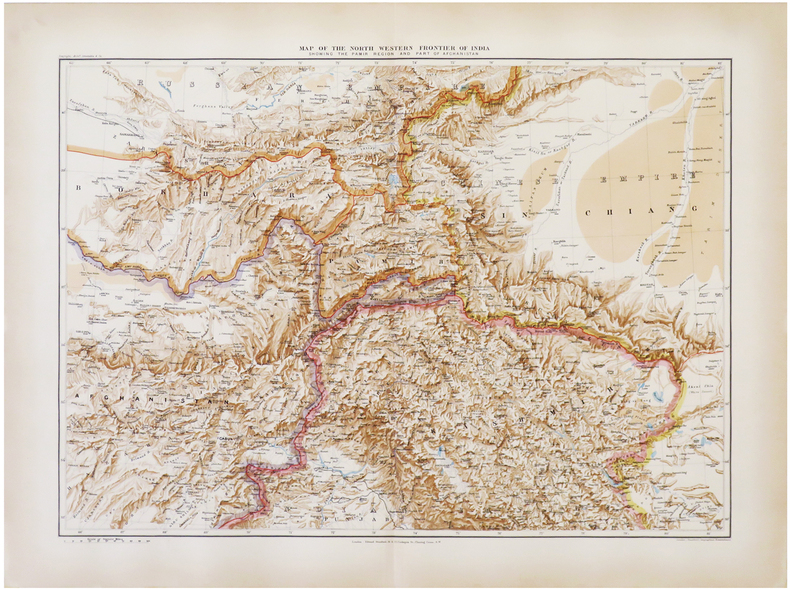
1896LBW-6821London, Edward Stanford, 1896. 470 x 640 mm.
Very Good Turkish, Ottoman (1500-1928) Collection includes six postcards by him sent to Mehmed RAsih Bey, Âli Türkgeldi (Sofia, Bulgaria), Satvet Lütfi Tozan, one newspaper clipping about Gerede, eight autograph letters signed 'Hüsrev' sent to Satvet Lütfi Tozan, (1889-1975), Âli Türkgeldi, 1867-1935) and beside ones which came from them to him. Some letters are more than one page. Full text. In Ottoman script. Items dated from 1920 to 1929/30 on letters and postcards. All in one envelope with Ottoman script autograph notes and name of Hüsrev Gerede on it. Letters and other material include mostly important diplomatic contents and early Republican Turkish historical info. These material is not published. Gerede was a Turkish career officer, who served in the Ottoman Army and the Turkish Army. He was also a politician and diplomat of the Republic of Turkey. He has Medal of Independence with Red-Green Ribbon.
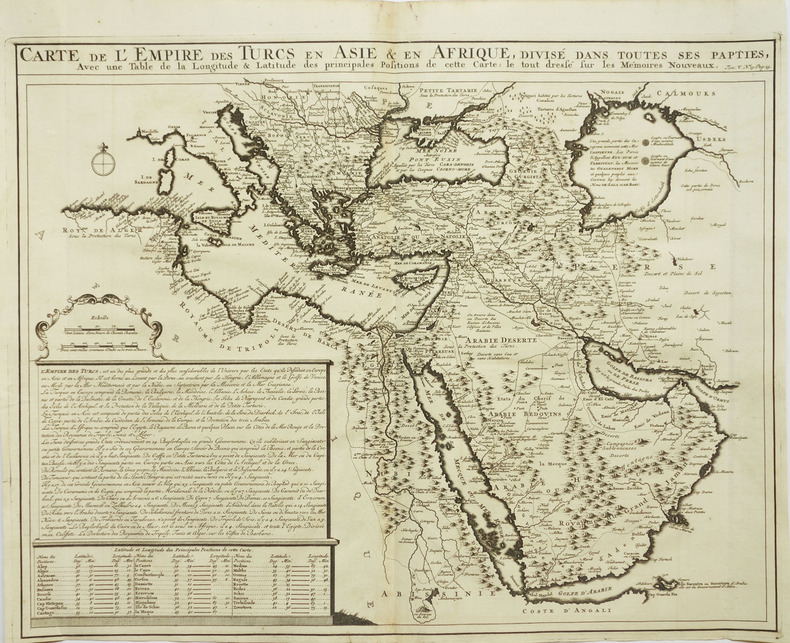
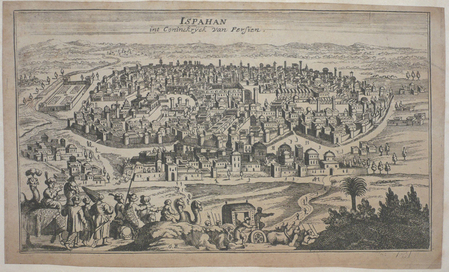
1720LBW-2043Amsterdam, circa 1720. 400 x 512 mm.
Very Good Persian Original wrappers. Roy. 8vo. (21,5 x 18 cm). In Persian. [2], 284 p., b/w plates. Signed and inscribed 'Dr. Rezazadeh Shafaq'. First edition and a rare autographed copy of these official travel memoirs of Switzerland by an Iranian politician from the liberal party in the Pahlavi period, including attractive impressions and descriptions of European culture. Sadeq Rezazadeh Shafaq was one of the activists of the Qajar dynasty and Ph.D. graduate of the University of Berlin who taught the history of Persian literature as well as was a journalist, poet, and politician. Only one copy in OCLC: 949522859 (Bogaziçi University Library). An extremely rare autographed copy.
Very Good Persian Paperback. 12mo. (16,5 x 11,5 cm). In Persian. 160 p. [AZIZ NESIN IN PERSIAN] Tabq muqarrat (Majmua-ye Dâsitân). [= Gidi gidi]. Translated from Turkish to Persian by Reza Hamrah. Nesin was a Turkish writer, humorist and the author of more than 100 books. Aziz Nesin was a political activist. After the 1980 military coup led by Kenan Evren, the intelligentsia was oppressed. Aziz Nesin led a number of intellectuals to rebel against the military government, by issuing the Petition of Intellectuals (Turkish: Aydinlar Dilekçesi). He was the President of the Türkiye Yazarlar Sendikasi (Turkish Writers' Union). Reza Hemrah who translated Aziz Nesin's "Bir Ölünün Hatiralari", "Saçkiran", "Kimliksiz Adam", "Gidigidi" and many other works into Persian has an important position in reputation of Aziz Nesin in Iran. Nearly half of works of Aziz Nesin translated into Persian belongs to Reza Hemrah. Hemrah translation attracted considerable attention by 1960s and 1970s. Persian media has some doubts about whether Reza Hemrah's translations are authentic or not. According to criticisms, when the books of Hemrah were banned by government of that time, writer published his own books in the name of Aziz Nesin. To another criticism, Hemrah compiled Aziz Nesin's works by reading his books or asking for his friends to read them and published again. (Yesim Isik). First and Only Persian Edition. This the second translation of Aziz Nesin to Persian language and in Persian literature. "Tabq muqarrat" means in Persian "According to the rules". First one was in 1965 by Samad Bahrangi. Not in OCLC.; Mushar 3414. Extremely rare.
Very Good English Original color city map of Isfahan. 70x50 cm. In English. Folded. No scale. This detailed Isfahan city map includes a very detailed alphabetical index as well. There are some b/w photos indicated several important places and buildings on the map. Remarks says, "Please note that most Government Departments, Point 4, Fao, Banks etc. are situated around the Shah Sqaure. Ask for Ostandari i.e. the Governor's Office at F6 or find the Information Dept. at D6. All streets, avenues, kuchehs are listed under the name of khiaban eg. Khiaban Abbasssad is under K. not A. Historic places are listed both under their own names e.g. Ali-Qapu, Chehel-Sotoon etc.; and under Mosques, Minarets, etc.".
Very Good English Original wrappers. Cr. 8vo. (19,5 x 13,5 cm). In English, Persian, and Ottoman script (Old Turkish with Arabic letters). 26 p. Abû-Muhammad Muslih al-Dîn bin Abdallâh Shîrâzî, (1193-1292), Persian poet and prose writer, widely recognized as one of the greatest masters of the classical literary tradition. His influence is not limited to Persian literature. He also deeply affected Turkish and Urdu literature and the Western world (Encyclopadiae Iranica). Bostan [i.e. the Orchard] and Gulistan [i.e. the Rose Garden], his famous Works, were translated into many languages and commented. Pendname is one of Sa'dî's poetical works. In this ethical-based work, ethical values such as science, justice, consenting to fate, honesty, patience, generosity, modesty, and grace are praised. Bad habits such as talking to ignorant, cruelty, lie, arrogance, and stinginess are badly criticized. The Persian text of Sa'dî's Pendname, it's an English translation, and Ottoman Turkish translation in verse were printed together in the early 20th century. The work is about some moral characteristics that are seen as "acceptable and submissive" in societies and have been recited with the idea of benefiting people. (Source: A BOOK ON ETHICAL LITERATURE: SAADI'S PENDNAME, Melek Dikmen). Major William Henry Carmichael-Smyth, (1780-1861), was a British military officer in the service of the East India Company and an orientalist. In 1797, at the age of seventeen, he was commissioned into the Bengal Artillery. In 1803, the Second Anglo-Maratha War broke out, and he was present at the battles of Aligarh, Delhi, and Laswari. Carmichael-Smyth returned to India in 1810 as a captain and served in the Invasion of Java in 1811. Thereafter he returned to Bengal and went to Callinger as a field engineer where he was mentioned in dispatches for exemplary valor in 1812. He returned to England in 1820 and was elevated to Major in 1821. Not in Özege.; OCLC 50021435, 1065323294.
Very Good Turkish, Ottoman (1500-1928) In contemporary black cloth. Roy. 8vo. (24 x 17 cm). In Ottoman script (Old Turkish with Arabic letters). Occasionally minor stains and fading on pages. Otherwise a good copy. 384 p. It is a rare book written after the Constitutional Monarchy at the request of the Unionists to make propaganda about Kurds. It is one of the early detached texts about Kurds written in the Ottoman period. Upon the request of the Ittihad ve Terakki [i.e. Union and Progress] leaders, he began to work in 1912 for the newly established National Security Organization (Teskilât-i Mahsusa). He then continued his intelligence work with the IAMM and AMMU, in the name of which he did his fieldwork on the Anatolian Kurds and Turcoman (Turkmen) tribes. Habil Adem's (his pseudonym means in English 'Abel Adam') writing reflect -even more openly than those of his colleague Baha Said- the unionist ambition to collect the data considered necessary for its politics of social and demographic engineering, such as information on basic demographic realities, as well as social and cultural aspects. The obvious aim of this publication was to create public knowledge favorable to the nationalization project. His book on the Kurds, printed in 1918, immediately after WW 1, under the pseudonym of a fictitious German orientalist (Dr. Friç), allegedly only translated by Habil Adem, elaborated on a thesis that would gain leverage in the early Turkish Republic and become very prominent in the 1930s, namely that the Kurds were actually Turks and the Kurdish as an independent language did not exist. In the book's section on the religion of the Kurds, he makes two distinctions such as Muslim and non-Muslim Kurds and Sunni and Shiite Muslim Kurds. (Source: Writing Religion: The Making of Turkish Alevi Islam; Dressler, Marcus). Pelister worked in the translation office of the General Directorate of Security since 1908 and in the Turkmen Branch of the General Directorate of Tribes and Immigrants from 1913, and he personally assigned him to Talat Pasha, (1874-1921). He was very good at speaking English, German, and French languages, thus, he was involved in researches related to the Kurdish and Turkmen tribes with some delegations in Ottoman Turkey in Asia. The German original of this book never existed, neither did Dr. Fritsch from the Berlin Academy of Science. Years later, Celadet Bedirxan, a Kurdish intellectual, explained the mistakes that Naci Ismail made intentionally or unknowingly on the Kurdish culture, population, history, folklore, and language, with the letters he wrote to Mustafa Kemal and drew Mustafa Kemal's attention. This book was written probably by a commission with corrigenda and footnotes by Pelister. The book generally focuses on the historical geography of the Kurds. There is an effort to Turkify in the part that talks about the origins of the Kurds. In the introduction, detailed information about Iranian and Iraqi Kurds is given and Sharafnâma is criticized. Although detailed information is available on many Kurdish tribes (Leks, Sividis, Arukhs, etc) in Anatolia and Mesopotamia, most of these are dubious. Only three institutional copies in OCLC: 977638243 (University of Toronto Robarts Library), 949451620 (Bogaziçi Library), and 164856325 (Bayerische Staatsbibliothek of Germany).; Özege 11517.; TBTK 11113. First Edition.
Very Good Persian Original decorative dark brown full leather bdg. 44 p. Printed on a special paper with an early 18th century watermark. The Advice by Attâr includes 901 couplet in Persian. Attar Persian poet, Sufi, theoretician of mysticism, and hagiographer, born ca. 540/1145-46 at Nisapur, and died there in 618/1221. His name was Abû ?âmed Mo?ammad b. Abî Bakr Ebrâhîm or, according to Ebn al-Fowatî, b. Sa'd b. Yûsof. ?Attâr and Farîd-al-dîn were his pen-names. It seems that 'Attâr was not well known as a poet in his own lifetime, except at Nisâpûr. 'Awfî, who traveled widely, may have heard about him while staying there , or perhaps from Majd-al-dîn Bagdâdî if this Majd-al-dîn was their common Sufi mentor, though Awfî appears to have only known about Attâr's lyric poetry. Farid al-din 'Attar is one of the most famous spiritual poets of Persia. His works were the inspiration of Rumi and many other mystical poets. 'Attar, along with Sana'i were two of the greatest influences on Rumi in his Sufi views. Rumi has mentioned both of them with the highest esteem several times in his poetry. Rumi praises 'Attar as follows: "Attar roamed the seven cities of love... we are still just in one alley." 'Attar reached an age of well over 80 and died a violent death in the massacre which the Mongols inflicted on Nishapour in April 1221. The world depicted in 'Attar's works reflects the whole evolution of the Sufi movement. The starting point is the idea that the body-bound soul's awaited release and return to its source in the other world can be experienced during the present life in mystic union attainable through inward purification. In explaining his thoughts, 'Attar uses material not only from specifically Sufi sources but also from older ascetic legacies. Apart from his two famous epic masnavi poems 'The Conference of the Birds' and 'The Book of God' he composed a Divan full of powerful, enlightened ghazals and ruba'is. The Pand-nama is a small book of wise, moral advice in short poems in rhyming couplets that is practical and spiritual... (Encyclopedia Iranica & Pand-nama : (Book of Wisdom) Selections Introduction). [EARLY FIRST PERSIAN EDITION of the ADVICE by ATTAR PRINITED in the OTTOMAN EMPIRE] Pend-i Attar. Published by Fâkîr Seyhzâde Es-Seyyid Mehmed Es'ad. Only two printed copies of this edition in OCLC: 819123862.; Türkiye'de basilmis Farsça eserler çeviriler ve Iran'la ilgili yayinlar bibliyografyasi [= Bibliography of the Persian books, their translations and books on Iran published in Turkey] 721.; Mushar -.
Very Good Turkish, Ottoman (1500-1928) Original leather bdg. with traditional decorative embossing and gilt lettering of the title on boards. Roy. 8vo. (24 x 15 cm). In Ottoman script (Old Turkish with Arabic letters) and Persian. 480 p. Traditionally framed text. First volume, all published. Early edition of this exceedingly rare Persian-Turkish lexicon, which was one of the earliest Persian dictionaries in the Islamic world, written by Hasan Suuri Efendi from Aleppo, one of the finance officers of the Ottoman Empire. First edition was printed in 1742 and was the last book in two volumes of the first Islamic printing house founded by Ibrahim Müteferrika. This copy is the second edition. All published. Özege 5625.; 780172767, 39832974 (Seven printed copies in American libraries: Concordia Theological Seminary, Virginia Tech, Butler University Libraries, Concordia College Library, Morningside University, Dallas Theological Seminary, and Princeton University Library).
Very Good Turkish, Ottoman (1500-1928) Original cloth bdg. with traditional embossings. Foolscap 8vo. (17 x 12 cm). In Ottoman script. First Ottoman Edition. 7 volumes full set in one volumes: (112 p.; 112 p.; 111 p.; 111 p.; 111 p.; 111 p., 111 p.). Hejra: 1289 = Gregorian: 1872. Özege: 20613. Haft Paykar "The Seven Beauties" (1197) (also called Bahram-Nama). A pre-Islamic story of Persian origin, it was dedicated to the ruler of Maragha, 'Ala' Al-Din korp Arslan. It is the story of Bahram V, the Sassanid king, who is born to Yazdegerd after twenty years of childlessness and supplication to Ahura Mazda for a child. The Haft Paykar is a romanticized biography of the Sasanian Persian empire ruler Bahram Gur. His adventurous life had already been treated by Ferdowsi in the Shahnama, to which fact Nezami alludes a number of times. In general, his method is to omit those episodes that the earlier poet had treated, or to touch on them only very briefly, and to concentrate on new material. The poet starts by giving an account of the birth of Bahram Gur and his upbringing in the court of the Arab King No'man and his fabled palace Khwarnaq. Bahram whose upbringing is entrusted to Nom'man becomes a formidable huntsman. While wandering through the fabled palace, he discovers a locked room which contains a depiction of seven princesses; hence the name Haft Paykar (seven beauties). Each of these princesses is from the seven different climes (traditional Zoroastrian-Islamic division of the Earth) and he falls in love with them. His father Yazdegerd I passes away and Bahram returns to Persia to claim his throne from pretenders. After some episodes he is recognized as King and rescues the Persians from a famine. Once the country is stable, the King searches for the seven princesses and wins them as his brides. His architect is ordered to construct seven domes for each of his new brides. The architect tells him that each of the seven climes is ruled by one of the seven planets (classical planetary system of Zoroastrian-Islamic world) and advises him to assure good fortune by adorning each dome with the color that is associated with each clime and planet. Bahram is skeptical but follows the advice of the architect. The princesses take up residence in the splendid pavilions. On each visit, the king visits the princesses on successive days of the week; on Saturday the Indian princess, who is governed by Saturn and so on. The princesses names are Furak (Nurak), the daughter of the Rajah of India, as beautiful as the moon; Yaghma Naz, the daughter of the Khaqan of the Turks; Naz Pari, the daughter of the king of Khwarazm; Nasrin Nush, the daughter of the king of the Slavs; Azarbin (Azareyon), the daughter of the king of Morocco; Humay, the daughter of the Roman Caesar; and Diroste (wholesome), a beautiful Iranian princess from the House of Kay Ka'us. Each princess relates to the king a story matching the mood of her respective color. These seven beautifully constructed, highly sensuous stories occupy about half of the whole poem. While the king is busy with the seven brides, his evil minister seizes power in the realm. Bahram Gur discovers that the affairs of Persia are in disarray, the treasury is empty and the neighboring rulers are posed to invade. He clears his mind first by going hunting. After returning from hunt, he sees a suspended dog from a tree. The owner of the dog, who was shepherd, tells the story of how his faithful watchdog had betrayed his flock to a she-wolf in return for sexual favors. He starts investigating the corrupt minister and from the multitude of complaints, he selects seven who tell him the injustice they have suffered. The minister is subsequently put to death and Bahram Gur restores justice and orders the seven pleasure-domes to be converted to fire temples for the pleasure of God. Bahram then goes hunting for the last time but mysteriously disappears. As a pun on words, while trying to hunt the wild ass (gûr) he instead finds his tomb (gûr
Very Good Turkish, Ottoman (1500-1928) Original 1/4 leather bdg. Roy. 8vo. (23 x 15 cm). In Ottoman script. [33], 186 p. Hegira 1286 = Gregorian 1869. Özege 4204. Second Edition. 'Alî 'Imâdu d-Dîn Nasîmî, (1369-1417), was a 14th-century Azeri or Iraqi-Turkmen, Hurûfi poet. Known mostly by his pen name (or takhallus) of Nesîmî, he composed one divan in Azerbaijani, one in Persian, and a number of poems in Arabic. He is considered one of the greatest Turkic mystical poets of the late 14th and early 15th centuries and one of the most prominent early divan masters in Turkic / Turkish literary history (the language used in this divan is close to Azerbaijani). Hurufism (Arabic: Hurufiyyah) was a Sufi doctrine based on the mysticism of letters (?urûf), which originated in Astrabad and spread to areas of western Persia and Anatolia in the late 14th and early 15th centuries. Extremely rare.
Very Good Turkish, Ottoman (1500-1928) Original illustrated wrappers. Cr. 8vo. (19 x 13 cm). In Ottoman script (Old Turkish with Arabic letters). 105 p., 8 b/w plates. First edition of this illustrated travel account of one of the exiled Young Turks to Afghanistan, who was invited to the country by the reformist Afghan Emir Habibullah Khan (1872-1919), who was the ruler of Afghanistan from 1901 to 1919. The news that the reformist Afghan Emir Hamidullah Khan was looking for well-educated Turkish youth to help the development of his country, reached the Young Turks in exile in Egypt. The author of this book, Mehmet Fazli was one of the Young Turks (A reformist group in the early 20th century that favored the replacement of the Ottoman Empire's absolute monarchy with a constitutional government), and he followed this royal invitation and set off with his friends. He reached Kabul via an adventurous journey through Austria-Hungary, Russia, Azerbaijan, Turkmenistan, and Iran. With his guide and friend who was an Afghan and his Turkish friend Hüseyin Hüsni Bey, Fazli met in Cairo and they went to Afghan lands. He described Kabul, Herat, Ghazna, Belh, and Kandahar cities during their travel, wrote about the Afghan Emîr and the dynasty. His book revolves around the many details on Afghan peoples' customs, social life, education, industry, roads, antiquity, postage system and organization, arms and army, etc. The book has a photo of the Afghan Emir beside other attractive illustrations and photographs. (Sources: Afganistan'da Bir Jöntürk: Misir Sürgününden Afgan Reformuna., Prep. by Kenan Karabulut.; History of Geographical Literature during the Ottoman Period., Edited by Ekmeleddin Ihsanoglu). Özege 16749.; OCLC 868007927.; MKAHTBK, II 948.
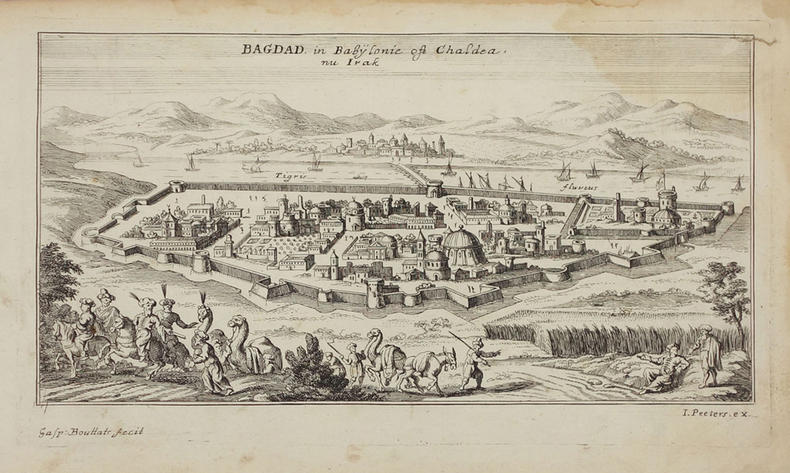
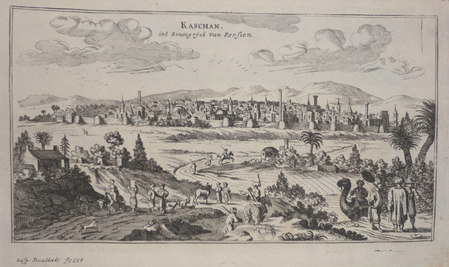
LBW02507[circa 1690]. 121 x 231 mm.
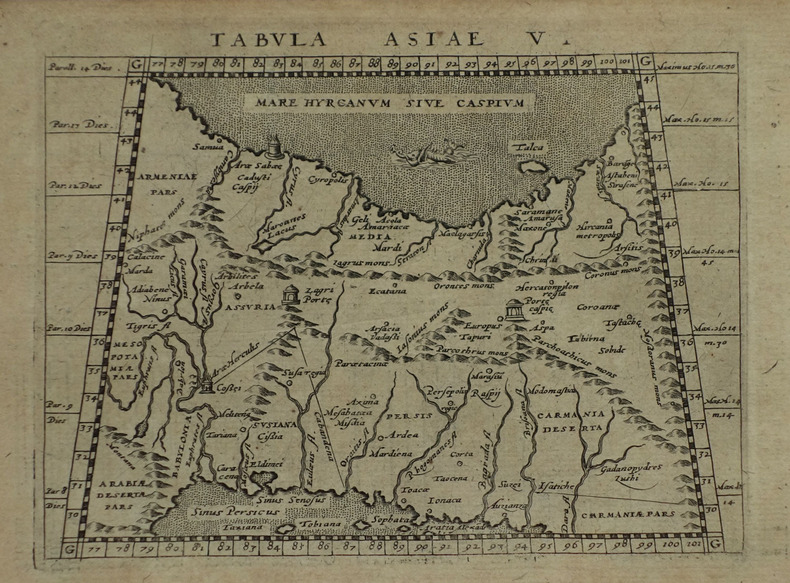
1617LBW-1923[Arnhem, Joannes Jansson, 1617]. 128 x 170 mm.
LBW045edcirca 1690 139 x 234 mm.
LBW02508circa 1690 127 x 236 mm.
Very Good Persian Original wrappers. Folio. (33 x 25 cm) and some different sizes. In Persian with bilingual titles in English and Persian. A lot including 124 issues, published between July 30, 1991, to 1999. A lot including 124 issues of this rare Iranian satyric magazine "Gol Agha", which was the first such publication in post-revolutionary Iran, maintaining its dominance for more than two decades after its debut, adding monthly and annual editions as well as producing new generation of satirists and cartoonists. Kioumars Saberi Foumani, (1941-2004), also known by his pen name Gol-Agha, was an Iranian satirist, writer, and teacher. Saberi was born during the Second World War in Souma'eh Sara a city in Gilan Province. His father, originally from Rasht, worked for the Ministry of Economic Affairs and Finance. He was transferred to Souma'eh Sara in 1938 and then to Fuman in 1942 where he died a few months later. His mother, who was the daughter of a respected cleric and one of the few educated women in the city, taught the Quran after the death of her husband. His brother, who was 14 years older, had to leave school at the age of 15 to work to help with the family expenses. Education for Saberi was hard because of his family's poverty and he had to start working in a tailor shop after finishing his elementary education. He also worked in his brother's bicycle repair shop during elementary school and high school. He started high school education at his mother's insistence. At the age of 16, he gained entry to Sari's Agriculture teacher's college which only accepted one student from Fuman each year. He continued his college education and graduated in 1959. He worked as a teacher from 1959-1961. At the age of 20, he took his high school exams and received his high school diploma. He continued his education at the University of Tehran while working as a teacher. He achieved his bachelor of science degree in political science in 1965. He spent most of the 1970s reading and teaching and in 1978 he obtained his master's degree in comparative literature from the University of Tehran. Saberi got married in 1966 and he had a daughter and a son. His son died in a car accident in 1985 but this sad incident did not stop him from reaching his goal, which was to make people smile. Kioumars Saberi Foumani died on April 30, 2004. During his first year at university, Saberi was arrested for participating in student demonstrations and started to write political satire in Towfigh magazine. Towfigh magazine was Iran's most respected pro-democracy political satire magazine, with the highest circulation in Iranian history. Its editor-in-chief was Hossein Towfigh who, along with his brothers Hassan and Abbas, turned Towfigh magazine into the most influential journal in Iranian history. Saberi became one of the many staff writers of Towfigh magazine. After the Iranian Revolution, he became the cultural advisor for Mohammad Ali Rajai. One of his other political posts was as the counselor to the minister of Housing and Urban Development of Iran. Following the Revolution, Saberi worked in different political positions before deciding to leave politics. He was in charge of Roshde-Adabe-Farsi magazine and sometimes he wrote for the Ettelaat newspaper. He started a column called "Do-Kalame-Harfe-Hesab" in Ettelaat in 1984 which was a starting point for political satires after the revolution. He continued writing for this column for six years until he started his own magazine called Gol-Agha in 1990. His courageous and powerful writings were appreciated by many famous authors such as Mohammad Ali Jamalzadeh. Saberi received first prize in the press exhibitions of 1992 and 1994 and second prize in 1993. He stopped writing for Ettelaat in 1993. The main characters in his writings are Gol-Agha, Shagholam, Mamasadegh, Kamineh, The wife of Mamasadegh), Mash-Rajab, and Ghazanfar. In 2003 in his last editorial in Gol-Agha, Saberi announced that publishing Gol-Agha will be stop
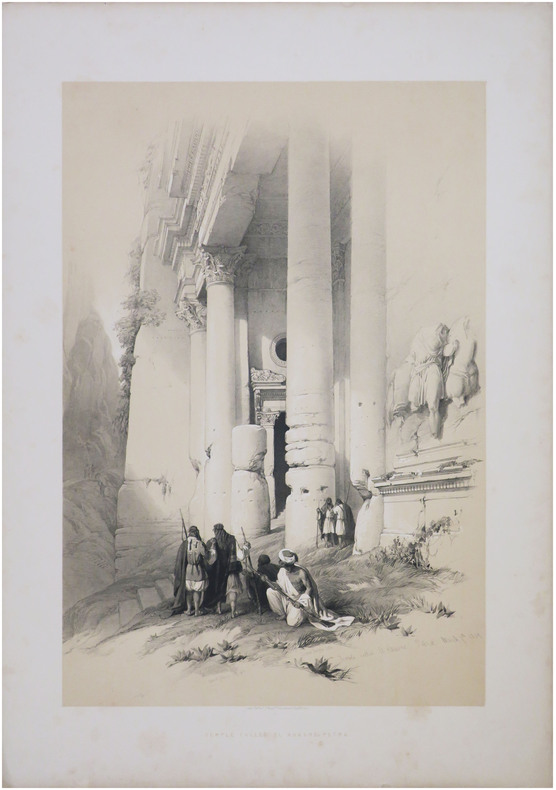
1842LBW-8857London, F.G. Moon, 1842. 513 x 335 mm.
Very Good French Original copper engraving b/w map. 24,5 x 19,5 cm. In French. Shows Hormuz, on the left side a part of the Island of Kishim, the lower part of the Persian coast, the Island of Hormuz with its fortress, and the entrance of ships. Decorated with ships. "This map probably comes from Raynal's History of the East Indies, and it was earlier published in Prevot's collection of voyages.". Qasimi, p. 203. Jacob van der Schuere was a Dutch Golden Age writer. He was born in Menen but moved north to Haarlem where he became a schoolmaster and wrote educational books. In 1612 he published the work Nederduytsche spellinge, which was a proposal for a comprehensive spelling of the Dutch language and in 1643 he published the math book Arithmetica oft reken-konst. He probably died in Haarlem some time after the publication of his second book, though his death is not recorded.