199 résultats
2283230 July 1844; Constantinople. 1p 4to. On aged paper with traces of glue from mount on reverse and six short diagonal scalpel-cuts four of them across the text not the signature. He has received with 'beaucoup de satisfaction' the unnamed recipient's 'ouvrage intitulé Panigraphie que vous m'avez fait l'honneur de m'offrir'. He finds 'ce produit des sic vos talents . d'autant plus precieux qu'il facilite l'etude des quatre langues les plus interessantes de l'Europe'. He will recommend the work 'à nos amateurs des langues en orient'. In thanking him for 'cet offre' he expresses happiness at having made the recipient's acquaintance 'quoique par écrit'. 'Panigraphie' is clearly a mistake for 'Pangraphie' but no record to the publication of a work with that title has been discovered. In Mannheim in 1807 Heinrich Bürmann printed a 'Programme de la pangraphie partie fondamentale de la caractéristique syntactique système de notation universelle' and in 1850 Chambers' Edinburgh Journal reported that 'a Monsieur Ivichievich of Wallachia submits a plan of what he calls 'Pangraphie' or universal writing'. The earliest use of the word 'pangraphic' 'writing on all subjects or in all forms' recorded in the OED is in 1821. 30 July 1844; Constantinople. unknown
1940049547Ankara: 1940s 1940. Soft cover. Very Good. Original business card with autograph dedication. In Turkish. Muzaffer Görduysus was Turkish consul of Komotini Gümülcine between the years of 1943-1947. Dedicated to Ismail Hakki Okday 1881-1977 who was son of last Ottoman vizier Ahmet Tevfik Pasha groom of the last Ottoman sultan Vahdeddin soldier diplomat and philatelist. <br/> <br/> [1940s] paperback
1934052617Ankara: T. B. M. M. Özel 1934. Soft cover. Very Good. Original autograph letter ALS signed 'Bilecik Saylavi Salih Bozok' with its original envelope. 21x15 cm. In Ottoman script. 2 p. Full. Letter includes 27 lines. Dated December 22 1934. Letterhead 'TBMM Özel' i.e. Turkish Grand National Assembly. Recipient is Salih Bey Sener who was lived in Kadiköy and Commandant Gendarme. Bozok was an officer of the Ottoman Army later the Turkish Army and a politician of the Republic of Turkey. He was the chief aide-de-camp of Mustafa Kemal Atatürk the founder of modern Turkey. Bozok was a close childhood and lifelong friend of Atatürk both having been born in 1881 in Salonica and having attended the Monastir Military High School together. On November 10 1938 upon witnessing the dead body of Atatürk in the latter's bedroom of Dolmabahçe Palace a distraught and stunned Bozok stepped outside and shot himself through the chest with a pistol. However the bullet narrowly missed his heart and Bozok did not succumb to his fatal wound until April 1941. Wikipedia. <br/> <br/> T. B. M. M. Özel paperback
049456Istanbul. Soft cover. Very Good. Original autograph letter signed as 'Sezai' by Samipasazade Sezai to Türkgeldi family. In Ottoman script. 4 p. last page has Ali Fuat Türkgeldi's autograph note on Samipasazade Sezai's death as: "Samipasazade Sezai Bey; 26 Nisan 1936 Pazar aksami saat dokuzu yirmi geçe 21:20 ölmüstür.". Sezai's letter starts as 'Pek muhterem kardesim'. Used blue ink with a fountain pen. Ali Fuat Türkgeldi 1867-1935 was an Ottoman historian and politician. He is the son of Celâl Bey the undersecretary of the Ministry of Interior and the son of Cemal Bey in the Reform period Tanzimat - Westernization period the director of Translation Chamber. Sezai Turkish realist storyteller novelist. He is the author of Sergüzest Adventure which is one of the first realistic novels of Turkish literature. Also he was pioneer of the modern short story in Turkish literature with Küçük seyler 'Little things' he wrote in 1892. Between 1885 and 1901 he lived in Istanbul this letter dated probably in that period and had a literary period. He was close friends with Abdülhak Hamit and Recaizade Ekrem. He met with Namik Kemal whom he met when he was 17-18. He did not produce many works like other Tanzimat writers; wrote one novel two small story books and travel memoirs. In 1888 he published a novel called Sergüzest A story about a Pasazade and his love story after which he became one of the first writers of Turkish literature after Semseddin Sami Namik Kemal and Ahmet Mithat Efendi. He translated Alphonse Daudet's 'Jak' into Turkish. For thinking that he was being held under 'surveillance' for his novel he went to Paris in 1901 and stayed there until the declaration of the Constitutional Monarchy in 1908. He met the Young Turks in Paris; He joined the Committee of Union and Progress and came to a respected place in the community in a short time. Upon the declaration of the Constitutional Monarchy he returned to Istanbul and was appointed as ambassador to Madrid. As WW 1 began he moved from Madrid to Switzerland where he stayed until the end of the war. His only novel Serguzest was the first novel in Turkish literature to deal entirely with captivity; the novel in which the system of concubinance and slavery was criticized was his most famous work. It was translated into French by Besim Ömer Pasha. e combined romance and realism in her writings. He combined romanticism and realism in his writings. He gave works with the motto of "l'art pour l'art". <br/> <br/> paperback
1924054927N. p.: 20 July 1924 1924. No Binding. Very Good. Original autograph letter signed ALS by Ottoman princess 'Sükriye Serafeddin'. 175x145 cm. In Ottoman script Turkish with Arabic letters. 1 p. in four. Bifolium. The letter starts with 'Huve' and it has 12 lines. She mentions a letter that was sent by this unnamed recipient to 'Serafeddin' who is probably from the Ottoman dynasty. Sükriye Sultan was an Ottoman princess the daughter of the heir to the throne Sehzade Yusuf Izzeddin son of Sultan Abdulaziz and Leman Hanim. Sükriye Sultan was born on 24 February 1906 in Çamlica Palace. Her mother was Leman Hanim. She was the second child and eldest daughter born to her father and the eldest child of her mother. She had two younger siblings a brother Sehzade Mehmed Nizameddin two years younger than her and a sister Mihrisah Sultan ten years younger than her. She was the granddaughter of Abdulaziz and Dürrünev Kadin. <br/> <br/> 20 July 1924 unknown
1885051539Istanbul: Bâb-i Fetva Daire-i Seyhülislâm. H.: 1301 1885. No Binding. Very Good. 8vo - over 7¾ - 9¾" tall. Original manuscript handwritten letter ALS signed 'Ahmed Es'ad'. Oblong: 19x24 cm. In Ottoman script. Letterhead of 'Bâb-i Fetva Daire-i Seyhülislâm'. AH: 1301 = AD: 1885. With elqab includes three lines. Written on salary increase of 'Imam-i Sânî Rasid Efendi hazretleri'. Folded. In elqab it starts with 'Faziletlü efendim hazretleri' after 'Hüve'. Uryânîzâde Ahmed Esad Efendi was 117th sheikh al-islam of the Ottoman Empire in the period of Sultan Abdulhamid 2. He was son of Mehmed Said who was one of qadis judge of Sultan Mahmud II. He was descend from Osman el-Uryânî who was a Kilis city-born. <br/> <br/> Bâb-i Fetva Daire-i Seyhülislâm., [H.: 1301] unknown
1921050839Istanbul: Harbiye Nezâreti Ministry of War. H.: 1337 1921. No Binding. Very Good. Original manuscript autograph letter signed 'Ziya Kutnak' sent to Mustafa Hilmi Pasha. 27x17 cm. In Ottoman script. 1 p. It mentions 'Divân-i Harb azaligina tayîn'. i.e. Assignment to the Divan-i Harb membership. Divân-i Hârb was an assembly where high-ranking soldiers meet for work on war issues or war criminals. Çürüksulu Ziya Pasha or Ziya Kutnak is the last Minister of War in the Ottoman Empire. His father was Çürüksulu Osman Nuri Pasha who was Hedjaz Hijaz Governor. In 1908 he participated in military exercises in Russia. In 1911 he visited Rumelia with Sultan Mehmed Resad during Sultan's famous voyages to Rumelia. He was sent as a representative to the King of England ceremonies. He assisted the Turkish War of Independence during his war ministry. Mustafa Hilmi Pasha 1840-1922 was a general of the Ottoman Army. He was the son of Ibrahim Pasha Sarim. In the early 20th century he participated in the modernisation and unification of the Ottoman Army. In World War I he commanded the VI. Army Corps which was sent to participate in the campaign against Romania during the period October 1916 - February 1918. In the Turkish War of Independence he fought against French forces around Aleppo. He died in 1922 in Istanbul. Original text: "Erkân-i Divân-i Harbiye Meclisi olan tayinleri hususuna bi'ilânindan fî sene 7 Eylül 1337 tarihinde irâde-i seniyye-i cenâb-i pâdisâhî seref-müteallik buyurulmus olmakla hemen vazife-i cedidelerine mübâseret buyurmalari mütemennâdir efendim. Fî sene 14 Eylül 1337. Harbiye Nâziri Signature". <br/> <br/> Harbiye Nezâreti [Ministry of War]., [H.: [1]337] unknown
H10772Very Good. Quarto half black leather marbled boards title stamped in gilt on spine. Offprints from the Reichs-Gesetz-Blatt of 1856 and 1878 bound together paginated 209-249; 177-209 very good light rubbing to leather. Important pair of treaties: the Paris 1856 treaty effectively concluded the Crimean War. The Western European powers pledged to maintain the integrity of the Ottoman Empire and restored the respective territories of the Russian and the Ottoman Empires to their prewar boundaries. They also neutralized the Black Sea for international trade: it was a huge setback for Russian influence in the region. The Treaty of Berlin 1878 came at the conclusion of the Russo-Turkish war and was a remapping of the Balkans pushing back Russian claims and forcing the Ottomans to accept the loss of major European holdings in a plan largely orchestrated by Bismarck. From 1849 to 1918 the Reichsgesetzblatt legal abbreviation: RGBl. was the official publication organ of the Imperial Patents Laws Regulations and State Treaties of the Austrian monarchy--at the time of these treaties under Franz Josef I. Although not stated owned by Ulysses Grant-Smith 1870-1959 a lifelong diplomat who was stationed in Vienna as part of the American Legation through WWI and who was later the American signatory of the US-Hungarian Peace Treaty of 1921 which had to be done separately because the US senate refused to be part of the Treaty of Trianon. These two treaties would have been good historical preparation for his approach to the 1921 treaty. unknown
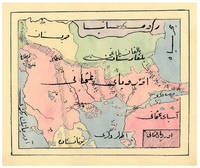
1910ABC_47241Ottoman Empire 1910. Gold-stamped cloth with the tughra of Mehmed V ruled 1908-18 on the front board when reading right to left and "Album" on the back board the front when reading left to right with an inscription below the tughra and the European numerals 16 and 2 flanking an ornament below the inscription the whole framed by 4 large floral cornerpieces. Oblong 4to 26.5 x 19.5 cm. 14 leaves with 10 pen-and-ink maps hand coloured with watercolours. Tissue guards. An album of hand-drawn maps forming an atlas of the western mostly European parts of the Ottoman Empire with legends in Ottoman Turkish written in the Arabic script. The overview map shows Albania Kosovo Macedonia and the Ottoman controlled northern parts of Greece coloured together with Thrace and the northwest parts of Anatolia shown treating them as a single unit while Serbia and Bulgaria like the small parts of territories outside Ottoman control are coloured separately. Most of the other maps give more detailed views of some of these regions including the Bosporus the Dardanelles Halkidiki Chalcidice Albania etc. but there is also a map of Crete not in the overview map.In fine condition. hardcover
0483240230.Ghardcover. Good. Access codes and supplements are not guaranteed with used items. May be an ex-library book. hardcover
0364201460.Ghardcover. Good. Access codes and supplements are not guaranteed with used items. May be an ex-library book. hardcover
0483209155.Gpaperback. Good. Access codes and supplements are not guaranteed with used items. May be an ex-library book. paperback
0483240710.Ghardcover. Good. Access codes and supplements are not guaranteed with used items. May be an ex-library book. hardcover
1980KOS01300381Commonplace Publishing 1980. Soft Cover. Fine. KOS01300381 Commonplace Publishing paperback
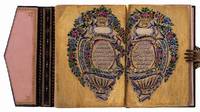
65596Ottoman Empire: Signed Hajj Isma'il Haqi Ibn Mohammed Islamboli first Imam of Sultan Selim Mosque and head of shiekh reciters and dated the fourteenth of Jumada al-Akhirah in the year one thousand two hundred and ninety-four of hijra 1294 AH 1877 AD. Arabic manuscript of 9 leaves of pink polished paper plus 3 blank leaves at the end 11 lines of neat black naskh per page text framed within gilt borders gold roundel verse markers with catchwords decorative endpapers first leaf decorated with illuminated headpiece comprised of saz-style floral sprays and three different varieties of flowers including roses and tulips final leaf likewise decorated with gilt ornamentation and with round stamp of the 'Chief of the Sheikhs of Qur'an Reciters Sayyid Ismail'. Housed in contemporary purple morocco binding with prominent gilt filets to sides. Folio: 18.2 cm. Text Panel: 11.5 x 6.3 cm. Some light rubbing to exterior outer margins with some light wrinkling toning and a few nicks generally a very good example in a handsome leather binding. In the Ottoman tradition a Qur'an school certificate is known as an Ijaza. It is a formal license granted by a teacher to a student certifying that they have mastered the recitation or memorisation of the Qur'an and are now qualified to transmit that knowledge to others. These were prestigious manuscripts granted to students who had mastered the components of Qur'anic sciences such as recitation 'Tajwid' and memorisation 'Hifz' and often include as here a chain of transmission 'Sanad' listing the pupil's teachers. Ottoman Empire: Signed Hajj Isma'il Haqi Ibn Mohammed Islamboli first Imam of Sultan Selim Mosque and head of shiekh reciters, a hardcover
63854Ottoman Empire dated 1266 AH/1849-50 AD. Arabic manuscript on paper 308 leaves plus 4 fly-leaves 15 lines to the page written in naskh in black ink verses separated by gold and polychrome illuminated rosettes within gold and black rules hizb sajda and juz' marked by illuminated floral marginal devices surah headings in white thuluth on gold and polychrome illuminated panels f.1b and 2a illuminated in gold and polychrome with rococo floral decoration against a gold ground pin-pricked with cintamani motifs the colophon within similarly illuminated panels in Ottoman gilt dark brown leather binding with flap with fitted box. Text panel: 8 by 5.1cm. Leaf: 12.5 by 8.2cm. Isma'il Najib is recorded as a pupil of Ahmed Zarifi and teacher to Tentene-zade Seyyid Hasan Vehbi Stanley 2009 p.248. Further Qur'ans by the scribe have sold in Christie's London 26 April 2018 lot 177; 26 October 2017 lot 229 and 12 October 1978 lot 7 and another was sold at Sotheby's London 21 November 1985 lot 390. The latter example is illuminated in a very similar manner to the present lot in a fully Rococo style unlike the typical Shumen style of illumination. In the 19th century one of the most important places of Ottoman manuscript production was Shumen a strategically-important fortress in what is today Bulgaria. Tim Stanley and Süheyl Ünver have independently worked on the corpus of manuscripts there identifying more than fifty Qur'anic scribes from the town apparently divisble into three groups according to their original teacher: Seyyid Mehmed Nuri Ahmed Zarifi and Ahmed Nazifi Tim Stanley The Decorated Word volume II. Oxford 2009 p.226. By the 1850s Qur'ans from Shumen had come to be remarkably homogenous: all observe the principle of ayet ber kenar in which every page ends with a completed Qur'anic verse; all are written with 15 lines of text to a page; all have between 300 and 310 pages. The dimensions of these manuscripts are also fairly constant. Although these manuscripts were produced in quantities to make them available to many relatively prosperous subjects of the Ottoman Empire Shumen Qur'ans were presented by Ottoman sultans to important figures including Ali Rif'at Pasha the Khedive of Egypt and al-Husayn Sharif of Mecca. The production of Qur'ans in Shumen came under increasing pressure with the rise of lithographic printing and came to a complete stop with Bulgarian indepedence in 1878. For a fuller discussion of the Shumen school of calligraphy see Tim Stanley "The Shumen Phenomenon" The Decorated Word volume II. Oxford 2009 pp.222-51. The illumination of Shumen manuscripts - though united by a Baroque idiom and a bright pastel colour palette - exhibits some variety suggesting that there were several different schools of illumination in the city alongside the numerous calligraphers. Ottoman Empire, dated 1266 AH/1849-50 AD. hardcover
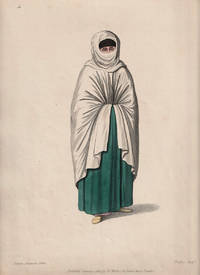
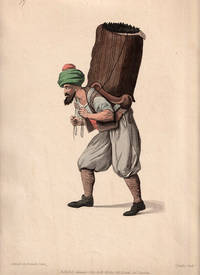
1802219552London.: W. Miller. 1802. Hand-coloured engraving 34.7 x 26 cms sheet including plate-mark edge toning but in very good condition. Attractive large image prepared as Plate IV for Dalvimart's work "The Costume of Turkey". <br>"Dalvimart's is one of the basic works on Turkish costume which has provided the prototypes for numerous other illustrative material. It is known that Dalvimart travelled in Turkey and Greece in 1797-8" Atabey. . W. Miller. unknown
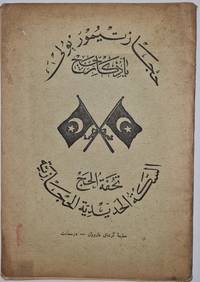
1913000166Very rare brochure printed in Armenian house in İstanbul 1913. In English Ottoman Turkish Arabic Russian and Urdu. 10 p. Text with 11 plates. In the printer wrappers. Archak Garoyan paperback
1920054028Baku: P. V. CH. Hükümet Matbaasi i.e. Government Presss. AH 1336 1920. 1st Edition . Soft cover. Very Good. Original wrappers. Demy 8vo. 21 x 14 cm. In Ottoman script Turkish with Arabic letters. 3 158 p. Occasionally minor age-toning on pages and cover. Spine restored. Uncut and untrimmed copy with sensitive extremities. Otherwise a good copy. First Edition and extremely rare Baku imprint of Karabekir's book including his advices to children printed in Baku in the same year when the Red Army captured Azerbaijan. Printing types are peculiar to the Caucasus imprints. The author wrote this book in his own words to teach children "the first facts of life". Kâzim Karabekir Pasha who took care of thousands of children who lost their parents during the First World War is a statesman and soldier who was also closely interested in the education of these children. "My Advice" book purposes to reach teachers and parents as well as primary and secondary school students. The rights and wrongs that every child should know about life are explained in a sweet way. The book contains more than a hundred moral and other advices on issues such as the importance of being friendly how to spend money hospitality rules spies paying attention to cleanliness helping each other and respecting elders. Musa Kazim Karabekir Pasha was a Turkish general and politician. He was the commander of the Eastern Army of the Ottoman Empire at the end of World War I and served as Speaker of the Grand National Assembly of Turkey before his death. Karabekir was appointed commander of the 2nd Corps on the Caucasian front Erzurum Kars and Baku and fought bitterly against the Russian and Armenian forces for almost ten months. In September 1917 he was promoted to brigadier general by a decree of the Sultan. OCLC 13180947.; Özege 16062. <br/> <br/> [P. V. CH.] Hükümet Matbaasi [i.e. Government Presss]., [AH 1336] paperback
1802219551London.: W. Miller. 1802. Hand-coloured engraving 34.7 x 25.8 cms sheet including plate-mark edge toning but in very good condition. Attractive large image prepared as plate 17 for Dalvimart's work "The Costume of Turkey". <br>"Dalvimart's is one of the basic works on Turkish costume which has provided the prototypes for numerous other illustrative material. It is known that Dalvimart travelled in Turkey and Greece in 1797-8" Atabey. . W. Miller. unknown
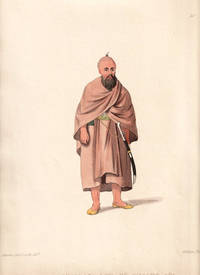
1802219553London.: W. Miller. 1802. Hand-coloured engraving 34.7 x 25.9 cms sheet including plate-mark edge toning but in very good condition. Attractive large image of a Dervise or Dervish prepared as Plate XXX for Dalvimart's work "The Costume of Turkey". <br>"Dalvimart's is one of the basic works on Turkish costume which has provided the prototypes for numerous other illustrative material. It is known that Dalvimart travelled in Turkey and Greece in 1797-8" Atabey. . W. Miller. unknown
1909055883Trabzon: Mesveret Matbaasi. AH 1325 1909. 1st Edition . Soft cover. Very Good. 8vo - over 7¾ - 9¾" tall. Original wrappers. Cr. 8vo. 20 x 11 cm. In Ottoman script Old Turkish with Arabic letters. 15 p. Restored spine by special tape chippings on extremities of the front cover uncut pages. Overall a good copy. The first and only edition of this epic poem written in memory of Turkish Unionist Captain Ilyas from Trabzon one of the first to fall when the sultan's supporters opened fire at the bridgehead in Galata Istanbul during the outbreak of the March 31 Incident. The poem which can also be regarded as an elegy for the Captain contains severe accusations against Sultan Abdulhamid II. The book was published by the Mesveret Printing House sharing its name with the Unionist and anti-sultan newspaper that had been published in Trabzon since the 1890s. It was written in 66 verses using an 11-syllable meter. The identity behind the pen name "Maçka Sairi" which appears at the end of the poem remains undetermined. He was likely a member of the Mesveret newspaper staff a close acquaintance of Captain Ilyas and a staunch opponent of Sultan Abdülhamid as well as a supporter of the Committee of Union and Progress. According to historical sources Captain Ilyas from Trabzon was the first person killed during the March 31 Incident. Due to this significant distinction an extensive poem was composed in his honor. While detailed information about Captain Ilyas is scarce it is believed that he was either a native of Trabzon or became affiliated with Mesveret while serving there. He was likely an Ottoman soldier who shared the same political views as the poem's author. Özege 25512. As of February 2025 we couldn't trace any copies in the OCLC. <br/> <br/> Mesveret Matbaasi., AH 1325 paperback
052108Istanbul : Manuscript. 19th century. 2nd Edition . Soft cover. Very Good. 16mo - over 5¾ - 6¾" tall. Original ketebe page and last page of a manuscript written by Ottoman / Turkish calligrapher Hasan Hüsni Efendi 1840-1914. 16x8 cm. In Arabic. 2 p. Written on a watermarked paper. Well-trained in the educational and instructional curricula of the day anda member of the class of religious scholars Hasan Hüsnü Effendi attended dasses in calligraphy under the Üsküdar Mawlawi sheikh Zeki Mehmed Dede from whom he received his diploma and became one of the best representatives of this art. Hasan Hüsnü Effendi who taught the Persian style of calligraphy nasta'lik or naskh-i ta'lik in the law school Medresetü'l Kuzat trained a number of artists like Hulusi Yazgan and Kemal Batanay and attained da place of importance in the history of the Turkish art of calligraphy. A Neglected Cultural Treasure: Calligrapher Karînâbatli Hasan Hüsnü Effendi MUHITIN SERIN. <br/> <br/> Manuscript., [19th century] paperback
1839055027Kostantiniyye Constantinople - Istanbul: Takvîm-i Vekâyi. AH 1255 1839. Soft cover. Very Good. Original newspaper taken from a volume. Folio. 425 x 28 cm. In Ottoman script Old Turkish with Arabic letters. 5 p. Extremely rare early issue of this first official newspaper of the Ottoman Empire after the proclamation of Reform Tanzîmât in 1839 informed Daguerre's new and weird invention "photography" as it would be called in the 1850s to the Ottoman peoples and readers. The article reads: "It is the talk of the town steam engines have been able to run on rails in factories in recent years. Meanwhile a man carefully focused on his thoughts so much and the craft turned into a strange art and finally a coquettish mirror surface appeared. This skillful Frenchman named Daguerre drew the lines of objects by reflecting the sunlight with the methods of the different science of art he learned drew the contours of the objects and gave 20 years secretly and openly to the formation of this strange art. Finally he reached the goal and this event won the appreciation and admiration of everyone. This is to say the image of the object in the form of a large or small box free from light is pictured inside by passing through the glass in front of it. In order for the reflected picture to be captured on a surface some chemicals must be prepared. Daguerre has achieved this mix based on his experience. This substance applied on the plate is called iodine. After the plate is kept in the vapor of the iodine for a few minutes it is immediately placed in the dark box and the image passing through the window of the box is pictured for five minutes. Considering that some of the things that should be hidden are captured like this it will be understood what a valuable invention this is.". In the continuation of the article it is written that an Englishman named Talbot Henry Fox Talbot found the same thing with almost the same processes ! but Daguerre had taken pictures before. Takvim-i Vekâyi was the first fully Turkish-language newspaper. It was launched in 1831 by Sultan Mahmud II taking over from the Moniteur ottoman as the Official Gazette of the Ottoman Empire. With the beginning of the Tanzimat reform period Takvim-i Vekayi produced versions in multiple language editions. It ceased publication in 1878 resuming in 1891-2 before being closed again. It resumed in 1908 until around 1922. In the 1831-1878 period it published a total of 2119 issues - an average of slightly less than one a week. <br/> <br/> Takvîm-i Vekâyi., [AH 1255] paperback